Michal Kalinowski

332 posts

Michal Kalinowski banner
Michal Kalinowski

Michal Kalinowski

@MPKalinowski

Find your calling → Become who you’re capable of. Deep learning → Real world application. Sapolsky. Kahneman. Haidt. Peterson & more. Applied.

Pimlico, London Katılım Mart 2026
91 Takip Edilen53 Takipçiler
Sabitlenmiş Tweet
Michal Kalinowski
Michal Kalinowski@MPKalinowski·
There's no such thing as a violent person. There are only people in violent situations. It took me 700 pages of Sapolsky's Behave to actually accept that. It rewrites how you understand almost everyone you've ever known. Thread: 🧵 👇️
Michal Kalinowski tweet media
English
1
0
0
125
Michal Kalinowski
Michal Kalinowski@MPKalinowski·
Female mate choice had to solve two variables simultaneously, capacity for dominance and willingness to redirect it toward pair-bond. The murderer maxes signal one and catastrophically fails signal two. The accountant never clears signal one. What she's calibrated for is the integrated version. Not tame, tame just means the aggression was never there. Domesticated: the capacity is present, subordinated by choice. Peterson's version: not harmless, but dangerous and voluntarily restrained.
English
0
0
1
99
Rob Henderson
Rob Henderson@robkhenderson·
"female attraction has a dark side too...Women want men of ambition and status, interesting men as opposed to safe ones. Murderers get a lot more love letters from anonymous women than practicing accountants do." firstthings.com/repentance-and…
English
13
47
410
15.8K
Michal Kalinowski
Michal Kalinowski@MPKalinowski·
Don't trust your empathy to scale. It targets the visible, the familiar, the in-group, the named. It barely activates for statistical victims, distant suffering, or people who don't look like you. This isn't a moral failing, it's a structural feature of how the system was built. This is why charity prefers identifiable individuals over effective interventions. Why news of one named child moves people more than data about ten thousand. You can't brute force yourself into caring equally about everyone. What you can do is build rules and systems that produce fair outcomes whether or not your empathy shows up. The rule does the work the feeling can't.
Michal Kalinowski tweet media
English
1
0
0
11
Michal Kalinowski
Michal Kalinowski@MPKalinowski·
The problem isn’t the emotion. It’s the relationship you have with it. Suppress anger and it doesn’t disappear, it goes underground and comes back as resentment or anxiety. Treat it as an enemy and it behaves like one. Peterson calls this integration: the emotion has information. The goal isn’t to control it into silence but to understand what it’s pointing at and use it. Regulation improves when the emotion becomes an ally, not a prisoner.
English
1
0
5
724
Adam Grant
Adam Grant@AdamMGrant·
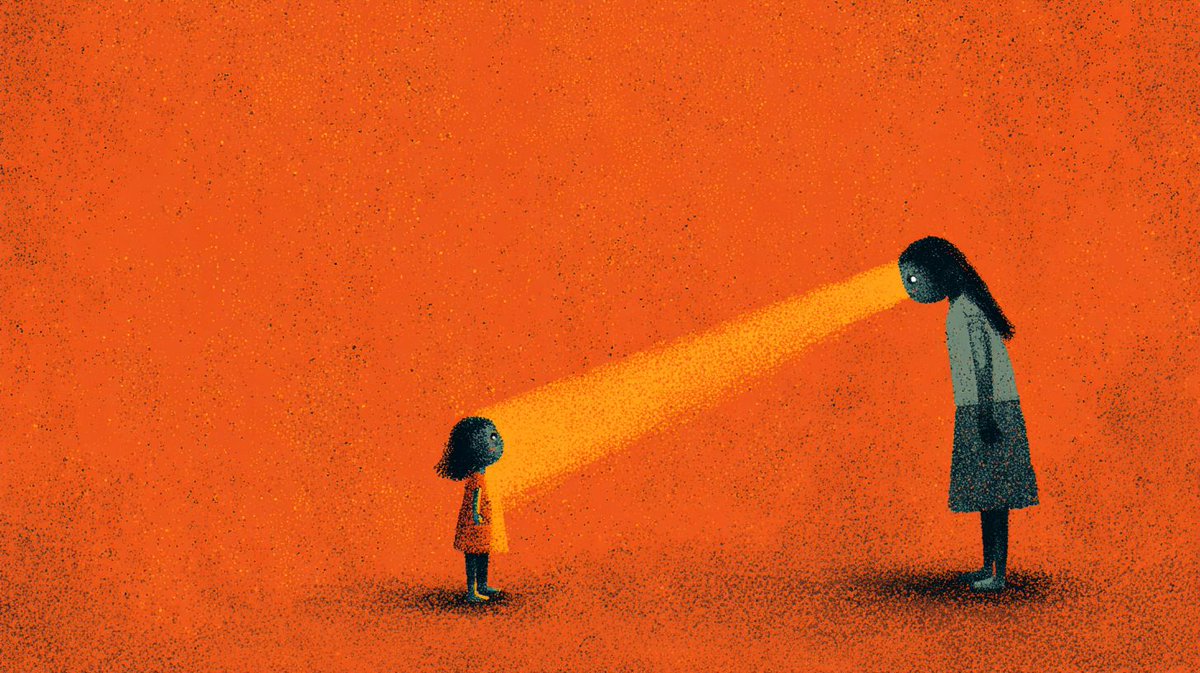
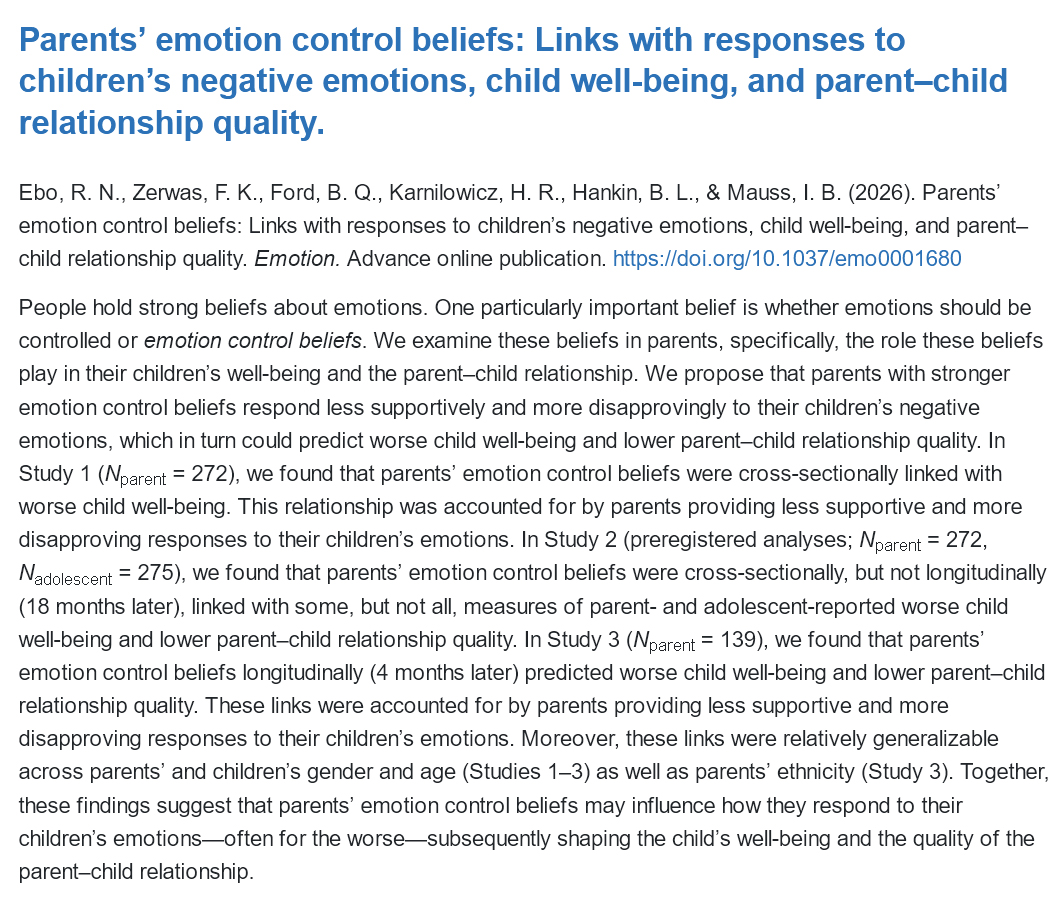
Expecting kids to control their emotions is not good for their well-being. When parents believe in suppressing feelings, they respond with more disapproval. Their kids are more likely to become anxious and depressed. Emotion regulation improves with practice, not punishment.
Adam Grant tweet media
English
30
165
904
82.4K
Michal Kalinowski
Michal Kalinowski@MPKalinowski·
"He was just born that way" is bad genes. So is "she's purely a product of her upbringing." Genes don't code for behaviour. They code for proteins, which build cells, which respond to environments. Genes are conditional on context. The MAOA "warrior gene" only predicts violence when paired with childhood maltreatment. Without that environment, no effect. There's no behaviour that's purely genetic and no behaviour that's purely environmental. The unit of analysis is gene × environment. Always. The implication: most confident "nature" or "nurture" claims you hear are reductionist nonsense. Real biology is more complicated and more interesting.
Michal Kalinowski tweet media
English
1
0
1
18
Michal Kalinowski
Michal Kalinowski@MPKalinowski·
Where you sit in the rank order isn't just psychology. It's in your blood, your brain, and your immune system. Subordinate position alters stress hormones, immune function, gene expression. Subordinate humans get more cardiovascular disease, more depression, faster cellular aging. The pattern depends on hierarchy stability. Stable hierarchies stress the bottom. Unstable ones stress the top. There's no neutral position, the structure picks who pays. In any team, people operating below their actual rank are paying a biological tax. Recognising rank, formally or informally is one of the cheapest performance
Michal Kalinowski tweet media
English
1
0
0
8
Michal Kalinowski
Michal Kalinowski@MPKalinowski·
You're never dealing with someone where they are now. You're dealing with the sum of where they've been. Adverse childhood experiences leave biological fingerprints that persist for decades. Altered stress response. Smaller hippocampus. Larger amygdala. Calibrations for an environment that no longer exists. This isn't destiny. It's a baseline. Adult intervention can shift the curve, but the curve is real. The practical version: every adult you work with came in pre-shaped by experiences you'll never see. Treating everyone as a blank slate is wrong. Treating everyone as fixed by their history is also wrong. Both errors are common.
Michal Kalinowski tweet media
English
1
0
0
3
Michal Kalinowski
Michal Kalinowski@MPKalinowski·
@marcuswlefton Exactly. Structure does what the prefrontal cortex can’t yet do on its own. It’s essentially external regulation until internal regulation catches up.
English
0
0
1
11
Marcus Lefton
Marcus Lefton@marcuswlefton·
@MPKalinowski You notice pretty quickly with younger athletes how much better decisions become once structure is consistent around them.
English
1
0
2
38
Michal Kalinowski
Michal Kalinowski@MPKalinowski·
Don't ask a seventeen year old to think like a thirty year old. The hardware isn't there yet. The teenage brain isn't broken. It's in transition. The limbic system: emotion, reward, novelty seeking is fully online. The prefrontal cortex isn't. It won't be until around 25. This produces the predictable pattern: high reward seeking, weak impulse control, strong peer influence, dramatic risk-taking. Most of what looks like teenage stupidity is biology. The useful response, in any context where you're working with younger people: build structures around them, not against them. Don't moralise the developmental stage. Design for it.
Michal Kalinowski tweet media
English
2
0
0
87
Michal Kalinowski
Michal Kalinowski@MPKalinowski·
Make the important calls when your prefrontal cortex is rested. Don't trust the version of you that's been working for ten hours. The PFC is the part of the brain that lets you do the harder thing when the harder thing is the right thing. It's also metabolically expensive, it depletes with use, hunger, fatigue, and stress. Tired PFC produces predictable failures: impulsivity, short-term thinking, weaker override of emotion. Schedule against your own depletion curve. Hard decisions in your fresh hours. Easy ones in the worn-out ones. The version of you in each window is genuinely different.
Michal Kalinowski tweet media
English
1
0
0
11
Michal Kalinowski
Michal Kalinowski@MPKalinowski·
@NewSchedules I agree, understanding why we do things, integrating our drives brings much better results than trying to repress them.
English
0
0
1
6
The Schedule System
The Schedule System@NewSchedules·
@MPKalinowski Learning how the brain works is always interesting. We'll have much more success working with our internal wiring instead of constantly fighting against it.
English
1
0
1
27
Michal Kalinowski
Michal Kalinowski@MPKalinowski·
By the time you've decided someone makes you uncomfortable, your brain has already made the decision and you're just narrating. The amygdala, your brain's threat-detection centre, classifies any new face as "us" or "them" in under a tenth of a second. Conscious awareness arrives late, and your job is mostly to construct an explanation for a verdict that's already in. This is why first impressions are so hard to override. They're not impressions, in the sense of careful judgments. They're sub-second classifications you didn't watch happen. The override is possible. It just takes deliberate work, the kind your conscious mind isn't built to do casually.
Michal Kalinowski tweet media
English
5
0
2
16
Michal Kalinowski
Michal Kalinowski@MPKalinowski·
The coupling runs deeper than preference, familiarity actively suppresses threat detection. The nervous system treats novelty as a default danger signal. That's why forced contact between groups often doesn't reduce prejudice: you can't bond through oxytocin while the threat system is still running. The safety has to come first.
English
0
0
0
22
Marcus Lefton
Marcus Lefton@marcuswlefton·
@MPKalinowski The body and nervous system tend to prioritize familiarity and safety together, which is useful until it starts limiting perspective and adaptability.
English
1
0
1
16
Michal Kalinowski
Michal Kalinowski@MPKalinowski·
Oxytocin is sold as the bonding hormone, the love chemical, the molecule of trust. That's half the story. The same molecule that bonds you to your in-group increases your hostility to your out-group. It's not pro-social. It's pro-tribal. Evolutionarily this makes sense. The mechanism that bonds you to your kin is the same one that hardens your edge against outsiders. The practical version: every "we're a family here" company, every team-bonding exercise, every us-language activates this. The flip side is harsher treatment of anyone framed as outside the family. Notice both effects.
Michal Kalinowski tweet media
English
2
0
1
36
Michal Kalinowski
Michal Kalinowski@MPKalinowski·
Peterson's framing adds the direction. The challenge at the edge isn't just optimal engagement, it's the marker of the path toward who you haven't become yet. Too easy, and you're maintaining. At the edge, you're becoming. The signal isn't just "this is hard." It's "this is what you're being called toward."
English
0
0
1
78
Naval
Naval@naval·
What you really want is a challenge at the edge of your capability.
English
596
2K
16.6K
499.1K