
Alex M. Bendersky PT. DPT.

3K posts

Alex M. Bendersky PT. DPT. banner
Alex M. Bendersky PT. DPT.

Alex M. Bendersky PT. DPT.

@MSKQuestPT

Curiosity, knowledge, and openness fuel my journey. MSK health advocate, lifelong learner, proud father, and the world's most average runner.🏃‍♂️🏋️‍♂️📖

Vernon Hills, IL Katılım Ocak 2017
1.7K Takip Edilen333 Takipçiler
Alex M. Bendersky PT. DPT. retweetledi

JAMA
JAMA@JAMA_current·
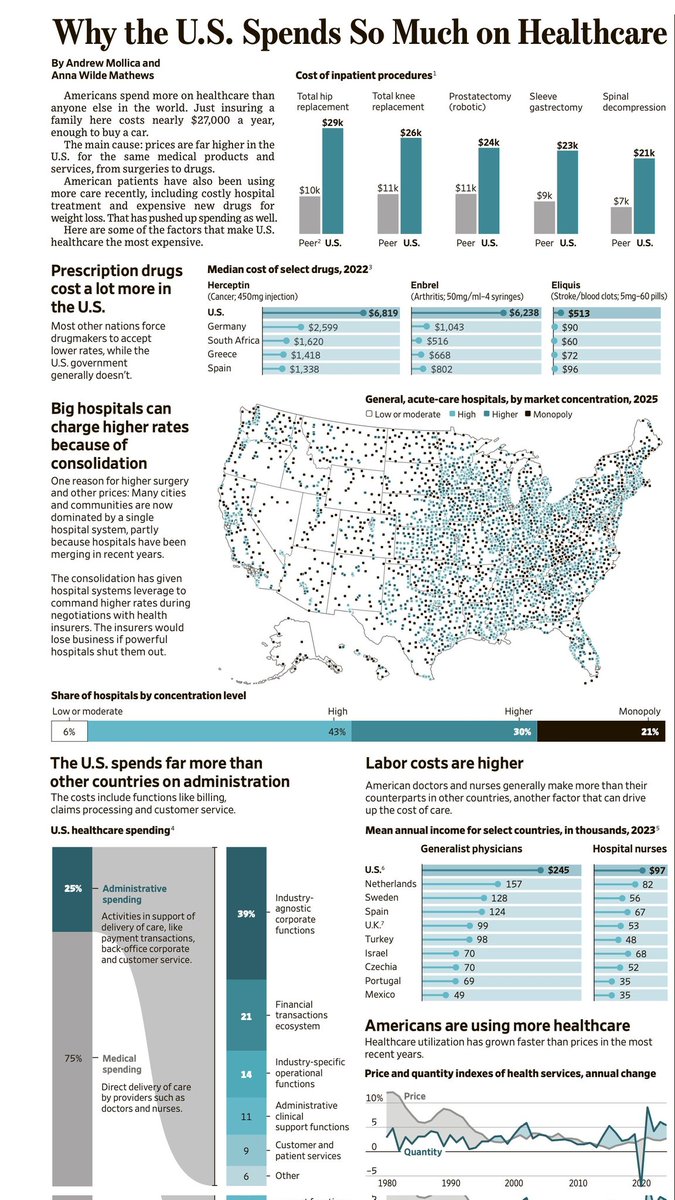
US nonprofit hospitals spent $7.8 billion on management consultants from 2009 to 2023, but contracts were not associated with meaningful changes in finance, operations, or quality of care. 🧵 ja.ma/4d46zfq

JAMA tweet media
English
66
516
1.3K
362.5K
Alex M. Bendersky PT. DPT. retweetledi
Arjun (Raj) Manrai
Arjun (Raj) Manrai@arjunmanrai·
🧵1/ Our new study on AI and physician reasoning just came out in @ScienceMagazine. As co-senior author, I'm excited about our findings, and I do think AI will reshape medicine. But after seeing some of the discussions, I'm also worried about how our findings may be misinterpreted.
Arjun (Raj) Manrai tweet media
English
31
158
517
157.1K
Alex M. Bendersky PT. DPT. retweetledi
Chris Chavez
Chris Chavez@ChrisChavez·
For other marathoning nerds – Maurten shared Jacob Kiplimo's fueling strategy for his 2:00:28 at the London Marathon (No. 3 all-time and also under the previous world record) with me and I think it's a little different. Jacob Kiplimo's fueling protocol 6:00 a.m. — Bread (small breakfast) 7:00 a.m. — Bicarb System 15 Pre-race — Drink Mix 320 In-race plan 5K — 240ml Drink Mix 320 10K — 230ml Drink Mix 320 15K — 220ml Drink Mix 320 20K — 200ml Drink Mix 320 25K — Water + Gel Caf 100 30K — 180ml Drink Mix 320 35K — 170ml Drink Mix 320 40K — 150ml Drink Mix 320 If I'm reading these right... Sawe front-loads with a fixed 160ml of Drink Mix 320 at every station from 5K through 40K. (Plus a Gel 100 Caf 100 added at 20K on top of his regular drink) vs. Kiplimo starts higher (240ml at 5K) and carefully tapers his volume down across the race: 240, 230, 220, 200, then a full break from carbs at 25K where he takes water and a caffeine gel only, before resuming with 180, 170, and 150ml to close. His total volume per station is actually higher early on, but he's taking in less and less as the race gets harder. The other notable difference is the bicarb. Sawe takes Bicarb System 12. Kiplimo takes Bicarb System 15. What's fascinating is how dialed this is for an athlete who's also racing, covering moves and responding to surges while running so fast. As Zouhair Talbi (who ran 2:03 at Boston last week) told me, many of these Kenyan runners don't tend to nurse fluids that deliberately. So the next step would be to watch back the tape and see how much he's actually guzzling early and if this is just the target, or if he's hitting these numbers exactly. Wish someone were able to collect all the bottles and then also see/share how much was actually consumed.
CITIUS MAG@CitiusMag

How did Sabastian Sawe fuel during his 1:59:30 marathon world record? The Maurten team has shared his fueling plan. The Maurten research team was embedded with Sawe’s team in Kenya for 32 days across six trips between last and this April. They were training his gut to absorb that load by mimicking race-day protocol in training. The hydrogel technology they have developed over the past 10 years now allows athletes to absorb 90–120 grams of carbs per hour without GI distress. In addition to that, sodium bicarbonate is also used, essentially a blood buffer since it neutralizes the lactic acid buildup that causes the burning sensation in muscles during high-intensity effort. Sawe used both of Maurten’s products for it on race day. Taking the bicarb early is deliberate since it peaks in the bloodstream roughly 60–90 minutes after ingestion, so the timing of 2+ hours before the race would put peak buffering capacity right at the start. Sawe told the media in the press conference that he had two pieces of bread and tea with honey as his breakfast before the race.

English
15
134
1.1K
671.5K
Alex M. Bendersky PT. DPT. retweetledi
Dr Sudhir Kumar MD DM
Dr Sudhir Kumar MD DM@hyderabaddoctor·
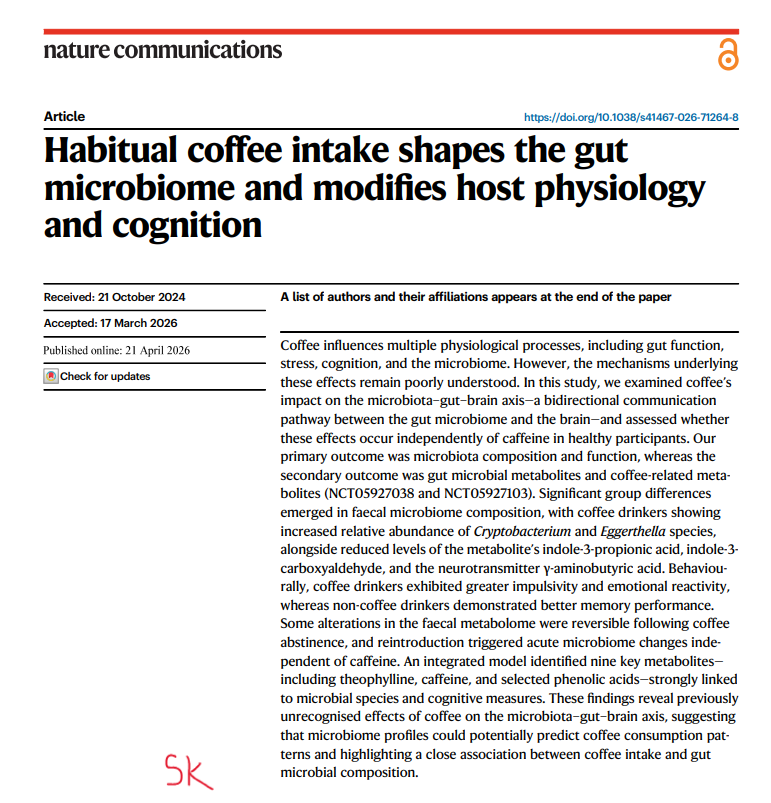
Your coffee habit is doing more than just waking you up! New research in Nature Communications (2026) shows that coffee actually "rewires" your gut-brain axis. Here is the breakdown of why your daily cup is a health powerhouse: 1️⃣ Coffee promotes "good" bacteria like Eggerthella, which helps your digestion and keeps the "bad" bugs at bay. 2️⃣ Decaf coffee was specifically linked to better memory and learning, thanks to its rich antioxidants (polyphenols). 3️⃣ Regular caffeinated coffee reduced anxiety and improved focus while lowering body-wide inflammation. 4️⃣ Both regular and decaf drinkers reported lower stress and better moods. It is not just the caffeine; it is the coffee itself! ✅The Bigger Picture: Recent studies from Harvard and the UK Biobank (2025-2026) also suggest that 2-3 cups of unsweetened coffee daily could lower the risk of Alzheimer’s and Parkinson’s by nearly 30%. Bottom line: Your coffee is a complex "superfood" for your microbes and your mind. Keep brewing! ☕️ Dr Sudhir Kumar (@hyderabaddoctor)
Dr Sudhir Kumar MD DM tweet media
English
47
288
1.1K
73.4K
Alex M. Bendersky PT. DPT.
Alex M. Bendersky PT. DPT.@MSKQuestPT·
Who Holds the Safety Net? Ethical and Responsible AI Integration in Physical Therapy
English
0
0
0
6
Alex M. Bendersky PT. DPT. retweetledi
Kevin Kelly
Kevin Kelly@kevin2kelly·
How can we be sure our robots and AIs do the right thing when the world is always new? I wrote up a 2-page Catechism for Robots that might help guide them morally. It's a first draft. You might want to create your own version. Mine is here: kevinkelly.substack.com/p/a-catechism-…
English
3
11
35
7K
Alex M. Bendersky PT. DPT. retweetledi
Human Progress
Human Progress@HumanProgress·
The Human Development Index (HDI) was created in 1990 to measure the expansion of human choices using three metrics: life expectancy, education level, and income per capita. Between 1990 and 2023, the global average HDI score grew by nearly 30 percent.
GIF
English
2
14
56
5.1K
Alex M. Bendersky PT. DPT. retweetledi
Dr. Javier Flores
Dr. Javier Flores@farmacotips·
🚨ULTIMA HORA: La IA se equivoca el 49.6% de las veces en dar "recomendaciones medicas" a pacientes siendo más del 19.6% catalogadas como muy problemáticas.
Dr. Javier Flores tweet media
Español
48
636
1.4K
108.1K
Alex M. Bendersky PT. DPT. retweetledi
dra fermdo
dra fermdo@fernandamdo·
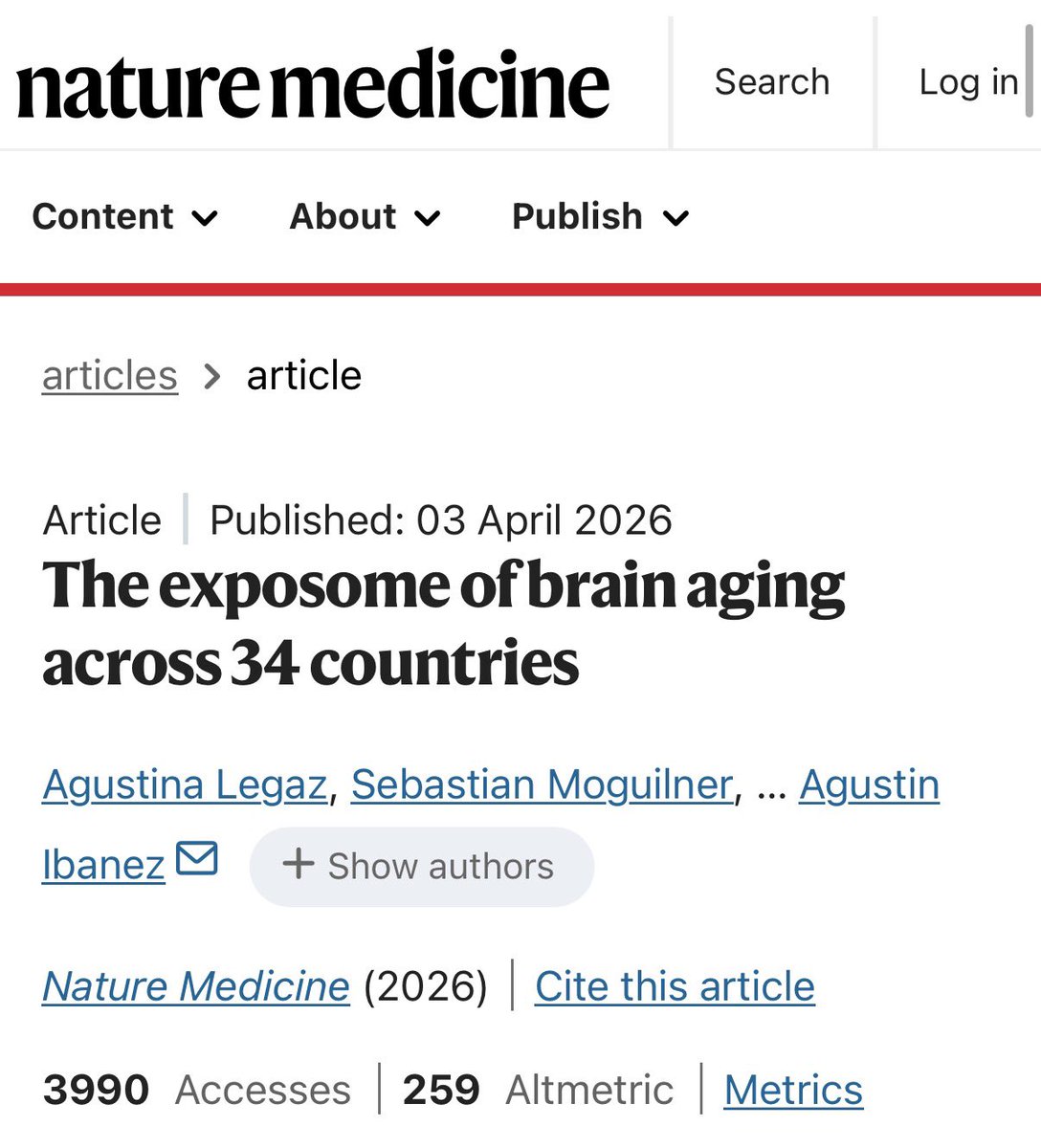
Hoy voy a contarles de las verdaderas razones del envejecimiento cerebral acelerado, es este paper que salió en abril de 2026 y que todo el mundo está citando pero casi nadie lo está explicando.
dra fermdo tweet media
Español
35
688
2.6K
227.4K
Alex M. Bendersky PT. DPT. retweetledi
Corey Twine
Corey Twine@CoreyTwine·
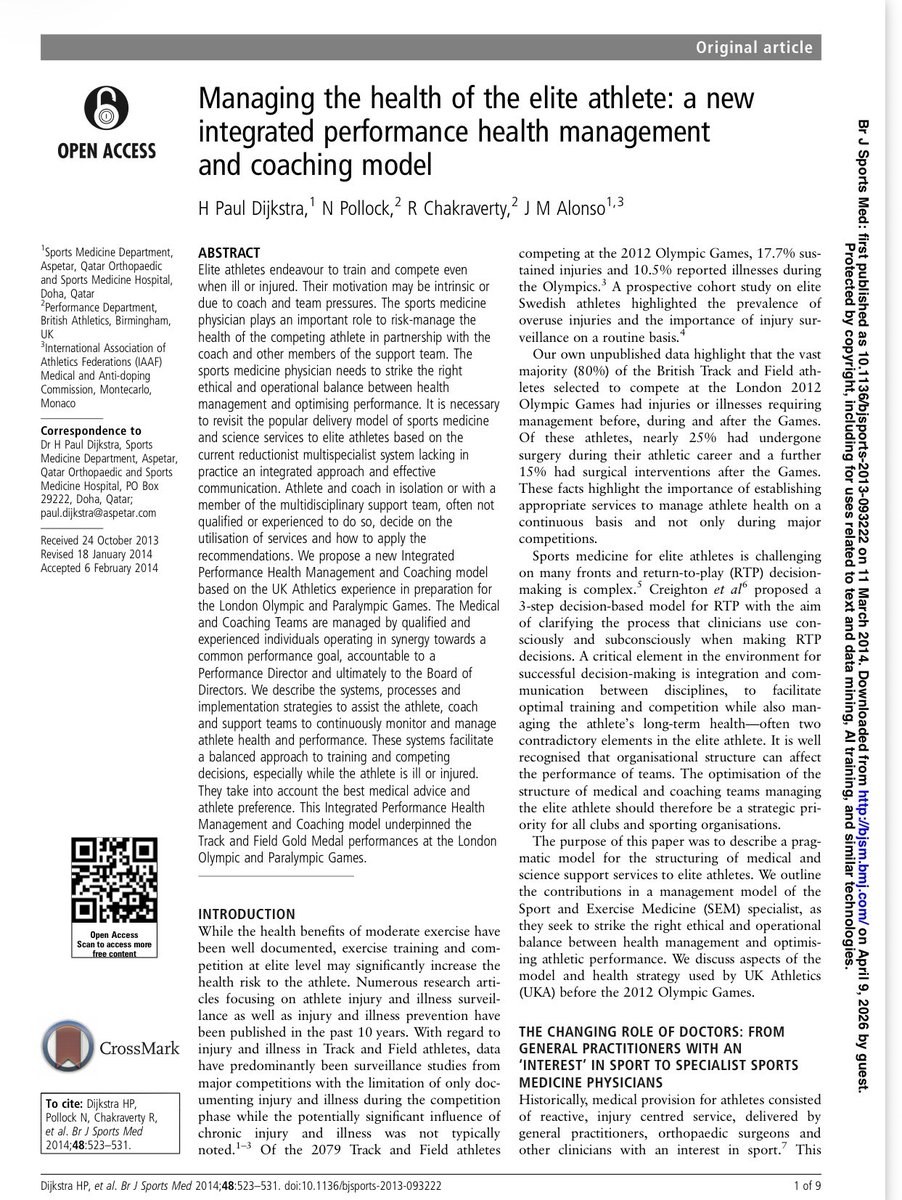
Great read!! Dijkstra et al. do not argue that rehabilitation is unimportant, but they do make a clear case that elite sport systems should not be organized as reactive, injury centered service models. The paper explicitly contrasts the older model of sports medicine, described as a “reactive, injury centred service,” with a newer integrated model that is built to continuously manage health in support of performance. The authors argue that a fragmented, reductionist system can leave the athlete and coach trying to manage disconnected recommendations on their own, whereas the better model is one in which health and coaching operate in synergy toward a common performance goal. In that framing, rehabilitation is part of the system, but not the organizing principle of the system. That is the strongest paper based way to support your sentiment. A faithful interpretation of Dijkstra et al. would be that when a Human Performance organization becomes dominated by treatment and rehabilitation, it may reflect drift away from a holistic, performance focused model and back toward a reactive one. The paper repeatedly emphasizes continuous health management, risk reduction, communication, decision making around training and competition, and the integration of medicine, therapy, science, and coaching. It also states that medical teams should help reduce injury and illness risk while prioritizing the use of sports medicine and science to optimize and improve performance. That is much closer to “build and sustain performance capacity” than “mainly manage breakdown after the fact.” So if you want to stay very tight to the paper, I would write it this way: A strong Human Performance model should not be organized primarily around reactive, injury centered care. Dijkstra et al. propose an integrated performance health management and coaching model in which health services, including rehabilitation, support the broader objective of optimizing training, competition, and long term athlete management. In that model, rehabilitation is necessary, but it functions within a larger performance system rather than defining the system itself.
Corey Twine tweet media
English
1
9
44
2.6K
Alex M. Bendersky PT. DPT. retweetledi
Barack Obama
Barack Obama@BarackObama·
What the Artemis II astronauts did over the last 10 days was a testament to their bravery. And the fact that they traveled farther from Earth than anyone ever has, re-entered our atmosphere at more than 24,000 mph, and splashed down safely was a testament to human ingenuity. Thanks to everyone at @NASA for making this mission possible, and for taking us along for the ride.
Barack Obama tweet mediaBarack Obama tweet media
English
15.8K
61.9K
833.8K
63.6M