anomy

3.7K posts

anomy

anomy

@Maanow043

Katılım Haziran 2022
1.2K Takip Edilen37 Takipçiler
Sabitlenmiş Tweet
anomy
anomy@Maanow043·
ชีวิตลงตัวทุกองศา ที่ บริทาเนีย วงแหวน-เทพารักษ์ 🌳🚗 #ติดถนนใหญ่ #บ้านใกล้ทางด่วน แค่ 5 นาที* พร้อมฟังก์ชันครบครัน ตอบโจทย์ทุกไลฟ์สไตล์! #ฟินกว่าที่คิดอยู่บริทาเนีย ลงทะเบียนรับสิทธิพิเศษเลย! #BRITANIA#บ้าน #บ้านสมุทรปราการ vt.tiktok.com/ZSkk9Tgw3/
ไทย
0
0
0
113
anomy retweetledi
Jian Wang
Jian Wang@jianw851·
DEVOPS │ ├── 1. FUNDAMENTALS │ ├── What is DevOps? │ ├── SDLC Basics │ ├── Agile & Scrum │ ├── Dev vs Ops Culture │ ├── CI/CD Concepts │ ├── Infrastructure as Code │ ├── Automation Basics │ └── DevSecOps Introduction │ ├── 2. OPERATING SYSTEMS │ ├── Linux Basics │ ├── File System │ ├── Permissions & Ownership │ ├── Process Management │ ├── Package Management │ ├── Systemctl & Services │ ├── Cron Jobs │ ├── Networking Commands │ └── Shell Scripting │ ├── 3. NETWORKING │ ├── IP Addressing │ ├── DNS │ ├── HTTP / HTTPS │ ├── TCP vs UDP │ ├── Load Balancing │ ├── Reverse Proxy │ ├── Firewalls │ ├── VPN │ ├── CDN │ └── SSL/TLS │ ├── 4. VERSION CONTROL │ ├── Git Basics │ ├── GitHub │ ├── GitLab │ ├── Bitbucket │ ├── Branching Strategies │ ├── Pull Requests │ ├── Merge Conflicts │ ├── Git Hooks │ └── Git Workflows │ ├── 5. PROGRAMMING & SCRIPTING │ ├── Bash Scripting │ ├── Python for DevOps │ ├── YAML │ ├── JSON │ ├── Regex │ ├── APIs │ └── Automation Scripts │ ├── 6. CLOUD COMPUTING │ ├── AWS │ │ ├── EC2 │ │ ├── S3 │ │ ├── IAM │ │ ├── VPC │ │ ├── Lambda │ │ ├── RDS │ │ ├── CloudWatch │ │ └── Route53 │ │ │ ├── Azure │ ├── Google Cloud │ ├── Multi-Cloud │ └── Hybrid Cloud │ ├── 7. CONTAINERS │ ├── Docker Basics │ ├── Dockerfile │ ├── Docker Compose │ ├── Docker Networking │ ├── Docker Volumes │ ├── Container Registries │ ├── Podman │ └── Container Security │ ├── 8. CONTAINER ORCHESTRATION │ ├── Kubernetes Basics │ ├── Pods │ ├── Deployments │ ├── Services │ ├── Ingress │ ├── ConfigMaps │ ├── Secrets │ ├── Helm │ ├── StatefulSets │ ├── Auto Scaling │ ├── Service Mesh │ └── OpenShift │ ├── 9. CI/CD PIPELINES │ ├── Jenkins │ ├── GitHub Actions │ ├── GitLab CI/CD │ ├── CircleCI │ ├── Travis CI │ ├── ArgoCD │ ├── Tekton │ ├── Blue-Green Deployment │ ├── Canary Deployment │ └── Rollbacks │ ├── 10. INFRASTRUCTURE AS CODE │ ├── Terraform │ ├── Ansible │ ├── Puppet │ ├── Chef │ ├── CloudFormation │ ├── Pulumi │ ├── Vagrant │ └── Immutable Infrastructure │ ├── 11. MONITORING & LOGGING │ ├── Prometheus │ ├── Grafana │ ├── ELK Stack │ ├── Loki │ ├── Datadog │ ├── New Relic │ ├── Splunk │ ├── Jaeger │ ├── OpenTelemetry │ └── Alerting Systems │ ├── 12. SECURITY (DEVSECOPS) │ ├── IAM │ ├── Secrets Management │ ├── Vulnerability Scanning │ ├── SAST │ ├── DAST │ ├── Container Security │ ├── Kubernetes Security │ ├── Compliance │ ├── Zero Trust │ └── SIEM │ ├── 13. DATABASES & STORAGE │ ├── SQL Databases │ ├── NoSQL Databases │ ├── Redis │ ├── MongoDB │ ├── PostgreSQL │ ├── MySQL │ ├── Backup Strategies │ ├── Replication │ └── Disaster Recovery │ ├── 14. SERVER & WEB TECHNOLOGIES │ ├── Nginx │ ├── Apache │ ├── Tomcat │ ├── Node.js Deployment │ ├── Reverse Proxy Setup │ ├── Caching │ ├── CDN Integration │ └── SSL Configuration │ ├── 15. OBSERVABILITY │ ├── Metrics │ ├── Logs │ ├── Traces │ ├── Incident Management │ ├── SRE Principles │ ├── SLI / SLO / SLA │ ├── Chaos Engineering │ └── Root Cause Analysis │ ├── 16. ADVANCED DEVOPS │ ├── GitOps │ ├── MLOps │ ├── AIOps │ ├── Platform Engineering │ ├── Internal Developer Platforms │ ├── Edge Computing │ ├── Serverless Architecture │ ├── Event-Driven Systems │ └── FinOps │ ├── 17. SOFT SKILLS │ ├── Documentation │ ├── Team Collaboration │ ├── Incident Communication │ ├── Problem Solving │ ├── System Design Thinking │ └── Leadership │ └── 18. DEVOPS PROJECTS ├── CI/CD Pipeline Setup ├── Kubernetes Deployment ├── Dockerized Applications ├── AWS Infra Automation ├── Monitoring Dashboard ├── GitOps Workflow ├── Blue-Green Deployment ├── Multi-Cloud Architecture ├── DevSecOps Pipeline └── Full Production Infrastructure
Jian Wang tweet media
English
1
26
80
2K
anomy retweetledi
Raul Junco
Raul Junco@RaulJuncoV·
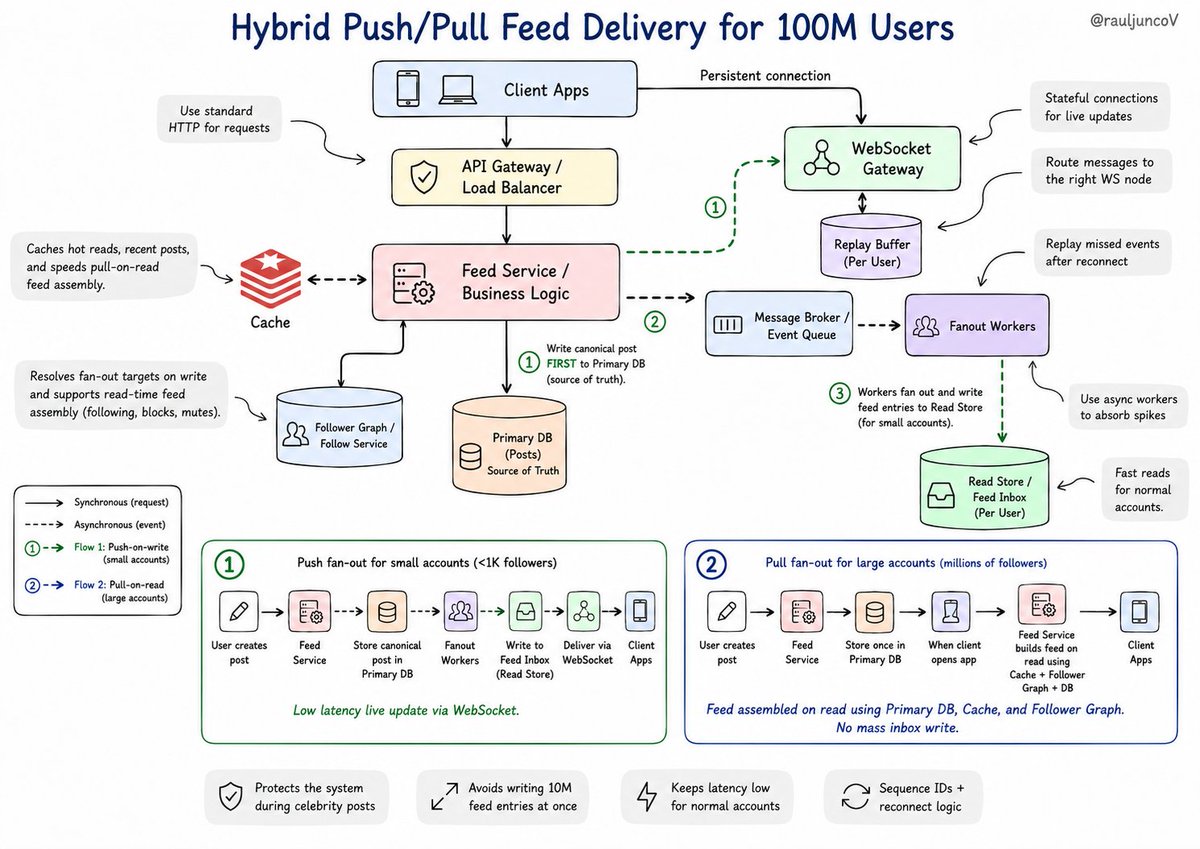
Push-based systems come up in 90% of system design interviews. Here's the exercise you should be able to solve: Design a notification system for 100M users. Some have 50 followers. Some have 10M. The instinct is to hold a WebSocket connection open to every active user and push updates as they arrive. Clean mental model. It collapses the moment a celebrity posts. When someone with 10M followers posts, you push to 10M open connections simultaneously. Your message broker saturates. Your WebSocket servers fall over. The system fails at the exact moment it needs to work. That's the fan-out problem. And it kills more interview answers than any other mistake. The production answer: push and pull aren't binary. You pick based on follower count. Users with fewer than 1,000 followers get push fan-out. Each follower gets notified immediately. Users with millions of followers get pull fan-out. Their feed assembles on read. Nobody gets a push. Followers see the post when they open the app. Twitter built exactly this: push-on-write for small accounts, pull-on-read for large ones. But fan-out is only half the problem. Push means stateful connections. Your servers now need to know which connection lives on which machine. You can't route blindly. Most teams reach for Redis pub/sub here; the WebSocket server subscribes, the backend publishes, the message finds the right node. Add a 3-second network drop and you have another layer: what did the client miss? Now you need sequence IDs, a message buffer, and reconnect logic that replays missed events. "Push-based" became push with a pull fallback, a message broker, sticky routing, and a replay buffer. Most engineers stop at the first diagram. The ones who get the offer keep pulling the thread until the system breaks.
Raul Junco tweet media
English
13
44
308
77.3K
anomy retweetledi
Ahmad
Ahmad@TheAhmadOsman·
INCREDIBLE The MOST COMPLETE GUIDE for understanding LLMs from first principles is now available online to read for free Covers the model mechanics - Tokens / tokenizers - Transformers - Attention - KV cache - Prefill vs decode - Decoding controls - Model packages - Chat templates - Long context - RAG - Agents / tools - Fine-tuning - Multimodal models Then connects that to running models locally - What "local" really means - Open-weight vs opensource - Quantization - VRAM math - Hardware tiers - File formats / load safety - Runtimes / serving modes - Model selection - Privacy - Failure modes - Benchmarks - Practical setup paths You should read this, and if you cannot now then you most definitely wanna bookmark it for later Opensource AI FTW
Ahmad@TheAhmadOsman

x.com/i/article/2057…

English
24
159
1.2K
169K
anomy retweetledi
regent0x
regent0x@regent0x_·
karpathy said it best - most people paying for claude aren't actually using claude. they're typing prompts into a $20/mo chatbox meanwhile claude code ships with built-in features that replace 90% of plugins people install and nobody knows they exist i had 23 plugins. deleted all of them. my sessions got 3x longer and my outputs got sharper watch the video then read the full breakdown below - you'll probably uninstall half your setup by tonight
regent0x@regent0x_

x.com/i/article/2057…

English
39
126
2.1K
580.8K
anomy retweetledi
Ivan Velichko
Ivan Velichko@iximiuz·
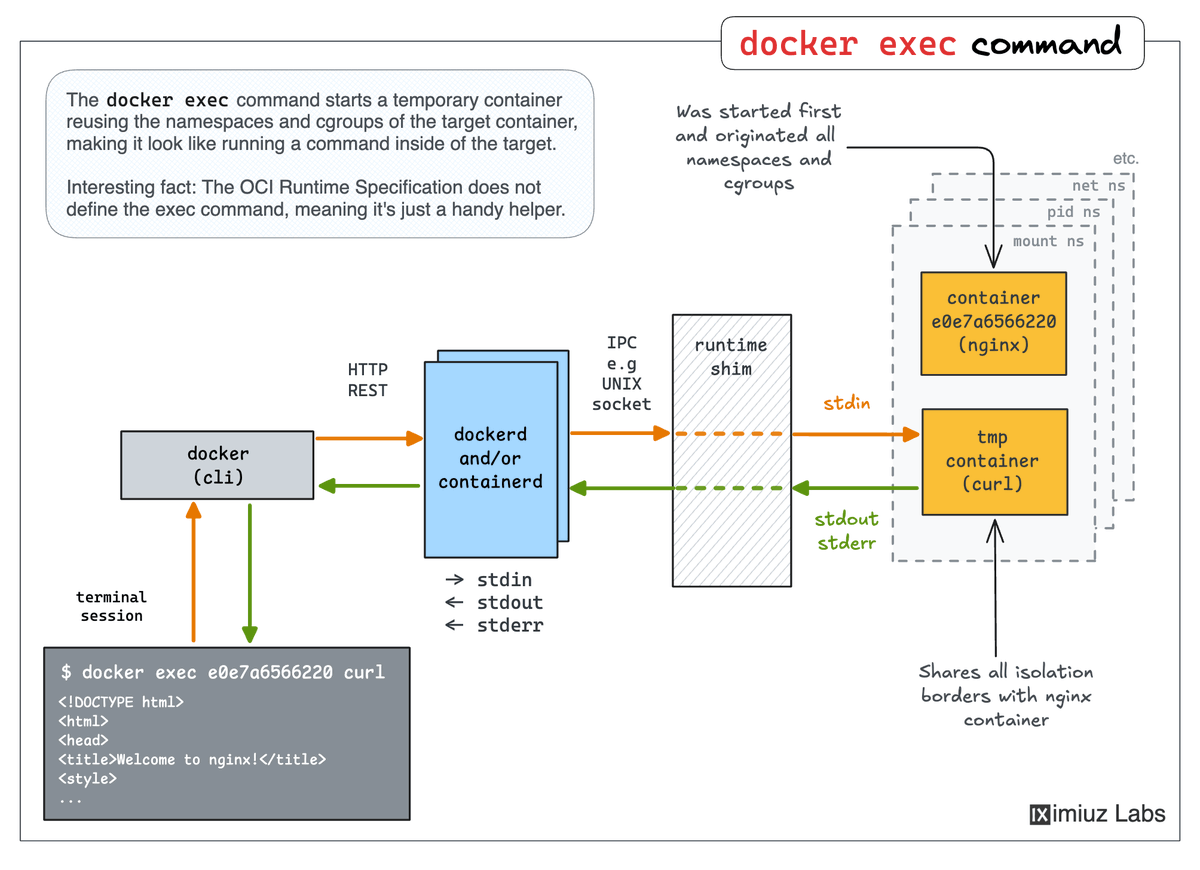
Docker 101: Execute Commands inside Running Containers 🐳 An HTTP server is running in a container. Its public API sits on 0.0.0.0:3000, but its debug interface is at 127.0.0.1:9000. Can you access it? Practice debugging containers at labs.iximiuz.com/challenges/doc…
Ivan Velichko tweet media
English
0
24
160
5.3K
anomy retweetledi
eric zakariasson
eric zakariasson@ericzakariasson·
the most used skill internally at cursor right now /thermo-nuclear-code-quality-review - deletes complexity instead of moving it - blocks files over 1k lines - flags thin wrappers and leaked logic - rejects PRs that work but make code messier
English
126
215
5K
324.7K
anomy retweetledi
DevopsCube
DevopsCube@devopscube·
GitHub Actions + AWS Without Long-Lived Secrets? 🚀 Modern DevOps pipelines should not depend on hardcoded AWS access keys. Because leaked CI/CD credentials are still one of the biggest cloud security risks. That is where OIDC helps. Instead of storing AWS secrets in GitHub, your workflow gets short-lived, temporary credentials directly from AWS at runtime. - No static keys. - No secret rotation headaches. - Less blast radius if something goes wrong. In this blog, We will look at GitHub Actions OIDC AWS Integration using a step-by-step example that secures access to the AWS cloud. By the end of this guide, you will understand: - Why OIDC is a secure way to connect GitHub Actions with AWS - How GitHub’s OIDC integration works with AWS - A step-by-step method to set up OIDC using IAM roles - How to test the setup using AWS CLI and deploy to EKS with GitHub Actions workflows 𝗗𝗲𝘁𝗮𝗶𝗹𝗲𝗱 𝗕𝗹𝗼𝗴: devopscube.com/github-actions… 𝗡𝗼𝘁𝗲: A fully private GitHub Enterprise Server setup cannot use AWS OIDC unless AWS can access the GHES OIDC metadata endpoint over HTTPS #devops #GithubActions #OIDC #aws
DevopsCube tweet media
English
0
28
102
3.1K
anomy retweetledi
Ayaan 🐧
Ayaan 🐧@twtayaan·
Learning Kubernetes from documentation feels like reading airplane manuals before flying. 😵‍💫 That’s why K8s Games is such a cool idea. It’s a 3D browser game where you learn Kubernetes by fixing actual cluster problems using real kubectl commands. You deal with: → CrashLoopBackOff → broken deployments → DNS failures → networking issues → scaling problems inside a simulated production environment. Instead of watching tutorials for hours, you’re actively troubleshooting things like a real DevOps engineer. Repo: github.com/rohitg00/k8sga…
Ayaan 🐧 tweet media
English
1
5
29
1.2K
anomy retweetledi
Darryl Ruggles
Darryl Ruggles@RDarrylR·
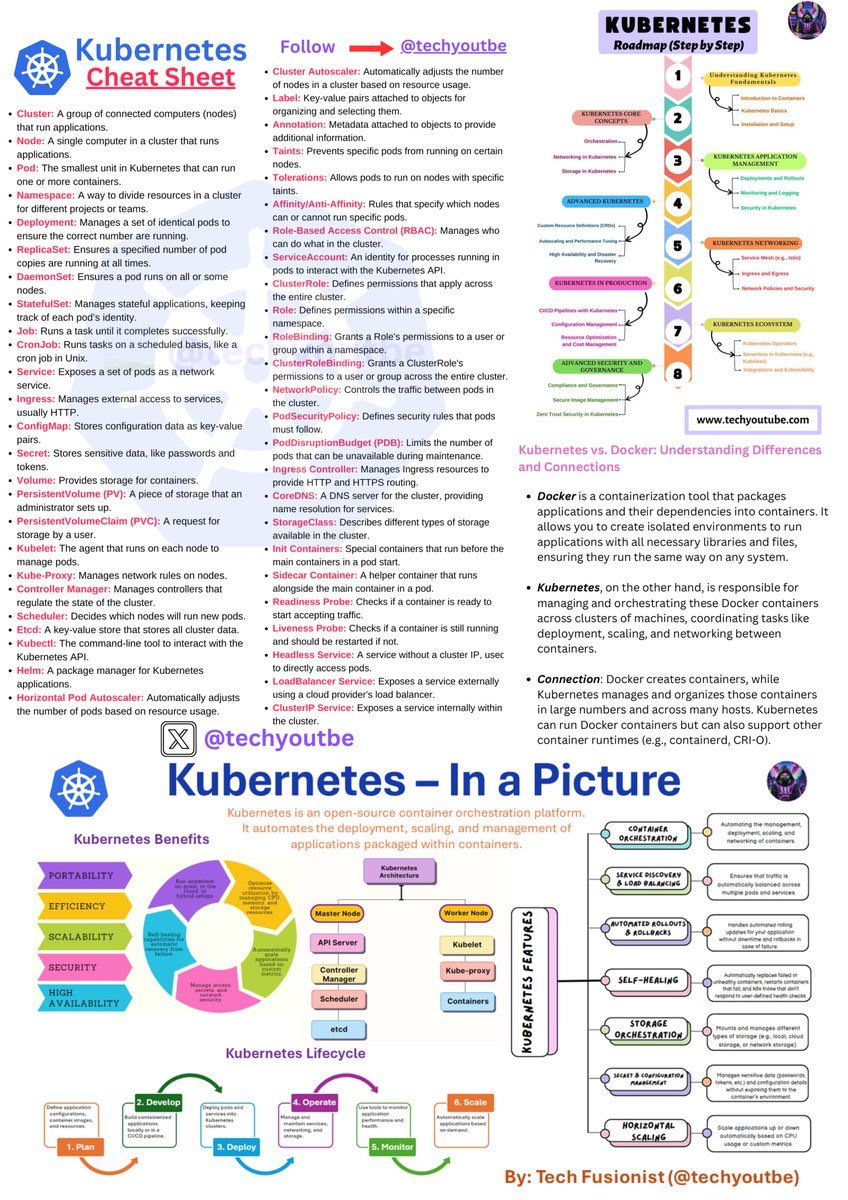
More Kuberentes basics! Configuration in Kubernetes sits in that quiet middle zone where mistakes do not always announce themselves. ConfigMaps and Secrets are the standard answer, but knowing when to reach for each one still trips up plenty of teams shipping to production. This artilce covers the basics including explaining why hardcoded values become a liability, how decoupling fits into cloud native thinking, and where base64 stops being useful. The MariaDB and nginx demos are good to try. The truth about secrets not being encrypted by default, and the nudge toward encryption at rest or tools like HashiCorp Vault for anything serious is discussed. Thanks to Sasanka Ranawaka for putting this together. lckhd.eu/Kxxix7 #Kubernetes #basics #configMaps #secrets
English
0
8
22
975
anomy retweetledi
Ivan Velichko
Ivan Velichko@iximiuz·
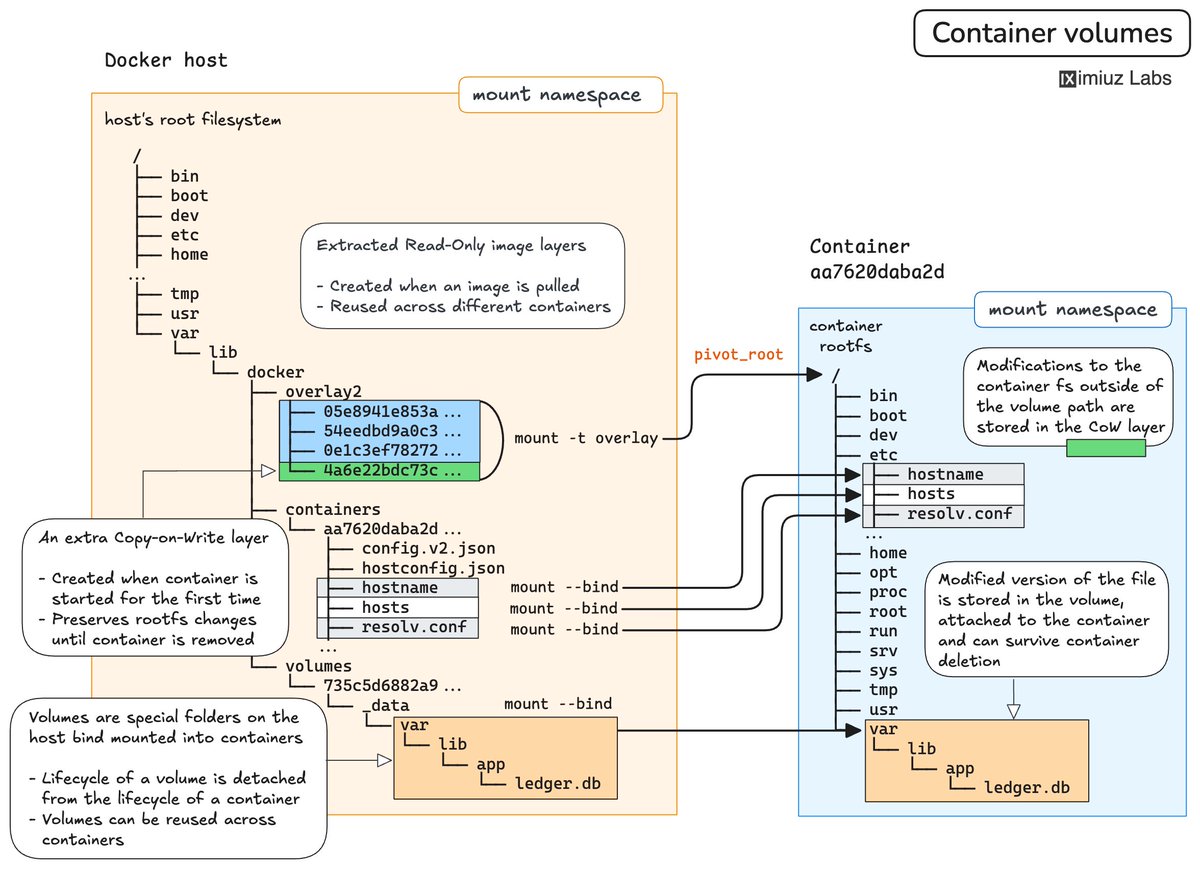
Docker 101: Volumes 🐳 Learn how to persist the application's on-disk state using a volume so you can replace a container with a newer version while keeping existing data intact. Hands-on: labs.iximiuz.com/challenges/doc…
Ivan Velichko tweet media
English
1
46
326
10.6K
anomy retweetledi
camsoft2000
camsoft2000@camsoft2000·
XcodeBuildMCP has 5.6k ⭐️ on GitHub for a reason. It gives AI agents real control over iOS and macOS development: build, run, test, and have your agent interact with apps without human intervention. It’s free, open source, and transparent. No black boxes. No “trust me bro”. Just the most popular OSS agentic tool for Apple platform development. xcodebuildmcp.com
English
3
9
78
13.5K
anomy retweetledi
Hasan Toor
Hasan Toor@hasantoxr·
I don’t trust Claude Code without this anymore. A developer built a free open-source harness that forces Claude Code to stop acting like a chaotic intern and start working like an actual engineer. It’s called Claude Code Harness. Most AI coding sessions fail for the same reason: You ask for a feature. Claude edits 9 files. It says “done.” You run the app. Something is broken. Now you have to reverse-engineer what it changed. Claude Code Harness fixes the workflow around the model. Instead of just prompting and praying, it gives Claude a real delivery loop: Plan. Work. Review. Release. That means Claude has to think before editing. Then execute. Then inspect its own work. Then prepare the final result. The best part is the built-in review system. It checks the work from multiple angles: - Security - Performance - Code quality - Accessibility So Claude does not just ship code because it feels confident. It has to pass through a structured review flow first. This is the missing layer in AI coding. Not a bigger model. Not a better prompt. Not another “10x dev” tweet. A harness. Because Claude Code is powerful. But without structure, power just becomes expensive chaos.
Hasan Toor tweet media
English
39
93
748
55.1K
anomy retweetledi
Nandkishor
Nandkishor@devops_nk·
One of my friends recently attended a DevOps interview at Wipro via BerriBot: Some questions asked 👇 ☸️ Kubernetes • Explain Blue-Green deployment & zero downtime • What are taints and tolerations? • ConfigMaps vs Secrets 🚀 CI/CD & DevSecOps • SonarQube integration with Jenkins? • Handling failures during security scans? • What is artifact management? 🏗️ Terraform • Terraform state & locking? • Azure SQL DB with cross-region resiliency 🌿 Git • Revert a buggy commit in shared branch? • Handling PR review changes? 🛠️ Scenario Based • Challenging production issue you solved • Real-world troubleshooting scenarios The interview focused more on real production experience, troubleshooting, collaboration & problem-solving rather than just tool definitions. #DevOps #SRE #Kubernetes #Terraform #AWS #Jenkins
English
3
13
41
3K