Mad Bitcoins

93.7K posts

Mad Bitcoins banner
Mad Bitcoins

Mad Bitcoins

@MadBitcoins

Spreading the word about #Bitcoin since ‘13 @worldcryptonet🌎 '14 #CurioCards🦝 '17

The Internet Katılım Nisan 2013
991 Takip Edilen48.2K Takipçiler
Mad Bitcoins retweetledi
Sizwe SikaMusi
Sizwe SikaMusi@SizweLo·
In 2002, the US conducted Millennium Challenge, the largest war games in its history. They split soldiers into two teams: 🔵Blue, which was America, and 🔴Red, an unnamed generic Middle Eastern country. The 🔴Red team was led by retired Marine Corps Lieutenant General Paul K. Van Riper. The idea behind the games was to see how, not if, the 🔵Blue team would win. In other words, the 🔴Red team was supposed to lose, but General Van Riper didn’t want to lose. So he played to win. He used asymmetric tactics by doing things like using civilian boats instead of military ones, motorcycle couriers and coded messages in mosque towers because their cell phone networks had been hacked. He launched a massive preemptive strike using a swarm of small boats and cruise missiles, which overwhelmed the 🔵Blue Team’s Aegis defense system. In the simulation, this resulted in the “sinking” of 16 American warships, including an aircraft carrier. The exercise was supposed to take 14 days. Vin Riper and his team won after day one. Understandably, the US military was embarrassed because this was supposed to show off all its superior tactics and cutting edge technologies. So, they restarted the exercise and changed the rules to force everyone to follow a script so that the 🔴red team could not win. The exercise controllers brought the sunken ships back to life, and forced Van Riper to follow a scripted path that ensured a 🔵Blue Team victory. 🔴Red was ordered to turn off certain air defense systems and use regular cellular communications to allow 🔵Blue to destroy them. 🔴Red was also told exactly where to move certain units so 🔵Blue could pretend to find them and neutralise them according to a pre-planned timeline. Most crucially, Van Riper was forbidden from using the swarming tactics that had been so effective in the opening hours. The controllers argued that the reset was necessary because the goal of Millennium Challenge 2002 wasn’t just to see who would win, but to test new Network-Centric Warfare concepts. They felt that if the game ended on Day 2, they wouldn’t get to test the rest of their expensive toys. Van Riper, however, argued that testing those toys in a rigged environment provided a false sense of security. General Van Riper was so angry, he quit the exercise midway and wrote a 21-page recommendation on changes the military had to make to, get around his asymmetric tactics. They ignored the report and said the exercises were a huge success that proved the military doctrine was good. “It was no longer a free-play exercise... it was a scripted exercise. They had a desired outcome, and they were going to get it.” — Lt. Gen. Paul Van Riper 24 years later, maybe Von Riper was onto something.

Sizwe SikaMusi tweet media
English
81
721
2.7K
145.9K
Mad Bitcoins retweetledi
Dr. Lemma
Dr. Lemma@DoctorLemma·
In 2007, a mother in Jacksonville, Florida, USA took a photo of her eleven month old son on a beach. He had his tiny fist clenched, his jaw set, and the expression of someone who had just won something important. He was actually about to eat a fistful of sand. She uploaded the photo to the internet and forgot about it. Two years later it had become one of the most recognisable images on the entire internet. A baby with a clenched fist and a look of pure determination. Two words underneath it. Success Kid. It was used by Barack Obama's presidential team. It appeared on billboards across the United Kingdom. It was licensed to Coca-Cola. Millions of people used it every single day to celebrate small victories. Nobody knew the boy's name. Nobody knew what was happening at home. Before Sammy Griner was born his father Justin was diagnosed with kidney disease. By the time Sammy was old enough to understand what was happening, his father was spending four hours a day three days a week on dialysis. Six years of it. Justin's mother had already passed from the same disease. The family needed a transplant and they needed money for the medication that would follow. His mother was initially reluctant to use her son's famous face to ask for help. She wanted the fundraiser to be about her husband, not a meme. Then she changed her mind. Within five days three hundred people had donated. Within a few more days the story spread across the internet and the total reached over one hundred thousand dollars. The call came. A kidney was available. The transplant was a success. When Sammy was told his father had a new kidney, he burst into tears. The photo that started as a joke about eating sand had saved his father's life.
Dr. Lemma tweet media
English
9
90
725
22.1K
Mad Bitcoins retweetledi
Lukas (computer) 🔺
Lukas (computer) 🔺@SCHIZO_FREQ·
If coding actually does get replaced by AI it's gonna be super ugly The last 30-40 years appear to have been a gradually intensifying "revenge of the nerds" fever dream, and non-techies really did not enjoy watching these people make 250k/yr remotely without degrees I predict low levels of sympathy in the case of mass coder layoffs
taoki@justalexoki

i think its a little sad to watch all these people who took pride in the art of programming slowly die away as they realize bit by bit that its actually over

English
180
173
4.9K
501.2K
Mad Bitcoins retweetledi
Martti Malmi
Martti Malmi@marttimalmi·
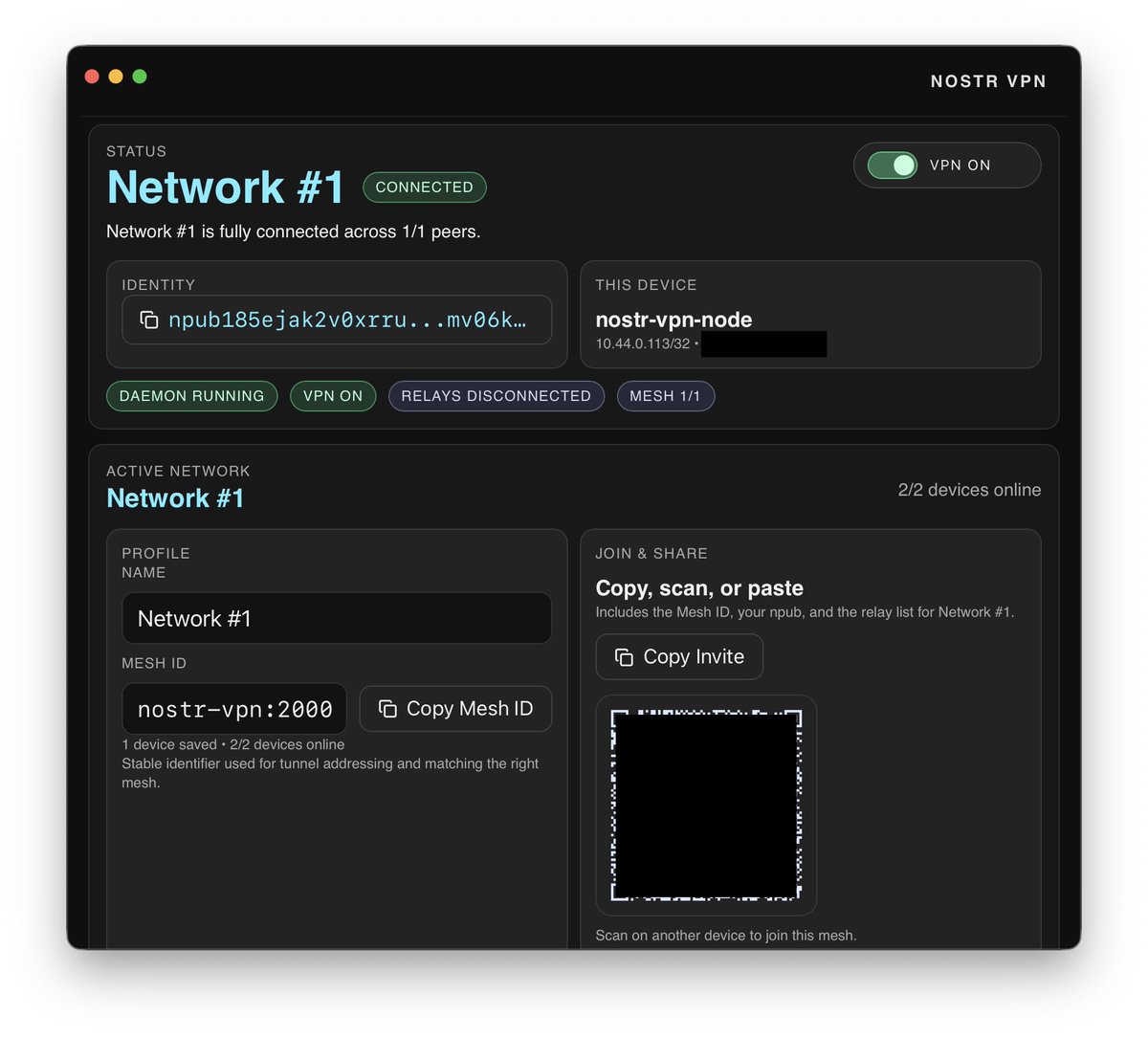
Got annoyed by Tailscale requiring 3rd party accounts, so created Nostr VPN. It signals over nostr relays and creates a wireguard / boringtun network. Builds for Macos and Linux. Using it between my Macs, but haven't tested extensively yet.
Martti Malmi tweet media
English
57
133
913
68.5K
Mad Bitcoins retweetledi
Tuki
Tuki@TukiFromKL·
🚨 Do you understand what this man just pulled off.. > a guy from North Carolina used AI to generate hundreds of thousands of songs.. uploaded them to Spotify, Apple Music, Amazon.. then botted billions of streams on his own tracks and walked away with $8 million > 660,000 fake streams per day.. spread across thousands of AI songs so nobody noticed.. $1.2 million a year.. for music no human ever actually listened to real artists are out here grinding for 0.003 cents per stream.. promoting on TikTok.. begging for playlist placements.. and this guy just had AI make the music AND the audience first-ever criminal streaming fraud case.. he's paying back $8 million.. but the playbook is out there now.. and AI just got better since he started the music industry spent 10 years fighting piracy.. now they have to fight songs that don't exist being listened to by people who don't exist.
FearBuck@FearedBuck

The first criminal case of streaming fraud where a North Carolina musician who used AI to make songs, then streamed them billions of times himself making $8 million

English
680
6.3K
42.3K
6M
Mad Bitcoins retweetledi
beeple
beeple@beeple·
ZUCK DELETING THE METAVERSE
beeple tweet media
English
381
492
4.7K
148.3K
Mad Bitcoins retweetledi
Terry Marc
Terry Marc@Marcute22·
Longtime users are frustrated with X because it no longer works the way it used to. Back in the early days of Twitter, your reach was simple and direct. If you had 5,000 or 10,000,20,000 followers, your posts were delivered to them in real time. It was a true chronological feed—your tweets showed up in the order you posted them, and your audience actually saw your content. The “old” Twitter (pre-2016) was built around that real-time experience. Your voice reached the people who chose to follow you, without interference. Today, that’s no longer the case. X relies on an algorithm-driven, engagement-based feed, meaning even your own followers may never see your posts unless the system decides to prioritize them. That shift—from a guaranteed audience to an unpredictable algorithm—is why so many longtime users feel frustrated and disconnected.
English
811
1.4K
6.6K
425.1K
Mad Bitcoins retweetledi
Zero-knowledge Audiovisual Club
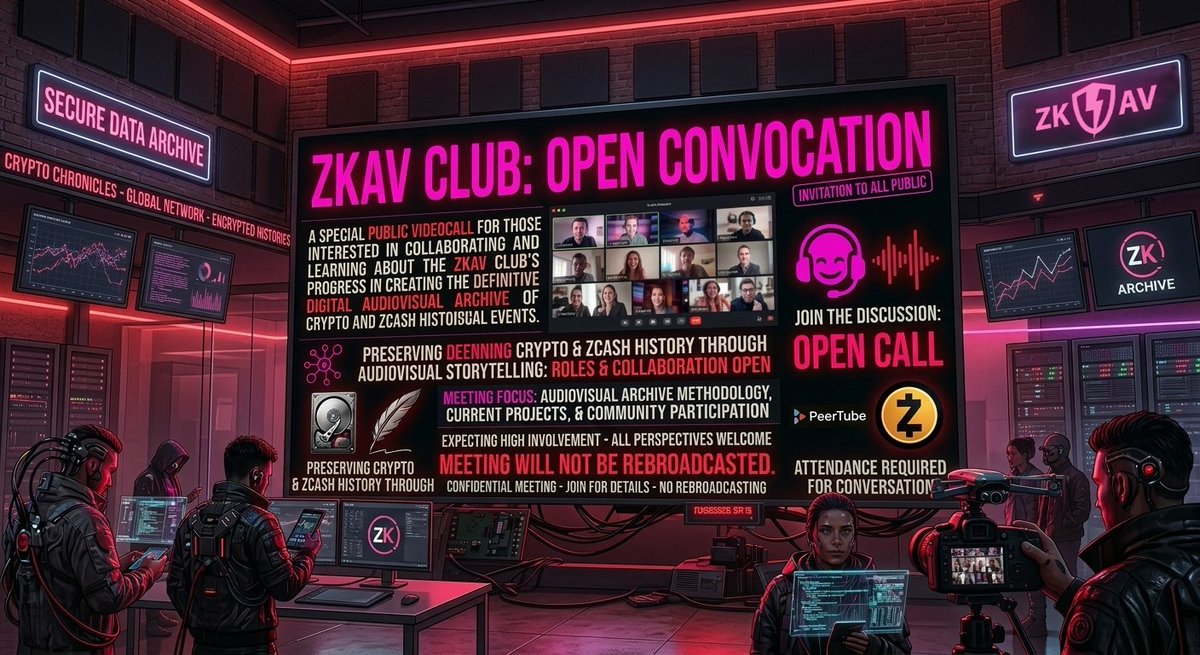
🔴 Live today! Zk Av Club Open Call at 16:30 UTC • The Archivist & The Storyteller • Recording Station updates • Zcash PeerTube progress ⚡ BONUS: 20 min workshop with Robmar on live translation tech for Zcomm We don’t livestream these or publish full recordings 👉 Join live or miss it: meet.jit.si/aa2892b7-b57b-…
Zero-knowledge Audiovisual Club tweet media
English
0
4
14
386
Mad Bitcoins retweetledi
Last Dive Bar 🏟
Last Dive Bar 🏟@LastDiveBar·
“The Last Game” documentary is now live on YouTube. A documentary 2 years in the making from director Matt Dooley and his amazing team. Watch on YouTube here: youtu.be/8QqwgcL49TU?si…
YouTube video
YouTube
Last Dive Bar 🏟 tweet media
English
11
127
656
28.3K
Mad Bitcoins retweetledi
beeple
beeple@beeple·
FUCK VANITY FAIR
beeple tweet media
English
138
168
1.3K
61.8K
Mad Bitcoins retweetledi
Brian Cohen
Brian Cohen@inthepixels·
The Cognitive Cost of Bitcoin: Andreas Antonopoulos and the Hidden Toll of Early Crypto Evangelism In the nascent years of Bitcoin, few figures were more instrumental in bridging the gap between esoteric code and public understanding than Andreas M. Antonopoulos. Through his seminal book Mastering Bitcoin, hundreds of global lectures, and tireless explanations of cryptography, distributed systems, and revolutionary monetary theory, he became the ecosystem’s most trusted “interpreter.” He translated dense technical concepts into accessible education for millions, helping transform Bitcoin from a niche cryptographic curiosity into a global movement. Yet behind this intellectual legacy lies a profoundly human story of obsession, endurance, and neurological cost. Antonopoulos has described his first deep encounter with Bitcoin in vivid terms: stumbling upon it initially in mid-2011 with a dismissive “Pfft! Nerd money!” reaction, he ignored it for six months. The second time, via a mailing list discussion, he read Satoshi Nakamoto’s white paper and experienced an immediate epiphany—“this isn’t money, it’s a decentralized trust network.” What followed was a four-month fugue state of total immersion. He read, wrote, and coded for 12 or more hours a day, forgetting to eat or sleep. He lost 26 pounds in the process, later jokingly calling it “the Bitcoin diet” while cautioning others not to follow his example. This all-consuming obsession marked the beginning of his role as educator and advocate—and planted the seeds for the cognitive and physical toll that would later manifest. In recent years, Antonopoulos has spoken candidly about suffering from debilitating migraines that have severely curtailed his ability to produce new content, update his books, or continue livestreams. He recently announced he would stop producing new material to focus on his health, having tried nearly every available treatment without full resolution. His experience illuminates a rarely discussed reality of technological revolutions: the extreme neurological pressures placed upon the pioneers who carry the vision forward. A Perfect Storm: From Obsession to Central Sensitization The early Bitcoin environment was an unusually potent incubator for migraine triggers. For a polymath like Antonopoulos, the risks were multiplicative. Deep mastery demanded simultaneous engagement with cryptography, economics, security, and game theory—an intensity of cognitive load that can overstimulate the trigeminal nerve system, a key pathway in migraine pathogenesis. This mental marathon was compounded by relentless physical triggers. Early advocates lived in digital “garrisons,” auditing code and engaging in 24/7 global forums. Blue light disrupted circadian rhythms; computer vision syndrome bred neck tension; LED flicker sensitivity acted like a strobe on a vulnerable brain. Bitcoin never sleeps, and in those formative years, neither could many of its human interpreters. The result was chronic circadian destabilization—perpetual jet lag without travel—which destabilizes the hypothalamus, the brain’s command center for both sleep-wake cycles and migraine initiation. Antonopoulos’s initial four-month obsession exemplified this pattern: total immersion at the expense of basic self-care. Over years of sustained high-stress “arousal” states, the brain can undergo central sensitization. Episodic migraines evolve into a chronic condition where the nervous system becomes hyper-reactive. Pain signals become a learned default response, such that even minor stimuli provoke debilitating attacks. The Irony of the Human Layer There is a poignant irony at the heart of the story. Bitcoin was designed as a decentralized system promising individual sovereignty and freedom from centralized points of failure. Yet birthing and explaining this vision relied heavily on a small number of centralized human figures who served as the vital “human layer.”
Brian Cohen tweet media
English
4
9
18
1.1K
Mad Bitcoins retweetledi
Curio Cards
Curio Cards@MyCurioCards·
Complexity is one of the most meticulously made NFTs drawn by hand using pen on paper, over at least 20–30 hours It starts from the center, a process of drawing outward, padding it with little vertical dashes Repeating again and again, adding tetrahedrons adjusting the thickness of the lines and repeating motifs until it appears to form part of an elusive whole "a part that's not on the page"
Curio Cards tweet media
English
0
3
32
507
Mad Bitcoins retweetledi
Paul Anleitner
Paul Anleitner@PaulAnleitner·
Train Dreams might not have won any awards last night. But this film is like an antidote to our dopamine-addicted world. Slow down your scroll for a moment and just sit with this for a moment. Here’s to the slow work of beauty in transforming the human heart.
English
81
609
4K
93.1K
Mad Bitcoins
Mad Bitcoins@MadBitcoins·
Huge fan of PT and he deserves all the awards for his body of work. Bugonia will be the film people will be talking about 5-10 years from now. Watch Bugonia.
GIF
English
0
0
1
92
Mad Bitcoins retweetledi
Bitcoin News
Bitcoin News@BitcoinNewsCom·
NEW: Bitcoin educator Andreas Antonopoulos says he will stop producing livestreams and new content due to health issues. Antonopoulos previously said he has been suffering from debilitating migraines and has tried nearly every treatment available, but nothing has successfully stopped them.
Bitcoin News tweet mediaBitcoin News tweet media
English
519
234
3.4K
543.5K
Mad Bitcoins retweetledi
beeple
beeple@beeple·
2026 SO FAR
beeple tweet media
English
309
430
3.4K
117.9K
Mad Bitcoins retweetledi
Zero-knowledge Audiovisual Club
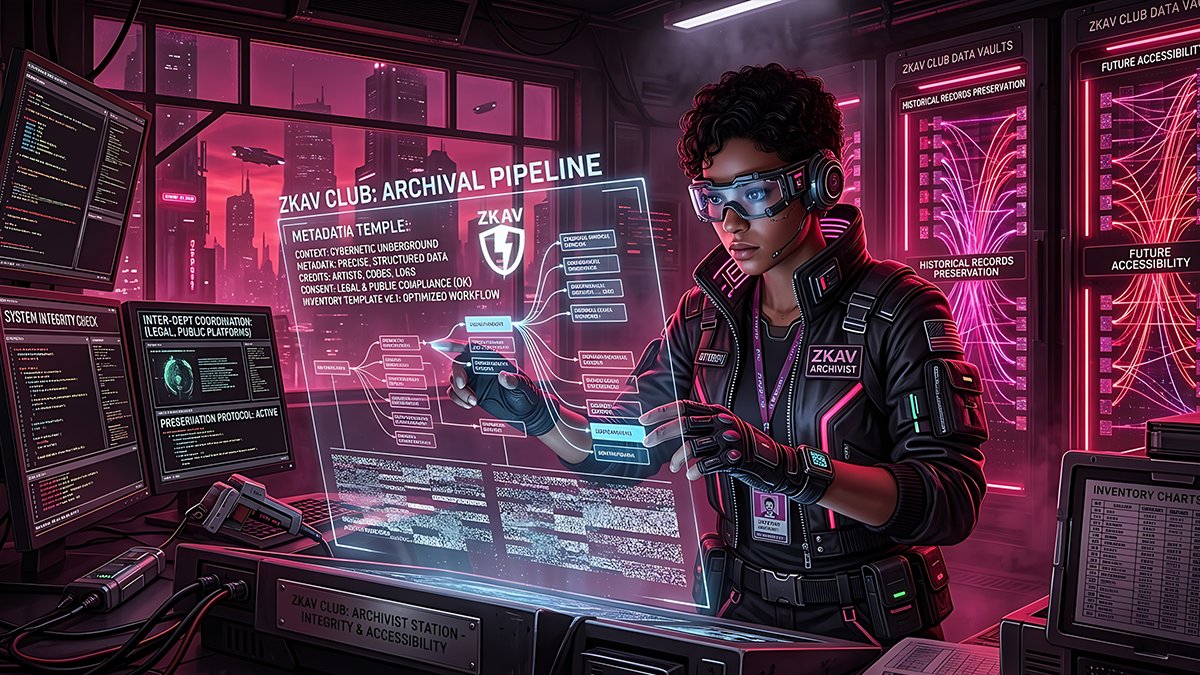
1/3 At ZkAV Club, we believe that every conversation, meetup, or talk generates valuable knowledge that deserves to be preserved. That’s why we’re looking for an Archivist to help us preserve and organize the community’s audiovisual archive. 🧵👇
Zero-knowledge Audiovisual Club tweet media
English
1
6
16
546
Mad Bitcoins retweetledi
Curio Cards
Curio Cards@MyCurioCards·
It was an honor for Curio Cards to be featured in a book by @TASCHEN @robertalice_21's "On NFTs" included 100+ artists exploring blockchain art Whether art or anything else: believe in somETHing, start building, and the world eventually catches up
Curio Cards tweet mediaCurio Cards tweet media
English
1
5
34
622
Mad Bitcoins retweetledi
Curio Cards
Curio Cards@MyCurioCards·
Happy Rediscovery Day, Curio Cards On this day in 2021, Curio Cards were rediscovered, after four years in the NFT wilderness first found by a user named dieaping, then picked up by @HarryBTC To their credit, they didn’t quietly buy up everything. instead, they shared the information publicly That moment captured something special about early NFT culture: open discovery, shared knowledge, early excitement, a bit of blockchain archaeology (shout out @adamamcbride for catching us up too) What a wild ride it's been since then and will continue to be for (historical) NFTs
English
6
9
41
1.8K
Mad Bitcoins retweetledi
Curio Cards
Curio Cards@MyCurioCards·
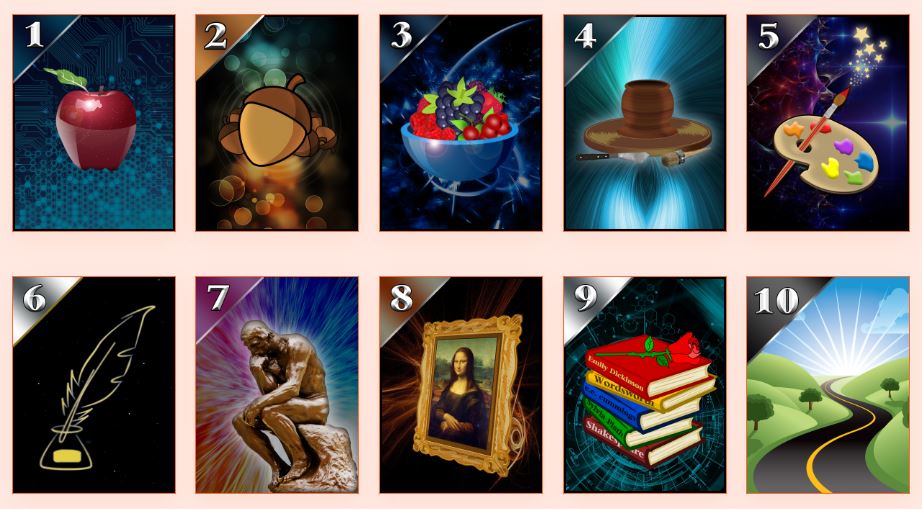
Only 438 Curio Cards Story Sets (1–10) can ever be collected
Curio Cards tweet media
English
4
4
35
938