Michael Isenberg

20.3K posts

Michael Isenberg banner
Michael Isenberg

Michael Isenberg

@MadMikeIsenberg

Peculiar & pedantic Zionist Omar Khayyam fanboy, author of historical novels & Quarter Millennial Minutes. زن زندگی آزادی עַם יִשְׂרָאֵל חַי 🇺🇸🇮🇱🍸🥩🥓

#MA02 Katılım Ocak 2022
2.5K Takip Edilen2.7K Takipçiler
Sabitlenmiş Tweet
Michael Isenberg
Michael Isenberg@MadMikeIsenberg·
"Shogun for Persia" Please check out my latest novel, The Thread of Reason. It's a murder mystery set in Baghdad & western Persia in the year 1092, featuring Omar Khayyam. The murder happened in real life. The investigation & solution are my invention. amazon.com/dp/0985329750
English
27
26
138
35.3K
Michael Isenberg
Michael Isenberg@MadMikeIsenberg·
@billmaher HOT TAKE: I can't believe you said "Eat some fruit." Have you any idea how much sugar is that s--t?! 😉
English
0
0
0
5
Bill Maher
Bill Maher@billmaher·
If God wanted us to have an opinion on everything, he wouldn’t have given us the 🤷 emoji.
English
180
267
1.8K
282.7K
Michael Isenberg retweetledi
Rothmus 🏴
Rothmus 🏴@Rothmus·
Rothmus 🏴 tweet media
ZXX
43
604
6.3K
66.4K
Three Year Letterman
Three Year Letterman@3YearLetterman·
It is long past time to outlaw QR code menus in restaurants
English
111
185
3.2K
52.9K
Michael Isenberg
Michael Isenberg@MadMikeIsenberg·
Reducing the fledging nation's dependence on imports. My latest...
Quarter Millennial Moments@TheBig250

250 years ago today, Congress passed three resolutions to reduce America's dependence on imports by developing the industries of the fledgling nation: “Resolved, That it be recommended to the several assemblies, conventions, councils or committees of safety, and committees of correspondence and inspection, that they exert their utmost endeavours to promote the culture of hemp, flax, and cotton, and the growth of wool in these United Colonies. “Resolved, That it be recommended to the said assemblies, conventions, and councils or committees of safety, that they take the earliest measures for erecting and establishing, in each and every colony a society for the improvement of agriculture, arts, manufactures, and commerce, and to maintain a correspondence between such societies, that the rich and numerous natural advantages of this country, for supporting its inhabitants, may not be neglected: “That it be recommended to the said assemblies, conventions, and councils or committees of safety, that they forthwith consider of ways and means of introducing the manufactures of duck and sail cloth, and steel, into such colonies where they are not now understood, and of encouraging, increasing and improving them where they are.” The measures were part of John Adams’s campaign to achieve American independence by stealth. If he and his allies could not get Congress to declare independence from Great Britain explicitly, they would engineer de facto independence by having the United Colonies become more self-reliant incrementally. In a June 2nd letter to Henry Knox, Adams wrote, “We ought to lay Foundations, and begin Institutions, in the present Circumstances of this Country, for promoting every Art, Manufacture and Science which is necessary for the Support of an independent State. We must for the future Stand upon our own Leggs or fall.” Later, he explained in his autobiography, “These Resolutions, I introduced and supported, not only for their Intrinsic Utility, which I thought would be very considerable: but because they held up to the view of the Nation the Air of Independence.” Adams followed up the resolutions with numerous inquiries into the state of manufacturing in the colonies. In a June 30thletter to Abigail’s cousin, Cotton Tufts, for example, he asked where things stood in Massachusetts. “I never shall be easy, then,” he wrote, “untill We shall have made Discoveries of Salt Petre, Sulphur, Flynts, Lead, Cannon, Mortars, Ball, Shells, Musquetts, and Powder, in sufficient Plenty, so that We may always be sure of having enough of each.” The focus, necessarily, was on the industries required for the war effort. A more broad-based industrialization of America would have to wait until independence had been won. Some historians date it from the construction of the Slater textile mill in Pawtucket, Rhode Island in 1793. But the aspiration that someday America would become an industrial powerhouse was in the national DNA from the beginning. I'm @MadMikeIsenberg, and that's the way it was. Previous QMM: Blowing up Castle William x.com/TheBig250/stat… Next QMM: The City of London Petitions the King Illustration(s): 18th century iron forge (Joseph Wright, 1772) Slater Mill, Pawtucket (Rhode Island Historical Society) Sources: Diary and Autobiography of John Adams, Cambridge: Belknap Press (1962), L. H. Butterfield, ed., vol. 3, p. 373, archive.org/details/workso…. John Adams, “Letter to Herny Knox,” June 2, 1776, National Archives, founders.archives.gov/documents/Adam…. John Adams, “Letter to Cotton Tufts,” June 30, 1776, National Archives, founders.archives.gov/documents/Adam…. See also Tufts’ reply at founders.archives.gov/documents/Adam…. Journals of the Continental Congress (1774-1789), Washington: Government Printing Office, vol. 4 (1906), p. 224, archive.org/details/journa….

English
0
0
0
36
Michael Isenberg
Michael Isenberg@MadMikeIsenberg·
"The mines were fired...and they had a very good Effect." My latest...
Quarter Millennial Moments@TheBig250

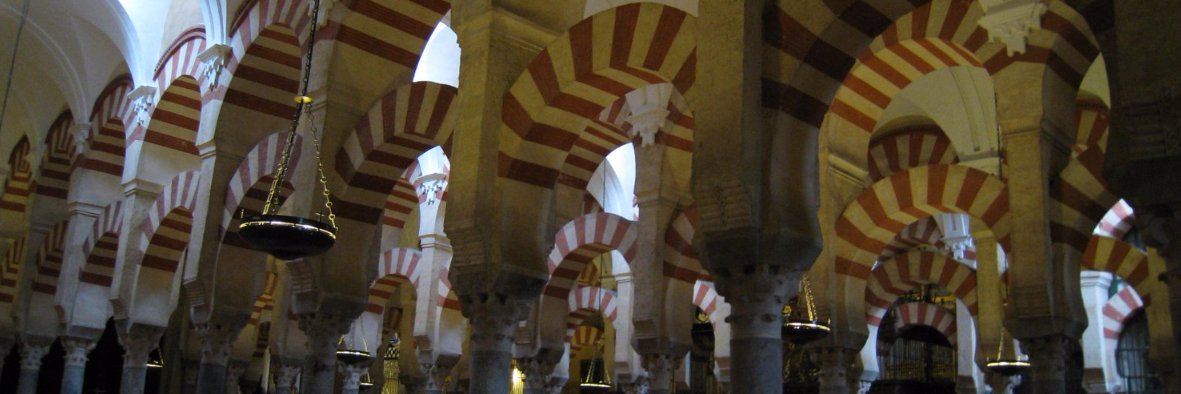
250 years ago today, the British fleet still had not left Boston Harbor. The Redcoats had some more works of destruction to complete before they departed. The Patriots, meanwhile, prodded them to get moving—with cannon fire. As we saw previously, the Redcoats evacuated Boston on March 17, 1776. But they didn’t actually leave. They merely sailed a short distance from the city and anchored in the outer harbor. “The continuance of the Fleet in Nantasket Road affords matter for Speculation,” George Washington wrote to old Josiah Quincy. “It surpasses my comprehension—and awakens all my Suspicions.” There was no shortage of theories. Perhaps, thanks to their haste in evacuating Boston, the Royal Navy was unprepared to sail and needed to make repairs before hitting the open water. Perhaps the fleet was awaiting more favorable winds. Or perhaps the Redcoats were planning one last act of dastardliness against the long-suffering residents of Massachusetts. Washington ordered extra sentries to be posted and alert for the last possibility. He wrote his former secretary, Joseph Reed, “The Enemy have the best nack at puzling People I ever met with in my life.” On March 20, 1776, Rebel forces launched an amphibious attack on Redcoat work parties and transport ships. Lt. Archibald Robinson, of the Royal Engineers, witnessed the operation from Castle William, located on the eponymous Castle Island. “About two we observed about 21 Whale Boats set out from Dorchester neck and row across the Thomsons Island,” he wrote in his diary, “where they landed a small Cannon and pull’d it to the point and fired on our working Partys on Spectacle Island and some of the Transports furthest up the Bay but without effect. They retired in about ½ an hour towards Squantom.” Robertson was at Castle William for a mission of his own: to blow it up and thereby prevent its use by the Rebels. “At 3 o’clock,” he wrote, “Colonel [Alexander] Leslie came to the Castle from the General with orders to load the mines. We began immediately and had 63 done by 7 o’clock….At 8’oclock 6 Companies Embark’d and the Boats lay off until the mines were fired, which was done ½ an hour Afterwards and they had a very good Effect. The Barracks and other houses were then set on fire and at 9 the Rear Guard consisting of 3 Companies, the Artillery, etc., Embark’d and we got all safe on board the Transports.” But Robertson was mistaken when he said that the Rebel whaleboat attack was “without effect.” It convinced Admiral Molyneux Shuldham to relocate his fleet even further from Boston. “At 8 in the morning,” Robertson wrote the next day, “the Admiral made a signal for all the fleet to fall down to Nantasket, which we did.” If the British persisted in remaining in the harbor, Quincy and Lt. Col. Benjamin Tupper had a plan to kick things up a notch: set boats on fire and let them loose among the Ministerial fleet. “In Revenge for their burning the Castle last Night,” he wrote Gen. Washington, “were we provided with a sufficient Number of fire Ships and fire Rafts, covered by the Smoke of Cannon from a few Row Gallies; this Night, might exhibit, the most glorious Conflagration.” On receiving Quincy’s letter, Washington ordered Gen. Artemas Ward to attempt the operation “in a Windy, or dark Night.” Still, the Patriots had some misgivings. John Adams wrote that “Fire ships and Rafts, are the King of Terrors to Men of War….There seems to be Something infernal in this Art. But…’When it is to combat Evil, Tis lawfull to employ the Devil.’” Even Quincy admitted that a fire boat attack would be barbarous. A last resort. “Humanity revolts at the Destruction of so great Number, even of our Enemies,” he wrote. The British delay was, in fact, due to a combination of preparation and weather. On March 23, Shuldham wrote to the Admiralty from Nantasket Roads, “His Majesty's Troops being safely Embarked, and the Transports Anchored in King Road, from whence, as fast as they were Watered and ready for Sea they proceeded to this place; where they are all collected and will proceed by the first opportunity of Wind and Weather under Convoy of the Ships in the Margin, to Halifax.” When they would be ready and able to sail, and whether it would be before the Patriots launched their fire boats, will be the subject of a future Quarter Millennial Moment. As for Castle William, the nation rebuilt it and, in a 1797 ceremony attended by Adams—who was now president of the United States—removed the name of a King of England from the structure and gave it a new one: Fort Independence*. I'm @MadMikeIsenberg, and that's the way it was. Previous QMM: Burning Books x.com/TheBig250/stat… Next QMM: Promoting Manufactures *The current structure on Castle Island, also called Fort Independence, was built between 1833 and 1848. Illustration(s): A 1759 French fire ship attack on the English fleet at Quebec by Dominic Serres Castle Island today (Author photo) Source(s): John Adams, “Letter to David Sewall,” June 12, 1776, National Archives, founders.archives.gov/documents/Adam…. Josiah Quincy, Sr, “Letter to George Washington,” March 21, 1776, National Archives, founders.archives.gov/documents/Wash…. Naval Documents of the American Revolution, Washington: Government Printing Office (1968), William Bell Clark, ed., vol. 4 (1969), p. 472, books.google.co.ke/books?id=-RTPc…. Archibald Robertson, Diaries and Sketches in America, 1762-1780, New York: New York Public Library (1930, 1971), Harry Miller Lydenburg, ed., pp. 80-1, babel.hathitrust.org/cgi/pt?id=mdp.…. George Washington, “Letter to Joseph Reed,” March 26, 1776, National Archives, founders.archives.gov/documents/Wash…. George Washington, “Letter to Josiah Quincy,” March 24, 1776, National Archives, founders.archives.gov/documents/Wash…. George Washington, “Letter to Artemas Ward,” March 24, 1776, National Archives, founders.archives.gov/documents/Wash….

English
0
1
0
40
James Fishback
James Fishback@j_fishback·
Would you rather spend $200 billion to bomb Iran or…? A: give every teacher in America a $62,500 bonus B: provide downpayment assistance for 20 million young families C: build 1,300 rural hospitals
English
21.9K
7.1K
49.1K
3.4M
Michael Isenberg
Michael Isenberg@MadMikeIsenberg·
@RoKhanna "$200 billion would pay for free college for every American." No, it wouldn't. That's only $600 per person. Do you even #math?
English
0
0
0
8
Ro Khanna
Ro Khanna@RoKhanna·
$200 billion would pay for free college for every American, $10 day childcare, 1000 new trade schools, the 40% federal share of special needs education and a lot more. What are we even doing here? MAGA is now Iran first?
Jeff Stein@JStein_WaPo

SCOOP: The Pentagon asked the White House today for more than *$200 billion* for the Iran war supplemental, sources say Some White House aides think Congress won't support b/c it's so big Will tee up giant battle in Congress

English
5.9K
7.2K
32.2K
1.3M
Michael Isenberg
Michael Isenberg@MadMikeIsenberg·
“The freedom of the press is now insulted and infringed, by some zealous advocates of liberty." My latest...
Quarter Millennial Moments@TheBig250

250 years ago tonight, the Sons of Liberty held a book burning on the New York Common, destroying nearly the entire first edition of a Tory pamphlet. The offending booklet, The Deceiver Unmasked, was a rebuttal of Thomas Paine’s Common Sense. The author was a Loyalist clergyman at Manhattan’s Trinity Church, Rev. Charles Inglis. Paine had published his pamphlet anonymously; the author was merely identified ironically as “An Englishman.” In his reply, Inglis identified himself as “A Loyal American.” “I find no Common Sense in this pamphlet,” Inglis wrote in the preface, “but much uncommon phrenzy. It is an outrageous insult on the common sense of Americans; an insidious attempt to poison their minds, and seduce them from their loyalty and truest interest. The principles of government laid down in it, are not only false, but such as scarcely ever entered the head of a crazy politician. Even Hobbes would blush to own the author for a disciple. He unites the violence of a republican with all the folly of a fanatic.” Inglis argued that Paine’s proposal for independence from the mother country was a remedy that was “infinitely worse than the disease. It would be like cutting off a leg, because a toe happened to ache….in A reconciliation with Great-Britain, on solid, constitutional principles, excluding all parliamentary taxation, the happiness and prosperity of this continent, are only to be sought or found.” Reversing a line from Paine, he wrote, “This author says—'The blood of the slain, the weeping voice of nature cries, “Tis time to part.” I think they cry just the reverse. The blood of the slain, the weeping voice of nature cries—It is time to be reconciled.” The Deceiver Unmasked was published by New York printer Samuel Loudon. Loudon was an ardent supporter of the Patriot cause but was equally dedicated to the cause of free speech. In an angry editorial in his newspaper, The New York Packet, Loudon described the circumstances of the pamphlet’s publication and the events that ensued: “Having almost finished printing off the sheets, I advertised the publication of the pamphlet in Mr. [Hugh] Gaine’s Gazette, not imagining that any offence could justly be taken by my fellow citizens: But, to my great surprise, I soon found that the advertisement had given disgust to some of the inhabitants, who highly resented it as a disapprobation of the laudable efforts of the colonies to support their just rights and privileges. On the evening of the 18th ult. [i.e. March 18, 1776] I received a message to attend on the Committee of Mechanics [i.e the Sons of Liberty]. I attended accordingly, and was interrogated by Mr. Christopher Duyckink, the Chairman…I expostulated with them on the impropriety of condemning a book before they had read it… “The following evening…past ten o’clock…, Mr Duyckink, without any commission from the Committee of Safety, attended by a large company, and notwithstanding all my intreaties, forced into my house, ran up stairs to the Printing-office, and took away the whole impression of said pamphlet, being about 1500 copies, which, at a moderate computation, amounts to 75L. They, as I have been informed, carried them to the Commons, and committed them to the flames…. “As the question concerning American independence hath not, to the best of my knowledge, been decided by the Continental Congress, nor by any legal subordinate Convention, there can be no criminality in publishing the arguments for and against it; and as it is a question of the greatest importance, it should not be decided before these arguments are fully discussed…. “The freedom of the press is now insulted and infringed, by some zealous advocates of liberty. A few more nocturnal assaults on Printers may totally destroy it, and America, in consequence, may fall a sacrifice to a more fatal despotism that with which we are threatened. “I have no consciousness of guilt in the affair for which I have been persecuted. It is well known that I have always been a steady friend to the liberties of America, and I am resolved to risque my all in their defense.” Inglis, like Loudon, was unrepentant. He arranged for a second edition of the pamphlet to be published in Philadelphia under a different title. I'm @MadMikeIsenberg, and that's the way it was. Previous QMM: Unceremonious Entry x.com/TheBig250/stat… Next QMM: The Destruction of Castle William Illustration(s): April 11, 1776 edition of the New York Packet, with Loudon’s lead editorial Bishop Charles Inglis by Robert Field (1810) The Deceiver Unmasked title page (New York Historical Society. Evidently, a copy survived the fire.) Sources: Hugh Hughes, “Letter to John Adams,” March 31, 1776, National Archives, founders.archives.gov/documents/Adam…. Charles Inglis, The Deceiver Unmasked; or, Loyalty and Interest United: in Answer to a Pamphlet intitled Common Sense, 1sted., New York: Samuel Loudon (1776), quod.lib.umich.edu/cgi/t/text/tex…; excerpts at americainclass.org/sources/making…; 2nd ed., Philadelphia: James Humphreys (1776), archive.org/details/bim_ei…. Samuel Loudon, “To the Public,” New York Packet, vol. I, no. 15, April 11, 1776, loc.gov/item/sn8303013….

English
0
1
0
64
Michael Isenberg retweetledi
Quarter Millennial Moments
250 years ago tonight, the Sons of Liberty held a book burning on the New York Common, destroying nearly the entire first edition of a Tory pamphlet. Today's Quarter Millennial Moment--podcast edition--is up on Spotify... open.spotify.com/episode/7eZjDg…
English
0
1
1
39
Michael Isenberg retweetledi
Michael Isenberg
Michael Isenberg@MadMikeIsenberg·
“The Town, although it has suffer’d greatly is not in so bad a state as I expected to find it.” My latest...
Quarter Millennial Moments@TheBig250

250 years ago today, Gen. George Washington rode into the city of Boston—one day after the Redcoats evacuated it. During the long months of British occupation, Washington had to settle for viewing the city through his telescope. But now, at last, he could finally enter. There was no grand ceremony to welcome the conqueror. That would come later. For now, he simply wanted to assess how the town had weathered nearly a year of warfare and siege. Gen. John Sullivan accompanied the commander-in-chief. In a letter to John Adams, he described the scene: “On Monday morning his Excellencey Make his Entry into Boston and Repaired to Mr. [John] Hancocks House where we found his Furniture Left without Injury or Diminution.” During the Siege, Hancock’s Beacon Hill home had been occupied by Gen. James Grant, who, on his departure, had conscientiously arranged for an agent to prepare an inventory of its contents. “Indeed,” Sullivan continued, “General Grant Sent for the man Left in Charge of the House and Desired him to Examine whether any of the Furniture was Damaged which he Said was not (Though I believe the Brave General had made free with Some Articles in the Cellar).” In fact, for a number of observers that day, the condition of the Hancock Mansion was a matter of great interest. Even then, the Lifestyles of the Rich and Famous were a source of fascination. Several people commented that, in addition to the furniture, Hancock’s family pictures were unharmed. As for the rest of the town, Sullivan’s letter to Adams continues, “the Buildings Except the old wooden ones have Suffered but very Little by the Rebel Army. We found about forty good Cannon, a fine 13 Inch mortar and great Quantity of Stores which they in their Hurry have Left for our use. They Spiked up the Cannon but we can Easily Clear them. I Shall this Day visit your House or rather mine and Inform you what State it is Left.” The bottom line, Washington wrote to Hancock, was that “The Town, although it has suffer’d greatly is not in so bad a state as I expected to find it.” Others who visited the city in those early days came to the same conclusion. Abigail Adams did not go in person. Smallpox was prevalent in the town and, since she had neither had it nor been inoculated, she was "fearfull.” But she sent an agent to check on her house and learned that not all the British were as scrupulous as Grant. “I find it has been occupied by one of the Doctors of a Regiment,” she wrote to her husband. “Very dirty, but no other damage has been done to it. The few things which were left in it are all gone….I look upon it a new acquisition of property, a property which one month ago I did not value at a single Shilling, and could with pleasure have seen it in flames.” “The Town in General is left in a better state than we expected, more oweing to a percipitate flight than any Regard to the inhabitants, tho some individuals discoverd a sense of honour and justice and have left the rent of the Houses in which they were, for the owners and the furniture unhurt, or if damaged sufficent to make it good.” “Others have committed abominable Ravages. The Mansion House of your President [i.e. Hancock] is safe and the furniture unhurt whilst both the House and Furniture of the Solisiter General [Loyalist Samuel Quincy] have fallen a prey to their own merciless party.” For years, the colonists had gathered at the Old South Meeting House to air their grievances against the mother country. In 1773 it was the site of the assembly which precipitated the Boston Tea Party. So the spiteful British treated the structure with especial contempt during the Siege. “I went to view the Old South Church,” Surgeon’s Mate James Thacher wrote, “a spacious brick building near the centre of the town. It has been for more than a century consecrated to the service of religion, and many eminent divines have in its pulpit labored in teaching the ways of righteousness and truth. But during the late siege the inside of it was entirely destroyed by the British, and the sacred building occupied as a riding school for [Gen. John] Burgoyne’s regiment of dragoons. The pulpit and pews were removed, the floor covered with earth, and used for the purpose of training and exercising their horses. A beautiful pew, ornamented with carved work and silk furniture, was demolished; and by order of an officer, the carved work, it is said, was used as a fence for a hogsty.” The artillery fire which the Patriots had rained upon the city earlier that month had left its mark. Col. Jedediah Huntington wrote to his brother Andrew that he “saw several Holes where the Canno[n] Shot from our Lines at Roxbury had passed-two 13 Inch Shells from Cobble Hill fell just over Mr Sherburnes House a little above Kings Chapple.” In the meantime, the war went on. Washington believed New York would be the next battlefield. That same day, March 18th, Continental troops began to depart for the metropolis to the south. But since British ships “are still in the Harbour,” the general wrote Hancock, “I thought it not prudent to march off with the Main Body of the Army until I should be fully satisfied they had quitted the Coast—I have therefore only detach’d five Regiments,* beside the Rifle Battalion, to New York, and shall keep the remainder here till all Suspicion of their return ceases.” I'm @MadMikeIsenberg, and that's the way it was. Previous QMM: Evacuation Day x.com/TheBig250/stat… Next QMM: Burning Books *The five regiments were Stark’s, Patterson’s, Webb’s, Greaton’s, and Bond’s, under the command of Brigadier William Heath. Illustration(s): A Prospective View of Part of the Commons, engraving based on 1768 watercolor by Christian Remick, showing John Hancock’s house on the upper right. British Riding School in the Old South, illustration from 1877 history by Everett W. Burdett Sources: Abigail Adams, “Letter to John Adams,” March 31, 1776, Natonal Archives, founders.archives.gov/documents/Adam…. Naval Documents of the American Revolution, Washington: Government Printing Office (1968), William Bell Clark, ed., vol. 4 (1969), p. 379, books.google.co.ke/books?id=-RTPc…. John Sullivan, “Letter to John Adams,” March 15-19, 1776, National Archives, founders.archives.gov/documents/Adam…. James Thacher, A Military Journal during the American Revolutionary War from 1775 to 1783, Boston: Cottons & Barnard (1827), p. 41, archive.org/details/b33092…. George Washington, “General Orders,” March 14, 1776, National Archives, founders.archives.gov/documents/Wash…. George Washington, “Letter to John Hancock,” March 19, 1776, National Archives, founders.archives.gov/documents/Wash….

English
0
1
2
67
Michael Isenberg
Michael Isenberg@MadMikeIsenberg·
The closure of the Straits of Hormuz, the price of oil, and Trump's apparent surprise that the Islamic Republic fought back are getting all the headlines. But I'm seeing a number of articles like this one that argue that the US/Israeli alliance are systematically degrading the regime's military capabilities, and getting measurables results, such as a measurable and significant decline in missile and drone launches. Still, I wonder if the destruction of the Islamic Republic's ability to project power against its neighbors abroad will turn into the regime change at home that's so desperately needed. understandingwar.org/research/middl…
English
0
0
0
56