

MartG
905 posts

MartG
@MalteseCrypto
The official Integration Manager of the DAI Channel. HODL THE ODL People
Federal Way, WA Katılım Eylül 2018
892 Takip Edilen291 Takipçiler

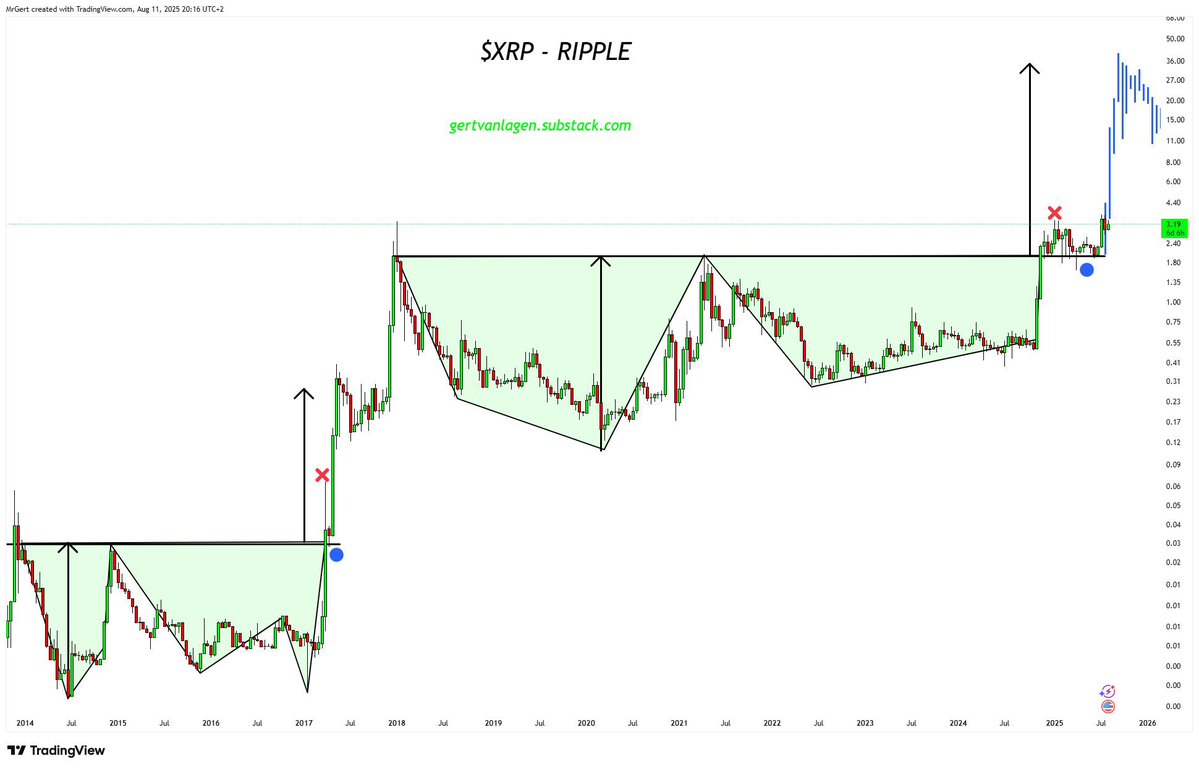
@CyPhlux I too have been in XRP since 2017. Never sold and staked for years. Thank you for this heart felt statement of truth. I don’t think anyone could say it better than this as to what it means to follow that feeling inside and to stand on it year after year against all.
English


@DigPerspectives Gold is all 3 a commodity, money and a utility - I believe XRP will be all 3, however XRP is something else guys it’s an ambassador of value. Meaning it can represent value of anything.
English

We know XRP is not a security.
What we still don`t know is what XRP is.
Is it a Utility or a commodity?
The classification of XRP as a **utility** versus a **commodity** has significant implications for its regulation, use, and potential price dynamics. Below, I outline the key differences between a utility and a commodity, and discuss the potential for price control if XRP is deemed a utility. ### **Differences Between a Utility and a Commodity**
1. **Definition**: - **Utility**: A utility is a product or service provided to the public, often under government regulation, to meet essential needs (e.g., electricity, water, telecommunications). If XRP were classified as a utility, it would likely be viewed as a service or infrastructure facilitating transactions or payments, potentially subject to oversight by regulatory bodies. - **Commodity**: A commodity is a raw material or standardized good traded in markets, typically with intrinsic value (e.g., gold, oil, or cryptocurrencies like Bitcoin). Commodities are generally subject to market-driven supply and demand dynamics with less direct regulatory control over pricing.
2. **Regulatory Framework**: - **Utility**: Utilities are often regulated by government agencies (e.g., the Federal Communications Commission for telecom or public utility commissions for electricity). If XRP is classified as a utility, it could fall under stricter regulatory scrutiny, potentially requiring Ripple (the company associated with XRP) to comply with rules governing pricing, access, and service standards. -
**Commodity**: Commodities are typically regulated by agencies like the Commodity Futures Trading Commission (CFTC) in the U.S. for futures and derivatives trading. If XRP is a commodity, it would likely face lighter regulation, with oversight focused on market manipulation and fraud rather than direct control over its use or pricing. 3. **Market Dynamics**:
- **Utility**: As a utility, XRP’s use case (e.g., facilitating cross-border payments) might be tied to regulated industries, potentially limiting its price volatility but also subjecting it to rules that could cap profits or control pricing to ensure affordability and access. - **Commodity**: As a commodity, XRP’s price would be driven primarily by market forces—supply, demand, speculation, and adoption—similar to Bitcoin or Ethereum. This could lead to higher volatility but fewer restrictions on price movements. 4. **Legal Implications**: - **Utility**: If XRP is deemed a utility, it might not be classified as a security (per the SEC’s ongoing case against Ripple), but it could still face regulatory hurdles as a public service. This might require Ripple to register with specific agencies or comply with consumer protection laws. -
**Commodity**: If XRP is a commodity, it would likely avoid securities regulation (a key issue in the SEC v. Ripple case), aligning it with cryptocurrencies like Bitcoin, which are treated as commodities by the CFTC. ### **Price Control Implications if XRP is a Utility** If XRP is classified as a utility, the potential for **price control** depends on the regulatory framework applied:
1. **Regulatory Oversight**: - As a utility, XRP could be subject to government or regulatory price controls to ensure it remains accessible for its intended purpose (e.g., low-cost cross-border payments). For example, regulators might impose caps on transaction fees or require Ripple to maintain stable pricing for financial institutions using XRP. - This could limit speculative price surges, as regulators might prioritize stability and affordability over market-driven gains.
2. **Impact on Ripple**: - Ripple, which holds a significant portion of XRP, might face restrictions on how it sells or distributes XRP to prevent price manipulation or profiteering, similar to how utilities are monitored for fair pricing. - Regulators could require Ripple to maintain a stable supply or limit large-scale sales that could affect XRP’s price.
3. **Market Effects**: - Price controls could reduce XRP’s appeal to speculative investors, potentially lowering volatility but also capping upside potential. This might make XRP less attractive as an investment compared to commodities like Bitcoin. - However, a utility classification could increase adoption by financial institutions, as a regulated and stable asset might be more appealing for practical use in payments.
4. **Comparison to Commodities**: - If XRP remains a commodity, its price would be largely unregulated, driven by market forces like trading volume, investor sentiment, and adoption by financial institutions. There would be little to no direct government control over its price, except in cases of market manipulation or fraud. - A commodity classification would likely allow for greater price volatility, which could benefit investors but pose risks for its use as a stable payment mechanism.
### **Current Context (as of July 12, 2025)**: - The SEC v. Ripple case has been a key factor in determining XRP’s classification. As of my last knowledge update, a 2023 court ruling found that XRP is **not a security** when sold on public exchanges, but programmatic sales to institutional investors could be considered securities. This leans toward a commodity-like treatment for retail markets, but no final determination has explicitly classified XRP as a utility or commodity.
- If XRP were to be deemed a utility, it would likely stem from its role in Ripple’s payment solutions (e.g., RippleNet), where it serves as a bridge currency for cross-border transactions, resembling a regulated service. -
**Conclusion** Classifying XRP as a **utility** would subject it to stricter regulatory oversight, potentially including price controls to ensure affordability and stability, but it could limit speculative gains and volatility.
As a **commodity**, XRP would face lighter regulation, with prices driven by market forces, leading to higher volatility but less government intervention. The potential for price control is higher under a utility classification, as regulators could impose rules to stabilize costs for users, particularly in financial applications. If you’d like me to dig deeper into recent regulatory updates or specific price control mechanisms, let me know!
English

Just walked into Brad Kimes at the MGM. How cool is that @DigPerspectives
Only been listening to this man since he went by the name back up Bradley before his first ever YouTube
English

@StealthQE4 Q) What is the main export of the USA!
A) inflation
So believe me when I say it’s 100x worse outside of America.
There are plenty of places in the world that are way more dangerous than the states.
Political division - the oldest play of the elites for control, it everywhere
English

@MalteseCrypto I think it used to. The inflation, political division, cost of living.
It’s not what it used to be. Even the safety here has dropped off
English
Would you pay $5 million for a “gold card” to get permanent residency here?
Personally I think the US is overrated lol
English






🚨BREAKING: Should Elon Musk lead the Government Efficiency agency and audit the entire federal government?
A. HE SHOULD
B. HE SHOULDN'T

English

🚨I want from you to be Honest for this Question:
Should we abolish the IRS and go with a flat tax system?
A. Yes, flat tax now
B. No, keep the IRS but lower taxes

English
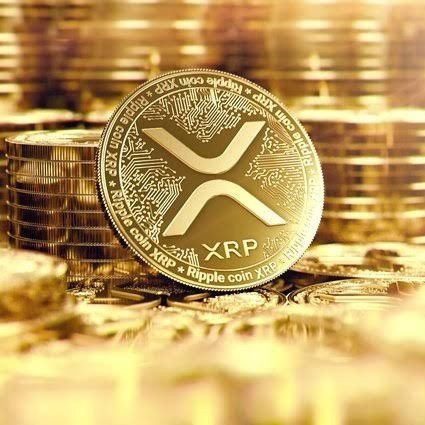
Let’s say $XRP hits $100 tomorrow, What is the first thing you're buying? 🤑
I am buying for myself a Mansion on the Island 🏝
#XRP

English