The Manipulator’s Logbook

118 posts

The Manipulator’s Logbook banner
The Manipulator’s Logbook

The Manipulator’s Logbook

@ManipulatorsLog

If “show more” feels like an assault… flee to shorts 😏 and rot your brain freely. Reserved for rare souls who read full paragraphs without emergency dopamine.

Sterea Ellada, Greece Katılım Ocak 2026
76 Takip Edilen14 Takipçiler
The Manipulator’s Logbook
The Manipulator’s Logbook@ManipulatorsLog·
The Sweet Lie of War “War is sweet to those who have not experienced it. But the experienced man trembles in his heart at its approach.” Pindar Contemporary man doesn’t even have to get off the couch to feel the “sweet taste” of war. It’s enough to open X or any other portal. People eagerly take sides in conflicts as if it were a football game or the new series. Without compassion, they churn out memes, crack jokes about the tragedies of millions, and turn human suffering into viral content. War has become a backdrop for moral and intellectual performance — people quote Heraclitus (“war is the mother of all things”), Nietzsche, or other theories about nations being forged and progress through conflict. All from a safe distance: from apartments with electricity, running water, and a full stomach. Wars are the oldest and common part of human history - ever since agriculture emerged, along with property, food reserves, inequalities, and larger, permanent communities. All of this dramatically increased both the reasons and the opportunities to wage war. From Neolithic settlements, through ancient empires, colonizations, Crusades, world wars, to today’s conflicts. No major civilization or state has survived without wars. War was a tool of expansion, defense, resource acquisition, settling succession disputes, and ideological struggles. But why now? John Mueller, who is no naive pacifist, says: “Major war between rich states has become so stupid and unprofitable that it is increasingly heading to the dustbin of history — just like duels or slavery. But conflicts will still arise in places where the cost-benefit calculation looks different.” And let us hope his prediction comes true. Meanwhile, for many elites, oligarchs, and representatives of the military-industrial complex, war remains the most reliable way to multiply wealth and power. Arms deals, reconstruction contracts, control of resources, new markets — all of this generates enormous, predictable profits. Big money is made on war — not on peace. As long as real power and decision-making in the world remain in the hands of groups for whom conflict is good business, wars will keep breaking out or being prolonged. Every one of us who today has electricity, bread, and is not standing on the barricades is a winner in history’s lottery. This luck carries an obligation — at least the obligation not to turn someone else’s hell into cheap, tasteless entertainment. And to seriously ask ourselves whether we would be capable of looking another human being in the eyes and pulling the trigger. And this is not a matter of feminine “sensitivity” or instinct. All people possess an innate, powerful, evolutionary mechanism that inhibits the killing of our own kind. A resistance so strong that in many circumstances soldiers on the battlefield would rather die than overcome it. Dave Grossman, in his book On Killing, shows in detail how armies had to develop special methods of psychological conditioning to break this barrier — and what enormous psychological cost (PTSD, depression, suicide, guilt) those who cross it must bear. And people think that posting a funny meme turns them into impressive tough guys, intelligent commentators, armchair strategists, and heroes in civilian life? Perhaps instead of a philosophical, witty, or “most righteous” comment, it is simply time to shut up out of respect for those who have been forced to commit inhuman acts. Who for months cross the boundary of their own humanity — they have no choice. You do. This is not a game. This is not a film. This is not a meme. This is a confrontation with the deepest moral and emotional side of a human being! And until you yourself start killing, do not jokes on subjects you know only from history books or even the most credible Hollywood films — they have nothing in common with the real tragedy that unfolds between people wearing two different colored uniforms when they meet on the battlefield.’
The Manipulator’s Logbook tweet media
English
0
0
0
65
Defend the West
Defend the West@real_DefendWest·
This is how the “Stasi police” that protect the EU dictatorship react to European citizens trying to deliver 530,000 signatures for the “Save Europe Act”. Disgraceful.
English
32
178
733
10K
The Manipulator’s Logbook
The Manipulator’s Logbook@ManipulatorsLog·
@car45426700 This is why 👇
The Manipulator’s Logbook@ManipulatorsLog

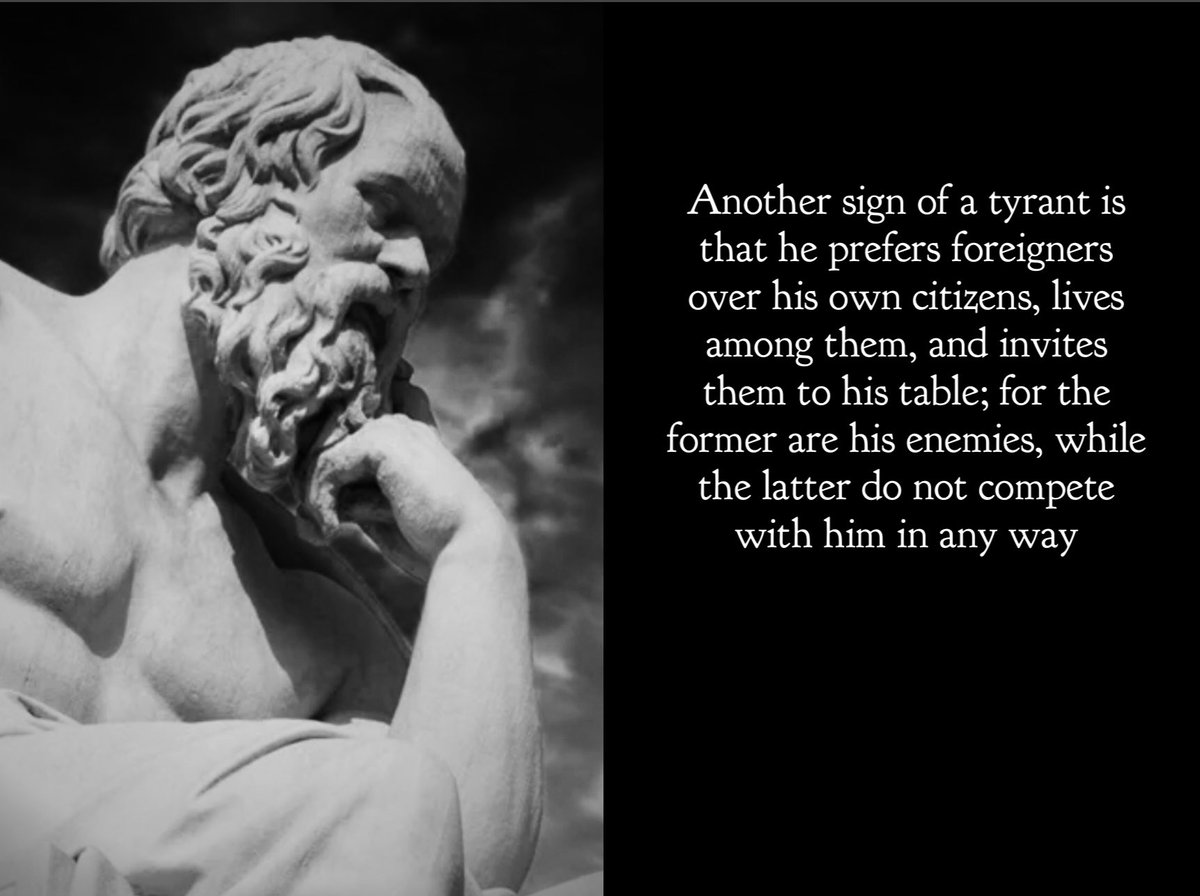
Barbed Wire for Citizens: The EU’s Soft Tyranny Exposed “Another sign of a tyrant is that he prefers foreigners over his own citizens, lives among them, and invites them to his table; for the former are his enemies, while the latter do not compete with him in any way.” — Aristotle Yesterday we saw tyranny in action with our own eyes. European citizens tried to deliver more than 530,000 signatures for the “Save Europe” remigration initiative. Instead of open dialogue at the headquarters of what is supposed to be “democracy in action” — an institution that should protect citizens, ensure their security, sovereignty, and freedom of speech — they were greeted with barbed wire fences and police cordons. This is the same system that for years has claimed “we cannot close the borders,” yet it managed to do so within hours — when the goal was to protect itself from its own people. Why? Because citizens have rights, expectations, and the potential power to resist. They can question those in power and demand justice. To the EU’s tyranny, they are the “enemy” because they represent a real threat. Foreigners, on the other hand, are dependent on the authorities’ goodwill. They do not resist injustice — in fact, they often support it, since they live off the same resources: taxes and rights extracted from working citizens. They are grateful for their place “at the table” and willingly serve as bodyguards, advisors, or tools of repression. A tyrant surrounds himself with those who do not challenge his dominance. Modern tyranny is not a single person or family, but a sprawling network of institutions, oligarchs, and political elites who maintain power through lobbying, algorithmic manipulation, censorship, mass surveillance, financial dependency, lawfare, and cultural authoritarianism — including cancel culture, mandatory gender ideology in schools and workplaces, climate alarmism used as a control mechanism, and engineered mass migration. All of this serves to shield their power from their own people. This system now dominates much of the Western world and key supranational institutions (the EU, UN, Big Tech, and global financial bodies). Understanding what is truly happening helps us recognize threats to freedom in any era. The philosophical study of tyranny shows us that it is not about uniforms or titles. It is about the relationship between those in power and the citizens: whether the state and its institutions serve the common good, or whether they exist primarily to maintain and expand their own dominance. When authorities begin to treat their own people as the enemy — blocking petitions with barbed wire and silencing dissenting voices — we are witnessing classical tyranny, only in a modern, “soft” form. It is time for citizens to remind the elites who is really in charge in Europe.

English
1
0
1
17
Anna Carlsson
Anna Carlsson@car45426700·
@ManipulatorsLog It’s sick. Only Europeans have no right in Europe. Let alone the immigrants are protected.
English
1
0
1
17
The Manipulator’s Logbook
The Manipulator’s Logbook@ManipulatorsLog·
Barbed Wire for Citizens: The EU’s Soft Tyranny Exposed “Another sign of a tyrant is that he prefers foreigners over his own citizens, lives among them, and invites them to his table; for the former are his enemies, while the latter do not compete with him in any way.” — Aristotle Yesterday we saw tyranny in action with our own eyes. European citizens tried to deliver more than 530,000 signatures for the “Save Europe” remigration initiative. Instead of open dialogue at the headquarters of what is supposed to be “democracy in action” — an institution that should protect citizens, ensure their security, sovereignty, and freedom of speech — they were greeted with barbed wire fences and police cordons. This is the same system that for years has claimed “we cannot close the borders,” yet it managed to do so within hours — when the goal was to protect itself from its own people. Why? Because citizens have rights, expectations, and the potential power to resist. They can question those in power and demand justice. To the EU’s tyranny, they are the “enemy” because they represent a real threat. Foreigners, on the other hand, are dependent on the authorities’ goodwill. They do not resist injustice — in fact, they often support it, since they live off the same resources: taxes and rights extracted from working citizens. They are grateful for their place “at the table” and willingly serve as bodyguards, advisors, or tools of repression. A tyrant surrounds himself with those who do not challenge his dominance. Modern tyranny is not a single person or family, but a sprawling network of institutions, oligarchs, and political elites who maintain power through lobbying, algorithmic manipulation, censorship, mass surveillance, financial dependency, lawfare, and cultural authoritarianism — including cancel culture, mandatory gender ideology in schools and workplaces, climate alarmism used as a control mechanism, and engineered mass migration. All of this serves to shield their power from their own people. This system now dominates much of the Western world and key supranational institutions (the EU, UN, Big Tech, and global financial bodies). Understanding what is truly happening helps us recognize threats to freedom in any era. The philosophical study of tyranny shows us that it is not about uniforms or titles. It is about the relationship between those in power and the citizens: whether the state and its institutions serve the common good, or whether they exist primarily to maintain and expand their own dominance. When authorities begin to treat their own people as the enemy — blocking petitions with barbed wire and silencing dissenting voices — we are witnessing classical tyranny, only in a modern, “soft” form. It is time for citizens to remind the elites who is really in charge in Europe.
The Manipulator’s Logbook tweet media
English
0
0
0
56
The Manipulator’s Logbook
The Manipulator’s Logbook@ManipulatorsLog·
@KoronaWarszawa Police officers on standby and barbed wire — this is exactly what democracy in action looks like! And they certainly didn’t look ashamed of themselves.
English
0
0
2
208
Korona Warszawa
Korona Warszawa@KoronaWarszawa·
❌Ponad 500 tys. obywateli UE (głównie 🇳🇱 i 🇩🇪) podpisało inicjatywę wzywającą KE 🇪🇺 do wprowadzenia przepisów odnośnie deportacji imigrantów. ❌Kiedy organizatorzy mieli złożyć podpisy w PE 🇪🇺 - brukselska Policja dostała rozkaz aby zablokować im wejście.
Polski
48
597
1.9K
26.1K
The Manipulator’s Logbook
The Manipulator’s Logbook@ManipulatorsLog·
@LauraGuldager @D_Tarczynski @SaveEuropeAct Dominik „Zero” Tarczyński ❤️ He is one of the few who emphasizes that this is not only about politics, but more importantly, about protecting human lives - personally safeguarding your own safety and the freedom of your family and loved ones.
English
0
0
3
86
Raport Światowy
Raport Światowy@RaportSwiatowy·
🤣🇪🇺 Niesamowite, jednak się da! Okazuje się, że Unia Europejska potrafi błyskawicznie zabezpieczyć teren i postawić ogrodzenie z drutu kolczastego... trzeba tylko zorganizować wiec patriotów. Kiedy chodzi o ochronę granic przed nielegalną migracją, od lat słyszymy, że „to skomplikowane”. Ale gdy trzeba odgrodzić własnych obywateli – wszystko działa z zaskakującą sprawnością. Obserwuj @RaportSwiatowy, aby być na bieżąco z wydarzeniami ze świata 🌍
Polski
6
67
468
8.9K
The Manipulator’s Logbook
The Manipulator’s Logbook@ManipulatorsLog·
@brivael Unbelievable, but true - Police officers on standby and barbed wire — this is exactly what democracy in action looks like!
English
0
0
1
39
The Manipulator’s Logbook
The Manipulator’s Logbook@ManipulatorsLog·
Yes, they try to shut down our demonstration and build walls against the pro-European voice. This breeds frustration and robs many of hope. But it is from this very frustration that the strongest change can emerge — as long as we direct it into constructive, determined action. Our voice is not dead. It’s only being held hostage. The time has come to reclaim it — even if they call us extremists for doing so. Those who defend their nation’s interests, their culture, and the safety of their families and children have both the right and the duty to act. No wall can stop us if we stand together. I know that in this age of individualism, building true Solidarity can feel difficult — but right now in Europe, nothing is more needed. Let us rebuild the great values of our past: Solidarity and united, collective action! We will not give up — we can and we will break through.
Save Europe Act@SaveEuropeAct

Everyone is allowed to protest on the Place du Luxembourg in front of the European Parliament: whether they are Antifa, Pro-Palestine, Pro-Curdistan and Pro-refugee. But the EU does not seem to like Pro-European They want to shut down ONLY our demonstration. The current EU is an anti-European engine of destruction."

English
1
0
1
105
The Manipulator’s Logbook
The Manipulator’s Logbook@ManipulatorsLog·
The Manipulator’s Logbook@ManipulatorsLog

#022 „Send Them Back” – Is That Too Harsh? Humanitarian aid, fundraising, and accepting refugees in genuine crises are an obvious moral imperative. However, when the label “refugee” is abused, an entitled attitude takes centre stage, and the level of misuse and financial costs far exceeds any reasonable limits, questioning the scale of this assistance becomes not only legitimate — but necessary. Over time, genuine empathy has been transformed into a sweeping moral duty to accept ever-larger numbers of people, regardless of cultural differences, their willingness to integrate, or the actual social and economic capacity of the receiving country. Any discussion about borders, the pace of inflows, problematic and dangerous behaviours or the costs involved is immediately framed in moral terms, making honest debate almost impossible. Society has thus been confronted with a done deal: a mass influx of people from distant cultural backgrounds who, despite every possible integration effort, frequently create parallel societies while drawing on and straining the welfare system and the financial resources of citizens. It is possible to address this issue politely and cautiously, avoiding politically incorrect language. But when logical, reasonable voices are silenced, ridiculed, and driven out of the public square, diplomacy and restraint no longer suffice. It is time to speak harshly! We can no longer pretend that profound cultural and civilizational differences do not matter. We cannot keep telling people that their fears for the future of their own children amount to “xenophobia.” Europe does not need to apologize for wanting to survive as Europe. True compassion means helping those who truly need it — but on our own terms, with strict selection and firm requirements for integration. Anything less is dangerous naivety that will bring tragic consequences for future generations of Europeans. It is time to end this suicidal hospitality. It is time to set clear boundaries. It is time to raise our voices.

QME
0
0
0
61
Joe Rogan Podcast News
Joe Rogan Podcast News@joeroganhq·
Polish MEP Dominik Tarczyński: “In Poland we put them in cuffs, we put them on the plane and send them back from wherever they came from. It’s simple as that.”
English
41
687
3.6K
39.1K
The Manipulator’s Logbook
The Manipulator’s Logbook@ManipulatorsLog·
From Consumer to Superhuman – Something We Can Really Do “Well-trained consumers – and that’s essentially who we all are, from an increasingly young age – tend to see the world as a warehouse of products. The relationship between customer and commodity becomes the model for all other relationships, including those between people. The product must bring pleasure, and there is no reason to remain loyal if a better offer appears.” “The pursuit of happiness constantly occupies our minds, consumes the lion’s share of our lives, never slows down, and allows no rest.” Zygmunt Bauman (1925–2017) was a philosopher and sociologist, he diagnosed the mechanisms of “liquid modernity” – a reality in which everything becomes temporary and uncertain: work, relationships, identity. Relationships are loosely tied, consumption and individualization dominate, and people feel like tourists in their own lives. In contrast to postmodernists who enthusiastically deconstructed traditional values and celebrated fragmentation, Bauman did not rejoice in liquid modernity - he diagnosed it as a source of suffering, anxiety, and loss of dignity. While others reduced morality to discourses of power or local narratives, he consistently defended the universal moral responsibility towards the Other. Instead of dismissing solidarity as oppressive, he called for its reconstruction. He sharply criticised consumerism, seeing it as a mechanism that turns people into perpetual, depthless consumers. In his later years, he even distanced himself from the label “postmodernism,” preferring the term “liquid modernity.” Even if many have reservations about Bauman’s works, it is worth selecting from his thought what can help us become better people and navigate this fluid world more consciously and with greater dignity. Not everyone is ready to dive straight into intellectual giants like Karoń or Nietzsche. Most of us benefit more from noticing small things in everyday reality and taking realistic steps in the epoch of Nietzsche’s Last Man. It is often wiser to draw from Bauman’s thought — even though he is neither fully “politically correct” nor ideologically pure — than to stay paralysed by grandiose plans we cannot fulfil. In an age that loves to divide everything into black and white, Bauman offers a valuable shade of grey: imperfect, yet rich in sharp, realistic insights that can truly help us live better. As he observed, “Life in liquid modernity requires constant readiness for change, but also the courage to stand by values that are not temporary.” Solidarity “is not given – it must be built anew in every generation.” Here are some realistic first steps we can take today: Build distance and independent thinking. Ask yourself daily: “Am I treating this relationship, job, or experience like a commodity to be quickly exchanged?” Practice moral responsibility in small gestures. Listen truly, help without seeking recognition, and maintain contact even when it is no longer “profitable.” Invest in longer commitments. Nurture deeper bonds with family, friends, and community through regular meetings and mutual help. This counters the “tourist” feeling of liquid life. Limit consumption as the path to happiness. Introduce pauses for reflection. Focus on creativity, helping others, and developing skills instead of constant hunting for new pleasures. Seek solidarity on a small scale. Engage in local initiatives, volunteering, or honest conversations that go beyond individual interest. In a liquid world, real strength lies in ethical attitude and human bonds. These steps will not stop the flow of liquid modernity, but they allow us to move through it with greater dignity, awareness, and humanity. Bauman shows that even today we can choose not to be mere consumers of life, but its thoughtful, responsible co-creators. The path from consumer to superhuman begins with these small, daily choices — and that is something we can really do.
The Manipulator’s Logbook tweet media
English
2
3
83
132.5K
The Manipulator’s Logbook
The Manipulator’s Logbook@ManipulatorsLog·
The Manipulator’s Logbook@ManipulatorsLog

“The barbarians are not at the gates. They are inside the gates — and they have academic tenure, judicial appointments, government grants, and control of the movies, television, and other media.” - Thomas Sowell Today, this mechanism has taken on a new and far more dangerous form. The barbarians are no longer confined to the realms of culture and ideas. They are increasingly occupying positions that grant them real, concrete power. Anyone who controls law enforcement, enforcement priorities, and immigration policy has a decisive influence over the shape of society. When such positions are held by individuals who openly declare that their Islamic faith is “the absolute driving force behind everything they do,” a fundamental question arises about loyalty and priorities. Since September 2025, Shabana Mahmood has served as Home Secretary — one of the most powerful positions in the United Kingdom. She is responsible for: • Immigration and asylum policy, • Border control (Border Force), • Strategic oversight of policing in England and Wales, • National security (including MI5). In an interview with British Muslim TV, Mahmood stated plainly: “Islam, my own religion… like many practising Muslims, my faith is the most important thing in my life. It is the absolute driving force behind everything I do. I feel a very strong calling of my conscience, and my conscience calls me to God.” This is not a private declaration of faith. It is a public admission that her religion serves as the supreme frame of reference for every her decisions — including those concerning who enters the country, who is deported, and what priorities the police should have. We see a similar pattern across other European countries. Individuals with strong Islamic identification are taking up roles related to migration, integration, and public security — in Belgium (particularly Molenbeek and the Brussels area), Germany, France, Sweden, and the Netherlands. Sowell was right: the most dangerous forces are not standing outside the gates. They are already inside — and they increasingly hold the levers of state power: the police, the borders, the courts, and the migration apparatus. This is not about claiming that every Muslim is a threat. It is about recognising that Islam, as a religio-legal system, is fundamentally incompatible with the Western liberal democracy we have known — and never will be compatible. Their religion contains no genuine concept of integration or assimilation. Wherever Muslims settle, they bring their own religious laws and values with them, systematically displacing and uprooting anything that differs from their own. Europe stands at a civilisational crossroads. If we do not summon the will to remove from positions of power those whose primary loyalty lies elsewhere, our continent will not be conquered — it will be quietly surrendered from within. Time is no longer on our side.

QME
0
0
0
9
Bruno Topola
Bruno Topola@BrunoTopola·
🇵🇱 "Czy naprawdę chcemy, żeby legalizowanie obcokrajowców było w rękach obcokrajowców?" Krzysztof Stanowski na temat Ukrainki, która prowadzi w Poznaniu firmę legalizującą imigrantów. W dodatku "bez odpowiednich pozwoleń".
Polski
54
591
3K
38.8K
The Manipulator’s Logbook
The Manipulator’s Logbook@ManipulatorsLog·
Freedom Without Duty: Not Such a Silent Battle of the Sexes The mastery of manipulation is not a grand conspiracy with a shadowy villain. It is a culture in which “listen to your heart and do what makes you happy” is seen as the height of wisdom, while duty, sacrifice, hard work, loyalty to something greater than oneself, and the painful piercing of an inflated ego balloon are dismissed as oppression and toxic control. The system—the generous welfare state, corporate tactics, and mainstream media—completes the picture. It offers easy rewards: benefits, endless entertainment, consumption, and social media validation in exchange for passivity and loyalty to the prevailing life-eroding narrative. People don’t have to want to be parasites. They are raised in a world where parasitism becomes a rational survival strategy. Why struggle and take responsibility when the system rewards shortcuts and the culture insists you “deserve everything”? This is freedom turned into a tool of enslavement, and individualism into easily controlled atomization. The most insidious element is the systematic dismantling of the family—the foundation of stability for both sexes for millennia. Its roots lie in the Industrial Revolution, which moved production out of the home and broke the economic unity of the multigenerational family. What was once a natural community of production, education, and care dissolved into “free individuals”—ideal consumers and workers. This was not a simple conspiracy but a complex set of economic, technological, cultural, and political changes that created strong incentives against the traditional family. Maybe it was never purely a systemic project against the family, though the welfare state and corporations later exploited it. Second-wave feminism and hyper-individualism added cultural fuel. The result: the family ceased to be an economic necessity and became merely a “lifestyle” option. The real acceleration came after World War II, when women were pushed into the workforce—not because all wanted to leave home, but because the system needed cheap labor and economic recovery. Today, men blame women and women blame men, but both are victims of the same long-term process. The system first destroyed the material foundations of the family, then offered an easier alternative: single life supported by benefits, credit, entertainment, and the ideology of hyper-individualism. The consequences are painfully visible. Men write bitter texts accusing women of cynical exploitation. Women describe men as immature, addicted to games and porn, and emotionally fuckup. In the gender wars, both sides vent frustration whose real source is the lack of foundation and belonging. Neither sex today seems ready for mature parenthood. Instead of self-improvement and building lasting bonds, they retreat into tribal camps with slogans that justify their loneliness and failures. Family requires sacrifice, compromise, and long-term responsibility—difficult but profoundly rewarding work. It is the antidote to selfishness, burnout, and alienation, which is why it is portrayed as a trap. For many, starting a family now feels almost masochistic—something that “ruins life” rather than fulfills it. Lonely and atomized people are far easier to manipulate. This is a coherent system in which personal freedom has been forged into self-perpetuating destruction, while everything that once prevented it is demonized. The culture does not destroy through violence but by convincing people that happiness and authenticity require abandoning commitment, relationships, family, and belonging. The sooner we name it honestly, the greater the chance that some will still choose the harder but deeper path. And therein lies hope: each of us can start by building mature relationships and embracing responsibility. When enough people do so, the culture will slowly but irreversibly begin to change.
The Manipulator’s Logbook tweet media
English
0
0
0
336
The Manipulator’s Logbook
The Manipulator’s Logbook@ManipulatorsLog·
“He who fights with monsters should take care that he himself does not become a monster.” Friedrich Nietzsche In politics and social life more broadly, when we oppose someone, we are usually fighting the ideology that drives them. We recognize its dangers, its mechanisms of manipulation, distorted interpretations, control, and verbal or symbolic violence. We expose them, resist them, and launch a counterattack. Unfortunately, far too many people get swept up in the logic of the struggle itself. In the heat of battle, they embrace a new, “more righteous” ideology — often presented as the cure for the old evil. This is the most dangerous moment, when vigilance is essential. Every fight, every loss, and every victory — even the most justified — is a stressful and traumatic experience that changes us psychologically. Under extreme stress, instincts and inner forces we never knew existed awaken within us. They arise automatically to help us survive, regardless of moral or ideological context. We are not the same person we were before. It is precisely this deep, often unconscious transformation that blinds us to the moment in which we ourselves could become the monster. Carried away by our sense of righteousness, we begin using the very same tactics we once condemned: moral blackmail, exclusion, dehumanization of opponents, censorship, and double standards. We become new monsters — monsters in opposition. Fighting an ideology is not only about replacing its content, but about refusing to adopt its methods and form. True freedom of thought demands constant self-awareness — so that in battling monsters, we do not become one ourselves. If we miss this critical moment of reflection, we fall into the same trap that George Orwell so brilliantly portrayed in his pig dystopia (Animal Farm): the revolution devours its own children, and the new leaders soon become indistinguishable from those they replaced.
The Manipulator’s Logbook tweet media
English
0
0
0
74