MantisClone

7.2K posts

MantisClone banner
MantisClone

MantisClone

@MantisClone

Senior Blockchain Engineer @RequestNetwork | Member @Opolis | Identity, Privacy, Data Sovereignty

Cleveland, OH Katılım Temmuz 2011
9.8K Takip Edilen2.4K Takipçiler
Sabitlenmiş Tweet
MantisClone
MantisClone@MantisClone·
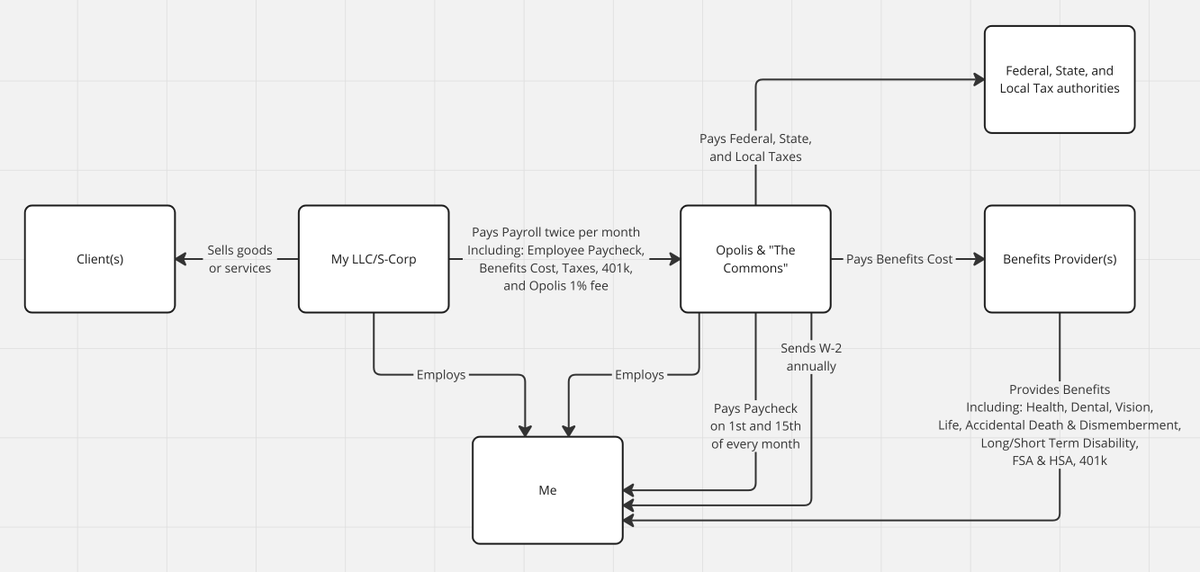
How @Opolis works for me: * Employer of Record for proving income and taking loans * Payroll Processor to simplify tax and compliance * Benefits Bundler for lower costs via collective bargaining * Limit Liability by separating business and personal * Diversify Income streams
MantisClone tweet media
English
153
10
302
9.5K
MantisClone retweetledi
ZKsync
ZKsync@zksync·
📌 On May 4, ZKsync Lite will be fully deprecated. This is a planned, orderly sunset for a system that has served its purpose and does not affect any other ZKsync systems. Please read below how the shutdown works and how user funds remain safe and recoverable throughout the process. Clarity and capital safety are our priority.
English
24
51
275
49.6K
MantisClone retweetledi
Jeffrey Emanuel
Jeffrey Emanuel@doodlestein·
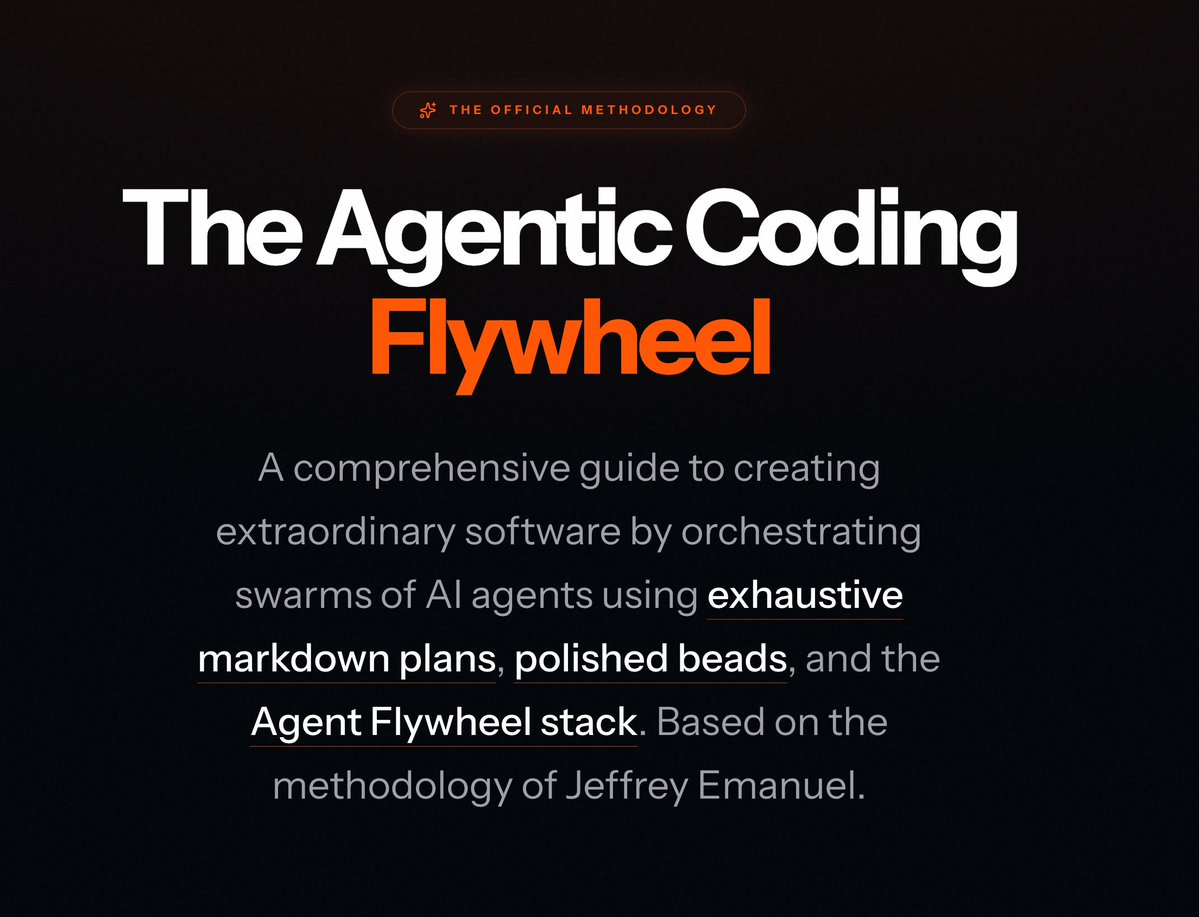
People are constantly asking me about my planning and execution methodology for creating software using my Agent Flywheel system of tooling, prompts, and workflows. As a result, I find myself posting the same link, often multiple times in a day, to a post of mine that includes links to 5 other X posts and threads I've made about my methodology. While this "works," in that a motivated person can read through each post and understand my approach pretty well, I realize that it's far from optimal, and a lot of people see that and just give up quickly. So I finally decided to gather together all my materials on my method and turn them into two different articles with different target audiences. Perhaps unsurprisingly, I was able to extensively leverage my own tools to do this effectively. For one, I was able to use my xf tool (for searching your personal X post archive that you can download from X) to pull in all the various posts and my replies to people in those threads into a single large markdown document. Then, I had agents use my cass tool to search for my real-world usage of my various tools and to gain insights into my planning process from firsthand observation. I also had a lot of materials in the tutorials section of the Agent Flywheel website, as well as in various agent skills I've created. All of this was woven together and synthesized into a single comprehensive document, The Flywheel Approach to Planning and Bead Creation: agent-flywheel.com/complete-guide This is the new canonical and complete guide to my approach, with everything in one place and synthesized into a coherent whole so that you don't need to scrounge around for all the different posts. I will also be updating the article as my methodology evolves and in response to reader feedback on what is confusing or unclear (so please let me know in the comments). Incidentally, as I got to the final stages of preparing this document, I found this prompt to be extremely useful: "Read the entire document again with fresh eyes all the way through, putting yourself in the position of a smart software developer who is new to agentic coding and doesn't know how to use the Flywheel or agent swarms effectively yet and who doesn't understand the planning process or beads, etc. What would be most confusing? How could we make it more engaging and intuitive without removing any content and without simplifying anything (think additively)?" Beyond that big comprehensive guide, as the Flywheel system has grown to 20+ tools now, I've heard repeatedly from people that they find the entire system too overwhelming, because there are so many tools to understand. But the truth is, there is a "core" to the Flywheel approach which captures most of the value and just uses 3 tools: * My Agent Mail project for coordination and communication of multiple agents of various types; * beads_rust (br) for task management; and * beads_viewer (bv) for automatically triaging the beads graph so that agents always work on the optimal next bead to maximize overall development velocity. So to that end, I created a separate, shorter, more-focused article for beginners to the system, the Flywheel Core Loop Guide: agent-flywheel.com/core-flywheel If you've previously been interested in the Flywheel but found it to be too hard to understand or had "information overload" (which is totally understandable... this stuff emerged organically over months of working on this stuff, so I'm sure it's a lot to take in all at once like that), I highly recommend checking it out. Once you get the hang of it, you can then layer in additional utilities, starting with destructive_command_guard (dcg) to prevent agents from blowing up your projects or machine; coding_agent_session_search (cass) to search instantly across all your agent sessions, and give this power to your agents themselves; and ultimate_bug_scanner (ubs) for finding bugs and problems across most popular programming languages in a single tool that is heavily optimized for use by agents.
Jeffrey Emanuel tweet media
English
29
26
250
17.8K
MantisClone retweetledi
Ethereum Foundation
Ethereum Foundation@ethereumfndn·
Today, the Foundation’s Board released the EF Mandate. This document, which was first intended for EF members, reaffirms the promise of Ethereum, and the role of EF within this ecosystem.
English
200
383
2K
1.7M
MantisClone retweetledi
Suhail Kakar
Suhail Kakar@SuhailKakar·
i love defi but this is bad. really bad this isn't on aave or cow swap. the contracts did their job. but a checkbox on mobile being the only thing between you and losing $49.9M to slippage? come on permissionless =/= unprotected. wallets and frontends need to show the actual loss in big red numbers, force splits on large orders, something. anything the tech worked. the ux didn't. and in defi bad ux costs millions we can do better
Stani.eth@StaniKulechov

Earlier today, a user attempted to buy AAVE using $50M USDT through the Aave interface. Given the unusually large size of the single order, the Aave interface, like most trading interfaces, warned the user about extraordinary slippage and required confirmation via a checkbox. The user confirmed the warning on their mobile device and proceeded with the swap, accepting the high slippage, which ultimately resulted in receiving only 324 AAVE in return. The transaction could not be moved forward without the user explicitly accepting the risk through the confirmation checkbox. The CoW Swap routers functioned as intended, and the integration followed standard industry practices. However, while the user was able to proceed with the swap, the final outcome was clearly far from optimal. Events like this do occur in DeFi, but the scale of this transaction was significantly larger than what is typically seen in the space. We sympathize with the user and will try to make a contact with the user and we will return $600K in fees collected from the transaction. The key takeaway is that while DeFi should remain open and permissionless, allowing users to perform transactions freely, there are additional guardrails the industry can build to better protect users. Our team will be investigating ways to improve these safeguards going forward.

English
93
28
518
71.7K
MantisClone retweetledi
rita kozlov 🐀
rita kozlov 🐀@ritakozlov·
at a time when software is abundant, building the right thing is even more critical instead of using it to produce lines of code, you can use it as a really powerful tool for thinking, and sharpening your thinking read for more takes on how AI is changing the PM role
rita kozlov 🐀@ritakozlov

x.com/i/article/2020…

English
6
12
119
27.2K
Stani.eth
Stani.eth@StaniKulechov·
Earlier today, a user attempted to buy AAVE using $50M USDT through the Aave interface. Given the unusually large size of the single order, the Aave interface, like most trading interfaces, warned the user about extraordinary slippage and required confirmation via a checkbox. The user confirmed the warning on their mobile device and proceeded with the swap, accepting the high slippage, which ultimately resulted in receiving only 324 AAVE in return. The transaction could not be moved forward without the user explicitly accepting the risk through the confirmation checkbox. The CoW Swap routers functioned as intended, and the integration followed standard industry practices. However, while the user was able to proceed with the swap, the final outcome was clearly far from optimal. Events like this do occur in DeFi, but the scale of this transaction was significantly larger than what is typically seen in the space. We sympathize with the user and will try to make a contact with the user and we will return $600K in fees collected from the transaction. The key takeaway is that while DeFi should remain open and permissionless, allowing users to perform transactions freely, there are additional guardrails the industry can build to better protect users. Our team will be investigating ways to improve these safeguards going forward.
English
2.9K
1K
11.2K
6.5M
MantisClone retweetledi
Pete Kim
Pete Kim@petejkim·
@ZainanZhou Make identicons great again.
English
0
1
6
173
MantisClone retweetledi
Duca
Duca@big_duca·
People tell me “people won’t leave crypto just bc of a once a year painful experience”. Absolutely incorrect. I’ve had MANY people tell me they want to stop using crypto. Bc of the tax headache. That’s a problem. And it has to be solved. It’s hard, but it has to.
English
32
5
94
7.8K
MantisClone retweetledi
vitalik.eth
vitalik.eth@VitalikButerin·
Crypto privacy is needed if you want to make API calls without compromising the information of your access patterns. eg. even with a local AI agent, you can learn a lot about what someone is doing if you see all of their search engine calls first-order solution to that is to make those calls through mixnet but then (or in fact, even without the mixnet) the providers will get DoSed, and they will demand an anti-DoS mechanism, and realistically payment per call by default that will be credit card or some corposlop "yeah we'll get to the privacy later" stablecoin thing so we need crypto privacy But yes, for privacy you have to think full stack. Local AI agent layer is very important. It is like longevity: if there are 10 things damaging your body, curing one of them increases your longevity by 11%, curing two by 25%, and curing three by 42% (1 / (1 - 0.3) minus 100% base). Risks from data leakage are similar, and so mitigations similarly compound super-additively.
English
114
92
800
105.2K
MantisClone retweetledi
signüll
signüll@signulll·
the most underrated hire right now is a great product person. when i say product person i'm def not talking about a product manager. perhaps i think there has to be somewhat of a new role. i don't have a good name for it yet but maybe something like "product thinker".. someone with an intuitive grasp of the product as it exists, where it's soft, where it sings, & how to iterate it toward something even sharper. in some sense, this person has to cohesively hold in their head where this product should be 2 years from now & work backwards from that. i say this cuz when building was hard, engineering was the bottleneck & the status hierarchy often reflected that. building is no longer hard. which means the variance in outcomes has shifted almost entirely to judgment on what to build, how to sequence it, & how to talk about it. & the story matters as much as the thing. internally, it organizes the team around a shared model of why. externally, it shapes the interpretive frame users bring to their first experience. you can't retrofit narrative onto a product & expect it to land, it has to be load bearing from the start. the rarest version of this person sits at the intersection of culture & deep technology. someone genuinely bilingual. they know what's technically possible & they know which cultural currents are real vs. ephemeral. that combo is what separates products that feel inevitable from products that feel assembled. before ppl clap back with this person has always been valuable, i know.. i am just saying now they might be the most *important* person in the room. their value compounds like never before.
English
448
740
6.3K
1.4M
MantisClone retweetledi
Armani Ferrante
Armani Ferrante@armaniferrante·
I keep seeing terrible advice online for people interested in computer science. AI is making programming knowledge obsolete in the same way interpreted languages made compiled languages obsolete, in the same way compilers made assembly obsoletely, and in the same way assembly made knowledge of circuits obsolete. It didn't. The percentage of people that can go through every layer of the stack will shrink and that knowledge will become more valuable, not less. With more tools, your knowledge base should expand not contract. Learn everything you can, while you're in school--and use AI to accelerate that process. Learn how programming languages work. Learn how computers work. Learn how matrix multiplication is optimized. Learn FFTs are implemented. Learn calculus and linear algebra. Learn optimization. Learn how that all applies to training. Learn how to use the AI tools, but also learn how they are built. The history of computing is the history of abstraction layers being built one on top of the other, and it's only when you can traverse layers of abstraction can you truly build new things. Learn more. Build more.
English
88
164
1.2K
70.8K
MantisClone retweetledi
owocki
owocki@owocki·
I co-founded @Gitcoin in 2017. Today I went to gitcoin.co and realized it has quietly become something new: a community-curated playbook for crowdfunding the Ethereum and AI ecosystems. Which honestly feels like the natural next step. Some of the latest trends: 1/ Quadratic Funding is now basic infrastructure. Hundreds of rounds. Dozens of forks. Anyone can spin up a QF deployment. The hard question is no longer how to run QF. It is when to use it versus retro funding, milestone grants, or something else. 2/ The funding design space is exploding. QF. RetroPGF. Hypercerts. Conviction voting. Streaming. Milestone-based funding. Vaults. Outcome-based rewards. Hybrid models. & more. This is becoming a full capital allocation design space, not a single product. Checkout gitcoin.co/mechanisms 3/ $60M+ distributed created a dataset. Gitcoin learned more from what failed than what worked. In a world where you can spin up a new funding mechanism in a weekend, institutional knowledge becomes the real moat. 4/ Funding is shifting from rounds to flows. Grant rounds create bottlenecks and funding gaps. New experiments are moving toward continuous funding, streaming, and always-on allocation systems. 5/ The source of capital matters as much as the mechanism. Donations were the bootstrap phase. The next era is structural capital: yield, protocol revenues, treasuries, and mechanisms that create recurring funding for public goods. 6/ Getting upside in funded projects is becoming a meta. Pure donations are giving way to hybrid models where funders can share in the upside. Hypercerts, retro rewards, token allocations, and other mechanisms are blurring the line between grants and investment. 7/ AI-driven capital allocation is emerging. As the design space explodes, humans alone cannot evaluate everything. AI systems will increasingly help surface projects, analyze impact, simulate mechanisms, and guide allocation decisions. 8/ Capital allocation infrastructure is becoming its own industry. Designing mechanisms, running experiments, publishing results, and mapping the space is becoming a core layer of the ecosystem. Mechanisms are getting cheaper to deploy. Which means the scarce resource is not mechanisms. It is maps of: • which mechanisms work at which stage of a project • which governance structures reduce capture • which incentive models actually produce public goods So maybe @Gitcoin’s most important role in 2026 is not running funding rounds. Maybe it is helping the ecosystem learn how to fund itself. More @ gitcoin.co
English
14
28
160
8.8K
MantisClone retweetledi
Austin Federa | 🇺🇸
Austin Federa | 🇺🇸@Austin_Federa·
If you are in the United States, you've probably noticed this new payment system Zelle has taken the world of normies by storm. And by normies I don't mean 22-year-olds in New York or San Francisco but your plumber or your housekeeper or the guy that plows your driveway. The crazy thing about Zelle is it's actually a really bad technical product. It's basically a pre-confirmation for ACH and it allows a user to use an email address or phone number as a proxy for a good old-fashioned ACH account number and routing number to their bank. But is succeeding in ways Venmo and PayPal and Cash App and all these other fast payment systems never could because it's linked in to the boring, dumb stuff that regular, normal people use. As much as we reinvent the wheel in crypto, distribution remains king. Getting into existing distribution channels where people already operate is a far past their method of adoption and trying to get them to move their entire workflow over. This is why this news is interesting. It's not because the technology is innovative or the user experience is so great. In fact it will almost certainly be worse than just sending USDC through a normal wallet, but the distribution here is basically unmatched.
Solana Payments@solanapayments

BREAKING: @WesternUnion is launching USDPT, a new stablecoin on @solana. @Crossmint will power wallets and payment APIs connected to Western Union's Digital Asset Network. Stablecoins will be redeemable through 360,000 cash locations in 200+ countries. x.com/crossmint/stat…

English
20
24
440
72.7K
MantisClone retweetledi
Kraken
Kraken@krakenfx·
A historic moment for crypto. Kraken Financial has been granted a Federal Reserve master account, making us the first digital asset bank with direct access to the U.S. payments system. A major step toward connecting crypto infrastructure with the core rails of global finance. blog.kraken.com/news/federal-r…
English
1.1K
2.8K
13.9K
1.4M
MantisClone retweetledi
Tristan Wallaert
Tristan Wallaert@tristanwallaert·
Crypto was supposed to replace traditional payment rails, but years later, it still hasn't. I see four structural reasons why that rarely get discussed: 1. Attribution is broken. A wallet address doesn't tell you who paid or for what. The workaround is custody, which brings back the intermediaries crypto was meant to remove. 2. Pricing is distorted. PSPs bundle crypto alongside cards and price both to coexist. Crypto is overpriced. 3. Consumer fragmentation. In crypto funds are scattered across chains. Accepting crypto means managing payments across most chains and tokens. 4. Security is the payer's problem. Anyone paying in crypto is exposed to the risk without the possibility of chargeback, dispute, or reversal that traditional payment rails do. These aren't technology problems, but infrastructure problems [Continue reading]
English
1
2
6
123
MantisClone
MantisClone@MantisClone·
"...look for users, both individual and institutional, for whom sanctuary tech is exactly the thing they need. Optimize payments, defi, decentralized social, and other applications precisely for those users, and those goals, which centralized tech will not serve." 👏 👏 👏
vitalik.eth@VitalikButerin

Over the past year, many people I talk to have expressed worry about two topics: * Various aspects of the way the world is going: government control and surveillance, wars, corporate power and surveillance, tech enshittification / corposlop, social media becoming a memetic warzone, AI and how it interplays with all of the above... * The brute reality that Ethereum seems to be absent from meaningfully improving the lives of people subject to these things, even on the dimensions we deeply care about (eg. freedom, privacy, security of digital life, community self-organization) It is easy to bond over the first, to commiserate over the fact that beauty and good in the world seems to be receding and darkness advancing, and uncaring powerful people in high places are making this happen. But ultimately, it is easy to acknowledge problems, the hard thing is actually shining a light forward, coming up with a concrete plan that makes the situation better. The second has been weighing heavily on my mind, and on the minds of many of our brightest and most idealistic Ethereans. I personally never felt any upset or fear when political memecoins went on Solana, or various zero-sum gambling applications go on whatever 250 millisecond block chain strikes their fancy. But it *does* weigh on me that, through all of the various low-grade online memetic wars, international overreaches of corporate and government power, and other issues of the last few years, Ethereum has been playing a very limited role in making people's lives better. What *are* the liberating technologies? Starlink is the most obvious one. Locally-running open-weights LLMs are another. Signal is a third. Community Notes is a fourth, tackling the problem from a different angle. One response is to say "stop dreaming big, we need to hunker down and accept that finance is our lane and laser-focus on that". But this is ultimately hollow. Financial freedom and security is critical. But it seems obvious that, while adding a perfectly free and open and sovereign and debasement-proof financial system would fix some things, but it would leave the bulk of our deep worries about the world unaddressed. It's okay for individuals to laser-focus on finance, but we need to be part of some greater whole that has things to say about the other problems too. At the same time, Ethereum cannot fix the world. Ethereum is the "wrong-shaped tool" for that: beyond a certain point, "fixing the world" implies a form of power projection that is more like a centralized political entity than like a decentralized technology community. So what can we do? I think that we in Ethereum should conceptualize ourselves as being part of an ecosystem building "sanctuary technologies": free open-source technologies that let people live, work, talk to each other, manage risk and build wealth, and collaborate on shared goals, in a way that optimizes for robustness to outside pressures. The goal is not to remake the world in Ethereum's image, where all finance is disintermediated, all governance happens through DAOs, and everyone gets a blockchain-based UBI delivered straight to their social-recovery wallet. The goal is the opposite: it's de-totalization. It's to reduce the stakes of the war in heaven by preventing the winner from having total victory (ie. total control over other human beings), and preventing the loser from suffering total defeat. To create digital islands of stability in a chaotic era. To enable interdependence that cannot be weaponized. Ethereum's role is to create "digital space" where different entities can cooperate and interact. Communications channels enable interaction, but communication channels are not "space": they do not let you create single unique objects that canonically represent some social arrangement that changes over time. Money is one important example. Multisigs that can change their members, showing persistence exceeding that of any one person or one public key, are another. Various market and governance structures are a third. There are more. I think now is the time to double down, with greater clarity. Do not try to be Apple or Google, seeing crypto as a tech sector that enables efficiency or shininess. Instead, build our part of the sanctuary tech ecosystem - the "shared digital space with no owner" that enables both open finance and much more. More actively build toward a full-stack ecosystem: both upward to the wallet and application layer (incl AI as interface) and downward to the OS, hardware, even physical/bio security levels. Ultimately, tech is worthless without users. But look for users, both individual and institutional, for whom sanctuary tech is exactly the thing they need. Optimize payments, defi, decentralized social, and other applications precisely for those users, and those goals, which centralized tech will not serve. We have many allies, including many outside of "crypto". It's time we work together with an open mind and move forward.

English
0
0
0
61