Emmanuelle Steels

8.7K posts

Emmanuelle Steels banner
Emmanuelle Steels

Emmanuelle Steels

@ManuSteels

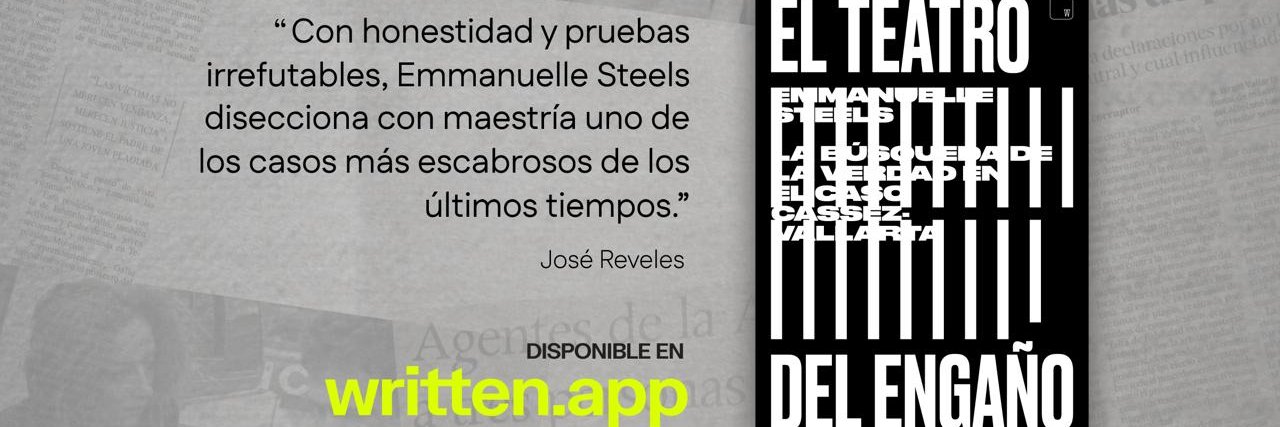
Journaliste/Periodista 🎤🗞️ 📚 “El teatro del engaño : el caso Cassez-Vallarta”, “Mexique : la révolution sans fin”, "Ceci n'est pas un kidnapping".

Atenas, Ελλάδα Katılım Şubat 2011
6.3K Takip Edilen15.3K Takipçiler
Sabitlenmiş Tweet
Emmanuelle Steels
Emmanuelle Steels@ManuSteels·
❗️9 de diciembre 2005 - 9 de diciembre 2025❗️ Israel Vallarta celebra en libertad los 20 años del montaje que marcó su vida y la de su familia. Pero todavía hay inocentes en la cárcel. Para entender el caso completo, hay una nueva edición de mi libro : written.app/book/103
Español
3
12
21
895
Emmanuelle Steels retweetledi
Pedro Sánchez
Pedro Sánchez@sanchezcastejon·
Justo hoy, Netanyahu lanza su ataque más duro contra el Líbano desde que empezó la ofensiva. Su desprecio por la vida y el derecho internacional es intolerable. Toca hablar claro: - Líbano debe formar parte del alto al fuego. - La comunidad internacional debe condenar esta nueva violación del derecho internacional. - La Unión Europea debe suspender su Acuerdo de Asociación con Israel. - Y no debe haber impunidad ante estos actos criminales.
Español
5.1K
40.4K
138.9K
2.5M
Emmanuelle Steels retweetledi
Ce jour-là dans l'Histoire
Ce jour-là dans l'Histoire@CeJour_Histoire·
Son père fabrique du carton. Sa mère fait tourner la maison. Il grandit dans une banlieue de Bruxelles, entre le scoutisme et le collège catholique. Il s'ennuie. Il rate ses études. À 18 ans, il entre dans la cartonnerie familiale. Il vend du carton ondulé. Le soir, il écrit. Des poèmes d'abord. Puis des chansons qu'il joue à la guitare dans des soirées paroissiales. Sa famille ne comprend pas. Ses amis trouvent ça trop violent. Il se marie à 21 ans. Une fille naît. Il a un emploi, un foyer, un avenir tracé. Il décide de tout quitter pour Paris. Sa famille lui coupe les vivres. À Paris, il chante en première partie dans des cabarets vides. Le public est tiède. On se moque de ses allures de provincial. Brassens le surnomme "l'abbé Brel". Au festival de Knokke, il finit avant-dernier. Puis un disque change tout. "Quand on n'a que l'amour", en 1956. Puis "Ne me quitte pas". Puis "Amsterdam". Puis "Ces gens-là". Il donne 300 concerts par an. Il sue, il crie, il s'effondre sur scène. Chaque spectacle est un marathon. En 1966, au sommet de sa gloire, il arrête tout. Il fait ses adieux à l'Olympia en peignoir. Il part vivre aux Marquises, au bout du monde, sur une île où personne ne le connaît. Il y meurt le 9 octobre 1978. Il avait 49 ans. Jacques Brel est né il y a 97 ans jour pour jour. Le vendeur de carton qui a mis la chanson française à genoux.
Ce jour-là dans l'Histoire tweet media
Français
48
466
1.7K
49.7K
Emmanuelle Steels retweetledi
Lizzie Porterلِيزي بورتر
The grim reality summed up by @liz_cookman : “For freelance foreign correspondents, essentially if you haven’t got the ability to just send yourself somewhere and take the hit of being extremely miserable and uncomfortable, staying in the worst conditions, having no money and basically not getting paid for your work, you’re not going to work.” pressgazette.co.uk/press-gazette-…
English
3
77
211
84.3K
Emmanuelle Steels retweetledi
Lizzie Porterلِيزي بورتر
I was freelance for four years and i think things have only deteriorated since. People who don't work in this field are often shocked when you tell them how low the wages are. How long you wait to get paid and how much you have to beat down accounting departments' doors to get money you are owed for work you did months ago. How little support there is from media outlets who themselves are all stretched. How some editors (not all) can just change their minds half way through an assignment and decide that they don't want your work anymore (ie, you don't get paid, or get paid a fraction of the original agreed sum), or decide that they are going to get a staffer to do the job instead.
Lizzie Porterلِيزي بورتر@lcmporter

The grim reality summed up by @liz_cookman : “For freelance foreign correspondents, essentially if you haven’t got the ability to just send yourself somewhere and take the hit of being extremely miserable and uncomfortable, staying in the worst conditions, having no money and basically not getting paid for your work, you’re not going to work.” pressgazette.co.uk/press-gazette-…

English
7
107
399
80.1K
Emmanuelle Steels retweetledi
Susan Park 👹🤘
Susan Park 👹🤘@Susan16Park·
I don’t think the average American has any clue the amount of pain and destruction their country has caused the rest of the world.
English
4.4K
28.9K
171.7K
2.2M
Emmanuelle Steels retweetledi
Imtiaz Mahmood
Imtiaz Mahmood@ImtiazMadmood·
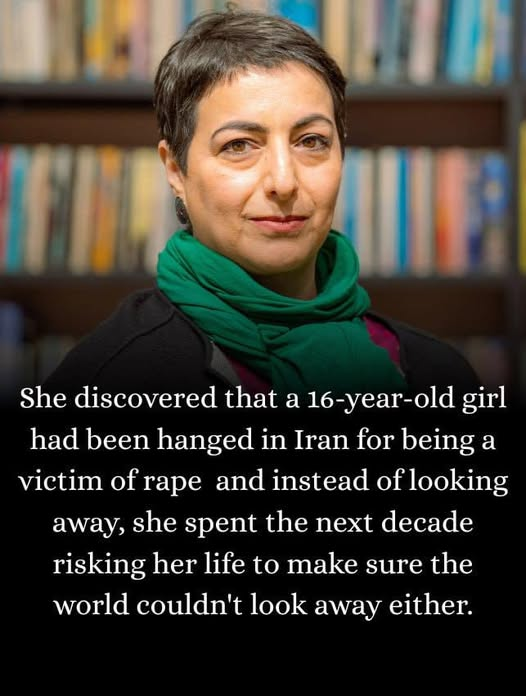
n 2004, a journalist named Asieh Amini came across a story from a small town in northern Iran. A 16-year-old girl named Atefeh Sahaaleh had been publicly hanged. The official charge: "acts incompatible with chastity." The reality, which Amini uncovered through careful, dangerous investigation: Atefeh had been repeatedly raped by a neighbor and other men beginning when she was nine years old. She had been neglected by her family and paid to keep silent — money she used simply to survive. At 13, Iran's morality police arrested her. A judge sentenced her to one hundred lashes. Under Iranian law, a woman could be sentenced to lashings three times — the fourth offense carried the death penalty. She was 16 when they hanged her. Amini wrote the story. Her newspaper refused to publish it. Another paper refused as well. A women's publication finally agreed to run an edited version. She kept going. Born in 1973 in the Mazandaran province of northern Iran — one of four sisters who spent their childhood painting, reading, and playing outdoors — Amini had built her career as a journalist through the brief flowering of press freedom following President Khatami's election in 1997, editing a women's affairs newspaper called Zan until hardline clerics shut it down in 1999. She had known the Iranian state's capacity for silencing voices. She had not yet known the full depth of what it was capable of doing to girls. After Atefeh, she knew. Case after case began reaching her. Leyla — a 19-year-old with diminished mental capacity, herself a victim of child rape, facing execution. The judge in her case told Amini plainly that Leyla was a threat to family life because of her "sexual availability." Amini enlisted human rights lawyer Shadi Sadr, published Leyla's story, drew international attention, and helped get her out of prison and into the care of a women's organization in Tehran. One life at a time. One story at a time. Against a legal system that had no interest in being exposed. In 2006, Amini discovered that despite a government moratorium on stoning — a directive issued in 2002 that carried no binding legal force — a man and woman had been stoned to death in Mashhad for adultery. The judge claimed he answered only to Sharia law. The Ministry of Justice denied the stoning had happened. State media attacked Amini's credibility. That October, Amini and Sadr co-founded the Stop Stoning Forever (SSF) campaign — systematically documenting stonings occurring across Iran and sharing their findings through colleagues abroad who could publish without fear of arrest. The state took notice. In March 2007, Amini was among 33 women arrested during a silent sit-in at a Tehran courthouse. During interrogation she realized — with the specific clarity of someone who had been investigating surveillance — that the police had been investigating her for some time. She was released after five days. Her phones, she was certain, were tapped. Her movements tracked. She kept reporting. The sustained pressure of the work eventually took its physical toll — stress-induced symptoms that included headaches, vision problems, and muscle paralysis forced her to step back briefly while her partners reorganized the campaign from outside Iran. She recovered. She continued. In 2009, following the disputed reelection of Mahmoud Ahmadinejad, Amini was among the demonstrators beaten in the protests that swept Iran. She continued reporting — under pseudonyms, in the chaos. Then came the warning: police were questioning prisoners about her. She needed to leave. She had been invited to a poetry festival in Sweden. She took her daughter Ava and she went. They did not come back. Amini settled eventually in Norway, supported by the International Cities of Refuge Network — a program that protects writers facing state persecution. From exile, she continued her advocacy, published two books of Norwegian-language poetry, and kept doing what she had always done: making sure that the stories of girls and women the Iranian state wanted silenced were heard by the world instead. She was awarded the Human Rights Watch Hellmann/Hammett Award in 2009 — the same year she fled. The Oxfam Novib/PEN Award in 2012. The Ord i Grenseland prize in 2014. Asieh Amini picked up a pen in a country that punished women for existing outside the law's narrow definitions — and she used it, at enormous personal cost, to push against every wall that pen could reach. The girl from Mazandaran who dreamed of becoming a painter and writer became something rarer and harder: A witness who refused to look away. And a voice that — no matter how many times the state tried to silence it — kept finding new ways to be heard.
Imtiaz Mahmood tweet media
English
71
2.4K
6.1K
165K
Emmanuelle Steels retweetledi
Ramy Abdu| رامي عبده
🚨Three Flemish universities jointly award an honorary doctorate—for the first time—to Italian jurist @FranceskAlbs , recognizing her work on human rights and international justice. The ceremony in Antwerp drew over 1,000 attendees.
English
280
5.4K
15.3K
273.2K
Emmanuelle Steels retweetledi
Ignasi Guardans
Ignasi Guardans@iguardans·
Tres universidades de Bélgica han decidido ser valientes. Y han otorgado un Doctorado Honoris Causa conjunto a Francesca Albanese, la Relatora de la ONU sobre Gaza. Sancionada por EEUU. Bestia negra para Israel (pueden imaginar las presiones… y se quedan cortos). Enhorabuena.
Ramy Abdu| رامي عبده@RamAbdu

🚨Three Flemish universities jointly award an honorary doctorate—for the first time—to Italian jurist @FranceskAlbs , recognizing her work on human rights and international justice. The ceremony in Antwerp drew over 1,000 attendees.

Español
168
5.5K
12.2K
120.7K
Emmanuelle Steels retweetledi
Ivo Delingpole
Ivo Delingpole@ivodelingpole·
Would highly recommend you watch David Foster Wallace talking about boredom, and why some people now find it so hard to read. Sorely wish he were around today to hear his views on TikTok and the like.
English
82
1K
7.6K
392.1K
Emmanuelle Steels retweetledi
José Mario
José Mario@JoseMarioMX·
Una mujer. Dos empleos. Un hijo. Una casa que nadie pagó pero que alguien limpiaba, organizaba y sostenía todos los días. Mientras ella destinaba su sueldo al súper, a las colegiaturas, a los gastos corrientes del hogar, su marido usaba el suyo para comprar propiedades a su nombre. Años así. Una década así. Al llegar el divorcio, él presentó escrituras. Ella presentó facturas de la escuela y recibos del súper. El juez de primera instancia lo vio y dijo lo más injusto que puede decir un juez en este país: “los dos trabajaron, no procede compensación.” Como si trabajar doble valiera lo mismo que trabajar simple. Como si el hogar no fuera trabajo. Como si el cansancio de las 11 de la noche doblando ropa después de una jornada laboral no tuviera precio. Ese caso llegó a la @SCJN. Y la Suprema Corte lo cambió todo. La Primera Sala estableció algo que llevaba décadas pendiente de nombrarse con precisión jurídica: la doble jornada laboral no es un rasgo de carácter ni una virtud doméstica. Es un costo de oportunidad real, medible, resarcible. Cada hora dedicada al hogar fue una hora que no se invirtió en construir patrimonio propio. Cada año cargando con la crianza de manera desproporcionada fue un año en que el otro cónyuge acumulaba mientras tú sostenías. Y lo más poderoso del criterio no es solo eso — es el giro probatorio que introduce. Ya no le toca a ella demostrar que se sacrificó. Ahora la presunción opera a su favor. Es él quien tiene que probar que las cargas del hogar se distribuyeron de manera equitativa. Que él también doblaba ropa a las 11 de la noche. Que él también faltaba al trabajo cuando el niño tenía fiebre. Que el peso fue igual. Y eso, en la abrumadora mayoría de los matrimonios mexicanos, es simplemente imposible de probar porque nunca fue verdad. Lo que hace brutal e histórico este criterio es lo que dice entre líneas: el matrimonio en México fue durante décadas el mejor negocio jurídico para uno y el contrato más leonino para la otra. Una institución que normalizó que una persona acumulara y la otra sostuviera, y que al momento de disolverse premiara al que acumuló con su patrimonio intacto y dejara a la otra con las manos vacías y el currículum atrofiado. La SCJN rompió esa lógica con jurisprudencia obligatoria, con perspectiva de género como requisito de validez de cualquier sentencia, y con un mensaje que no admite lectura ambigua: el divorcio no puede ser el momento en que una mujer queda más pobre por haber dado más. Llegó tarde para muchas. Pero para las que vienen, ya hay Corte.
José Mario tweet media
Español
40
909
2.4K
71.1K
Emmanuelle Steels
Emmanuelle Steels@ManuSteels·
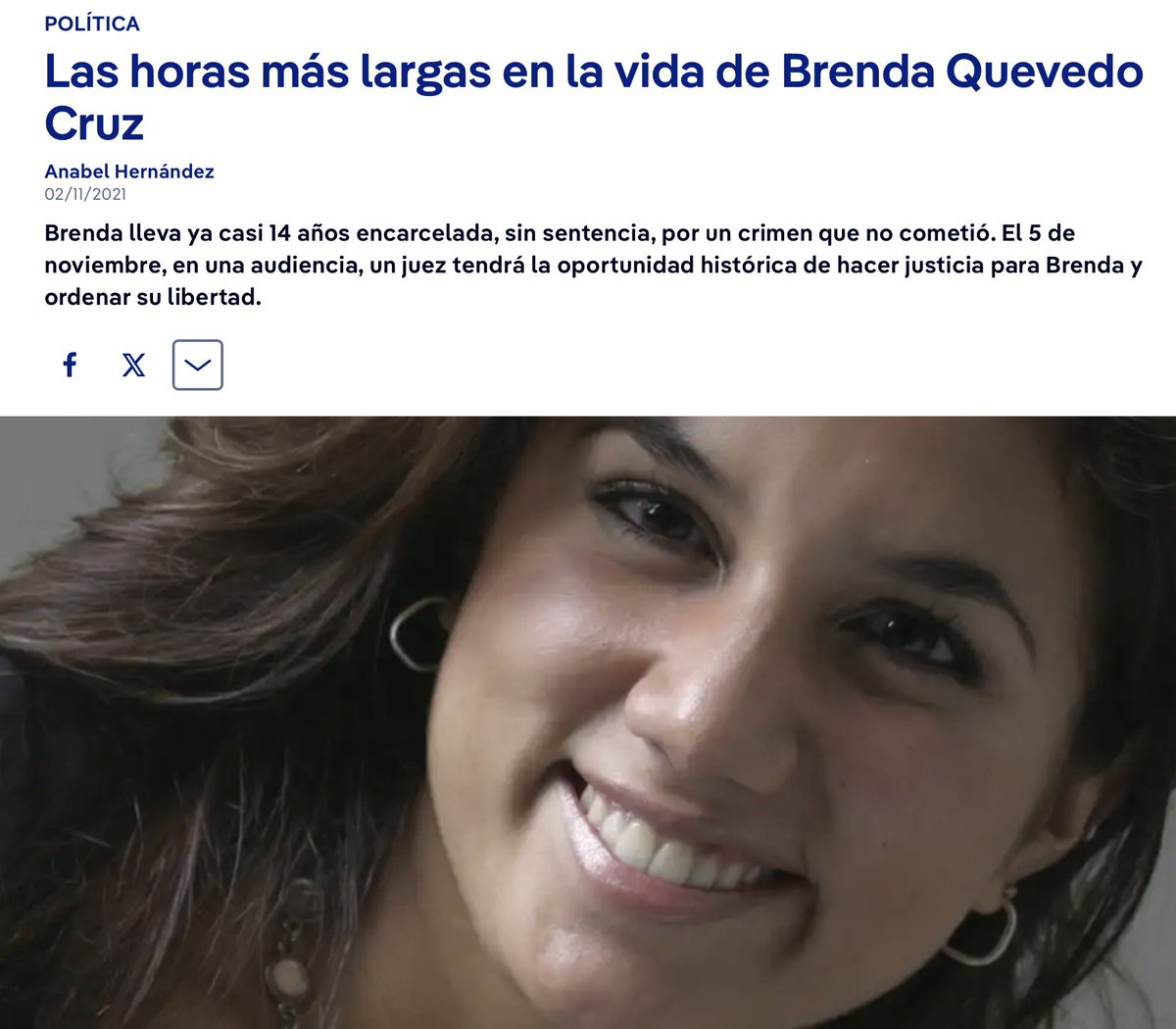
El caso de Brenda Quevedo es de los que inspiran una rabia y une indignación desbordantes. "Si la absuelven, admiten que destruyeron 18 años de vida de una mujer inocente. Entonces el sistema hace lo más cobarde: no decide. La mantiene atrapada en un limbo jurídico..." Basta ya!
José Mario@JoseMarioMX

Brenda Quevedo lleva 18 años presa sin sentencia. Dieciocho años. Entró a prisión en 2007, la torturaron, la trasladaron de penal en penal, y la ONU declaró formalmente que su detención es arbitraria. Hoy no está en una celda, está encerrada en su casa con una pulsera electrónica, sin poder trabajar, sin poder llevar a su mamá enferma al médico, sin poder vivir. Y el juicio nunca terminó. De hecho, el expediente lleva listo para sentencia desde 2014. Once años con el caso “listo” y nadie lo cierra. ¿Por qué? Porque cerrarlo obliga a tomar una decisión que el sistema no quiere tomar. Si la condenan, México enfrenta responsabilidad internacional ante la Comisión Interamericana de Derechos Humanos, que ya admitió el caso. Si la absuelven, admiten que destruyeron 18 años de vida de una mujer inocente. Entonces el sistema hace lo más cobarde: no decide. La mantiene atrapada en un limbo jurídico donde no es libre pero tampoco es culpable. Ayer, el juez que conoce del caso, rechazó en tres líneas la solicitud para revisar su situación, ignoró los argumentos de derechos humanos, ignoró la perspectiva de género, ignoró once años de proceso paralizado. La desechó de plano. Sin audiencia. Sin explicación real. Esto no es un error judicial. Esto es una decisión política disfrazada de tecnicismo legal. El Estado mexicano lleva casi dos décadas usando a Brenda Quevedo como moneda de cambio entre la presión mediática, la impunidad institucional y el miedo a las consecuencias de hacer justicia. Mientras tanto, ella y su mamá sobreviven con una pensión mínima, sin atención médica adecuada, sin libertad, sin sentencia. Dieciocho años esperando justicia en un país que decidió que es más fácil mantenerla encerrada que reconocer lo que le hizo. #BrendaLibre

Español
1
67
83
2.4K
Emmanuelle Steels retweetledi
José Mario
José Mario@JoseMarioMX·
Brenda Quevedo lleva 18 años presa sin sentencia. Dieciocho años. Entró a prisión en 2007, la torturaron, la trasladaron de penal en penal, y la ONU declaró formalmente que su detención es arbitraria. Hoy no está en una celda, está encerrada en su casa con una pulsera electrónica, sin poder trabajar, sin poder llevar a su mamá enferma al médico, sin poder vivir. Y el juicio nunca terminó. De hecho, el expediente lleva listo para sentencia desde 2014. Once años con el caso “listo” y nadie lo cierra. ¿Por qué? Porque cerrarlo obliga a tomar una decisión que el sistema no quiere tomar. Si la condenan, México enfrenta responsabilidad internacional ante la Comisión Interamericana de Derechos Humanos, que ya admitió el caso. Si la absuelven, admiten que destruyeron 18 años de vida de una mujer inocente. Entonces el sistema hace lo más cobarde: no decide. La mantiene atrapada en un limbo jurídico donde no es libre pero tampoco es culpable. Ayer, el juez que conoce del caso, rechazó en tres líneas la solicitud para revisar su situación, ignoró los argumentos de derechos humanos, ignoró la perspectiva de género, ignoró once años de proceso paralizado. La desechó de plano. Sin audiencia. Sin explicación real. Esto no es un error judicial. Esto es una decisión política disfrazada de tecnicismo legal. El Estado mexicano lleva casi dos décadas usando a Brenda Quevedo como moneda de cambio entre la presión mediática, la impunidad institucional y el miedo a las consecuencias de hacer justicia. Mientras tanto, ella y su mamá sobreviven con una pensión mínima, sin atención médica adecuada, sin libertad, sin sentencia. Dieciocho años esperando justicia en un país que decidió que es más fácil mantenerla encerrada que reconocer lo que le hizo. #BrendaLibre
José Mario tweet media
Español
79
1.8K
2.9K
128.2K
Emmanuelle Steels retweetledi
Ioan Grillo
Ioan Grillo@ioangrillo·
After years of searching, Ceci Flores @CeciPatriciaF found the remains of her son disappeared in 2019 in Sonora, Mexico. It's heartbreaking the only reward the searchers get is closure of knowing their loved one does not live. It's heartbreaking the term madre buscadora exists.
Nacho Lozano@nacholozano

La Fiscalía de Sonora confirmó que los restos que encontró la madre buscadora y activista, Ceci Flores @CeciPatriciaF, sí pertenecen a su hijo Marco Antonio Sauceda Rocha. “Debido al evidente estado de degradación de los restos óseos y el impacto de la fauna local, el personal especializado aplicó protocolos de alta complejidad que incluyeron el fraccionamiento de muestras por triplicado y un tratamiento de descalcificación con EDTA para maximizar la recuperación de material biológico”, informó la #FGJES.

English
9
88
243
8.1K
Emmanuelle Steels retweetledi
Jo
Jo@JoJoFromJerz·
This is an absolutely INSANE thing to say out loud. We killed their leaders in the middle of negotiations because we didn’t like the way they negotiated?!?!
Aaron Rupar@atrupar

Karoline Leavitt: "Some of the previous leaders are now no longer on planet Earth because they lied to the United States and they strung us along in negotiations, and that was unacceptable to the president, which is why many of the previous leaders were killed"

English
1.8K
23.2K
84.2K
1.9M
Emmanuelle Steels retweetledi
Gaëlle K.
Gaëlle K.@clarisselecter1·
La photo du jour. "No Kings" - Los Angeles - 28 mars. 📷 Jill Connelly (AP)
Gaëlle K. tweet media
English
114
2.8K
9.2K
171.9K