Marc Ribalta

279 posts

Marc Ribalta

Marc Ribalta

@MarcRibalta_

AI Gen hype train. Not into politics. ML engineer.

Katılım Ekim 2012
68 Takip Edilen62 Takipçiler
Marc Ribalta retweetledi
OpenCode
OpenCode@opencode·
OpenCode x Ring 2.6 1T - free for a limited time 256K context • reasoning • text only Thanks to @AntLingAGI and @novita_labs for making the model available
English
45
76
1.6K
98.2K
Marc Ribalta retweetledi
Sandro
Sandro@pupposandro·
Reminder that this is the future of humanity if open source AI doesn’t win
Sandro tweet media
English
119
237
3.1K
1.1M
Marc Ribalta retweetledi
Unsloth AI
Unsloth AI@UnslothAI·
We collaborated with NVIDIA to teach you how we made LLM training ~25% faster! 🚀 Learn how 3 optimizations help your home GPU train models faster: 1. Packed-sequence metadata caching 2. Double-buffered checkpoint reloads 3. Faster MoE routing Guide: unsloth.ai/blog/nvidia-co…
Unsloth AI tweet media
English
23
158
940
59.3K
Marc Ribalta retweetledi
kache
kache@yacineMTB·
this is what the future looks like now that i've been unshackled from stinky, ugly macos I can actually make my computer do what I want it to do
kache tweet media
tooz@adarshsolanki

@yacineMTB jobs_done.mp3
English
24
8
325
30.5K
Marc Ribalta retweetledi
Benjamin Marie
Benjamin Marie@bnjmn_marie·
Qwen3.6 GGUF Evaluations For the 27B: Q2_K_XL is surprisingly recommendable. IQ3_XXS performs very similarly, uses only +0.2 GB, and generates significantly fewer tokens. If you are memory-tight, pick this one. Otherwise, if you can spare +2.5 GB, use Q3_K_XL: (almost) same accuracy and token efficiency as the original. All the results, also for the 35B, here: kaitchup.substack.com/p/summary-of-q… More results are coming, probably Monday, covering other GGUF providers and some abliterated models.
Benjamin Marie tweet media
English
38
76
700
83.9K
Marc Ribalta
Marc Ribalta@MarcRibalta_·
@gabmfrl Me pasaba, pero con el tiempo cambia. Ahora a las 23 el cuerpo ya me pide dormir.
Español
0
0
1
55
Gabriel Merlo
Gabriel Merlo@gabmfrl·
Se habla poco del cronotipo (reloj biológico interno para dormir), pero yo modificar incluso una hora mi mejor horario, incluso si duermo las mismas horas, me afecta ya. No se qué cronotipo tendréis pero si alguno tenéis un cronotipo de “buho” o nocturno, entenderéis el dolor que supone adaptarse a los horarios tradicionales. Mi mejor horario es de 2 a 10, pero vivo en uno de 0 a 8 y no hay día que no lo note a pesar de todo el trabajo que he puesto para adaptarme. Alguno de vosotros sois de cronotipo madrugador? Cómo os sentís pasadas las 00:00?
Español
2
1
5
480
Marc Ribalta retweetledi
Avi Chawla
Avi Chawla@_avichawla·
8 RAG architectures all AI Engineers should know:
Avi Chawla tweet media
English
17
356
1.9K
227.8K
Marc Ribalta retweetledi
Skywork
Skywork@Skywork_ai·
Matrix-Game 2.0 — The FIRST open-source, real-time, long-sequence interactive world model Last week, DeepMind's Genie 3 shook the AI world with real-time interactive world models. But... it wasn't open-sourced. Today, Matrix-Game 2.0 changed the game. 🚀 25FPS. Minutes-long interaction. Fully open-source.
English
48
340
1.9K
1.4M
Marc Ribalta retweetledi
Lewis Tunstall
Lewis Tunstall@_lewtun·
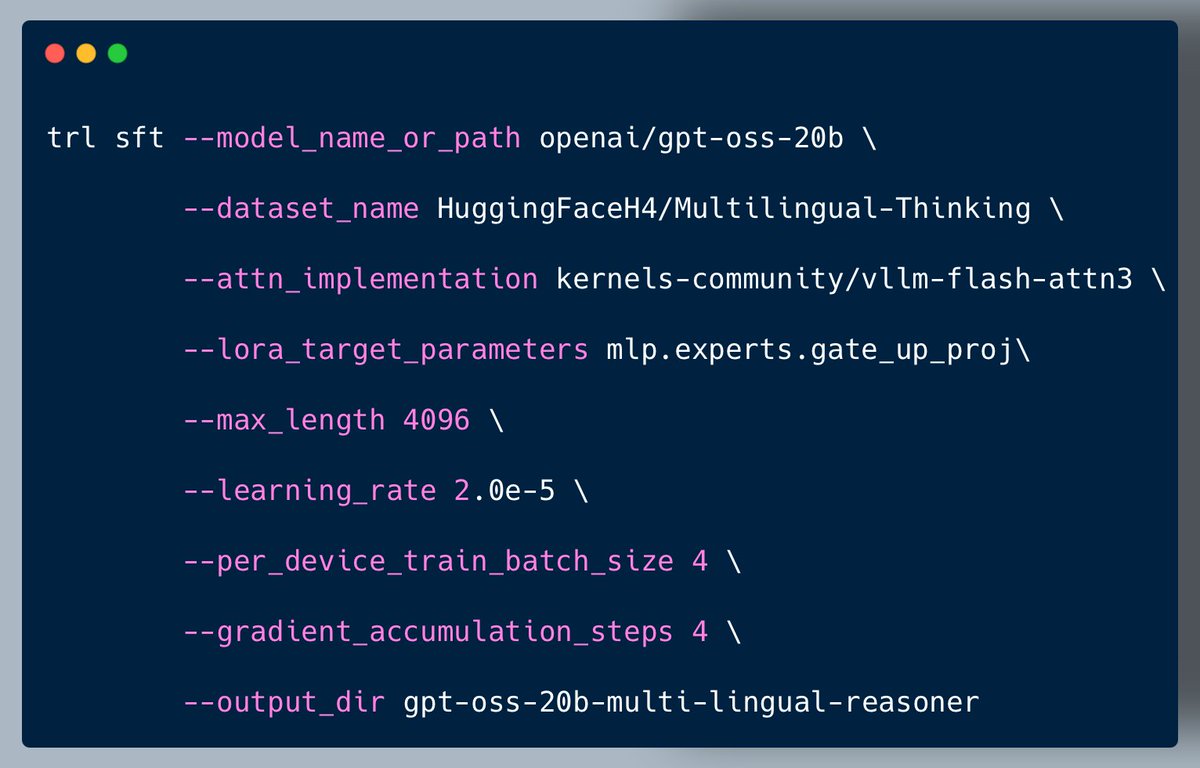
One line of code is all it takes to fine-tune the gpt-oss models from @OpenAI 🔥 > Support to target the MoE expert layers with PEFT > Kernels for FlashAttention3 & MegaBlocks > Fast inference with MXFP4 quantization format In our testing, these models are extremely efficient to tune and can be adapted to new domains with just a few 100 samples 🤯 Download the models: huggingface.co/openai Training & inference recipes: github.com/huggingface/gp…
Lewis Tunstall tweet media
English
12
98
748
76.7K
Marc Ribalta retweetledi
Sundar Pichai
Sundar Pichai@sundarpichai·
So many of you are loving turning your photos into short videos in the @Geminiapp and the Gemini API. Next up, we’ll be rolling this feature out to @YouTube Shorts and @GooglePhotos. And soon, Remix your Google Photos into comics, sketches + 3D animations.
GIF
English
131
170
1.5K
186.4K
Marc Ribalta retweetledi
elvis
elvis@omarsar0·
New Lens on RAG Systems RAG systems are more brittle than you think, even when provided sufficient context. Great work from Google and collaborators. Good tips for devs included. Here are my notes:
elvis tweet media
English
33
225
1.5K
190.3K
Marc Ribalta retweetledi
eric zakariasson
eric zakariasson@ericzakariasson·
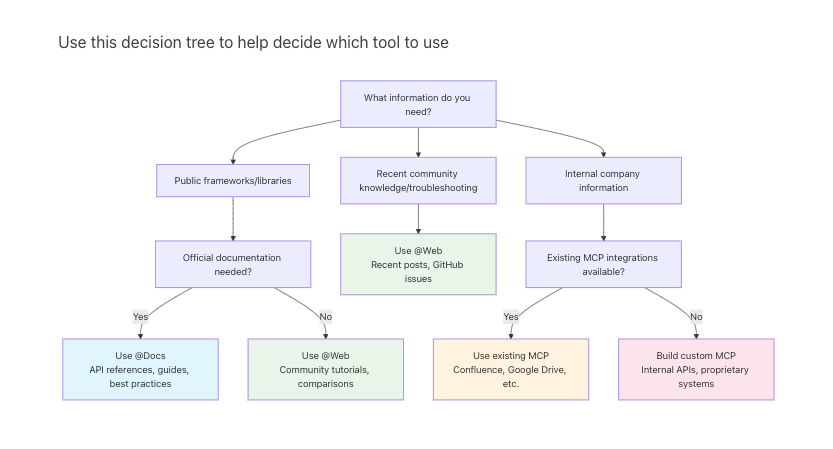
we wrote a guide on how to work with documentation in @cursor_ai includes some guidance on when to use which tool, a quick MCP server example for internal docs, and some prompting tips
eric zakariasson tweet media
English
32
120
1.8K
171.7K
Marc Ribalta retweetledi
Akshay 🚀
Akshay 🚀@akshay_pachaar·
Mixture of Experts (MoE) is a popular architecture that uses different "experts" to improve Transformer models. The visual below explains how they differ from Transformers. Let's dive in to learn more about MoE!
GIF
English
6
30
205
12.8K
Marc Ribalta retweetledi
Harrison Chase
Harrison Chase@hwchase17·
OpenAI recently released a guide on building agents which contains some misguided takes There's a lot of FUD, confusion, hype, and noise around agents I wrote a blog on how to think about agent frameworks. Includes: Background Info - What is an agent? - What is hard about building agents? - What is LangGraph? Flavors of agentic frameworks - “Agents” vs “workflows” - Declarative vs non-declarative - Agent abstractions - Multi agent Common Questions - What is the value of a framework? - As the models get better, will everything become agents instead of workflows? - What did OpenAI get wrong in their take? - How do all the agent frameworks compare?
Harrison Chase tweet media
English
88
120
920
450K
Marc Ribalta retweetledi
Elias
Elias@Eliasfiz·
Today, we’re launching Orpheus, an open-source TTS model that exceeds the capabilities of both open and closed-source models such as ElevenLabs and OpenAI! (1/6)
English
183
390
3.8K
629.4K
Marc Ribalta retweetledi
kalomaze
kalomaze@kalomaze·
no way
kalomaze tweet media
English
24
14
723
522.6K
Marc Ribalta retweetledi
Victoria Slocum
Victoria Slocum@victorialslocum·
'Just do RAG' they said. But WHICH RAG? Here’s 7 different RAG Architectures you should know 👇 1️⃣ 𝗡𝗮𝗶𝘃𝗲 𝗥𝗔𝗚: 𝗧𝗵𝗲 𝗖𝗹𝗮𝘀𝘀𝗶𝗰 𝗔𝗽𝗽𝗿𝗼𝗮𝗰𝗵 Naive RAG is the standard implementation with a relatively straightforward process: • Query comes in from the user • System retrieves relevant documents from a vector database • Retrieved documents are combined with the query as context • LLM generates a response based on both query and context This works well for many simple applications, like basic Q&A systems or document assistants. 2️⃣ 𝗥𝗲𝘁𝗿𝗶𝗲𝘃𝗲 𝗮𝗻𝗱 𝗥𝗲𝗿𝗮𝗻𝗸 𝗥𝗔𝗚 This one adds a reranking step after the retrieval to improve response quality: • Initial retrieval returns a larger set of potentially relevant documents • A reranking model evaluates and scores these documents based on relevance • Only the highest-scoring documents are sent to the LLM 3️⃣ 𝗠𝘂𝗹𝘁𝗶𝗺𝗼𝗱𝗮𝗹 𝗥𝗔𝗚 The architecture leverages models that can process and retrieve from text, images, audio, video, and other data types. 4️⃣ 𝗚𝗿𝗮𝗽𝗵 𝗥𝗔𝗚 Graph RAG uses a graph database to incorporate relationship information between documents: • Documents/chunks are nodes in a graph • Relationships between documents are edges • Can follow relationship paths to find contextually relevant information 5️⃣ 𝗛𝘆𝗯𝗿𝗶𝗱 𝗥𝗔𝗚 𝗩𝗲𝗰𝘁𝗼𝗿 𝗗𝗕 𝘄𝗶𝘁𝗵 𝗚𝗿𝗮𝗽𝗵 𝗗𝗕 This architecture combines both vector search and a graph database: • Vector search identifies semantically similar content • Graph database provides structured relationship data • Queries can leverage both similarity and explicit relationships • Results can include information discovered through relationship traversal 6️⃣ 𝗔𝗴𝗲𝗻𝘁𝗶𝗰 𝗥𝗔𝗚 𝘄𝗶𝘁𝗵 𝗥𝗼𝘂𝘁𝗲𝗿 𝗔𝗴𝗲𝗻𝘁 A single agent makes decisions about retrieval: • Analyzes the query to determine the best knowledge sources • Makes strategic decisions about how to retrieve information • Coordinates the retrieval process based on query understanding 𝘊𝘩𝘦𝘤𝘬 𝘰𝘶𝘵 𝘵𝘩𝘦 𝘘𝘶𝘦𝘳𝘺 𝘈𝘨𝘦𝘯𝘵 𝘪𝘯 𝘞𝘦𝘢𝘷𝘪𝘢𝘵𝘦: weaviate.io/blog/query-age… 7️⃣ 𝗠𝘂𝗹𝘁𝗶-𝗔𝗴𝗲𝗻𝘁 𝗥𝗔𝗚 This one employs multiple specialized agents: • Master agent coordinates the overall process • Specialized retrieval agents focus on different tasks • Agents can communicate and collaborate to solve complex problems For example, one agent might retrieve from various sources, another might do data transformation, and a third personalizing the results from the user—all coordinated by a master agent that assembles the final response. Check out this ebook for more deep-dives into RAG architecture and strategies: weaviate.io/ebooks/advance…
Victoria Slocum tweet media
English
12
227
1.2K
121K