
Maria Mhofu retweetledi
Maria Mhofu
308 posts


Maria Mhofu
@Mariah34794
Leader | Strategist | Delivering results Driving change through vision and action Focused on impact, leadership & progress
Bulawayo, Zimbabwe Katılım Nisan 2026
137 Takip Edilen74 Takipçiler

Maria Mhofu retweetledi

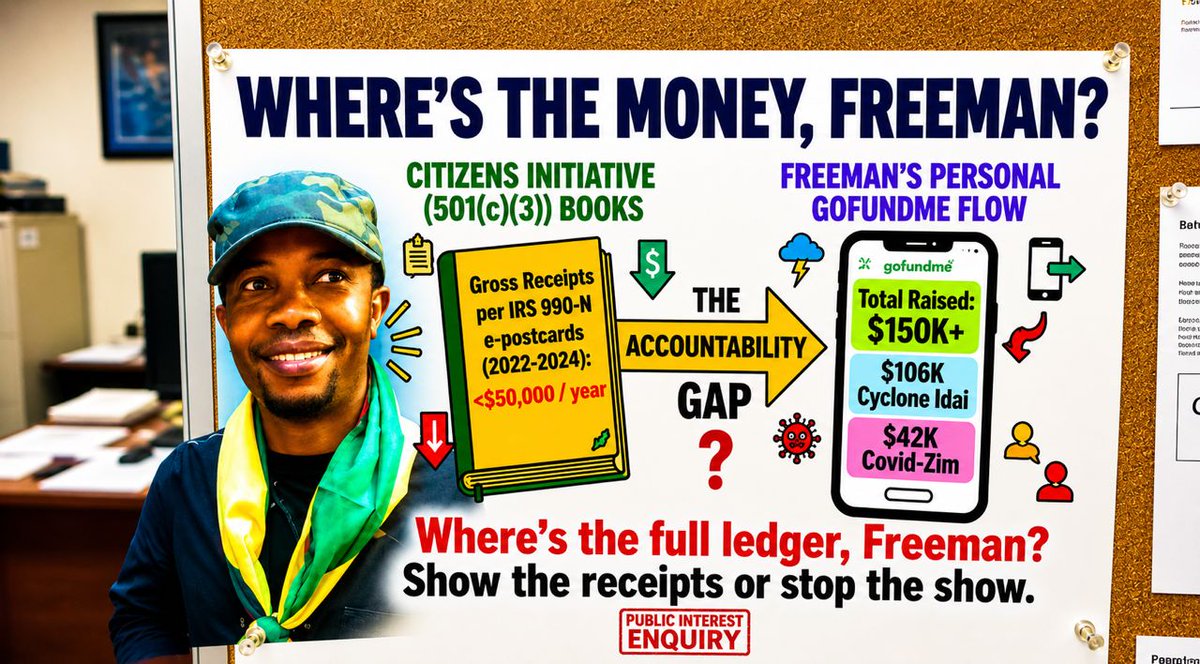
Transparency & Accountability: A Question of Figures
Did you know that over $150,000 was raised under the Citizens Initiative 501(c)(3) (EIN 84-4964958) banner, yet official IRS 990-N e-postcard filings for 2022–2024 report annual gross receipts of less than $50,000?
English

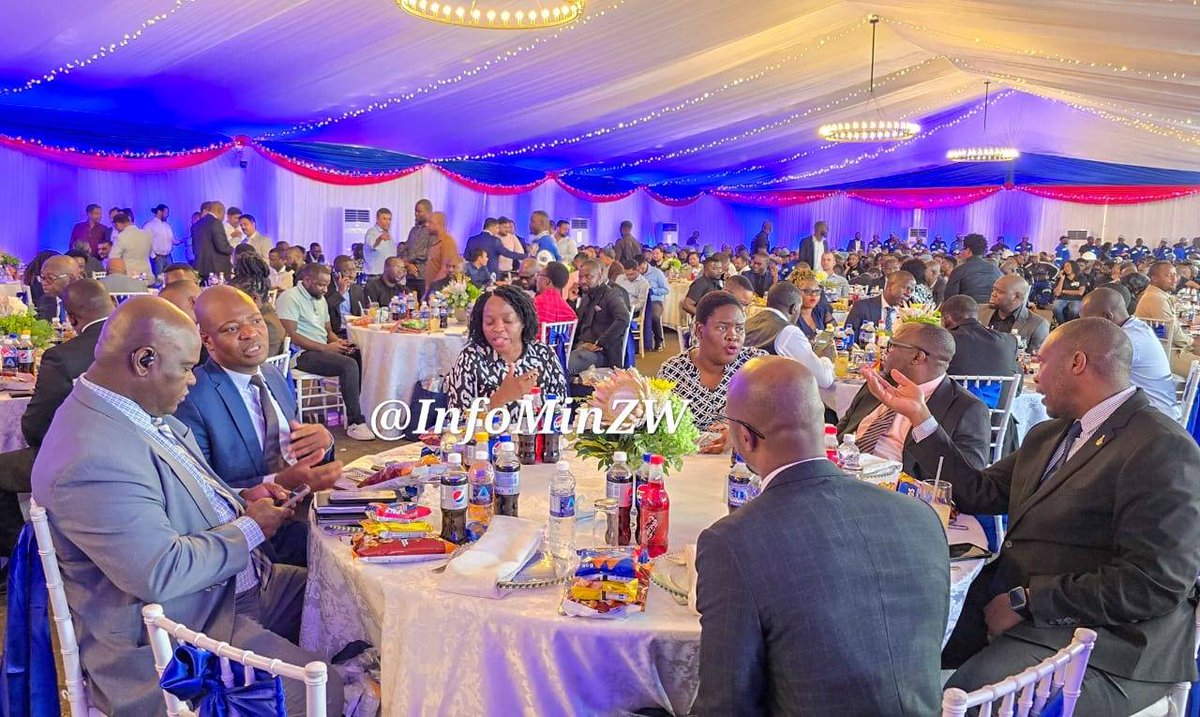
Varun Beverages Limited saw opportunity in Zimbabwe early. Since 2016, the company has expanded from a single Pepsi production line to a diversified manufacturing operation producing millions of beverages and snacks monthly, showcasing the country’s industrial potential under Vision2030


English
Maria Mhofu retweetledi

There is unfortunately no vacancy for a President in Zanu Pf.
While @matinyarare is still pushing that KT or PV Sibanda are eying presidency, this is what Dr Kuda Tagwirei said when he was asked if he wanted to be president after Cde @edmnangagwa
English
Maria Mhofu retweetledi

Vice President of the Republic of Zimbabwe, Honourable General (Retired) Dr Constantino Guvheya Dominic Nyikadzino Chiwenga, speaks to journalists following the inauguration ceremony of President Yoweri Kaguta Museveni of the Republic of Uganda in Kampala.
English
Maria Mhofu retweetledi
BREAKING NEWS: Former Minister of Tourism and Hospitality Industry (and several other portfolios), Dr Walter Mzembi, has been acquitted of corruption charges by the High Court.
English
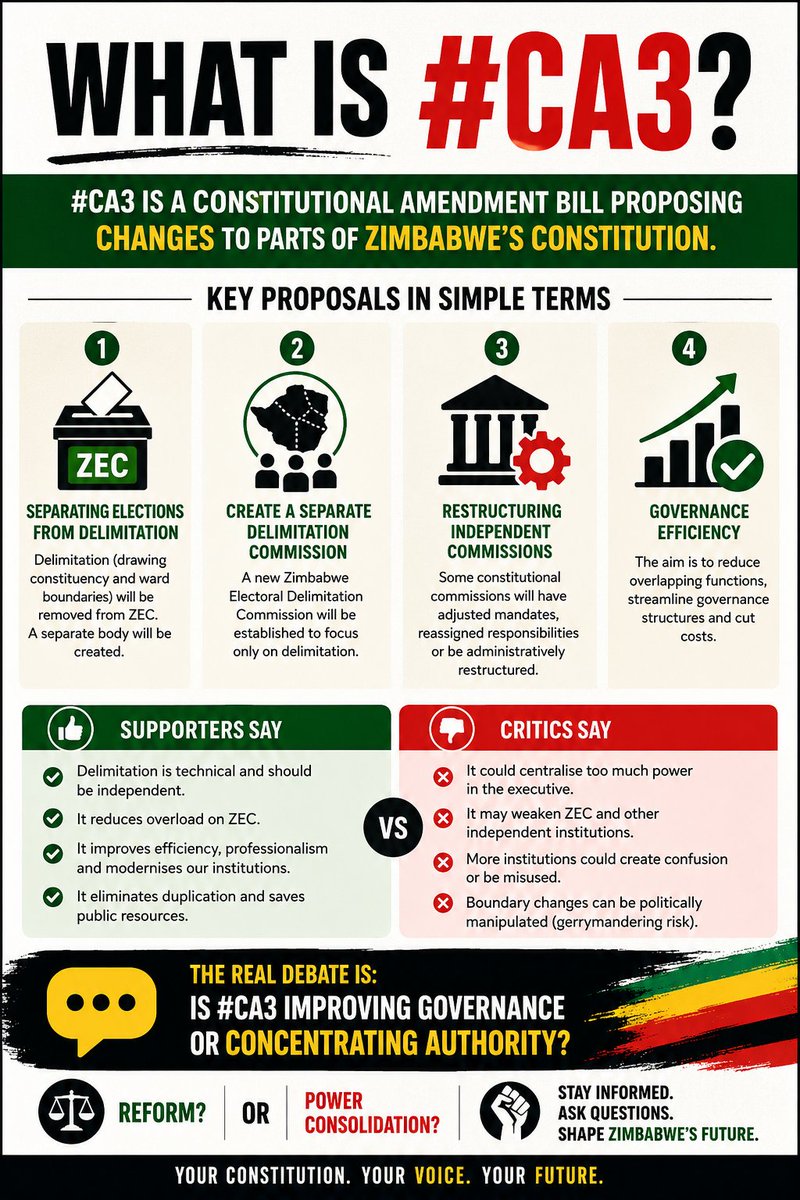
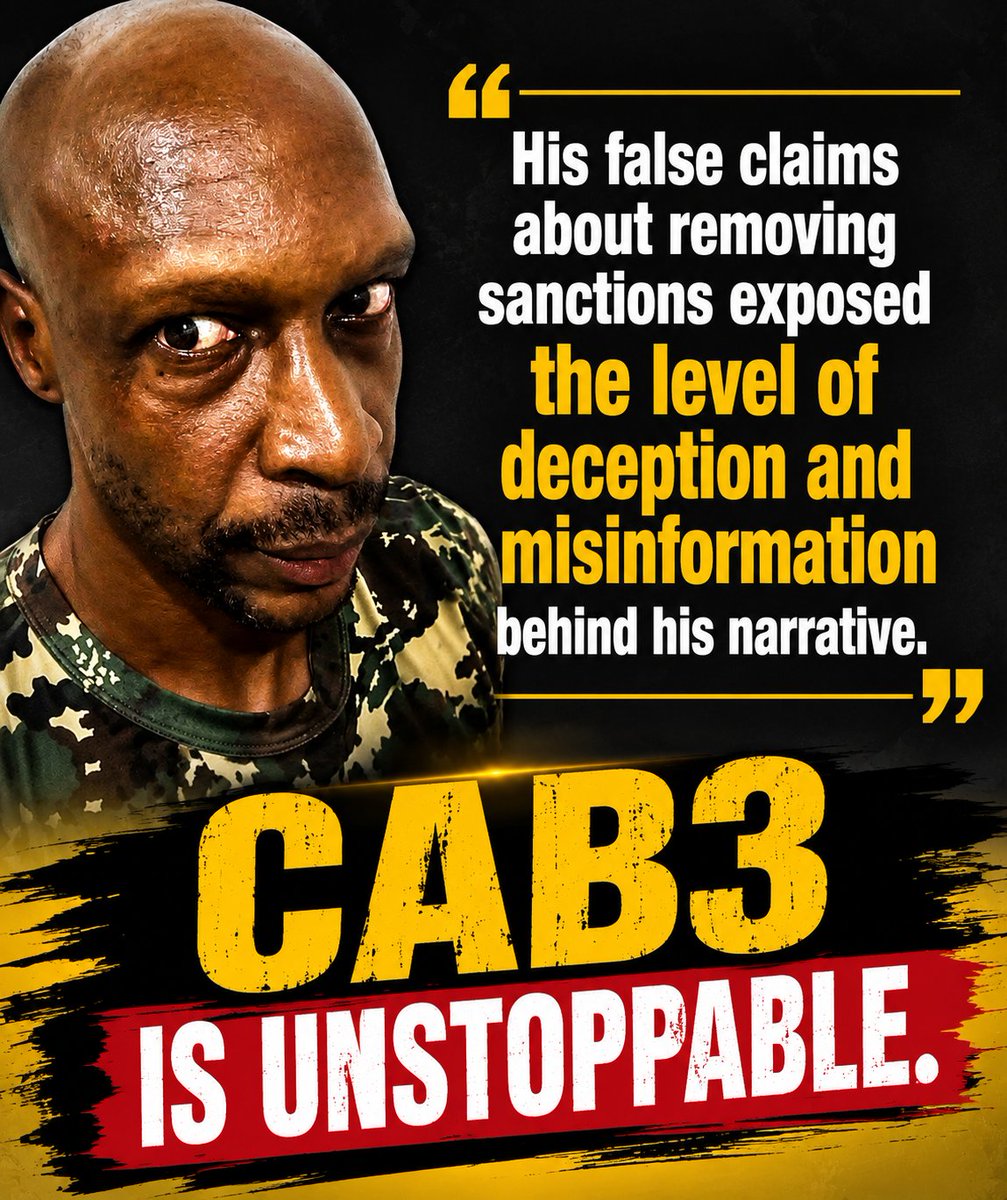
Deception only works until the truth is exposed. We are moving forward with a clear vision and a commitment to the legislative process. CA3 is Unstoppable
English
4 days to go.
Your voice matters in shaping the future of our Constitution. Engage. Participate. Make your CA3 submissions before the deadline. 🇿🇼

English
Maria Mhofu retweetledi

Under the Constitution of Zimbabwe, there is a very specific "road map" that must be followed before Constitutional Amendment Bill No. 3 can be passed. Here is what happens next after the 4 days that are left has passed:
1. Compilation of the Portfolio Committee Report
Now that the 4-day physical outreach will br over, the Parliamentary Portfolio Committee on Justice, Legal and Parliamentary Affairs (and potentially the Thematic Committee on Gender) will meet to consolidate all the feedback.
Written Submissions: Even though the physical meetings are done, the public typically has until the end of the 90-day gazetting period (which ends around May 17, 2026) to send written views to the Clerk of Parliament.
The Report: The Committee will write a report summarizing whether the public supported or rejected the Bill (including the clause on merging the Gender and Human Rights Commissions). This report is then tabled in the National Assembly.
2. The 90-Day "Waiting Period"
According to Section 328 of the Constitution, a Constitutional Bill cannot even be introduced for debate in Parliament until 90 days have passed from the date it was first published in the Government Gazette.
Timeline: Since the Bill was gazetted on February 16, 2026, Parliament cannot vote on it until after May 17, 2026.
Purpose: This period is a "cooling off" time designed to prevent the government from rushing through changes to the supreme law without adequate national reflection.
3. Debate and the "Two-Thirds" Rule
Once the 90 days are up and the Committee report is ready, the Bill moves to the Second Reading stage in the National Assembly.
The Vote: Unlike ordinary laws that require a simple majority, this Bill requires a two-thirds majority in both the National Assembly and the Senate.
The Opposition Factor: If the ruling party does not hold a two-thirds majority on its own, it would need to win over opposition votes or "independent" members to pass the Bill.
4. Presidential Assent
If both houses of Parliament pass the Bill by a two-thirds majority, it is sent to the President for his signature (Assent). Once signed and published in the Gazette as an Act, the Zimbabwe Gender Commission would officially begin the process of merging into the Zimbabwe Human Rights Commission.
#CA3

English
Colonial conquest stripped indigenous leaders and their people of political power through force of arms. Independence was about reclaiming that lost authority. CAB3 is part of that restoration process.
English
Maria Mhofu retweetledi

@ProfMadhuku’s charge that those pushing CAB3 are committing a “crime against humanity” would ordinarily deserve nothing but contemptuous silence. Yet it is an outrage against reason—because it plummets far below the minimum threshold of rationality and responsibility expected of a respected Professor of Law, senior member of the Bar, and veteran political leader who has contested the presidency in every general election for decades.
Such reckless hyperbole cheapens the gravity of true crimes against humanity!
English
Maria Mhofu retweetledi

Dear @AnnahBengesai
My argument in my article was centred on one fundamental question: what electoral system can best serve Zimbabwe in light of the country’s repeated cycle of disputed presidential elections?
Most of the responses I received were not necessarily about the merits or weaknesses of indirect presidential election itself, but about the process of changing the Constitution to effect such a system. That, however, demonstrates why constitutional process and policy issues are related but separate conversations.
A constitutional process answers the question: how should a proposed system be structured, designed, adopted, limited, and implemented within the constitutional framework of the state?
Policy issues answer the question: what should government do with that power once it is constituted?
The Constitution is the architecture of the state. Policy is what happens inside that architecture.
For example, whether a President is elected directly by citizens or indirectly through Parliament is a constitutional design question. It concerns legitimacy, stability, dispute resolution, accountability, succession, and the mechanics of political power.
Whether government should improve healthcare, reduce taxes, build roads, or subsidise agriculture are policy questions. Those are choices made within the constitutional framework.
The mistake many make in political debates is collapsing the two into one conversation.
A person may disagree with indirect presidential election because they fear elite capture. Another may support it because they believe it reduces disputed elections and political instability. Both are debating the structure and design of power, not whether government should provide jobs or improve service delivery.
Constitutions are designed to manage political behaviour, conflict, succession, and stability over generations. Policies change from administration to administration.
That is why countries with completely different policy directions can still operate under the same constitutional framework.
In simple terms, the Constitution decides how the game is played. Policy decides what players do during the game.
If we fail to separate those conversations, we end up judging constitutional design emotionally through current political frustrations rather than asking the deeper institutional question:
“What constitutional arrangement best produces stability, legitimacy, accountability, and governability over time?”
Annah Bengesai@AnnahBengesai
@glenmpani Glen, help me understand how constitutional process and policy issues are separate conversations.
English
@Just_Vibe_S @matinyarare Well I don't know what a dosi is but the bamdiki part is quite low
English

𝗖𝗛𝗔𝗥𝗔𝗠𝗕𝗔 𝗦𝗘𝗡𝗗𝗦 𝗢𝗠𝗜𝗡𝗢𝗨𝗦 𝗪𝗔𝗥𝗡𝗜𝗡𝗚 𝗪𝗜𝗧𝗛𝗢𝗨𝗧 𝗦𝗔𝗬𝗜𝗡𝗚 𝗔 𝗪𝗢𝗥𝗗.
On Friday, George Charamba posted a video of Julius Malema warning President Ramaphosa that he must listen more to those who criticize him and not those who tell him that he is right when he is wrong.
Malema also went on to warn the President not to ignore Chapter 9 institutions (in Zimbabwe we call them Chapter 12 institutions) and that he must not work with UNELECTED capitalists as Zuma worked with unelected Guptas, because then he might not finish his term.
The message is no different to the allegory of Hezekiah. I wonder what Mabiza will do…🙊🙊🙊🙊
English