Mark K

2.9K posts

Mark K banner
Mark K

Mark K

@MarkKaposvari

Lyrical takes on man-made mistakes https://t.co/c6G2R7Z9Ho May clarity and common sense prevail in the war against the virus of mendacity & hubris

Hungary Katılım Ekim 2015
266 Takip Edilen315 Takipçiler
Sabitlenmiş Tweet
Mark K
Mark K@MarkKaposvari·
"[...]the whispering descent of corporate Web crawlers itching to index and corrupt another patch of sanctuary for their own ends. Then it’ll be just like up there in the shallows. Link by link, they’ll bring it all under control, safe and respectable." —Thomas Pynchon
English
1
1
10
0
Mark K
Mark K@MarkKaposvari·
Julius Ruechel@JuliusRuechel

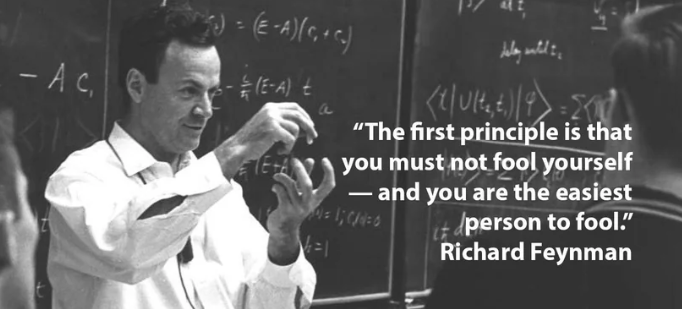
According to Mattias Desmet’s theory of mass formation (discussed during Covid), roughly 30% of the population does not fall under the spell or "hypnotized" state of mass hysteria. Sounds tidy, right? But since Covid, the "dissident" community from the Covid era has fractured into opposing camps as new mass hysterias have infected society. If some people are naturally more resistant to mass hysteria, it would always be the same people who manage to steer clear. All the same dissidents would reappear, time and time again, as new mass hysterias emerge. And all the same people who got caught up in it last time would get caught up in the next one. But clearly that has not been the case. Immunity to one bout of mass hysteria is no guarantee that you will have immunity to the next. So, resistance to mass hysteria obviously does not come from some genetic predisposition, nor is there some kind of lifetime psychological immunity. It changes from issue to issue. Most likely, personal circumstances play the biggest role. In some cases, being away from the crowd gives people time to reflect. Or personal familiarity with an issue or the people involved might create the disconnect needed to recognize the mass hysteria. Or the luck of seeing some comment or post that makes you think about something differently than what the crowd is discussing. Or how many in your close tribe fall prey and sweep you along. And some people simply have a habit of verifying original sources and thus are in the habit of testing and retesting their own ideas -- it's not that they are immune to propaganda and conspiracy theories and mass hysteria, but rather that their habits provide a mechanism to lead them back out. But, considering how the Covid dissident community has fractured since then, this category of people seems to be vanishingly small indeed. It's also worth noting that mass hysteria can arise from different places (i.e. government propaganda vs crowd-sourced), which also either sets you up to be more or less likely to fall prey depending on your psychological state. For example, if, due to a prior experience, you have completely lost your trust in government institutions or legacy media, that would make you more resistant to official propaganda. But if you have high trust in those institutions because you've never had a transformative run-in with how flawed they are, you're likely more easily misled by govt propaganda. By contrast, the inverse is also true. If you don't trust govt institutions, that might actually make you more susceptible to falling into some crowd-sourced conspiracy theory because you extend trust to "dissident voices" that provide alternate explanations for how the world works -- after all, if you don't trust the govt and the media, you're probably already out there looking for alternate explanations to make sense of the world. Whereas those who have a high degree of trust in government and media institutions are likely relatively immune to crowd-sourced conspiracy theories because they're not out there looking for alternate ways of making sense of the world and aren't likely to extend their trust to someone who isn't some media-approved institutional expert. Furthermore, if someone you trusted as a reliable source of information during the last mass hysteria falls for the next one, your trust in them might easily lead you down the same rabbit hole. In short, while there may be some validity to Desmet's idea that 30% are immune, it's a little more complicated than that. Clearly it's not the same 30% every time. Not even close. If anything, if you're busy congratulating yourself that you managed to avoid getting caught up in the mass hypnosis the last time, you may actually be overconfident in your ability to resist the next one and thus not have enough self-doubt to question your most strongly held opinions, which might just turn out to be wrong this time. That's why, no matter how confident you are in what you believe, the only safeguard to prevent you from deceiving yourself is the habit of continually putting all your beliefs to the test, verifying original sources, and giving consideration to what those you don't agree with are saying. As Richard Feynman so famously said: 👇

QME
1
0
0
88
Fyodor Dostoevsky Collection 🪓
Fyodor Dostoevsky Collection 🪓@Dostoevskyquot·
"The simple step of the courageous individual is to not take part in the lie." — Aleksandr Solzhenitsyn
Fyodor Dostoevsky Collection 🪓 tweet media
English
67
1.7K
5.2K
96K
Mark K
Mark K@MarkKaposvari·
@_taylorhudak One of my all time favourite walk routes is through Erzsébet bridge from Buda to Pest towards Ferenciek tere...
English
0
0
0
37
Taylor Hudak
Taylor Hudak@_taylorhudak·
Jó reggelt!
Taylor Hudak tweet media
Magyar
6
2
75
1.3K
Jash Dholani
Jash Dholani@oldbooksguy·
What's a book you consider a masterpiece?
English
216
11
149
132.6K
Mark K
Mark K@MarkKaposvari·
The 'suspension of disbelief' is as much the province of politics as it is of creative fiction, if not more.
Julius Ruechel@JuliusRuechel

According to Mattias Desmet’s theory of mass formation (discussed during Covid), roughly 30% of the population does not fall under the spell or "hypnotized" state of mass hysteria. Sounds tidy, right? But since Covid, the "dissident" community from the Covid era has fractured into opposing camps as new mass hysterias have infected society. If some people are naturally more resistant to mass hysteria, it would always be the same people who manage to steer clear. All the same dissidents would reappear, time and time again, as new mass hysterias emerge. And all the same people who got caught up in it last time would get caught up in the next one. But clearly that has not been the case. Immunity to one bout of mass hysteria is no guarantee that you will have immunity to the next. So, resistance to mass hysteria obviously does not come from some genetic predisposition, nor is there some kind of lifetime psychological immunity. It changes from issue to issue. Most likely, personal circumstances play the biggest role. In some cases, being away from the crowd gives people time to reflect. Or personal familiarity with an issue or the people involved might create the disconnect needed to recognize the mass hysteria. Or the luck of seeing some comment or post that makes you think about something differently than what the crowd is discussing. Or how many in your close tribe fall prey and sweep you along. And some people simply have a habit of verifying original sources and thus are in the habit of testing and retesting their own ideas -- it's not that they are immune to propaganda and conspiracy theories and mass hysteria, but rather that their habits provide a mechanism to lead them back out. But, considering how the Covid dissident community has fractured since then, this category of people seems to be vanishingly small indeed. It's also worth noting that mass hysteria can arise from different places (i.e. government propaganda vs crowd-sourced), which also either sets you up to be more or less likely to fall prey depending on your psychological state. For example, if, due to a prior experience, you have completely lost your trust in government institutions or legacy media, that would make you more resistant to official propaganda. But if you have high trust in those institutions because you've never had a transformative run-in with how flawed they are, you're likely more easily misled by govt propaganda. By contrast, the inverse is also true. If you don't trust govt institutions, that might actually make you more susceptible to falling into some crowd-sourced conspiracy theory because you extend trust to "dissident voices" that provide alternate explanations for how the world works -- after all, if you don't trust the govt and the media, you're probably already out there looking for alternate explanations to make sense of the world. Whereas those who have a high degree of trust in government and media institutions are likely relatively immune to crowd-sourced conspiracy theories because they're not out there looking for alternate ways of making sense of the world and aren't likely to extend their trust to someone who isn't some media-approved institutional expert. Furthermore, if someone you trusted as a reliable source of information during the last mass hysteria falls for the next one, your trust in them might easily lead you down the same rabbit hole. In short, while there may be some validity to Desmet's idea that 30% are immune, it's a little more complicated than that. Clearly it's not the same 30% every time. Not even close. If anything, if you're busy congratulating yourself that you managed to avoid getting caught up in the mass hypnosis the last time, you may actually be overconfident in your ability to resist the next one and thus not have enough self-doubt to question your most strongly held opinions, which might just turn out to be wrong this time. That's why, no matter how confident you are in what you believe, the only safeguard to prevent you from deceiving yourself is the habit of continually putting all your beliefs to the test, verifying original sources, and giving consideration to what those you don't agree with are saying. As Richard Feynman so famously said: 👇

English
0
0
2
33
Mark K
Mark K@MarkKaposvari·
@JuliusRuechel Stay safe, trust the science, Black Lives Matter, Slava Ukraini, Build Back Better, net zero, from the river to the sea, Protect the homeland, Death to the Dictator, AI will save us, etc. When the world is on fire, sooner or later all stripes of egos get cornered and weaponised.
English
0
0
1
37
Julius Ruechel
Julius Ruechel@JuliusRuechel·
According to Mattias Desmet’s theory of mass formation (discussed during Covid), roughly 30% of the population does not fall under the spell or "hypnotized" state of mass hysteria. Sounds tidy, right? But since Covid, the "dissident" community from the Covid era has fractured into opposing camps as new mass hysterias have infected society. If some people are naturally more resistant to mass hysteria, it would always be the same people who manage to steer clear. All the same dissidents would reappear, time and time again, as new mass hysterias emerge. And all the same people who got caught up in it last time would get caught up in the next one. But clearly that has not been the case. Immunity to one bout of mass hysteria is no guarantee that you will have immunity to the next. So, resistance to mass hysteria obviously does not come from some genetic predisposition, nor is there some kind of lifetime psychological immunity. It changes from issue to issue. Most likely, personal circumstances play the biggest role. In some cases, being away from the crowd gives people time to reflect. Or personal familiarity with an issue or the people involved might create the disconnect needed to recognize the mass hysteria. Or the luck of seeing some comment or post that makes you think about something differently than what the crowd is discussing. Or how many in your close tribe fall prey and sweep you along. And some people simply have a habit of verifying original sources and thus are in the habit of testing and retesting their own ideas -- it's not that they are immune to propaganda and conspiracy theories and mass hysteria, but rather that their habits provide a mechanism to lead them back out. But, considering how the Covid dissident community has fractured since then, this category of people seems to be vanishingly small indeed. It's also worth noting that mass hysteria can arise from different places (i.e. government propaganda vs crowd-sourced), which also either sets you up to be more or less likely to fall prey depending on your psychological state. For example, if, due to a prior experience, you have completely lost your trust in government institutions or legacy media, that would make you more resistant to official propaganda. But if you have high trust in those institutions because you've never had a transformative run-in with how flawed they are, you're likely more easily misled by govt propaganda. By contrast, the inverse is also true. If you don't trust govt institutions, that might actually make you more susceptible to falling into some crowd-sourced conspiracy theory because you extend trust to "dissident voices" that provide alternate explanations for how the world works -- after all, if you don't trust the govt and the media, you're probably already out there looking for alternate explanations to make sense of the world. Whereas those who have a high degree of trust in government and media institutions are likely relatively immune to crowd-sourced conspiracy theories because they're not out there looking for alternate ways of making sense of the world and aren't likely to extend their trust to someone who isn't some media-approved institutional expert. Furthermore, if someone you trusted as a reliable source of information during the last mass hysteria falls for the next one, your trust in them might easily lead you down the same rabbit hole. In short, while there may be some validity to Desmet's idea that 30% are immune, it's a little more complicated than that. Clearly it's not the same 30% every time. Not even close. If anything, if you're busy congratulating yourself that you managed to avoid getting caught up in the mass hypnosis the last time, you may actually be overconfident in your ability to resist the next one and thus not have enough self-doubt to question your most strongly held opinions, which might just turn out to be wrong this time. That's why, no matter how confident you are in what you believe, the only safeguard to prevent you from deceiving yourself is the habit of continually putting all your beliefs to the test, verifying original sources, and giving consideration to what those you don't agree with are saying. As Richard Feynman so famously said: 👇
Julius Ruechel tweet media
English
92
177
680
73.9K
Mark K
Mark K@MarkKaposvari·
~How about that weird protagonist in Gravity's Rainbow who had these compulsive sexual urges conditioned in him as an infant by a Pavlovian scientist, enmeshed in lifelong surveillance, nefarious geopolitical plots, drawn to underage girls, who in the end mysteriously disappears?
Collin Rugg@CollinRugg

JUST IN: New Epstein document drop reveals that Jeffrey Epstein thought of org*sms like he thought of eating: 3 times a day. According to Epstein victim Johanna Sjoberg, Epstein needed to have 3 org*sms a day. "He explained to me that, in his opinion, he needed to have three org*sms a day. It was biological, like eating."

English
0
0
1
200
Mark K
Mark K@MarkKaposvari·
@DanielHadas2 I'll have to read Sandman, sounds very interesting you have a typo there: "of *its salesmen" Have you seen the movie Her (2013)? x.com/MarkKaposvari/…
Mark K@MarkKaposvari

@duncanreyburn we may be fast approaching the point where the promise of an all-knowing interlocutor and a personal relation with a being that directly hears and sees and understands and guides us becomes too good for people to ignore... tantalizing us with an escape from "the tension in being"

English
1
0
2
103
Duncan Reyburn
Duncan Reyburn@duncanreyburn·
Utterly unsurprising. “The principle is not difficult to grasp: the tools we use can and often do hamper, if not outright attack, the abilities and potentials we possess. What we don’t practice, we lose. Just as muscles can atrophy when they are not used, skills can be lost. Intelligence is not immune to desecration.” Duncan Reyburn, ‘Degenerative AI’, The Eucatastrophologist (Substack), 15 February 2024.
Nav Toor@heynavtoor

🚨BREAKING: MIT hooked people up to brain scanners while they used ChatGPT. What they found should concern every single person reading this. ChatGPT users showed 55% weaker brain connectivity than people who didn't use it. Not after years. After just four months. Here's how they tested it. 54 people were split into three groups: one used ChatGPT to write essays, one used Google, and one used nothing but their own brain. They wore EEG monitors that tracked their brain activity in real time across four sessions over four months. The brain-only group built the strongest, most widespread neural networks. Google users were in the middle. ChatGPT users had the weakest brains in the room. Every time. Then the memory test hit. Participants were asked to recall what they'd just written minutes earlier. 83% of ChatGPT users couldn't quote a single line from their own essay. They wrote it. They couldn't remember it. The words passed through them like they were never there. It gets worse. In the final session, ChatGPT users were told to write without AI. Their brains were measurably weaker than people who never used AI at all. 78% still couldn't recall their own writing. The damage didn't go away when the tool was removed. Meanwhile, brain-only users who tried ChatGPT for the first time? Their brains lit up. They wrote better prompts. They retained more. Their brains were already strong enough to use AI as a tool instead of a crutch. The researchers also found that every ChatGPT essay on the same topic looked almost identical. More facts, more dates, more names. But less original thinking. Everyone using ChatGPT produced the same generic output while believing it was their own. MIT gave this a name: cognitive debt. Like financial debt, you borrow convenience now and pay with your thinking ability later. Except there's no way to pay it back. The question isn't whether ChatGPT is useful. It's whether the price is your ability to think without it.

English
4
3
20
2K
Mark K
Mark K@MarkKaposvari·
@duncanreyburn we may be fast approaching the point where the promise of an all-knowing interlocutor and a personal relation with a being that directly hears and sees and understands and guides us becomes too good for people to ignore... tantalizing us with an escape from "the tension in being"
English
0
0
1
129
Mark K
Mark K@MarkKaposvari·
@freddiesayers @unherd The mob wants to see heads roll, to satisfy its own lust for blood and for power The mob wants to feed on the frenzy of revenge, by projecting its collective Shadow onto salient scapegoats The mob wants nothing remedial besides the ecstasy of a righteous emotional high Always.
English
0
0
0
11
Mark K
Mark K@MarkKaposvari·
As rash as it sounds, when I think of the upcoming generations, I feel optimistic. Beneath all that frenzied cyber-distracted phoneheaddery, I see brilliance glimmering: a more robust appetite for truth than for status, a surge toward the Good. The silent majority seems dialed in
English
0
0
1
23
Mark K
Mark K@MarkKaposvari·
While the authorities warn the public about ongoing crises, the real crisis unfolding is the public’s trust in those authorities
English
1
0
1
22
Mark K
Mark K@MarkKaposvari·
@freddiesayers @unherd "putting all the blame on people who can be replaced. A royal trade envoy, a former White House lawyer, a technology billionaire—all genuinely involved, all genuinely disposable. The command structure above them stays out of the picture." Read: escapekey.substack.com/p/the-informat…
English
0
0
1
500
Mark K retweetledi
Julius Ruechel
Julius Ruechel@JuliusRuechel·
Every political system begins by protecting society's producers because without them there is no prosperity. In time, every political system degrades to favor the parasites who perfect the art of feeding on others' hard-earned wealth. And once that wealth is exhausted, the political system resets. Whether rule by king, by aristocracy, or by democratic vote, each era passes through this cycle - from favoring producers who create wealth to empowering parasites who feed on the wealth of others - and when each stage of that cycle reaches the point of exhaustion, society opens the door to the next, out of necessity. Those who fear the power of kings (and they are quite right to fear it) must nevertheless answer a simple question if they want to preserve democratic rule : once the parasites are embedded and have created a legal system that legitimizes their parasitism, how do you reform a system that is fully in the control of the parasites and which has perverted morality itself to morally justify the parasitism? This question is why transition periods are usually so turbulent, because throwing off the parasites usually requires ending the political system upon which their power rests while simultaneously forcing a total moral and philosophical realignment onto society to delegitimize the previous system and legitimize another. Change literally requires shattering the laws and overturning the moral codes that legitimize the parasites because reform or repeal is not possible as long as the parasites have political power and moral dominance within the existing system. For example, it took the Protestant Revolution to delegitimize the absolute power of the Medieval Church upon which the Feudal System was built. Prior to the Reformation it was moral heresy to even think of challenging the legitimacy of the parasitic feudal hierarchy. Only by breaking the moral and political fusion of Medieval Church and Feudal State, which morally justified the rigid feudal social hierarchy, could new political arrangements be imagined. (Ironically, in a classic case of "be careful what you wish for", this led directly to the Age of Absolutism, not to democracy, as the State was unshackled from the Church and thus rapidly accumulated power, and it took two more cycles to move from absolute kings to aristocratic parliaments to finally get to democratic rule - but that's another story for another day). In other words, to put it bluntly, the path out of stagnation requires taking away all the political and moral power of the parasitic class. Rotten kings dethroned. Rotten aristocrats disempowered. Rotten electorates disenfranchised. Once kings are rotten and become parasitic, you cannot find a "good king" to place on a rotten throne because his power base of supporters have become a parasitic foundation. The only solution is for aristocrats to band together to topple the throne altogether and replace it with aristocratic rule (i.e. Magna Carta) But once the aristocrats are rotted out as their hold on power turns parasitic, they must in their turn be overthrown by the wider people, thus opening the door to democratic rule (I.e. the gradual democratization of America from 1776 until 1965). But once the people have tasted power and learned to leverage the ballot box for parasitic ends (and evolved a moral code to justify it), no elected leader can reverse that process because elected power has become dependent upon the support of parasitic voting blocks. And so, the people begin to yearn for a philosopher-king to sweep away the parasitic system. Already in ancient Greece, Plato described this social cycle as repeating in perpetuity. And so we stand before a dilemma: How do you disenfranchise a parasitic electorate and undergo a long-overdue philosophical overhaul of our moral underpinnings without sacrificing democracy as a whole? Which will buy you a longer golden age before the parasites return to power? -- difficult democratic and moral reforms that set the clock back, or jumping ahead into the next stage of the cycle while hoping that the philosopher-king you empower isn't merely a rat in disguise? Or do you try to sidestep the madness by trying to geographically relocate yourself to another country at a different stage of that cycle in which you, as either producer or parasite, are most likely to thrive, while Plato's social cycles run their course? Do we yearn for a reformer, look for a caesar, or apply for a different passport? How you answer that question for yourself ultimately depends on your own philosophical beliefs about the evolution of society. We live in turbulent times, but one thing is for sure is that what comes next will likely be totally unexpected and not look in detail like anything we've grown accustomed to over the last decades and centuries because the status quo is unraveling and unsustainable, while simultaneously following a cyclical pattern as old as time itself.
English
38
91
311
9.5K
World of Statistics
World of Statistics@stats_feed·
🧙‍♀️ In 1692, you'd qualify as a witch if: ‣ You are female ‣ You are poor ‣ You are rich ‣ You have female friends ‣ You're married with few (or no) kids ‣ You have moles/birthmarks ‣ You've had unmarried sex
English
56
16
420
57.9K
Travelling Sign
Travelling Sign@Travelling_Sign·
I've always been very emotional. When working with koalas, I grieved when they died. It didn't get easier with time. I feel pain when I see distressed animals, especially if I can't help. I don't wish to feel less. I just learn how to feel deeply without being paralysed by it.
Travelling Sign tweet media
English
2
1
23
151
Mark K
Mark K@MarkKaposvari·
"In a closed system, throughput isn’t wealth—it’s waste. "Scarcity justifies tighter management. "Whenever economic life is put under moral control, total visibility of every transaction follows as a necessity. essay on the 'managed degrowth' framework: escapekey.substack.com/p/one
English
0
0
1
27
Disclose.tv
Disclose.tv@disclosetv·
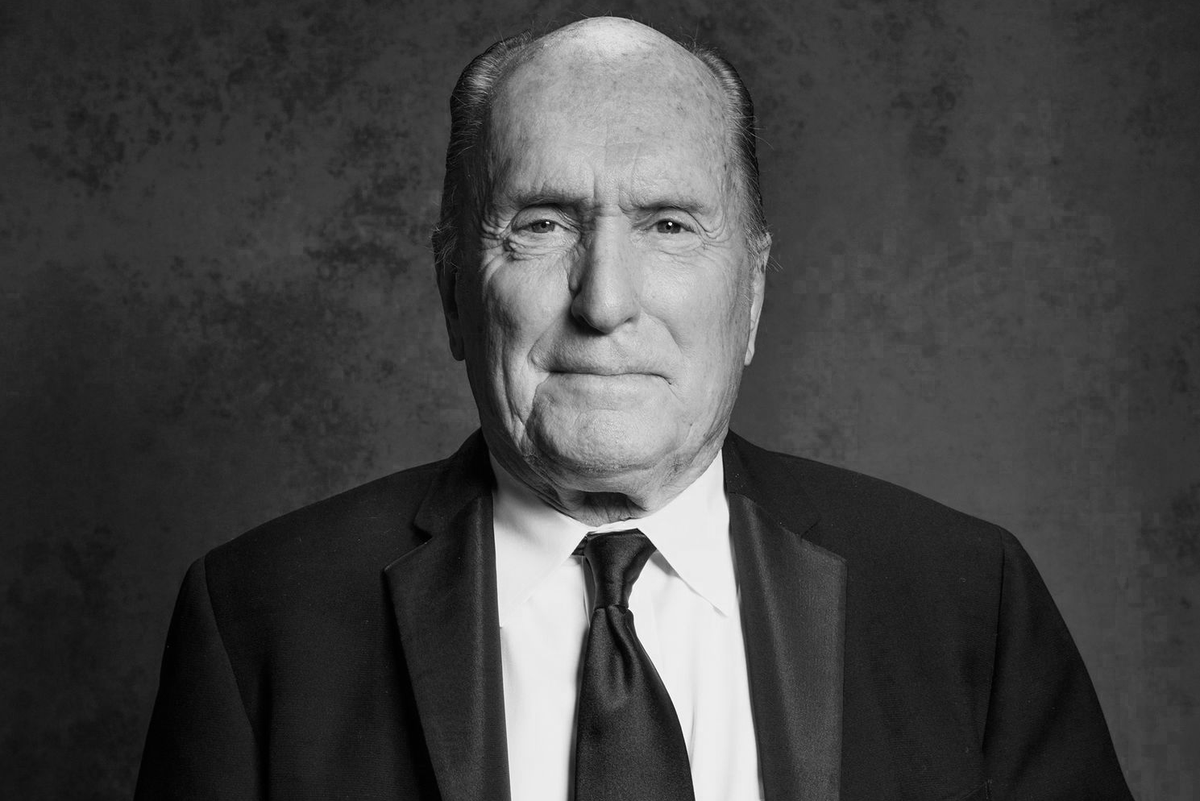
JUST IN - Robert Duvall, famous for his roles in "The Godfather" and "Apocalypse Now," dead at 95 — Sky
Disclose.tv tweet media
English
310
965
7.2K
780.6K