

Martin Thompson
181 posts
Martin Thompson
@MartinThompson
Fan dabby dozy.
Lincolnshire Katılım Şubat 2009
116 Takip Edilen21 Takipçiler


What is the first thing that comes to mind when you see this?

English


@Geniustechw That reminds me - i need to get sausages for breakfast tomorrow
English

@PicturesFoIder Egon, get the ghost guns and the spectrenets.
English


How would you describe Will Smith's son Jayden's fashion sense?
English


@Matt_Pinner He's done one of the 3 point cards from the Mr Pop game. #mbgames
English

@TrumpsHurricane I'm not keen on these stills from the latest star wars film.
English


@MbarkCherguia I can glue pigs liver to your face for the same results.
English

🚨Ladies: What's stopping you from getting lips like HERS? 😳💉
English
What do you think this guy does for a living?? 😳
English
@MbarkCherguia I'd rather attach two quavers to my upper lip.
English
Guys, what's stopping you from having a mustache like this? 😏
English
@Trump_Jr_Q How do I make the B big enough for him to see it from Alabanania or Mistissippsi
English

Do you agree that President Trump is the greatest president in U.S. history or in your lifetime?
A. Yes
B. No
English
Which pronouns would you use here?
x.com/JebraFaushay/s…
English
@californiasun1 @histories_arch Babies in Ireland and Spain, embezzlement (Cardinal Becciu), the innocence of young children who were abused. For further details please contact the news.
English
@californiasun1 @histories_arch You're saying that as if catholics have never stolen anything.
English

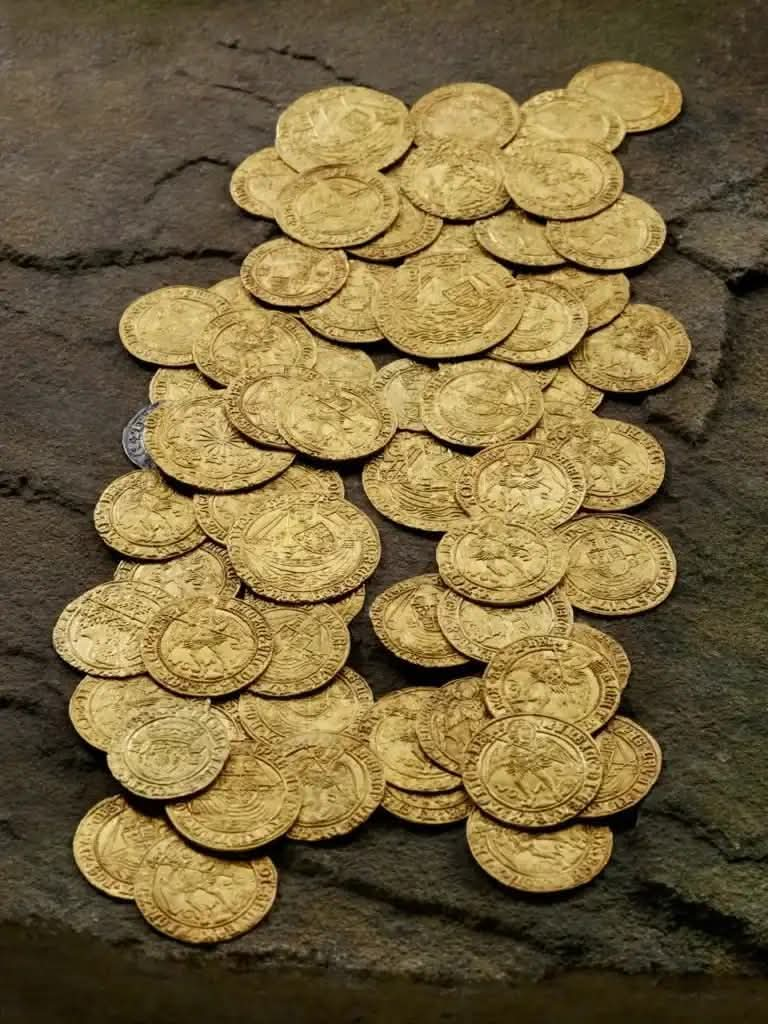
A couple in southern England 🏴🇬🇧 were working in their garden, adjusting a fence post. As they dug into the clay soil near their flower bed, they hit something unexpected—a handful of small, round objects. At first, they looked like bits of old metal. Then the mud came off, and the coins began to shine.
They had stumbled onto a hidden fortune from the reign of Henry VIII.
The finding, which happened in 2020, came as a total shock. As they rinsed the dirt away under the tap, the details on the coins started to show. There was gold, silver, and centuries-old markings. There were a total of 64 of them in the same spot. The text includes portraits of kings, Latin text, and even the initials of two of Henry VIII’s wives: K for Katherine of Aragon and I for Jane Seymour. Most of them were in stunning condition, although they were dating from 1420s through 1530s.
The coins span the reigns of Henry VI, Edward IV, Henry VII, and most notably, Henry VIII. Experts date the burial to the late 1530s, a time marked by intense religious upheaval in England. It was the era of the Dissolution of the Monasteries. Henry VIII declared himself head of the Church of England in 1534 and broke free from the Catholic Church. Over the next few years, he ordered the closure—and looting—of hundreds of Catholic monasteries and priories.
Milford-on-Sea, where the hoard was found, lay within the estate of Christchurch Priory, one such dissolved monastery. It’s quite likely that the people in the priory buried the treasure attempting to hide it from the kind and retrieve it at a later time. They never did.
The hoard is now expected to sell for over £230,000 (more than $300,000).
#archaeohistories
English