
Marv Clowder retweetledi

JUST IN: Iran is charging $2 million per tanker to pass through the Strait of Hormuz. The Financial Times reported the payment. The IRGC confirms it by radio. And the world’s most important chokepoint has been converted from a military blockade into a toll road.
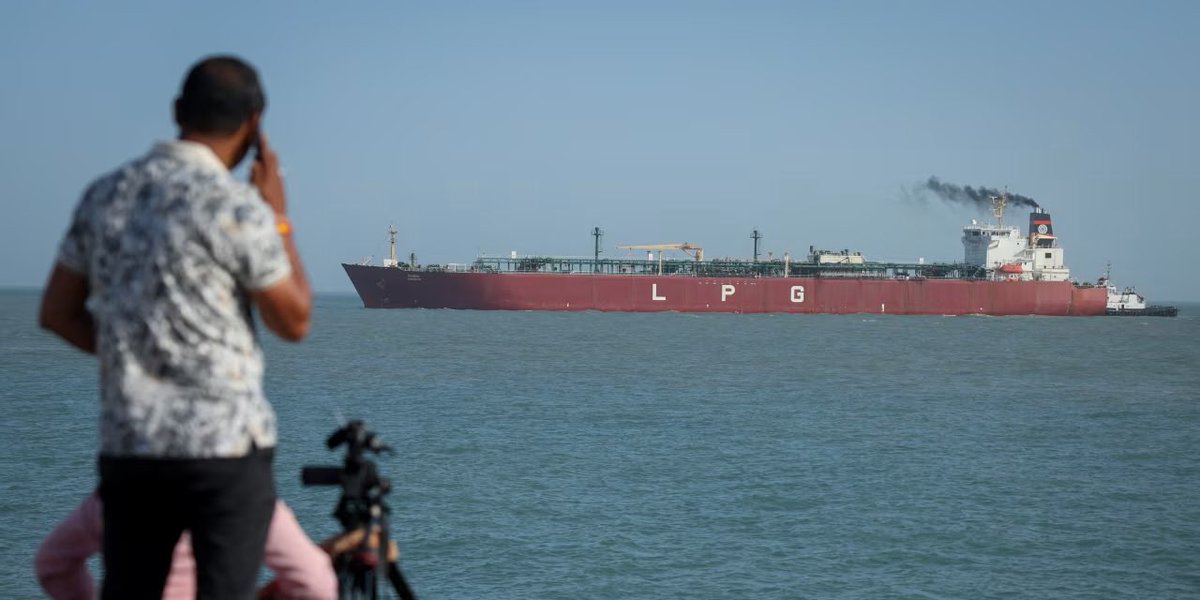
The mechanism is precise. A tanker operator contacts intermediaries. The intermediaries negotiate with the IRGC. A fee is agreed, reportedly up to $2 million per voyage. Payment is made in cash, cryptocurrency, or barter. The vessel receives clearance. The IRGC hails the tanker on VHF radio, verifies its AIS transponder data, and grants passage. The tanker transits. It arrives.
Roughly 89 to 90 vessels, including 16 oil tankers, successfully transited between March 1 and March 15 under some form of IRGC clearance according to Lloyd’s List Intelligence. Not all of them paid. Some were Iranian or allied ships. Some were Indian tankers that received diplomatic safe passage after government-to-government negotiations. Some were shadow fleet operators running dark with transponders off. But the Financial Times report confirms that at least one tanker operator paid the toll explicitly. The commercial precedent now exists.
The $2 million sits on top of war-risk insurance that has surged to 3 to 5 percent of hull value where coverage exists at all. A VLCC valued at $120 million pays $3.6 to $6 million in war-risk premium for a seven-day single-voyage policy. Add the $2 million toll. Add the quadrupled charter rate of up to $800,000 per day. The total cost of moving a single cargo of crude through Hormuz now exceeds what it cost to move an entire fleet through the strait six months ago.
Every dollar of that cost arrives at the consumer. The toll does not stay on the water. It enters the price of every barrel, every LNG cargo, every tonne of urea, every container of pharmaceuticals that the tanker carries. The $2 million is not a bribe. It is a tax levied by the IRGC on global commerce, collected at the narrowest point of the world’s most concentrated energy transit route, and passed through to four billion people downstream.
The strategic innovation is that Iran has found a way to fund its war effort through the war itself. The IRGC closed the strait. The closure created scarcity. The scarcity created desperation. The desperation created willingness to pay. The $2 million per voyage funds the same provincial commands whose sealed packets created the closure. The feedback loop is self-financing: the blockade generates the revenue that sustains the blockade.
The United States will frame this as state-sponsored extortion funding terrorism. The sanctions response is predictable: penalties on operators who pay, expanded designations on intermediaries, accelerated naval escorts under the six-allies pledge. But the enforcement faces a paradox. If the US sanctions every operator who pays the toll, it removes the only vessels currently moving oil through Hormuz. The molecules that are getting through, even at $2 million per transit, would stop entirely. The toll is extortion. The extortion is also the only functioning supply mechanism.
The IRGC did not just close the strait. It reopened it selectively, on its terms, at its price. The blockade was the leverage. The toll is the monetisation. And the distinction between a military operation and a protection racket has collapsed into a radio frequency and a bank transfer.
Full analysis: open.substack.com/pub/shanakaans…
English