
Mary Chibwe retweetledi
Mary Chibwe
27 posts

Mary Chibwe
@MaryChibwe4
Molecular Biologist|Water Sanitation &Hygiene Scientist|Public Health &Zoonosis;One Health Practitioner|Science Communicator|Academician|PhD Candidate🇿🇲🇿🇦
Katılım Aralık 2021
116 Takip Edilen47 Takipçiler

Mary Chibwe retweetledi

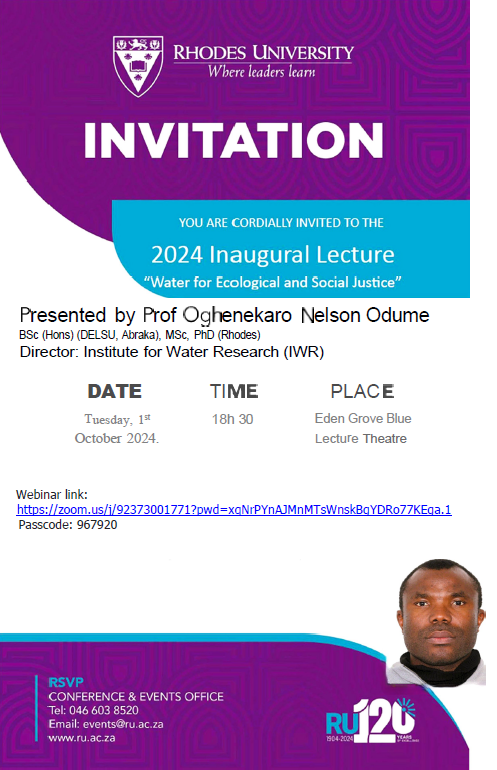
You are cordially invited to attend Professor Nelson Odume's Inaugural Lecture titled "Water for Ecological and Social Justice". Join in person or virtually. Further details about the event are attached below.
English
Mary Chibwe retweetledi

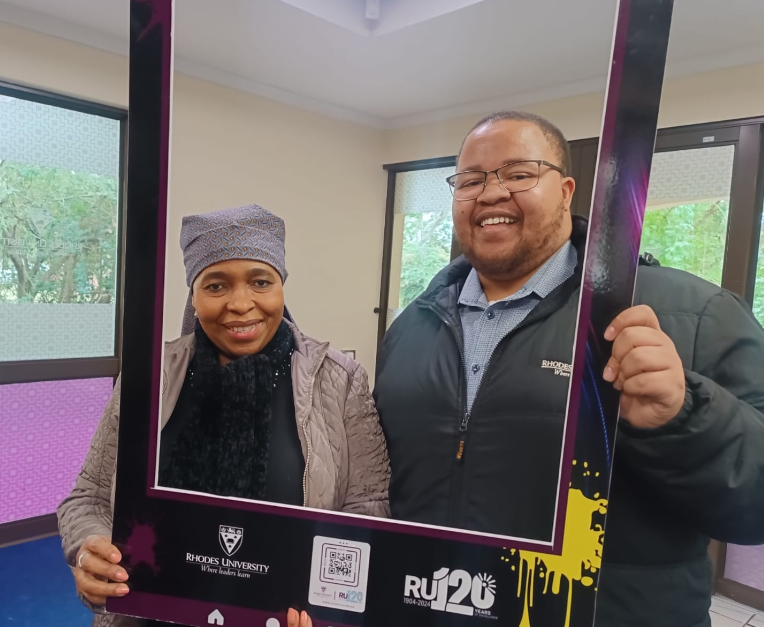
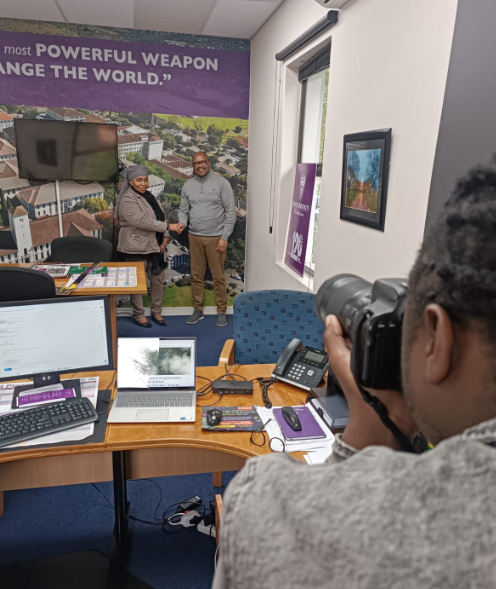
Happy birthday to us! 🥳🤩 While the Rhodes University bidecacentennial anniversary #RU120 year continues, today marks the institution’s *actual* 120th birthday. 🎂 Deputy Vice-Chancellor: Academic and Student Affairs, Prof 'Mabokang Monnapula-Mapesela popped in to celebrate this remarkable milestone. Here's to the next 120 years of academic excellence! #whereleaderslearn
English

Mary Chibwe retweetledi
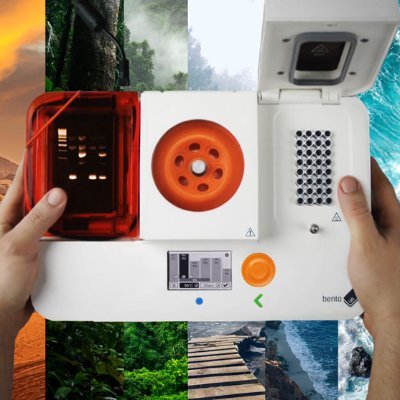
In the quest for faster and more portable diagnostic PCRs, here is a new qPCR method called “FlashPCR” by Bustin et al. (2024) that allows a 10-15 min PCR on standard qPCR cyclers.
It could save valuable time in point-of-care medical testing, and importantly could help make future diagnostic PCR devices become simpler and less power-hungry, thereby making qPCR diagnostics more accessible and portable.
And, while it was designed for medical qPCR testing, it’s possible that some of the principles could be applied to other qPCR or standard PCR applications where faster PCR is extremely valuable.
Very exciting! So how does it work?
FlashPCR uses a 15 s denaturing followed by 1 s cycling between 79 °C and 71 °C, and uses high melting point primers and a simple buffer containing PCR enhancers.
The lower-than-usual denaturing temperature and high-melting-point primers allow much faster cycling between steps, reducing the temperature difference between denaturing and annealing/extension (which occur simultaneously).
The qPCR mix contains a very fast DNA polymerase (MyTaq) and optimised buffers containing KCl, MgCl2, 1,2 propanediol (propylene glycol), 1,3 propanediol, ethylene glycol, trehalose, bovine serum albumin, and dNTPs.
Of these components, propylene glycol, ethylene glycol, trehalose, and bovine serum albumin are all PCR enhancers or additives that variously assist with amplification of GC-rich DNA, lower DNA melting temperature, stabilise polymerases, and counteract PCR inhibition. I'm not aware of any published literature on 1,3 propanediol for PCR but presumably it acts in a similar way. So all of these components help allow the PCR to amplify efficiently even with very short step durations.
Together, this combination of parameters allows very rapid ramping and cooling, as well as very short efficient PCR steps.
The authors demonstrated the method works with qPCR, reverse transcriptase qPCR, and digital droplet PCR; and with SARS-CoV-2 gRNA, human breast cancer mRNA, and human fibroblast mRNA.
They also experimented with shorter Pentabase primers that have a higher specificity to their DNA templates, increasing melting points and allowing shorter amplicons to be produced. The authors found that these could provide a marginal improvement to the qPCR.
There's lots more in the article, and an enormous amount of experimental work. You can read all about it here:
Bustin et al. (2024). FlashPCR: Revolutionising qPCR by Accelerating Amplification through Low∆ T Protocols. International Journal of Molecular Sciences, 25(5), 2773.
mdpi.com/1422-0067/25/5…
And could FlashPCR be used for amplifying longer amplicons in conventional PCR? It would be really interesting to test some of these buffers and high melting point primers using an approach following Pedlar et al. (2024) (below), to see if even more time could be shaved off conventional PCRs!
Pedlar et al. (2024). Amplifying PCR productivity and environmental sustainability through shortened cycling protocols. Biochimie, 221, 60-64.
sciencedirect.com/science/articl…
***
mdpi.com/1422-0067/25/5…
English
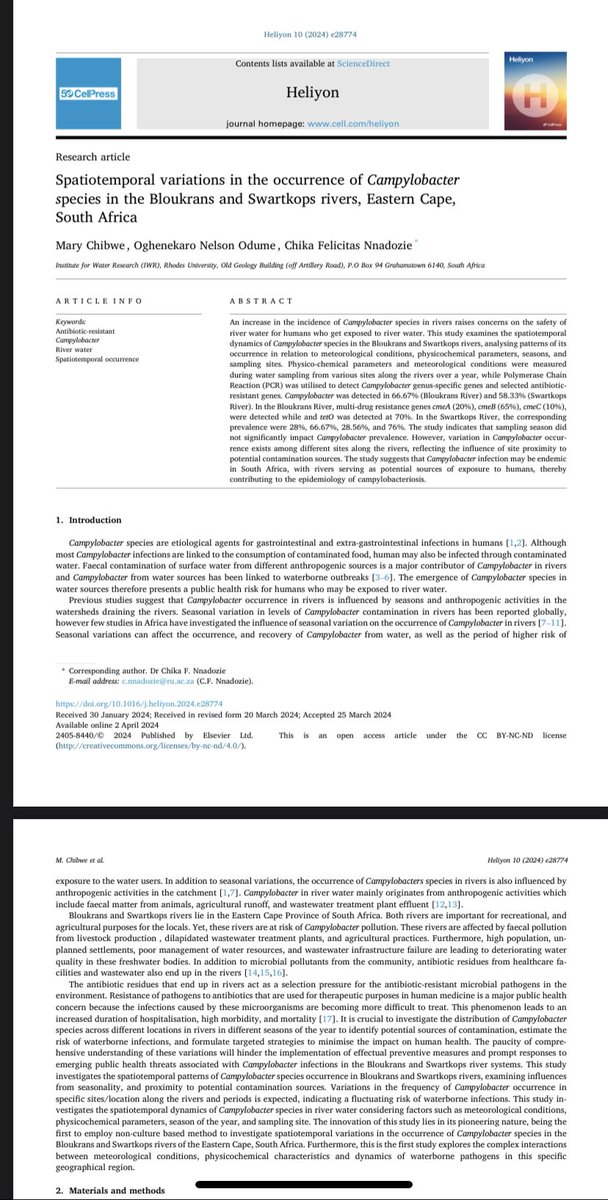
Excited to share my latest publication. 3rd output from my PhD research. In this paper, we discuss the influence of anthropogenic activities, seasonality and physicochemical characteristics on the occurrence of campylobacter species and antibiotic resistant genes in river water.
English
Mary Chibwe retweetledi

🌿 At COP28, Climate Mobility Youth Delegates @OkalHarriette & @dheenylkhair met with @kristiklaas, Vice Minister & Deputy Secretary General of Estonia's Ministry of Climate, to voice a critical call for climate finance & youth inclusion in climate policy-making.
#ClimateMobility

English
Mary Chibwe retweetledi
Really important talk by Mary Chibwe on distribution of antibiotic resistant bacteria in South African rivers @HFSP #HFSPmeeting2023

English
The training, the food, the conversations,the pics and the laughter. I feel energised @WaterResearchRU
Sofia Lazar@LAZARSofia1
Each day ✨ is a beautiful #souvenir, filled with inspiration from amazing #mentors and #camaraderie with fantastic #colleagues at @WaterResearchRU 🌊 #WaterResources #WaterResearch #TeamIWR #WaterLeadership
English
English

Citation milestone! 200 citations hit on @Google Scholar, doubling our research impact in exactly 1yr!
Grateful for all the support and looking forward to continuing the journey of knowledge dissemination!🙏
@AcademicChatter @TweeterAcademic @nelskaro @WaterResearchRU @google
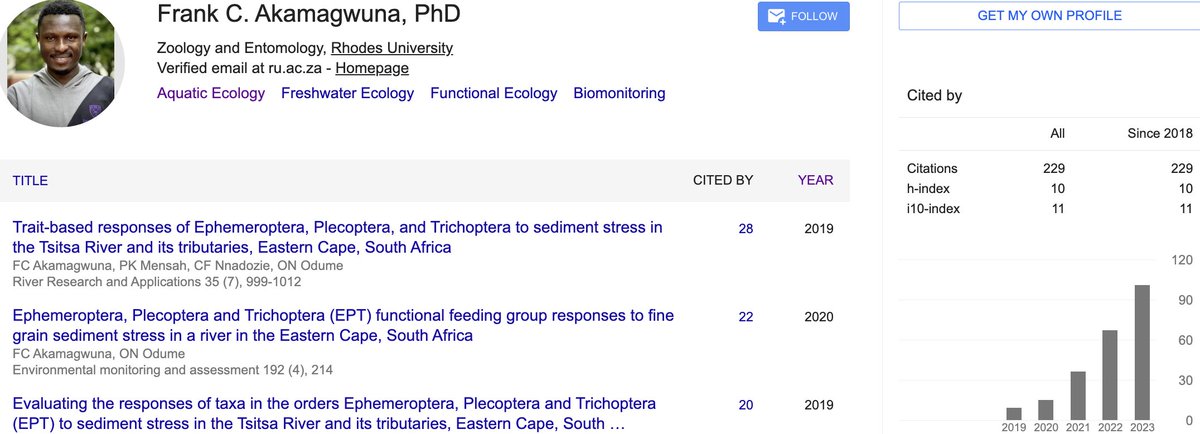
Frank C. Akamagwuna, PhD@FAkamagwuna
Google Scholar alerted me I reached 100 citations. Never thought it was a thing to celebrate citations. It’s my birthday today, so double celebrations🌸🙏 @PhDVoice @PostdocVoice scholar.google.com.my/citations?user…
English

Should the legal drinking age in Zambia be increased to 21?
English
Mary Chibwe retweetledi
Hot off the press🗣️
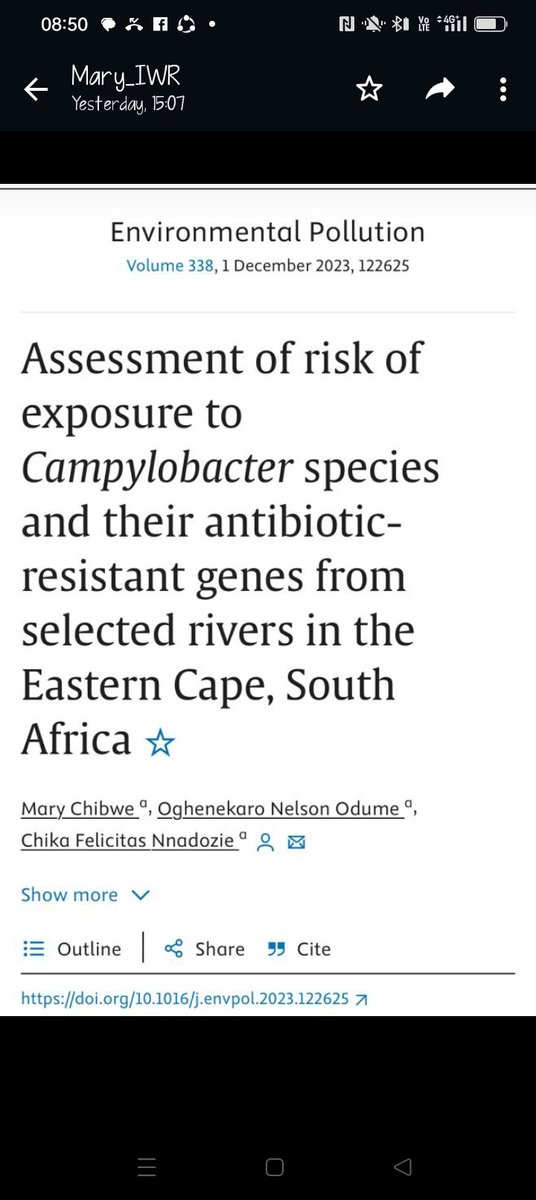
Can you intentionally ingest “super bugs" while swimming in river water? Find out more in this interesting recently published article by our PhD AWaRMM scholar @MaryChibwe
doi.org/10.1016/j.envp…
#Newpublication
English
In my latest publication, we assess the risk of human exposure to antibiotic resistant Campylobacter in freshwater environments. #AWaRMN scholar. sciencedirect.com/science/articl…
English

Mary Chibwe retweetledi
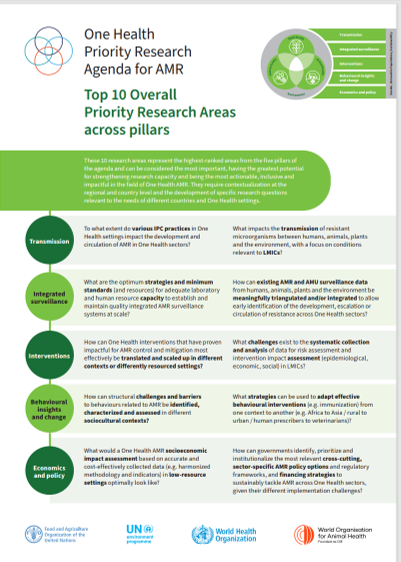
👏Congratulations to the #Quadripartite on the publication of the One Health Priority Research Agenda for #AMR!!
A crucial guide for catalysing scientific interest & financial investment in solutions to mitigate AMR across #OneHealth sectors.
@WOAH @FAO @WHO @UNEP #OHPRA
English
Mary Chibwe retweetledi
When they look at river water, some see microplastics and macroplastics, some see invertebrates, and one sees bacteria and how it affects human health. Another one is more concerned about ecosystem services offered by rivers. The "Amazing Water Resources team" @SASAqS_society

English
Mary Chibwe retweetledi
AWaRMN scholars attending the @SASAqS_society conference in Somerset West, South Africa. Taking selfie's before their presentations. Look out for their presentations today and tommorow @MaryChibwe4 @EstherSeriki1 @LAZARSofia1

English
English
Mary Chibwe retweetledi
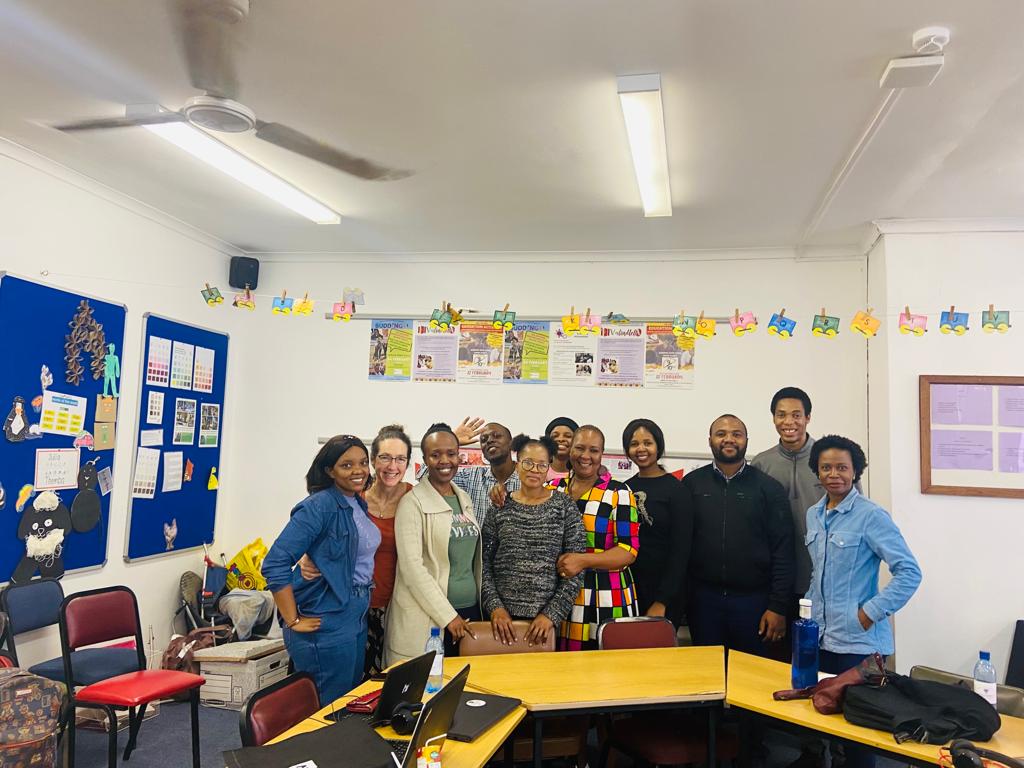
A group from @WaterResearchRU completed a digital storytelling course this week held by @RUengagement Rhodes University - learning how to connect scientific knowledge with community stakeholders and their knowledge in innovative ways. #communityengagement #digitalstorytelling
English