Mason Neuroscience

2K posts

Mason Neuroscience banner
Mason Neuroscience

Mason Neuroscience

@MasonNeuro

https://t.co/DYpQnbnXb5 The Interdisciplinary Program in Neuroscience (IPN) at George Mason University. Retweets do not imply endorsement.

Fairfax, VA Katılım Kasım 2018
1.9K Takip Edilen532 Takipçiler
Mason Neuroscience retweetledi
News from Science
News from Science@NewsfromScience·
You don’t need a brain to benefit from a good night of sleep. Despite lacking a central nervous system, jellyfish and sea anemones have sleep patterns remarkably similar to those of humans, researchers report. Learn more: scim.ag/49qn4k2
English
8
98
470
40.7K
Mason Neuroscience retweetledi
William A. Wallace, Ph.D.
William A. Wallace, Ph.D.@drwilliamwallac·
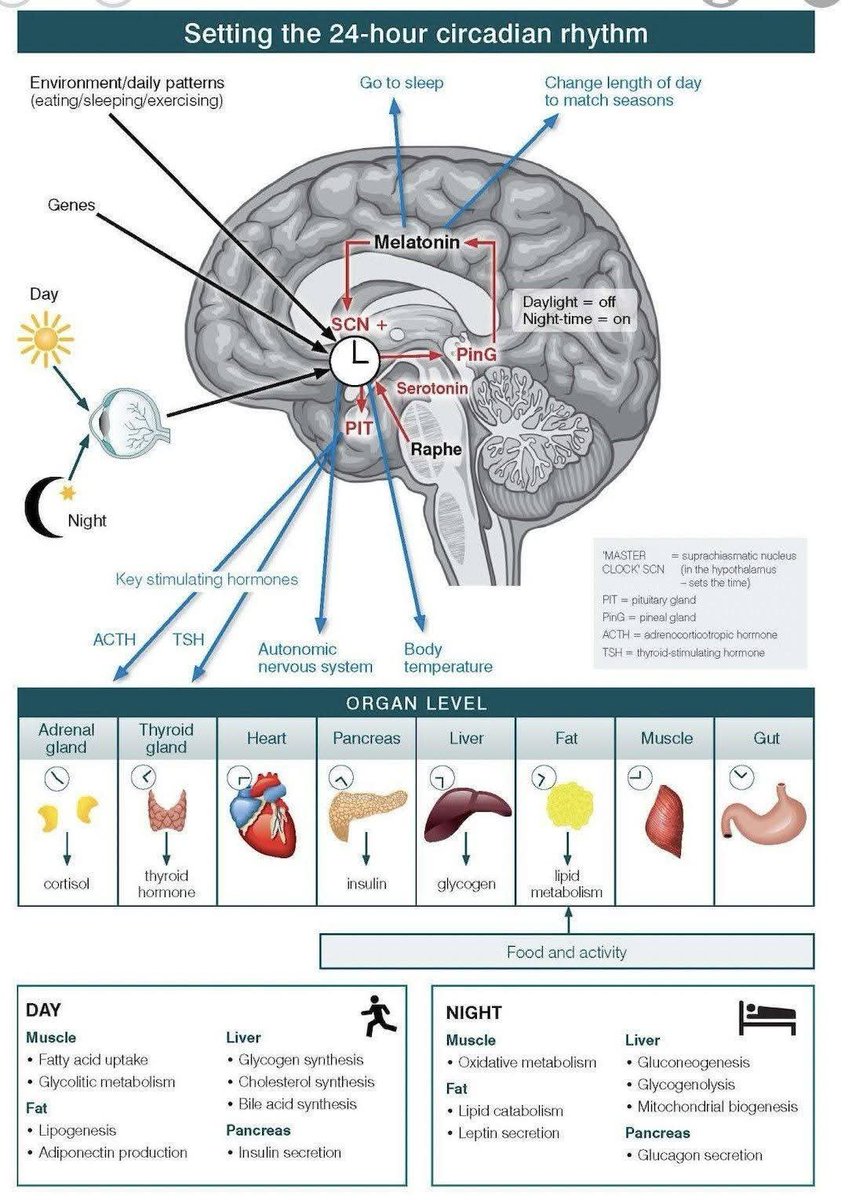
Your body has a master clock hidden deep in the brain, and it quietly controls almost everything you feel during the day. This chart shows what that clock is actually doing, and why your sleep, hunger, hormones, energy, and mood follow the same 24-hour rhythm every single day. Here’s the simple breakdown: ⏰ The “master clock” lives in the "SCN" (as its abbreviated) Located in the hypothalamus, it takes in light from your eyes and uses it to reset your entire system. • Light in the morning tells your brain: wake up, raise cortisol, increase alertness. • Darkness at night flips the switch: make melatonin, lower body temperature, prepare for sleep. 🌙 Melatonin rises only when the SCN says it’s dark The pineal gland releases melatonin to start the sleep process. If light hits your eyes at night (phones, TVs, bright LEDs), that signal can shut off or slow down. 😴 Serotonin and melatonin are linked During the day, serotonin helps regulate mood and alertness. At night, the system converts part of that serotonin into melatonin to drive sleep timing. 🧠 Your organs follow the brain’s schedule Every major organ has its own “clock genes,” and they all sync to the SCN. That’s why timing matters: Daytime: • Muscle: glycolytic metabolism and strength performance peak • Liver: glycogen and cholesterol synthesis • Pancreas: insulin secretion • Fat: lipogenesis and adiponectin production Nighttime: • Muscle: oxidative metabolism and repair • Liver: gluconeogenesis and mitochondrial biogenesis • Pancreas: glucagon secretion • Fat: lipid breakdown and leptin release (signals satiety) In other words: Your biology isn’t the same at 8 AM as it is at 8 PM. 🍽️ Food and activity act as “secondary clocks” Eating late, irregular sleep, shift work, or inconsistent light exposure can confuse these clocks and throw off hormones, metabolism, and mood. This is why: • Morning light improves sleep • Regular mealtimes stabilize metabolism • Late-night eating increases glucose spikes • Consistent sleep strengthens hormone rhythms • Exercise timing can shift circadian signals Your circadian rhythm isn’t just about sleep. It’s a full-body timing system coordinating hormones, temperature, digestion, metabolism, and repair. Get your light, food, and sleep aligned… And the rest of your biology starts working with you instead of against you. Graphic citation: Unknown Research citation: PMID: 11584554
William A. Wallace, Ph.D. tweet media
English
27
283
1K
30.6K
Mason Neuroscience retweetledi
Danielle Beckman
Danielle Beckman@DaniBeckman·
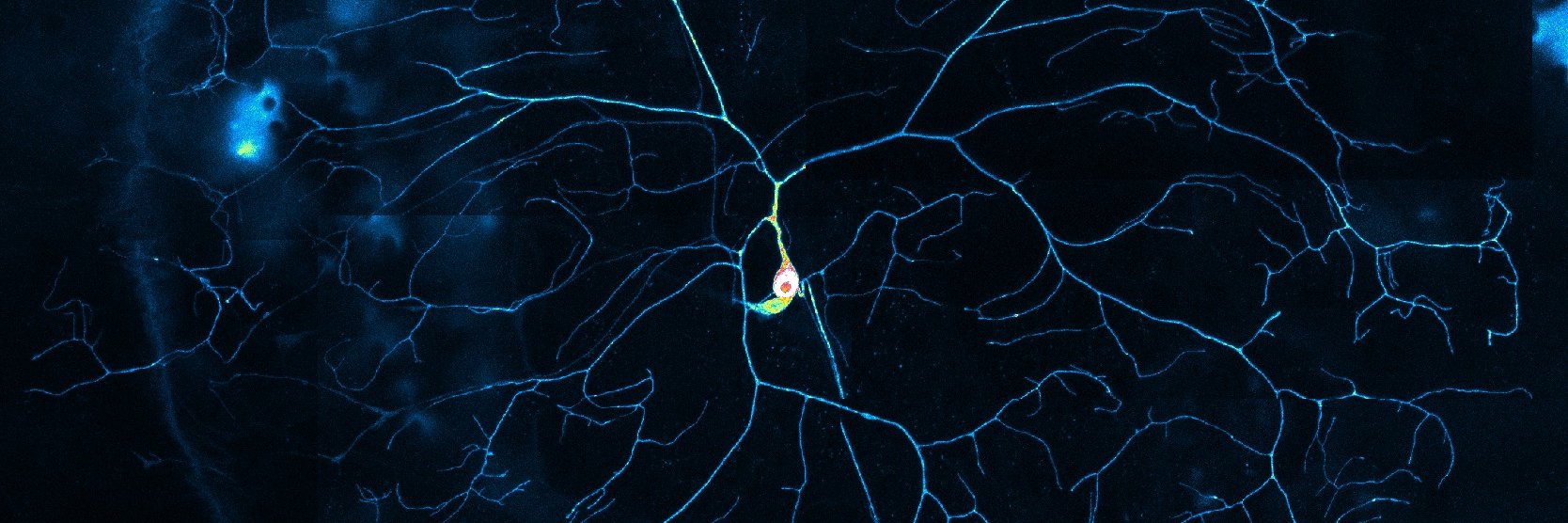
Twitter is full of A.I & bad news now, so I'm doing my part to make it prettier with some NeuroArt☺️. This is my favorite🔬 image from this project:🟡shows neural stem cells during embryonic brain development guiding neurons🟣to their final location.🔵shows macrophages/microglia
Danielle Beckman tweet media
Danielle Beckman@DaniBeckman

Starting the year with a manuscript accepted as first author! 😎 In this study, we show that E. Coli infection during pregnancy can induce loss of neurons in the fetal brain that is not rescued by antibiotic treatment. More evidence of the impact pathogens can have on the brain!

English
35
124
586
19K
Mason Neuroscience retweetledi
Scholarship for PhD
Scholarship for PhD@ScholarshipfPhd·
PhD vs Master student.
English
21
322
4.3K
715.9K
Mason Neuroscience retweetledi
Sabha Ahmed
Sabha Ahmed@SabhaAhmed03·
As neuroradiologists, we spend a lifetime mastering arteries. Yet it is often the veins—quiet, adaptive, overlooked—that decide the outcome. Launching my neuroradiology education series this month, starting with developmental venous anomalies. #Neuroradiology #NeuroTwitter
English
27
141
758
31.3K
Mason Neuroscience retweetledi
Science Magazine
Science Magazine@ScienceMagazine·
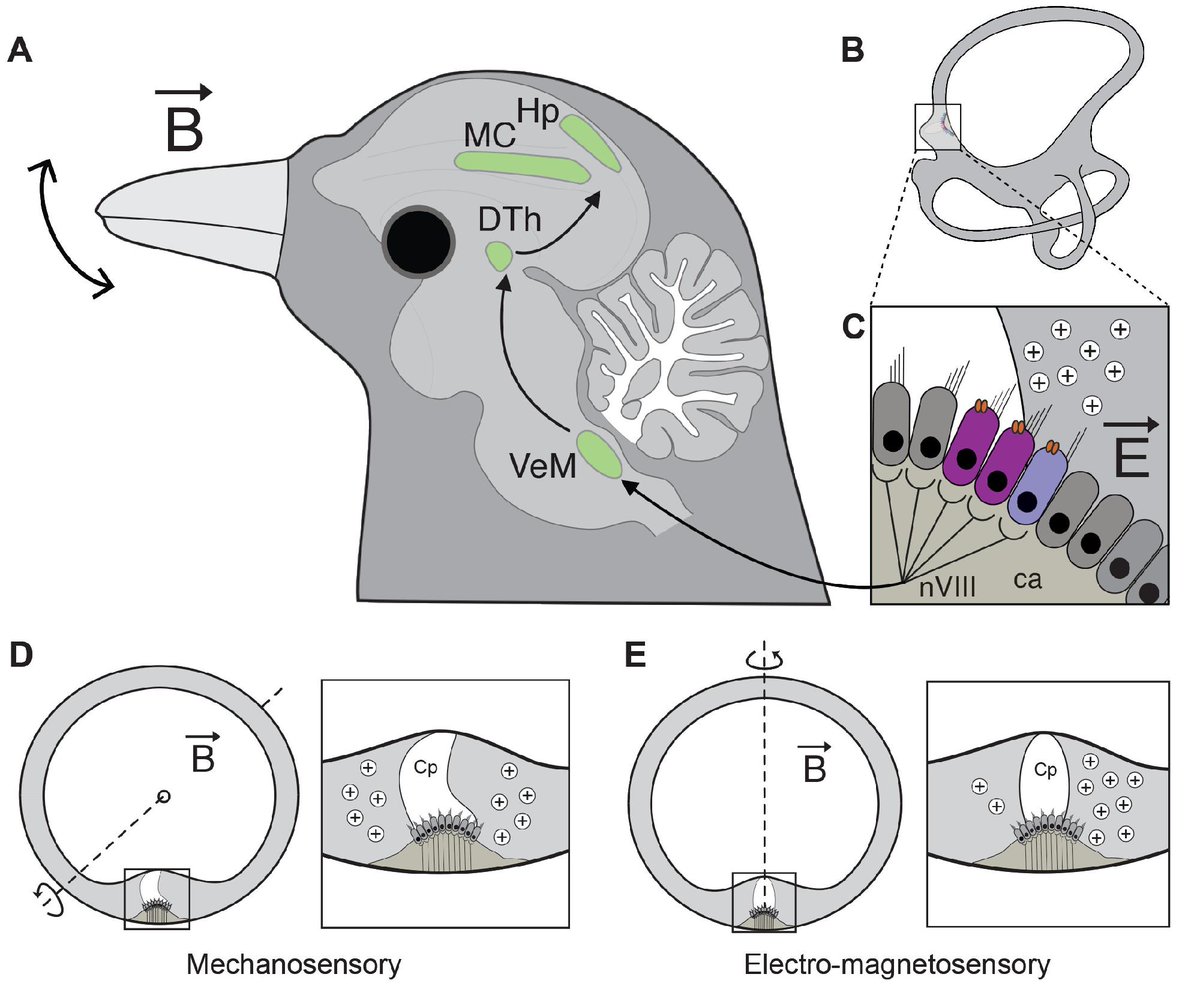
How animals detect the Earth’s magnetic field remains a mystery in sensory biology. In a new Science study, researchers used whole brain activity mapping, tissue clearing, and light sheet microscopy to identify neuronal populations activated by magnetic stimuli in the pigeon. Learn more: scim.ag/3MrcjXe
Science Magazine tweet media
English
22
277
1.1K
61.1K
Mason Neuroscience retweetledi
PhD_Genie
PhD_Genie@PhD_Genie·
Reviewer 2
English
8
87
512
91.8K
Mason Neuroscience retweetledi
nature
nature@Nature·
Long thought of as support cells, astrocytes are emerging as key players in health and disease go.nature.com/4oHwUUz
English
7
91
349
39.7K
Mason Neuroscience retweetledi
Hadas Weiss
Hadas Weiss@weiss_hadas·
early career scholar and their first publication
English
18
192
2.3K
87.3K
Mason Neuroscience retweetledi
Oded Rechavi
Oded Rechavi@OdedRechavi·
Re-reading what you wrote the next day
English
23
78
705
49.3K
Mason Neuroscience retweetledi
NeuroWoodworks
NeuroWoodworks@NeuroWoodworks·
Making a 4ft tall art piece, with a bunch of chunky walnut wood neurons.
NeuroWoodworks tweet media
English
5
11
96
1.9K