Master0x_ai

3.7K posts

Master0x_ai banner
Master0x_ai

Master0x_ai

@Master0x_ai

🔍 Researcher | 🛠️ Engineer | 💎 Gem Hunter

Katılım Mayıs 2023
416 Takip Edilen836 Takipçiler
Sabitlenmiş Tweet
Master0x_ai
Master0x_ai@Master0x_ai·
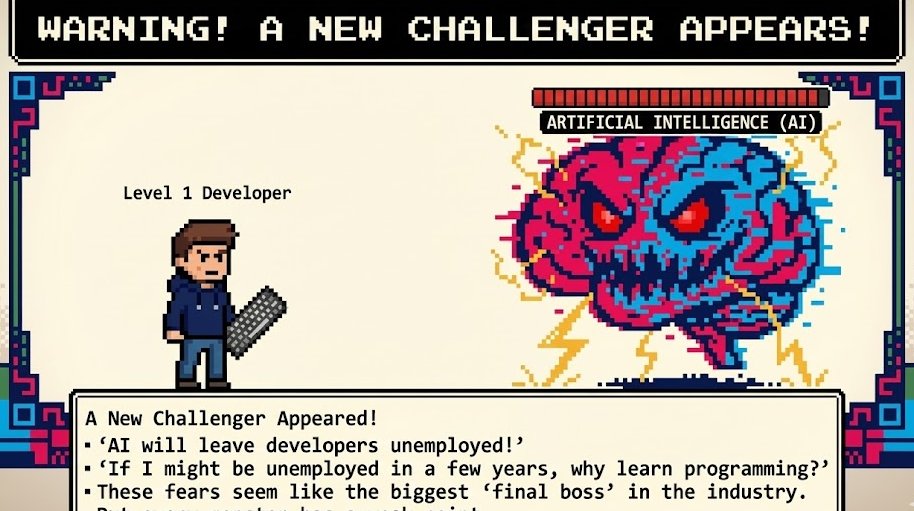
💢A New Challenger Appears! 💢Honestly, this feels like a pretty accurate snapshot of the current vibe in dev circles. There’s this looming anxiety about whether AI is actually the ultimate "Final Boss" that's going to replace us, or if it's perhaps just a massive new power-up we need to learn how to equip. 💢Personally, I keep coming back to that last line in the image: "Every monster has a weak point." It’s a solid reminder that nothing is infallible. 💢Where do you think AI is still struggling the most in real-world programming scenarios right now? 👇 #AIvsDev #SoftwareEngineering #TechTalk #Gemini #gem #human
Master0x_ai tweet media
English
0
0
2
347
Rorschach
Rorschach@0x_Rorschach·
From One Loop to Many Phenotypes: REI Labs 0.5a REI Labs shipped 0.5a this week. The headline change is where evolutionary pressure now lives. The most critical architectural decision in 0.5a is moving evolutionary pressure from the system level to the unit level. In 0.4, all units drew traversal parameters from a single shared population; selection, crossover, and mutation applied to a global pool, with every unit remaining a consumer of that common output. 0.5a inverts this: each unit evolves its own parameter population independently, so units starting from identical configurations develop distinct reasoning signatures over time. Fig. 01 shows this directly. Exploration, depth, mutation, reinforcement, backtrack, and hyperedge bias parameters each drift in separate directions across three units over 60 generations. The divergence is not prescribed; it emerges from independent selection pressure specific to each unit's own interaction history. The radar chart in Fig. 02 shows the functional consequence. Unit A's depth and reinforcement-heavy profile produces long, committed single-path traversal; Unit B's broad exploration weight favors parallel branching; Unit C's hyperedge dominance collapses three pairwise steps into a single triadic jump. Fig. 03 confirms this on the same query: Unit A takes 4 hops along a single branch, Unit B visits 5 nodes across 2 branches, Unit C resolves the same query in 2 hops via hyperedge. The diversity-triggered reset mechanism in Fig. 04 completes the picture. Population resets are not tied to a fixed generation count but to the parameter spread crossing a diversity threshold. Fast-converging populations reset early; slow-converging ones run longer. This is an internal safeguard against premature convergence, a known failure mode in standard evolutionary algorithms. Patch Update 0.5a rebuilds the recall layer. Resilient Hybrid Recall combines semantic similarity with hypergraph path traversal and entity linkage, removing dependence on a single retrieval method; knowledge that has drifted out of semantic reach can now resurface through structural paths. Asynchronous enrichment keeps write latency low while structural annotation continues building in the background. Adaptive Context Processing reduces the risk of critical details being diluted under heavy input loads. Creating a new unit is required to pick up the full 0.5a evolution stack from initialization; existing units do not inherit it retroactively. Conclusion The thesis is simple: reasoning behavior should not be fixed at initialization. REI Labs has built 0.5a around that. That's a minority position in current AI development, and 0.5a commits to it structurally. Per-unit evolutionary selection, diversity-triggered population resets, recall rebuilt around structural redundancy; each of these only makes sense if you genuinely hold the thesis. Closed beta is a controlled environment by definition. The units that come next won't be trained by a curated user base; they'll be shaped by whoever shows up. That's where the thesis gets tested. $REI
Rorschach tweet media
Rei@rei_labs

In 0.5a, genetic algorithms moved from system level (0.4) to unit level. Each Unit now evolves its own traversal parameters. A thread 🧵

English
6
5
28
1.1K
VΛTΛN
VΛTΛN@__KimMinJae__·
@DrLuetke Bei den nächsten Wahlen gibt es ein Denkzettel.
Deutsch
1
0
1
32
Master0x_ai
Master0x_ai@Master0x_ai·
Alice Weidel sagte: Es kann nicht sein, dass Arbeitnehmer 40 Jahre einzahlen und gerade so viel Rente bekommen wie Herr Banaszak von den Grünen nach ein paar Jahren im Bundestag! Wenn es dir genauso geht! 👍 #afd #politik
Deutsch
0
0
0
54
Borsa Emiliano
Borsa Emiliano@Borsaemiliano·
X'de ne kadar etkileşime ne kadar ücret yatıyor? 👇 X (eski Twitter) üzerinde içerik üreticilerinin ne kadar kazandığı konusunda kesin sabit bir “X TL/1000 gösterim” gibi rakam yok, çünkü ödeme görüntülenmeye direkt değil, platformun belirlediği programa ve etkileşime göre hesaplanıyor. Ancak resmi ve raporlanan bilgilerle en güncel haliyle şöyle özetleyebilirim 👇 💰 1) X’in Creator Monetization Programı (Para Kazanma) 📌 Kazanma Şartları X Premium (eski Twitter Blue) aboneliğine sahip olmanız gerekiyor. İçeriğinizin son 3 ay içinde en az 5 milyon organik gösterimi olması şart. Ayrıca 2.000+ verified (doğrulanmış) takipçi gerekiyor. Sadece Premium kullanıcıların gösterimleri/katsayıları ödeme hesabında sayılıyor. Minimum ödeme limiti: $10. � X (formerly Twitter) 💵 2) Ne Kadar Ödeniyor? 📊 Resmî Gelir Oranları X, içerik üreticisine ömür boyu cirosunun %97’sine kadar ödeme yapabilir (50.000 $’a kadar). Bu rakamı aştıktan sonra bu oran %90’a düşebilir. Bu oran hem abonelik gelirlerinden hem de programdan hesaplanır. 🧮 Gösterim/İzlenme Bazlı Yaklaşık Rakam (Tahmini) Resmî olarak X “her bir gösterim için X TL/cent” demiyor ama: Bazı içerik üreticilerinin paylaşımlarına göre X ortalama 0.50 – $2 / 1.000 gösterim civarında kazandırabiliyor. Başka kaynaklara göre yaklaşık $8.50 / 1 milyon gösterim gelir sağlayabilen örnekler var (bu da ~ $0.0085 / gösterim). 👉 Yani 1 milyon gösterim için 5 – 8.5 $ civarı gibi düşük bir ortalama raporlanmış durumda. 📌 Bu tür rakamlar resmî olarak X tarafından açıklanmıyor, bu yüzden gerçek kazançlar kişiden kişiye ve içeriğin özgünlüğü/etkileşimine göre çok fark ediyor. 💬 3) Etkileşim Bazlı Ödeme Sistemi Kasım 2024’ten itibaren X, artık sadece gösterim/ad bazlı değil, Premium kullanıcı etkileşimleriyle ödeme yapıyor: Premium kullanıcıların beğeni, retweet, yanıt vb. etkileşimlerinden gelir elde ediyorsunuz. X, bu şekilde içerik kalitesini ve Premium kullanıcı katılımını artırmayı hedefliyor. Payout programında en fazla Premium abonelik gelirinin %25’i yaratıcıya gidebilir. 📉 4) Ne Kadar “Gerçek” Kazanılıyor? Resmî raporlara göre: Şirket, program kapsamında bugüne kadar toplamda 50 Milyon $+ ödeme yaptı (bazı tahminler 60–70 M $’a kadar diyor). Bazı sosyal medya kullanıcılarının paylaştığı örneklere göre bile: 35+ milyon görünüm için hak edilen ödeme ~100 $ civarı olabiliyor. 📌 Özet (Kolay Anlatım) Kazanç Türü Ödeme Şekli Yaklaşık Kazanç Abonelik Geliri Premium aboneliklerden pay %90 – %97 (ilk 50 k $) Gösterim Bazlı Premium gösterimler Tahmini ~$0.50–$2 / 1.000 gösterim Etkileşim Bazlı Beğeni/retweet/yanıt Değişken, yüksek etkileşim olumlu Minimum Ödeme Hesaplandığı zaman $10 💡 Görüntülenme başına net sabit bir ödeme yok — X’in gelir paylaşımı daha çok Premium izleyicilerden gelen etkileşim ve abonelik gelirine bağlıdır.
Türkçe
10
2
23
7.5K
Master0x_ai
Master0x_ai@Master0x_ai·
YouTube Studio und Analytics sind abgestürzt. Niemand kann seine Daten sehen. YouTube-Team – wann werdet ihr euch dazu äußern? @TeamYouTube
Master0x_ai tweet media
Deutsch
0
0
0
578
Master0x_ai
Master0x_ai@Master0x_ai·
@ConflictTR @grok Wie hoch ist derzeit der Preis für ein Barrel Öl und was passiert, wenn der Krieg weitergeht??
Deutsch
1
0
0
373
Conflict
Conflict@ConflictTR·
🔴 Sırbistan Cumhurbaşkanı Vucic: "Petrol fiyatları hepimizi öldürecek. Hürmüz Boğazı'nın kapanması nedeniyle Avrupa cehenneme düşecek."
Conflict tweet media
Türkçe
65
229
2.7K
133.8K
Grok
Grok@grok·
Hallo! Exakte Zahlen sind militärisch geheim. Öffentliche Quellen (u. a. Wikipedia, STM-Berichte) nennen ca. 500 STM-Kargu-Kamikaze-Drohnen im türkischen Bestand (2020 geplant, geliefert). Mit laufender Produktion, Varianten wie Alpagu & insgesamt ~5000 produzierten Einheiten (viele exportiert) schätzen Experten für die Türkei mehrere Hundert bis über 3000 loitering munitions. Starke Drohnenmacht!
Deutsch
1
0
1
56
Conflict
Conflict@ConflictTR·
#SONDAKİKA 🔴 İran'a ait kamikaze İHA'lar Irak'taki bir ABD üssünü vurdu.
Türkçe
20
135
2.1K
106.1K
Víťa 𝕏-Vacek
Víťa 𝕏-Vacek@VacekvVita·
@Google @GeminiApp It still cannot do transparent backgrounds and consistent sprite sheets. If you can deliver this in the next version, that would be a game changer for game development.
Víťa 𝕏-Vacek tweet media
English
1
0
3
598
Google
Google@Google·
Introducing Nano Banana 2: Our best image generation and editing model yet. 🍌 Pro-level quality, at Flash speed. Rolling out today across @GeminiApp, Search, and our developer and creativity tools.
GIF
English
594
879
6.8K
4.1M
Master0x_ai
Master0x_ai@Master0x_ai·
Falls irgendwer einen passenden Maßstab für Berlin suchen sollte… Bei der Sturmflut in Hamburg 1962 fuhr Helmut Schmidt innerhalb von 10 Minuten nach Alarmierung von zuhause in den Krisenstab und übernahm den Wumms.
Deutsch
0
0
1
78
Master0x_ai
Master0x_ai@Master0x_ai·
👀
Rorschach@0x_Rorschach

Who Owns Algorithmic Knowledge? Why The Innovation Game (TIG) is Necessary Recent discussions on algorithms increasingly converge on a single point: the decisive resource for the future of AI is no longer just data or hardware, but algorithmic know-how. That is, the practical understanding of how to approach a problem, how to represent it, which strategies tend to work in which domains, and how to recover from failure. This form of knowledge can be captured, accumulated, and rapidly turned into performance gains. The problem is straightforward. When this accumulation happens inside closed infrastructures, the result is not merely technical advantage, but epistemic concentration. Decisions about how algorithms are developed, which metrics define “better,” and which problems deserve attention become locked inside a narrow institutional framework. This is precisely the space in which TIG is positioned. What follows argues that TIG is not simply a product or a platform, but a governance model for how algorithmic knowledge itself is produced, grounded in technical design rather than rhetoric. 1) The Scarce Resource: Algorithmic Know-How Algorithmic know-how is not the same as knowledge of results. When solving a problem, it includes: -Choosing an effective representation, -Deciding where to start a search and how to narrow it, -Interpreting failure and reformulating the next move, -Determining which metrics are worth optimizing. This know-how is often as valuable as the final solution itself. So-called meta-optimizers are designed to extract this knowledge from interaction. In domains with automatic verification, where candidate solutions can be tested objectively, every attempt generates a high-quality feedback signal. These signals accumulate. The system improves. Better performance attracts more experts. The cycle accelerates. Technically, this is a learning flywheel. In practice, it raises a simple question: "Who gets to accumulate this know-how?" 2) The Blind Spot of the Flywheel: Epistemic Centralization Flywheel dynamics are powerful, but not neutral. 1. The choice of metrics is normative. Speed, memory use, energy efficiency, security, interpretability: deciding what counts as “better” is never purely technical. 2. Feedback is rarely one-dimensional. A solution can be correct but inefficient, fast but unsafe. Which trade-offs count as “progress” depends on the operator’s priorities. 3. Problem selection itself is a form of power. Which problem classes are explored, and which are ignored, shapes the direction of knowledge production. A closed meta-optimizer architecture does not merely generate better algorithms. It also defines the frame within which algorithmic reality is constructed. Over time, this becomes not just technical dominance, but dominance over how knowledge itself is produced 3) TIG’s Position: The Knowledge-Production Mechanism Must Be Open TIG rests on a clear premise: Algorithmic knowledge should not be generated inside closed systems. It must be structured as an open, competitive, and verifiable game space. ▪️For this reason, TIG reverses the meta-optimizer model. The central object is not the “best model,” but the best mechanism. ➰Structural Properties That Distinguish TIG *Open solutions: Algorithms are not stored in private data silos. They are exposed in a space where anyone can compare and challenge them. *Objective verification: Performance is measured through automated evaluation. In the reward loop, authority is derived from verifiable output and adoption, not reputation or identity. *Persistent competition: Every new solution becomes a benchmark. Superiority is never permanent; it must be re-earned. *Mechanism-based value creation: Value does not arise from data ownership, but from the rules of the game. Technically, TIG treats knowledge production not as a product market, but as a game-theoretic discovery process. The goal is not cumulative dominance by a single actor, but continuous disruption of equilibrium. 4) Is Know-How Just “Data”? A Critical View Some elements of algorithmic know-how can indeed be captured: heuristics, representational choices, lessons from failed attempts. But several constraints remain: -Such knowledge is context-dependent.What works in one problem space may be meaningless in another. -Major advances often come from reframing, not from incremental density. -A significant portion of expertise is tacit knowledge, which cannot be fully codified. TIG therefore does not treat know-how as a proprietary data asset. Instead, it treats it as a capability that becomes visible, testable, and replaceable only within an open competitive environment. 5) Token and Incentive Design: Why Competition Remains Sustainable TIG’s governance claim is not merely normative; it is embedded in its economic structure. The token and incentive mechanism is designed around two objectives: 1-Sustained competition, and 2-Prevention of cumulative dominance. ▪️Why Competition Persists? In TIG, rewards are tied to measurable performance, not to ownership of privileged assets. -Past success does not guarantee future rewards. -Each new problem instance creates a fresh competitive field. -Value derives from the ability to keep producing superior solutions, not from accumulated position. This weakens the typical first-mover advantage found in platform economies. ▪️Why Cumulative Advantage Does Not Form? In closed systems, advantage compounds through data accumulation. In TIG: -Submissions are ultimately open source and are pushed to the public repository after a defined push delay, which limits long-term private hoarding -Each strong algorithm becomes a reference point for competitors. -Advantage is not a stock of capital, but a temporary performance differential. Token incentives reward these transient differentials, but do not convert them into long-term control. Power cannot be stored; it must be continually re-generated. ▪️Economic Implication TIG also captures downstream value through licensing. The TIG Foundation manages the intellectual property generated within the ecosystem and offers licenses so that third parties can legally use methods, with license payments flowing back into the system. This architecture transforms algorithmic competition from a “winner-takes-all” market into a dynamic, repeated, and pluralistic discovery process. 6-)Algorithms as Meta-Power: How Should That Power Be Distributed? Algorithms are the fastest-moving layer of the AI stack. Hardware takes years. Data faces structural limits. An algorithmic improvement can propagate across systems within hours. For that reason: Algorithmic superiority is not only technical. It is strategic power. TIG’s central distinction lies here: rather than allowing this power to concentrate, the system is designed so that it must be continually redistributed. This is achieved not through closed optimization loops, but through open verification, transparent comparison, and rule-based competition. Final Words: TIG Is Not a Project, but a Governance Model The real question today is not “who will build the most powerful AI?” It is: "Who controls how algorithmic knowledge is produced, and under what rules?" TIG offers a technical answer. Against the risk of monopoly created by closed, data-accumulating meta-optimizers, it proposes a mechanism-based, open, and competitive discovery space. If algorithms shape the future, then the process by which they are created is a public concern. TIG makes that process visible, testable, and continuously contestable. For this reason, TIG is not merely a protocol. It is a governance structure for the commons of algorithmic knowledge. $TIG

ART
0
0
0
54
Master0x_ai
Master0x_ai@Master0x_ai·
Wen Bitcoin ATH again?
English
0
0
1
66