Master chief

34 posts

Master chief

Master chief

@MasterLazychief

Katılım Ekim 2022
32 Takip Edilen2 Takipçiler
Cam
Cam@CameronDiro·
One again hotel WiFi will be the death of me
English
62
2
1.6K
63.8K
Master chief
Master chief@MasterLazychief·
@Anon182696 @SpeakKarnataka Waah guru yen logic nimdu. It should have been optional so that people who want their kid to be multilingual can opt in and those who don't can opt out .
English
0
0
2
65
Rakesh R
Rakesh R@Anon182696·
@SpeakKarnataka Le ning beDdidre nim makalna fails maadsko Our kids will be multilingual unlike them
English
6
0
2
13K
Master chief
Master chief@MasterLazychief·
@SpeakKarnataka As long as there is no regional party govt like TN in Karnataka hindi is not going anywhere from curriculum. It is not in the interest of both congress and bjp high command
English
1
1
17
2.6K
Master chief
Master chief@MasterLazychief·
@frontierindica Biggest thing is we were clueless that a american submarine is sitting in our backyard. I just cannot imagine a scenario, where we knew and we still did not inform them
English
2
4
10
3.7K
Frontier Indica
Frontier Indica@frontierindica·
"It was outside Indian waters" is the most pathetic cope I've seen in a while. We invited the IRIS Dena to Vishakhapatnam for International Fleet Review 2026, the Indian Navy tweeted welcome photos talking about "bridges of friendship," and the ship got torpedoed on its way home 40 nautical miles off Sri Lanka. 87+ sailors dead and at least 60 more missing. Sri Lanka launched rescue operations while India, the host country, the self-proclaimed net security provider of the Indian Ocean, has said nothing. But sure, it was technically outside our EEZ so let's all pretend our guest didn't just get murdered walking out of our driveway because the property line ends at the gate.
English
165
993
5.2K
160K
Master chief
Master chief@MasterLazychief·
@anujg Can you share the source of this? Is this just the active GitHub accounts? Or is it highlighted by number of pr raised from each region?
English
0
0
4
1.6K
Anuj Gupta
Anuj Gupta@anujg·
Cow Belt Coders: A look at GitHub activity shows the Hindi heartland shining bright. Uttar Pradesh and Bihar appear to be producing programmers at remarkable scale.
Anuj Gupta tweet media
English
138
452
4.4K
215.6K
Varsh
Varsh@infinite_varsh·
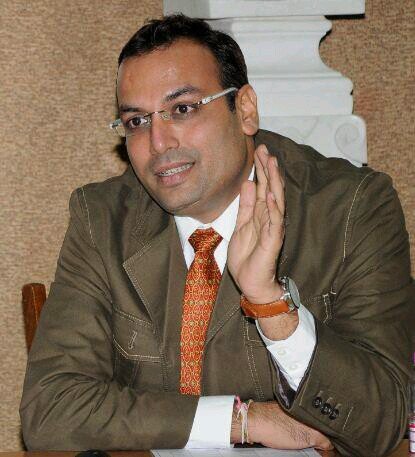
the babu got to him. RIP based indian rakeshK. @narendramodi you can have amazing airports, train stations, and even highways - but unless the local governance improves, all of those efforts will be in vain. metros will be a huge failure unless the walkablity to and from those stations is increased exponentially.
biased indian@RakeshK32229480

Day 3.5 of traveling in Faridabad for my internship >was wrong about Faridabad on many fronts and had given a false impression of the city >Most of the city is in good shape and well-developed > Some areas are neglected but MCF officials told me they will fix them

English
20
295
2.2K
56.9K
Master chief
Master chief@MasterLazychief·
@junshiguancha1 @Ravan06076274 there you go idiot , you just contradicted yourself, Originally claims iran should have relied on china, now you are saying china would not sell advanced weapons to iran to maintain good relations with arab countries, pick a lane
English
0
0
1
31
PLA_Overwhelm
PLA_Overwhelm@junshiguancha1·
@Ravan06076274 You low-IQ idiot, you've read too much fake news and actually believe that Iran imported China's air defense system? In order to balance its interests in the Middle East and maintain good relations with Arab countries, China has never exported any advanced weapons to Iran.
English
9
0
14
6.7K
PLA_Overwhelm
PLA_Overwhelm@junshiguancha1·
Iran's biggest mistake: choosing India over full alignment with China. India sided with Israel and betrayed Iran when it counted. Chinese missiles & drones = Israel destroyed 10×. Advanced anti-ship ballistic missiles = US fleet sunk in Arabian Sea.
English
514
331
4.3K
800.7K
Income Tax India
Income Tax India@IncomeTaxIndia·
KIND ATTENTION PLEASE: ➡️STT has been raised only on options and futures. ➡️The rate for futures now is 0.05 and for options is 0.15 ➡️Total volume of transaction in options and futures is more than 500 times of Indian GDP ➡️In Rupee terms, our GDP is 300 lakh crore rupees. ➡️Volume for options and futures is more than 1.5 lakh lakh crore rupees. Therefore there is justification for increase in rates to curb purely speculative activity in options and futures. Other STT rates remain the same. Here's the direct Link to FAQ document:incometaxindia.gov.in/Documents/Budg… For authentic and accurate information, always refer to official sources only.
English
1.4K
765
3.6K
950.9K
Master chief
Master chief@MasterLazychief·
@bfornitin @Akshat_World You will realise how big of a blunder this is when there is no liquidity in market and how easily market gets manipulated in coming days
English
0
0
0
13
Master chief
Master chief@MasterLazychief·
@bfornitin @Akshat_World The mental gymnastics going here to justify the govt tax. If they really wanted to discourage general population they could have easily increased minimum lot size.
English
1
0
2
60
Akshat Shrivastava
Akshat Shrivastava@Akshat_World·
We are destroying the Indian stock market bit-by-bit. Today's budget was just a step to demolish it more. Let me explain by giving a concrete example- We are killing the options market in India. Before you dance and think this is great: get your head out of your ass. And, take some time out to study the need for a healthy options market for stock investors:- 1) Options sellers in the market are liquidity providers. Having a healthy options market allows the entire capital market to work well. 2) Let me give you an example: when some sells a Put option (on let's say Nifty 50). It is an obligation to buy Nifty 50, at a predetermined price (if the market falls) 3) In cases of extreme events (eg. Covid fall or 2008 crash). The Put sellers, actually provide cushion to the market. And, support the market. If there is no counter liquidity from the buyers, sellers would just sell and run away. And, you will witness a steep fall. Additionally, we will never attract big foreign investors. Because Options can offer insurance. Example: if a big Foreign Investor buys (Nifty 50) of 10Mn$ worth, he would need to Buy a Put option to protect his portfolio. Putting crazy taxes on anything is the fastest way to kill a market. And, we are doing exactly that. I can see keyboard warriors typing: "Oh but 90% retail loses money on options". Well because options are NOT for them to begin with. It is funny to see full grown ass adults being told what is good/bad for them. Teach them, let them make their decision. What's the high handedness with taxes? ** For context: I don't do options in the Indian market due to high taxes. So this issue does not impact me. But, since I do options generally in world markets, I can tell you whey they are important. And, explaining it.
Akshat Shrivastava@Akshat_World

Market is reacting badly to the budget. And, rightly so. - STT on options & futures up. - Nothing much in it for stock investors. - We are going the more conservative way (pushing bond market, banking reforms). - Prioritizing: fiscal responsibility over growth (investors don't love this) - Capital will be freed from speculation. And likely to be fed into the real economy via lending (hence, Banking reforms focus) - Clear move from "financialization" of our economy to real capital flow into the economy via lending; especially in MSME. Honestly, this is not bad. For FIIs: nothing much. For investors nothing much. Overall good for the economy. Negative for investors in the mid-term. People don't easy get this point. An economy could be strengthened. But, economy could give negative returns. Example: China. Will economy really improve? Remains to be seen. Corruption, crony capitalists etc are major issues. A budget cannot address this. Short-term message is: If you wish to make money from stock investing, look elsewhere.


English
184
367
2.8K
359.2K
RedboxGlobal India
RedboxGlobal India@REDBOXINDIA·
9 OUT OF 10 RETAIL INVESTORS WERE LOOSING MONEY IN F&O SO GOVT HAD TO TAKE SOME STEPS: KOTAK SHAH
English
280
85
1.3K
182K
Frontalforce 🇮🇳
Frontalforce 🇮🇳@FrontalForce·
This beast is arriving in middle east by Jan 25th 🔥
Frontalforce 🇮🇳 tweet media
English
54
364
6.3K
144.1K
Nikhil Pahwa
Nikhil Pahwa@nixxin·
Hi Deepi, are you baiting me? Sigh. Here we go again: The phrase “commercial announcements” stands out for me. Which means that you agree that the announcement is done, just not the “commercial” announcement. You know what’s actually funny...you've chosen to announce: 1. before releasing benchmarking data, 2. releasing preview devices, 3. sharing all the science (as you claim) 4. Making all the claims about brain bloodflow publicly. Especially for a product that claims to be somewhat scientific, the onus of proof is on YOU, not doctors. No one need to wait for you. YOU need to publish the research and proof in order avoid the criticism. You need their validation, they don't need yours. It's pseudoscience until you prove them wrong, and science if and after you do. So their criticism isn’t funny Deepi. It’s valid and needed until you prove them wrong. You don’t decide when someone can or should critique especially once you’ve chosen to put it out there. Free as in speech. Your launch playbook for creating demand before supply, announcements before commercial announcements, claims before data, maybe even curiosity via controversy… is kinda backfiring, is it? Maybe a little too much bloodflow to the brain isn't a great idea either. Btw I should clarify that this is not a un/scientific claim: it's sarcasm. It's also fair game. Premature launch will elicit “premature judgement”, and snark will attract snark. That’s life when you’re not surrounded by confirmation bias. I don’t know if you’re friends, but Bhavish is probably thanking you for giving him a bit of a breather. You seem to be grabbing at his Sasta Elon crown. Seriously dude, what’s with the “Until then, be curious, and cheer Indian startups? Your skepticism is valuable, but at the right time.” lol. Who are you to decide what the right time is, and what’s with the “Cheer Indian Startups” defense? You know that bit about “Patriotism is the last refuge…” etc etc, right? I know it didn’t work out well for you the last time you put out data about something, but it might be needed here, since this may be about science and all, and not data for (alleged) algorithmic exploitation that you brilliantly ended up benchmarking publicly as a reference point for all future conversations about the the gig economy. Well done with that btw. However, I’ll still give you mature advice for an immature tweet. Don't worry...it’s AI generated so it’s more mature than my response here. Since you’re using AI for (some) tweets, and probably haven’t hired someone for communications and crisis management advice, or aren't listening to them (I’m saying it again, you should, on both counts: hire and listen) try using AI for Risk Factors. For now, let me, as a wellwisher, do that for you. I’ve included a response from my Risk Analysis custom bot below (which I created after your Green Delivery fiasco btw), which has some free (as in beer) advice (because the subscription cost is externalised to me). This is useful especially when there’s the likelihood of there being some naive little kid on twitter who will tell the emperor he has no clothes. (He means well, btw, and believes in free as in speech). Sincerely, Nikhil P.s.: 1. Still a Zomato investor, despite everything. Thoda udhar business ko bhi dekh lena bhai. Stock price kaafi gir gaya hai, aur thoda focus bhikhra hua lag raha hai 2. Also, for the Rs 10 rupees per tweet people who will troll me with “tune kya ukhaad liya zindagi me?”, let me pre-empt you: nothing much. But, free as in speech. You and Deepi can ignore me. Here’s the Risk Factors AI response: Below is a public-perception risk analysis of Deepinder Goyal’s tweet responding to doctor/influencer criticism about the “Temple” wearable, using the context reported across recent coverage and his own post. Risk assessment (public sentiment + stakeholder reaction) 1. “Condescending tone toward doctors” (UGLY) The phrasing (“That’s funny, tbh”, “gentle reminder”) can read as dismissive of medical caution, triggering sentiment that he’s belittling domain experts rather than engaging with them. This may harden clinician skepticism and invite a “billionaire biohacking vs. science” narrative. Stakeholders: doctors/medical bodies, health journalists, regulators, general public. 2. “Anti-science framing: ‘judge later’” (BAD) Saying “we will share all the science if and when we decide to sell” may be interpreted as conditional transparency—i.e., science is a marketing asset, not a foundation. In health-tech, audiences often expect early validation signals (study design, IRB/ethics, methodology) even pre-launch. Stakeholders: scientists, research community, investors, regulators, consumer advocates. 3. “Streisand effect: amplifying the controversy” (MODERATE) By addressing “concerned doctors/influencers,” the tweet can broaden attention, converting a niche critique into a bigger storyline and encouraging more experts to weigh in publicly. This can intensify memes + skepticism cycles already visible around the podcast moment. Stakeholders: media, social audiences, competitors, potential customers. 4. “Perceived attempt to silence criticism / gatekeep timing” (BAD) “Your skepticism is valuable, but at the right time” can be read as “don’t criticize until we’re ready,” which tends to inflame watchdogs and medical voices who see early warning as their duty. That dynamic is already present in reported expert reactions. Stakeholders: doctors, patient-safety advocates, journalists, policymakers. 5. “Brand spillover onto Zomato/Eternal reputation” (BAD) Even if he says it’s not a Zomato product, public perception may still tie the founder’s conduct to Zomato/Eternal leadership judgment and ethics. Any ‘pseudoscience’ label can splash onto the parent brand and invite broader scrutiny of credibility. (mint) Stakeholders: Zomato/Eternal employees, customers, partners, investors. 6. “Pseudoscience headline risk (gravity ageing hypothesis adjacency)” (UGLY) The tweet’s defensiveness may inadvertently validate the frame that this is “claims running ahead of proof,” especially since media narratives connect Temple to the “Gravity Ageing Hypothesis” debate. Once “pseudoscience” becomes a shorthand, it’s hard to reverse. Stakeholders: mainstream media, scientists, regulators, investors. 7. “Regulatory attention risk: implied health/medical utility” (BAD) Even without selling, public discussion about measuring cerebral blood flow can trigger questions about intended use, claims, and whether the product may fall under medical-device regulation when commercialized. A combative public stance can make regulators more cautious. Stakeholders: regulators, legal/compliance teams, investors, partners. 8. “Trust gap: no pathway details (validation, trials, ethics, privacy)” (BAD) “Months away… if at all” plus “we’ll share science if/when” leaves a vacuum: people fill it with suspicion about validation rigor, ethics approvals, and data practices. In wearables, privacy and data governance are major trust drivers even pre-release. Stakeholders: privacy advocates, consumers, regulators, enterprise partners. 9. “Influencer backlash + creator economy pile-on” (MODERATE) Calling out “influencers” can trigger creator communities to respond defensively, turning it into a status/ego conflict rather than a scientific discussion. That tends to produce viral dunking and oversimplified narratives. Stakeholders: influencers, social platforms, journalists covering online culture. 10. “Elitism optics: ‘cheer Indian startups’” (MODERATE) The “cheer Indian startups” line can be read as equating skepticism with being anti-India or anti-startup, which can alienate neutral audiences who see scrutiny as part of responsible innovation—especially in health. (X (formerly Twitter)) Stakeholders: general public, policy commentators, startup ecosystem, medical community. 11. “Investor confidence volatility (signal of maturity/discipline)” (MODERATE) Investors may read the tone as reactive and worry about governance, claims discipline, and comms control in a high-risk category like health-tech. That concern is amplified by reports of significant funding/investment chatter around the initiative. Stakeholders: current/prospective investors, board/advisors, analysts. 12. “Employee morale/internal comms risk” (MODERATE) Employees (at Zomato/Eternal or the separate initiative) may worry leadership is picking fights with doctors online, increasing reputational exposure and making hiring harder for scientific roles. This can create internal unease about priorities and decision-making. (mint) Stakeholders: employees, candidates, leadership teams. 13. “Media framing: ‘Founder attacks doctors’ vs ‘Founder clarifies’” (BAD) The same tweet can be covered as a clarification or as a clapback; the “funny, tbh” increases the probability of the latter. Once the “clapback” frame sticks, subsequent scientific releases get viewed through a conflict lens. (NDTV Profit) Stakeholders: journalists, general public, investors, policymakers. 14. “Future launch risk: receipts will be used against you” (MODERATE) If/when Temple launches, any shortcomings in validation, accuracy, or claims will be compared to this tweet’s posture (“judge later”), making criticism sharper (“they asked us to wait—now look”). It raises the reputational stakes of the eventual evidence package. Stakeholders: future customers, reviewers, regulators, medical experts. Strategic recommendations (how to reduce backlash and keep sentiment constructive) 1. Reframe tone from “pushback” to “shared goals.” Replace “That’s funny, tbh” with a calm acknowledgement: “Doctors are right to demand evidence; we’re not asking anyone to trust claims.” This keeps experts from feeling attacked and reduces the “founder vs doctors” headline risk. 2. Offer “pre-commercial transparency,” not conditional transparency. Without making marketing claims, publish a short technical note: sensor modality, what it can/can’t measure (e.g., “indirect estimates vs direct CBF”), known limitations, and a validation roadmap. This directly addresses the “if/when we decide to sell” trust gap. 3. Create an independent clinical/scientific advisory signal. Announce a credible advisory board (with disclosed roles) and a plan for peer-reviewed publication or pre-registered studies. Even if early, “we’ve submitted protocol to ethics review / IRB equivalent” is a strong safety-and-seriousness cue (without overpromising outcomes). 4. Stop debating “who gets to critique when.” Swap “at the right time” with “critique anytime—here’s what we can share today, and what we’ll share next.” That de-escalates the gatekeeping perception and invites good-faith scrutiny. 5. Separate “Indian startups” pride from scientific validation. Keep patriotism out of evidence disputes. A safer line: “Innovation thrives with rigorous skepticism—especially in health.” This avoids the “skepticism = anti-India” interpretation. 6. Pre-empt regulatory concerns with a claims discipline pledge. Publicly commit: no medical claims until validated; clear intended-use boundaries; and compliance planning for whichever regulatory category applies at launch. Regulators and health journalists respond well to “we will not overclaim.” (mint) 7. Add a privacy/data governance teaser early. Share principles: user ownership, opt-in research consent, de-identification, retention limits, and no sale of sensitive health data. This reduces suspicion even before product availability. 8. Use a structured “Q&A” format instead of open-ended threads. Publish a pinned explainer: “What Temple is / isn’t,” “What we measure / don’t,” “Why we’re testing,” “What evidence we’ll publish and when.” It reduces rumor oxygen and helps media copy accurate framing. 9. Invite credible third-party replication pathways. Announce plans to provide devices/data access to select independent labs under controlled protocols. The perception shift is: “We want to be proven wrong/right transparently,” which is the opposite of “trust us later.” 10. Internal alignment: one spokesperson, one narrative, one glossary. Ensure all channels (X/LinkedIn/press) use consistent language: avoid “brain blood flow precisely” if the device estimates proxies; be explicit about limitations. Mixed precision invites “caught exaggerating” narratives later.
Deepinder Goyal@deepigoyal

Gentle reminder to all the concerned doctors and/or influencers We haven’t made any public commercial announcements about Temple yet. We haven’t released any official device benchmarking data. A lot of the work is still underway; we’re months away from introducing preview devices to the public, if at all. You are advising people not to buy an “unvalidated” device that isn’t even available to order or pre-order yet. That’s funny, tbh. We will share all the science if and when we decide to sell Temple. You can judge and give all your advice at that moment. Until then, be curious, and cheer Indian startups? Your skepticism is valuable, but at the right time.

English
58
66
430
173K
Sanatani Capitalist
Sanatani Capitalist@pashupatasthra·
@ramprasad_c No country has any US equivalent of leverage, China comes economically close and Russia militarily, We are far away right now our entire IT industry worth 2-300 billion usd mostly depends on US, plus we don't have all round strong MIC, plus no energy security
English
2
0
11
1.7K
Ram
Ram@ramprasad_c·
3 ways to deal with Trump Fight back when you have leverage like China or when you have nothing to lose, like Cuba, Colombia. Surrender when you are totally dependent, like Europe, Japan, UK. Ignore him if you don't fall into either category. Build leverage so you are ready when the next Trump comes. Modi Ji is ignoring him. I hope India builds leverage. Will take years.
English
91
466
4K
216.1K
Why U
Why U@vayunandini·
Guys mere pas 30-40k savings hain suggest kahan invest karu ki ye paise double ho jayein 1 saal ke andar
English
462
27
1.6K
294.6K
Master chief
Master chief@MasterLazychief·
@dhinka_cheeka @mujifren lost ? vietnam had ~3 million casualties us had ~60k . They withdrew from the war due to political pressure back in their home. North Vietnam was meanigfully able to capture lands once us forces exited
English
1
0
9
588
SR
SR@dhinka_cheeka·
@mujifren Vietnam simply lost interest? Brother they lost. They lost bad.
English
4
0
11
6K
Muji Singh Rangi
Muji Singh Rangi@mujifren·
There is no point competing US military US never loses war in the traditional sense, it simply loses interest due to domestic pressure Like Vietnam and Afghanistan, they didn't lose, they simply lost interest as internal politics changed But even if you are able to eject US out of your country, they come back via the CIA route and rot you from inside Case in point - India liberated Bangladesh in 1971, CIA engineers Coup killing Sheikh Mujib 4 years later and Bangladesh slips out of India's hand for next 35 years American Military Industrial Complex can simply out compete all the countries of the world combined US as a country has continent level resources, they got everything from Oil to Gold to Food right inside their country A truly sanction proof existence
Muji Singh Rangi tweet media
English
176
495
4.6K
190.4K
Master chief
Master chief@MasterLazychief·
@kyayaaromkar @TheRathore3 @mujifren Because they can.... and nobody can do anything about it other than crying online. But coming to your point: They did this because they want to control majority of oil across world. Now iran is next in the line
English
1
0
0
291
Master chief
Master chief@MasterLazychief·
@jainvaibhav2006 @kunalb11 Japan, china, south korea, singapore. All of these countries are living examples on how they lifted majority of their population out of poverty after adopting some form of capitalism
English
0
0
0
49
Kunal Shah
Kunal Shah@kunalb11·
I urge all popular Indian podcasters in all languages to teach the merits/demerits of capitalism (and socialism) to our country. Capitalism has its flaws, but it’s the only proven system which can lift us out of poverty and make a nation worth reckoning.
English
430
967
9.4K
1.1M