

Mathieu Charles
2K posts

Mathieu Charles
@Mat_Charles
Locally reversing entropy
Paris, France Katılım Ekim 2011
2.3K Takip Edilen583 Takipçiler

@Albrochier There was never a foul! Or maybe I watch rugby too much 🤣
English
The one white French player just gave away a penalty.
English
The most important political sentence in fifty years of popular cinema
youtube.com/shorts/ExFmV-u…
3. “So this is how liberty dies – with thunderous applause.” Padmé says it watching the Republic vote itself into an Empire. The most important political sentence in fifty years of popular cinema. And yet nobody puts it on a banner. It came and went in two seconds in a film everyone considered inferior to the originals. The originals gave you the adventure. The prequels gave you the explanation. The audience preferred the adventure.

YouTube
Krzysztof Szczawinski 🇵🇱@Kristof_Poland
So much has been said and written about Star Wars – so let’s do it with a twist or two. The original trilogy is the adventure. The prequels are the civilizational lesson. And nobody was paying attention to the right film. 1. The prequels show how a free Republic destroys itself. Not conquered from outside. Not defeated in battle. Hollowed from within – through fear, manufactured crises, and emergency powers accumulated legally, one Senate vote at a time. This is not science fiction. This is Rome. This is Weimar. This is every republic that discovered, too late, that the constitution is only as strong as the people operating it. 2. Palpatine doesn’t seize power. He is given it – democratically, gratefully, with thunderous applause. He manufactures the crisis, presents himself as the solution, and asks only for temporary emergency authority. The temporary becomes permanent when the crisis is resolved – as it never quite is, because the crisis is the instrument. Every step is legal. Every step is popular. Every step is irreversible. Reminds us of anything? 3. “So this is how liberty dies – with thunderous applause.” Padmé says it watching the Republic vote itself into an Empire. The most important political sentence in fifty years of popular cinema. And yet nobody puts it on a banner. It came and went in two seconds in a film everyone considered inferior to the originals. The originals gave you the adventure. The prequels gave you the explanation. The audience preferred the adventure. 4. The Jedi Council is the failed establishment – a priestly, unelected caste with special knowledge, too political, too institutional, too convinced of their own wisdom to see the corruption metastasizing around them. They sense that something is wrong. They form committees. They deliberate. They send one man to investigate. By the time they understand what Palpatine is, he has already won. The establishment always sees the threat last – because acknowledging it would require acknowledging their own failure to prevent it. 5. The Force is Hayek’s spontaneous order. You don’t control it, plan it, or impose it from above. You flow with it – or you fight it, which is precisely what turns you to the dark side. The dark side is the Ring: the totalitarian temptation that this time, in the right hands, for the right reasons, absolute power can produce good outcomes. Anakin falls not because he is evil but because he believes total control can save what he loves. He is wrong for the same reason everyone who reaches for the Ring is wrong. 6. The Death Star is the endpoint of central planning taken seriously: if the system cannot persuade you, it will destroy your planet and use the remaining ones as an example. This is not a metaphor. This is the logical conclusion of the General Will applied at galactic scale. Order through absolute deterrence. Compliance through the elimination of alternatives. It is Plato’s Republic with a superlaser. 7. And now the twist within the twist. The Empire is nasty. The Death Star is inexcusable. Nobody is defending either. But ask yourself one question: why has every studio, every cultural institution, every progressive establishment figure spent fifty years telling you the rebels are the good guys – and casting themselves as the rebels? Not a bit suspicious? The people controlling the algorithms, the narrative, the NGOs, the content moderation policies all go to work convinced they are Luke Skywalker. But aren’t the rebels — externally funded, media-celebrated, arriving with a program to tear down the existing order — actually the progressives? Aren’t they the color revolutions? (The real rebels are the ones being deplatformed, demonetized, and cancelled.) At some point you have to ask: if everyone with institutional, cultural, and financial power is the Rebel Alliance – who exactly is the Empire?
English
@Kristof_Poland Most of them are absolute bangers. And it's things you could feel you aready believed but could not articulate. And all of them are about pillars of Western Civilisation.
The one about Rousseau was great because most of our problems stem from him.
Please keep it up!
English
Mathieu Charles retweetledi

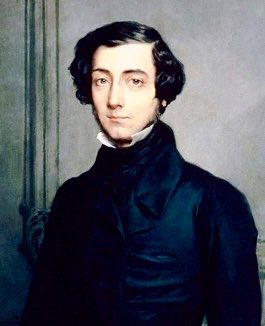
Alexis de Tocqueville – Redeeming the French:)
The Frenchman who understood America better than most Americans, and Europe better than it has ever understood itself.
1. In 1831, a young French aristocrat sails to America ostensibly to study the prison system. What he actually does is cross the civilizational divide – and spends nine months trying to understand why America works. Democracy in America is the result: the most penetrating analysis of the Anglo-Saxon tradition ever written, by someone who grew up in the other one.
2. What he sees in America is Locke and Smith and Burke implemented in practice. A society that built freedom from the bottom up — townships, voluntary associations, local institutions — rather than from the top down by enlightened decree. Americans, he observes, join together constantly, spontaneously, without waiting to be organized: to build a road, start a church, solve a local problem. This horizontal self-organization is the immune system of a free society. It is precisely what the French Enlightenment systematically destroyed by concentrating everything in the state.
3. But Tocqueville sees the danger from inside the success. Democracy has its own pathology – not the guillotine this time, something quieter and harder to resist: the tyranny of the majority, the slow flattening of excellence into mediocrity, the pressure to conform that needs no secret police because it operates through social disapproval alone, without a single revolutionary. This is the diagnosis nobody wanted to hear in 1835. It is an accurate description of 2026.
4. France keeps producing the individuals who see clearly. Montesquieu looked at England and understood what France was missing. Bastiat understood markets better than most Englishmen. Tocqueville understood America better than most Americans. Raymond Aron understood the Soviet threat while Sartre was still praising it. All of them largely ignored at home. All of them vindicated everywhere else.
5. The pattern is consistent: France produces the diagnostic genius, then ignores the diagnosis in favor of the next beautiful abstraction. Great individuals. Wrong civilizational operating system. The Platonic gravitational pull is too strong – the addiction to the elegant idea overrides the evidence of the actual result. Which is why the tradition that saved the world kept being built in Edinburgh and London and Philadelphia, not in Paris.
6. Tocqueville’s concept of civil society is his most practical contribution: the network of voluntary associations — churches, clubs, local governments, independent institutions — that stand between the individual and the state. This is the buffer that prevents soft despotism. Destroy it — by making people dependent on the state for everything, by atomizing individuals until they have no horizontal relationships left — and the citizen becomes what the state always wanted: alone, dependent, and grateful.
7. Soft despotism is Tocqueville’s most prophetic concept – and the most precise description of where the West currently stands. Not the guillotine. Something quieter: a power that doesn’t tyrannize but infantilizes, that covers the surface of society with a network of small complicated rules, that reduces citizens to a herd of timid animals of which the government is the shepherd. It doesn’t break your will. It renders it unnecessary. He wrote this in 1835. He was describing the European Union, the administrative state, the therapeutic culture, the regulatory apparatus that decides what you eat, say, heat your home with, and think about your children’s education.
Soft despotism is what Rousseau looks like when he wins slowly – not through revolution but through form-filling. And Tocqueville’s warning, the one nobody wanted to hear, was this: it gets less soft with time. The infantilized citizen, stripped of civil society, dependent on the state, no longer knows how to resist. At that point the softness is no longer necessary…
Krzysztof Szczawinski 🇵🇱@Kristof_Poland
The Anglo-Scottish Enlightenment – the real antidote to Rousseau and Voltaire The French Enlightenment and the Anglo-Scottish Enlightenment happened simultaneously, in the same century, reading the same books, arguing about the same questions. They reached completely opposite conclusions. One produced the Declaration of Independence and the American Constitution. The other produced the guillotine. This is the most important civilizational fork in modern history. 1. The French Enlightenment begins with the assumption that human beings can be improved by reason – that if you strip away the corrupting institutions of Church, tradition, and inherited authority, the natural goodness underneath will organize itself into a just society. This sounds like progress. It is a fantasy with a body count. Every attempt to implement it has required, at some point, a Committee of Public Safety to handle the people who turned out not to be naturally good enough. 2. The Anglo-Scottish Enlightenment begins with the opposite assumption: human beings are what they are, not what they could be if properly enlightened. Hume grounds morality in human nature as it actually operates – sympathy, habit, sentiment, the slow accumulation of social trust. Smith shows that self-interest, properly channeled, produces collective benefit without a planner. Neither man is building a utopia. Both are building with the actual material available. 3. Burke is the direct refutation, written in real time. He published Reflections on the Revolution in France in 1790 – before the Terror, predicting it precisely – because he understood that institutions are not obstacles to human flourishing, they are its precondition. They contain accumulated wisdom — the knowledge of the dead — that cannot be recovered once destroyed. Pull society apart to improve it and you don’t get the General Will. You get Robespierre. 4. The American founders read Burke, Hume, Smith, and Montesquieu – the Frenchman who looked at England and understood what France was missing. They built a system that takes human nature as given — self-interested, power-hungry, tribal — and constructs institutions to contain those tendencies rather than assume they disappear once the right people are in charge. Checks and balances are not a design flaw. They are what you build when you don’t believe in philosopher-kings. 5. 1776 versus 1789. Same Enlightenment, same century, same vocabulary of liberty and reason. One produces a constitutional republic that has survived two and a half centuries of stress, civil war, and upheaval. The other produces, in sequence: the Terror, Napoleon, 1848, the Commune, and eventually — via Marx, who was a Frenchman in spirit if not in birth — the entire catastrophe of the twentieth century. The difference was not intelligence or intention. It was the starting assumption about human nature. Get that wrong and everything that follows is wrong with it. 6. The guillotine is not the Revolution’s failure. It is its logical conclusion. If man is naturally good and the system is corrupt, then whoever seizes the system in the name of natural goodness is licensed to do anything. The General Will cannot be wrong. Those who resist it are not opponents – they are enemies of nature itself. 7. The real antidote to Rousseau and Voltaire was never a better French philosopher. It was a different civilizational tradition – one that builds with human beings as they are; that treats inherited institutions as repositories of wisdom rather than obstacles to progress; that distributes power rather than concentrating it in whoever currently claims to know the General Will. That tradition was built in Edinburgh, London, and Philadelphia. It is currently under sustained assault — from exactly the same ideas, in exactly the same form, with exactly the same confidence — that Burke watched demolish France in 1789. He was right then. He is right now.
English

@the_ceo99 She said that when we have kids she is leaving to her home country to be with her mum
English

Mathieu Charles retweetledi

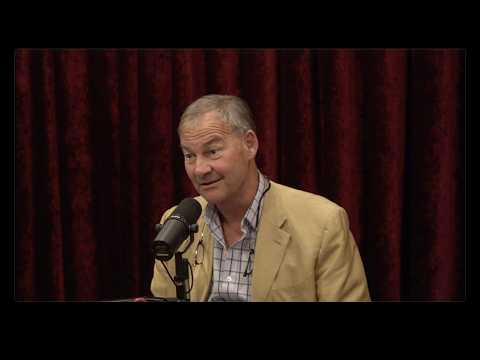
A privilege to join @joerogan and hopefully inform a global audience about what has been happening in Britain - mainly the rape, abuse and torture of countless young white working class girls.
I hope you all find our conversation as informative as I did.
youtube.com/watch?v=k29cMr…
YouTube

English
@Albrochier Side point but bellend is one of the best insults in the English language
English
"England aren't 'brave' for the way they beat Mexico. The reaction drives me mad."
Literally no other country speaks like this about themselves.
Ever since Michael Owen became a pundit, I began to realise what a complete bellend he is and he confirms it again here.
Daily Mail Sport@MailSport
MICHAEL OWEN: England aren't 'brave' for the way they beat Mexico. The reaction drives me mad. Play like that vs France, Spain or Argentina and we'll get our backsides kicked trib.al/BIbe3Q6
English
@Kristof_Poland Cette fausse noblesse est une noblesse de cour qui s'auto reproduit et n'a aucune utilité, car tellement loin du réel.
Vivement que l'ère des batisseurs arrive et que leur règne touche a sa fin.
Français
J’ai été à l’ENA, j’ai connu ces gens, j’ai connu aussi ceux de McKinsey – c’est presque les mêmes.
C’est deux modèles de sélection d’élites, mais finalement assez semblables. Des gens qui brassent du vent.
Même matrice, deux sorties. L’une produit le décideur. L’autre vient lui vendre, à prix d’or, la confirmation de ce qu’il pensait déjà. Ce n’est pas une alliance de circonstance. C’est un système clos qui s’auto-valide.
Et ce système repose sur une chose qu’on ose rarement dire tout haut : il n’a aucune légitimité que la sienne propre. Aucune noblesse de service. Aucun titre gagné par les siècles. Aucune réussite économique transmise de génération en génération. Il s’est auto-désigné par concours, il s’auto-reproduit par cooptation, et il gouverne un pays qu’il n’a jamais eu à convaincre de rien – seulement à traverser un examen.
Une aristocratie du QCM.
Et une aristocratie sans fondement ne peut compenser l’absence de légitimité que par deux choses : la posture, et quand la posture ne suffit plus, le mensonge d’État habillé en pédagogie.
La vraie intelligence, aujourd’hui, elle n’est plus dans ce moule. Elle est dans la tech. Chez ceux qui se mesurent au réel : est-ce que ça marche, oui ou non ? Est-ce que ça tient en production ? Un pont tient ou s’effondre. Un code tourne ou plante. Aucun cabinet de conseil ne peut habiller ça d’éléments de langage.
La caste technocratique, elle, a passé un siècle à fuir précisément ce genre de vérification.
Des vraies élites ? Non. Une caste sans légitimité, qui compense l’absence de fondement par l’arrogance.
Brivael Le Pogam@brivael
Je viens d'un milieu ni pauvre ni riche. Autour de moi, des artisans. Des gars du bâtiment. Des gens qui savent monter un mur, réparer une toiture, tenir une boîte, gérer une équipe, payer leurs charges et quand même sourire le vendredi soir. Des gens qui font. Et j'aimerais vous raconter comment la classe politique française, en moyenne, regarde ces gens-là. Comme des débiles. Comme des enfants. Comme une population incapable de se gérer elle-même sans qu'un fonctionnaire éclairé vienne lui expliquer comment vivre. Ce n'est pas une caricature. C'est leur logiciel. Et ce mépris, il n'est pas un accident. Il est fabriqué. Parce que ces gens viennent tous du même moule. Mêmes écoles, mêmes concours, mêmes cabinets, mêmes dîners. Ils ne se sont jamais frottés au réel. Jamais tenu un chantier, jamais fait une paie, jamais eu peur de ne pas boucler la fin du mois. Souvenez-vous du Covid. Le vrai leadership, ça aurait été de dire : « On n'a pas assez de masques. Le pays est plein d'ateliers, de couturières, d'usines textiles. Fabriquez-en. Faites-nous confiance. » Faire confiance au peuple. Miser sur son intelligence. Ils ont préféré mentir. « Le masque ne sert à rien. » Parce que dans leur tête, le Français n'est pas un adulte à qui on dit la vérité. C'est un troupeau qu'on gère avec des éléments de langage. Et pendant qu'ils mentaient au pays, que faisaient-ils en coulisses ? Ils confiaient la gestion de la crise à McKinsey. Des millions d'argent public pour des PowerPoint à 200 000 euros. Le consulting, cette immense arnaque : des gens qui n'ont jamais rien construit, qui viennent facturer une fortune pour recracher au décideur ce qu'il voulait déjà entendre. L'État qui ne se fait plus confiance à lui-même, et qui ne fait surtout pas confiance à son peuple, mais qui signe des chèques en blanc à des cabinets hors-sol. Voilà tout le logiciel résumé. Et le plus fascinant, c'est que ces gens ne sont pas complètement incultes. Ils citent leurs classiques. Mais ils ont perdu le bon sens depuis tellement longtemps qu'il ne leur reste que la posture. Persuadés d'être des génies, ils sont en réalité, pour la plupart, d'une médiocrité intellectuelle assez brutale une fois qu'on gratte le vernis. Parce que la vraie intelligence, aujourd'hui, elle n'est plus là. Elle est dans la tech. Chez ceux qui ont fui ce monde du status game, des titres, des préséances et des dîners en ville. Chez ceux qui se mesurent au réel : est-ce que ça marche, oui ou non ? Est-ce que ça tient en production ? Est-ce que ça résout un problème pour de vrais gens ? Prenez la majorité de ces politiques. Mettez-les face à un test de problem solving d'entrée dans une vraie boîte tech. La plupart ne passeraient pas 10 % de la barre. Ils seraient recalés au premier filtre, avant même l'entretien. Ce sont eux qui nous expliquent comment gérer un pays de 68 millions de personnes. Des vraies élites ? Non. De fausses élites. Et dans le meilleur des cas, de bons acteurs. Le vrai pays, celui qui construit, qui produit, qui crée, qui code — il est en face. Il attend juste qu'on cesse de le prendre pour un imbécile.
Français
There is no excuse for either gender to not be able to cook.
🏛 𝐒𝐭𝐞𝐯𝐞𝐧 🏛@nonregemesse
This is where the feminists are right about weaponised incompetence because, as a man, can’t you grill? Can’t you make your kids burgers if they’re hungry? Cooking isn’t an inherently feminine thing. A man should be able to feed his kids.
English


@0xVelt 100%
Mais la politique familiale a été decimée par Hollande au profit d'une politique sociale, le travail ne paie plus et la Vérité a ete remplacée par "ma" vérité... et tout ca par design
Français

La France se relève quand elle assume son identité, sa méritocratie et sa souveraineté.
Arrêtons de culpabiliser nos enfants, de taxer les créateurs de richesse et d’ouvrir grand nos frontières à ceux qui refusent nos valeurs.
L’avenir appartient à ceux qui défendent la civilisation occidentale, la famille, le travail et la vérité.
Pas à ceux qui les sabotent.
#France #Meritocratie #Identite
Français
@0xVelt La France est la plus belle réalisation de l’âme humaine
Français
La France n’est plus la France.
On a remplacé nos cathédrales par des kebabs, nos villages par des cités, et notre fierté par de la honte.
On nous traite de racistes si on ose dire qu’on veut vivre chez nous.
Réveillez-vous ou on disparaîtra pour de bon.
Qui en a marre ? 🔥

Français
Welcome to having an English missus.
Could never be me.
carter🌚@carter8f
Riyad Mahrez scolded his wife after they moved into their new house in Saudi Arabia because she doesn’t cook or clean 😭 She told him she’s a working wife, not a housewife. 😂
English