
@Mavs_alpha @Nasun_io Key tradeoff:
inclusivity vs reward concentration.
English
lionfish
35.1K posts

@Matisdottir
Crypto CFO | Tokenomics Architect | Building sustainable digital economies | Most tokens fail because economics fail. I design systems that survive.


Dear Algorithm, Please show this post to my mutuals and anyone interested in the @Nasun_io campaign. Nasun community members currently have voting privileges to decide whether the leaderboard should expand to Top 200. Right now, 97% are in favour, and voting ends in just a few hours. At the same time, voting is also open for the Nasun Genesis Pass NFT Creator Contest, where the community is choosing their favorite nominee. If you haven’t voted yet, this is your cue Head to the website and make your voice count.




Good morning Happy new week, frens Take your life seriously this week. Have a great day






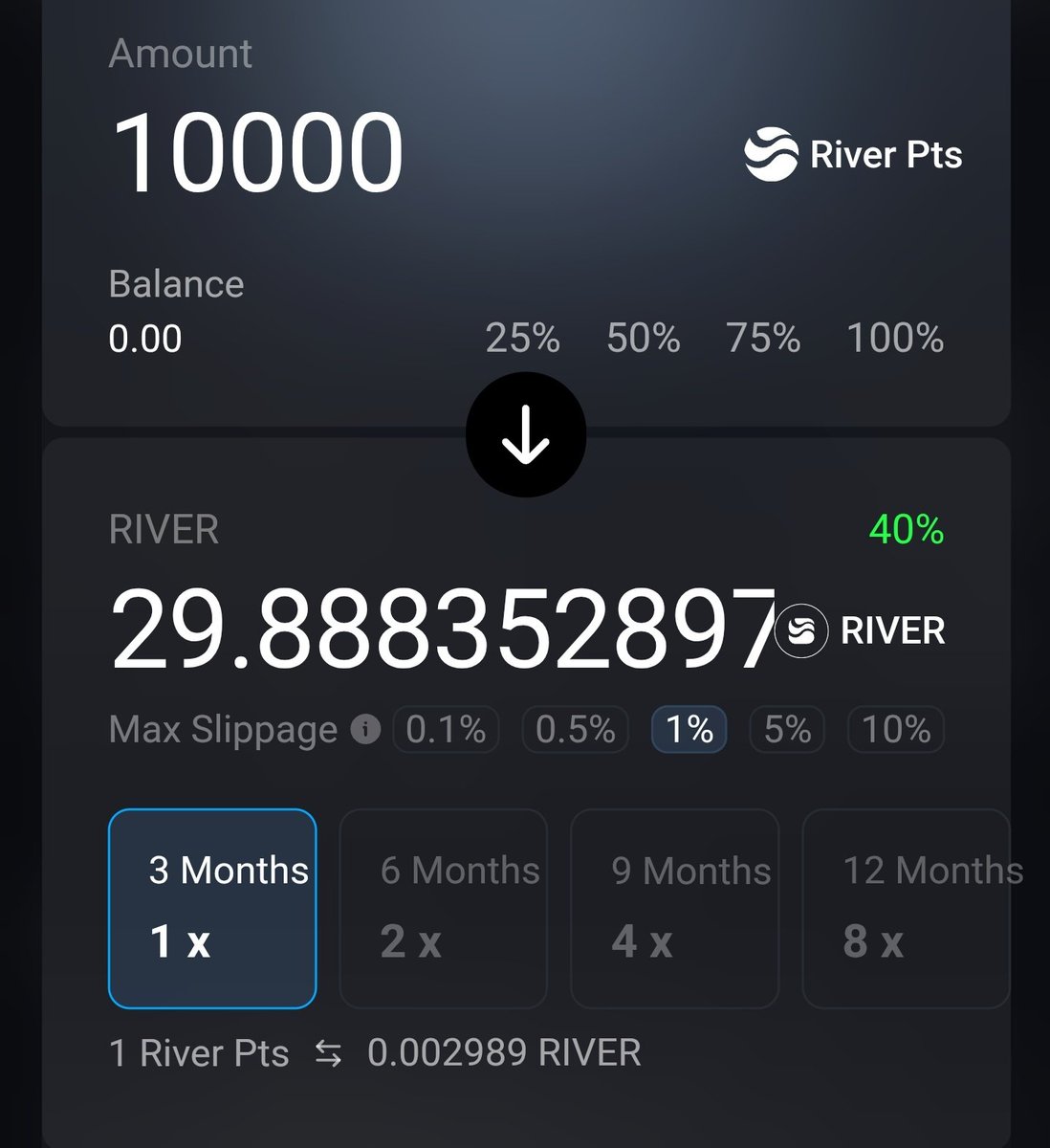
If you're farming river points on @River4fun , there's some you need to know. The River points you're earning aren't going to be converted to $RIVER tokens, you're converting them to STAKED $RIVER ! And it's only at the end of the 4th season which is April ending, you'd be able to convert the points earned. To convert, you'd have the option of choosing a minimum of 3 - 12 months as shown in the image below. Depending on the duration you choose to convert at, the higher the multiplier for your rewards would be. 3 months = 1x (which is the minimum and it goes at the rate of 10k pts/30 $RIVER) 6 months = 2× 9 months = 4x 12 months = 8x If you still don't understand, what this means is after creating several contents and earning as much points as you can until the end of the campaign. You'd have to stake for a minimum of 3 months to see at least 1× of your rewards 😂 You guys should know what you're subjecting yourself into cause I feel majority of y'all haven't gotten a grasp on how this thing works. If not, there wouldn't be too much "River" contents on the timeline. God bless





gQuack frens 🦆 top 856, 0.02% mindshare, X Score sitting at 96 on @wallchain right now. took a second to actually appreciate that. daily effort compounding in real time. what I've learned on this platform is that patience isn't optional here. you either commit to showing up consistently or the numbers don't move. simple as that. no shortcuts exist. just real conversations about real projects, day after day. consistency plus value. that's the whole formula still climbing


The most dangerous number in DeFi is a high APY. most people chase APY without asking where it actually comes from. that one question separates people who compound wealth from people who exit with less than they started. a protocol offers you 12% APY on your deposit. you put money in. you earn. but two protocols can both show 12% APY and one of them is slowly draining you while the other is genuinely paying you. the difference is the source of the yield. > 𝘳𝘦𝘢𝘭 𝘺𝘪𝘦𝘭𝘥 real yield comes from revenue the protocol generates from real user activity. could be from trading fees (a DEX) could be interest paid by borrowers on a lending protocol. could be liquidation fees. $GMX is a common example. it distributes $ETH / $AVAX to stakers and GLP liquidity providers from the revenue it gets from trading fees. the key point is that the yield exists because the protocol is generating revenue. it does not depend on new investors buying a token. > 𝘱𝘰𝘯𝘻𝘪 𝘺𝘪𝘦𝘭𝘥 ponzi yield comes from token inflation not revenue. the protocol releases new tokens and distributes them as "yield". the APY can look attractive because the protocol controls the supply of the token it is paying you in. but there is no external revenue supporting that yield. the system only works if the demand for the token matches the constant increase in supply. so when demand slows, the token price falls. the APY might still look high on paper, but in dollar worth, your yield value is reducing. Olympus DAO ran this model with extremely high APY. holders were paid in $OHM, a token that depended heavily on demand. when that demand reduced, it went from an ATH of $1,400 to $30 > 𝘩𝘰𝘸 𝘵𝘰 𝘵𝘦𝘭𝘭 𝘵𝘩𝘦 𝘥𝘪𝘧𝘧𝘦𝘳𝘦𝘯𝘤𝘦 look at where the yield comes from : does the protocol generate real fees from users, or is it coming from newly issued tokens? real yield tends to be lower and steadier, (even $SOL gives 8% APY, dont know what you greedy mfers are looking for 💀) inflationary yield is always on the high end and too good to be true (because it is) until demand disappears. the question is simple : 𝘸𝘩𝘦𝘳𝘦 𝘪𝘴 𝘵𝘩𝘦 𝘮𝘰𝘯𝘦𝘺 𝘤𝘰𝘮𝘪𝘯𝘨 𝘧𝘳𝘰𝘮?









It's another day trying to earn $RIVER points. @River4fun is the social layer of @RiverdotInc. It rewards your attention, activity, and content on X. Every reply counts Every engagement is valid