Matthew Pauls

4K posts

Matthew Pauls

Matthew Pauls

@MattPauls

Hedge Fund Manager-Patience and Opportunism

Washington DC Katılım Mayıs 2010
197 Takip Edilen586 Takipçiler
Matthew Pauls
Matthew Pauls@MattPauls·
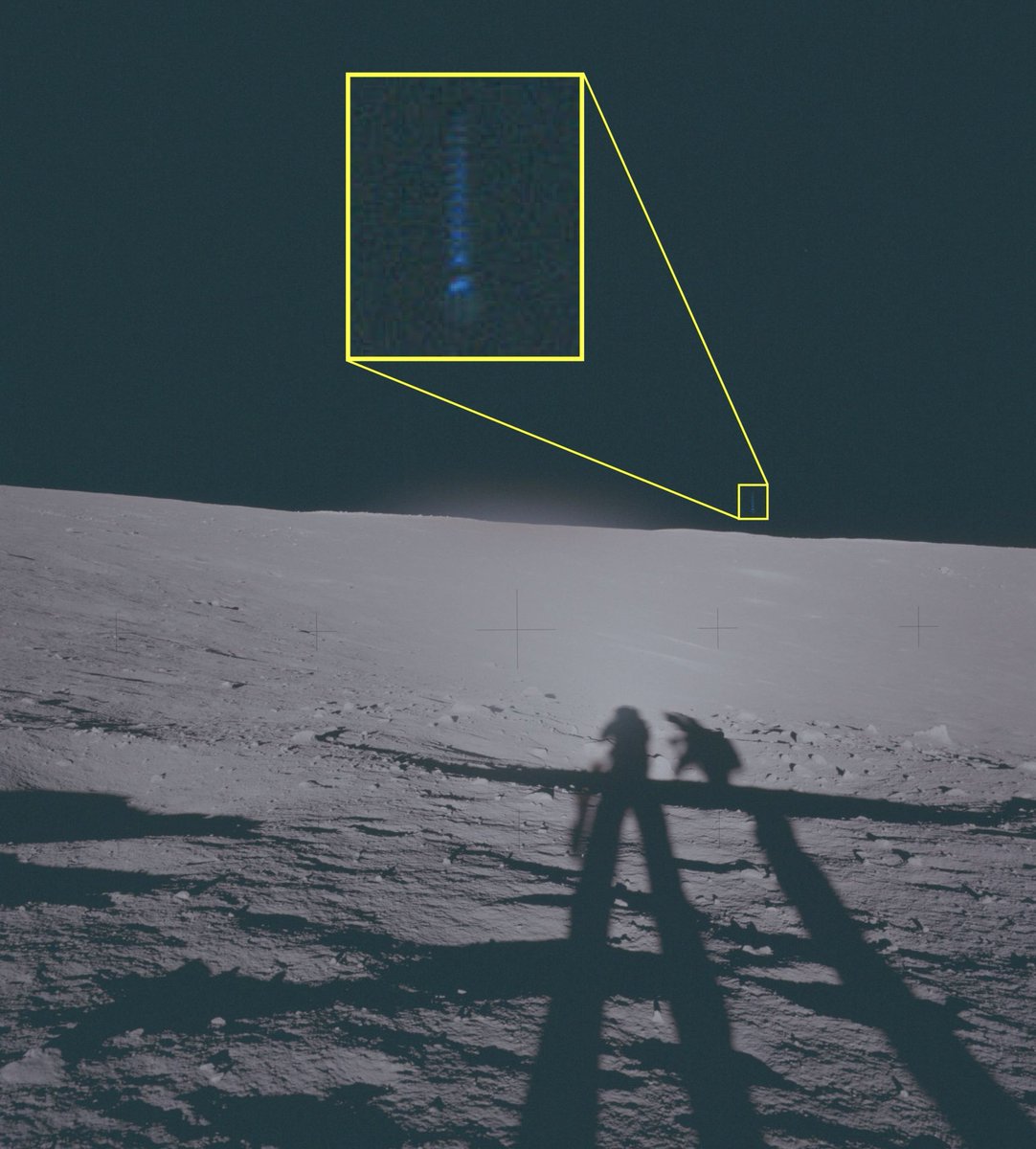
@BrightInsight6 Can we FOIA whether they actually lost the technology to return to the moon? Maybe we were just told not to come back.
English
0
0
0
14
Jimmy Corsetti
Jimmy Corsetti@BrightInsight6·
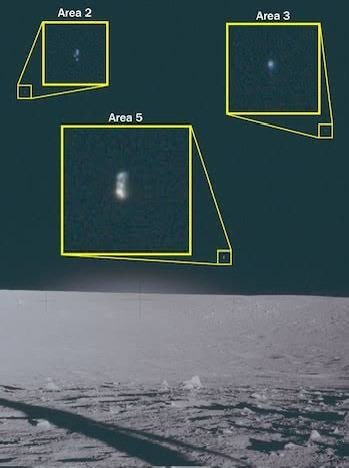
If the Apollo missions were faked and we never actually walked on the Moon, then why would “they” bother to orchestrate a fake “UFO sighting” while doing it, only to immediately classify it for 61 years? 🤔
Jimmy Corsetti tweet mediaJimmy Corsetti tweet media
English
279
117
2K
88.9K
David Senra
David Senra@davidsenra·
The loudest boos come from the cheapest seats. Dana White on ignoring criticism from those that can’t do: “These people are fucking zeros. They've never done anything in their life except talk. All the same guys talking shit now are the same ones who said the UFC peaked in 2016 and look where we are 10 years later: -Spike $35 million deal -Fox $100 million deal -ESPN $3 billion deal -Paramount $7.7 billion deal It's just crazy. You have to block all this noise out. Everybody that talks about this business and has an opinion on it are zeroes. They have no vision and they have no clue. They've never done anything in their fucking life except talk.”
David Senra@davidsenra

My conversation with @danawhite, president and CEO of the @UFC. 0:00 Founders Are the Best Storytellers 1:04 Buying the UFC for $2M 2:51 Excellence Is the Capacity to Take Pain 7:58 One Good Night's Sleep and "Fuck It, Let's Keep Going" 10:53 The Ultimate Fighter: A $10M Bet-It-All Moment 13:12 The Napkin Deal With Spike TV 22:00 Leaving Spike TV and the Phil Duman Story 28:24 First Event Profitable: What He Does Differently Now 32:30 Why Dana Sits Ringside Watching a Screen 34:07 Building a Team That Can Read His Mind 45:10 "Who the Fuck Are You and What Have You Done?" 51:55 Selling the UFC for $4+ Billion 57:32 Not Cutting a Single Employee During COVID 1:03:30 Firing a Sponsor Who Told Him How to Vote 1:07:45 There Is No Plan B 1:09:00 Joe Rogan: Doing the First 12 Fights for Free 1:12:37 Loyalty Is the Most Important Thing Includes paid partnerships.

English
32
82
894
240K
Matthew Pauls
Matthew Pauls@MattPauls·
Do you know what advantage Messi has going into this World Cup that nearly no one else has? Experience in the US climate on US fields. The humidity and heat are massive factors that most won’t be able to handle.
English
0
0
1
51
Matthew Pauls
Matthew Pauls@MattPauls·
@ihtesham2005 This is cute. The only people capable of explaining the periphery of knowledge are those who have contributed something unique to a discipline because they discovered something unique that those before them did not recognize.
English
0
0
0
939
Ihtesham Ali
Ihtesham Ali@ihtesham2005·
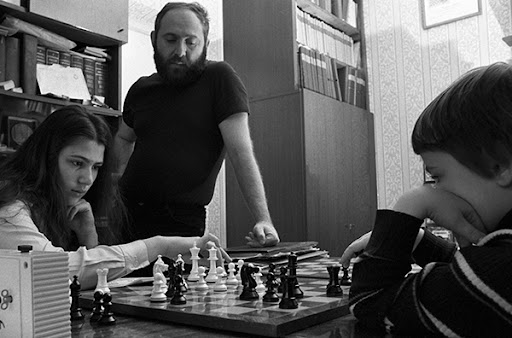
A Hungarian psychologist raised three daughters to prove that any child could become a chess grandmaster through early specialization. He succeeded. Two of them became grandmasters. One became the greatest female chess player who ever lived. Then a sports scientist looked at the data and found something nobody wanted to hear. His name is David Epstein. The book is called "Range." The Polgar experiment is one of the most famous case studies in the history of deliberate practice. Laszlo Polgar wrote a book before his daughters were even born arguing that geniuses are made, not born. He homeschooled all three girls in chess from age four. By their teens, Susan, Sofia, and Judit were dominating tournaments against grown men. Judit became the youngest grandmaster in history at the time, breaking Bobby Fischer's record. The story became the gospel of early specialization. Pick a domain young, drill it hard, and you can manufacture excellence. Epstein opens his book by telling that story honestly and then quietly demolishing the conclusion most people drew from it. Chess works that way. Most things do not. Here is the distinction that took him four years of research to articulate, and that almost nobody who quotes the 10,000 hour rule has ever read. There are two kinds of environments in which humans develop expertise. Psychologists call them kind and wicked. A kind environment has clear rules, immediate feedback, and patterns that repeat reliably. Chess is the cleanest example. Every game ends with a winner and a loser. Every move is recorded. The board never changes shape. The pieces never invent new ways to move. A child who plays ten thousand games will see most of the patterns that exist in the game, and pattern recognition is exactly what chess mastery is built on. A wicked environment is the opposite. Feedback is delayed or misleading. Rules shift. The patterns that worked yesterday may be exactly the wrong patterns to apply tomorrow. Most of the real world looks like this. Medicine is wicked. Investing is wicked. Building a company is wicked. Scientific research is wicked. Almost every job that involves a complex changing system with humans in it is wicked. The Polgar sisters trained in the kindest environment any human can train in. Their success was real and the method was correct. The mistake was generalizing the method to fields where the underlying structure of the environment is completely different. Epstein's research is what made the implication impossible to ignore. He looked at the careers of elite athletes outside of chess and golf and found that the pattern was almost the inverse of what people assumed. The athletes who reached the very top of their sports were overwhelmingly people who had played multiple sports as children, specialized late, and often switched disciplines well into their teens. Roger Federer played squash, badminton, basketball, handball, tennis, table tennis, and soccer before tennis became his focus. The kids who specialized in tennis at age six and trained year-round for a decade mostly burned out, got injured, or topped out at lower levels of the sport. The same pattern showed up everywhere he looked outside of kind environments. Inventors with the most patents had worked in multiple unrelated fields before their breakthrough work. Comic book creators with the longest careers had drawn for the most different genres before settling. Scientists who won Nobel Prizes were dramatically more likely than their peers to be serious amateur musicians, painters, sculptors, or writers. The skill that mattered in wicked environments was not depth in one pattern. It was the ability to recognize when a pattern from one domain applied unexpectedly in another. That kind of thinking cannot be built by drilling a single subject. It can only be built by accumulating mental models from many subjects and learning to move between them. The deeper finding is the one that should change how you think about your own career. Specialists in wicked environments often get worse with experience, not better. Epstein cites studies of doctors, financial analysts, intelligence officers, and forecasters showing that years of experience in a narrow domain frequently produce more confident judgments without producing more accurate ones. The expert builds elaborate mental models that feel comprehensive and turn out to be increasingly disconnected from the actual structure of the problem. They stop noticing what does not fit their framework. They mistake fluency for understanding. Generalists do better in wicked domains for a reason that sounds almost mystical until you understand the mechanism. They have less invested in any single mental model, so they abandon broken models faster. They are used to being a beginner, so they are not threatened by the discomfort of not knowing. They have seen enough different domains that they can usually find an analogy from one field that unlocks a problem in another. The technical name for this is analogical thinking, and the research on it is one of the most underrated bodies of work in cognitive science. The single most useful sentence in the entire book is the one Epstein puts almost as a throwaway. Match quality matters more than head start. A person who tries six different fields in their twenties and finds the one that genuinely fits them will outperform a person who picked one field at fourteen and stuck to it on willpower alone. The lost years were not lost. They were the search process that produced the match. Every field they walked away from taught them something they later imported into the field they finally chose. The reason this is so hard to accept is cultural, not empirical. We tell children to pick a path early. We reward the prodigy who knew at six. We treat the late bloomer as someone who failed to launch on time, when the data suggests they were running an entirely different and often more effective optimization process underneath. The Polgar sisters were not wrong. The conclusion the world drew from them was. If your environment is genuinely kind, specialize early and drill hard. If it is wicked, and almost every interesting human problem is, then the people who win are the ones who refused to specialize until they had seen enough to know what was actually worth specializing in. You are not behind. You were running the right experiment all along.
Ihtesham Ali tweet media
English
384
2.9K
11.3K
1M
Matthew Pauls
Matthew Pauls@MattPauls·
@aakashgupta What about extremely interesting conversation or communication. I bet you it’s almost identical.
English
1
0
3
569
Aakash Gupta
Aakash Gupta@aakashgupta·
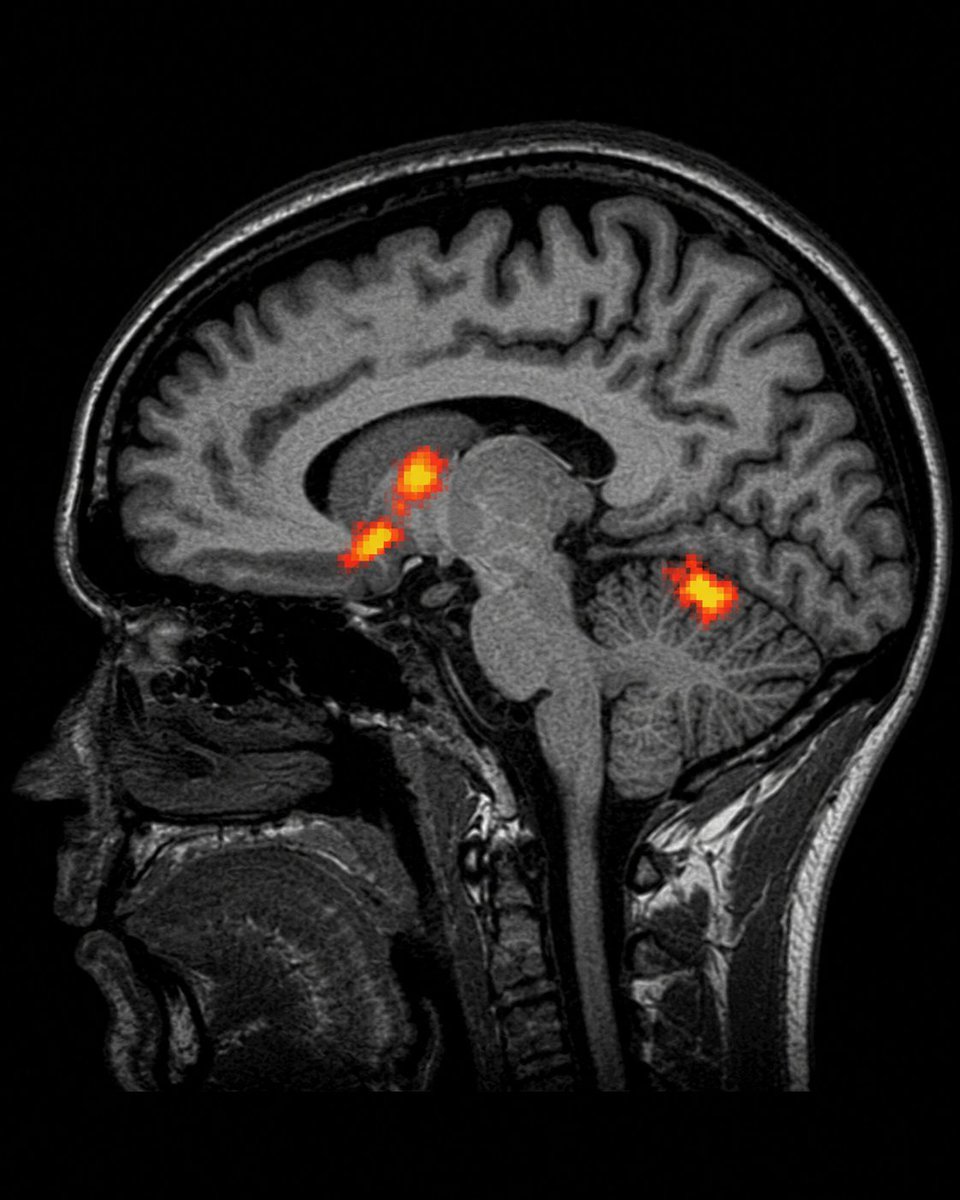
Music is the most evolutionarily inexplicable hit of dopamine your brain gives you for free. Every other reward in the human body has a survival logic. Food keeps you alive. Sex propagates genes. Even cocaine works by hijacking pathways built for actual functions. Music has no equivalent justification. It's patterned vibrations of air that trigger the same response in your nucleus accumbens as any of them. The Salimpoor study at McGill scanned people listening to their favorite songs and found something stranger than the dopamine release itself. The peak emotional moment and the dopamine release happen in different brain regions at different times. The caudate fires roughly 15 seconds before the chills hit. By the time you feel goosebumps, the dopamine has already peaked. Your brain rewards you for predicting the climax. The climax itself arrives after the chemistry is already done. That's why every great song uses the same trick. Build a pattern. Violate it just enough that your prediction was almost right. Resolve it. The chills come when reality confirms a slightly better version of what you anticipated. Music engages more brain regions simultaneously than almost any other human activity. Motor cortex tracks rhythm even when you sit still. Auditory cortex parses pitch. Limbic system handles emotion. Prefrontal cortex layers memory on top. Cerebellum runs timing. You use more neural surface area listening to a 3-minute song than you use driving a car. And it's the last thing to go. Late-stage Alzheimer's patients who can't recognize their children can still sing every word of a song they loved at 22. Music is encoded somewhere the disease doesn't reach. Patterned air. That's the whole input. Everything else is your brain.
Aakash Gupta tweet mediaAakash Gupta tweet media
Ajibola@4jibola

music is honestly one of the best parts of being alive.

English
32
252
1.3K
108K
Girişimci Hisler
Girişimci Hisler@girisimcihisler·
HERKES WARREN BUFFETT KONUŞUYOR AMA ASIL KRAL O DEĞİL! Wall Street kurtlarının sana asla söylemeyeceği sırları, bu adam MIT'de sadece 1 saatte anlattı. Adı Jim Simons. 30 yıl boyunca her yıl %66 kazandırdı. 1 saatini bu videoya ayır.
Türkçe
10
378
1.8K
164K
Matthew Pauls
Matthew Pauls@MattPauls·
@theesk Another great piece. By far the best analyst in this asset class that I have come across. Kee up the good work Paul.
English
3
0
6
4.1K
Paul Quinn
Paul Quinn@theesk·
For the good of all clubs (& their fans) involved in such structures, the affairs of Eagle Football  must signal the end of the PIK-funded, highly leveraged multi-club ownership/syndicate in global sports finance. theesk.org/2026/04/29/sys…
English
19
45
175
92.3K
Matthew Pauls
Matthew Pauls@MattPauls·
Football is about to change entirely. It will be fun when someone screenshots this in a few years once they understand why.
English
0
0
1
55
Matthew Pauls
Matthew Pauls@MattPauls·
@Sportico Collective ownership. The game is also not as merit based. Trust me the last thing you people in Europe want is collective ownership.
English
2
0
2
1.5K
Sportico
Sportico@Sportico·
The average NFL franchise generates nearly twice as much income as the most profitable European soccer club. Why do you think there is such a difference?
English
101
39
237
59.9K
Liam Cash
Liam Cash@_LiamCash·
Pre Mansfield at home ☀️ 🌱
Liam Cash tweet mediaLiam Cash tweet mediaLiam Cash tweet mediaLiam Cash tweet media
English
57
113
3.6K
704.6K
Matthew Pauls
Matthew Pauls@MattPauls·
@Ham_zee111 It’s allowable. Read the rules. Interim coaches done need licenses.
English
0
0
0
222
Matthew Pauls
Matthew Pauls@MattPauls·
I think just came to the conclusion that this is a solvable world. If you think about what thought is. All the things people have “created” or solved. It’s all about trying to solve the physical world. That is the purpose. That is the game. Create language. Solves thought transfer to interact in physical world with other people. Create numbers, counting mathematics. Solves ordering, transfer of things and ideas, create structures. Solves a lot of things, makes it easier to build things in the physical world (another language) for thought and knowledge transfer. Collective problem solving scales and is required for trying to figure out the physical world. AI is another extension. Whether it’s an intentionally created game is unclear, but the game of “life” for our entire species seems to me to be, can we solve our way out of the physical world? (I’m leaning towards, that is the meaning of life.) The mind seems to sit somewhere both outside and inside the physical world simultaneously. Anything existing within the physical world must, by definition, include the information to solve it. The mind connects us to both, the side we see and the side we can’t see but know exists. It seems to me the side we can’t see is (long term) more real than the one we can. This makes me feel like the one we are in is solvable-and once solved allows us to occupy the other.
English
0
0
1
48
Matthew Pauls
Matthew Pauls@MattPauls·
@MarioNawfal The same organization that lost all the files on how we got to the moon. Best of luck. 👌
English
0
0
0
140
Mario Nawfal
Mario Nawfal@MarioNawfal·
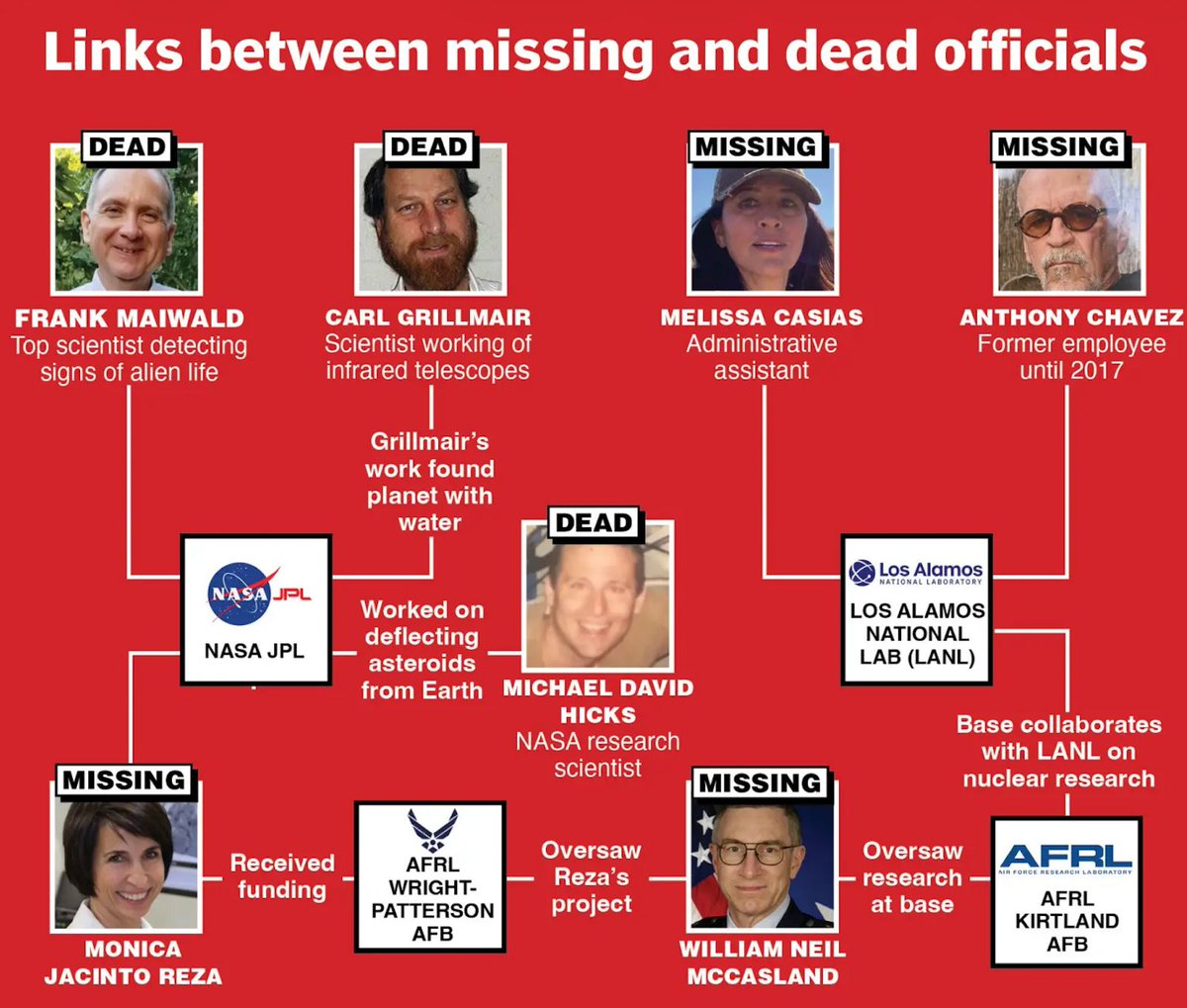
🇺🇸NASA is now directly involved in the growing investigation into the deaths and disappearances of at least 10 scientists tied to highly sensitive US nuclear and aerospace research. Several of the cases involve current or former NASA Jet Propulsion Laboratory personnel, including a longtime JPL nuclear physicist who was fatally shot outside his home, an aerospace engineer who vanished while hiking, and other space research specialists. The FBI is leading the probe alongside the Department of Energy, Department of War, and NASA, which says it is fully cooperating but has found no indication of a national security threat related to the agency. The House Oversight Committee has also launched its own investigation. CNN
Mario Nawfal tweet media
Mario Nawfal@MarioNawfal

🇺🇸 11 U.S. scientists with access to nuclear, aerospace, and classified programs are dead or missing since 2023. Congress is now demanding answers from the FBI, NASA, and the Pentagon simultaneously. That's not routine oversight.


English
112
1.8K
4.8K
261.2K
Matthew Pauls retweetledi
Paul Quinn
Paul Quinn@theesk·
The Analysis Series: Having looked at Ares, particularly its relationship with Chelsea, time to turn to another giant, Apollo Global Management - full analysis below, thanks for reading theesk.org/2026/04/17/the…
English
1
4
37
10.8K
Matthew Pauls
Matthew Pauls@MattPauls·
@theesk Absolutely fantastic write up. You are the first person I have ever seen (publicly) understand what’s going on.
English
1
0
1
88
Paul Quinn
Paul Quinn@theesk·
In case you missed it, earlier this week I published the following piece looking at the relationship between Chelsea FC, its owners and its principal lender Ares. It generated a huge response, thank you everyone who read it #Chelseafc #CFC theesk.org/2026/04/15/the…
English
4
7
45
3.9K
Matthew Pauls
Matthew Pauls@MattPauls·
@DribbleDesigner Just let it play in normal speed. I don’t know why people feel the need to speed up these videos.
English
0
0
0
27
ドリブルデザイナー 岡部将和
メッシはサッカーの神様 ドリブル💯 パス💯 トラップ💯 シュート💯 全てが異次元
日本語
9
24
374
112K