Matt Margolis

106 posts

Matt Margolis

Matt Margolis

@Matt_Margolis

Data Scientist at Guardant Health. Opinions are my own

Frisco, CO Katılım Ağustos 2011
595 Takip Edilen231 Takipçiler
sachin
sachin@sachsubra·
We’ve partnered with @OpenAI to release @SweetspotGov directly within ChatGPT. Any ChatGPT user can now search over federal contract data - no paid tools required and no Sweetspot subscription needed. We built this on ChatGPT because access to basic federal data shouldn't cost thousands of dollars a year. SAM.gov is public information, and using AI to find the right opportunities shouldn't be a privilege. For Sweetspot customers, it gets even better. You can pull opportunity data straight from ChatGPT and start up your full workflow (qualification, analysis, proposal response) inside Sweetspot. Even if you’re not in government contracting, check it out and share it with your colleagues who are. It’s completely free! Link below.
English
11
10
113
38.3K
Matt Margolis retweetledi
JCO Precision Oncology
JCO Precision Oncology@JCOPO_ASCO·
Prognostic Significance of Blood-Based Multicancer Detection in Circulating Tumor DNA: Five-Year Outcomes Analysis. Read the full article. bit.ly/4sL1pvA #MedEd
English
3
2
6
805
Matt Margolis
Matt Margolis@Matt_Margolis·
@andrewwhite01 Awesome to hear! I'm actualy unable to load the analysis. I get several errors that pop up. Regardless, awesome to hear, and even better for patients.
English
0
0
0
16
Andrew White 🐦‍⬛
Andrew White 🐦‍⬛@andrewwhite01·
We ran Kosmos on your IGF1R–ACC paper: it recapitulated ACC enrichment of non-frameshift insertions + the 2 hotspots (kinase domain + fibronectin hinge). Structural mapping (PDB+ESMFold) suggests hinge insertions perturb ATP/TKI binding → anti-IGF1R mAbs may be best to test first for inhibition. The Kosmos run: platform.edisonscientific.com/kosmos/843bf8d…
English
1
0
2
56
Andrew White 🐦‍⬛
Andrew White 🐦‍⬛@andrewwhite01·
After surprisingly long amount of work, our literature agent can finally read figures and tables from >150M papers and patents. We've open-sourced our readers from the many experiments and written up some of our findings.
English
4
38
306
17.9K
Aart Goossens
Aart Goossens@AartGoossens·
Get in touch if you want to get involved or have a use case.
English
1
0
0
123
Aart Goossens
Aart Goossens@AartGoossens·
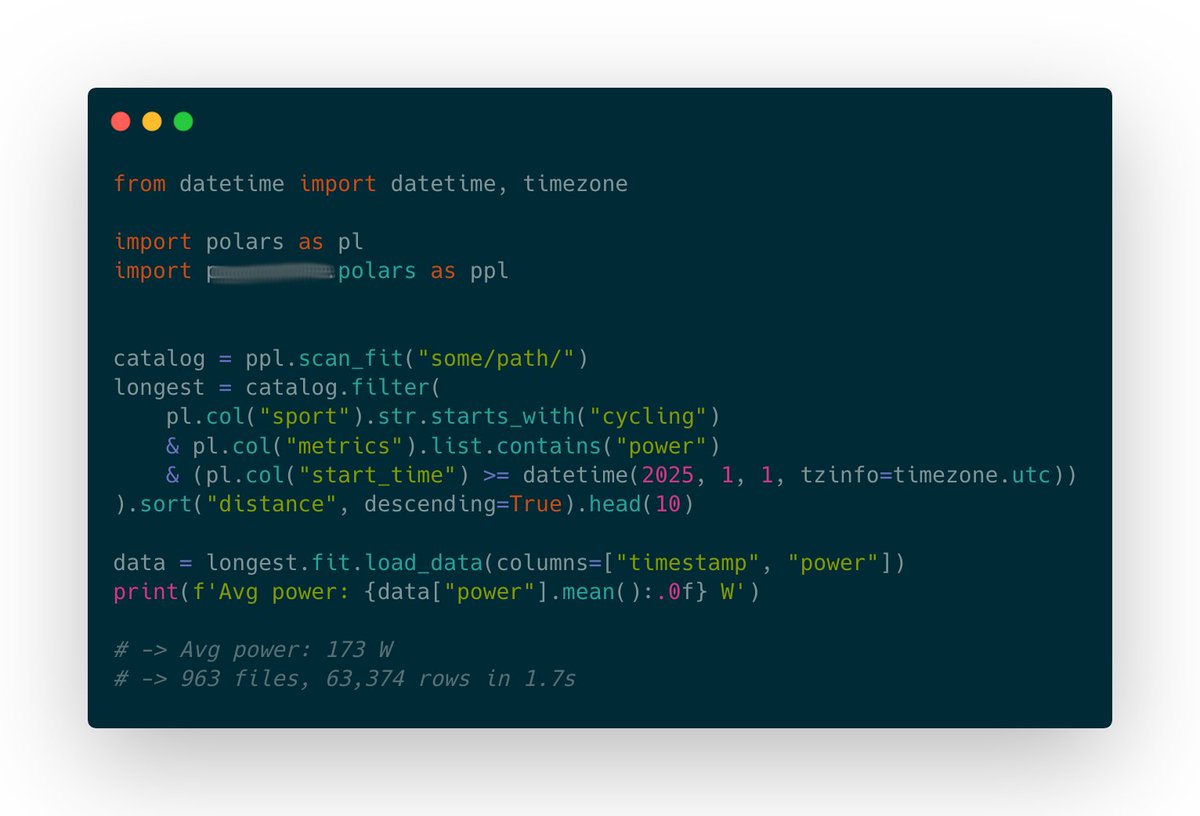
What if your .fit files were queryable? What if you could point a Python library at ~1000 .fit files, ask for the average power of your 10 longest rides in 2025, and get the answer in 1.7s?
Aart Goossens tweet media
English
3
0
14
843
Matt Margolis retweetledi
GRAIL
GRAIL@GrailBio·
Five-year CCGA3 outcomes in @JCOPO_ASCO show that cancers with a cancer signal detected result using a blood-based multi-cancer early detection (#MCED) test had survival consistent with matched SEER populations, including early-stage disease. The MCED test was likely to find clinically significant cancers without contributing to overdiagnosis. Read the abstract: bit.ly/4s5ft2z The Galleri test does not detect a signal for all cancers, and false positive and false negative results can occur. Diagnostic testing is needed to confirm cancer.
GRAIL tweet media
English
0
1
7
746
Matt Margolis
Matt Margolis@Matt_Margolis·
@GIMedOnc We should look at both NHS-G and PATHFINDER2 as studies that are going to shape how screening paradigms change in the US and what clinical utility it has. Overall, screening (at this moment) is limited by biology, not technology - as we already have the technology in MRD setting.
English
1
0
1
32
Matt Margolis
Matt Margolis@Matt_Margolis·
@GIMedOnc Trials like NHS-G take years to run and the science changes over that time period. We also don't know how COVID played a factor, especially in the NHS and their referral system.
English
1
0
1
32
Nicholas Hornstein
Nicholas Hornstein@GIMedOnc·
GRAIL has had a strange life as a company. Not because the idea is bad. Quite the opposite. They are trying to build something that could actually help people: a blood test that detects cancer before symptoms appear. That is a very hard problem. GRAIL was spun out of Illumina in 2016 with an initial approach focused on ultra-deep sequencing of circulating tumor DNA mutations. That quickly ran into a biological constraint. Early cancers often shed vanishingly small amounts of mutated DNA into the bloodstream. So the company pivoted. Instead of focusing on mutations, they moved toward genome-wide methylation patterns. Methylation carries a much larger signal and can also help infer tissue of origin. That pivot eventually became the basis for Galleri. Whether multi-cancer early detection testing will ultimately work remains an open question. But at least they are trying to solve a real problem. Which brings us to the NHS-Galleri Trial. The study enrolled roughly 140,000 participants in the UK to test whether Galleri could shift cancer diagnoses earlier. The key idea was straightforward: detect cancers before they present clinically and reduce late-stage disease. And this is where trial design matters. A lot. The primary endpoint combined stage III and stage IV cancers into a single “late stage” category. The trial ultimately did not meet that endpoint. But the results also suggest something more nuanced. There appears to be a reduction in stage IV cancers. Those two things can coexist. If a screening test moves cancers that would have presented as stage IV into stage III instead, that is arguably progress. Stage III disease is often curable. Stage IV usually is not. But if the endpoint lumps stage III and stage IV together, that improvement can disappear statistically. Same biology. Different interpretation. All because of how the endpoint was defined. (Separately, the CEO of GRAIL just “retired” three weeks after the results. That now makes six CEOs in ten years.) The bigger lesson here is not really about GRAIL. Cancer screening is brutally difficult. Biology, statistics, lead-time bias, overdiagnosis… every piece of it fights you. And sometimes the difference between a breakthrough and a failure is not the test. It is the trial you chose to run.
English
7
2
38
5.7K
Matt Margolis
Matt Margolis@Matt_Margolis·
Our 5-year outcomes analysis of blood-based multicancer early detection is out in @JCO_PrecOnc. Key takeaway: MCED test finds clinically significant cancers without contributing to overdiagnosis. ascopubs.org/doi/10.1200/PO…
English
0
0
1
46
Chris Hogg
Chris Hogg@cwhogg·
I had a lot of fun building a natural language analyzer for the large Medicaid spending dataset that was released a few weeks ago, so I expanded it to Medicare Spending data, BRFSS (health behaviors) and NHANES (clinical encounters). Please let me know what you think! openhealthdatahub.com
English
8
9
108
8.6K
Nicholas Hornstein
Nicholas Hornstein@GIMedOnc·
Confession: before I was a GI oncologist, I was a computer nerd. PhD in computational biology. I still get a strange amount of joy from a clean terminal window. I’ve been using large language models since they first became publicly available. Early versions were… rough. Hallucinations everywhere. Impressive demos, but not something you’d trust with real work. Over time they became genuinely useful. Great for drafting. Helpful for coding. Tools like OpenEvidence started to feel practical in day-to-day life. A clear productivity boost, but still incremental. This past week felt different. Using command-line versions of these models, paired with agents that can iterate, debug, and revise their own output, I watched a project I had spent months building get recreated in days. And not just recreated. Improved. You don’t need to understand command lines or model architecture to appreciate what’s happening. These systems are getting very good at reading complex material, writing code, organizing messy information, and iterating. If you do research, run trials, analyze data, write grants, build databases, or even just synthesize literature, this will touch your work. They won’t replace clinical judgment. They won’t replace experience. But they are absolutely going to change how we build things. And here’s the part that matters: we’re all still learning. This space is moving fast and no one has it fully figured out. I certainly don’t. But I’ve been experimenting long enough to see the trajectory. If you’re curious about how these tools might fit into oncology research or clinical workflows, reach out. I’m happy to share what I’ve learned, compare notes, or just think out loud together. The technology will keep improving whether we engage with it or not. I’d rather figure it out alongside people who care about patients and science. @TheGutOncLab
English
13
10
184
16.8K
Matt Margolis
Matt Margolis@Matt_Margolis·
@j_g_allen How often do you recommend cleaning them? Or not using altogether?
English
0
0
0
19
Joseph Allen
Joseph Allen@j_g_allen·
It is important to clean humidifiers regularly, or they can actually worsen indoor air quality and contribute to respiratory issues. EPA recommends **cleaning them every third day** (which no one does...) nytimes.com/2026/02/03/wel…
English
2
3
15
829
Matt Margolis
Matt Margolis@Matt_Margolis·
@doctorinigo @BarbaDelCid We’re all kras mutations identical in all mice? Presumably there would be different responses depending on mechanism? Eg: g12 vs q61
English
0
0
0
167
Iñigo San Millán
Iñigo San Millán@doctorinigo·
🧬 Why the new pancreatic cancer study from Mariano Barbacid’s lab @BarbaDelCid is important 👇 Their recent mouse study showed complete regression of pancreatic tumors by combining inhibitors of KRAS, EGFR, and STAT3. KRAS drives tumor growth. When KRAS is blocked, EGFR becomes a key escape route. STAT3 sustains survival and inflammatory signaling. Block one pathway and tumors adapt. Block key non-redundant nodes at the same time, and the system can collapse, as shown in this study. However, there is an Important nuance: These were established but not advanced metastatic tumors (roughly stage II–III). This is not yet a solution for stage IV metastatic pancreatic cancer. Most patients are diagnosed at stage IV, where additional survival pathways become dominant, especially the PI3K–AKT–mTOR axis, which is also downstream of EGFR. Barbacid’s study is important because it reinforces a critical idea: single targeted therapies are not enough. Pancreatic cancer is a network problem and requires multi-target strategies.
CRIS Contra el Cáncer@criscancer

🔴Cuando decimos que la investigación puede cambiar la historia, hablamos de días como hoy. El Dr. #MarianoBarbacid y su equipo han logrado la desaparición completa y duradera del #CáncerdePáncreas en modelos experimentales 👉 criscancer.org/adenocarcinoma…

English
2
13
76
9.8K
Matt Margolis
Matt Margolis@Matt_Margolis·
@Brady_H @Ketoneiq Hey @Brady_H do you normally take ketones immediately after a long session and then carbs+protein? curious if that would negate the effect of the ketones
English
1
0
1
104
Brady Holmer
Brady Holmer@Brady_H·
How it feels to take @Ketoneiq on an empty stomach after 2 hours of cardio.
English
7
1
36
5.9K
Matt Margolis
Matt Margolis@Matt_Margolis·
@EdisonSci this is super impressive! Great work and exemplifies the core principle of reproducibility in science! I am curiuos why you think some of the N don't match up exactly on the prevalence bar graph?
English
0
0
0
139
Edison Scientific, Inc
Edison Scientific, Inc@EdisonSci·
We liked this recent paper from @AnnaVarghese4 about predicting clinical effects of KRAS mutations on pancreatic cancer and asked our analysis agent to do the same analysis (prompt in alt text). It came to the same conclusion and almost the same figure (even finding data itself)
Edison Scientific, Inc tweet mediaEdison Scientific, Inc tweet media
English
4
12
85
40.9K
Matt Margolis
Matt Margolis@Matt_Margolis·
@Alan_Couzens If lactate testing suggests LT1 is > 70% of max (closer to 80%) does that imply we want to spend the majority just under that?
English
0
0
0
700
Alan Couzens
Alan Couzens@Alan_Couzens·
*Under* 70% max heart rate. In my testing database, the mean heart rate at the first rise in lactate is 69.8% of max. We want to be *below* this point for the vast majority of the work.
ABD AL HANAAN@abdalhanaan123

@Alan_Couzens @Alan_Couzens what do you think is a better threshold to stay under 70 or 75% of hr max for easy intensity for the majority
English
18
0
140
46.7K
Matt Margolis
Matt Margolis@Matt_Margolis·
@AndrewKSheaff I’ll be open water swimming all summer and was looking to still work on drills during this time. Do you have any aids you recommend for OWS? Drag socks in shallow water?
English
1
0
0
18
Andrew Sheaff
Andrew Sheaff@AndrewKSheaff·
And each repetition, the numbers let swimmers know if they’ve been successful or not. Relevant tasks + great feedback = powerful learning.
English
1
0
0
195
Andrew Sheaff
Andrew Sheaff@AndrewKSheaff·
To help swimmers learn to create more propulsion, I like giving them stroke count goals. And speed goals. They have to swim as long as possible AND as fast as possible. Creating more propulsion with each stroke is a solution to that problem.
English
1
0
5
285