Max Bosenko

19.2K posts

Max Bosenko banner
Max Bosenko

Max Bosenko

@MaxTheComrade

Credit Analyst by day Stock Junkie by night / Born and raised in 🇺🇦 Spoiled by 🇺🇸 / 🥃 lover @LFC supporter 🔴 MMA enthusiast 👊

Florida, USA Katılım Aralık 2013
654 Takip Edilen14.4K Takipçiler
Sabitlenmiş Tweet
Max Bosenko
Max Bosenko@MaxTheComrade·
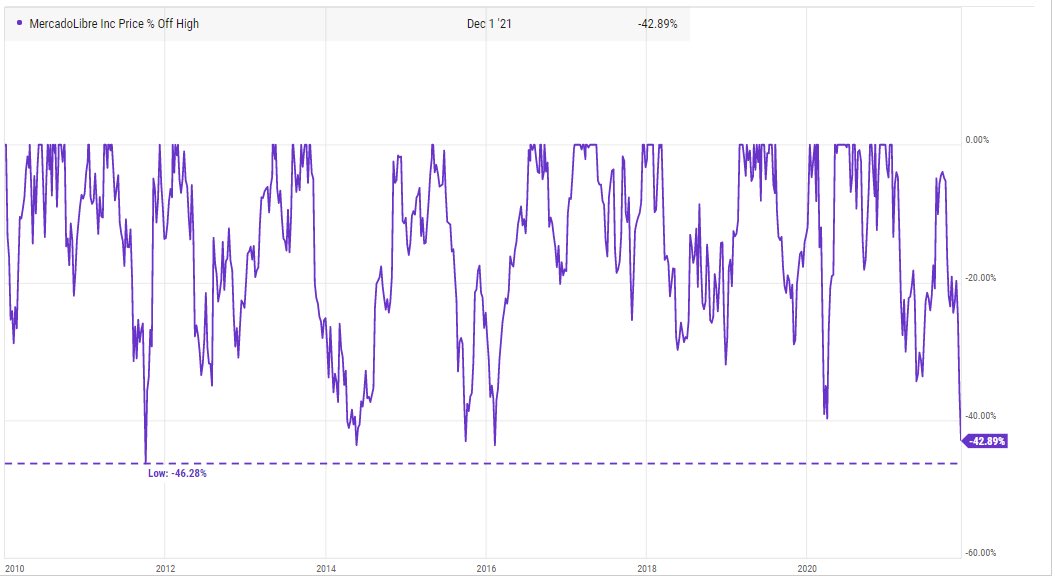
$MELI closed at $1,104.20, about 45% decline from its ATH of $2,020. Since 2012, there has been 5 instances when $MELI dropped more than 40% and recovered. Given the company’s recent performance and the management’s historical track record, I believe 6th time is not an exception.
Max Bosenko tweet media
English
24
27
313
0
Max Bosenko
Max Bosenko@MaxTheComrade·
@RussellShaw_MLS @JamesMac_Fit It’s everywhere today. I’m doing my best trying to engage with him and play outside but when they are around 9-10, they are too cool to hang out with their moms & dads. The other day he brought 4 friends to our house, each kid had an iPad and they all played games in his room 🫪
English
0
0
1
39
Russ Shaw MLS - Lab Scientist
Russ Shaw MLS - Lab Scientist@RussellShaw_MLS·
Same here. Definitely has gotten worse in the last couple years too it feels like. Or maybe I’m getting older and transforming more into an old man. But I see the same. We send the kid out to search the neighborhood for kids to play with and he comes back sad saying they don’t want to come outside.
English
1
0
1
21
JMAC | Men’s Health Coach
Dads... I need your advice. As a young dad myself, I’m genuinely worried about my son growing up addicted to screens, phones, games, etc. It feels like EVERYTHING is designed to grab their attention these days. So I want to ask: - How do you actually manage screen time in your house? - What’s worked for you? - What’s failed? Would appreciate real answers from people who’ve been there 🤝
English
2.1K
31
648
308.9K
Max Bosenko
Max Bosenko@MaxTheComrade·
@RussellShaw_MLS @JamesMac_Fit The main problem is that all of my son’s friends are on their devices pretty much every opportunity they have. He loves playing outside but he comes back home 10 mins after checking on 5 of his friends in the neighborhood who don’t want to play outside, they all hang out in VR 🤷‍♂️
English
1
0
1
26
Russ Shaw MLS - Lab Scientist
Russ Shaw MLS - Lab Scientist@RussellShaw_MLS·
Just don’t even start it. Who cares what their friends get to do. It’s not good. We did it more than I’d like to admit and have turned the other direction. I had access to video games as a kid but they were things that made me think and had me solve problems and I was challenged. And I wasn’t connected to the internet and talking to other people. The shit these kids today play and watch is so dumb. It’s brain rot. Seriously. And they’ll act like they’re addicted to crack when you take it away. Don’t let it happen to you. Limit it from the beginning and then monitor the hell out of whatever access you do allow when you allow it.
English
1
0
3
649
Max Bosenko
Max Bosenko@MaxTheComrade·
@RussellShaw_MLS That’s awesome, you guys are crushing it! Good luck with the Murph 👊 💪
English
0
0
1
152
Russ Shaw MLS - Lab Scientist
Russ Shaw MLS - Lab Scientist@RussellShaw_MLS·
My wife is one of the smartest, strongest people I know. She's my rock. She's the glue that holds me and the family together. I can't put into words how much she means to me, so I'll let the video do some of it for me. That's her, hitting a new personal best 300 lb deadlift at 130 lbs of bodyweight. 2.3 times bodyweight. I had to look at the bar twice when I watched her pull it. She’s one of the strongest girls at our gym and she’s only 5 feet tall. When I finally talked her into coming to 5 AM CrossFit with me, I thought I'd be the one showing her the ropes. Turns out she didn't need much showing. Years of competitive soccer growing up. Cross country. Some gymnastics training in there too. She picked up toes-to-bar fast. Pull-ups even faster. She's about a session or two away from her first strict muscle-up. Getting them now with a small band. And the part I didn't expect. She has leaned all the way into the weightlifting side. The deadlift. The clean. The snatch. The back squat. All of it. Crushes our WODs more days than I do. I get to share the rhythm of a 4 AM alarm and a 5 AM box with the person I love most in the world. We walk after dinner. We read the labels together. We raise our kids together. We grow together. I get to be her husband. Hard to think of a luckier man on the planet right now. So proud of her. Damn proud. Now we're heading to the box to knock out Murph together. Memorial Day tradition for us and a lot of CrossFitters across the country. 1 mile run, 100 pull-ups, 200 push-ups, 300 squats, another mile run. In a weighted vest. Honoring Lt. Michael Murphy and every service member who paid the ultimate price. Hope everyone has a great holiday weekend. Get out and move. Spend time with the people you love. Honor the ones who can't move with you anymore. Don't wait for the diagnosis. Read the label.
English
7
1
45
2.3K
Max Bosenko
Max Bosenko@MaxTheComrade·
@RussellShaw_MLS Haha, sounds like fun! If I would live closer, would def join you guys! Let me know how it goes. My personal goal is to complete it under 1 hour with perfect form for pull-ups, pushups, squats (no kipping, full lockout) 👊
English
1
0
1
31
Russ Shaw MLS - Lab Scientist
Russ Shaw MLS - Lab Scientist@RussellShaw_MLS·
CrossFit. Combines a little bit of all of the above plus this really fun thing called a wall ball. A few things you should know going in. There's a whiteboard or app at most boxes where you can see how you compare with everyone else who hit the WOD that day. So you don't just compete with yourself. You compete with the entire gym. Daily. It's deeply humbling when the mom of 5 outpaces you on a workout you gave everything to. You'll deserve it. You'll come back tomorrow anyway. It gives you organic-chemistry vibes in the sense that you'll learn a whole new language nobody outside the gym understands. AMRAP. EMOM. Hero WOD. RX. Scaled. Toes to bar. Devil's press. You'll catch yourself saying these words to friends at parties and watching them look at you like you've joined a cult. You'll be sore. Constantly. All the time. That's how you know you tried. You'll get cuts, bruises, calluses, and you'll rip a callus open every once in a while during pull-ups or muscle-up attempts. You'll carry the rip like a badge of honor. You'll show people the wound the next day at work and they will pretend to care, when in fact they're slightly concerned about you. You'll spend months trying to learn a muscle-up that other people make look easy. You will fail at the muscle-up roughly 400 times. The first time you nail one will be one of the best mornings of your life. You'll buy gear. Way too much gear. Lifters. Wraps. Knee sleeves. Hand grips. Jump rope. The fancy backpack with the Velcro panel for your competition patches. The patches themselves, marking every event you've competed in and a few details of your personality. You'll do your first competition. You'll be terrified. You'll love it. And then, the inevitable. The rite of passage. The thing that's true of every CrossFitter and we all pretend it isn't. Nobody will ever have to ask whether you do CrossFit. You will tell them. For your specific situation, CrossFit fits because it scales infinitely with your enhanced state. You can push the conditioning, the strength, the gymnastics, the Olympic lifts, the metcon volume, all simultaneously. There's no ceiling you'll hit at 38 that you can't push past with consistent work. The community is also strong. You'll find your tribe within a couple of weeks. Welcome to the cult. We have wall balls. Don't wait for the diagnosis. Read the label.
Marlon@drmarlonperalta

I want to get into something competitive and physical to leverage my enhanced state. Outside of bodybuilding/powerlifting/pickle ball, what would you suggest for a 38 year old dad?

English
2
1
3
1.7K
Russ Shaw MLS - Lab Scientist
Russ Shaw MLS - Lab Scientist@RussellShaw_MLS·
I've had it for about 6 months now. I started with an Oura ring when my wife purchased a Whoop. I was previously using a Myzone band for workouts and thought I didn't need the Whoop and only wanted to track sleep. After both of us got our trackers and started using them, I quickly became envious of hers. The Whoop was hands down better. Nicer user experience in the app. The Oura ring also annoyed me overall and I was happy to wear the Whoop instead. I honestly never notice it and it doesn't bother me one bit, even lifting. The ring you can't say that about. I ended up with the Whoop because my wife bought a new band and Amazon made a mistake and sent us a whole new Whoop with a one year subscription. I have the Whoop MG band, their most advanced model. It tracks blood pressure and can do an EKG. Neat features but if I'd bought it myself I probably wouldn't have gone with that tier. What actually makes the Whoop useful day to day is the feedback loop, not any single metric. The Strain score tells you how hard your cardiovascular system worked. The Recovery score (built mostly off HRV and sleep) tells you how prepared you are to absorb more strain. The Sleep score tells you how much restorative sleep you actually got versus what your bedroom routine suggests you should have. The three numbers talk to each other in a way that makes it harder to lie to yourself about what your body actually did and what shape it's actually in. For someone deciding. The data is only as good as your willingness to look at it and act on it. A wearable becomes powerful when you start noticing patterns. Alcohol the night before destroys recovery. A late dinner cuts deep sleep. Stress at work shows up in HRV before you feel it in your body. A poor night's sleep doesn't fully recover in one night. Strength training has a different recovery profile than long zone 2 cardio. These insights are available to anyone wearing the band who pays attention for a few weeks. The two practical choices in the consumer space right now are basically Whoop and Apple Watch (or comparable Garmin/Samsung if you're in that ecosystem). Oura works for people who want minimal commitment and only care about sleep. Whoop works for people who train seriously and want the strain/recovery feedback loop. Apple Watch is fine for general wellness if you already wear one. If I were starting fresh today and didn't have the Whoop, I'd still pick the Whoop on the standard subscription tier. The MG features are cool but not what produces the day to day value. The basic strain/recovery/sleep coaching is. Worth getting one. The wearable is one of the most underrated coaching tools available. Cheaper than therapy and harder to lie to than a journal.
English
1
0
2
67
Russ Shaw MLS - Lab Scientist
Russ Shaw MLS - Lab Scientist@RussellShaw_MLS·
I don't disagree with the intention. I disagree with Oura being the wearable that gets there, and I disagree that conventional clinical practice can absorb the data even if the device problem is solved. The Oura problem first. Personal experience. I tried it. It's big and clunky. I couldn't wear it lifting because it's about 3x as thick as a wedding band, and I don't even wear my wedding band lifting. Try doing deadlifts or power cleans or pull-ups in an Oura ring. Good luck. Cardio is fine. The gym isn't. For a wearable that wants to be the stethoscope-of-our-era, you can't take it off for the part of the day where the most physiologic stress happens. The form factor matters more than the marketing admits. The reason Whoop ate so much of the serious training market is that you forget you're wearing it. Same for the Apple Watch crowd. Oura's bet on the ring as a luxury jewelry item works for the executive desk worker. It doesn't work for anyone gripping a bar. The bigger problem is structural. In a perfect world, a 45 minute cash-pay primary care visit where the physician actually reads the chart, reviews the labs, and dives into the wearable data could move the needle in real ways. The wearable could answer the questions physicians never have time to actually ask. How long is the patient ACTUALLY sleeping? How much exercise are they ACTUALLY getting each week? How much stress are they REALLY carrying day to day? How many steps did they REALLY walk last week? What does their resting heart rate trend look like over 90 days? What does their HRV say about their autonomic nervous system right now? In the right model, an AI layer could summarize this for the physician at the start of the visit. Sleep architecture, exercise volume, recovery patterns, cardiovascular trends. Five minutes of pre-visit synthesis that's more informative than 30 minutes of patient self-report ever could be. Patients are notoriously unreliable narrators of their own habits. The wearable doesn't lie. That's the world where wearable data matters clinically. The world where it moves the needle. The problem is that almost nobody is operating in that world. Conventional primary care is a 7 minute visit with another 7 minutes of EHR documentation built around billing codes. The physician doesn't have time to read the chart, let alone look at 90 days of HRV trends. The reimbursement model has no slot for "spent 10 minutes reviewing wearable data and adjusted recommendations accordingly." There's no CPT code for that. The system isn't going to absorb this technology no matter how good the device gets. Which is exactly why wearables are showing up in cash-pay longevity clinics, direct primary care, and wellness coaching practices first. The care model has to support the data before the data can be useful. The conventional system isn't built for it and won't be anytime soon. The Stethoscope analogy is also worth pushing back on. Stethoscopes scaled because they were free at the point of care, simple to use, and produced information physicians were already trained to interpret. Wearables generate data that most physicians never trained to interpret, in formats they can't bill for, requiring time they don't have. The analogy breaks down at every joint. For patients reading this. Don't wait for the system to figure out what to do with your wearable data. Run your own panel quarterly. Use your wearable for the feedback loop on sleep, exercise, recovery, and stress. Find a physician (in whatever practice model fits) who will actually look at the data with you. The future of wearables in healthcare isn't going to be delivered by your conventional primary care visit. It's going to be delivered by the parallel ecosystem already building around it. Don't wait for the diagnosis. Read the label.
STAT@statnews

Can wearables become as synonymous with health care as the stethoscope is? Ricky Bloomfield, CMO of @ouraring, hopes they can one day. #STATBreakthrough

English
4
0
8
4.2K
Max Bosenko
Max Bosenko@MaxTheComrade·
@RussellShaw_MLS Would you consider a fast pace walking with a weighted vest for 50-60 mins to be an effective Zone 2 training?
English
1
0
1
27
Russ Shaw MLS - Lab Scientist
Russ Shaw MLS - Lab Scientist@RussellShaw_MLS·
Walking is the most underrated intervention in the entire health space, and the data behind it is some of the strongest we have. My wife and I walk every evening after dinner with the kids. Thirty to forty-five minutes, no phones out, no agenda. It’s the cheapest and most consistent thing I do for my health, and from a lab science perspective the mechanism is real and measurable. A 15 to 30 minute walk after a meal activates GLUT4 translocation in skeletal muscle through an insulin-independent pathway, pulling glucose out of the bloodstream without needing the pancreas to surge insulin. Real studies (Reynolds 2016, DiPietro 2013) have shown measurable reductions in postprandial glucose spikes, not just delayed ones. Over time, this lowers fasting insulin, improves HbA1c, drops triglycerides, and improves HDL. Walking also raises HRV, lowers resting heart rate, drops blood pressure, reduces hsCRP, and improves sleep architecture. There’s almost nothing else with that kind of cross-system benefit at that low a barrier to entry. Compounded over a decade, daily walking adds years of healthy life expectancy. The Cleveland Clinic study on cardiorespiratory fitness (Mandsager 2018, 122,000 patients, 8.4 year follow-up) showed mortality reduction with even modest fitness improvements, and the curve kept going down at the top end. The walk is one of the cheapest ways to start moving along that curve and keep moving. It also doesn’t require equipment, a membership, a coach, an app, or a supplement. Just shoes and time. The boring intervention beats almost every paid one I see marketed on this app. Don’t wait for the diagnosis. Read the label.
Marc Lobliner - IFBB Pro@MarcLobliner

I take at least one walk a day for 40 minutes. Sometimes I’ll add an extra 20 minute walk if time permits. If I am traveling, I’ll hit the hotel gym and walk before bed. Walking is one of the best ways to live a longer, healthier life and it costs nothing.

English
2
0
5
324
Max Bosenko
Max Bosenko@MaxTheComrade·
@Brady_H Incredible number! 👏 Would love to hear your thoughts @RussellShaw_MLS on the most effective ways to improve your Resting Heart Rate. I keep reading about Zone 2 training, at least 3-4x/week 50-60 mins of steady pace.
English
1
0
1
98
Max Bosenko
Max Bosenko@MaxTheComrade·
@RussellShaw_MLS “You miss 100% of shots you don’t take”… love this phrase, try to adhere to this rule on a daily basis, no matter how hard and daunting the task in front of me is. Regret of not trying is the worst.
English
1
1
10
649
Russ Shaw MLS - Lab Scientist
Russ Shaw MLS - Lab Scientist@RussellShaw_MLS·
Heard a quote this morning that hit deep. “You accept failure in the gym because you know it’s optimal for growth. But for some reason, you fear it in every other aspect of your life. Think about that for a second.” Sat with it for a while. I was a bench scientist for years. Just the guy running the samples. Reading the panels. Doing the work. Quiet. Reliable. Comfortable. I longed for more. I wanted to be in the room where decisions got made. I wanted to help grow the profession and the department. I wanted to be more than the guy keeping the lights on. But I was scared. Scared of trying. Scared of failing in front of people who’d seen me as the bench guy for a decade. Scared of finding out I wasn’t who I thought I was. So I stayed put. For years. Then I started taking swings. What if I hadn’t asked my coworker to go for a walk at the park. She’s my wife now. What if I hadn’t studied for the state supervisor’s license exam. What if I hadn’t applied for that supervisor role when it opened. What if I hadn’t taken the leap to manager. Whole new department. Whole new responsibilities. Things I had never done before. Then my boss left. I had a choice. Stay in the manager seat I’d just gotten comfortable in. Or apply to be a director. Bigger scope. Bigger team. A whole different level of accountability. Things I had never done before. I had no idea if I could do it. The bench scientist version of me would have stayed. The newer version said something different. Fuck it. Try. Fail at it if I have to. That’s been the pattern of every good thing in my life. The wife. The license. The supervisor job. The manager job. The director job. The brand on this app I built from zero. Every single one was on the other side of a moment where I almost talked myself out of it. Failure in the gym. The bar slams down. You reset and try again. Nobody thinks less of you for missing. Most people respect you for trying the lift. Same exact thing applies everywhere else. The pitch you didn’t make. The job you didn’t apply for. The conversation you didn’t have. The risk you didn’t take. The panel you didn’t run because you were scared of what it would say. Same brain. Same person. Two different rule sets. One says failure is the price of growth. The other says failure is the thing to avoid. Only one of those rule sets ever built anything. Try to fail at something this week. It will make you better. I promise. Don’t wait for the diagnosis. Read the label.
English
5
10
43
22.6K
Max Bosenko
Max Bosenko@MaxTheComrade·
@Alan_Couzens What is your take on the importance of aerobic base training for overall metabolic health? @RussellShaw_MLS In addition to doing CrossFit 5x/week, do you work on any Zone 2 training? In your opinion, what are the most effective ways of building aerobic base? Does it benefit HIIT?
English
0
0
0
639
Alan Couzens
Alan Couzens@Alan_Couzens·
Most athletes are in awful metabolic shape... And they don't know it. Then they skimp on the low zones because they're "time-crunched" and go straight to intensity. All that does? Reinforce the limiter. Want to really improve over long time horizons? Build the aerobic base first. Earn the higher zones.
English
8
21
321
76.8K
Max Bosenko
Max Bosenko@MaxTheComrade·
@RussellShaw_MLS Guess I should add grass fed whey protein from Heart & Soil to the list of my current supplements, mixing it with grass fed greek yogurt from Maple Hill and cottage cheese has been a great way for keep up with my daily protein goals.
English
1
0
1
65
Max Bosenko
Max Bosenko@MaxTheComrade·
@RussellShaw_MLS So true. This year I went from a mini CVS pharmacy in my cabinet to keeping just 2 supplements - Thorne Vitamin D + K2and Magnesium Glycinate. Everything else I try to get from my diet eating unprocessed whole foods. I guess 1 more, I drink Thorne Electrolytes after MMA and HIIT.
English
1
0
1
156
Russ Shaw MLS - Lab Scientist
Russ Shaw MLS - Lab Scientist@RussellShaw_MLS·
For me it was the supplement stack era. Before I ever drew a panel on myself, I bought into the idea that the next bottle was the answer. Pre-workouts with proprietary blends. Testosterone “boosters” with five ingredients at sub-clinical doses. Nootropic stacks that promised focus and delivered jitters. Greens powders. Mushroom blends. Whatever the most credible-looking guy on the internet was selling that quarter. I was working in a clinical lab the entire time. I could read a CBC in thirty seconds. I’d never run my own panel. The cobbler’s kids and all that. The shift came when I drew my first comprehensive panel and saw a fasting insulin of 14 staring back at me. Every supplement on my shelf was downstream noise. The actual problems were sleep, training, body composition, and metabolic health. The boring stuff. None of which was on a label I’d ever bought. The biggest lie wasn’t any one product. It was the framing that the answer was something you buy instead of something you measure. Once you draw the panel, the supplement aisle gets very small very fast. Most of what’s on the shelf doesn’t address what’s on the report. I have a few supplements on my shelf now. Everything on it has published human data and a dose I can read in under ten seconds. Took me about a decade and an embarrassing receipt history to get there. Don’t wait for the diagnosis. Read the label.
Gary Brecka@thegarybrecka

What is the biggest lie the health and wellness industry has ever sold you?? The low-fat products that made you fatter. The calorie counting that wrecked your metabolism. The detox tea that did nothing. The supplements with no science behind them. I have spent 20 years watching people spend money on things that did not work while ignoring the things that would have... What did you buy into that turned out to be wrong?

English
4
0
8
1K
Paul Saladino, MD
Paul Saladino, MD@paulsaladinomd·
We just cooked the protein bar industry, again! The most controversial protein bar is back in stock. We sold out in 1 day the first time. Why? Because it's a protein bar made from 100% REAL FOOD that tastes amazing. 20g grass-fed whey protein + collagen, beef tallow, sweetened with honey and organic fruit. No weird stuff, no fiber syrups, no bloat. Find me a better protein bar on the market. I’ll wait… This shouldn’t be controversial…we made the best protein bar on the planet in it's back in stock. Check it out → lineageprovisions.com/bar
Paul Saladino, MD tweet media
English
38
12
232
26.8K
Max Bosenko
Max Bosenko@MaxTheComrade·
@RussellShaw_MLS Fantastic, that’s what I needed, updating my list and will send it over to my PCP. I suspect you are correct about potential pushback, might end up inquiring about the full panel from independent labs. All about priorities and being proactive is at the top of my list. Thank you!
English
0
0
1
8
Russ Shaw MLS - Lab Scientist
Russ Shaw MLS - Lab Scientist@RussellShaw_MLS·
Solid list to start. You’ve got the metabolic and inflammation core covered. For a guy training MMA and lifting hard, I’d add a fair bit. Hard training stresses the endocrine, immune, iron, and recovery systems in ways a standard “comprehensive” panel completely misses. Foundation pieces to add. Full CMP (you’ve got pieces of it, but you want the full panel for liver enzymes including ALT, AST, GGT, plus electrolytes, total protein, albumin). Full CBC with differential (immune function, anemia, training stress). These two are cheap, every lab runs them, and they catch a lot. Hormones for a hard-training male. Total testosterone alone tells you almost nothing. You want Total T, Free T, and SHBG together. Add estradiol, LH, and FSH. DHEA-S for adrenal reserve. AM cortisol drawn between 7 and 9 AM. Iron panel. Critical for athletes and routinely missed. Hemolytic stress from training, foot-strike hemolysis, and GI losses can drop iron in active people. You want serum iron, TIBC, transferrin saturation, and ferritin. Ferritin alone is misleading because it’s an acute phase reactant and rises with inflammation. You need the full panel to read it correctly. Lipid additions. Add Lp(a) once in your lifetime. It’s genetic, non-modifiable by lifestyle, and identifies about 20 percent of the population with an independent cardiovascular risk that’s invisible on a standard lipid panel. You’ll never need to repeat it. Get it once and know. Recovery and metabolic markers. Creatine kinase (CK) baseline. Useful to know your resting CK so you can interpret values during heavy training cycles. Uric acid (metabolic health and inflammation marker). RBC magnesium (more accurate than serum, which is tightly regulated and misses tissue depletion). B12 and folate (especially if you eat any plant-forward). A few I’d consider adding. IGF-1 (growth and recovery axis). Reverse T3 alongside Free T3 (the ratio matters more than either alone for athletes who can develop functional hypothyroidism from heavy training). Optimal ranges for the addition. Total testosterone, 600 to 900 plus ng/dL. Free testosterone, top quartile of the reference range. SHBG, 25 to 45 nmol/L (high SHBG ties up free T, low SHBG can signal insulin resistance). Estradiol (sensitive assay), 20 to 30 pg/mL. LH and FSH, middle of range, both should be detectable. DHEA-S, upper half of age-adjusted range. AM cortisol, 10 to 15 ug/dL. Ferritin, 50 to 150 ng/mL for an active male (athletes feel best in the 80 to 120 range). Transferrin saturation, 25 to 45 percent. Lp(a), under 30 nmol/L is ideal, under 75 is acceptable. B12, 500 plus pg/mL. Folate, upper half of range. RBC magnesium, 5.5 plus mg/dL. Uric acid, 4 to 6 mg/dL. GGT, under 25 U/L (lower is better, especially if you don’t drink). Omega-3 index, 8 percent plus. Homocysteine, under 7 umol/L. IGF-1, middle of age-adjusted range (chasing high IGF-1 is not a longevity strategy). Two practical notes for the visit. Most PCPs will not order all of this without pushback. Be ready for that conversation. If they refuse and you can self-pay, services like Marek Health, Quest’s MyLabsDirect, Inside Tracker, or local independent labs will run all of this without a referral. Costs less than people expect when you order direct. I use whoop labs, get drawn at quest. I’m paying $150 for a panel with a lot of this. Expect around $300 for a full panel with all these markers. Track trends, not single values. One panel is a snapshot. Quarterly or semi-annual panels over years tell you whether you’re moving in the right direction. Don’t wait for the diagnosis. Read the label.
English
1
0
1
38
Russ Shaw MLS - Lab Scientist
Russ Shaw MLS - Lab Scientist@RussellShaw_MLS·
Agree completely on the reference range trap. “Normal” on a vitamin D panel means you’re not in active rickets territory. It does not mean you’re optimized. Three things I’d add from the lab side. First, dose without cofactors is half the equation. At higher D doses, calcium absorption goes up. K2 (specifically MK-7) is the cofactor that directs that absorbed calcium into bone instead of soft tissue, including arteries. Magnesium is required for the enzymes that convert vitamin D into its active form. If you’re taking 6,000 IU of D3 alone, you’re loading the absorption side without managing where the calcium ends up. K2 and magnesium aren’t optional. They’re part of the protocol. Second, vitamin D is fat soluble. Take it with a meal that contains real fat. Olive oil, eggs, salmon, avocado. Taking D3 on an empty stomach with black coffee cuts absorption significantly. This is one of those small details that explains why some people supplement aggressively and barely move their levels. Third, test, dose, retest. The dose-response curve is highly individual. Body composition, gut absorption, genetics (VDR polymorphisms), sun exposure, and baseline status all change how much D you need to hit a target. 6,000 IU might put one person at 75 and another at 45. The only way to know is to draw the level, dose for 8 to 12 weeks, then redraw. This applies whether you’re starting at 32 or trying to get from 60 to 70. For context, mine runs around 62 on 5,000 IU daily with K2, taken with breakfast that has real fat, and a lot of Florida sun. That’s the upper end of optimal without pushing the system. The U-shaped curve is real on this nutrient. More is not always better. Targeted is. The post is right that 32 is not optimal. It’s also right that most Americans are walking around at 20 to 40 wondering why they feel terrible. The supplement isn’t the whole answer. The cofactors and the verification are. Don’t wait for the diagnosis. Read the label.
Dr. BP | Metabolism 2.0@DrBPHealth

𝗧𝗵𝗲 𝗩𝗶𝘁𝗮𝗺𝗶𝗻 𝗗 𝗗𝗲𝗰𝗲𝗽𝘁𝗶𝗼𝗻 "Your Vitamin D is 32. That's normal." Wrong. 30-100 is the "reference range" — not the optimal range. For immune function, bone health, and inflammation control, you want 50-99 ng/mL minimum. And if you have an autoimmune disease, research from June of 2025 showed you can't over come it without levels above 80 ng/mL. Most Americans are walking around at 20-40. And wondering why they're always sick, tired, and inflamed. Test yours. Supplement accordingly. (I use 6,000 IU's daily) This one change can transform health outcomes.

English
2
0
7
905
Max Bosenko
Max Bosenko@MaxTheComrade·
@RussellShaw_MLS @SamaHoole I live in Panhandle area, buy my honey from a local farm along with their grass fed and grass finished beef and various organic produce. I think you should def buy some honey for your wife from a local place, she will thank you later :)
English
0
0
1
25
Russ Shaw MLS - Lab Scientist
Russ Shaw MLS - Lab Scientist@RussellShaw_MLS·
Great add. The local honey for local allergens angle does have some real science behind it. The mechanism is exposure to small amounts of regional pollen in the honey acting as a kind of low-dose oral immunotherapy. It only works if the honey is actually from your area though, which rules out most of what’s on grocery store shelves. I run manuka personally. Love it for the polyphenol profile and the antibacterial properties. I don’t have seasonal allergies myself, but my wife does, and you’ve got me thinking I should track down a local Florida source for her. What part of the state are you in?
English
1
0
1
48
Sama Hoole
Sama Hoole@SamaHoole·
Raw honey is sugar. I know. I know. The bees. The enzymes. The trace minerals. The single-origin Manuka with the medical-grade rating that costs more than a bottle of decent wine. The ancient Egyptian apothecaries. The antibacterial properties. It is sugar. A tablespoon of raw honey contains roughly 17 grams of sugar, of which about 8 grams is fructose, the kind that quietly visits the liver. The "raw" and "unfiltered" descriptors apply to processing. They do not apply to the chemistry, because the chemistry is glucose and fructose in approximately the same ratio you would find in high fructose corn syrup, which we have collectively decided is the villain of the story. The trace minerals: yes. The enzymes: yes, technically. In quantities so small that you would need to eat several jars to register a measurable contribution to your daily intake of anything that wasn't sugar. I am not saying honey is industrial slop. The bees did good work. The beekeeper did good work. The product is genuinely beautiful and a marvel of biology. It is still sugar. Spread it on your toast and call it a treat. Stop calling it a superfood. The bees are not impressed by the marketing either.
Sama Hoole tweet media
English
373
302
2.8K
188.6K
Max Bosenko
Max Bosenko@MaxTheComrade·
@RussellShaw_MLS @SamaHoole Agreed. I buy raw honey from local beekeepers in glass jars, tastes fantastic and helps with allergies, which is a big help for me living in FL, you know 😉
English
1
0
1
22
Russ Shaw MLS - Lab Scientist
Russ Shaw MLS - Lab Scientist@RussellShaw_MLS·
@MaxTheComrade @SamaHoole Eat your honey 🍯- it’s better than regular sugar. But understand it’s still sugar. I eat it daily. It’s a better choice than table sugar. But it’s still sugar. That’s his point I believe. Is it a super food? Debatable. It does have some good properties and heck, I love it.
English
1
0
1
22