
Maxime Stauffer

195 posts

Maxime Stauffer banner
Maxime Stauffer

Maxime Stauffer

@MaximeStauffer

Katılım Mart 2021
231 Takip Edilen209 Takipçiler
Maxime Stauffer retweetledi
Boaz Barak
Boaz Barak@boazbaraktcs·
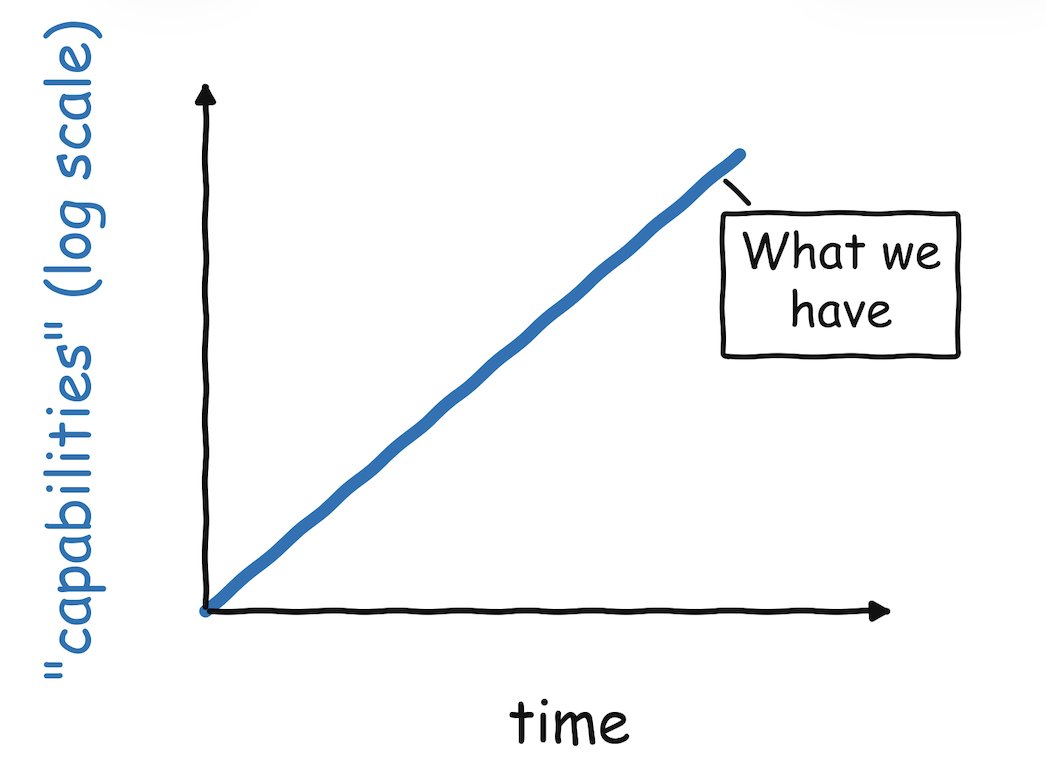
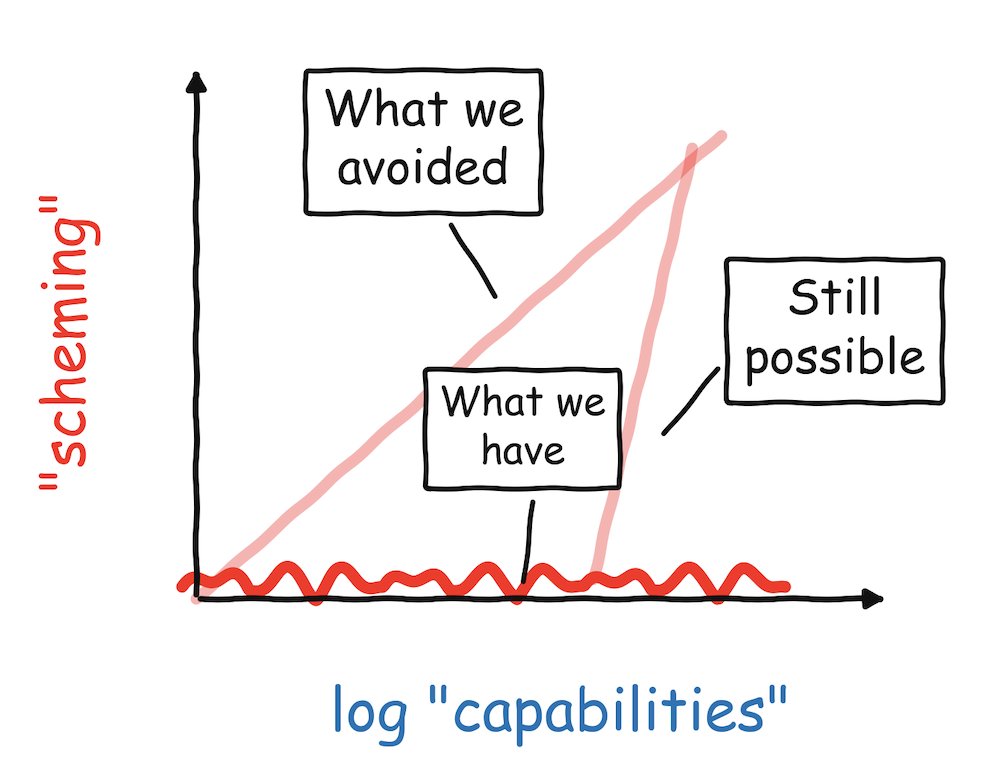
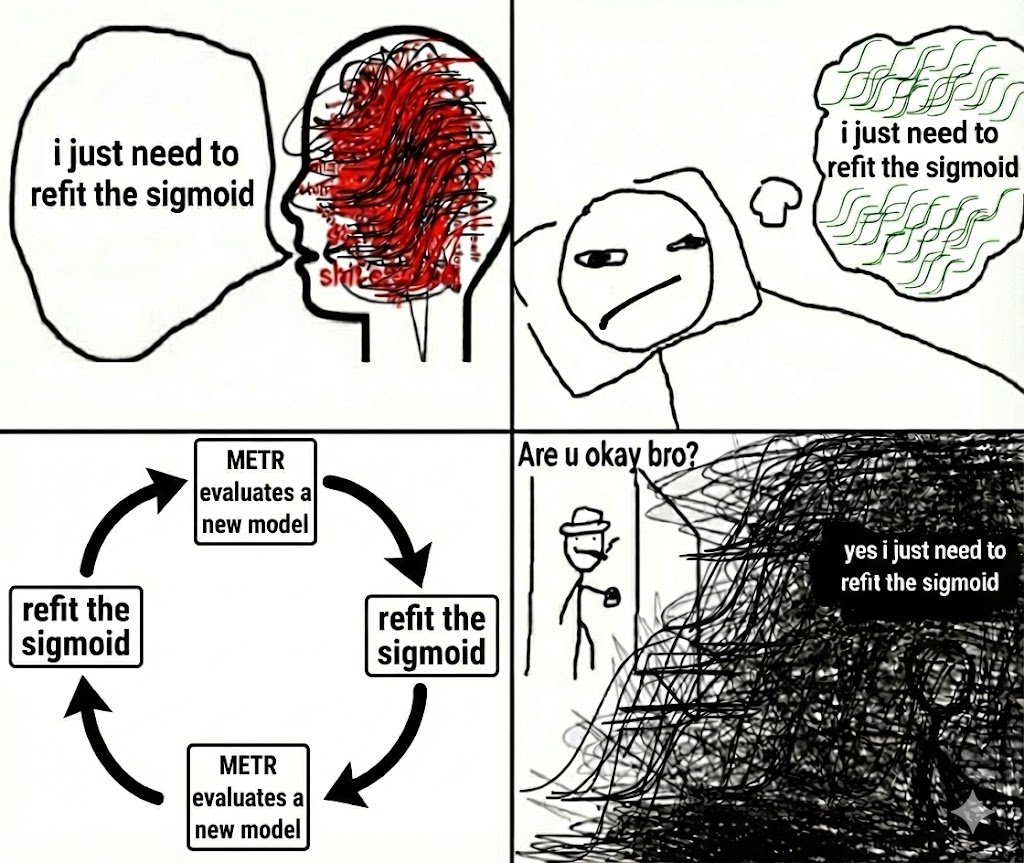
New blog post: the state of AI safety in four fake graphs.
Boaz Barak tweet mediaBoaz Barak tweet mediaBoaz Barak tweet mediaBoaz Barak tweet media
English
65
148
1.4K
596.2K
chiara maharani ✧
chiara maharani ✧@chiaragerosa·
I've been writing poetry since I was 14 and back then it was a cringe thing to enjoy doing. My poems were admittedly cringe too. But the older I get, the more I see friends starting to write poetry. What's that about
English
1
0
8
222
Maxime Stauffer retweetledi
Vivian
Vivian@suchnerve·
more like the Geneva Suggestions
English
81
10K
63.3K
621.7K
Maxime Stauffer retweetledi
Séb Krier
Séb Krier@sebkrier·
I'm spending more cognitive effort than I'd like parsing documents that are clearly 'lazily prompted low-effort AI outputs with some plausible deniability formatting cleanups' rather than 'AI-assisted, filtered, and finely crafted for a bespoke purpose and audience'.
English
8
4
131
6K
Maxime Stauffer retweetledi
chiara maharani ✧
chiara maharani ✧@chiaragerosa·
- deeply understanding the female experience (biology, emotions, reactions) - leaning into healthy masculinity; exploring femininity; playing with both confidently and attractively - appreciation for the complexity of human relationships, not over-simplifying them - sitting with tension in relationships, not needing to fix things immediately - attention to detail & beauty in physical space - a deeper appreciation for gift-giving
English
3
1
27
2.4K
Maxime Stauffer retweetledi
César A. Hidalgo
César A. Hidalgo@cesifoti·
This weekend I made a game from scratch to play with my 12 year old daughter. If you are a dad, you know how popular multiplayer games are with tweens. With Claude, I was able to whip out a game in two days & collaborate with my daughter on features & gameplay. Amazing family experience!
English
3
2
38
5.4K
Maxime Stauffer retweetledi
Chris Painter
Chris Painter@ChrisPainterYup·
Our team is stretched thin at the moment! To continue upper-bounding the autonomy of AI agents, and developing evaluations for monitoring AI systems and their propensity to subvert human control, we need more great engineering and research staff. Please apply below or DM me!
METR@METR_Evals

We estimate that Claude Opus 4.6 has a 50%-time-horizon of around 14.5 hours (95% CI of 6 hrs to 98 hrs) on software tasks. While this is the highest point estimate we’ve reported, this measurement is extremely noisy because our current task suite is nearly saturated.

English
25
45
354
62.5K
Maxime Stauffer retweetledi
Multiagent Systems Papers
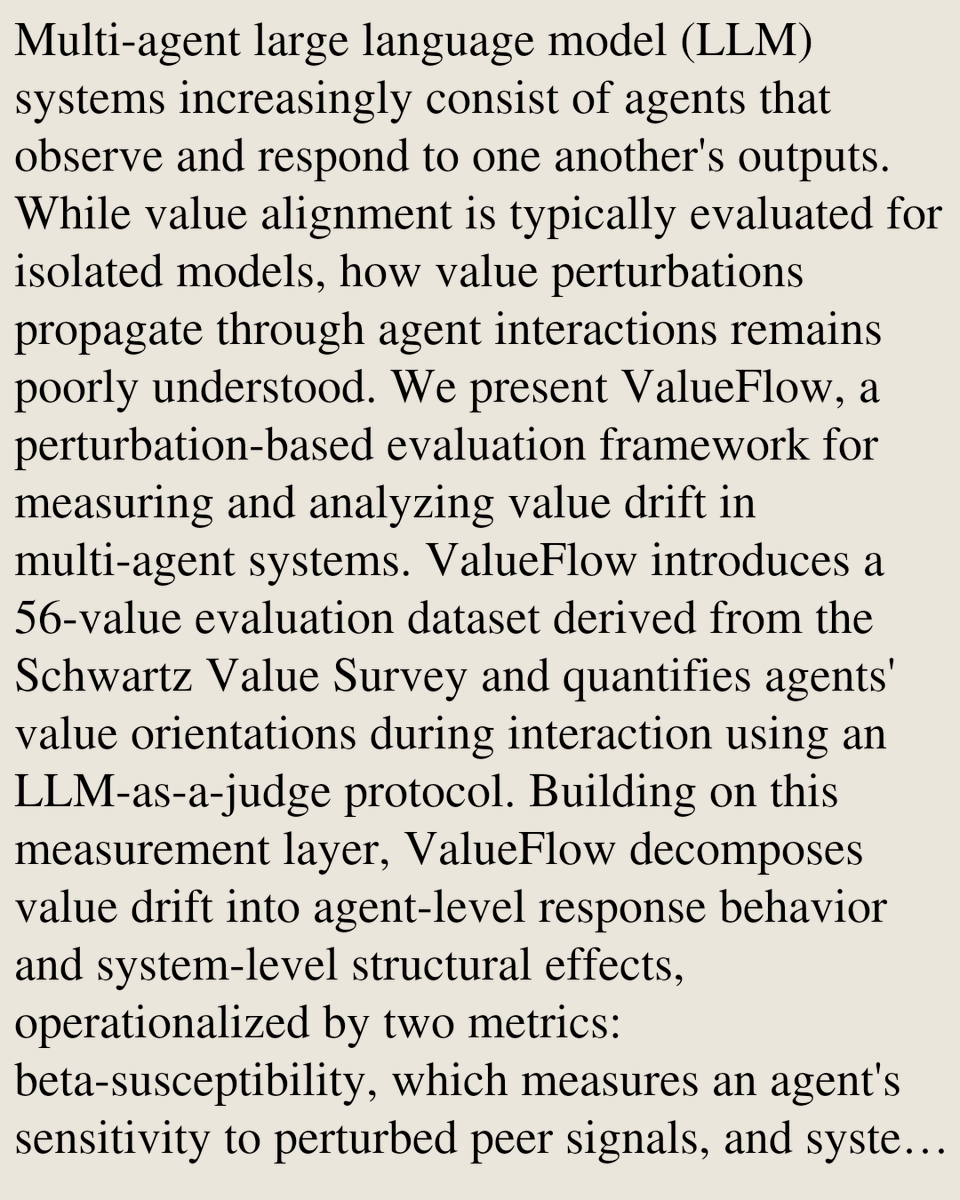
ValueFlow: Measuring the Propagation of Value Perturbations in Multi-Agent LLM Systems Jinnuo Liu, Chuke Liu, Hua Shen arxiv.org/abs/2602.08567 [𝚌𝚜.𝙼𝙰 𝚌𝚜.𝙲𝙻]
Multiagent Systems Papers tweet media
English
0
2
7
1K
Maxime Stauffer retweetledi
Séb Krier
Séb Krier@sebkrier·
The Moltbook stuff is still mostly a nothingburger if you've been following things like the infinite backrooms, the extended Janus universe, Stanford's Smallville, Large Population Models, DeepMind's Concordia, SAGE's AI Village, and many more. Of course the models get better over time and so the interactions get richer, the tools called are more sophisticated and so on. I'll concede that at least it's making multi-agent dynamics a bit easier to understand for people who are blessed with not spending their days interacting with models and monitoring ArXiv. The risk side is easy to grok - it always is! Humans are very good at freaking out. And whilst I like poking fun at the prophets of doom and the anxiety/neuroticism fueled parts of the AI ecosystem, it's plainly true that safety is important. So it's a good time to remind people of the Distributional AGI Safety paper (arxiv.org/abs/2512.16856) and the Multi-Agent Risks from Advanced AI paper (arxiv.org/abs/2502.14143). There's a lot to research here still. As usual, this will benefit from people with deep knowledge in all sorts of domains like economics, game theory, psychology, cybersecurity, mechanism design, and many more. Maybe this is the year we will get better protocols to incentivize coordination and collaboration without the downsides, mechanism design and reputation systems to discourage malicious actors, and walled gardens and proof of humanity to better filter slop. And risks aside - I think there's so much to be researched to help enable positive sum flywheels: using agents to solve coordination problems, OSINT agent platforms to hold power accountable, decentralised anonymized dataset creation for social good, aggregating dispersed knowledge without the usual pathologies (Community Notes for everything!), simulations of social and political dynamics, multi-agent systems that stress-test policy proposals, contracts, or governance mechanisms by simulating diverse strategic actors trying to game them etc. It's time to build!
Séb Krier tweet media
English
67
142
1.1K
165.5K
Maxime Stauffer retweetledi
chiara maharani ✧
chiara maharani ✧@chiaragerosa·
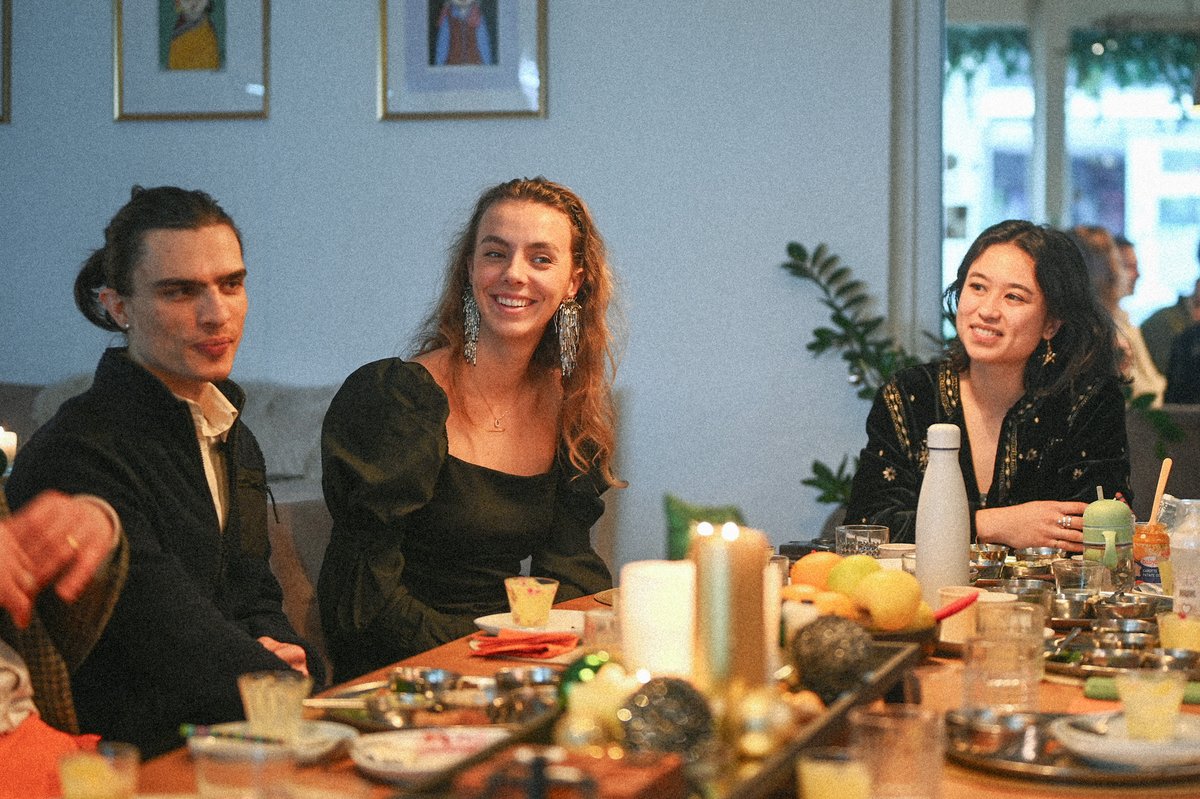
fractal uni geneva had its end-of-semester party this weekend :) we got all dressed up and booked a cozy little restaurant owned by a lovely lady who made us a bangin south indian brunch
chiara maharani ✧ tweet media
English
10
3
29
7.2K
Maxime Stauffer
Maxime Stauffer@MaximeStauffer·
@ayushchopra96 @sebkrier this looks like very exciting work! i wonder: as we scale multi-agent ai systems in terms of numbers of agents, what are the threshold effects we may anticipate? or, put differently, what are the problems that emerge at various scales? this may inform deployment strategy.
English
0
0
0
15
Séb Krier
Séb Krier@sebkrier·
Huge fan of multi agent systems, agent based modelling, and social intelligence - these frames still seem really absent from mainstream AI discourse except in a few odd places. Some half-baked thoughts: 1. Expecting a model to do all the work, solve everything, come up with new innovations etc is probably not right. This was kinda the implicit assumption behind *some* interpretations of capabilities progress. The 'single genius model' overlooks the fact that inference costs and context windows are finite. 2. People overrate individual intelligence: most innovations are the product of social organisations (cooperation) and market dynamics (competition), not a single genius savant. Though the latter matters too of course: the smarter the agents the better. 3. There's still a lot of juice to be squeezed from models, but I would think it has more to do with how they're organised. AI Village is a nice vignette, and also highlights the many ways in which models fail and what needs to be fixed. 4. Once you enter multi-agent world, then institutions and culture start to matter too: what are the rules of the game? What is encouraged vs what is punished? What can agents do and say to each other? How are conflicts resolved? It's been interesting seeing how some protocols recently emerged. We're still very early! 5. Most of the *value* and transformative changes we will get from AI will come from products, not models. The models are the cognitive raw power, the products are what makes them useful and adapted to what some user class actually needs. A product is basically the bridge between raw potential and specific utility; in fact many IDEs today are essentially crystallized multi agent systems.
Séb Krier tweet media
English
23
52
354
38.6K