Energy prices are a top concern for Americans.
Recent polling shows that 56% of voters support offshore wind development in their state as a way to improve energy affordability.
Offshore wind must be a part of the strategy to deliver stable, secure, and cost-effective power.
Learn more from Turn Forward: turnforward.org/resources/poll…
When shots are falling—focus on the process.
When shots aren’t falling—focus on the process.
So much of success comes down to showing up, weathering storms, staying in the moment, trusting your training, and making the next best move. It’s true in golf. It’s true in life.
After last year’s roller coaster victory at the Masters, Rory McIlroy came out firing on all cylinders. After 36 holes, he led by 6 strokes, the biggest margin at that juncture in 90 years of tournament history.
But then, on day three, he played a terrible round that included 3 bogeys and a double bogey. His entire lead was erased—he was tied for first heading into the final round.
He began the final round with more erratic play and by hole six was multiple shots back.
It was hard to watch.
Throughout it all McIlroy stayed calm and collected. No thrown clubs. No poor body language. Just a focus on the next shot.
He hung in there. Stopped the descent. Then stroke by stroke turned things around. He reclaimed the lead on 11 and made birdies on 12 and 13 to go up two shots.
The rest is history.
McIlroy won the Masters for the second year in a row, becoming only the fourth golfer ever to do so, along with legends Nick Faldo, Tiger Woods, Jack Nicklaus.
"One of the things that I love is focusing on the process over the prize... I would say to myself a lot: 'Process over prize. Process over prize. Process over prize, just to take myself away from the outcome," McIlroy says.
"I can get real caught up in the outcome. I just really need to remind myself that the outcome will ultimately happen if you just focus on the process. It takes care of itself."
McIlroy's instinct is backed by research.
Multiple studies find that those who focus on outcomes—winning, rankings, scores—experience more anxiety and reduced engagement. People who focus on the process—technique, the next action, what's in their control—perform better under pressure.
The reason is that outcome goals activate threat responses in the brain. Process goals keep you in the present moment.
It’s easy to show up when everything is clicking. But things will inevitably go wrong. You’ll make a great effort and still fall short. The winds will blow one way, then another. You’ll face moments where your emotions flare and things fall apart.
What matters most isn’t the adversity. It’s how you respond. Again and again and again.
There’s a reason so few people repeat at the Masters. There are so many variables. It is so hard to stay focused and play to win with history riding on the line.
When you think you’ve got it in the bag, you’re almost always wrong.
In today’s final round, there were four different leaders and every single one fell off, except for one: Rory McIlroy, who maintained his lead for the last 9 holes.
It’s not that outcomes don’t matter. (They do.)
It’s that what gives you the best shot at achieving your goals is focusing on the process and digging where your feet are.
When you focus on the process you put the shot that could have been or should have been or might have been behind you.
You play where you are. Which is the best way to play.
In golf. In sport. In life.
*Providence, RI Update*
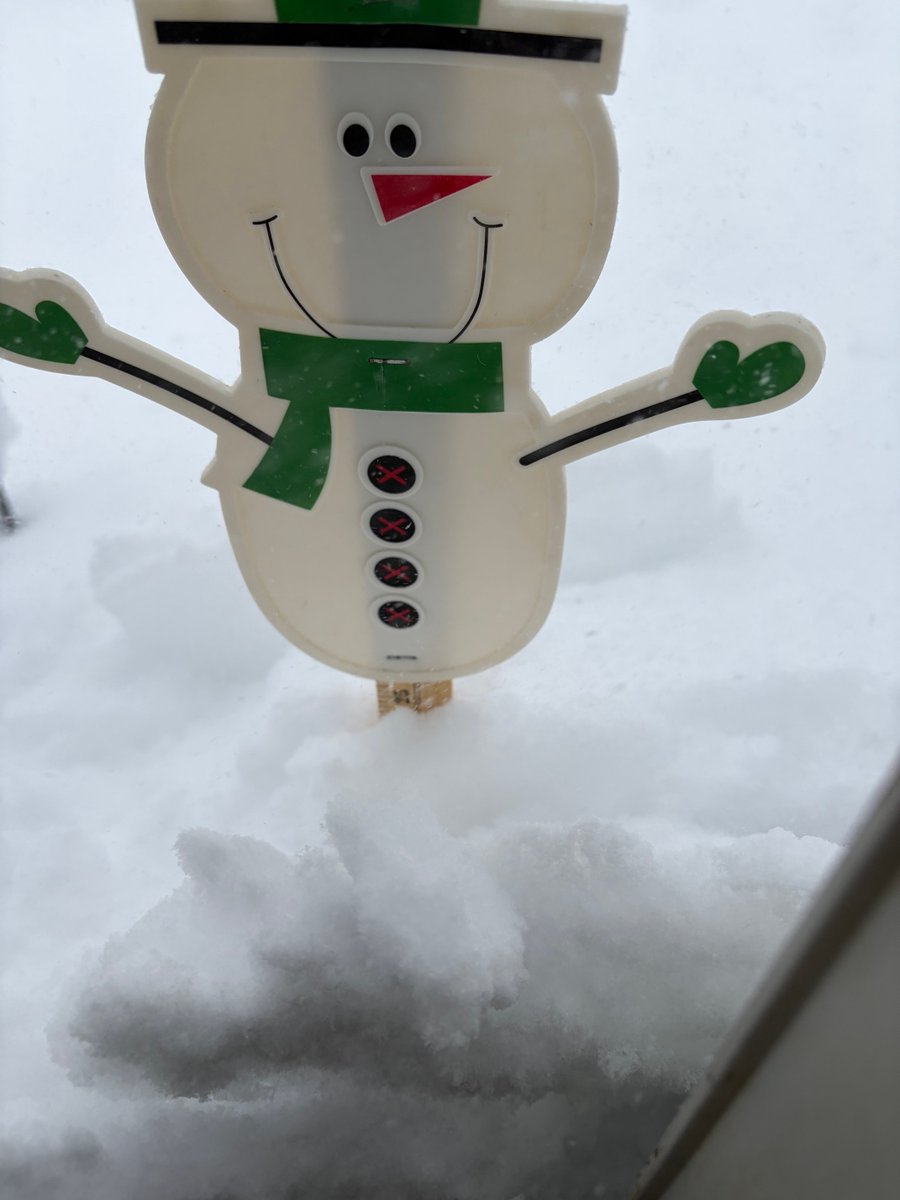
37.9" of snow. Top all-time snowstorm and the 24-hour state record for snowfall was possibly broken today
This is more snow than the ENTIRETY of 6 of the past 7 winters. The only one with more was 2022, and it was barely more than this (43.5"). #wbz
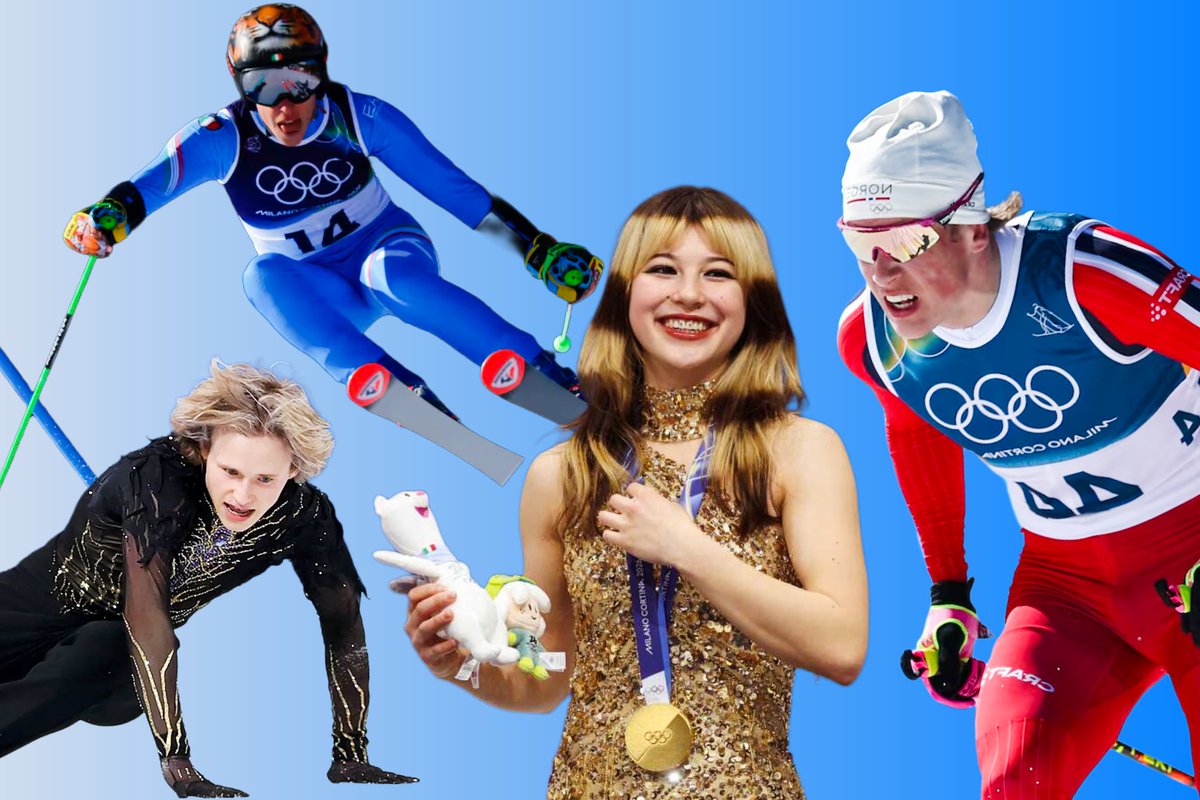
The 2026 Winter Olympic Games have been an extraordinary showcase of talent, effort, and the human spirit. Here are 15 lessons on excellence the Olympics keep teaching us:
1. Show up. Show up. Show up. You cannot control when the universe will gift you the latticework of variables that will bring out your best. All you can do is keep showing up and putting yourself in a position to receive it.
2. Surround yourself wisely. Nobody reaches the top alone. The people with whom you surround yourself shape you. Choose wisely.
3. Mental toughness isn’t the absence of nerves or robotic stoicism; it’s feeling what you’re feeling and doing it anyway.
4. Outcomes do matter (especially at the highest level), but the way you get the best outcomes is by fully embracing the process. As the five-time Olympic bobsledder Kaillie Humphries told me, “the bigger the goal, the smaller the steps.”
5. When you care deeply, you get the best out of yourself, but you also make yourself vulnerable. It requires courage and guts.
“I hope if you take away anything from my journey it’s that you have the courage to dare greatly,” said Lindsey Vonn after her crash. “Life is too short not to take chances on yourself. Because the only failure in life is not trying.”
6. Having fun is one of the greatest competitive advantages there is. You can be serious, give something your all, and have fun at the same time.
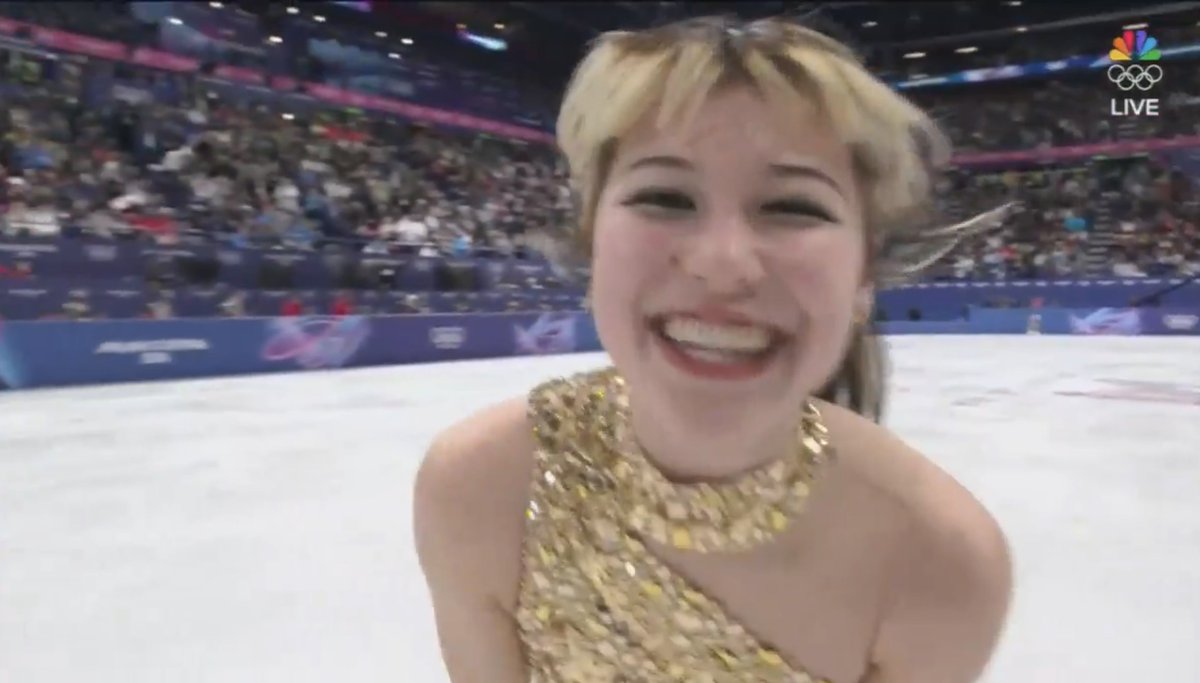
“That’s what I’m f***ing talking about. That was so much fun,” were the first words figure skater Alysa Liu uttered after her comeback gold medal performance. Intensity and joy can coexist.
7. Be yourself and go all the way. It’s good to learn from other people but don’t mimic them. Embrace your authenticity. Don’t fight yourself. Know who you are and use it to your advantage.
8. Competing means wanting to win, but it also means rising up together. The best rivals are those we respect deeply. They make us better.
9. You don’t need to like failure, but you’ve got to accept it’s an inevitable part of pushing your limits.
“I blew it,” said Ilia Malinin after his devastating misstep in figure skating. Sometimes it’s as simple as that. Failure sucks. Learn from it what you can. And then keep going.
10. Work and craft can be a central part of your identity, but you perform your best when it’s not the only thing in your life. Build your identity house with more than one room.
11. Good things take time. Most breakthroughs follow plateaus. So much of success simply comes down to staying in the game. Not days. Not weeks. Not months. But years and decades.
12. Dig where your feet are. Pressure, expectations, and past experiences are real, but the more you can drop into the moment, the better you perform.
“I came here for the skiing,” said Mikaela Shiffrin. “To take away the noise and just be simple.” Once the gun goes off, you just need to run the race you are in.
13. The best way to gain confidence is by giving yourself evidence. Put in the reps. Trust your training.
"I gave everything, I had no regrets... I trusted my plan, I trusted the work that I put in with my team and just went for it," Johannes Hoesflot Klæbo said after winning his fifth gold at the 2026 Games.
14. Take on big challenges and do hard things. It is immensely fulfilling and satisfying. It makes you feel alive.
15. You’re only on the podium for a minute. The top of the mountain is narrow. All the life is on the sides.
Set big goals. But then make sure you climb the right way.
I hope you found this valuable. Let me know what lessons you liked best or anything I might have missed!
Joy is a competitive super power.
Alysa Liu retired from figure skating at 16.
She was tired of not not having fun, tired of being consumed by her sport.
She came back two years later with a new goal: to have as much fun on the ice as possible. And now she’s an Olympic gold medalist.
Liu won her first national title when she was just 13. But by 16, after competing in the 2022 Olympics, she decided she’d had enough and stepped away. She said pressure and losing her identity trying to be an elite athlete made it all miserable.
But then, she said she went on a ski trip that reminded her just how much fun she could have doing a sport. Something in her brain clicked. Maybe she could bring fun to figure skating. Maybe she could approach it in a way that could be full of joy and life and love.
She unretired at 18 and won a world championship the next year. At 20, she was ready to face these Olympic games differently than in 2022.
Liu went into the women’s figure skating final in third place. After her short program, she said:
“Even if I mess up and fall, that’s totally okay, too. I’m fine with any outcome, as long as I’m out there.”
One of the greatest competitive advantages is having fun. People love to romanticize the athlete, artist, or entrepreneur who has a chip on their shoulder, fueled by anger and resentment.
But the truth is that if you’re not having fun, you are not going to last long at whatever it is you do, and you certainly won’t get the best out of yourself. There’s a foolish idea that you either have to be full of intensity or full of joy. But that’s nonsense.
It’s no surprise one of the first things out of Alysa’s mouth after her free skate was: “That was so much fun!”
Joy and intensity can coexist, and in the best performers, they almost always do.
Alysa is unapologetically authentic and true to her values. She has said where she used to skate to win and be technically perfect, she now uses competition as a chance to show her art, to have fun, and to put herself out there.
She’s a fierce athlete with an infectious sense of joy in her sport.
And she broke USA's 24-year gold medal draught in women’s figure skating doing it.
Excellence requires focus, determination, a little bit of crazy, at times obsession, and living a mundane lifestyle that many people would find boring.
But excellence also requires that you find deep joy in your craft, that you learn how to have fun while working hard.
What makes for excellence—and not just in sports, but in anything—is the combination of intensity and joy. It’s the latter that makes the former sustainable.
We are devastated by the unthinkable tragedy this weekend in the city we love. We have donated to Family Service of Rhode Island to support their essential services, including mental health counseling and resources for families in crisis. bit.ly/3KMO2KE
"This is not something we should have to train for, but we have," Providence Mayor Brett Smiley said as he and other officials gave an update on the deadly shooting at Brown University. Latest information here: tinyurl.com/kyb3xw9f?utm_m…
“No one talks about it…That’s when you start to worry. Tomorrow, I could be out of a job.”
WSJ's @DavidUberti talks to Connor Walcutt, a 26-year old union site tech in "holding pattern" at-sea due to the Revolution Wind stop-work order:
wsj.com/us-news/trumps… via @WSJ
“Revolution Wind’s will cost about 10 cents, less than some other electricity sources. And wind is no longer a fringe part of the region’s energy mix; grid operator ISO-NE is banking on the project to power about 350K homes starting next year.” @TedNesiwpri.com/news/local-new…