Eléna de M H

10.8K posts

Eléna de M H banner
Eléna de M H

Eléna de M H

@MelloHog

Katılım Ekim 2010
219 Takip Edilen275 Takipçiler
Sabitlenmiş Tweet
Eléna de M H
Eléna de M H@MelloHog·
I'm still here every now and again, but I'm also elsewhere.
English
0
0
2
144
Eléna de M H
Eléna de M H@MelloHog·
Important words from Novak Djokovic ⬇️
Saša Ozmo@ozmo_sasa

I asked Novak #Djokovic why so many tennis players feel burnt out or turn to antidepressants: 1️⃣ “The first thing that comes to mind is that social media is extremely present and largely dictates the mood and daily rhythm of an athlete — especially young ones, but older ones too. Everyone is on social media, and you can get lost there, get too attached to comments, to what someone types on a keyboard or phone… and that hurts. It’s not trivial. That’s something we need to talk about seriously.” 2️⃣ “There are various other factors. The fact is, in my opinion, that kids are pushed too early into strict professionalism, before they’ve developed emotional intelligence, which is part of psychological preparation for life. When a talent is spotted, they push them professionally — just play, play, play — and then all sorts of agents latch on, those with interest in success, and they push the player to play as much as possible so they earn more. It’s a vicious circle, and if a player gets a bit lost in that, it can strongly affect their psyche and how they live their life. 3️⃣ “Tennis has the longest season of all global sports 🎾. For most who play the full schedule, it’s from January 1 to late November. Other sports have more competitions now too, but tennis is individual — there are no substitutes, no ‘I don’t feel good today, can you sub in for me for five minutes so I can rest’... Here, every point matters, every day matters. If you want to reach the highest heights, you have to transform your entire life in service of tennis and sport. You lose yourself, it’s too big of a bite for most.”

English
0
0
2
295
Eléna de M H retweetledi
Boze Herrington, Library Owl 😴🧙‍♀️
The idea that women shouldn't work is a thoroughly modern one. In medieval villages, women tended the sick and prepared the dead for burial. When a wealthy tradesman died, often his wife would take over managing his business. Women have always worked. ...
English
48
257
2.2K
54.7K
Eléna de M H retweetledi
Eléna de M H
Eléna de M H@MelloHog·
Also, if you are going to rip players to bits, make sure it's those who are domestic abusers, sexual predators, racists and genuinely vile individuals, and not players who just didn't play as well as you thought they would 🙄🙄🙄 #RugbyValues #HesActuallyAReallyNiceGuy
Eléna de M H@MelloHog

All I want for Christmas is for people to stop describing things they like on a rugby pitch as filth, pure filth, sexy ruggers, rugby porn etc etc etc.

English
0
1
0
43
Eléna de M H
Eléna de M H@MelloHog·
The stadium in Marseille holds over 67,000 and it's sold out for Toulon v Toulouse (not a final, just a regular league match, I think?). Maybe time the Eng Prem takes a proper look at how they do things in France instead of talking about franchises.
RCT – Rugby Club Toulonnais@RCTofficiel

𝐈𝐍𝐂𝐑𝐎𝐘𝐀𝐁𝐋𝐄 🔥🤯 L'orange Vélodrome de Marseille sera à guichets fermés pour ce choc en 🔴&⚫ ! Merci à tous pour votre énorme soutien 🫶 #ParceQueToulon

English
0
0
0
71
Eléna de M H
Eléna de M H@MelloHog·
It's been three minutes since any Lions content was published. How will rugby fans cope?
English
0
0
0
23
Eléna de M H
Eléna de M H@MelloHog·
I really, really hope player ratings are phased out soon. Just catching up on last week's Leinster v Glasgow stuff and some of the things written in a player ratings article are needlessly cruel, far too personal, and, in one instance, completely inaccurate. #rugbyunion
English
0
0
0
44
Eléna de M H
Eléna de M H@MelloHog·
Please please please @ITVRugby @ITVSport provide your commentators and pundits with a pronunciation guide. There is no Italy player called Angie Cappywazzy. Nor Murco Spainolo. Nor Meeshelly Lamaro. #SixNations #ENGvITA
English
0
1
4
598
Eléna de M H
Eléna de M H@MelloHog·
Maxime Lucu is the love child of Jason Statham and Stanley Tucci.
GIF
English
0
0
1
153
Eléna de M H retweetledi
Mark Palmer
Mark Palmer@MarkPalmerST·
Our regular reminder to all purveyors of the "Scotland are arrogant" chat, which now seems to be coming out of Wales in addition to Ireland: talk to some actual Scottish people and you may well soon conclude that we are, in fact, the most pessimistic, self-doubting nation around
English
29
18
349
42.7K
Eléna de M H retweetledi
Alice Lowe
Alice Lowe@alicelowe·
gotta take a deep breath in these times and realise that panic and division plays exactly into the hands of anyone trying to seize more power. calm, kindness, and thinking stuff through logically seems the best way. respectful talk to each other.
English
4
4
94
3.8K
Eléna de M H retweetledi
Boze Herrington, Library Owl 😴🧙‍♀️
“optimize your writing with AI—” how about you optimize your brain by thinking for yourself and not outsourcing your creativity to companies owned by some of the world’s worst people
English
68
1.9K
7.7K
122.3K
Eléna de M H retweetledi
Lily Craven
Lily Craven@TheAttagirls·
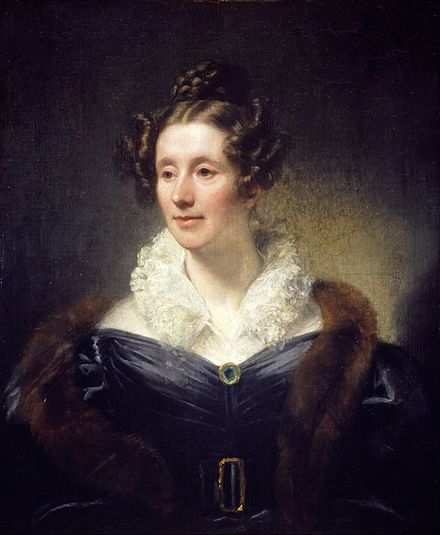
It is International Day of Women and Girls in Science, so let’s celebrate the woman whose mastery of several scientific disciplines was so great that she couldn’t be described as a Man of Science. A reviewer of her second book coined the word “scientist” for her. Mary Somerville. Mary was born in Jedburgh in 1780. Her mother did not believe in educating girls and left her to run free, observing nature. When her sea captain father returned from a long voyage, he intervened and sent her to boarding school for twelve months where she felt “like a wild animal escaped out of a cage”. “A few days after my arrival, although perfectly straight and well made, I was enclosed in stiff stays with a steel busk in front, while above my frock, bands drew my shoulders back until the shoulder-blades met. Then a steel rod, with semi-circle which went under the chin, was clasped to the steel busk on my stays. In this constrained state, I and most of the younger girls, had to prepare our lessons.” It was the only formal education she had but she developed a lifelong love of reading - “I was annoyed that my turn for reading was so much disapproved of, and thought it unjust that women should have been given a desire for knowledge if it were wrong to acquire it” - and when Mary stumbled across an algebra problem in a magazine for ladies, her quick and enquiring mind seized on it. Mary would listen while her brother was tutored in geometry and when he couldn’t answer a question, she prompted him. The surprised tutor let her continue as his unofficial pupil. When she was learning to draw (such a suitable subject for a young lady, not like mathematics), the drawing master mentioned Euclid and she had a revelation. “Here in the most unexpected manner, I got all the information I wanted, for I at once saw that it would help me to understand some parts of Robertson's Navigation.” (Well, her father was a sea captain). “I had to take part in the household affairs, and to make and mend my own clothes. I rose early, played on the piano, and painted during the time I could spare in the daylight hours, but I sat up very late reading Euclid.” Her mother ordered the servants to take away the candles as soon as Mary retired to bed to prevent her from studying into the night. That’s no use to a girl with a too-busy brain. “I had, however, already gone through the first six books of Euclid, and now I was thrown on my memory, which I exercised by beginning at the first book, and demonstrating in my mind a certain number of problems every night, till I could nearly go through the whole.” In 1804, Mary married her first husband at 24, also a sea captain, and they moved to London. He “possessed in full the prejudice against learned women which was common at that time”. His long spells away from home meant she was left to her own devices. “Although my husband did not prevent me from studying, I met with no sympathy whatever from him, as he had a very low opinion of the capacity of my sex.” Three years later, widowed and with two young children, Mary was financially independent and free to pursue her many interests. When she married again in 1812, this time to Army doctor William Somerville, his support gave her the impetus she needed to establish herself as a serious scientist. It would take a post the length of War and Peace to do justice to Mary’s life (and I may well return to her at some time in the future) but here are a few things you might not have known about this incredibly knowledgeable and influential polymath who had an unrivalled grasp of mathematics, physics, geography and astronomy. In 1811, Mary solved a mathematical puzzle involving a diophantine problem (do not ask me to explain it!) set by the Professor of Mathematics at Edinburgh University and won a silver medal as well as an offer of further instruction. In 1826, hers was the first experimental paper written by a woman to be published in the Royal Society’s journal Philosophical Transactions. It was about the magnetising power of sunlight but because women were barred from even setting foot on the premises of the Society, her supportive second husband had to present her paper instead. Even so, this was when her reputation as a scientist grew. In 1833, it was Mary who introduced her 17 year old pupil to the Lucasian Professor of Mathematics at a party. That’s how young Ada Lovelace, inventor of the algorithm, met Charles Babbage, inventor of the “Analytical Engine” that had all of the essential elements of a computer. In 1834, Mary’s second book ‘On the Connexion of the Physical Sciences’ was published. It sold 15,000 copies, cemented her reputation in elite science, and one its reviewers coined the term “scientist” especially for her. In 1835, Mary and astronomer Caroline Herschel of Bath became the first women to be admitted as honorary members of the Royal Astronomical Society. In 1848, Mary’s third book, the two volume ‘Physical Geography’, was published. Mary revised most of its seven editions to ensure it was as up-to-date as possible, which is why it remained on university textbooks for years. Not bad for a largely self-taught woman. Mary Somerville, the woman for whom Somerville College Oxford was named, died in 1872 aged 91, but not without doing one more thing for women’s rights. When John Stuart Mill devised his petition to Parliament in 1866 to demand votes for women, hers was the first signature. "British laws are adverse to women". They still are, Mary, they still are.
Lily Craven tweet media
English
45
312
719
16.7K
Eléna de M H retweetledi
Kevin P. Gilday
Kevin P. Gilday@KevinPGilday·
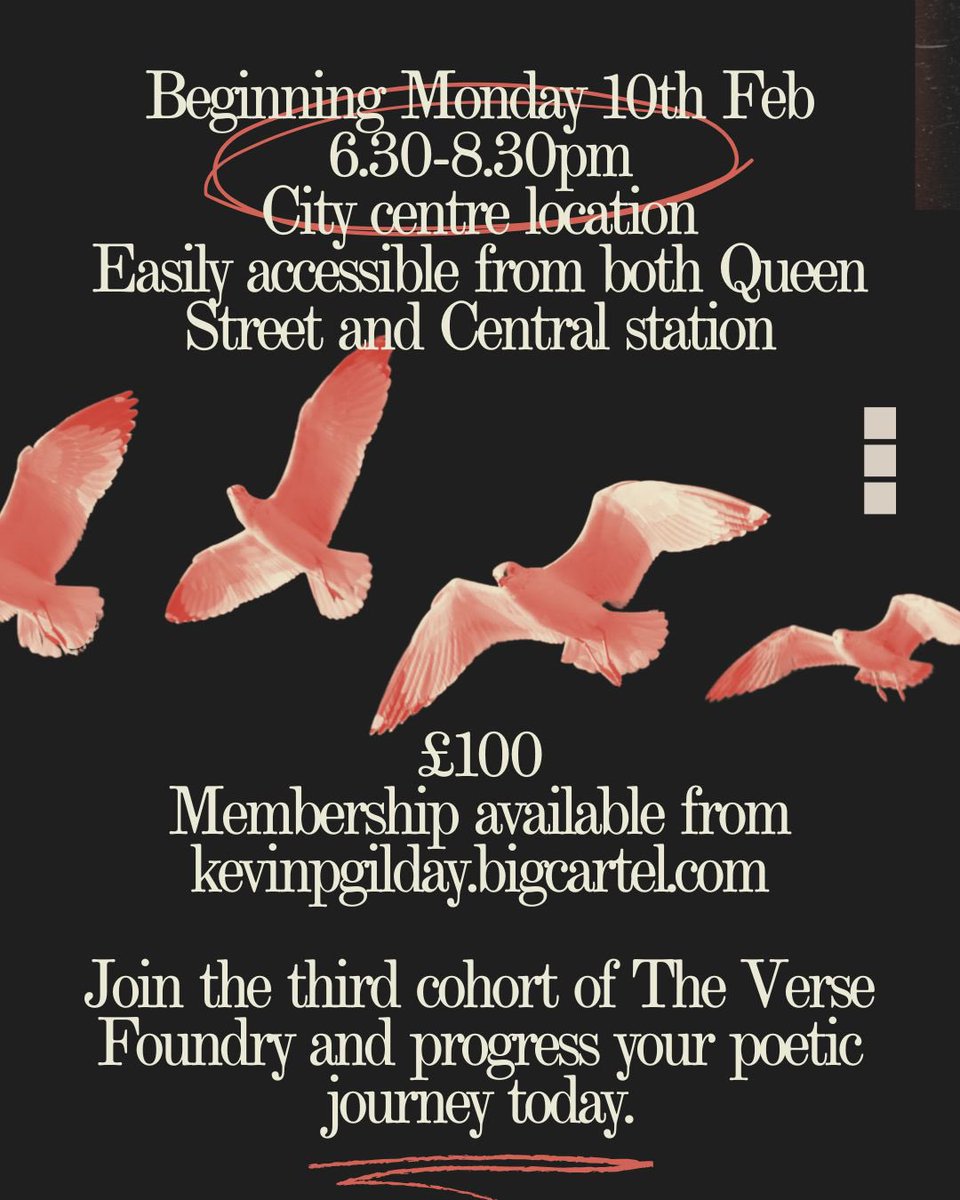
Still a few places left at The Verse Foundry beginning next week. We’ve got a brilliant mix of writers signed up already, if you’d like to join them in progressing your craft in writing and performance then you can sign up now at the link below.
Kevin P. Gilday tweet media
English
1
1
1
120