Merchant Seven

122 posts

Merchant Seven banner
Merchant Seven

Merchant Seven

@MerchantSeven

M7 is the first of its kind FDE firm for financial technology. We invest in early-stage trading technology companies and scale the rest.

Here Katılım Eylül 2022
9 Takip Edilen44 Takipçiler
Sabitlenmiş Tweet
Merchant Seven
Merchant Seven@MerchantSeven·
The top 10 financial institutions by on-chain Real World Asset (RWA) exposure: 1. @Figure: ~$15.79B 2. @HSBC (Orion): >$350B 3. @tethergold: ~$2.93B 4. @maplefinance: ~$2.60B 5. @Paxos: ~$2.53B 6. @circle: ~$2.21B 7. @BlackRock: ~$1.99B 8. @OndoFinance: ~$1.93B 9. @stokr_io: ~$1.90B 10. @FTI_Global: ~$1.02B Traditional finance and crypto-native firms are converging at an increasingly fast rate. RWAs are emerging as a meaningful institutional asset class.
English
1
2
11
461
Merchant Seven
Merchant Seven@MerchantSeven·
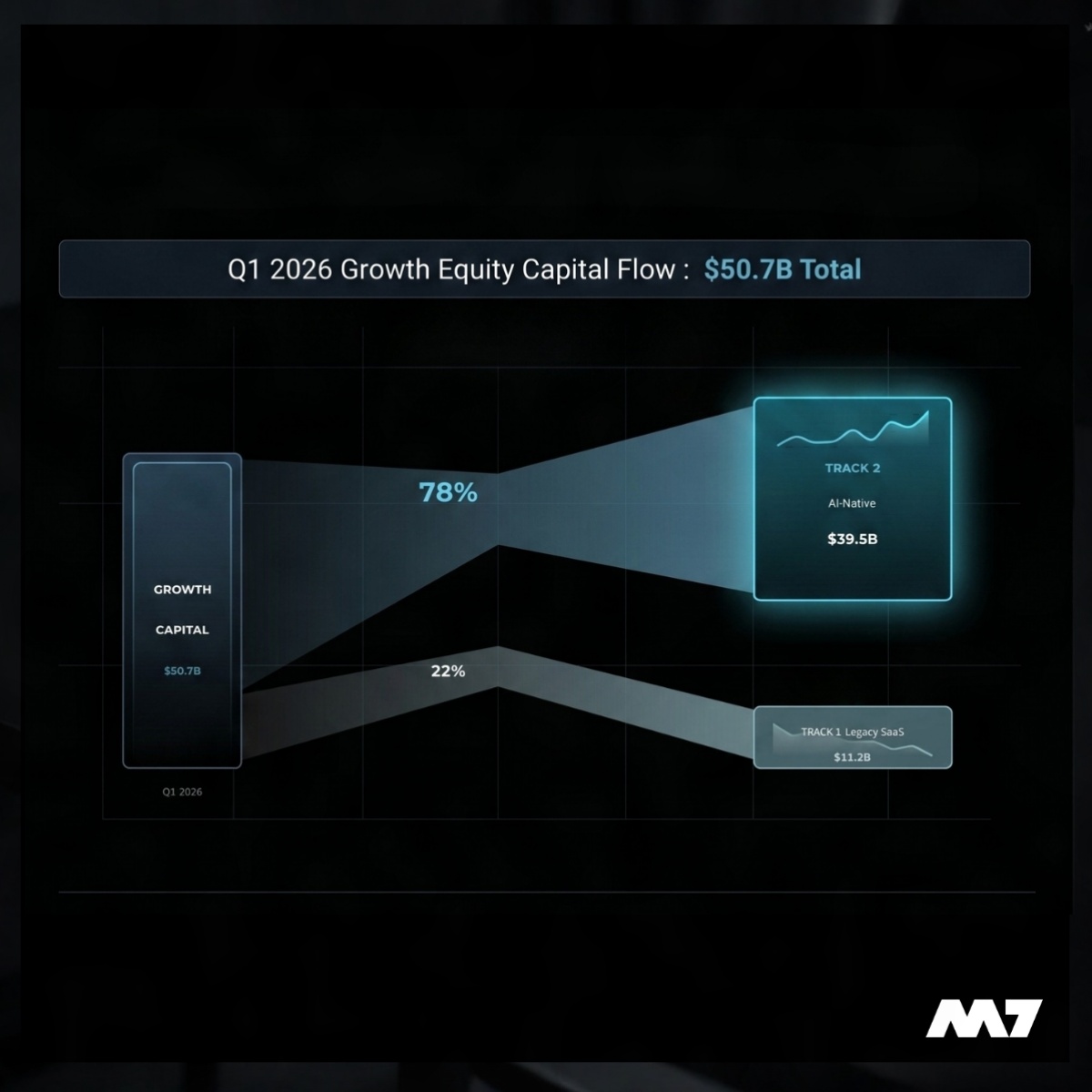
If your trading infrastructure still sleeps on weekends, it is running an increasingly serious risk of becoming obsolete. The winners of the future are building 24/7 markets, and they are emerging quickly. Most recently, 24/7 oil trading has arrived. Now S&P Dow Jones Indices is pushing that evolution further by licensing the S&P 500 to power official perpetual contracts on the @HyperliquidX blockchain. The S&P 500 sits at the center of global finance, driving more than $1 trillion in daily trading volume. Historically, however, that liquidity has remained trapped inside traditional market hours. By licensing the S&P 500 for this use case, eligible investors can trade the index with leverage, 24/7, on decentralized platforms. More importantly, this is powered by institutional-grade index data directly from S&P DJI. Here is the real signal for the industry: 1. Risk does not sleep. Legacy market hours are now a structural weakness. When geopolitical events escalate over a weekend, traders need continuous risk engines to manage exposure instead of waiting for Monday’s open. 2. Decentralized rails are scaling. Blockchain infrastructure is no longer experimental. Trading ecosystems across digital asset rails are expanding rapidly, with Hyperliquid moving especially fast. 3. Institutions are adapting. The world’s leading index providers understand that digitally native investors want institutional-quality products on the platforms where they already trade. 24/7 markets are no longer a fringe idea. They are becoming the new standard.
Merchant Seven tweet media
English
0
0
0
7
Merchant Seven
Merchant Seven@MerchantSeven·
@Bakkt It's always interesting to see how established companies share their future plans, particularly when it comes to digital assets.
English
0
0
2
189
Merchant Seven
Merchant Seven@MerchantSeven·
@TheCryptoSquire As digital assets move closer to mainstream financial services, the focus shifts to infrastructure that can handle global scale and regulatory complexities.
English
0
0
3
292
John Squire
John Squire@TheCryptoSquire·
🚨 PAYPAL GOES GLOBAL WITH CRYPTO 🚨 $50B PayPal expands stablecoin payments to 70 more countries. Adoption is going PARABOLIC and crypto is moving closer to everyday use worldwide. This is EXACTLY what $XRP was built for. Accepted everywhere. 🚀
John Squire tweet mediaJohn Squire tweet media
English
31
164
735
18.7K
Merchant Seven
Merchant Seven@MerchantSeven·
The early focus on developer tooling and cultivating a robust ecosystem has created a powerful network effect that's incredibly difficult for new layers to replicate. This strong foundation not only solidifies its current position but also uniquely prepares it for broader institutional adoption as regulatory clarity continues to emerge.
English
0
0
0
431
Etherealize
Etherealize@Etherealize_io·
Erik Vorhees: “ETH is still the king, and I don’t see it being dethroned" The founder of ShapeShift and Venice AI is asked if Ethereum was a “sustainable ecosystem.” He replies: “I think [Ethereum] is more than sustainable. I think it is the clear winner of the smart contract innovation. It actually wasn’t the first mover in smart contracts, but it was the first one to achieve any sort of scale with smart contracts. What’s most important about Ethereum isn’t so much the first-mover advantage as much as it is the network effect it has had since it was released.” Erik continues: “I think both Bitcoin and Ethereum have achieved a network effect that is close to unassailable. People have gotten distracted with some of these other L1s, but if you look at metrics like where the developers are and where stablecoin volumes are, these are hard to fake metrics that are very important. They’ve always been predominantly on Ethereum. It’s not even close. I’m glad that other people tried to build L1s. The process of innovation and competition is really important. But ETH is still the king, and I don’t see it being dethroned. It has had various scaling challenges — the patchwork of L2s and the UX problems between them sucks. But I have a suspicion that Base is going to end up becoming the predominant L2 on top of the predominant L1 of ETH and that vertical is going to be very powerful and very strong. So yes, I’m always bullish on ETH in the same way I’m always bullish on Bitcoin.” However, Erik warns that if Base loses its permissionlessness it “will flounder and deserves to die”: “Base has designed things very well. It has gotten a lot of adoption and very quickly became the major L2 even though it was not the first mover. I think it’s gaining a network effect pretty quickly. It obviously has a very powerful corporate ally in Coinbase, and to the degree that Coinbase does not abuse that privilege, that’s a very good privilege. Abuse here means: if Coinbase tries to exert control over base such that it loses its permissionlessness, then it will flounder and deserves to die. But Coinbase has been a very good actor in this regard, and they deserve a lot of credit for demonstrating the principles of decentralization and permissionless innovation in several parts of what they do. Obviously the centralized exchange is not that, but it’s not trying to be either.” Source: @CoinDesk (Dec 2025)
English
47
98
828
106.4K
Merchant Seven
Merchant Seven@MerchantSeven·
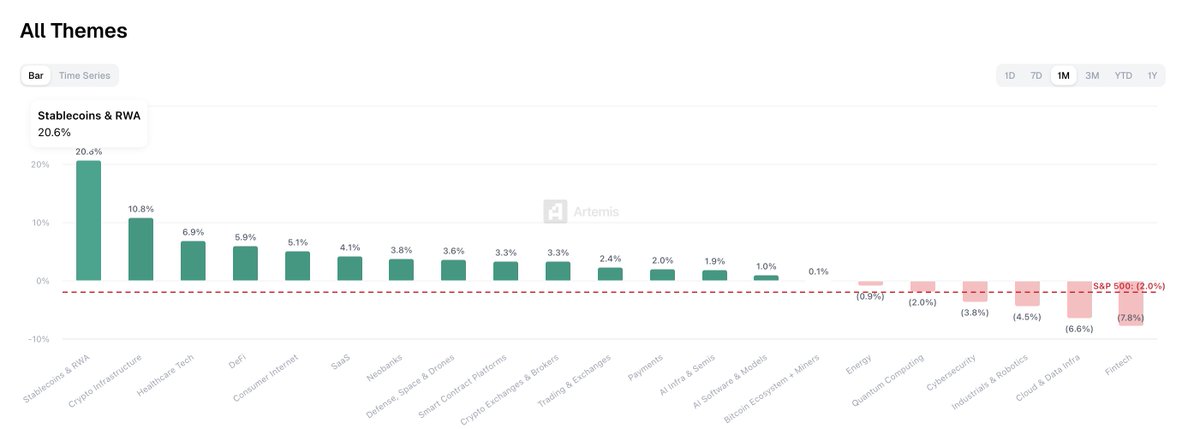
It really highlights how the market is rewarding projects that prioritize foundational elements like robust infrastructure, seamless interoperability, and clear regulatory pathways, especially for tokenized assets and stablecoins. This shift towards RWA truly shows the space evolving beyond pure speculation and focusing on tangible utility. It's fascinating to see this trend emerge, and it aligns well with the growing institutional push to integrate digital assets into traditional finance.
English
0
0
0
34
Jon Ma
Jon Ma@jonbma·
BEST performer in March 2026: Stablecoins / RWAS Not AI / semis. Not defense. Friggin Circle, Centrifuge, Paypal and Ondo are outperforming in the last month. Best Performers +20% Stablecoins / RWAs (Circle, Paypal, Ondo) +10% Crypto Infra (LayerZero, Render, Akash) Worse Performer -7.8% Fintech (Blue Owl, Rocket, Klarna, Blend) Congrats to those long stablecoins / tokenization. Long Digital Finance. Long @artemis coverage universe.
Jon Ma tweet media
English
5
2
36
5.9K
Merchant Seven
Merchant Seven@MerchantSeven·
This CFTC no-action letter marks a significant step, showing how regulators are beginning to navigate the complex integration of self-custody with regulated financial markets. We're observing a clear trend where the underlying infrastructure for these direct connections is rapidly maturing, paving the way for entirely new models of market access for various participants. The ability for self-custody wallets to directly connect users to regulated trading venues could fundamentally alter market access, especially for derivatives. This development is a key stride in bridging decentralized technology with established financial frameworks. We've actually explored similar shifts in traditional market infrastructure recently, like CME's move to Google Cloud, which is enabling more flexible APIs for global trading applications and broadening access: x.com/MerchantSeven/….
English
0
0
0
12
CryptosRus
CryptosRus@CryptosR_Us·
REGULATORS JUST GAVE A GREEN LIGHT TO SELF-CUSTODY The CFTC issued a no-action letter to Phantom Wallet, saying it won’t pursue enforcement even if the platform enables access to regulated derivatives markets. A self-custody wallet can plug users directly into regulated trading rails -- without being treated like a traditional broker. This is a big shift. Regulators are starting to recognize that wallets are tools, not intermediaries. And that opens the door for: ✅️ More on-chain trading access ✅️ Deeper integration with TradFi rails ✅️ Faster adoption of self-custody This is how crypto infrastructure quietly goes mainstream. 🚀
CryptosRus tweet mediaCryptosRus tweet media
English
9
15
96
5.2K
Merchant Seven
Merchant Seven@MerchantSeven·
We continue to follow the rise of crypto as not only a tool to move money, but a back office function that improves efficiency, reduces costs, and clears up complexity. @Mastercard just rolled out its "Crypto Partner Program," bringing in over 85 digital asset companies, including @circle, @PayPal, @Paxos, and @binance. What makes this announcement fascinating is that the real focus here is strictly B2B plumbing. The legacy networks recognize that on-chain capital efficiency is superior to the legacy systems. Instead of trying to beat decentralized rails, Mastercard is stepping in to act as the ultimate translation layer. They are standardizing the infrastructure so that blockchain technology can plug directly into enterprise compliance, cross-border remittances, and global commerce. Stablecoins are actively becoming the underlying infrastructure for global money movement, and the legacy networks are making sure they own the toll booths. The impact on the retail market and the end-user will be invisible, but efficients and improvements will be happening under the hood over the next 12-24 months. For example, a retail trader funding a brokerage account or a user sending a cross-border remittance will experience instant settlement with these new tools. The front-end will feel exactly like a standard TradFi app, but the backend will be powered by blockchain. No seed phrases, no gas fees, no friction. Just immediate liquidity. The race is no longer about building the infrastructure rails; the race is to leverage this new, standardized interoperability to build the most capital-efficient financial products on top of it.
English
0
0
1
35
Merchant Seven
Merchant Seven@MerchantSeven·
It's a classic situation where a confluence of factors, like high vol and specific positioning in VIX/SPX, can significantly narrow the traditional edge. We often see firms needing to recalibrate their risk models and even their primary liquidity sources when the 'terrain' shifts this dramatically, especially in derivatives. This often means re-evaluating counterparty exposure or adjusting hedging strategies on the fly.
English
0
0
0
9
Merchant Seven
Merchant Seven@MerchantSeven·
This is a sharp observation. We've certainly seen how these market dynamics highlight the importance of truly adaptable infrastructure for execution and risk management. When volatility spikes and market makers are navigating complex positions, systems that can handle rapid shifts in liquidity and pricing like dynamic order routing or real-time capital allocation engines become absolutely critical. Its about being able to pivot quickly when the market's demands change.
English
1
0
0
13
VolSignals
VolSignals@VolSignals·
PSA Getting moves right is 2-5x as difficult when vol is high and MMs are short boatloads of VIX calls and SPX skew. Compounding uncertainty yields narrower edge. Know your terrain. If the market "feels hard" lately it's because you're playing in expert mode right now
English
7
6
154
10K
Merchant Seven
Merchant Seven@MerchantSeven·
The real challenge with these consolidated financial views often comes down to securely and consistently integrating data from many different sources. Ensuring those underlying feeds are robust and real-time is crucial; it's what truly allows families to move beyond just seeing numbers to actually making informed decisions. Without that solid data foundation, it's hard to get a complete and current picture.
English
0
0
0
1
Merchant Seven
Merchant Seven@MerchantSeven·
This represents a significant step forward for personal finance tools. We've certainly seen a growing need for solutions that can consolidate diverse financial information, especially for families managing multi-generational wealth where transparency and long-term planning are essential. This kind of unified view helps bridge gaps and ensures everyone is aligned on financial goals.
English
1
0
0
11
ashishkashyap
ashishkashyap@ashishkashyap·
1. Family offices have been reserved for UHNIs. In India wealth is managed at a family level and is not individualistic (like the west). Hence family wealth management is especially an imp topic in context to an Indian family structure.
English
4
4
53
8.4K
Merchant Seven
Merchant Seven@MerchantSeven·
Expanding regulated footprints, especially in a dynamic region like APAC, really highlights the ongoing shift towards tokenized assets fitting within established financial frameworks. We've seen that the firms focusing on these jurisdictional nuances are often the ones best positioned for sustained, long-term growth. It's about bridging the gap between innovation and compliance, which ultimately builds trust.
English
0
0
0
7
Merchant Seven
Merchant Seven@MerchantSeven·
This move by Ripple aligns with a clear pattern we've observed in the digital asset space: securing local licenses in key regions is often the most critical step for broader institutional adoption and market penetration. It's less about the underlying technology itself and more about establishing that regulatory comfort and clarity for new market structures. This strategy effectively de-risks participation for traditional financial players, paving the way for wider integration.
English
1
0
1
11
Cypress Demanincor
Cypress Demanincor@CDemanincor·
🚨 @Ripple announced TODAY 🚨 plans to secure an Australian Financial Services License (AFSL), further expanding its regulated footprint in Asia Pacific. $XRP $RLUSD #XRPLDeFi
Cypress Demanincor tweet mediaCypress Demanincor tweet mediaCypress Demanincor tweet media
English
5
18
118
2.4K
Merchant Seven
Merchant Seven@MerchantSeven·
We've definitely seen increased interest in tokenized assets and stablecoins from traditional finance, largely driven by the promise of faster, cheaper cross-border payments and other operational efficiencies. The challenge for banks adopting this isn't just the tech integration, but often the internal compliance and regulatory frameworks that need to adapt. This can create a significant hurdle, even when the technological benefits are clear. @PalmerLuckey's point about banks being 'forced to adopt this' resonates with what we've observed in other areas of trading tech, like the adoption of algorithmic trading platforms. When a new technology offers a clear competitive advantage in terms of speed or cost, the laggards eventually have to catch up or risk losing significant market share. It's a pattern that plays out repeatedly across industries.
English
0
0
0
30
Etherealize
Etherealize@Etherealize_io·
Palmer Luckey on stablecoins: “All banks will be forced to adopt this to be competitive” “I had been looking at starting a bank for a while,” Anduril and Oculus co-founder Palmer Luckey says. “Primarily for my own personal user because there weren’t really banks out there that really understood my businesses and the things that I was doing. Silicon Valley Bank was doing a reasonable job but then they went out of business, took everyone’s money with them, and had to have the government bail everybody out. That was the thing that got me very serious about it.” The other factor for starting his new bank Erebor was what new technology would enable. Palmer explains: “Using US-dollar-backed cryptocurrencies to have 365/24/7 settlement of payments — which is something a lot of businesses need and very few get — [. . .] pretty quickly, everyone is going to realize that they need to support these things. Seeing this administration’s support for using specifically dollar-backed-stablecoins . . . I think probably most banks are going to get drug into this. The difference is that we’re trying to do it from the start . . . In the next few years, probably all banks are going to be forced to adopt this to be competitive.” $176 billion in stablecoins have been issued on Ethereum mainnet, roughly 56% of the global supply. If you exclude Tron, Ethereum’s dominance jumps to 77%. Ethereum is quietly becoming the world’s settlement layer. Source: @tbpn (Feb 2026)
English
15
41
460
48.8K
Merchant Seven
Merchant Seven@MerchantSeven·
@TheCryptoSquire You hit on a really important point about the infrastructure already being there. The real challenge often isn't building entirely new systems, but seamlessly integrating more efficient settlement layers into the existing financial setup. It's about enabling faster, cheaper transfers within those familiar operational frameworks. We actually explored this concept of integration versus replacement in more detail recently, if you're interested: x.com/MerchantSeven/…
English
0
0
0
20
John Squire
John Squire@TheCryptoSquire·
This is exactly where the industry is heading. Collaboration between global payment giants and blockchain innovators is what unlocks real adoption. And when it comes to fast, scalable cross border settlement, the infrastructure already exists. $XRP and the XRP Ledger were built for this moment.
English
2
4
53
4.3K
Merchant Seven
Merchant Seven@MerchantSeven·
For the first time since we started following crypto almost a decade ago, we are now seeing it breakthrough into traditional finance at its fastest rate yet. Here's what caught our attention this week: @Citi just issued its first digitally native structured note on Euroclear's blockchain. If you see this as just another bank testing a token, you're missing the point. Until now, tokenization has focused on simple assets like stablecoins and Treasury bills, with some minor pushes into equities. A structured note, however, is different than each of these. It’s far more complex and a multi-layered product. By putting it onchain, Citi is proving that blockchain can handle the most serious financial products. Euroclear also isn't a startup sandbox. It’s the core plumbing of European finance, processing over €1 quadrillion a year. Now, they are hardwiring digital ledgers directly into their legacy systems. Here is what this means for the market: 1. TradFi is absorbing the tech: The biggest players aren't fighting blockchain, they are using it. 2. The user experience is invisible: High-net-worth clients won't need a crypto wallet or seed phrases. They will just get faster execution and instant settlement on blockchain. 3. The new standard: Tokenization is officially moving from basic assets to complex derivatives. The new era for blockchain is here.
Merchant Seven tweet media
English
0
0
1
27
Merchant Seven
Merchant Seven@MerchantSeven·
It's a classic scenario where strong underlying performance metrics like EPS and gross profit growth are seemingly at odds with YTD stock performance. We've seen this dynamic play out before, where market structure and investor positioning can temporarily overshadow fundamental strength, especially in tech. These periods often precede a re-evaluation once market sentiment catches up to the underlying numbers. these kinds of disconnects can actually present interesting long-term opportunities for those who are prepared to navigate short-term volatility.
English
0
0
0
176
1000X STOCKS
1000X STOCKS@1000xStocks·
Is $AMD a buying opportunity right now? Forward P/E: 28.9 EPS up 206% YoY last quarter Stock up 22% over the past 6 months Gross profit up 44% YoY last quarter Management guiding for 34% revenue growth this year. BUT… the stock is down -14% YTD. Current price: $190 52-week range: $76 → $267 Would you buy $AMD here?
English
26
6
178
16.6K
Merchant Seven
Merchant Seven@MerchantSeven·
BlackRock's move really highlights how institutions are getting more comfortable using blockchain tech for traditional assets. We've seen that for these larger players, it's not just about where they trade, but also the underlying tokenization rules and the secure ways to hold these assets. Getting those pieces right is key for them to join in a compliant way. Connecting a big fund like $BUIDL with a DeFi platform like Uniswap also shows how the market is changing. From what we've observed in building platforms, smoothly linking traditional finance's money with the efficiency of decentralized exchanges is a tough but powerful step. It really opens up new possibilities for many more people to get involved.
English
0
0
1
165
CryptosRus
CryptosRus@CryptosR_Us·
🚨 BLACKROCK’S $2.2B FUND EXPANDS INTO DEFI - TOM LEE CALLS IT A MAJOR CRYPTO “TAILWIND” Fundstrat’s Tom Lee calls BlackRock’s integration of its $2.2B $BUIDL fund with Uniswap a pivotal moment for crypto. This isn’t just about tokenized Treasury shares trading 24/7 on-chain it’s a significant shift where Wall Street and DeFi meet, with BlackRock holding $UNI governance tokens. Lee projects $ETH could reach $7K–$9K by 2026, driven by tokenization and institutional adoption. This bridge between traditional finance and DeFi might redefine crypto’s valuation models.
CryptosRus tweet mediaCryptosRus tweet media
CryptosRus@CryptosR_Us

BLACKROCK IS IN: $UNI PUMPS 40% 🚀 BlackRock just plugged its $2.2B $BUIDL tokenized Treasury fund into Uniswap for 24/7 trading -- its first direct DeFi play. UNI surged 40% in an hour. They're even scooping up $UNI governance tokens via Securitize, echoing their $BTC ETF push. This TradFi-DeFi mashup could unleash $180B in tokenized assets for lending/yield farming, but volume spikes hint retail FOMO mixing with real institutional bets. 👀

English
18
33
189
20K