Etherealize

386 posts

Etherealize banner
Etherealize

Etherealize

@Etherealize_io

All roads flow through ETH. We are an institutional product, BD, and marketing arm for the Ethereum ecosystem.

Manhattan, NY Katılım Ocak 2025
51 Takip Edilen31.2K Takipçiler
Etherealize retweetledi
Centrifuge
Centrifuge@centrifuge·
Tokenization: the infrastructure making high-quality assets accessible, composable, and settled onchain.
Etherealize@Etherealize_io

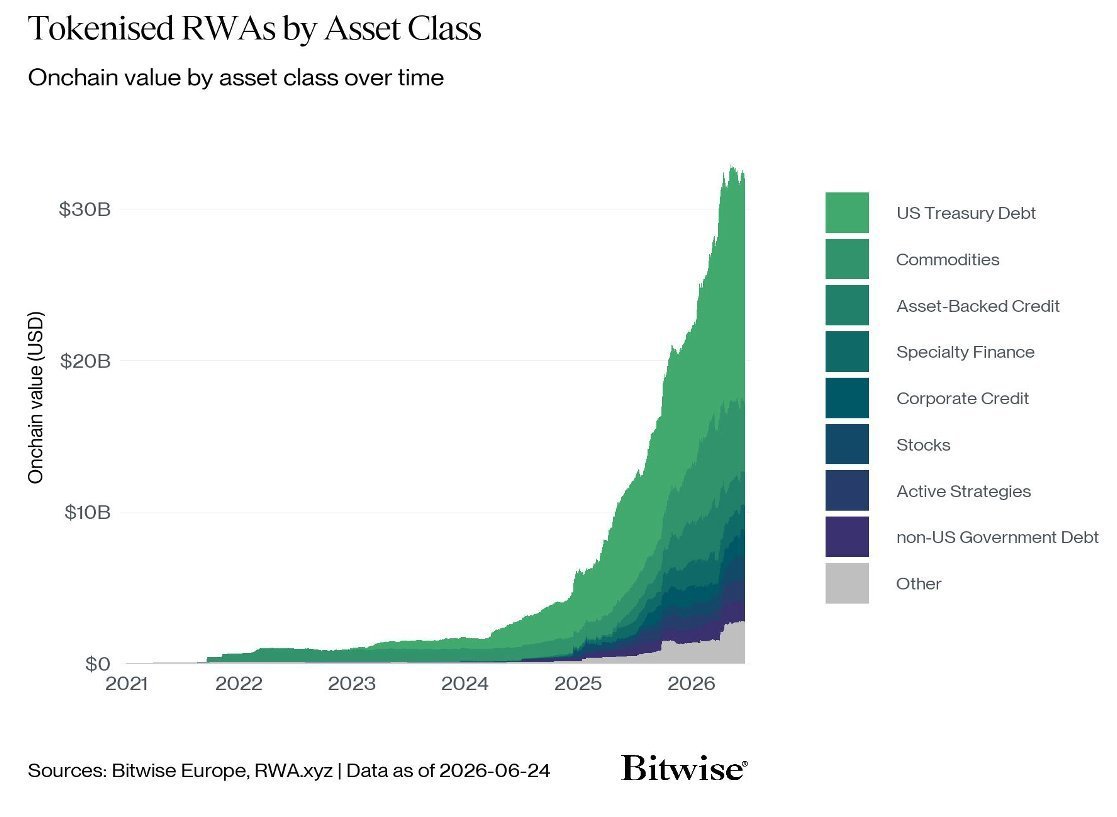
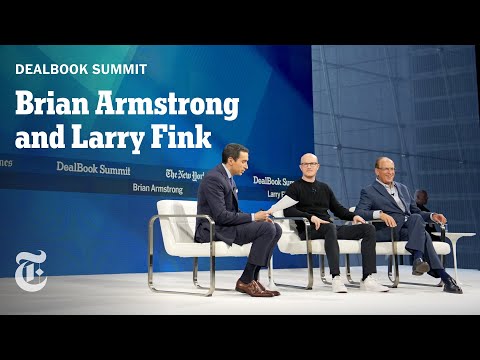
Coinbase CEO Brian Armstrong: 4 billion people can’t invest in high-quality assets “Tokenization is kind of a buzzword right now and it is really important as a trend because the same thing that happened with stablecoins — where a dollar got ‘tokenized’ and now people all over the world can use it and there’s fast/cheap/global payments — is now happening in the equities market and every asset class that people might want to invest in.” Brian explains why this is so important: “There’s about 4 billion adults right now who are ‘unbrokered’. Some people have heard about being ‘unbanked’, but there are also about 4 billion people who are unbrokered, meaning they don’t have any way to invest in high-quality assets — whether that’s American tech companies or the latest BlackRock or Apollo fund. When you tokenize it, there’s a bunch of efficiency gains. But it’s also about democratizing access . . . People who only make their income from labor are oftentimes left out of this wealth-creation engine, which is the ability to invest some of their hard-earned money in high-quality assets. That’s what we’re trying to do with the tokenization of every asset class.” Treasuries, private credit, real estate, and many other real world assets (RWAs) are being tokenized, with Ethereum is the preferred settlement rail for compliant institutional capital markets. More than 60% of all tokenized assets — over $200 billion — reside on Ethereum. Source: @Bloomberg (Jan 2026)

English
3
9
47
3K
Etherealize
Etherealize@Etherealize_io·
ETH investor Stanley Druckenmiller: “Our whole payment system will be stablecoins in 10-15 years” BitMine (BMNR), the ETH treasury company chaired by Tom Lee, holds more than $10 billion of ETH. Legendary investor Stanley Druckenmiller is listed among key backers like ARK and Bill Miller. This aligns with his recent bullish comments on stablecoins and blockchain payments: “Blockchain and the use of stablecoins — if you want to throw crypto and tokens into that — are incredibly useful in terms of productivity. I assume our whole payment system will be stablecoins in 10-15 years. Efficient. Quicker. Cheaper.” Source: @MorganStanley (Mar 2026)
English
10
40
282
17.1K
Etherealize retweetledi
Vivek Raman
Vivek Raman@VivekVentures·
Ethereum is the only neutral infrastructure the global financial system can agree to use together. Similar, ETH is the only neutral asset in a world where everything is tokenized. That’s why it’s a call option on becoming a global store of value.
The Rollup@therollupco

"Large players will never agree to build on another large player’s infrastructure, which is why Ethereum is the only option." Robbie asks ZK inventor Alex (@gluk64) how much credence he gives companies building their own L1s. Do JP Morgan, NYSE, and Circle all want to operate on their own networks, or will Ethereum become the neutral infrastructure that everyone can agree on?

English
26
38
280
15.4K
Etherealize retweetledi
ETH Layer2 Insiders
ETH Layer2 Insiders@ETH_L2_Insiders·
Media screaming 'Ethereum L2s dead' after Vitalik's post? Reality: The emergency rollup-centric era is over because L1 can scale natively now. L2s' real future is specialized superpowers with privacy, control, ultra-scale on top of a beefed-up Ethereum base. Institutions get it. You should too. ETH thesis intact & upgraded 🚀💪
Etherealize@Etherealize_io

x.com/i/article/2032…

English
3
4
50
4.4K
Etherealize retweetledi
Ether Machine (ETHM)
Ether Machine (ETHM)@TheEtherMachine·
This is the tokenization vision. Ethereum is the tokenization host.
Etherealize@Etherealize_io

Coinbase CEO Brian Armstrong: 4 billion people can’t invest in high-quality assets “Tokenization is kind of a buzzword right now and it is really important as a trend because the same thing that happened with stablecoins — where a dollar got ‘tokenized’ and now people all over the world can use it and there’s fast/cheap/global payments — is now happening in the equities market and every asset class that people might want to invest in.” Brian explains why this is so important: “There’s about 4 billion adults right now who are ‘unbrokered’. Some people have heard about being ‘unbanked’, but there are also about 4 billion people who are unbrokered, meaning they don’t have any way to invest in high-quality assets — whether that’s American tech companies or the latest BlackRock or Apollo fund. When you tokenize it, there’s a bunch of efficiency gains. But it’s also about democratizing access . . . People who only make their income from labor are oftentimes left out of this wealth-creation engine, which is the ability to invest some of their hard-earned money in high-quality assets. That’s what we’re trying to do with the tokenization of every asset class.” Treasuries, private credit, real estate, and many other real world assets (RWAs) are being tokenized, with Ethereum is the preferred settlement rail for compliant institutional capital markets. More than 60% of all tokenized assets — over $200 billion — reside on Ethereum. Source: @Bloomberg (Jan 2026)

English
2
13
60
4K
Etherealize retweetledi
poet.base.eth
poet.base.eth@1CrypticPoet·
A lot of people around the world are not just locked out of banking. They’re locked out of ownership. They can work their whole lives and still never get access to the assets that actually build wealth. That’s why tokenization matters. It opens the door to ownership, and @coinbase is pushing that door open for the world.
Etherealize@Etherealize_io

Coinbase CEO Brian Armstrong: 4 billion people can’t invest in high-quality assets “Tokenization is kind of a buzzword right now and it is really important as a trend because the same thing that happened with stablecoins — where a dollar got ‘tokenized’ and now people all over the world can use it and there’s fast/cheap/global payments — is now happening in the equities market and every asset class that people might want to invest in.” Brian explains why this is so important: “There’s about 4 billion adults right now who are ‘unbrokered’. Some people have heard about being ‘unbanked’, but there are also about 4 billion people who are unbrokered, meaning they don’t have any way to invest in high-quality assets — whether that’s American tech companies or the latest BlackRock or Apollo fund. When you tokenize it, there’s a bunch of efficiency gains. But it’s also about democratizing access . . . People who only make their income from labor are oftentimes left out of this wealth-creation engine, which is the ability to invest some of their hard-earned money in high-quality assets. That’s what we’re trying to do with the tokenization of every asset class.” Treasuries, private credit, real estate, and many other real world assets (RWAs) are being tokenized, with Ethereum is the preferred settlement rail for compliant institutional capital markets. More than 60% of all tokenized assets — over $200 billion — reside on Ethereum. Source: @Bloomberg (Jan 2026)

English
10
12
55
4.7K
Etherealize
Etherealize@Etherealize_io·
Coinbase CEO Brian Armstrong: 4 billion people can’t invest in high-quality assets “Tokenization is kind of a buzzword right now and it is really important as a trend because the same thing that happened with stablecoins — where a dollar got ‘tokenized’ and now people all over the world can use it and there’s fast/cheap/global payments — is now happening in the equities market and every asset class that people might want to invest in.” Brian explains why this is so important: “There’s about 4 billion adults right now who are ‘unbrokered’. Some people have heard about being ‘unbanked’, but there are also about 4 billion people who are unbrokered, meaning they don’t have any way to invest in high-quality assets — whether that’s American tech companies or the latest BlackRock or Apollo fund. When you tokenize it, there’s a bunch of efficiency gains. But it’s also about democratizing access . . . People who only make their income from labor are oftentimes left out of this wealth-creation engine, which is the ability to invest some of their hard-earned money in high-quality assets. That’s what we’re trying to do with the tokenization of every asset class.” Treasuries, private credit, real estate, and many other real world assets (RWAs) are being tokenized, with Ethereum is the preferred settlement rail for compliant institutional capital markets. More than 60% of all tokenized assets — over $200 billion — reside on Ethereum. Source: @Bloomberg (Jan 2026)
English
24
41
276
29.6K
Etherealize
Etherealize@Etherealize_io·
Erik Vorhees: “ETH is still the king, and I don’t see it being dethroned" The founder of ShapeShift and Venice AI is asked if Ethereum was a “sustainable ecosystem.” He replies: “I think [Ethereum] is more than sustainable. I think it is the clear winner of the smart contract innovation. It actually wasn’t the first mover in smart contracts, but it was the first one to achieve any sort of scale with smart contracts. What’s most important about Ethereum isn’t so much the first-mover advantage as much as it is the network effect it has had since it was released.” Erik continues: “I think both Bitcoin and Ethereum have achieved a network effect that is close to unassailable. People have gotten distracted with some of these other L1s, but if you look at metrics like where the developers are and where stablecoin volumes are, these are hard to fake metrics that are very important. They’ve always been predominantly on Ethereum. It’s not even close. I’m glad that other people tried to build L1s. The process of innovation and competition is really important. But ETH is still the king, and I don’t see it being dethroned. It has had various scaling challenges — the patchwork of L2s and the UX problems between them sucks. But I have a suspicion that Base is going to end up becoming the predominant L2 on top of the predominant L1 of ETH and that vertical is going to be very powerful and very strong. So yes, I’m always bullish on ETH in the same way I’m always bullish on Bitcoin.” However, Erik warns that if Base loses its permissionlessness it “will flounder and deserves to die”: “Base has designed things very well. It has gotten a lot of adoption and very quickly became the major L2 even though it was not the first mover. I think it’s gaining a network effect pretty quickly. It obviously has a very powerful corporate ally in Coinbase, and to the degree that Coinbase does not abuse that privilege, that’s a very good privilege. Abuse here means: if Coinbase tries to exert control over base such that it loses its permissionlessness, then it will flounder and deserves to die. But Coinbase has been a very good actor in this regard, and they deserve a lot of credit for demonstrating the principles of decentralization and permissionless innovation in several parts of what they do. Obviously the centralized exchange is not that, but it’s not trying to be either.” Source: @CoinDesk (Dec 2025)
English
47
98
826
105.7K
Etherealize retweetledi
dannyryan
dannyryan@dannyryan·
fastconfirm.it The fast confirmation rule is incredible So many years in the making. Super excited to see it finally ship!
English
33
107
572
78.1K
Etherealize retweetledi
L2BEAT 💗
L2BEAT 💗@l2beat·
The takeaway isn’t that Ethereum is moving away from L2s. The role of L2s is evolving. As the base layer scales, L2s can compete on customization, specialized environments, and new use cases, while still benefiting from Ethereum’s security.
Etherealize@Etherealize_io

x.com/i/article/2032…

English
5
10
54
5.1K
Etherealize
Etherealize@Etherealize_io·
Ethereum is the hub of debt capital markets - Maple Finance CEO Sid Powell “We’re chain agnostic. We’d like to be on as many chains as possible. But the way we make decisions is first and foremost commercial — how many stablecoins are on that chain and how many potentially customers do we have if we go to that chain?” The CEO of DeFi’s fastest-growing institutional lending protocol with over $4 billion in AUM explains why these questions have led them to choose Ethereum as the hub of their model: “There’s no good going to a technically brilliant chain that has little-to-no stablecoins because there just won’t be any customers for us . . . As I look at institutional adoption, the liquidity and supply of stablecoins on Ethereum really is a very material lead and advantage for it as an ecosystem.” Sid continues: “The way I’ve heard it expressed before is that Ethereum is evolving as the debt capital market of the on-chain ecosystems . . . In tech you tend to follow a power law distribution so Ethereum does very much at this point remain the hub, and you can see it expressed in being the first chain a lot of these tokenized funds are getting launched on. And indeed in the fact that Maple, Aave, and Athena are three very big sources of yield for people and most of the activity still takes place on Ethereum.” Source: @Unchained_pod (Mar 2026)
English
15
31
198
11.5K
Etherealize retweetledi
Vivek Raman
Vivek Raman@VivekVentures·
Proof of work turns AI and quantum into threats. Proof of stake turns AI and quantum into opportunities. The future infrastructure layer for the world - Ethereum - is future-proof via proof of stake.
Etherealize@Etherealize_io

Vitalik Buterin explains why proof-of-stake is more secure than proof-of-work “I think proof of stake is very secure because to attack the system, you need to have basically as much stake as the rest of the network. Right now, for example, we have 5 million ETH staking, which means you have to come up with 5 million ETH and then join the network.” At the time of this writing, more than 37 million ETH are being staked, with 3 million ETH waiting to join via the validator queue. At today’s prices, that’s more than $80 billion of ETH someone would have to acquire to attack the network and revert finalized blocks, which is more than the cost of attacking even the Bitcoin network by some estimates. The other defense mechanism that proof-of-stake has that proof-of-work doesn’t is slashing, which makes Ethereum antifragile. Vitalik explains: “Recovering from attacks is much easier in proof-of-stake than proof-of-work. For many kinds of attacks you do against [the Ethereum] network, we have this concept of automatic slashing. In order to revert a finalized block, you basically have to have a big portion of your validators sign two conflicting messages. This is something where once these messages are on the network, you can go and prove ‘these people did it.’ So we have this feature in the protocol where you basically take all these people who provably misbehaved and you burn their coins.” Vitalik also acknowledges the possibility of censoring attacks, where if 1/3rd of validators refuse to attest, the chain can’t finalize. But, as he explains, Ethereum has a contingency plan for this as well: “Everyone who got censored would create a minority chain, and the community would have to do a soft fork. The would have to say, ‘this chain is clearly attacking us and this one is not attacking us, so we’re going to join this chain.’ Then what happens is, on that new chain, the attackers also lose a lot of coins. The difference between proof-of-stake and proof-of-work is that in a proof-of-stake system, you can identify specific participants — and this isn’t a human going in and saying ‘I don’t like you’. It’s all automated.” One last benefit of proof-of-stake is that security scales with the value of the network. As Vitalik put it five years ago, it is really relative security, and not absolute security, that matters: “The security needs of a thing have to be proportional to the size of that thing, because as a thing gets bigger, its enemies become bigger and more well-motivated. If BTC were 100x as big as it is today, the value from destroying it would be 100x higher, and the kinds of actors that would want to care about destroying it would be much bigger and scarier. This is also why countries of all sizes have roughly similarly sized militaries as a percentage of GDP. Hence, cost of attack divided by market cap really is the correct statistic to measure, and in the long run issuance-free PoW really does look not that good." Source: @lexfridman (Jun 2021)

English
19
32
287
21.1K
Etherealize
Etherealize@Etherealize_io·
Vitalik Buterin explains why proof-of-stake is more secure than proof-of-work “I think proof of stake is very secure because to attack the system, you need to have basically as much stake as the rest of the network. Right now, for example, we have 5 million ETH staking, which means you have to come up with 5 million ETH and then join the network.” At the time of this writing, more than 37 million ETH are being staked, with 3 million ETH waiting to join via the validator queue. At today’s prices, that’s more than $80 billion of ETH someone would have to acquire to attack the network and revert finalized blocks, which is more than the cost of attacking even the Bitcoin network by some estimates. The other defense mechanism that proof-of-stake has that proof-of-work doesn’t is slashing, which makes Ethereum antifragile. Vitalik explains: “Recovering from attacks is much easier in proof-of-stake than proof-of-work. For many kinds of attacks you do against [the Ethereum] network, we have this concept of automatic slashing. In order to revert a finalized block, you basically have to have a big portion of your validators sign two conflicting messages. This is something where once these messages are on the network, you can go and prove ‘these people did it.’ So we have this feature in the protocol where you basically take all these people who provably misbehaved and you burn their coins.” Vitalik also acknowledges the possibility of censoring attacks, where if 1/3rd of validators refuse to attest, the chain can’t finalize. But, as he explains, Ethereum has a contingency plan for this as well: “Everyone who got censored would create a minority chain, and the community would have to do a soft fork. The would have to say, ‘this chain is clearly attacking us and this one is not attacking us, so we’re going to join this chain.’ Then what happens is, on that new chain, the attackers also lose a lot of coins. The difference between proof-of-stake and proof-of-work is that in a proof-of-stake system, you can identify specific participants — and this isn’t a human going in and saying ‘I don’t like you’. It’s all automated.” One last benefit of proof-of-stake is that security scales with the value of the network. As Vitalik put it five years ago, it is really relative security, and not absolute security, that matters: “The security needs of a thing have to be proportional to the size of that thing, because as a thing gets bigger, its enemies become bigger and more well-motivated. If BTC were 100x as big as it is today, the value from destroying it would be 100x higher, and the kinds of actors that would want to care about destroying it would be much bigger and scarier. This is also why countries of all sizes have roughly similarly sized militaries as a percentage of GDP. Hence, cost of attack divided by market cap really is the correct statistic to measure, and in the long run issuance-free PoW really does look not that good." Source: @lexfridman (Jun 2021)
English
89
147
990
100.2K
Etherealize retweetledi
Etherealize
Etherealize@Etherealize_io·
Robinhood Head of Crypto on Non-Ethereum L1s: “Centralization is a major issue” “You’ve seen with many of the other [non-Ethereum] L1s — even the big ones — centralization is still a major issue: sometimes there’s an issue, and everyone restarts [the validators] at the same time. It doesn’t really feel decentralized, right? With Ethereum, you get all of this for free. So you can focus your mental bandwidth and resources on building on top of it instead of doing the basic things that everyone else is doing.” Crypto General Manager Johann Kerbrat explains that this free security was a huge factor in Robinhood’s decision to build a Layer 2 rather than an alternative Layer 1. Accessing the liquidity of Ethereum and other EVM-compatible chains was another major factor: “If you’re alone on your private island and no one can come in or out — I’m sure we could get customers because we’re Robinhood and a big platform, but we actually want to recreate the entire financial system on-chain. So we need everyone to be able to come into our island.” Source: @DeFi_Dad (Dec 2025)
English
16
38
274
37.2K
weicheng
weicheng@weicheng_95·
@Etherealize_io "fancy database that's probably slower than an actual database" 💀 he did not miss
English
1
0
1
4
Etherealize
Etherealize@Etherealize_io·
Robinhood head of crypto Johann Kerbrat on why they're building an Ethereum L2: “Creating the security of a real, properly decentralized chain is extremely difficult, and we basically get that for free with Ethereum. When you look at the new L1s being created, they’re not really decentralized or secure, so at the end of the day, you basically have a fancy database that is probably a bit slower than an actual database.” To understand the future of Ethereum scaling and the Layer 2 ecosystem, read the full article 👇
Etherealize@Etherealize_io

x.com/i/article/2032…

English
13
25
204
14K
Etherealize
Etherealize@Etherealize_io·
Etherealize CEO Vivek Raman: Banks are looking at Larry Fink and Ethereum “It’s impossible not to be bullish now. […] The [Ethereum] network has never been stronger, more resilient, or future-proofed to scale with Layer 2s plugged in and ready for the institutional moment right now. Asset price will follow.” “[BlackRock CEO] Larry Fink is a pioneer in the space. He has been a visionary, and his voice is heard and listened to by everyone else on Wall Street. The banks are looking at him. The asset managers are looking at him. He’s one of the leaders that’s digital assets-forward, and when he tokenized BUIDL — their money market fund — on Ethereum before there was regulatory clarity and before we got out of the Gensler SEC, that set the standard for Ethereum to be the default.” “Ever since then, the money in money market funds on Ethereum has multiplied. Stablecoins on Ethereum have multiplied. And now Larry Fink is coming in and saying, ‘We need one common blockchain’ so that we don’t have fragmentation and all tokenized assets can be in one place. That means Ethereum — it’s the best set up for it.” Source: @therollupco (Mar 2026)
English
22
52
282
13.4K
Etherealize retweetledi
RISE
RISE@risechain·
L2s that survive Ethereum scaling are the ones doing what L1 can't Shared state between an orderbook and DeFi primitives in the same block The Home for Global Markets
Etherealize@Etherealize_io

x.com/i/article/2032…

English
20
28
148
6.6K
Etherealize retweetledi
dannyryan
dannyryan@dannyryan·
you go deep, we'll go broad I respect and appreciate the EF clarifying its focus and mandate so that others know what gaps to fill and which alternative threads to follow so we make maximal impact as a collective At @Etherealize_io we'll stay the course and focus on rearchitecting institutional finance from the inside out We are one piece of the diverse machine that will make the deepest and broadest impact possible
Ethereum Foundation@ethereumfndn

Today, the Foundation’s Board released the EF Mandate. This document, which was first intended for EF members, reaffirms the promise of Ethereum, and the role of EF within this ecosystem.

English
64
95
581
130.5K