
MERCVRE

8.9K posts

MERCVRE banner
MERCVRE

MERCVRE

@MercureCopy

Undercover Copywriter in an 8-figure publishing company. Author of Quiet Persuasion. My funnel is a spy story. Join the investigation below ↓

Katılım Şubat 2021
187 Takip Edilen11.9K Takipçiler
Sabitlenmiş Tweet
MERCVRE
MERCVRE@MercureCopy·
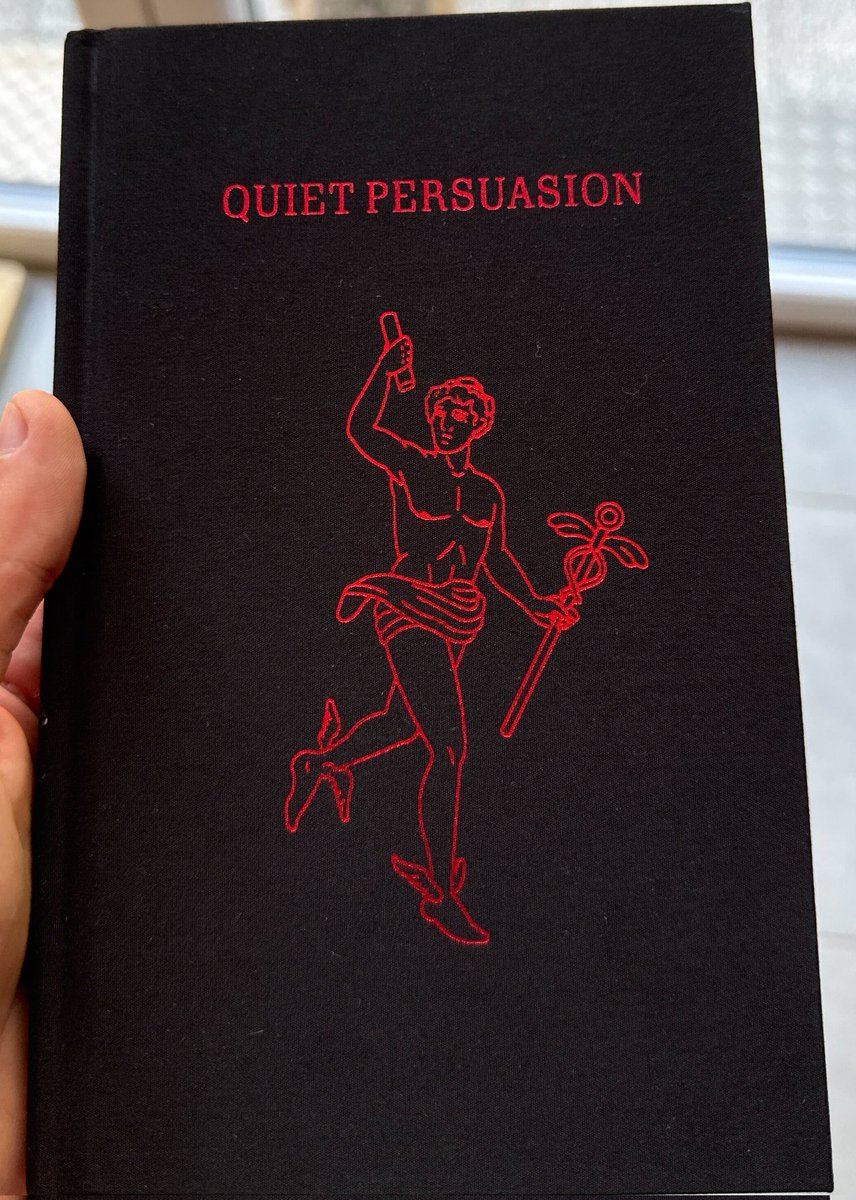
Just hit 11k followers, so figured it’s high time I introduce myself again🕵️ I’m Mercure. That’s not my real name. I’m a Copywriter. I spent 5 years working in-house at one of the largest direct response companies in Europe, before moving on to focus on my own freelancing career. My account is anonymous and will likely stay that way. Because who I actually am doesn't really matter. What matters is the Big idea behind all of this. See, I share what I know about Copywriting, but probably not in a way you’ve seen before. Most people associate Copywriting will loud, catchy, headlines. And while that's a popular expression of Copy, I’m more interested in what’s underneath. The psychology, the philosophy, the linguistics. See, I have written a lot of Copy in regulated markets. Markets where you can't just show up shouting big claims. To still write winners, I had to find new ways of writing claim-less Copy. That's where I found storytelling, world building, and how to install ideas in your readers without ever saying them. I call this Quiet Persuasion. And I've written a book about it, which has already been qualified as a marketing classic by its readers. Now the Quiet approach isn’t for everyone. It usually takes more work. It requires more research, to know your audience better than they know themselves. If you can't outclaim your competition, you've got to out-think them. You have to be patient when the internet rewards immediate impact. But here’s what it gives you. You learn to see what most people overlook. You understand human psychology at a level that influences your whole life. It’s a master key that opens doors you didn’t know existed. And if you're curious about what Quiet Copy looks like... ...I built my entire funnel as an immersive detective investigation, where the goal is to find ME. I disappeared, and I've left behind me scattered pages of the manuscript of Quiet Persuasion, that might lead you to me. If you’re curious, start here: mercurecopy.com/case-file-2543… See you around. Merc
MERCVRE tweet media
English
32
10
182
15.9K
MERCVRE
MERCVRE@MercureCopy·
@TrillionMindX Good Copy is Copy that converts, while staying within the confines of the law (and some would argue, ethics.) If they could produce winning Copy out of the box with AI, of course they wouldn't need Copywriters. But most can't. And that's the core of the issue.
English
0
0
0
9
MERCVRE
MERCVRE@MercureCopy·
The real problem with AI isn’t that it writes bad Copy. It’s that it writes okay Copy. Bad Copy is easy because it’s obviously bad. So you scrap it and rewrite it. Okay Copy is trickier because nothing jumps at you. But look deeper and you’ll see the structural issues. Like when the real hook is buried three paragraphs in.Or when one idea gets said three times in a row with different words. AI pads everything because it doesn’t know when the point has been made. The piece reads smooth but if you stop and ask what that paragraph actually said, the answer is often nothing. And this is becoming the default everywhere. Every market is filling up with Copy that reads fine but doesn’t say much. Which means the bar has moved. Spotting bad Copy bad isn’t enough anymore. Now you need to spot okay Copy. You need the eye to look at something that seems fine and feel that it’s hollow, and know what to do about it.
English
14
4
49
1.3K
MERCVRE retweetledi
MERCVRE
MERCVRE@MercureCopy·
Copywriters reviewing their AI output before sending it to the client:
English
14
5
99
5.6K
Proryv
Proryv@Proryv_fr·
@MercureCopy J'ai rien vu de plus drôle aujourd'hui camarade !
Français
1
0
1
10
MERCVRE
MERCVRE@MercureCopy·
I was reviewing applicants for a Copy position recently and you’d be shocked at how many submissions had the AI prompt response left in the Copy. Like, “Here are 2 new hooks for your ad script,” right at the top of the sample they sent to get hired. They didn’t even read it before submitting. Bad applications aren’t new. You always get some. But the volume right now is wild. AI allowed everyone to produce professional-looking Copy, so the pile of submissions got three times bigger and most of it is AI slop that took two minutes to produce and zero minutes to review. The hard part isn’t spotting the bad applicants anymore. It’s telling apart the Copywriter who uses AI as a tool from the one who just prompts, copies, and pastes. Because on the surface, both can look fine. Many Copywriters today have no idea whether their AI output is good or not. So they read it, it sounds good enough, and they go “okay this works.” It doesn’t, but they can’t tell. And because they can’t tell, they feel stuck with whatever AI gave them. I guess starting over after half an hour of prompting feels like going backwards, so they change a few words, delete the obvious “this isn’t X, it’s Y,” and ship it. And it reads exactly like what it is. The main issue with AI output is the writing itself is usually fine. That’s what makes it tricky. You read it and nothing jumps out. But look underneath, at what the words are actually saying. The hook is either buried or weak. The angle has been used to death. The argument wanders. You get the exact same point repeated in three sentences in a row with slightly different wording. Many Copywriters skip past all of that because it reads smooth. And smooth tricks them into thinking it’s good. I use AI every single day, btw. I’ve spent a long time building my workflow, and the output still mostly sucks. It gets me to a rough starting point faster, which saves me time. But going from that rough starting point to something that works in the real world is still on me. Which is what concerns me about people who get good at prompting but never really learn Copy. They’ve got a ceiling they can’t see. Everything on their screen looks like it should sell. And when it doesn’t, they have no idea what went wrong because they never built the ability to tell the difference between okay and good. Now that writing isn’t the bottleneck, knowing whether a piece of Copy is any good is what you get paid for. And if you can’t make that call yourself, no AI is going to save you.
MERCVRE@MercureCopy

Copywriters reviewing their AI output before sending it to the client:

English
2
4
25
1.1K
MERCVRE
MERCVRE@MercureCopy·
Opinion is my own, and I may be wrong... ...But I don't think so. Being good at AI but bad at Copy caps you at a certain level. I see it every day. Even with good prompting, well built skills, tons of context/examples, etc. ...I still get MOSTLY bad output. Maybe it's a skill issue, but I'm pretty certain my AI workflow right now is better than most regular people's, so I can't imagine what it does for people with neither AI nor Copywriting skills.
English
0
0
1
58
Thumos Bear
Thumos Bear@Bear_the_AI_guy·
Would you say that at this point 85% of the skill of copywriting can be gained by an absolute expert at leveraging AI? Like if the AI expert wants to build a very robust automated prompting framework specifically for copywriting but isn't actually interested in the copywriting itself. Does such a person have a higher market value than the avg copywriter?
English
1
0
1
61
MERCVRE
MERCVRE@MercureCopy·
Most Copywriting education tells what to do. I built an investigation-based funnel that shows you how influence actually feels. Join to receive my newsletter, a free extract from my book Quiet Persuasion extract, and the ability to purchase my programs: mercurecopy.com/case-file-2543…
English
0
0
1
179
MERCVRE
MERCVRE@MercureCopy·
Of course, I agree. I’m mostly taking the piss out of how lazy AI has made some Copywriters (if we can even call them that) I was reviewing applicants for a top Copy job recently and I’m still speechless at the amount of AI slop I had to go through. You always get plenty of bad applications. This doesn't change. But now it's double or triple the volume. And the problem is that now I have to figure out who’s actually a decent Copywriter using AI (which they should be) and who’s just a poser delegating 100% of the work
English
2
0
7
288
Justin Brooke ❤️‍🔥
Justin Brooke ❤️‍🔥@IMJustinBrooke·
I wish you and I could have a chat about this man. I don’t get the copywriting worlds beef with AI, and I’m a die hard copywriter and ex-agora guy. At the very least it’s the best research tool copywriters have had, ever! But done right AI copywriting can smoke most human writers (except for the top 1%). It’s definitely better than all the junior writers out there.
English
3
0
12
736
MERCVRE retweetledi
MERCVRE
MERCVRE@MercureCopy·
The moment someone feels you're trying to change their mind, they put their guard up. But show them something that helps them understand their own situation better… And they'll do the work for you.
English
38
10
214
12K
MERCVRE
MERCVRE@MercureCopy·
A lot of people get into Copywriting the way they get into dropshipping. Someone on the internet told them it makes good money, so they bought a course, and they believed they’d have clients within a month. When that didn’t happen, they moved on. Just like they’ll move on from AI automation or whatever they try next. This happens because Copywriting got sold to them as a business opportunity. “One skill, $10K/mo, work from anywhere.” The same pitch as every other hustle. So it attracted people who wanted the money next month, not next year. And when the money didn’t come fast enough, they assumed the opportunity was bad and went looking for another one. But Copywriting is not a bizopp. It’s a skill. And you don’t judge a skill’s ability to make you money on a 30-day timeline. It’s like quitting the gym because you can’t deadlift 500 pounds a month into it. The people who build careers and businesses thanks to Copywriting are the ones who got curious about the skill itself. People who wanted to understand why people buy, how trust works, what makes someone hand over money to a stranger on the internet. They got into the psychology of it and found it fascinating. I’m grateful my mentor drilled this into my head early in my career. He used to say you don’t become a proficient Copywriter until you’ve been writing every day for at least 5 years. That sounds insane when you’re starting out. But it reframed the whole thing for me. It loosened the pressure. It portrayed Copywriting as something worth getting good at. Something that demands respect (hence why I write Copy with a capital C, by the way). And that made all the difference, because I’m still here, writing Copy every day, 7 years later. The money came. It just took longer than most bizopp pitches promise. If you’re early in this and frustrated, ask yourself: are you chasing the money or are you learning the skill? Because the money chasers never stick around long enough for it to come. The ones who learn the skill are the ones who end up changing their financial future. If you want to understand the psychology underneath all of this, how people want things, how they decide, how trust forms, I put everything I know into a book called Quiet Persuasion. Check it out here: mercurecopy.com/nlsbi-field-re…
English
4
3
32
903
MERCVRE
MERCVRE@MercureCopy·
Most Copywriters are afraid of leaving something out in their Copy. They should be afraid of leaving too much in. There’s a saying in theater: “better to frustrate than to bore.” Most Copywriters do the opposite. They know their product inside out. They have ten good arguments. So they use all ten. And their reader remembers none of them. Because when you flood someone’s brain with information, it doesn’t store the best parts and discard the rest. It gives up and stores nothing. Copy that sells makes one argument really well and leaves everything else out. That takes discipline. Because cutting a good argument feels like waste. But every decent point you keep is competing with your best point for your reader’s attention. And on the internet, that attention is limited. So anytime you find something “good”, don’t ask yourself whether it’s worth including. Ask “does this earn its spot next to my strongest argument?” If the answer is even a maybe, cut it. Give your reader room to hold onto something.
English
6
2
49
954
MERCVRE
MERCVRE@MercureCopy·
Your Copy is probably missing one simple, unglamorous sentence. It won’t feel like your strongest argument when you write it. But it’s the sentence your reader needs to justify the purchase to themselves and to anyone who asks. Because people don’t just buy and move on. They buy and start building a case for why it was a good idea. In their own head first, then out loud when their partner sees the bank notification or their friend goes “you spent how much on what?!” And the material for that case comes from your page whether you planned for it or not. The problem is most Copywriters only write for the “wanting” phase. But getting someone to want something is one job. Giving them permission to actually buy it is another. Right when they reach the tipping point, they start looking for something logical to hold onto. If they find it, they buy and feel good about it. If they don’t, the whole thing starts feeling impulsive and they talk themselves out of it. So you need one plain, rational sentence somewhere on your page. Something your reader could say to a skeptical person without feeling like they got played. “It pays for itself with one client.” “It saves me about an hour a day.” “It’s replacing three subscriptions I was paying for.” That kind of thing. Boring as hell. But it’s what people actually say when someone asks why they bought something. Most Copywriters skip this because it doesn't feel like “real Copy.” There’s no emotion, no storytelling, no clever metaphor. But it’s exactly what people are unconsciously looking for, even if they’d never describe it that way. And the best place for this sentence is in your testimonials. A past buyer most likely already said it for you. Find that line, bold it, quote it, make sure it’s impossible to miss.
English
5
7
45
1.1K
MERCVRE
MERCVRE@MercureCopy·
I've hidden my entire approach to persuasion inside an investigation where YOU become the detective... ...So you can experience true persuasion instead of just studying it. Join for my free newsletter + free book chapter + more training here: mercurecopy.com/case-file-2543…
English
0
0
2
179
MERCVRE
MERCVRE@MercureCopy·
The easiest way to sell more without changing a word of Copy is to count how many steps your buyer has to take between wanting the product and owning it. Click the link. Land on the page. Scroll to the button. Click the button. Fill out the form. Choose a plan. Enter payment info. Confirm. Get redirected. Wait for an email. Every one of those steps is an opportunity for buyers to change their mind, get distracted, or just think “I’ll do this later.” And “later” means never 99% of the time. The companies that sell the most online are obsessed with this. Amazon has one-click buying for a reason. They know that most sales are lost at the checkout. If your conversions are low and your Copy is fine, count the steps. You’ll probably find there are too many.
English
5
5
57
1.2K
MERCVRE
MERCVRE@MercureCopy·
Your sales page most likely doesn’t need another benefit. It needs you to find the one sentence that’s making people leave. And fix it. Most Copywriters try to improve a page by adding another paragraph about how great the product is, another testimonial, or another bonus. But someone leaving your page is not missing a reason to buy. They had a reason to hesitate. And you didn’t catch it. Maybe you said something that made them nervous, maybe it was a confusing sentence in your offer section, maybe your pricing had three tiers and they didn’t get which one was for them, etc. It only takes one moment of hesitation to undo everything your page built up to that point. And no amount of extra benefits will fix it because you’re adding weight to a cart with a broken wheel. Before you add anything to a page, read it cold and find the spot where you’d hesitate if you were the buyer. And fix that first.
English
2
1
43
897
MERCVRE
MERCVRE@MercureCopy·
If you're a Copywriter who's tired of competing on volume and drama, who wants to learn persuasion that operates below conscious awareness... ...My investigation-based funnel shows you how. Join for newsletter + free book extract + more training here: mercurecopy.com/case-file-2543…
English
0
0
3
244
MERCVRE
MERCVRE@MercureCopy·
A mentee told me this week “I need to learn more before I can start charging for my Copy.” I asked how much more, exactly? One more course? Two? What’s the specific piece of knowledge that, once acquired, will make you feel ready? Can you name it? He couldn’t answer. He admitted he just felt like he wasn’t ready yet. And that, my friend, is the tell. If you can’t name the exact thing you’re missing, you don’t have a knowledge problem. You have a fear problem. And courses are a really comfortable way to manage fear because they feel productive. They delay the moment you’ll deal with clients with money on the line. The moment your Copy will meet the market and might bomb. But in truth, another purchase will not make you feel more ready. The only thing that does is doing the work, getting feedback, surviving the feedback, and realizing nobody died. And it never goes away completely, by the way. You just learn to work with it.
English
7
7
65
4.1K
Adam Papp
Adam Papp@copywriter_adam·
The funny thing is you do need to learn more to charge more. You can’t just charge 4 figures with 0 knowledge about copy. But… The best way to get knowledge is to write for clients who put spend behind your copy. Not with courses. And you won’t have fear of not knowing enough once you get feedback. At this point, multiple 7 figures have been put behind my copy. And I can charge whatever I want because I know I can crush it in any market with any product. I used to think like this too. “I need to go through more courses, do more copy breakdowns…” … But the truth is, you just need to get better results for your clients so you are confident enough in your skills.
MERCVRE@MercureCopy

A mentee told me this week “I need to learn more before I can start charging for my Copy.” I asked how much more, exactly? One more course? Two? What’s the specific piece of knowledge that, once acquired, will make you feel ready? Can you name it? He couldn’t answer. He admitted he just felt like he wasn’t ready yet. And that, my friend, is the tell. If you can’t name the exact thing you’re missing, you don’t have a knowledge problem. You have a fear problem. And courses are a really comfortable way to manage fear because they feel productive. They delay the moment you’ll deal with clients with money on the line. The moment your Copy will meet the market and might bomb. But in truth, another purchase will not make you feel more ready. The only thing that does is doing the work, getting feedback, surviving the feedback, and realizing nobody died. And it never goes away completely, by the way. You just learn to work with it.

English
6
0
40
2.9K