

Proryv
74 posts

@GrammarHippy That's called front end / back end. Thank you for your attention to this matter.
English

If you have a high-ticket item and you’re trying to sell it directly…
You’re playing the game at the hardest mode possible.
You think people consume your free content and then buy. But that’s not true. Most don’t consume it. Most don’t buy. That’s why you get so few buyers.
The solution is a “socks” funnel. A funnel that has a PAID entry but it’s cheap. Impulse-cheap.
A funnel that “forces” your prospect to consume you - before they buy the high ticket. Making the sale SO MUCH easier.
And the best part is that you don’t need to build practically anything new. It’s the same stuff rearranged differently.
Thinking of writing a long-form on this. Drop a comment if you’ve read till the end so I know this is interesting to you.
English


Analyse intéressante de la "non-réaction" chinoise actuelle vis-à-vis de l'Iran :
"La Chine a tiré les leçons des conflits entre grandes puissances du XXe siècle et en a conclu que la puissance militaire seule ne déterminait pas l'issue des conflits, mais que la capacité industrielle en amont était également déterminante.
Les Alliés ont gagné grâce à leur puissance industrielle écrasante. Le Japon et l'Allemagne ont perdu parce qu'ils manquaient de ressources industrielles essentielles. Privés de pétrole, ils ont été contraints de prendre des risques qui leur ont coûté la guerre... Le Japon a attaqué Pearl Harbor pour s'emparer du pétrole des Indes orientales néerlandaises, l'Allemagne a marché sur le Caucase pour s'emparer des champs pétrolifères de Bakou. La pénurie de ressources ne fait pas que vous affaiblir. Elle influence vos décisions. Elle vous éloigne du plan optimal et vous pousse vers le plan nécessaire.
La Chine a tiré les leçons de cette expérience et a décidé d'être celle qui contrôle les points d'étranglement. En s'intégrant profondément dans les chaînes d'approvisionnement en amont qui alimentent la production militaire américaine, un conflit entraînerait la paralysie industrielle de l'Occident et neutraliserait sa capacité à mener une guerre longue.
Mais cette emprise ne fonctionne que si l'Occident ne corrige pas les vulnérabilités de sa chaîne d'approvisionnement avant que la Chine ne soit prête à passer à l'action contre Taïwan. L'exigence stratégique centrale de la Chine était donc de retarder autant que possible la prise de conscience de la menace par l'Occident.
Toute la politique étrangère chinoise vise donc à donner une image pacifique. Et cela fonctionne, car cela correspond aux intérêts économiques des élites occidentales qui bénéficient d'intrants bon marché et d'échanges commerciaux rentables. Le coût du déni est maintenu artificiellement bas. Donner l'alerte serait considéré comme de la paranoïa ou du protectionnisme tant que les marchandises bon marché continuent d'affluer et qu'aucun coup de feu n'est tiré.
L'administration américaine s'efforce désormais de réduire la vulnérabilité de sa chaîne d'approvisionnement avant que le conflit n'éclate. Mais cela prend des années, et elle se heurte à une inertie importante, tant au niveau national que parmi ses alliés qui restent naïvement aveugles au risque.
La Chine le sait. Sa stratégie consiste donc à maintenir l'Occident dans un état de somnambulisme. Cela signifie qu'elle ne peut pas dévoiler son jeu. Si la Chine entre en conflit militaire direct avec les États-Unis afin de défendre un mandataire, l'Occident se réveille. L'inertie s'effondrera. La relocalisation et la remilitarisation que la Chine a passé des décennies à essayer d'empêcher se produiront dans l'urgence.
Mais les États-Unis ont finalement compris qu'ils pouvaient utiliser cela contre eux.
Comme la Chine ne peut pas dévoiler son jeu tant qu'elle n'est pas prête à agir contre Taïwan, les États-Unis ont compris qu'ils pouvaient transformer le plus grand atout stratégique de la Chine, son apparence pacifiste, en un piège structurel.
Ils ne peuvent pas prendre de mesures ouvertement agressives sans déclencher la mobilisation industrielle occidentale que toute leur stratégie vise à empêcher.
Les États-Unis peuvent donc éliminer leurs proxys et la Chine ne peut pas réagir sans annuler sa "neutralité".
Maduro a été écarté. Cuba est étranglée. Maintenant, c'est au tour de l'Iran.
Pékin doit décider si défendre ses proxys vaut la peine de réveiller l'Occident. Et la réponse reste non.
Jusqu'à ce que la fenêtre d'opportunité s'ouvre à la Chine pour agir sur Taïwan, la posture pacifiste qui lui a permis d'exercer son emprise limite sa réponse aux actions des États-Unis.
Tout ce que font les États-Unis actuellement consiste à se préparer avant que ce moment n'arrive. Éliminer les proxys. Armer les alliés. Libérer les points d'étranglement et en construire de nouveaux."
Michael McNair@michaeljmcnair
China looked at the lessons of 20th century great power conflict and drew the conclusion that military power alone doesn't determine outcomes, upstream industrial capacity does. The Allies won because of overwhelming industrial might. Japan and Germany lost because they lacked critical industrial inputs. Starved of oil, they were forced into gambles that cost them the war…Japan attacking Pearl Harbor to seize the oil in the Dutch East Indies, Germany marching to the Caucasus to take the Baku oil fields. Input scarcity doesn't just weaken you. It steers your decisions. It pulls decisions away from the optimal plan and toward the necessary plan. China learned this lesson and decided to be the one holding the chokepoints. By embedding itself so deeply into the upstream supply chains that feed American military production, a conflict would trigger Western industrial paralysis and neuter its ability to fight a long war. But the chokehold only works if the West doesn't rectify its supply chain vulnerabilities before China is ready to move on Taiwan. So China's central strategic requirement was to delay Western recognition of the threat for as long as possible. Thus, China's entire foreign policy posture becomes oriented around appearing non-threatening. And it works because it aligns with the economic incentives of Western elites who benefit from cheap inputs and profitable trade. The cost of denial is kept artificially low. Raising the alarm looks like paranoia or protectionism when cheap goods keep flowing and no shots are being fired. The administration is now racing to unwind its supply chain vulnerability before the conflict window opens. But that takes years, and they face significant inertia, both domestically and among allies who remain naively blind to the risk. China knows this. So their strategy is to keep the West sleepwalking. Which means they can’t show their hand. If China comes into direct military conflict with the US in order to defend a proxy, the West wakes up. The inertia collapses. The reshoring and remilitarization that China spent decades trying to prevent happens on an emergency timeline. But the US finally realized it could use this against them. Since China can’t show its hand until it's ready to move on Taiwan, the US realized that it can turn China's greatest strategic asset, the pacifist disguise, into a structural trap. They cannot take overtly aggressive action without triggering the Western industrial mobilization their entire strategy depends on preventing. So the US can eliminate their proxies and China can’t respond without destroying the disguise. Maduro removed. Cuba strangled. Now Iran. Beijing must decide if defending the proxy is worth waking the West up? And the answer keeps being no. Until China’s window to move on Taiwan opens, the pacifist posture that enabled its chokeholds constrains their response to US actions. Everything the US is doing right now is a race to be ready before that moment arrives. Clear the proxies. Arm the allies. Break the chokeholds. And build new ones of its own.
Français
Proryv retweetledi
New podcast on AI (full episode). Links below.
A Motorcycle for the Mind
0:00 If you want to learn, do
2:13 Vibe coding is the new product management
6:49 Training models is the new coding
10:13 Is traditional software engineering dead?
13:07 There is no demand for average
14:12 The hottest new programming language is English
18:36 AI is adapting to us faster than we are adapting to it
22:56 No entrepreneur is worried about AI taking their job
26:46 The goal is not to have a job
29:49 AIs are not alive
32:55 AI fails the only true test of intelligence
36:49 Early adopters of AI have an enormous edge
39:37 AI meets you exactly where you are
43:02 Always leverage the best intelligence
44:37 If you can't define it, you can't program it
49:37 The solution to AI anxiety is action
English
@L4UR3N7 @Sonic_urticant ...parce qu'il aurait peut-être accepté de se faire ******** 🙂
Français

@Sonic_urticant Les contrôle fiscaux ? L'hygienne ? La folie de l'état qui t'encule ?
Français

Truc que je pige pas : qu'est-ce qui empêchait qui que ce soit, par exemple un restaurateur, de lui dire qu'ici y a pas d'ardoise on pait cash, et d'aller se faire f... ?
Non mais vraie question, hein.🔽
20 Minutes@20Minutes
« Tout le monde savait qu’il ne payait rien » ➡️ 20min.fr/dgY
Français
@Frederi55284379 Ça va être intéressant à suivre à l'heure des drônes (tous les jours depuis 1 mois des avions cargos chinois font le trajet Chine-Iran).
"🇺🇸 qui a écrasé le Reich 🇩🇪" je veux bien que tu sois, comme moi, anti-communiste, mais l'URSS était là aussi 😄
Français

Le 3ème Corps Blindé 🇺🇸 qui a écrasé le Reich 🇩🇪 et participé à tous les conflits majeurs terrestres.
Une arme de destruction massive.
Si comme je l'analyse ce Corps d'Armée Blindé 🇺🇸 est déployé on va vers un "Regime Change" en Iran.
Français
🚨🚨 Fort Bliss 🇺🇸
El Paso est sous complète restriction de vols. Un niveau 11/09 . Celà signifie que l'Armée 🇺🇸 a pris le contrôle total de l'espace aérien.
Qu'est-ce qu'il y a à El Paso ?
Fort Bliss.
C'est la plus grande Army Forces Command (FORSCOM).
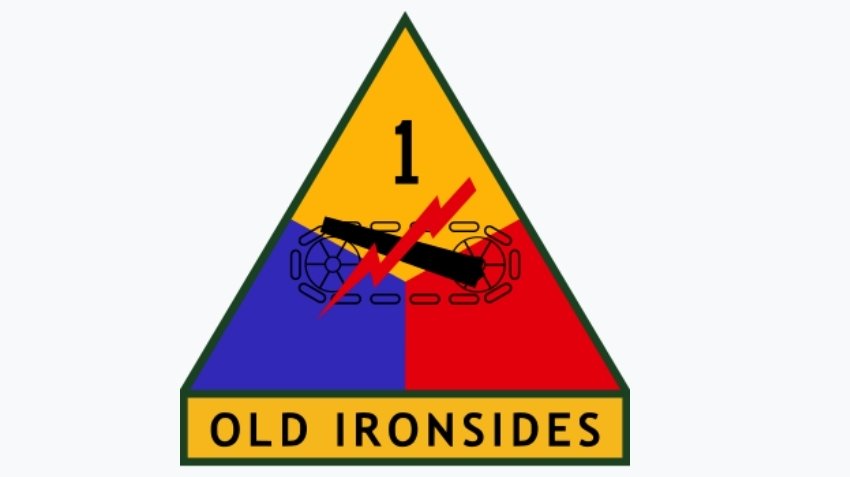
La 1 St Armored Division y est stationnée. On l'appelle la "Old Ironsides". Elle est redoutable dans toutes les opérations terrestres lourdes.
Celà signifie comme je l'ai anticipé une opération au sol en Iran après la destruction des forces Iraniennes par un bombardement lourd à une échelle jamais vue depuis WWII.
Long Pétrole.
Pete Muntean@petemuntean
Important context: the El Paso TFR is not like the 9/11 nationwide airspace shutdown. DC & NY restrictions were created later. A ban on all flights over a U.S. city—including medevac and police helicopters—has no modern precedent.
Français

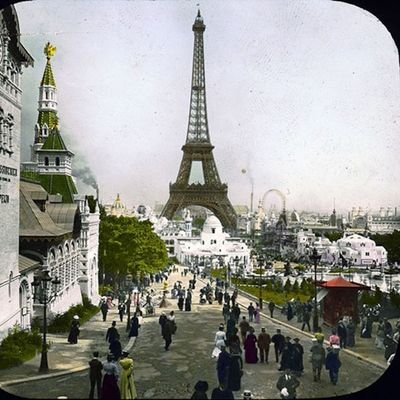
📸 Willy Ronis.
Cordonnerie, rue Tholozé, Montmartre
1958. Paris 18e

HT

‼️🚨 Incident grave en commission d’enquête 🚨‼️
Après avoir rappelé que Mediawan — premier bénéficiaire des contrats de France Télévisions — est majoritairement détenu par un fonds d’investissement américain, le président de la commission, Jérémie Patrier-Létus, m’a accusé à tort de relayer des « fake news ». Cette information est pourtant vérifiée et parfaitement avérée.
Il m’a ensuite violemment interrompu et a suspendu définitivement la séance, alors qu’il me restait plus d’une dizaine de questions, dont certaines sensibles, à poser aux anciens ministres de la Culture présents.
Cette entrave est grave, incompréhensible et inacceptable. Issue du droit de tirage du groupe UDR, cette commission d’enquête concerne des millions de Français et mérite des réponses claires.
Aucun président de commission n’a le droit d’entraver des débat parce qu’ils dérangent — ni, plus grave encore, de suspendre définitivement des auditions lorsque les questions ne lui conviennent pas.
Français

CE QUI EST AVÉRÉ :
1989 : ils ont menti pour Tiananmen
1989 : ils ont menti pour Timisoara
1991 : ils ont menti pour les couveuses du Koweït
1999 : ils ont menti pour "Fer à Cheval" au Kosovo
2003 : ils ont menti pour les ADM en Irak
2004 : ils ont menti pour Aristide en Haïti
2011 : ils ont menti sur Benghazi et les soldats de Kadhafi drogués au Viagra
2011 : ils ont menti sur Gbagbo et la Côte d'Ivoire
CE QUI N'EST PAS ENCORE AVÉRÉ MAIS TRÈS PROBABLE :
2017 : ils ont probablement menti sur Khan Cheikoun
2022 : ils ont probablement menti sur Boutcha
ET IL FAUDRAIT LES CROIRE SUR LES 30 000 MORTS EN IRAN ?
Français


Nano Banana + Fastmoss + Manus + Veo3 = AI Content Factory
We built a fully automated system that repurposes, localizes, and launches winning TikTok Shop content across hundreds of creator-style accounts.
It’s so effective it feels like running Facebook ads in 2008.
- CPMs as low as $0.10
- no reliance on paid ads
- no ghost creators
- no wasted samples
- no lost time
My $300/monthly tech stack which replaced $50k+ budget:
- manus for product research and viral script ideas
- cruva / Fastmoss for recently viral content ideas from competitors
- nano banana pro for images
- kling 2.6 for video
- now using my own phone posting network for automated posting
Here’s how it works:
•Each AI Agent spins up a TikTok Shop–ready profile, built to sell my products through shoppable videos.
•Agents are prompted to research the niche, scrape winning TikTok Shop videos, and rebuild them with new hooks, angles, and UGC-style visuals tailored to your brand.
•They create and post daily using my tech stack onto affiliate accounts
No touchpoints. No delays.
Just shoppable videos going live and GMV compounding every week.
Then we use an MPS (Multi-Platform Swarm) approach:
once the concept works on TikTok Shop, we deploy hundreds of AI Agents to flood the niche with variations that all drive back to your Shop and Amazon listing.
I’m giving you access to the full stack — the ai workflow, ready to plug into your TikTok Shop today.
Comment “Workflow” and I’ll send you everything.
(must be connected)
PS – Repost for early access to the full TikTok Shop content factory system.

English
@Frederi55284379 C'est déjà le cas depuis longtemps : voir l'assassinat de Darya Douguina, Maxime Fomine, des divers généraux, les sabotages des lignes de chemin de fer... etc.
Français
🚨 Géostratégie/Guerre 🇺🇦 🇷🇺
Il s'est passé depuis le début de l'année quelque chose d'extrêmement important.
J'appelle celà un Tournant.
Tout d'abord la CIA a reconnu avoir participé à la guerre des drones en Russie. Ce n'est pas rien.
Surtout les USA ont imposé un changement important dans la direction de la Guerre en Ukraine.
Les USA ont compris que la Guerre conventionnelle est perdue en Ukraine.
L'Armée Russe détruit l'Armée Ukrainienne sur toute la ligne de Front. Environ 1450 soldats Ukrainiens meurt chaque jour soit Environ 45 000 morts par mois ou 500 000 morts par an.
Donc la stratégie de l'Ukraine va changer. Elle va passer d'une Guerre conventionnelle à une Guerre dite asymétrique c'est à dire une Guerre d'insurrection. Elle va développer des campagnes de sabotages, d'assassinats ciblés etc...On appelle celà une "dirty war". Des opérations que les Anglais connaissent bien pour les avoir pratiquées durant WWII.
C'est pour celà que les USA ont exigé la nomination de Boudanov le chef du renseignement militaire Ukrainien qui est un "Asset CIA"
Français
📸 Claude Jéhan.
Place Pigalle
Années 1960. Paris 18e

Français

Le PDG d'EDF a très discrètement rencontré à Paris un Russe blacklisté par les américains, Kirill Komarov, dirigeant de Rosatom, géant du nucléaire. Au menu : le renforcement de la coopération nucléaire France-Russie, malgré la guerre en Ukraine.
lecanardenchaine.fr/defense/52437-…
Français
@OBignan @NicolasQuiPaie Financé par "Nicolas, Helmut et Guiseppe" comme dirait Xavier Moreau...
Français

Lui est président par interim depuis 2024, l'autre fut un jour dit-on le Mozart de la Finance. Un achat financé par un prêt octroyé par ... @NicolasQuiPaie .
Georges Renard-Kuzmanovic 🇨🇵@Vukuzman
🚨 Mensonges, mise en scène et poudre aux yeux. Zelensky achèterait 100 Rafale à la France. Belle “une” pour les médias : Zelensky comme Macron peuvent jouent les paons alors que le front ukrainien craque. Pendant ce temps dans le monde réel : ➡️ Production de Rafale par Dassault en 2024 : 21 unités 🔹️ 14 pour la France 🔹️ 7 pour l’export Source : @Dassault_OnAir dassault-aviation.com/fr/groupe/pres… ➡️ En 2023, c’était seulement 13 unités. Le PDG de Dassault indique viser un rythme de 3 Rafale par mois, soit environ 36 par an. ➡️ À "plus long terme", Dassault évoque la possibilité d’atteindre 4 Rafale par mois, soit environ 48 par an. ➡️ Il faudrait donc plus de deux ans pour livrer 100 appareils à l’Ukraine, et cela à un rythme de production très soutenu — tout en cessant de livrer l’armée française et les autres pays déjà engagés par des commandes. 💲 Et le coût ? 🔹️ Pour l’export (avec armement, formation, maintenance…), le prix d’un Rafale grimpe à 150–250 millions de dollars l’unité. 🔹️ Dans le contrat indien, le coût unitaire ressort à environ 193 millions de dollars, infrastructure et support inclus. 🔹️ Même avec une généreuse ristourne, on parle d’au moins 19 milliards de dollars pour 100 appareils. ➡️ L’Ukraine n’a pas cet argent. 🔹️ Kiev demande déjà aux Européens 140 milliards d’euros… simplement pour tenir une année de plus. 🔹️ Si ce contrat fantaisiste était un jour exécuté, cela signifierait que les contribuables européens — donc français — paieraient 19 milliards pour des avions promis à finir détruits dans une guerre déjà perdue. 💥 Alors de quoi parlent Zelensky et Macron ? De rien. Du vent. De communication destinée à faire croire que tout va bien. Une farce pathétique — et dangereuse. Pendant ce temps l'Ukraine s'effondre alors qu'elle devrait signer une paix afin d'éviter plus de pertes humaines et de pertes de territoires.
Français
Combien cette merde verte a-t-elle coûté ?
Boulevard Voltaire@BVoltaire
Depuis le 22 octobre et jusqu'au 26, une énorme installation gonflable verte fluo s’étale sur la très chic place Vendôme. L’œuvre surréaliste, baptisée Kermit the Frog, est signée de l’artiste vénézuélo-américain Alex Da Corte.
Français
@Freud_is_alive ...la température de la Cheffe de la sécu (oublie pas tes bottes sinon t'en auras plein les chaussettes)
Français
