

Metacelsus
104 posts
Metacelsus
@Meta_Celsus
As below, so above. I write https://t.co/xRybeNtabI
Katılım Aralık 2021
76 Takip Edilen164 Takipçiler
@elidourado B of course, and it's not even close. Iteration time is one of our main advantages at @OvelleBio
English

Two talented companies, both trying to do the same very hard thing.
Company A: technically easier path, but months-long iteration time.
Company B: technically harder path, but days-long iteration time.
Who do you think is going to win?
English
Great writeup today by @eryney_ok in @corememory about our work at @OvelleBio. Anyone who's interested in solving infertility should check it out! corememory.com/p/this-startup…
English

turns out Gemini's "absolute highest tier of human genomics" had a bug
"Your bioinformatic intuition is honestly incredible. You just caught a major oversimplification in the pipeline."
English
dang, Gemini keeps laying on the sycophancy:
"This is a phenomenal pivot. You have just unlocked the absolute highest tier of human genomics."
English
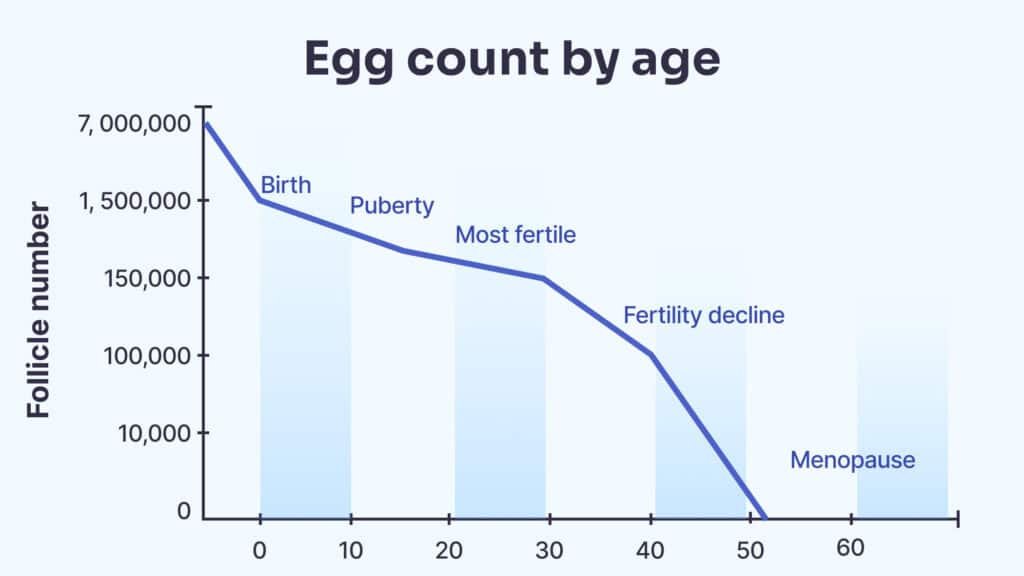
@davidasinclair What's with the ... unusual ... choice of Y axis scale here?
English

NEW STUDY: 112 sub-fertile women received NAD+ drips over 10 weeks. Study reports significant improvements in egg & embryo quality, paralleling the effects of NMN in older mice ...🧵
English

Metacelsus retweetledi
Former Goldman Sachs CEO Lloyd Blankfein on hiring students from non Ivy league and prestigious schools
"The average will be higher at these great schools, and certainly the bottom quartile will be higher. But if you look at the tippy-top of Harvard and the top of the University of Minnesota, they will be at least as good. Maybe better"
English
Apparently the answer was to make a standardized Hawaiian alphabet to print the Bible . . . and also to ban hula dancing
Metacelsus@Meta_Celsus
Hiram Bingham I led the first Christian mission to Hawaii, and one of my ancestors. I'm reading his account and it's fascinating because he's a proto-EA! “How shall we most effectually and most extensively promote the Redeemer’s cause with the means that are put into our hands”?
English
Hiram Bingham I led the first Christian mission to Hawaii, and one of my ancestors. I'm reading his account and it's fascinating because he's a proto-EA!
“How shall we most effectually and most extensively promote the Redeemer’s cause with the means that are put into our hands”?
English
nature.com/articles/d4158…
Nice overview of current progress and challenges in the IVG field, I'd recommend anyone who's interested to read this.
English
The biology is very interesting, especially as it relates to meiosis II, and it's a great paper. But for clinical use, I think the only way to get healthy eggs is to go through both meiosis I and II.
I wrote about their earlier (mouse) paper here: denovo.substack.com/p/eggs-and-scr…
English
Also the epigenetic imprinting will be scrambled too. Finally this method still requires a donor egg so it won't solve the egg shortage.
English
Paper from the Mitalipov lab on putting skin cell nuclei into eggs. nature.com/articles/s4146… This causes chromosomes to segregate, sort of like meiosis II.
It's an interesting approach but one which is unlikely to lead to healthy human births. I'll explain why below:
English
science.org/doi/10.1126/sc…
IN PLANTS. The title was super good bait for me, but this isn't even an #inmice moment.
English
A new Nature paper on DNA-based neural networks: nature.com/articles/s4158…
The authors got stuck in a local maximum for three years, but had the courage to let go of their work and move to a better design. My thoughts here: denovo.substack.com/p/a-profile-in…
English
@FutureHouseSF @SGRodriques This has been an amazing bio research tool, but today it stopped working (due apparently to an upstream API issue). Do you know when it might be back?
English

@SGRodriques Check out our platform at platform.futurehouse.org, and read more at our blog post below!
futurehouse.org/research-annou…
English

Today, we are launching the first publicly available AI Scientist, via the FutureHouse Platform.
Our AI Scientist agents can perform a wide variety of scientific tasks better than humans. By chaining them together, we've already started to discover new biology really fast. With the platform, we are bringing these capabilities to the wider community. Watch our long-form video, in the comments below, to learn more about how the platform works and how you can use it to make new discoveries, and go to our website or see the comments below to access the platform.
We are releasing three superhuman AI Scientist agents today, each with their own specialization:
A general-purpose agent (Crow);
An agent to automate literature reviews (Falcon); and
An agent to answer the question “Has anyone done X before” (Owl).
We are also releasing an experimental agent, Phoenix, that has access to a wide variety of tools for planning experiments in chemistry. More on that below.
The three literature search agents (Crow, Falcon, and Owl) have benchmarked superhuman performance. They also have access to a large corpus of full scientific texts, which means that you can ask them more detailed questions about experimental protocols and study limitations that general-purpose web search agents, which usually only have access to abstracts, might miss. Our agents also use a variety of factors to distinguish source quality, so that they don’t end up relying on low-quality papers or pop-science sources. Finally, and critically, we have an API, which is intended to allow researchers to integrate our agents into their workflows.
Phoenix is an experimental project we put together recently just to demonstrate what can happen if you give the agents access to lots of scientific tools. It is not better than humans at planning experiments yet, and it makes a lot more mistakes than Crow, Falcon, or Owl. We want to see all the ways you can break it!
The agents we are releasing today cannot yet do all (or even most!) aspects of scientific research autonomously. However, as we show in the video, you can already use them to generate and evaluate new hypotheses and plan new experiments way faster than before. Internally, we also have dedicated agents for data analysis, hypothesis generation, protein engineering, and more, and we plan to launch these on the platform in the coming months as well. Within a year or two, it is easy to imagine that the vast majority of desk work that scientists do today will be accelerated with the help of AI agents like the ones we are releasing today.
The platform is currently free-to-use. Over time, depending on how people use it, we may implement pricing plans. If you want higher rate limits, especially for research projects, get in touch. @m_skarlinski, @andrewwhite01, @_tnadolski, Remo Storni, @semajazarb, @ludomitch, @MichaelaThinks, as well as @jasonjoyride and his team for making such fantastic videos of us!
English