Michelangelo

452 posts

Michelangelo

Michelangelo

@MichaelBalsamic

I like Balsamic Vinaigrette

Katılım Ekim 2011
271 Takip Edilen49 Takipçiler
Michelangelo
Michelangelo@MichaelBalsamic·
@R1_021 Whaaaaat??? No mask!!! Omg you are so pretty
English
0
0
0
400
R1
R1@R1_021·
✨⌚️
R1 tweet mediaR1 tweet media
QME
5
26
1.3K
11.5K
R1
R1@R1_021·
ZXX
8
30
1.3K
17.8K
Michelangelo
Michelangelo@MichaelBalsamic·
@business @flacqua He is a complete fraud who got fired from Goldman for being WRONG about the “super cycle” a few years ago.
English
0
0
2
792
Bloomberg
Bloomberg@business·
"I've never seen anything like it before." Oil storage tanks in the United States will run empty "somewhere in the July 4 period," Carlyle's Jeff Currie tells @flacqua bloom.bg/4niuf4G
English
186
1.6K
3.4K
694.4K
Michelangelo
Michelangelo@MichaelBalsamic·
@SreamRM Felt like last time you were only open for like 10 min before you filled the slots lol, your coms are in demand!!
English
1
0
1
31
Sream 🐰
Sream 🐰@SreamRM·
Hey everyone, I hope you're having a great May! This is a heads-up for those who were wondering: I will be opening commissions, but I ask for your patience as I'm moving to a new house and need to move all my things and get settled. I really appreciate those who have been patient and have written to me Love you all!
English
3
4
31
2.1K
Michelangelo
Michelangelo@MichaelBalsamic·
@DFDvbya Let it be known that while the north wanted and got more European Christians, the south wanted Africans! Imagine wanting Africans over Germans lol. Countless thousands of good white men dying for their pet Africans, shameful.
English
0
0
0
30
Dubs
Dubs@DFDvbya·
Because despite the fact that the Union imported 43% of it’s Army and conscripted soldiers to murder it’s fellow citizens, had nearly unlimited more resources in terms of raw materials and weapons, the Confederates were a slip of Gettysburg away from winning the war.
Richard Arion@RichardArion1

@HomericFuturist Why the Confederacy so important for Southerners?

English
56
139
2.5K
72.5K
Michelangelo
Michelangelo@MichaelBalsamic·
@SoleilTitor Super hot! Miss your content, I love how preggo and busty you make your girls!
English
0
0
2
581
Steve Milloy
Steve Milloy@JunkScience·
The Overland Campaign was butchery. For example, Grant lost 6,000 men killed and wounded in about 30 minutes at Cold Harbor on June 3, 1864. Nothing patriotic, heroic, or uplifting about it or the rest of the Campaign. It was just more pointless murder at the behest of Abraham Lincoln.
Michael Brasher@2ndMississippi

The Last Arithmetician An Introduction to the Overland Campaign, May–June 1864 [Author's Notes: Today marks the anniversaries of two of the war's most consequential engagements — Chancellorsville, where Lee achieved perhaps his most brilliant victory, and Port Gibson, where Grant planted his army on the east bank of the Mississippi and never looked back. It has been a full day for those of us who try to keep faith with these men and these dates. But as May deepens, the calendar turns toward something larger still. One year after Chancellorsville — almost to the week — a new Union commander crossed the Rapidan River with a hundred and twenty thousand men and launched the campaign that would, at long last, decide the war in the East. No more retreating after a battle. No more wintering north of the river and waiting for spring to try again. Grant came south and kept coming, through the Wilderness and Spotsylvania and Cold Harbor, all the way to the gates of Petersburg, in the most sustained and brutal offensive the continent had ever seen. Over the next several weeks I'll be covering the major engagements of the Overland Campaign — the fights that defined it, the men who endured it, and the commanding generals who drove it forward on both sides. I hope you'll follow along.] *** In the late winter of 1864, Abraham Lincoln had a problem that no general had yet solved for him, and he had tried a good many generals. He had tried the careful ones and the bold ones, the political ones and the professional ones, the ones who moved too slow and the ones who moved too fast, and through all of it Robert E. Lee had remained, had endured, had bled his enemies white in the tangled Virginia countryside and sent them back across whatever river they had crossed to reach him. The war in the East had a rhythm by now, a cruel and familiar one: the Army of the Potomac would advance, Lee would hurt it badly enough to give it pause, and presently the army would fall back to reorganize and reconsider and await the next man Lincoln sent to try his luck. McClellan had tried. Pope had tried. Burnside had tried, and Hooker, and Meade — Meade who had won at Gettysburg and then watched Lee slip back across the Potomac like a man leaving a party before the host could think of a reason to detain him. It had been going on for three years. The country was running out of patience and the army was running out of men and Lincoln, who understood arithmetic better than any of them, was running out of time. The man he promoted to Lieutenant General in March — the first officer to hold that full rank since George Washington himself — had come out of the West, out of the river country and the river towns, out of Belmont and Donelson and Shiloh and the long siege that had finally cracked Vicksburg open on the Fourth of July. Ulysses Grant was not a handsome man, not a theatrical man, not a man who inspired speeches or filled a uniform the way McClellan had. He was five feet eight inches of plain Ohio stubbornness, a man who smoked cigars until they were gone and who, when asked what he intended to do next, generally did it. His staff called him the quietest man they had ever known in the presence of a crisis. His enemies called him a butcher, though they would not say so to his face, and what they meant was that he was willing to pay a price that the other commanders had not been willing to pay. What they did not understand — what most of them would never understand — was that Grant had simply done the arithmetic and accepted the answer. He came east and established his headquarters with the Army of the Potomac, leaving George Meade in nominal command of that army but making it plain, by his presence, that nominal was the operative word. The arrangement was awkward and both men knew it. Meade had built the Army of the Potomac into a formidable instrument; Grant would play it. What Grant brought with him was not a plan so much as a philosophy. Every Union army would move, and move simultaneously, and keep moving, so that Lee could not strip one front to reinforce another, could not use the Confederacy's interior lines the way a chess player uses tempo. Grant would go after Lee's army — not Richmond, not any particular piece of ground, but the army itself — and he would not stop until it was done. "Find out where your enemy is," he had said more than once. "Get at him as soon as you can. Strike at him as hard as you can, and keep moving on." Across the Rapidan, Robert E. Lee had spent the winter watching and thinking. His army numbered perhaps sixty-four thousand men — lean, veteran, magnificently led, short of everything except courage and the memory of what they had done to other armies in this same country. They had fought in the Wilderness before, at Chancellorsville the previous spring, where Stonewall Jackson had taken twenty-eight thousand men through the forest and come out on Hooker's flank like something conjured from the timber itself, and the result had been as near a masterpiece of Confederate arms as the war had produced. Jackson was dead now, twelve months gone, and Lee had reorganized the army and replaced what could not be replaced and moved on, because that was what Lee did. He knew Grant was coming. He had watched the Federals reorganize through the winter, had noted the consolidation of corps and the arrival of heavy artillery regiments stripped from the Washington fortifications — men who had never heard a rifle volley but who came in units of twelve hundred strong, fresh and well-fed. He calculated the odds with the clear eye of a man who has calculated them many times before. He knew what the numbers meant. He had always known what the numbers meant. What he intended to do was fight in the Wilderness, where numbers meant least and knowledge of the ground meant most, and hurt Grant badly enough, early enough, to take the heart out of the new campaign before it found its legs. On the night of May 3rd, one hundred and twenty thousand Federal soldiers began moving in the darkness toward the Rapidan River crossings. They moved with the practiced, grinding efficiency of a great army that has made this kind of march before — infantry and artillery and wagon trains stretching back across the roads for miles, the creak of wheels and the shuffle of feet and somewhere in the dark the low sound of men who know they are going somewhere from which not all of them will return. Grant rode with them or ahead of them, a cigar clamped in his teeth, saying little. By the morning of the fourth they were across the river and entering the Wilderness — that same dense, second-growth tangle of scrub oak and pine and underbrush where Hooker had come to grief a year before, where the trees grew so close together that a regiment could lose itself in fifty yards, where the smoke of battle had nowhere to go and fires started in the dry leaves and men burned where they fell. Grant had hoped to move through the Wilderness quickly, to get his army out the other side and into the open country where his superior numbers and artillery could be brought to bear. Lee had other ideas. What followed over the next six weeks — from the Wilderness through Spotsylvania and Cold Harbor and the crossing of the James, all the way to the outskirts of Petersburg — would test both armies in ways that no previous campaign in the East had managed. It would be the longest, bloodiest, most relentless sustained offensive of the entire war. It would cost Grant sixty-five thousand casualties. It would reduce Lee's army to a shadow of what it had been. And at the end of it, Grant would be exactly where he intended to be, doing exactly what he intended to do, pressing the life out of an army that had been pressing the life out of Union generals since the first summer of the war. The arithmetic, in the end, was not complicated. It was only terrible.

English
33
8
69
21.6K
Michelangelo
Michelangelo@MichaelBalsamic·
@OleVanishing @WanjiruNjoya Ok fine, "most" of the wealth was in the north. Actual wealth like factories and production, not some cash crop that you sell making a fortune in Europe. Where was all this wealth during the war?? Reb armies were often hungry, had poor shoes, with poor railroads, etc.
English
0
0
0
12
Ole Miss Rising
Ole Miss Rising@OleVanishing·
WTF? Before the Civil War, the North held more total wealth, but the South was extraordinarily wealthy per capita, especially among its planter elite. The idea that “all the wealth was in the North” is a myth; the reality is more nuanced and more interesting. The wealthiest counties in the United States in 1860 were almost all in the Deep South (Mississippi, Louisiana, South Carolina). The top 1% of wealth holders were disproportionately Southern planters. Mississippi and Louisiana were the two richest states per capita in the entire country.
English

1
0
1
24
Wanjiru Njoya
Wanjiru Njoya@WanjiruNjoya·
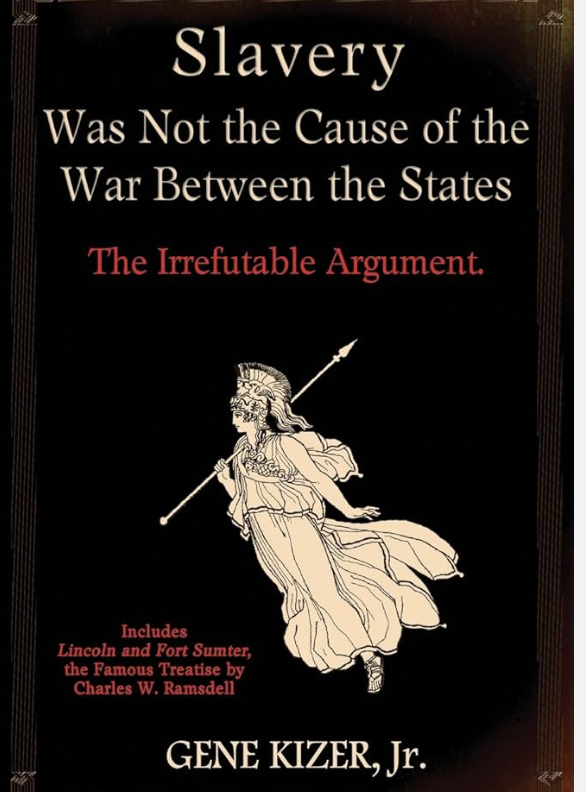
"Cotton alone was 60% of US exports in 1860. Without the South, the North was headed for bankruptcy."
Wanjiru Njoya tweet media
English
34
111
686
15.6K
Amusteven
Amusteven@Amustevenx·
Tight Fantasy 3 Progress😊 Been travel for holidays over the past couple weeks and then doing nothing for another couple weeks😂. Now finally done the dialogue script and hand it over to the voice actor/tress. Still have a long way to go tho. The release date i can be sure now is before 2027. Sorry keeping you guys waiting. Same as me waiting for FF7 part 3 news😌 #ff7r #tifa
Amusteven tweet media
English
33
59
1K
34.6K
Michelangelo
Michelangelo@MichaelBalsamic·
@WolffeldPrice We have perhaps top 3 worst owner in the league. Good chance Sox will sell at trade deadline for a haul, this organization is incredibly cheap. Murakami is amazing
English
1
0
0
228
Wolffeld Price 𝕏
Wolffeld Price 𝕏@WolffeldPrice·
I wonder what White Sox fans think of Murakami. Is Chicago excited?
English
1
0
13
6K
Michelangelo
Michelangelo@MichaelBalsamic·
@FudgeX02 So hot how happy she is being such an absurd size
English
0
0
4
207
FudgeX02
FudgeX02@FudgeX02·
Lilly's face has become striking over the years, hasn't it? ^_^
FudgeX02 tweet media
English
10
42
367
7.1K
Michelangelo
Michelangelo@MichaelBalsamic·
@kwalker1009 It’s been amusing to see you play around with the algorithm lmaoo
English

0
0
3
1.9K
WBR
WBR@W_B_Rick·
DISASTER
Norsk
5
2
28
4.9K
Michelangelo
Michelangelo@MichaelBalsamic·
@Blooshier @DuPageCountyGOP Republican areas don’t want to be crime infested shitholes like democrats want, it’s just the reality. And you are ignoring how our jelly belly governor wants low income housing in every town. He wants to put Cabrini Green’s into nice, safe towns.
English

0
0
1
29
Blooshier
Blooshier@Blooshier·
@MichaelBalsamic @DuPageCountyGOP Ignoring your blatant bigotry, if someone builds a duplex to an eight Plex in a nice neighborhood, it’s going to attract people from that neighborhood.
English

1
0
3
120
DuPage GOP
DuPage GOP@DuPageCountyGOP·
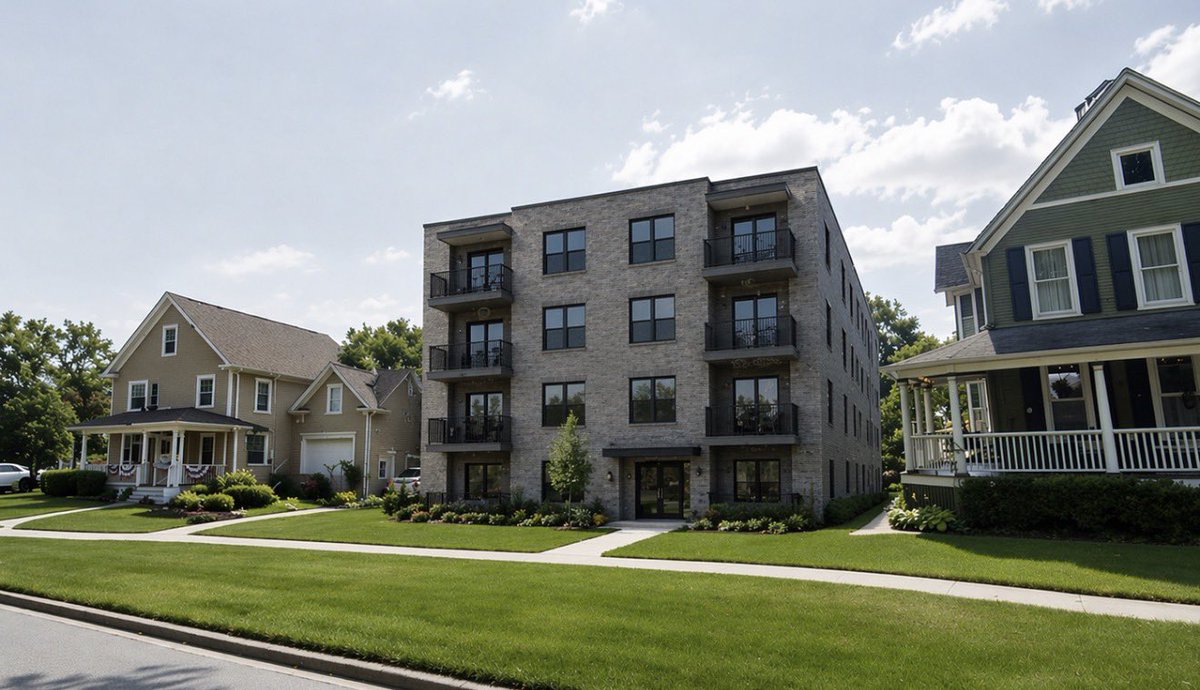
The Democrats’ BUILD Act will allow developers to bring apartments to single family neighborhoods. They would be allowed to do this by right … ie no public hearing. Local authority will be tossed aside and suburban mayors are furious. What say you? Are you ok waking up tomorrow to find an apartment next door? See example below.
DuPage GOP tweet media
English
449
187
638
731.7K
Michelangelo
Michelangelo@MichaelBalsamic·
@JortJerker @DuPageCountyGOP Oh interesting, I thought it was about how you can do whatever you want on the property you own. So I can build a 70 story apartment building in a sleepy suburban town? It’s housing right?
English
1
0
1
50