Michael Rappaport

1.7K posts

Michael Rappaport banner
Michael Rappaport

Michael Rappaport

@MichaelRapp

Professor at the University of San Diego School of Law, and Director of the Center for the Study of Constitutional Originalism
Katılım Haziran 2009
681 Takip Edilen2.5K Takipçiler
Michael Rappaport
Michael Rappaport@MichaelRapp·
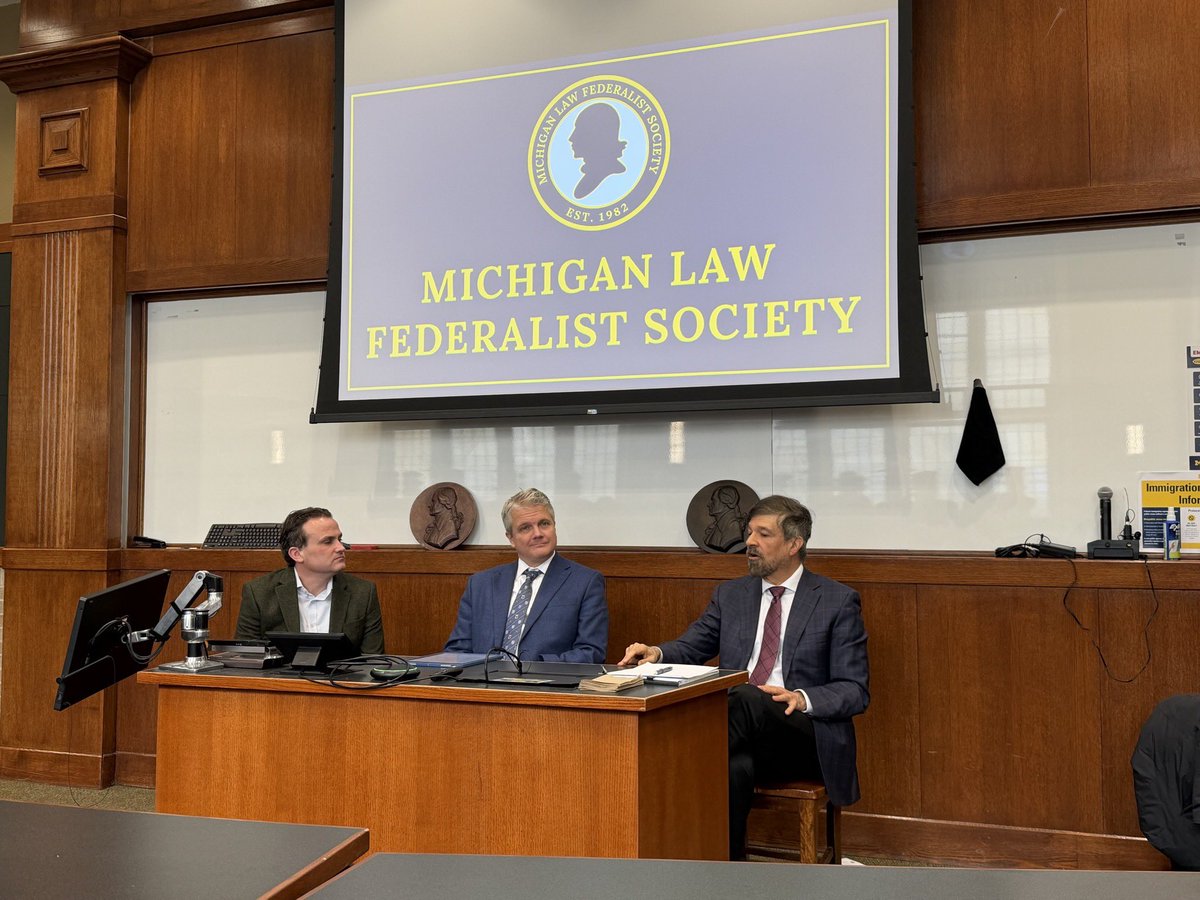
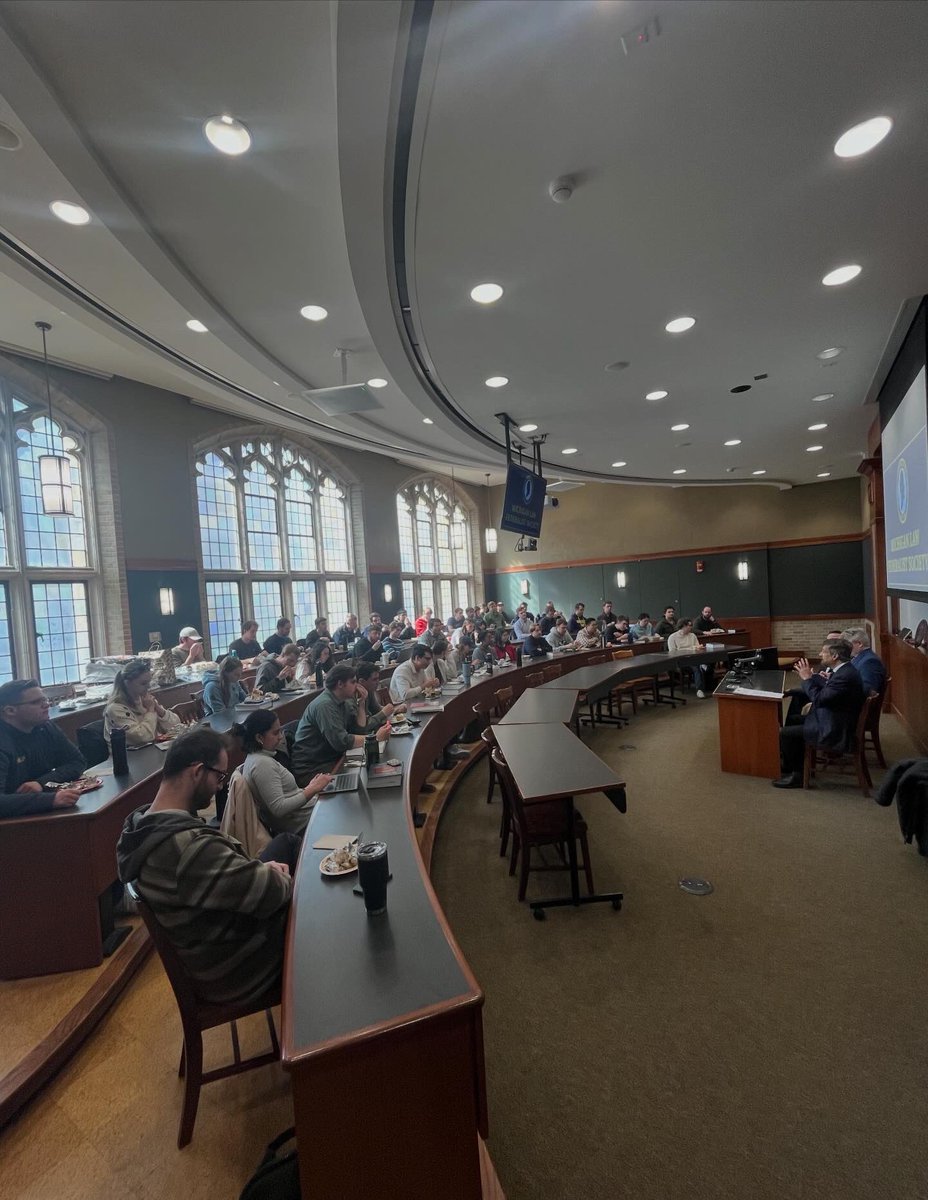
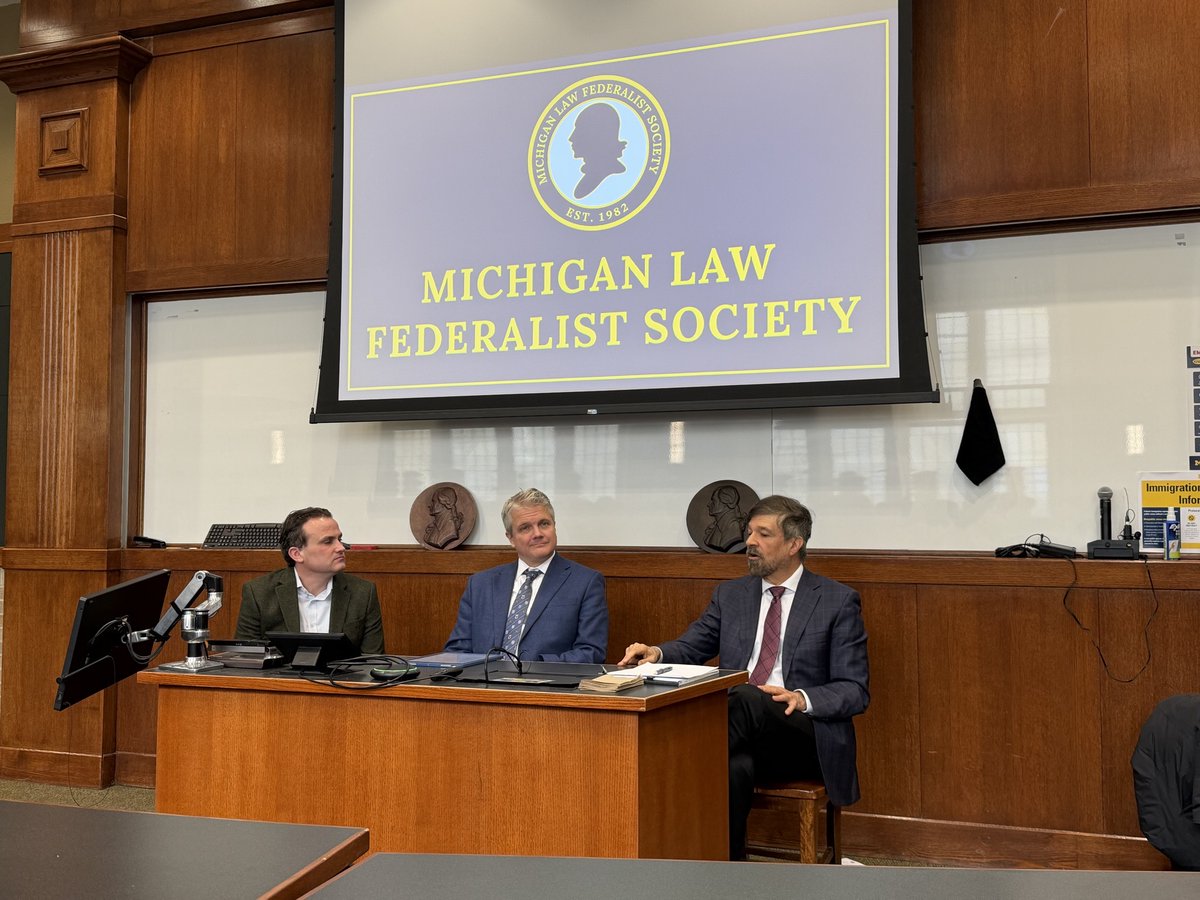
Thanks to the Michigan Federalist Society.
English
0
0
1
100
Ed Whelan
Ed Whelan@EdWhelanEPPC·
Sotomayor asks a 3-minute question, cuts off response after 10 words, talks for another 30 seconds, cuts off response after 5 words, and again and again.
English
144
306
4K
135.1K
Michael Rappaport
Michael Rappaport@MichaelRapp·
@avidseries @Musa_alGharbi I agree with your basic point about the wealthy students being self-centered. But why do you say the service workers are exploited? They may not be as fortunate but why is that exploitation?
English
2
0
17
1.3K
i/o
i/o@avidseries·
Liberal academic @Musa_alGharbi's observations when he moved to Manhattan: "One of the first things that stood out to me is that there’s a racialized caste system here that everyone takes for granted. You have disposable servants who will clean your house, watch your kids, walk your dogs, deliver food to you... mostly minorities and immigrants and disproportionately women... And this is basically taken for granted in New York, that this is the way society operates. And yet... this is not how things are in many other parts of the country. Most other places, the person buying a pair of shoes and the person selling them are likely to be the same race — white — and the gaps between the buyer and the seller are likely to be much smaller. Even the most sexist or bigoted rich white person in many other contexts wouldn’t be able to exploit women and minorities the same way as the typical liberal professional in a city like Seattle or New York; the infrastructure simply isn’t there. It’s these progressive bastions associated with the knowledge economy that have these well-oiled machines for casually exploiting the vulnerable, desperate and disadvantaged. And it’s largely Democratic-voting professionals who take advantage of them. A few months after I arrived at Columbia, Trump won. I expected this to happen, but for most people, that was not the expectation. So here at Columbia, the day after Trump won, a lot of the students claimed to be so traumatized that they couldn’t do tests or homework. They needed time off. Now there are two things striking about that to me. First, these are students at an Ivy League school, overwhelmingly people from wealthy backgrounds — and even if they don’t come from wealth, they’re likely to be well-positioned... [but these] students seemed to view themselves as somehow uniquely vulnerable to Trump and his regime, as being especially threatened or victimized. And so they demanded all of these accommodations for themselves. Meanwhile, there was this whole other constellation of people [mostly minorities and immigrants] around them who seemed to be literally invisible to them. The people doing all the work on the campus... these ignored laborers — the people with the most at stake in this election — [were not] saying they needed time off because they were too traumatized. They showed up to work the next day and did their jobs. They weren’t making a scene, sobbing as they scrubbed rich kids’ mess out of the toilets. The juxtaposition was sobering... When I left campus, walking around the Upper West Side, or other affluent parts of Manhattan, similar scenes were playing out. Nor was New York City unique in this regard. Other knowledge economy hubs had similar scenes playing out. And the same drama that was playing out in Columbia was unfolding at colleges and universities across the country. This is precisely what I found so troubling, so difficult to shake off: It wasn’t about my own school. It was about this broader disjuncture between knowledge-economy elites, their narratives about the world, and the realities on the ground."
English
74
426
2.3K
102.5K
Michael Rappaport
Michael Rappaport@MichaelRapp·
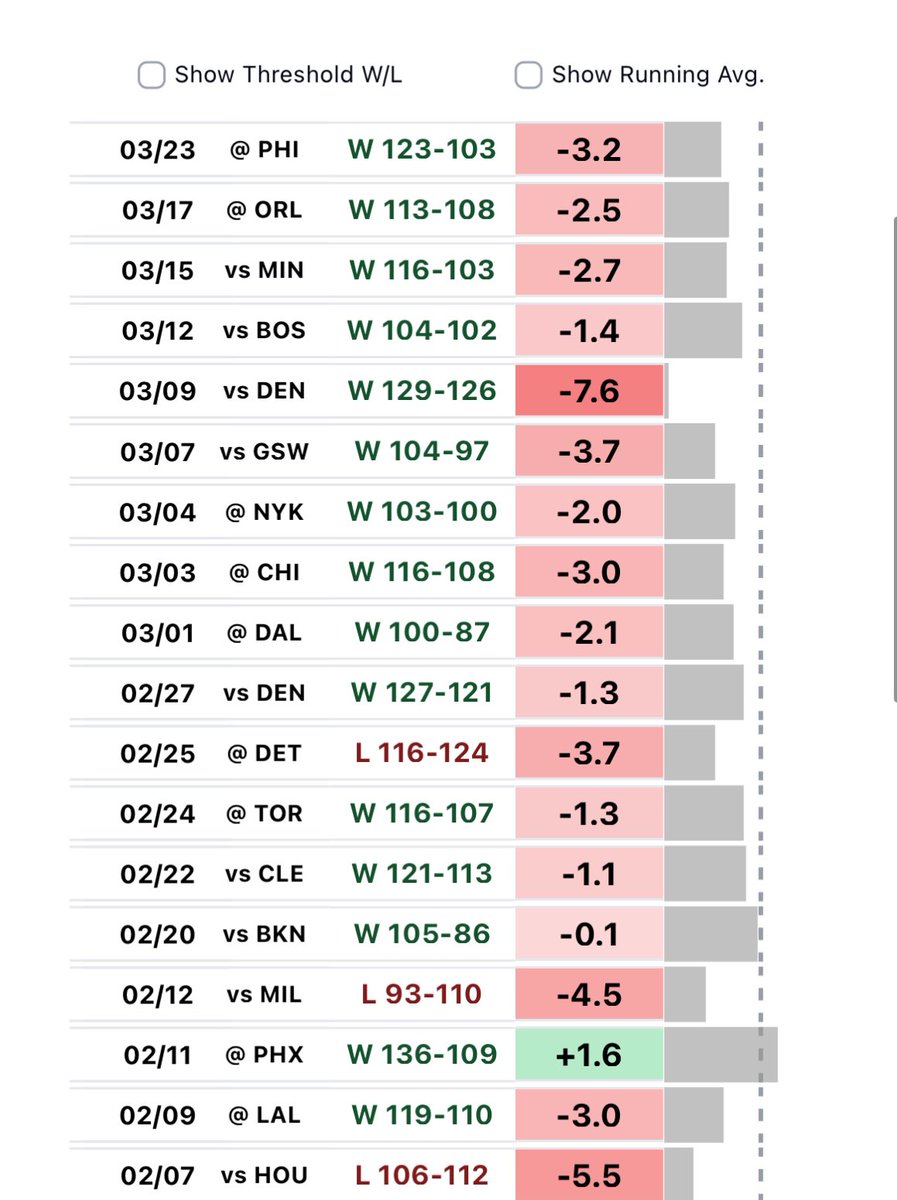
@okcamars For some reason he is taking bad shots. He needs to only shoot when he is open.
English
0
0
2
254
amar$$$💍💍✌️
Lu Dort is currently on one or the worst offensive stretches in NBA history
amar$$$💍💍✌️ tweet media
English
19
24
492
36.7K
Michael Rappaport
Michael Rappaport@MichaelRapp·
@robinhanson I thought you were being sarcastic. Have you seen the DEI mandates? Sports has none of that.
English
0
0
1
86
Robin Hanson
Robin Hanson@robinhanson·
The nicest thing about the Oscars is that it is one of our rare public celebrations of meritocracy.
English
18
1
67
8.4K
Michael Rappaport
Michael Rappaport@MichaelRapp·
I have long thought there was a critical period for music exposure. This seeks to explain it.
Aakash Gupta@aakashgupta

Your brain peaked musically somewhere around age 16. Everything since then has been a dopamine echo. Between the ages of 12 and 22, the mesolimbic dopamine pathway, the same circuit that processes cocaine and sex, fires at levels in response to sound that it will never reach again for the rest of your life. A 2011 McGill study used PET scans and fMRI simultaneously and found that music triggers dopamine release in the striatum at peak emotional arousal. The caudate nucleus lights up during anticipation of the good part. The nucleus accumbens lights up when it hits. Your brain is treating a guitar riff with the same reward architecture it uses for food-seeking and pair bonding. During adolescence, that response is dramatically amplified. Pubertal hormones are flooding the system. The prefrontal cortex is still wiring itself. Memories formed during this window get encoded with a density of emotional tagging that nothing in your 30s or 40s can replicate. Researchers at the University of Leeds identified this as the “reminiscence bump”: the period when your sense of self is forming, and the music playing during that formation becomes structurally integrated into your identity. A 2025 longitudinal study from the University of Gothenburg analyzed 40,000 users’ streaming data across 15 years. Younger listeners explored broadly across genres. Older listeners collapsed into increasingly narrow loops, almost entirely anchored to music from their teens and early twenties. Your brain stopped losing interest in new music years ago. It’s running a cost-benefit analysis. Familiar songs deliver guaranteed dopamine with zero processing cost. New songs require pattern recognition, expectation-building, and repeated exposure before the reward circuit kicks in. Past 25, most people stop paying that tax. The one variable that predicts whether someone keeps exploring: the personality trait “openness to experience.” Score high, you keep seeking. Score average, you default to the familiar forever. The fix, if you want one: deliberate exposure. Three listens minimum before your auditory cortex builds enough predictive models to generate a reward response. One passive listen on a playlist will never get there. Your brain needs repetition to find the pattern, and it needs the pattern to release dopamine.

English
0
0
1
533
Michael Rappaport
Michael Rappaport@MichaelRapp·
@PhilWMagness I don't have a position on the duties nomenclature. But the idea that the executive could be delegated authority over certain subjects, including foreign commerce, does not depend on it.
English
1
0
0
45
Phil Magness
Phil Magness@PhilWMagness·
John Roberts' ruling in the Obamacare case may be the worst major supreme court decision in the last 50 years. The Clarence Thomas dissent in the recent tariff case nonetheless makes it look like a beacon of legal clarity by comparison.
English
7
13
146
7.7K
Michael Rappaport
Michael Rappaport@MichaelRapp·
@PhilWMagness Fair enough. Since I adopt a similar view to Thomas as to delegation of the tariff policy, I suppose I disagree. See here: papers.ssrn.com/sol3/papers.cf…. I do think that Roberts was correct on the statutory interpretation question. And I do oppose the tariffs on policy grounds.
English
1
0
0
59
Michael Rappaport
Michael Rappaport@MichaelRapp·
From Nellie Bowles: There were more synagogue attacks this week than days in the week. Last weekend: There were three shootings at synagogues within a 10-mile radius in Toronto. On Monday: In Liège, Belgium, a synagogue was bombed. On Thursday: A man with a rifle and explosives drove into the largest synagogue in West Bloomfield, Michigan. On Thursday afternoon: In Trondheim, Norway, police arrested a man for suspicious behavior outside a synagogue. On the earliest hours of Friday: There was an arson attack at a Rotterdam synagogue. And that’s just the last seven days. To say this is simply “rising antisemitism,” which is typically how the headlines put it, fails to miss the speed and severity of this virus. We are living through an alarming, historic period in which the guardrails that previously kept this hate at bay have fallen away.
English
0
0
0
235
Michael Rappaport
Michael Rappaport@MichaelRapp·
You don't sign up. You just visit it.
English
0
0
1
367
Michael Rappaport
Michael Rappaport@MichaelRapp·
Originalism, Substantive Due Process, and the Privileges or Immunities Clause by Mike Rappaport Link below. There is a strong case that the traditional right to raise one’s children as one sees fit was protected by the Privileges or Immunities Clause.  This is a
English
1
5
31
4.8K
Michael Rappaport
Michael Rappaport@MichaelRapp·
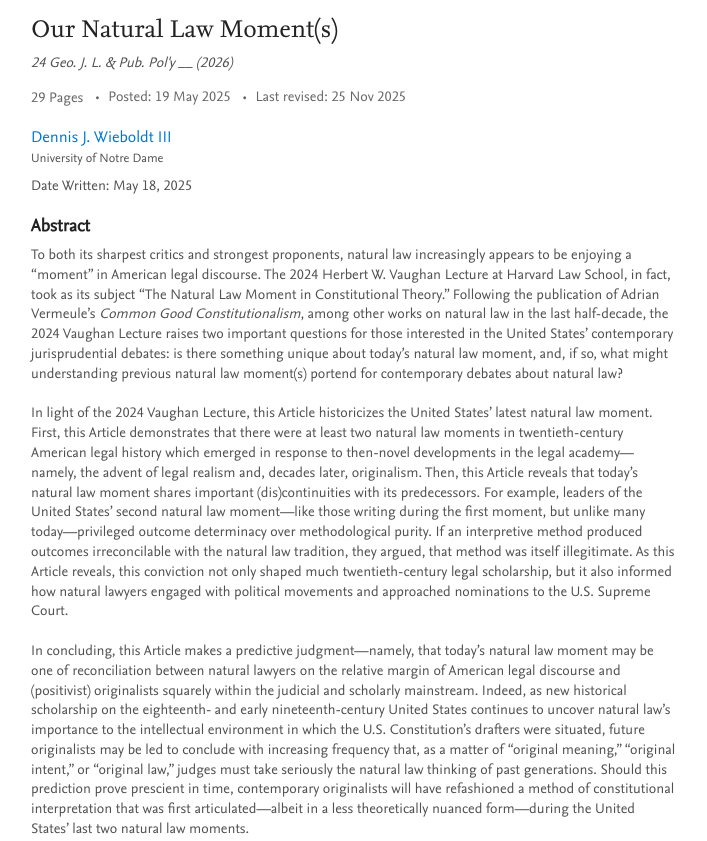
@DennisWieboldt Pretty bad form to leave out Joel Alicea's name from the Vaughan Lecture but to mention Adrian Vermeule's name.
English
0
0
0
94
Orin Kerr
Orin Kerr@OrinKerr·
One of the quirkier uses of AI that I've found really fascinating is explaining legal history. You can give AI an ancient legal document and ask it to make sense of it-- and if you prompt it well, it seems to be able to do that quite well. An example below.
English
6
12
245
48.8K