

Just Mr K
15.9K posts

Just Mr K
@Michaeljo80
Conservative minded. #Homeless politically. Apologies in advance for bad grama 👍. I don't do Hate it's bad Karma. #BlackCountry. IFB.
Katılım Ağustos 2017
3.5K Takip Edilen2.3K Takipçiler






I've seen and heard his work and it's a truly fantastic collection and whether he just gets royalties and/or sings himself I promise you it's excellent and worth a fortune in my opinion please could you help me get an agent or someone who can help #Music #Agent #Management #help
English
@dissidentwookie @ukraine_map @WarMonitor3 I'm European, I'm English and I love America and most people I know do. Just saying
English

Zelenskyy is under enormous pressure tonight.
Im hoping this brave man remains strong and true to his values and country.
English
Well said, the west has money for all wars, foreign aid ect ect, yet we don't look after our own people who are struggling to even eat one meal a day or put the heating on. But war is a business and foreign aid is a bribe wake up and stop paying taxes until they listen #UKNOW
Benny Johnson@bennyjohnson
Enough with foreign obsessions. I’m sick of it. We’re obsessed with Israel, Ukraine, and the next country, while Americans struggle, our nation crumbles, and our time, money, and energy are wasted. Flags go up for every other nation while the American flag disappears. George Washington warned us in his farewell address: avoid foreign entanglements. He understood that meddling in ancient conflicts destroys nations from within. Yet we ignore that wisdom while our own country rots, pretending we can solve everyone else’s problems. It’s time to put America First. Prioritize your own country, everything else comes second. Thanks again for having me on @piersmorgan
English
Just Mr K retweetledi



The team has been working hard bringing upgrades to Grok Imagine in the past month. We're rolling out the 1st model upgrade today, with more to come. Try it out and join us if you want to help accelerate!
Elon Musk@elonmusk
Try the new Grok Imagine by downloading the latest app version
English
@CherylWroteIt @DanLinnaeus This is a ruse..once they've got the hostages safe the job will be finished 👌
English

This is Trump’s little speech where names the countries and more importantly doesn’t name the countries behind this deal.
This will not end up the way so many people seem to hope.
@DanLinnaeus
Mor Edge Insight@MorEdge_Insight
This is without question one of the best and most detailed analyses you’ll read this year. Trump’s 20-point plan and the Beijing Declaration of 2024 will in effect be two sides of the same coin, and ultimately it will be a case of Heads you lose, Tails you lose for Israel. This will become what I and so many others have said from almost the beginning. We all want the hostages home, but as painful as it is to accept and contemplate, the hostages are not the prize, they’re the Achilles Heel. Hamas knows this. Qatar and others know this. It’s dragged on for so long that the desperation of Israelis and now the US administration to get them back blinds us from any and all dangers and threats that will be attached to them. The Beijing Declaration was facilitated by China's Foreign Minister Wang Yi and witnessed by representatives from Egypt, Algeria, Saudi Arabia, Qatar, Jordan, Syria, Lebanon, Russia, and Turkey. Now what’s interesting is that in Trump’s own words he thanks and praises every single country stated above by name, except two that he intentionally doesn’t name… Russia and China. The declaration itself emphasizes: - Achieving comprehensive national unity under the PLO as the sole legitimate representative of Palestinians. - Forming an interim national reconciliation government to oversee Gaza's post-war reconstruction, with support from Egypt, Algeria, China, and Russia. - Establishing an independent Palestinian state with Jerusalem as its capital, in line with UN resolutions. - Lifting Israel's blockade on Gaza to allow humanitarian aid. Affirming Palestinians' right to resist occupation per international law, while opposing any displacement from their lands. @DanLinnaeus is absolutely right in his assessment, and Hamas and its allies will use this opportunity to further isolate and delegitimize Israel in the international community. This isn’t a masterstroke by Trump. This ends up handing “Total Victory” to Hamas. It’s the ultimate Trojan Horse. If Israel does not finish the job, it will lose more than most imagine. If Hamas are not destroyed completely, this war will never end but rather serve as just the beginning of something far more dangerous and deadly.
English

@akeomangkorn @CherylWroteIt did this simple logic work out when USA won over Japan and Nazi Germany was beaten?
English
This is without question one of the best and most detailed analyses you’ll read this year. Trump’s 20-point plan and the Beijing Declaration of 2024 will in effect be two sides of the same coin, and ultimately it will be a case of Heads you lose, Tails you lose for Israel.
This will become what I and so many others have said from almost the beginning. We all want the hostages home, but as painful as it is to accept and contemplate, the hostages are not the prize, they’re the Achilles Heel. Hamas knows this. Qatar and others know this. It’s dragged on for so long that the desperation of Israelis and now the US administration to get them back blinds us from any and all dangers and threats that will be attached to them.
The Beijing Declaration
was facilitated by China's Foreign Minister Wang Yi and witnessed by representatives from Egypt, Algeria, Saudi Arabia, Qatar, Jordan, Syria, Lebanon, Russia, and Turkey.
Now what’s interesting is that in Trump’s own words he thanks and praises every single country stated above by name, except two that he intentionally doesn’t name… Russia and China.
The declaration itself emphasizes:
- Achieving comprehensive national unity under the PLO as the sole legitimate representative of Palestinians.
- Forming an interim national reconciliation government to oversee Gaza's post-war reconstruction, with support from Egypt, Algeria, China, and Russia.
- Establishing an independent Palestinian state with Jerusalem as its capital, in line with UN resolutions.
- Lifting Israel's blockade on Gaza to allow humanitarian aid.
Affirming Palestinians' right to resist occupation per international law, while opposing any displacement from their lands.
@DanLinnaeus is absolutely right in his assessment, and Hamas and its allies will use this opportunity to further isolate and delegitimize Israel in the international community. This isn’t a masterstroke by Trump. This ends up handing “Total Victory” to Hamas. It’s the ultimate Trojan Horse.
If Israel does not finish the job, it will lose more than most imagine.
If Hamas are not destroyed completely, this war will never end but rather serve as just the beginning of something far more dangerous and deadly.
dan linnaeus@DanLinnaeus
A Deal With the Devil: Hamas’s 'Conditional Yes,' Beijing’s Trojan Horse, and the Risk of a 2005 Reset Hamas’s October 3 statement to President Trump arrives in the idiom of responsible statecraft: consultations “within leadership institutions,” talks with mediators and “brothers,” and, above all, a professed "keenness" to end “aggression and genocide.” In the document, Hamas offers two headline concessions: the release of “all occupation prisoners—both living and remains—according to the exchange formula contained in President Trump’s proposal,” and the handover of Gaza’s administration to a Palestinian body of “independents (technocrats)” formed on the basis of national consensus and backed by Arab and Islamic partners. What the text never does is commit to ceding a role in post-conflict governance or disarmament. Those omissions form the hinge on which the genocidal terror group's entire “yes” turns. Trump’s 20-point framework, rolled out at the end of September and amplified this week, ostensibly brokered the Saudi-French letter with Israeli Prime Minister Netanyahu's 'Day After' doctrine, explicitly tying any ceasefire, hostage return, phased Israeli withdrawal, and Gaza reconstruction to a demilitarized Strip with no role for Hamas in governance, directly or indirectly. In public packaging, it is presented as a sequence: if both sides accept, hostilities stop immediately; all hostages are returned within a defined window; Israel withdraws in stages; and a temporary technocratic administration takes over—under international scaffolding that Trump’s team brands the “Board of Peace.” The plan’s red lines are bright: hostage release and guns down first; politics later; Hamas nowhere in the formal architecture. Without Hamas's formal acceptance, the phased process doesn't activate, meaning the hostage release timeline doesn’t kick in; it instead defaults to the rejection scenario in Pt. 17, where the U.S., Israel, and partners proceed unilaterally on aid, stabilization, and handovers in cleared "terror-free areas" without waiting for Hamas compliance, and "all HELL" is unleashed on Hamas. Hamas's letter, predictably feigned submissions, attempting to inhabit the plan’s silhouette while substituting a different skeleton. Its “technocrats by consensus” formula echoes the July 2024 Beijing Declaration—a Palestinian unity blueprint that promises reconciliation, institutional integration, and transitional governance but never binds the factions to verifiable disarmament. The rhetorical harmonics are hard to miss: consensus language, interim administration, reconstruction as legitimizing glue. Read strictly, Hamas is consenting to a structure of administrative change and hostage exchange; read functionally, it is withholding the only concession that would actually convert the battlefield into a durable political order. That, too, is by design. This design draws from Hamas's playbook where aid inflows, estimated at $4B, were diverted post-2021 for tunnels and weapons (per GAO audits) and funneled to military recuperation, while embedding influence under humanitarian cover. The terror group's own charter in its 1988 version explicitly calls for Israel's obliteration with anti-Semitic overtones (Article 7: "The time will not come until Muslims fight the Jews and kill them"), while the 2017 revision softens rhetoric, framing their fight as against "Zionist occupation" rather than Jews, while retaining armed resistance until liberation from Jordan River to Meditteranean Sea is achieved, evincing Hamas’s commitment to the attritional warfare of the Muqawama Doctrine. The events of the day reinforce the strategy. Following Hamas’s partial acceptance, Trump publicly urged Israel to halt bombing “immediately” to enable the hostage handover, while maintaining an ultimatum—accept the plan by Sunday evening or face what he called “all HELL.” The choreography is notable: a U.S. demand for operational de-escalation to safeguard the exchange, coupled with a coercive deadline that keeps military leverage on the table. The international reaction has been broadly welcoming of the “opening,” because it pairs a possible end to bombardment with the return of captives and a pathway—however provisional—toward governance that doesn’t bear Hamas’s stamp. Yet the same reaction, by prioritizing relief and process, risks blurring the disarmament line that actually separates cessation from reset. To understand why the wording matters, place it against Hamas’s declared red lines. Senior figures have long insisted that disarmament cannot precede sovereignty, citing anti-colonial precedents in which armed groups demobilized only after the political horizon was secured. Senior Hamas official Mohammad Nazzal, who joined Hamas shortly after its founding in the late 1980s and has held leadership roles for decades, repeated yesterday to Drop Site’s Jeremy Scahill that Hamas will only consider disarmament after the creation of a Palestinian state. “The problem is that they want to disarm us before granting us an independent Palestinian state, and this is impossible…In the history of resistances… whether in South Africa, Afghanistan, Vietnam, Algeria, or Ireland—no one has demanded or agreed to disarmament…This is impossible as long as the Zionist entity does not agree to the establishment of an independent Palestinian state for the Palestinian people.” (cit. loc. x.com/i/status/19737…) Yet these precedents differ from muqawama's reality: Unlike the IRA's 1998 demobilization where 90% of fighters disarmed or FARC's 2016 peace with 13,000 demobilized—where ideologies adapted to concessions—Hamas's charter-driven persistence shows a deadly shelf-life, with zero disarmament across more than ten pacts. This blueprint echoes Nazzal’s Algeria-inspired attrition logic, as Rettig Gur argues: Viewing Israel as French Algeria ignores Jews' permanence, leading to strategies assuming 100-year endurance will force withdrawal—but failing, as in repeated cycles. It is therefore unsurpring that the BBC reported two days ago that Izz al-Din al-Haddad, Hamas’s military commander, predictably rejected calls for the group’s disarmament (cit. loc. bbc.com/news/articles/…). As to Hamas’s rhetorical pivot to statehood, this has been a political maneuver from its politburo and is widely understood to be nothing more. Hamas leader, Khaled Mashal, openly remarked on the Two-State Solution in January 2024: “Our vision remains unchanged…liberating Palestine from the River to the Sea [is] a realistic idea that has already begun…It is part of the plan, part of the agenda, and we are standing on its threshold, Allah willing.” (cit. loc. x.com/DanLinnaeus/st…) This maneuvering has, however, permitted critics of Israel’s and the United States’ rejection of the Saudi-French-led NY Declaration to argue: “If you just hand over a state under NY, Hamas has already committed to disarm. That makes the deal worth it. Pressure should be on Israel to accept, because disarmament is the prize.” This is one area where Trump’s 20-point plan achieved marked progress, namely in uniting the international community on a linchpin that Israeli, regional, European and North American leaders already agree on: Hamas’s disarmament—but under one negotiation tent. It is also where the most critical fault line remains visible: The Beijing Declaration, signed in July 2024, promised Hamas and 13 other factions—including Islamic Jihad and other designated terror organizations like the PFLP—integration into a transitional unity government under the PLO, paving the way for elections and guaranteeing them a political role after surviving militarily. It’s a mirror of the 2005 Cairo Declaration for those familiar with this setup. (Chinese MFA presser cit. loc. mfa.gov.cn/mfa_eng/wjbzhd…; original photographic copies of the signed text cit. loc. wattan.net/ar/news/440499…; for a copy of the 2005 Cairo Declaration’s full text cit. loc. miftah.org/Display.cfm?Do…) Beijing Declaration’s core objectives are fostering unity among the 14 factions through a consensus-based, transitional government structure, institutional reconciliation under the PLO umbrella, and collective decision-making on national issues in line with international laws and resolutions (UNSC 242 and 338, right of return per 194). The contradiction is built into the deal itself, with Hamas predicating disarmament on sovereignty and leaving room for it to push the conversation toward political integration tracks that already exist — namely the Beijing Declaration and the failed PA “reform and revitalize” project that began with Biden’s diplomacy and evolved into the Saudi-French-led NY track. Its Trojan horse was visible: failure to demand the Palestinian Authority publicly withdraw from Beijing, walking away from its promise to integrate Hamas. It is unsurprising that Hamas’s response to President Trump directly implicates the Beijing Declaration of July 2024, which politically binds its 14 Palestinian factions. Hamas’s “approval to hand over the administration of the Gaza Strip to a Palestinian body of independents (technocrats)” is explicitly “based on Palestinian national consensus” according to their statement published by the White House today—an overt reference to the Beijing Declaration’s provisions, which emphasize forming a “temporary national consensus government” pending elections. As former Saudi Intelligence Chief Prince Turki al-Faisal stated in a now-deleted Al-Arabiya interview on Sept. 24, where he called for Hamas’s integration into the PLO: “It is therefore incumbent on Israel to negotiate with the PLO and the Palestinian Authority about the parameters and conditions of the new state. If Hamas is fully integrated into the PLO and becomes committed to the same conditions that the PLO has accepted, that is one way for Hamas to remove itself as an independent entity from Palestinian political life.” (cit. loc. Al-Arabiya deleted video interview with Turki al-Faisal x.com/i/status/19718…; transcript of 7:10–10:27 min cit. loc. x.com/DanLinnaeus/st…) This is the 2005 Cairo Declaration blueprint—a hard reset of nearly two decades of violence that began with the 2005 declaration unifying 12 factions under the same terms and the 2005 unilateral withdrawal, facilitating Hamas’s rise to power in the Strip. It underscores a consistent logic of muqawama politics: weapons are not bargaining chips but the guarantor of bargaining power. In that worldview, an early surrender of arms would trade asymmetrical leverage for speculative guarantees that adversaries could later erode through procedures, monitors, and “security reform” semantics. The letter’s silence on disarmament is thus a signal, not a gap. It says: we will transact on hostages and administration; we will not liquidate the core instrument that preserves our role when the formal ink dries. This is precisely where the Beijing Declaration becomes more than a backdrop but a dangerous Trojan horse, one that the Saudi-French-led initiative and Trump’s own 20-point team arguably should have insisted the Palestinian Authority abrogate as a precondition. But even this glaring omission hints at a deeper palette: a potential U.S. strategy to sideline Beijing’s framework, extract immediate concessions like hostages, and then wield military leverage to enforce terms, echoing the PLO’s history of fractured commitments that have spilled into violence. Historical patterns urge caution. When Gaza’s political-security order has been renegotiated under conditions of procedural progress—elections, reconciliations, joint committees—without a credible coercive mechanism to dismantle parallel armed capacities, the result has been drift toward dual power rather than consolidation of a single chain of command. In that drift, monitors tend to certify processes, not control territory; aid agencies stand up projects, not police the diversion of materials with dual-use value; and transitional bodies become arenas where factionalists test the limits of institutional camouflage. That is how a ceasefire becomes an intermission, and how an interim government becomes a vehicle for re-embedding armed influence beneath administrative skins. Trump’s architecture tries to solve this by sequencing: verifiable demilitarization not only precedes politics, it conditions the very existence of the technocratic transition and the staged Israeli withdrawal. But if the interim government forms without forcing Hamas to disband its Qassam Brigades, now weakened but still operational, are likely to embed ideologically aligned recruits into reformed security forces during reconstruction/election prep. Qatari and Egyptian mediators may seek to exploit these seams, leveraging Beijing’s unity pledge to dilute Trump’s terms, letting a “consensus” force include ex-Hamas elements—shifting to precisely that modality, undermining observers who, like in 2006, monitored elections but not day-to-day security. Hamas’s calculus exploits that tilt. By accepting the parts of Trump’s package that most mobilize international sympathy—hostages, technocrats, consensus—and refusing the part that most constrains its future power—disarmament—it seeks to recast the plan into a legitimacy machine. The near-term reward is obvious: a respite from maximal military pressure; international validation as a rational actor; and a foothold in a transitional structure staffed by “independents” whose selection and local anchoring will, inevitably, be contested. The medium-term reward is subtler: once technocratic governance is operational and reconstruction funds flow, the density of contractors, NGOs, and municipal actors increases. In that fog of projects, influence is exercised through appointments, subcontracts, and policing practices that are adjacent to formal authority but not visibly branded as Hamas. Dual power re-enters quietly, by habit rather than declaration. None of this requires assuming omnipotence or omniscience on Hamas’s part. The movement is battered, its command-and-control degraded, and its ability to reconstitute capabilities under surveillance and audit regimes is uncertain. But the organization has always combined ideological rigidity with tactical patience. It expects time to do part of the work: outrages fade; “temporary” arrangements normalize; accountability windows close; and political actors lose the appetite to reopen fundamental questions once schools and sewage plants are on budget. The “technocrat first” gambit is designed to harness that political entropy. A different set of dangers runs in the other direction. If Washington insists that the plan’s demilitarization clause is not negotiable and interprets any hedging as rejection, the ultimatum converts the present opening into a trigger for escalation. There is no alchemy in which coercion remains credible without periodic demonstration; that is how ultimatums function. In that scenario, operations intensify, the humanitarian ledger worsens, and the very hostage issue that made the opening politically saleable becomes a reason to brand further strikes as reckless. Either way—through leniency or through compulsion—the process sets up a test of nerve that could harden positions rather than settle them. The most realistic failure mode is neither clean acceptance nor clean rejection but managed ambiguity. Diplomatic drafts begin to translate “demilitarization” into “security reform” or “weapons decommissioning under a restructured police.” Mediators craft formulas that allow former Hamas personnel to be “vetted” into “consensus” security units not labeled as Qassam. International monitors certify compliance against checklists that emphasize procedures—training sessions held, payrolls audited, depots inventoried—over the irreducible material fact of who can coerce whom on a dark street at 2 a.m. The metrics look good; the street reality remains mixed. That is how 2005 morphs into 2007 without ever formally declaring itself. The hallmark of this drift is a vocabulary of progress that never lands on a testable end-state. Even if Trump’s sequencing holds and the battlefield quiets, relief from international pressure is unlikely to follow. History points in the opposite direction. Each prior round of Gaza fighting has been followed not by diplomatic slackening but by a surge of scrutiny: UN inquiries multiplying after the 2014 war, International Criminal Court filings after 2021, and donor reviews that transformed reconstruction channels into political weapons. Far from easing the burden, cessation has repeatedly opened new fronts of contestation in law, diplomacy, and aid oversight. In this cycle, a cessation of fire would almost certainly be met with intensified investigation into the conduct of both Israel and Hamas, the mobilization of international NGOs, and the revival of debates over proportionality, occupation, and accountability. Israel has damaged and destroyed vast swaths of Gaza. As it begins its withdrawal, the international campaign to villainize Israel can and will accelerate, not diminish as international observers rush in to rehabilitate the enclave and report after report emerges of “war horrors”. For Israel in particular, the aftermath tends to be more bruising diplomatically than the conflict itself, as attention shifts from active hostilities to forensic audits of casualties and destruction. This is not incidental. Hamas’s doctrine anticipates that international institutions will carry forward what military stalemate cannot achieve: delegitimization of Israel, pressure on allies, and financial penalties tied to reconstruction. In that sense, a ceasefire without structural demilitarization does not drain pressure; it reconfigures it. The battlefield pauses, but the narrative and legal campaigns accelerate, risking the relief dividend that proponents imagine a fata morgana in Israel’s longest war. (cit. loc. x.com/danlinnaeus/st…). This can and may be used as justification (successfully or not) to build up forces and counterbalance against future Israeli aggression, among whom Hamas militants and politburo members threaten to embed via Beijing’s Trojan horse. The linchpin revolves around effective disarmament which Hamas has publicly, explicitly and consistently rejected, and effective exclusion in ‘day after’ goverenance which Hamas explicitly rejects in its letter to Trump today. Roughly speaking this deal, as it sits on drying ink today, from a historic perspective threatens to metastesize into a drastic escalation rather than a chance at peace, from a persistent counter terrorism problem to a proto-state to state conflict that increasingly threatens to draw in regional and major powers. The clues will appear early. Watch the language in Palestinian Authority communiqués and mediator talking points for the migration of Trump’s red-line words—“no role,” “full demilitarization”—into orbiting synonyms that preserve room for “reintegration.” Watch the composition of the so-called technocratic cabinet and its second-tier appointments, especially in interior, municipal services, and border-adjacent functions. Watch the inspection rights and physical access of international monitors: delays justified on safety grounds at exactly the depots and corridors that matter most. Watch the contracting chains for reconstruction projects and the provenance of “local partners.” These are not afterthoughts; they are the terrain on which the plan will either become real or hollow out. None of this implies that the 20-point framework is intrinsically unworkable, or that an integration-first approach must fail. It means that sequencing, once compromised, tends to unravel the entire logic of a disarmament-conditioned transition. The Gaza theater is unforgiving to gray zones because the muqawama doctrine thrives precisely in its shadows, where governance and coercion are coterminous in daily life; the entity that ultimately commands armed men, even a diminished cadre, writes the final footnotes to any administrative text. If technocrats are to matter, they must sit atop a monopoly on force or be backed by one. Under the shade of fig leaves, history promises the system will revert to the mean. The day’s headlines, understandably, prize the human immediacy of a hostage release and the calming of bombardment. Those are ends in themselves. But as analysis, the question is narrower and colder: does Hamas’s “yes” accept the plan’s load-bearing condition, or does it propose to exchange vivid near-term goods for a deferred fight over the only clause that alters the strategic equilibrium? The text, the timing, and the invocation of consensus technocrats all point to the latter. That is hardly cynicism; it is a reading against twenty years of Gaza’s political realities. There is, finally, a reason this moment feels like a house of mirrors. Trump courts decisiveness with a promise of swift sequencing and an enforcement threat for defection. Hamas’s counter-move courts plausibility—accept the broken human pieces to rehabilitate or bury, accept the administrative veneer, accept the forums for future decisions—while holding back the levers that decide whether the rest will hold. Between them is a cohort of mediators, allies, and cold adversaries who prefer any framework that stops the bleeding today and leaves argument over structure to tomorrow. One need not paint the coalition’s efforts as malign to acknowledge the matching fingerprints pressed in Arab and Israeli civilian blood alike that jut from its pages—littered in Gaza’s history and now evident in yet another blueprint for a deal struck with the devil.
English

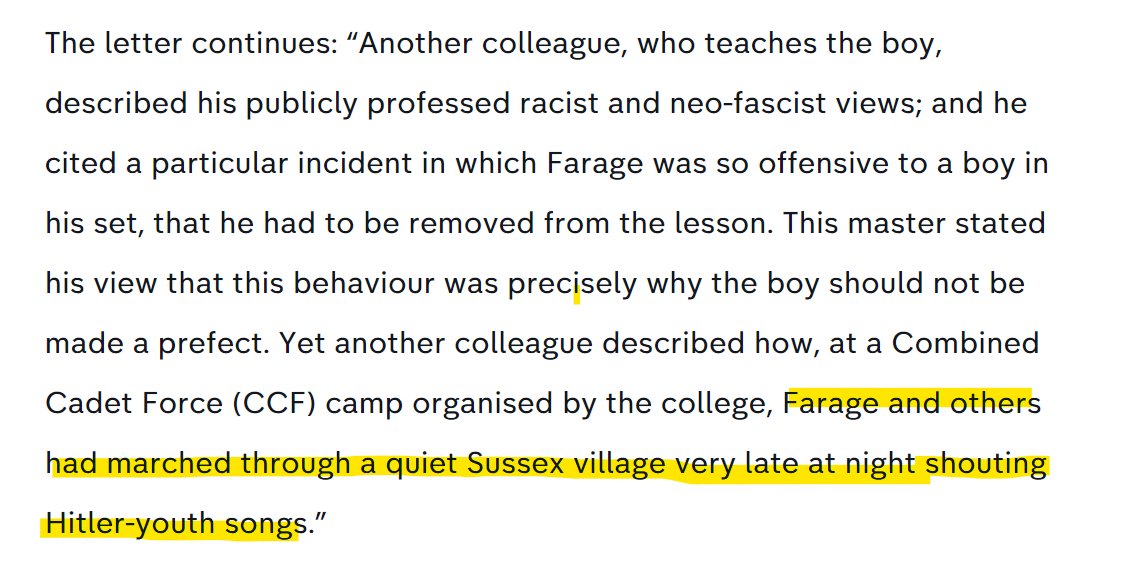

🚨 It seems David Lammy has broken the Ministerial Code!
General Duty of Honesty: Ministers must uphold honesty "at all times" under the Nolan Principles (now directly enshrined in the Code). This extends beyond Parliament to public statements, but the strictest rules apply to parliamentary contexts.
Courteous and Professional Conduct: Section 1.3 requires ministers to "be courteous and professional in all their dealings" and treat "parliamentary colleagues... with consideration and respect." Derogatory or false statements about other MPs could violate this if they undermine proper working relationships
@reformparty_uk @Nigel_Farage
English

Gawd I love #Bluehand its just awesome.. its members..its set up.. its just bloody awesome.. I swear you meet the best people on earth.. Thank you #Bluehandfamily

English
And we keep filling the country up with immigrants when the system is already overstretched
James Melville 🚜@JamesMelville
An elderly relative of mine has been trying to get a GP appointment. After being put repeatedly on hold and going through a rigmarole of automated options, he was eventually told that the first available GP appointment is in 5 weeks. This is unacceptable. We are paying the highest tax burden in history for diminishing essential public services - and the first point of contact with the NHS has fallen off a cliff since the Covid era. Britain is falling apart - in particular, basic infrastructures and public services are now completely unfit for purpose and everything is so bloody expensive. It helps to explain why so many people are understandably pissed off.
English

When Isaac Newton was 77 he was rich (millionaire by today's standard), he decided to invest in a "south sea company" that shipped enslaved Africans but because of bad prediction, he lost third of his wealth, and said "I can calculate the motions of heavenly bodies, but not the madness of people"

English
@HazelAppleyard_ He did what everyone on the far left couldn't and will never be able to....Sit down and debate opinions that he didn't agree with R.I.P Charlie Kirk 💔🙏😓
English

Just Mr K retweetledi
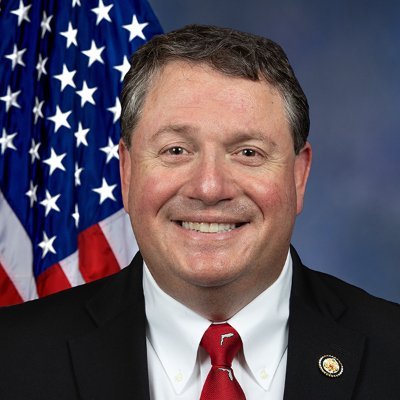
I just introduced the No Sharia Act, which would ensure that no U.S. court, public agency, or legal institution can ever enforce or legitimize Sharia law.
You don’t get to come to this country and demand that our legal system accommodate your oppressive laws.
Proud to work with @RepKeithSelf on this important legislation.

English


This man George Soros is the most evil man on this planet and the biggest threat to Western culture. Our governments have taken his money and allowed this. He funds #Antifa
And all the other far left organisations. He needs arresting. #ImmigrationDebate
x.com/i/grok/share/u…
English

Partial Solar Eclipse ☀️
Charlie Kirk wasn't the main event, it was the dress rehearsal
A test run
Simulation
Echoes from the past
Rekindling 1968 energy
Uranus sextile Neptune
New Moon returns to the point of the Moon on Robert F Kennedy's assassination
Enjoy the show 🍿
GIF
We Know Your Game 🧙♂️@WeKnow_1234
Uranus sextile Neptune Last time this was at its peak 1968 Need to look up at the sky, it's written in the stars Soon the proper assassination season... MLK, RFK, them BIG vibes The riots, collapse from within Trump's assassination soon You get me? x.com/rawsalerts/sta…
English