Michal Shur-Ofry

117 posts

Michal Shur-Ofry

Michal Shur-Ofry

@MichalShur

Law Professor at the Hebrew University. Interested in Innovation, Intellectual Property, Networks, Complexity, Meta-Science, and more.

Katılım Aralık 2019
519 Takip Edilen329 Takipçiler
Michal Shur-Ofry
Michal Shur-Ofry@MichalShur·
Thanks @ProfSchrepel for the shout-out to my piece on AI Governance as Regulation of Collective Memory. It explores how AI can shape collective memory, and why, to safeguard our “future’s past,” collective memory needs a seat at the AI regulation table. 👇 networklawreview.org/shur-ofry-coll…
Thibault Schrepel@ProfSchrepel

My reading suggestions for September 2025. Includes @nancyscola @TobinSouth @lugaricano @MichalShur @profjasonpotts @volker_stocker @paulohm @mario__leccese @florianederer @ReginaSeibel4 @johnhcochrane @anastasiya_vc @ghitzah @guodaya @andrewjkoh @ghadfield @Guodaya and many others.

English
1
0
4
147
Michal Shur-Ofry
Michal Shur-Ofry@MichalShur·
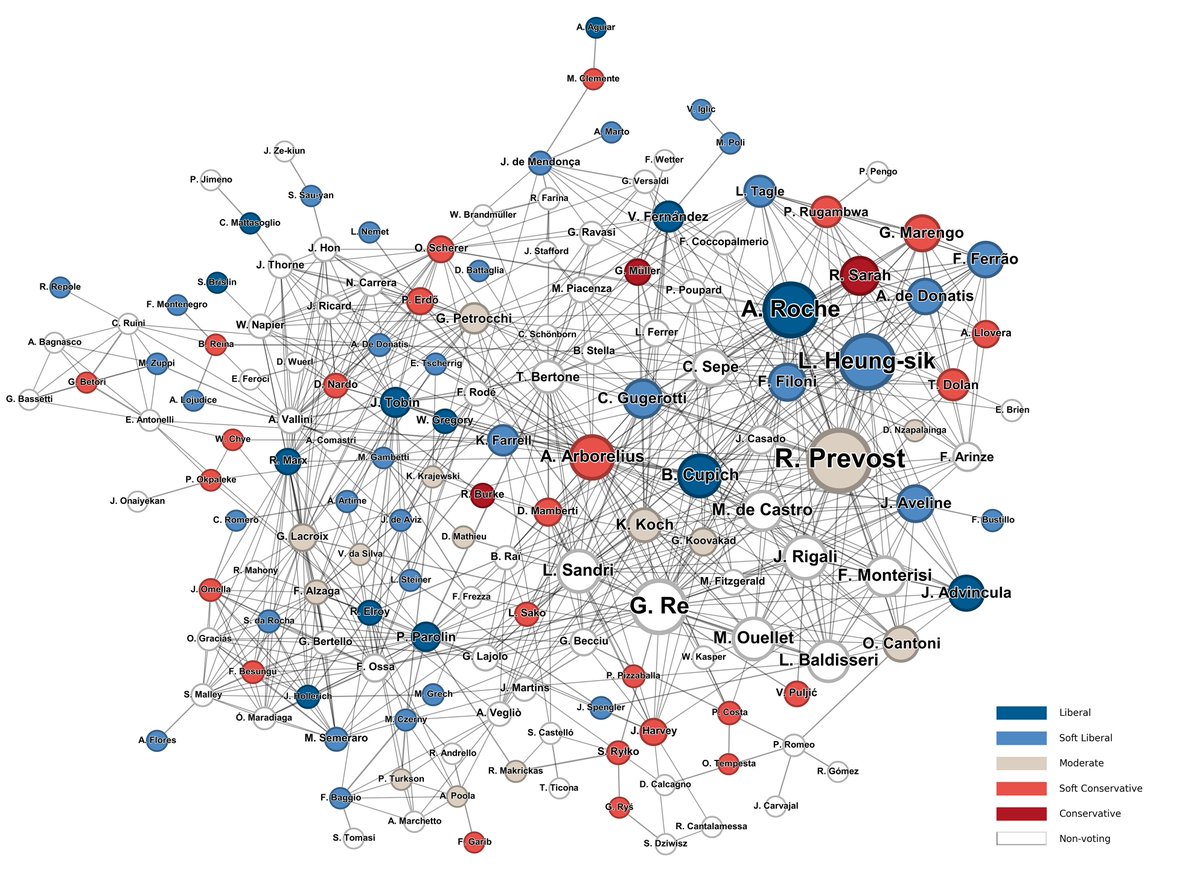
@LnrdRizzo @Unibocconi Cool application of network science ! Now to predicting who’s going to win the Eurovision :) (constructing the network more difficult, though)
English
0
0
1
62
Michal Shur-Ofry
Michal Shur-Ofry@MichalShur·
@barabasi Predictability (and falsifiability) in complex systems can exist at a more general level—patterns rather than precise predictions (cf. Hayek). E.g., power law distributions, diffusion dynamics, etc.
English
0
0
2
351
Albert-László Barabási
Network science isn’t just theory—it’s experimentally testable (falsifiable). Two examples: Predicting locomotion-critical neurons (Yan et al., Nature 2017) Coupled semiconductor networks (Bonamassa et al., Nat. Phys. 2023) Know of any more? Share, please.
English
7
25
186
13.6K
Michal Shur-Ofry
Michal Shur-Ofry@MichalShur·
It was a pleasure to join this episode of @BHComplexity , one of my favorite podcasts, to discuss Law & Complexity. Thanks to @BradyHeywood , a master of interdisciplinary conversations! Listen below 👇
Simplifying Complexity@BHComplexity

In this episode of Simplifying Complexity, we speak to @MichalShur about complexity science and the law. We explore the problems associated with the law attempting to effectively regulate complex real-world systems, and we also examine how the law, in and of itself, is a complex adaptive system. Apple Podcasts: podcasts.apple.com/au/podcast/sim… Spotify: open.spotify.com/show/3SfqApqNW…

English
2
3
12
849
Nathalie Smuha
Nathalie Smuha@NathalieSmuha·
It’s finally out! After years of work, I’m very glad to announce that my #book Algorithmic Rule by Law is now published @CambridgeUP. If you’re interested in the intersection of #law, #technology and #government - with some philosophical twists - this book is for you.
Nathalie Smuha tweet media
English
21
46
228
17.4K
Michal Shur-Ofry
Michal Shur-Ofry@MichalShur·
@FriedrichHayek @CambridgeUP @SSRN @lsolum Thank you @FriedrichHayek for highlighting Hayek’s work on complexity. I agree with and discuss the distinction between detailed ‘naive’ predictions (often likely to fail) and prediction of patterns, which is super important for law &policy (this is the following parts).
English
1
1
2
1.1K
TakingHayekSeriously
TakingHayekSeriously@FriedrichHayek·
"Hayek on Complexity and the Rule of Law" Friedrich Hayek’s contributions to the study of complex phenomena and his analysis of the rule of law and negative rules of just conduct are interconnected through his broader project of understanding how decentralized social orders emerge and are sustained without centralized control. 1. Complex Phenomena and Hayek’s Epistemology Hayek argued that society is a paradigmatic example of a complex adaptive system—a network of numerous, interdependent agents whose interactions give rise to emergent properties that cannot be predicted or explained purely by examining individual components. For Hayek, the social order is not designed but evolves spontaneously through human action, not human design. This perspective is rooted in his critique of constructivist rationalism, which assumes that social orders can be centrally planned or fully understood. Key elements of Hayek’s theory of complex phenomena include: •Dispersed Knowledge: Information relevant to social coordination is scattered across individuals and cannot be fully aggregated or utilized by any central authority. •Emergent Order: Social orders emerge through the unintended consequences of individual actions guided by local knowledge. •Limits of Prediction: Due to the sheer complexity of social interactions, precise predictions of societal outcomes are impossible. Instead, only patterns can be discerned. 2. Negative Rules of Just Conduct Hayek emphasized the importance of general, abstract, and negative rules of conduct for enabling coordination within a complex society. Negative rules specify what individuals must not do (e.g., do not steal, do not harm others) rather than prescribing positive actions. These rules: •Reduce conflict by providing stable expectations about permissible behavior. •Allow individuals to pursue their own goals within a framework that minimizes interference with others. •Foster innovation and experimentation by enabling individuals to act freely within defined boundaries. Negative rules are inherently abstract and apply universally, reflecting what Hayek termed “rules of just conduct.” They are not designed to achieve specific outcomes but to provide a predictable environment in which individuals can navigate complexity and adapt to changing circumstances. 3. The Rule of Law and Social Coordination The rule of law is central to Hayek’s vision of a functioning liberal society. For Hayek, the rule of law entails governance by clear, general, and stable rules rather than by arbitrary discretion. It supports complex social coordination in several ways: •Predictability: By ensuring that individuals can anticipate the legal consequences of their actions, the rule of law reduces uncertainty, allowing for more effective planning and interaction. •Impersonality: The generality of the law ensures that it applies equally to all, preventing favoritism and fostering trust in social institutions. •Facilitation of Spontaneous Order: The rule of law creates a framework in which individuals can self-organize, leveraging local knowledge without interference from centralized authority. 4. Interconnection Between the Two Domains Hayek’s work on complex phenomena and the role of law is tightly interwoven. In his view, the spontaneous order of a complex society depends on the framework provided by the rule of law and negative rules of just conduct: •The abstract nature of negative rules aligns with the unpredictable and emergent character of complex phenomena. These rules do not constrain the diversity of individual actions but instead channel them in ways that prevent destructive conflict. •The stability and generality of the rule of law enable the decentralized trial-and-error processes that are crucial for adaptation in complex systems.
English
2
0
2
86
Michal Shur-Ofry
Michal Shur-Ofry@MichalShur·
Chapter 2 of my book-in-progress, Law and Complexity—An Introduction (forthcoming @CambridgeUP), now on @SSRN. It offers a working definition of #complexsystems and a ‘Complexity 101’ for law & policymakers. Thank you @lsolum for highlighting it! 👇 hq.ssrn.com/submissions/Cl…
Lawrence Solum@lsolum

Shur-Ofry on Law and Complexity, buff.ly/4fHMYRO - Michal Shur-Ofry (Hebrew University of Jerusalem, Faculty of Law) has posted Law and Complexity: An Introduction (forthcoming with Cambridge University Press)—Chapter 2 on SSRN.

English
4
6
15
2.2K
Michal Shur-Ofry
Michal Shur-Ofry@MichalShur·
Thrilled to find Chapter 1 of my book-in-progress, Law and Complexity: An Introduction (forthcoming w @CambridgeUPress), on @lsolumn’s Legal Theory Blog. Chapter 2 coming soon to @ssrn. #LawandComplexity
Lawrence Solum@lsolum

Shur-Ofry on Complexity Theory and Law, buff.ly/3CWrZNk - Michal Shur-Ofry (Hebrew University of Jerusalem, Faculty of Law) has posted Law and Complexity: An Introduction and Chapter 1 (forthcoming, Cambridge University Press) on SSRN.

English
0
4
9
1.4K
Michal Shur-Ofry
Michal Shur-Ofry@MichalShur·
Will large language models narrow our world & decrease our exposure to diverse contents? Check out our new study of LLMs output diversity, incl baseline evaluations & simple mitigation strategies, w @boknilev, Bar Horowitz-Amsalem & Adir Rahamim. @SSRN papers.ssrn.com/sol3/papers.cf…
Yonatan Belinkov@boknilev

How diverse are the outputs of large language models when diversity is desired? Not very. See our paper for en evaluation, simple mitigations, and discussion on implications for AI policy. “Growing a Tail: Increasing Output Diversity in Large Language Models”

English
0
0
2
163
Thibault Schrepel
Thibault Schrepel@ProfSchrepel·
Here are my latest reading suggestions networklawreview.org/november-2024/ Topics include breaking up Big Tech, the evolution of market structure reasoning, regulating AI without stifling innovation, IKEA, an evolutionary take on platforms, an Olympic marathoner, and complexity science in law, among others. With @drpinarakman, @Sherman1890, @corbinkbarthold, @rubenvoosten, @jasonfurman, @CassSunstein, @ginakolata, @djrosent, @gilbert, @AuerDirk, @geoffmanne, @MichalShur, @BrianLeiter and others!
English
1
2
7
1.3K
Michal Shur-Ofry
Michal Shur-Ofry@MichalShur·
How nice to find "Law and Complexity: An Introduction" (first chapters of book-in-progress, forthcoming w @CambridgeUP ) in the reading suggestions of @ProfSchrepel, among so many fascinating reads! link here-papers.ssrn.com/sol3/papers.cf… More #LawandComplexity soon, stay tuned:)
Thibault Schrepel@ProfSchrepel

Here are my latest reading suggestions networklawreview.org/november-2024/ Topics include breaking up Big Tech, the evolution of market structure reasoning, regulating AI without stifling innovation, IKEA, an evolutionary take on platforms, an Olympic marathoner, and complexity science in law, among others. With @drpinarakman, @Sherman1890, @corbinkbarthold, @rubenvoosten, @jasonfurman, @CassSunstein, @ginakolata, @djrosent, @gilbert, @AuerDirk, @geoffmanne, @MichalShur, @BrianLeiter and others!

English
0
1
9
521
Michal Shur-Ofry
Michal Shur-Ofry@MichalShur·
How can #complexity inform the #law? Sharing Intro & Ch1 of book-in-progress, Law and Complexity: An Introduction, forthcoming @CambridgeUP. Chptrs describe the emergence of complexity & ask: so what does it have to do with the Law? more soon stay tuned! spkl.io/6013fn92z
English
1
0
12
156
Michal Shur-Ofry retweetledi
האוניברסיטה העברית בירושלים
כבוד לאוניברסיטה העברית שטיפסה בדרוג שנגחאי לפי תחומי מחקר ((Global Ranking of Academic Subjects בלימודי מתמטיקה, תקשורת ומשפטים! במתמטיקה ותקשורת עלתה האוניברסיטה למקום ה- 14 ובמשפטים דורגה האוניברסיטה במקום ה-42 מבין האוניברסיטאות הטובות ביותר בעולם. זאת לצד דרוגה הכללי של האוניברסיטה במקום ה- 81 לשנת 2024. מדד שנגחאי לפי תחומי מחקר, המתפרסם כל שנה בחודש נובמבר, מודד את ביצועי המחקר באוניברסיטאות בעולם, תוך התייחסות לחמישה תחומי הערכה עיקריים: סגל ברמה עולמית, תפוקה, מחקר איכותי, השפעת המחקר ושיתופי פעולה בינלאומיים.
האוניברסיטה העברית בירושלים tweet media
עברית
1
4
18
960
Wonder of Science
Wonder of Science@wonderofscience·
Watch the strange, life-like behavior of small ball bearings in castor oil when exposed to an electric field—a fascinating display of self-organization. 📽: Stanford Complexity Group
English
38
310
1.8K
277.4K