
Sabitlenmiş Tweet
Mike K
2.1K posts


Mike K
@Mike_Kearnes
Christian, Husband, Father, Soldier-Scholar
Katılım Aralık 2021
256 Takip Edilen133 Takipçiler

Mike K retweetledi

Jesus answered, “I am the way and the truth and the life. No one comes to the Father except through me.”
John 14:6
English
Alternatively, low IQ criminals with no morals should have harshest punishment because they are incapable of knowing better and allowing them to continue a life of crime will only result in harm to their immortal souls and to others.
Visegrád 24@visegrad24
“None of you need to go to prison today.” This is what Judge Nicholas Rowland told teenage rapists from a traveller gang who filmed themselves raping lone schoolgirls in two separate sex attacks. The judge seemingly absolved the teenagers of their crimes because the boys are 'very young', have low intelligence, a 'limited understanding of consent' and were susceptible to 'peer pressure'. The judge also praised the boys for their conduct during the trial.
English
Mike K retweetledi

Galatians 4:4 looks like a transition verse.
“But when the fullness of time had come, God sent forth His Son.”
If you read it fast, it sounds like a timestamp. But if read slowly, it is the most staggering sentence in the Bible.
‘Fullness of time’. Paul isn't saying God picked a convenient moment. He is saying God declared a moment complete. “The preparation is finished and everything I have been building across centuries is exactly where I need it to be”. God looked at human history and said: now.
Which forces the question. Why then? Why not a thousand years earlier, when Moses was fresh? Why not a thousand years later? What was so perfect about the first century?
I started looking into it and I have not recovered.
God needed a people with the theology. He spent 2000 years forming Israel; the covenant, the sacrificial system, the prophets, Isaiah 53 written seven centuries before Calvary, the framework of a coming Messiah who would bear the sin of the world. The Jews were shaped by wilderness, exile, and divine discipline, until the theological infrastructure for substitutionary atonement was fully in place.
But theology alone could not travel. God needed a language. Not a tribal dialect, but a universal tongue. So five hundred years before the Gospel, He let the Greek philosophers begin.
Heraclitus sat in Ephesus and concluded the universe was governed by an invisible rational principle. He called it the Logos.
The Stoics built on it. Philo of Alexandria stood at the intersection of Greek thought and Hebrew scripture and said the Logos was the mind of God in creation. For five hundred years, philosophy built a conceptual category it could not fill.
Then God sent a conqueror with no interest in theology. Alexander the Great wanted glory and empire. God let him want it. In satisfying his ego across three continents, Alexander Hellenized the ancient world and forged Koine Greek, the common tongue of the docks, markets, soldiers, and slaves. A language stripped of complexity, simple enough for anyone, universal enough for everyone.
The Hebrew scriptures were translated into it. The Septuagint was born. God used a pagan conqueror’s ambition to translate His own Word.
Then Rome came and paved the road. The Pax Romana. Piracy cleared. Stone highways stretching from Spain to Syria. A framework for movement the ancient world had never seen.
None of them knew they were collaborating.
Heraclitus thought he was doing philosophy. Alexander thought he was building a monument to himself. Rome thought it was building an empire for Rome. Not one of them understood they were stagehands. God was with Heraclitus in his pondering, with Alexander in his conquest, with Roman engineers laying stone, quietly requisitioning their work for a purpose none of them could see.
And then, when the covenant people were in place, the language primed, the roads built, and the category ready, when everything He had been quietly assembling was finally set, God stepped into the room they had unknowingly prepared.
John picked up his pen and wrote: “In the beginning was the Logos.”
Every Greek philosopher in the Mediterranean felt the ground shift. “And the Logos became flesh.” The category they spent five centuries constructing was not a principle. It was a Person.
The ‘fullness of time is not a timestamp’. It is God’s signature on a completed work. And the humbling thing is that this work was not built by saints. It was built by conquerors, philosophers, and emperors who thought they were writing their own story. God let them think that. And used every word. If this is not amazing then I don’t know what is.
English
Mike K retweetledi
Instead of mocking personal encounters with Jesus, read Seeking Allah, Finding Jesus by Nabeel Qureshi — a former Muslim who knew the Dawah arguments inside and out and still came to Christ.
If you’re man enough to look at both religions fairly, it’s worth your time. But only if you are strong enough.
English

@JosephButhee @Mike_Kearnes @btbsoco “I seen jesus” trust me bro… such pathetic reason to believe, how about the Hindu who sees Krishna? If your religion can’t stand up by its own evidence then it ain’t true. Clearly Christianity isn’t as you appeal to subjective moments
English

baptisms in the name of Jesus are invalid - and those who have been so baptised must be rebaptised; and those practicing such a baptism are not qualified to do baptisms and should stop! Baptisms are only valid when pronounced as 'I baptise you in the name of the Father, and of the Son and of the Holy Spirit' or words close there to. The trinitarian faith is the only historical faith of this island; denial of the trinity is unbritish!
English


I’ve discovered British food is not actually bad. That’s just an anti-Colonialist, anti-Protestant psy-op


English
@JosephButhee @FortuneOnTV @btbsoco We cannot set aside the actual words of Christ because 'the heart was right.' That has never been the historic Christian position for 2,000 years, and we shouldn’t start now.
Mercy covers ignorance. Cheap grace that makes obedience optional is something else entirely.
English

@Mike_Kearnes @FortuneOnTV @btbsoco I believe the church needs to make every effort to baptise in the father son and holy spirit... But if someone took that scripture where they do it in the name of Jesus I don't think it's an invalid baptism
English
All the parents who say that they want their kids to decide for themselves, be very careful for what you wish for.
Ryan Burge 📊@ryanburge
Among people who were raised Protestant: 73% are still Protestant. 20% became nones. 3% became Catholics. Among people raised Catholic: 63% are still Catholic. 21% became nones. 12% became Protestant. Among those raised without religion: 71% still have no religion.
English
I hear you. I don't think anyone here wants to sound legalistic. But let’s flip it. On judgment day, if St. Peter asked, ‘Why didn’t you just do it the way Jesus commanded with water and the words He gave us?’ What would you say?
The pattern in Scripture is remarkably consistent: water + the right words. Even in Acts when the Spirit falls dramatically, they immediately baptize with water. The thief on the cross is the exception that proves the rule, not the normal model for the Church.
Jesus is the Word (John 1). He spoke creation into existence, and time after time His miracles combined authoritative words with the world (like water). Why would the new birth be any different? Perfect rituals are not important, but simple obedience to what He clearly told us to do is.
English
I don't hesitate..I just think it's a very legalistic stance he's put, yes it matters, it matters to us as the church but I think when judgement day comes you won't be rejected from the gates for having a baptism where the wrong words were said...
And also the baptism of the holy spirit is a very different thing to John's baptism, one is in water the other is in spirit, nothing to do with words..
English
Here's a question - why do you hesitate when we know the exact words God wants us to use?
And on your point from Acts, that was right after they revealed they had the baptism of John the Baptist, and had never heard of the Holy Ghost. We don't know exactly what formula they used, but it is a bad argument to say that it wasn't the words from Matthew 28.
English
@btbsoco Big fan of yours bob. . But I dunno Bob I don't really think God is that anal about these things.... Words and all that...
"On hearing this, they were baptized in the name of the Lord Jesus."acts 19:5
English
Mike K retweetledi
If atheists consistently rejected things that were unproven, they’d reject:
>the external world
>uniformity in nature
>laws of logic
>moral obligations
>human rights
>the existence of consciousness in other beings
>free will
…and the soundness of their own reasoning
Just to name a few things.
Atheistboi@athiestboi
English
Mike K retweetledi


Mike K retweetledi

My brothers and sisters, some from Chloe’s household have informed me that there are quarrels among you. What I mean is this: One of you says, “I follow Paul”; another, “I follow Apollos”; another, “I follow Cephas”; still another, “I follow Christ.”
Is Christ divided? Was Paul crucified for you? Were you baptized in the name of Paul? I thank God that I did not baptize any of you except Crispus and Gaius, so no one can say that you were baptized in my name. (Yes, I also baptized the household of Stephanas; beyond that, I don’t remember if I baptized anyone else.) For Christ did not send me to baptize, but to preach the gospel—not with wisdom and eloquence, lest the cross of Christ be emptied of its power.
~1 Corinthians 1:11-17
English

@Mike_Kearnes @theoldworldshow Thank you so very much! Since you like it, I’d really appreciate it if you left a comment and thumbs up on the episodes you enjoy, to help boost it!
So glad you like it!
English

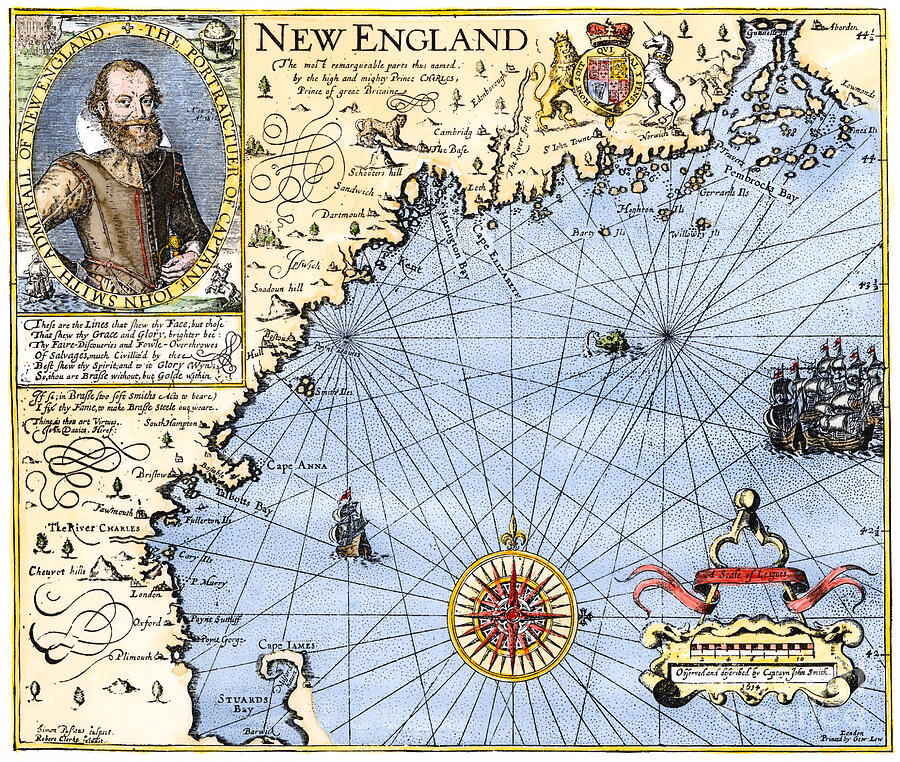
Did you know that "New England" got its name thanks to Captain John Smith? And then the Puritans didn't let him come along because they thought the old mercenary a disreputable rogue...
Here's the tale:
After having to leave Virginia because he had made enemies of all there, but with a heroic reputation related to his past wars with the Turks and sole ability to manage the Indians, and even more important reputation as a great cartographer (his map of Virginia remained in heavy use for a century, and archeological use for centuries more), Smith set about finding something else to do
It took him a few years to scrounge up enough funding for future trips, but he managed to do so by 1614. He set out for what was then called "Northern Virginia," thanks to the king's very broad grant of territory
So, he sailed to the north of America with two small ships, arriving on a rocky, wind-swept coastline, the fish and fur resources of which the merchants who backed the trip were eager to exploit
While his crew engaged in the lucrative but mundane work of catching whales and trading for beaver pelts with the local tribes, Smith took to a small boat to perform the work he loved best: exploration and cartography.
He mapped the entire rugged coastline from Cape Cod all the way to Nova Scotia with the same commendable precision he had displayed in the Chesapeake, a rarity in his day. Upon his return to England, Smith presented this masterly new chart to Prince Charles, the young heir to the throne, and requested permission to systematically strip away the native and French names from the landscape, replacing them with English alternatives
It was during this presentation that Smith formally coined the term “New England” for the region, forever altering the geopolitical vocabulary of the continent. His map meticulously laid out landmarks that would soon become famous across the globe, including Cape Ann, the Charles River, and a small, sheltered harbor he christened “Plymouth.” Yes, that Plymouth
In 1620, when the separatist Puritans (the Pilgrims) were preparing their voyage to the New World aboard the Mayflower, they reviewed Smith’s published books and charts, upon which they heavily relied for the voyage and for savely navigating the waters around Plymouth.
But they explicitly rejected his personal services as a military commander, viewing the rough, controversial mercenary as "not a good fit" for their pious religious community, choosing the more compliant Miles Standish instead.
Still, they relied heavily on his maps, and were quite open about doing so, and so Smith watched from London as another English civilization grew thanks in large part to him.
🇺🇸 The American Culturist 🇺🇸@MericaCulture
Today in American History: 1643 The colonies of Massachusetts Bay, Plymouth, Connecticut, and New Haven formed the United Colonies of New England, an early confederation for mutual defense and governance.
English
@eliotranch @hibousue_ Unfortunately this is Afghanistan, so the boys the probably give away for free. If you know, you can’t un-know it.
English

Not once does this article ask "who is buying children and why?"
Nor does it ask "why are they selling their girls, not boys?"
Is a lack of basic curiosity a requirement for the BBC now?
BBC News (World)@BBCWorld
Selling children to survive: Afghan fathers forced to make impossible choices bbc.in/49UQzLU
English
I really appreciate the angle you're taking on readiness and adaptability. A few years ago I wrote an Art of War Paper on cohesion and the COHORT personnel stability experiment.
Core finding: Personnel stability is a prerequisite for real unit cohesion — without it, you can't build the adaptability you're arguing for.
Would you be interested in reading it? Happy to send the link or PDF.
English

Ok, I have a draft done. Here's a section to chew on.
Why This Matters (and Why It’s Politically Hard)
The current readiness system optimizes for auditability and predictability. It briefs well, aligns with career incentives, and satisfies oversight. It is also strategically brittle.
The alternative optimizes for resilience in the face of inevitable surprise. It accepts that the unexpected will occur and asks a single question: how fast can the force adapt?
There is a real trade-off. Baseline capability against plausible near-term threats remains necessary. But that capability must rest on a foundation of adaptability—not be mistaken for it.
This is not incremental reform. It challenges the intellectual foundation of the defense establishment. The current model persists because it is comfortable, fundable, and career-safe. The alternative demands risk, discomfort, and accountability to reality rather than to the next readiness brief.
It will be resisted. That resistance is the point—and the proof of its necessity.
TimOnPoint@TimOnPoint
I’m writing a paper this weekend—might just be an article—that’s proving to be more complex than I anticipated. *What is readiness? Define it. I’m going to be reaching out to a bunch of you to get an answer in your context. So far the answers are wildly all over the place. My hypothesis is that most of the military (and supporting entities) are thinking about readiness wrong (still)—and it’s a root cause of so many of our challenges.
English
Mike K retweetledi
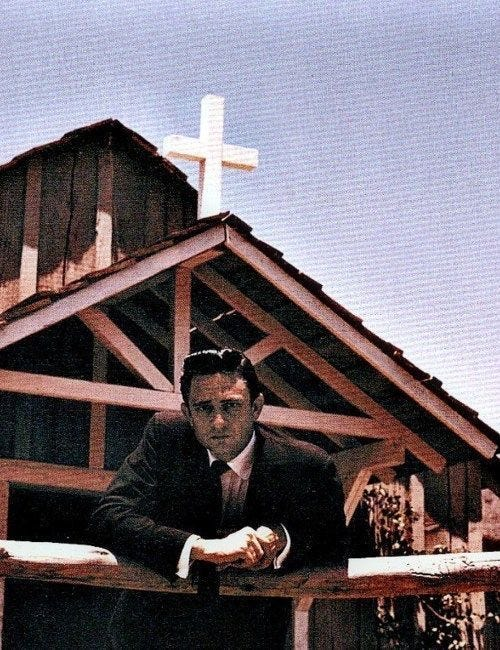
Quīcumque vērē vestīgat vērum, ad Iēsum pervenit — “Anyone who really wants the Truth ends up at Jesus.” (Johnny Cash)
Latviešu