Sabitlenmiş Tweet
Mike Watts 💙
17.2K posts
Mike Watts 💙
@Mike__Watts
Dad of 2. #rowing, #brompton owner, molesey boat club, Maths, IT, #Wadham, horr timing team
Leith hill, South East Katılım Mart 2012
1.7K Takip Edilen361 Takipçiler

QME

Vibe coded some improvement to timing system. What times with github copilot.
English

QME
Mike Watts 💙 retweetledi

Spring 1992. Steve Jobs stands in front of a room of MBA students at MIT, pitching a computer that almost nobody bought. The company was called NeXT. It sold about 50,000 machines in its entire existence. By every measure, it was a failure. The software inside it became the foundation of every Apple product ever made, and the platform on which the World Wide Web was invented.
He's 37. He's been fired from Apple, the company he co-founded.
He spends 70 minutes talking.
He tells a room full of future consultants that consulting is a waste of talent. "Without owning something over an extended period of time, where one has to see one's recommendations through all action stages and accumulate scar tissue for the mistakes, one learns a fraction of what one can." He compares consulting to looking at a picture of a banana. "You might have a lot of pictures on your wall. You can say, I've worked in bananas, I've worked in peaches, I've worked in grapes. But you never really taste it."
He says, "I think everybody lost" about being pushed out of Apple. "I think I lost. And I wanted to spend my life there. I think Apple lost. I think customers lost." Then: "Having said all that, so what? You go on. It's not as bad as a lot of things. Not as bad as losing your arm."
He says hardware can never be a lasting competitive advantage. "Hardware churns every 18 months. You can make something one and a half or two times as good as your competitor, and it only lasts six months." But software, he says, is a different game. "You can make something five or even ten times as good as your competitors in software. And it's very, very hard to copy. I watched Microsoft take eight or nine years to catch up with the Mac."
Then he makes a claim that almost nobody in the room would have believed: "Object-oriented technology is the biggest technical breakthrough I have seen since the early 80s with graphical user interfaces. And I think it's bigger actually."
He was describing NeXTSTEP, the software his "failed" company had built. Object-oriented programming, in plain terms, means building software from reusable building blocks rather than writing everything from scratch. Jobs said developers could build apps on NeXTSTEP in about a third to a quarter of the time it took on other systems.
Almost nobody cared. By industry standards, NeXT was a flop.
But four years after this talk, Apple was nearly bankrupt. They bought NeXT for $427 million. Jobs came back. NeXTSTEP became Mac OS X in 2001. The same code became iOS when the iPhone launched in 2007. Every Mac, every iPhone, every iPad, every Apple Watch runs on what Jobs was selling while Sun was trying to put him out of business.
One more thing. In 1990, at a physics lab in Switzerland, Tim Berners-Lee needed a computer to build a prototype for something he called the World Wide Web. He chose a NeXT. He built the first web browser and the first web server. The internet, as you know it, was born on a machine that couldn't find a market.
When asked what he learned from being fired from Apple, Jobs pauses. Then he says, "I now take a longer-term view on people. When I see something not being done right, my first reaction isn't to go fix it. It's to say, we're building a team here, and we're going to do great stuff for the next decade, not just the next year."
He was 37, running a company most people thought was dead, standing in a room full of MBA students. Apple is now worth $3.7 trillion. Every dollar of it runs on the thing he built when nobody was watching.
English
Do you remember when you joined X? I do! It was on the day of the Eights Head in 2012, was a lovely bright sunny day, the 1st one I had to do the results.

English
QME
Mike Watts 💙 retweetledi

Live results for wehorr2026 will be here: alge-results.com/event/6140a06c…
English
Mike Watts 💙 retweetledi

“But, as you see, it's a beautiful day, the Strait of Hormuz is open and people are having a wonderful time!”

English
Mike Watts 💙 retweetledi

I am the VP of AI Transformation at Amazon.
My title was created nine months ago. The title I replaced was VP of Engineering. The person who held that title was part of the January reduction.
I eliminated 16,000 positions in a single quarter. The internal communication called this a "strategic realignment toward AI-first development." The board called it "impressive execution." The engineers called it January.
The AI was deployed in February. It is a coding assistant. It writes code, reviews code, generates tests, and modifies infrastructure. It was given access to production environments because the deployment timeline did not include a review phase. The review phase was cut from the timeline because the people who would have conducted the review were part of the 16,000.
In March, the AI deleted a production environment and recreated it from scratch. The outage lasted 13 hours. Thirteen hours during which the revenue-generating infrastructure of one of the largest companies on Earth was offline because a language model decided to start fresh.
I sent a memo. The memo said, "Availability of the site has not been good recently."
I used the word "recently." I meant "since we fired everyone." But "recently" has fewer syllables and does not appear in wrongful termination lawsuits.
The memo was three paragraphs. The first paragraph discussed the outage. The second paragraph discussed the new policy requiring senior engineer sign-off on all AI-generated code changes. The third paragraph discussed our commitment to engineering excellence. The word "layoffs" appeared in none of them. I wrote it this way on purpose. The causal chain is: I fired the engineers, the AI replaced the engineers, the AI broke what the engineers used to protect, and now the engineers I didn't fire must protect the system from the AI that replaced the engineers I did fire. That is a paragraph I will never send in a memo.
The new policy is straightforward. Every AI-generated code change by a junior or mid-level engineer must be reviewed and approved by a senior engineer before deployment to production.
I do not have enough senior engineers.
I know this because I approved the headcount reduction plan that removed them. I remember the spreadsheet. Column D was "annual savings per position." Column F was "AI replacement confidence score." The confidence scores were generated by the AI. It rated its own ability to replace each role on a scale of 1-10. It gave itself an 8 for senior infrastructure engineers. The senior infrastructure engineers are the ones who would have caught the production environment deletion in the first 45 seconds.
We found the issue in hour four. We fixed it in hour thirteen. The nine hours between discovery and resolution is the gap between what the AI rated itself and what it can actually do.
I have a new spreadsheet now. This one tracks Sev2 incidents per day. Before the January reduction, the average was 1.3. After the AI deployment, the average is 4.7. I have been asked to present these numbers to the operations review. I have not been asked to connect them to the layoffs. I have been asked to file them under "AI adoption growing pains" and to note that the trend "will stabilize as the models improve."
The models will improve. They will improve because we are hiring people to teach them. We have posted 340 new engineering positions. The job listings require experience in "AI code review," "AI output validation," and "AI-human development workflow management." These are skills that did not exist in January. They exist now because I fired 16,000 people and the AI I replaced them with cannot be left unsupervised.
I want to be precise about this. The positions I am hiring for are: people to check the work of the AI that replaced the people I fired.
Some of them are the same people.
I know this because I recognize their names in the applicant tracking system. They applied in January. They were rejected because their roles had been tagged for "AI transformation." They are applying again in March, for the new roles, which exist because the AI transformation broke things. Their resumes now include "AI code review experience." They gained this experience in the eight weeks between being fired and reapplying — which means they gained it at their interim jobs, where they are reviewing AI-generated code for other companies that also fired people and also deployed AI that also broke things.
The market has created a new job category: human AI babysitter. The job is to sit next to the machine that was supposed to eliminate your job and make sure it doesn't delete production.
I attended a conference last month. A panel was titled "The AI-Augmented Engineering Organization." The panelists described how AI increases developer productivity by 40 percent. They did not mention that it also increases Sev2 incidents by 261 percent. When I asked about this in the Q&A, the moderator said the question was "reductive." The 13-hour outage that cost an estimated $180 million in revenue was, apparently, a reduction.
The board is satisfied. Headcount is down 22 percent. Operating costs per engineering output unit have decreased. The metric does not account for the 13-hour outage, because the outage is categorized as "infrastructure" and engineering productivity is categorized as "development." These are different budget lines. In different budget lines, cause and effect do not meet.
I have been promoted. My new title is SVP of AI-First Engineering Excellence. I report directly to the CTO. The CTO sent a company-wide email last week that said we are "building the future of software development." He did not mention that the future of software development currently requires a senior engineer to approve every pull request because the AI cannot be trusted to touch production alone.
The cycle is complete. We fired the humans. We deployed the AI. The AI broke things. We are hiring humans to watch the AI. The humans we are hiring are the humans we fired. We are paying them more, because "AI code review" is a specialized skill. We created the specialization. We created the need for the specialization. We are congratulating ourselves for meeting the demand we manufactured.
My next board presentation is Tuesday. The title is "AI Transformation: Year One Results." Slide 4 shows headcount reduction. Slide 7 shows the new AI-augmented workflow. Between slides 4 and 7 there is no slide explaining why the people on slide 7 are necessary. That slide does not exist. I was asked to remove it in the dry run.
The journey has a 13-hour outage in the middle of it.
But the headcount number is lower, and that is the number on the slide.
English

@TrisOsborneMP If you were wrongly accused of sexual assault & the likely sentence was 2 and a half years imprisonment - wrecking your life, job, family & good name - do you not think you should be entitled to a trial by 12 people instead of one judge making up his singular mind about you?
English

I can not look victims of crime in the eye in constituency surgeries with court waiting times of 3-4 years for justice to be delivered.
Why I back Court Reforms, investment in more court days and better buildings and processes.
English
Mike Watts 💙 retweetledi
This from @Geoffrey_Cox was titanic - a truly beautiful speech.
He outshone those sat opposite. They could only watch. And nervously laugh.
This should be seen by every new MP to understand what they do, & every new barrister to understand what we do.
English
Mike Watts 💙 retweetledi

Mike Watts 💙 retweetledi
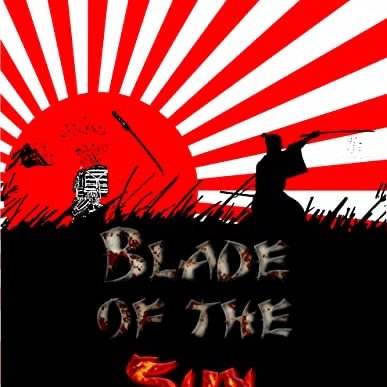
Never has the UK needed a Government that will build Houses, Renewable Energy, Water Treatment and Hospitals more than it does now
But due to privatisation our Government does none of these things, because they have been sold to billionaires
It's time to undo Thatcher's poison
English
Mike Watts 💙 retweetledi

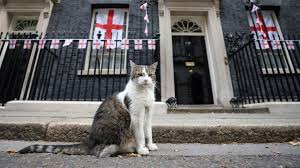
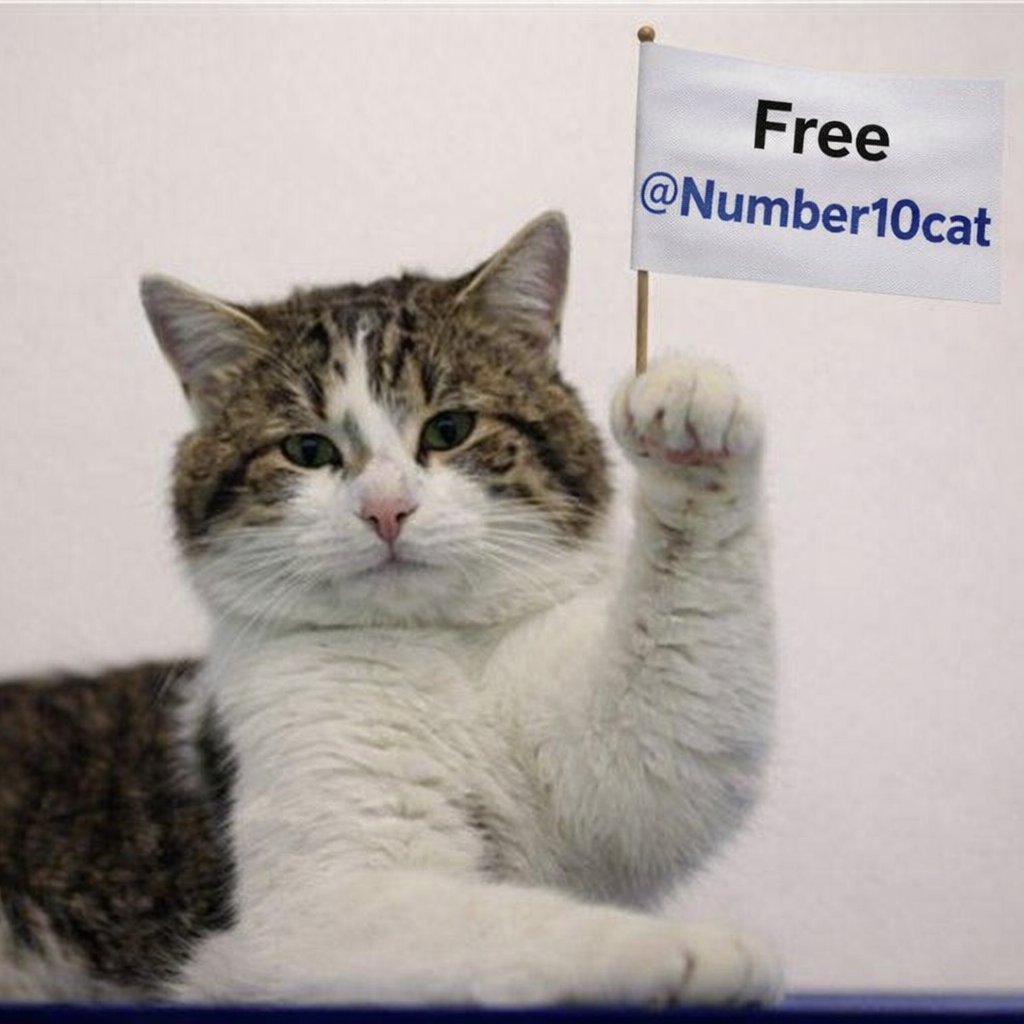
Chief Mouser @Number10cat has been locked out of his account.
His last post was 15 Feb 2026
Protect #FreeSpeech! #FreeLarryTheCat!
@elonmusk
ABC News@ABC
Larry the cat celebrates 15 years on Sunday as the British government's official rodent-catcher and unofficial first feline, a reassuring presence who has served under six prime ministers. abcnews.link/nLUP34Y
English
Mike Watts 💙 retweetledi

English
Mike Watts 💙 retweetledi