
Milind Dhaimade
1.9K posts

Milind Dhaimade
@MilindDhaimade
can I tell you a story?
india Katılım Nisan 2014
136 Takip Edilen983 Takipçiler
Milind Dhaimade retweetledi

Lol. This hilarious. @narendramodi Prime Minister of India has given 3000 rupees each to Pandits that @VP’s plane disappears in mid air before it reaches Pakistan. I can’t stop laughing. Jinnah once called India a priest ridden society. Proved right again.
English

Milind Dhaimade retweetledi

The ECI already holds this data in structured form. It chose to release scanned images instead — effectively locking out public scrutiny. We broke that barrier. Here's everything we found, in full, open to verification: sir-data-decoded.altnews.in
English
Milind Dhaimade retweetledi

Fake News!
This is from Gujarat, last year.
Police arrested 14 individuals for their involvement in the violence.
police paraded the accused publicly, made them apologise, and subjected them to lathi punishment. The accused include Aldeep Maurya, Shyam Kamli, Vikas Parihar, Ashil Makwana, Rohit alias Durlabh Sonawane, Nikhil Chauhan, Mayur Marathi, Pradeep alias Monu Tiwari, Rajveer Singh Bihola, Alkesh Yadav, Ayush Rajput, Dinesh Rajput and Deepak Kushwaha.
deccanchronicle.com/fact-check/fac…
English
Milind Dhaimade retweetledi

At least the Godi media Anchors and IT cell trolls didn’t hold the entire Indian Navy responsible for the actions of Chintada Ravindra, unlike how they collectively blamed and targeted the entire Muslim community for weeks over the heinous crime committed by Aftab Poonawala.
Ankita Mahalanobish@onkeyta_
Woman killed. Body chopped, put in a suitcase & fridge. Head burnt. Accused: Chintada Ravindra. Result: Total radio silence. No outrage. This is not something the Right wing can weaponize. Had he been a Muslim, you know exactly what your timeline would look like right now.
English
Milind Dhaimade retweetledi

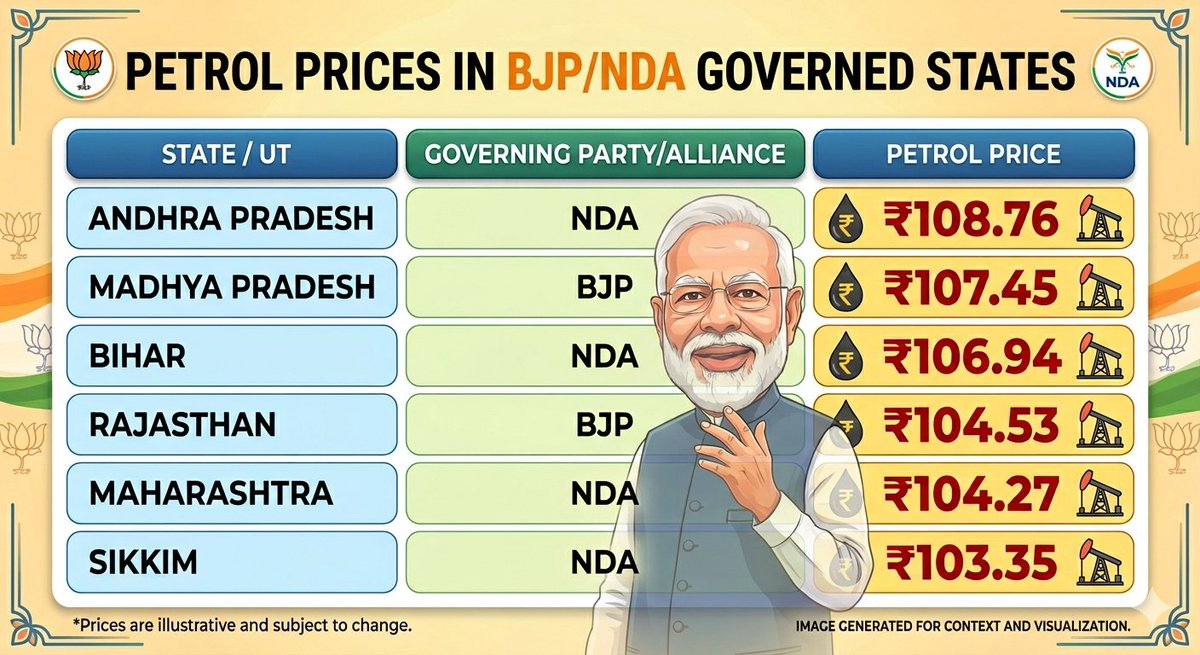
@BJP4Bengal @MamataOfficial Thanks for reminding us about how costly Petrol is in Andhra, MP, Bihar, Rajasthan, Maharashtra is.

English
Milind Dhaimade retweetledi

Deepfake Alert: Army Chief Upendra Dwivedi did not say India shared Iranian warship IRIS Dena’s location with Israel. The viral clip is lifted from a recent interview and the audio is AI-generated. #FactCheck by @OishaniB_ altnews.in/viral-clip-of-…
English
Milind Dhaimade retweetledi

Milind Dhaimade retweetledi

A post tagging us has gone highly viral. It states:
"How this cultured Hindu boy looks at Muslim women and children with lust and commits such heinous acts.
The voices in the video are clear, and they are speaking in Marathi.
No action has been taken against this rapist.
Retweet 🙏 until he is arrested. @TheRFTeam"
Regarding the said video, it has been learned that it is from Bharatpur, Rajasthan. The footage is reportedly from a wedding procession that came to Bhawanpura from a village called Gudbas. In the video, a Hindutva Youth can allegedly be seen making obscene gestures toward children and women.
After the video surfaced, we reviewed the Instagram ID of Mankesh Gujjar, where several reels involving Rajasthani women were also found. Those reels will be shared in the comment section of our post.
I request @PoliceRajasthan and @BharatpurPolice to take strict legal action against this individual.

English
Milind Dhaimade retweetledi

Bro is a journalist in Uttar Pradesh
Bro was approached by Ashutosh Pandey, a history-sheeter.
Bro was asked to frame Swami Avimukteshwaranand in a fake rape case.
Bro was told allegation would involve two minor children.
Bro went along with it, and a POCSO case was registered against the Shankaracharya.
Bro started feeling guilt and fear for lying.
Bro decided to tell the truth.
Bro went to the Shankaracharya and spilled the beans.
Bro cried in front of the Shankaracharya and asked for mercy.
Bro showed his conscience and refused to be part of dirty propaganda.
Be like bro 🫡
English
Milind Dhaimade retweetledi

Hey NHRC, Did you take any action against this Brahmin who gave rape threats to JNU's students ?
Or does he have free hand because of his caste ?
NHRC India@India_NHRC
NHRC, India takes suo motu cognizance of the reported physical and sexual assault on a journalist covering students' protest in the North Campus of Delhi University. May like to refer to the press release at: nhrc.nic.in/media/press-re… #HumanRightsViolation #Journalist #Assault
English
Milind Dhaimade retweetledi

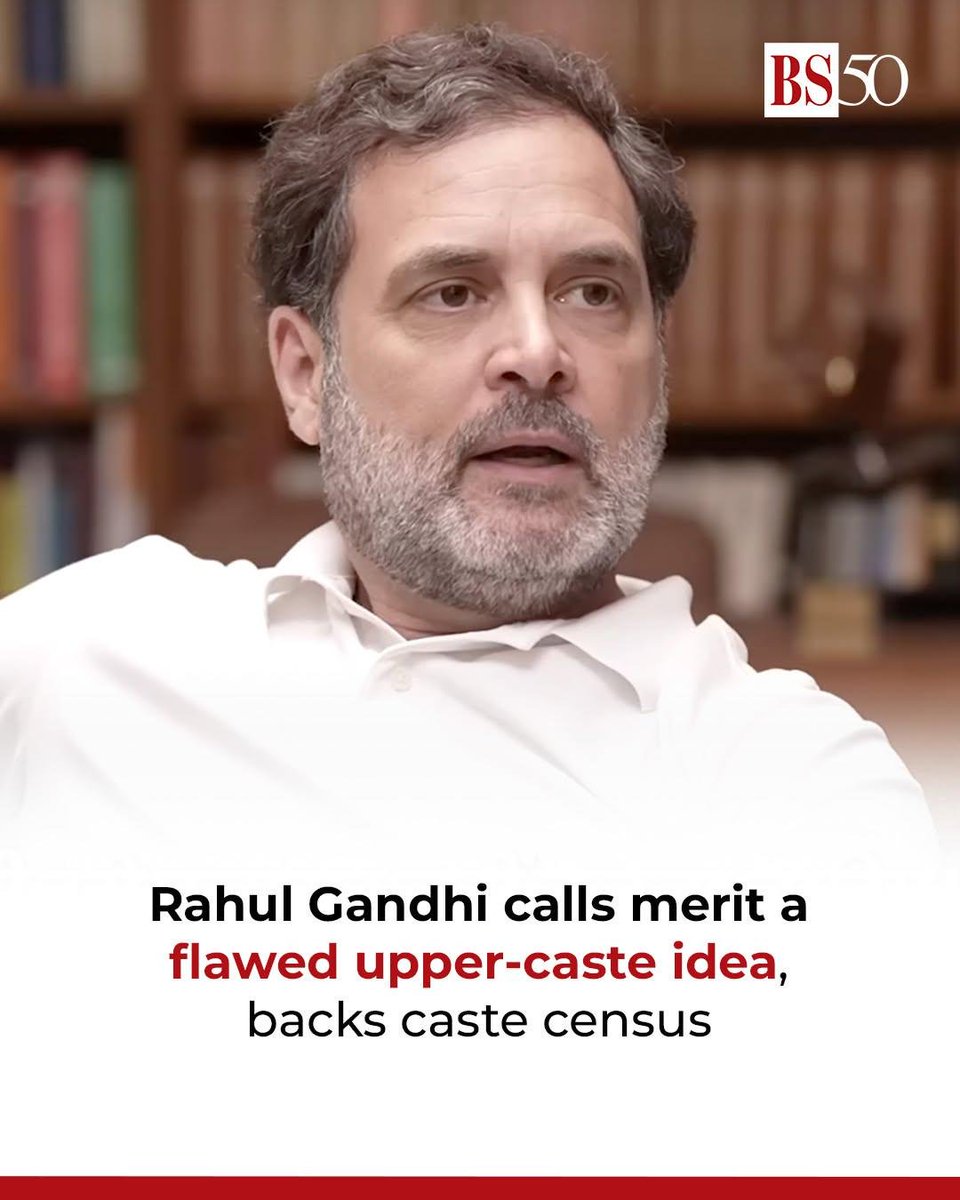
Rahul Gandhi is Right: Merit in India is a Flawed Upper-Caste Idea
Rahul Gandhi said something that needed saying. Merit, as India currently understands and practises it, is an upper-caste idea. Not because talent is caste-specific, it obviously isn't, but because the conditions that produce "meritorious" performance are distributed almost entirely along caste lines. And the data, when you look at it without defensiveness, follows too.
Consider a thought experiment that cuts through all the noise. If Einstein had been born in Uganda, in a village without electricity, without books, without a father who brought home physics puzzles, without a culture that treated abstract reasoning as a respectable occupation, he would not have been Einstein. Not because the raw intelligence wouldn't have been there. But because intelligence without the right soil produces nothing that a civilisation can recognise or reward. The genius stays unrecognised. The talent produces nothing the system can reward.
What we call Einstein is not simply a brain. It is a brain plus Leipzig, plus Zurich, plus the particular Jewish intellectual culture of early twentieth century Central Europe that treated argument and abstraction as almost sacred activities. Remove any of that and the man we know disappears entirely. India's Oppressed-caste children are born into the Ugandan condition, not the Swiss one. Measuring them at eighteen and calling the result a meritocracy is not a neutral act. It is a verdict delivered after the crime.
Ambedkar understood this before any Western sociologist named it. In Annihilation of Caste, he argued that Hindu social organization had functioned for centuries as a system of enforced incompetence. Certain groups were structurally prevented from acquiring the knowledge, confidence, and networks that other groups inherited as naturally as their mother tongue. Pierre Bourdieu gave this a name much later: cultural capital. But Ambedkar had already described the same thing, running deeper and older in the Indian context than anything Bourdieu observed in France.
I was born lower middle class in Jaipur, in a Privileged caste Muslim family. We didn’t have money. And yet, sitting at the dinner table every evening, my mother was explaining Ghalib to me. Ghazals of Mallika Pukhraj and Begum Akhtar were simply the air in the house. My mother read to us the best Urdu Literature before sleep. I never learned to read or write the script, but high art in Urdu was woven into how we spoke, how we argued, how we understood the world. The result was not that I became a sharper writer in English.
Jaipur is not a city where spoken English circulates naturally, and it was spoken English where the inheritance showed. A fluency in argument, in shifting registers, in treating language as a living thing rather than a mechanical tool. That came not from school, not from money, but from a mother, a family, who had absorbed Urdu literature, culture or simply ‘Tehzeeb’ in its bones and passed it across the dinner table without even meaning to.
Money can buy coaching, tuition, exposure, even a kind of performative culture. What it cannot buy is the thing I am describing. The Ghalib your mother explains to you at age eleven is not available in any market. It leaves a residue that shapes how you think before you even know you are thinking. This is what Bourdieu meant when he insisted that cultural capital is the form of capital least visible and most consequential, precisely because it masquerades as natural ability.
Now think about Payal Tadvi. Dr. Payal Tadvi was an Adivasi Muslim woman, a postgraduate medical student in Mumbai, driven to suicide in 2019 by the sustained casteist harassment of her Privileged-caste seniors. She had made it, against every odd, into a medical college. And still the institution could not tolerate her presence.
Can anyone honestly compare her starting point to mine?
Yes, I have faced communal slurs. Being Muslim in India does not come without its ugliness. But here is the difference: the cultural capital I inherited, my upbringing, had built in me something that no slur could easily reach.
A sense of self so settled that when someone comes at me with that kind of ugliness, my first instinct is not shame or collapse. It is dismissal. My brain simply rejects those people as unworthy of further conversation, as intellectually beneath engagement. That is not bravado. That is what generations of cultivated self-respect produces in a person without them even trying.
My Brahmin and Rajput friends extended to me the caste respect that my Ashraf identity quietly commanded. I was never invisible to them. When I beat them at sports, my brahmin friends would say, half laughing, half serious, "well, you people eat meat." An excuse, yes, but a revealing one. They could absorb a defeat at the hands of an Ashraf Muslim and find a way to file it away without too much damage to their pride.
What they could never have done, and what they never did, was extend that same ease to an Oppressed-caste Hindu who outperformed them. That would have been a different kind of threat entirely, one their caste identity had no comfortable explanation for. In their eyes, I occupied a strange but tolerable position: an outsider, certainly, but one whose lineage they could somehow place and respect. Payal Tadvi would have been granted no such placement.
Payal Tadvi had none of that armour. She arrived at a modern institution that recognised nothing she carried and saw only her caste as something to punish. I do not think she had been handed the same interior fortress. Not because she was less, but because her community had been told, in a thousand ways across centuries, that they were. That kind of messaging does not wash off easily, no matter how brilliant you are. She was doubly marginalised, as an Adivasi and as a Muslim, in ways I have never truly been and cannot fully imagine. Calling whatever examination result emerges from these two lives a fair measure of individual merit is not an argument. It is an insult dressed as an argument.
This is the structure of the fraud. Between January 2021 and January 2026, 79.76% of High Court judges appointed through the collegium system were from forward castes, despite SC, ST, and OBC communities together comprising roughly 75% of India's population. The collegium calls this merit.
What it actually is, as legal scholar Anuj Bhuwania has argued, is a closed guild reproducing its own membership. Sociologist Satish Deshpande, in his work on the "general category" as a privileged fiction, puts it plainly: the person who appears to have no caste because caste is only ever mentioned in relation to reservations is simply the Privileged-caste norm passing itself off as universal. When someone says "just select on merit," they are describing a process already filtered through generations of unequal preparation, unequal schooling, and unequal exposure to the cultural forms that entrance examinations reward.
The IIT and the IIM are not Olympics stadiums of elite excellence. They are the gatekeepers of public power in a democratic republic. Who controls them, who gets produced by them, who sets the terms of entry, these are political questions, not technical ones. Pretending otherwise is precisely the move Gandhi is calling out.
A caste census would at least give us an honest map. Rohit Vemula's institutional murder, and it was, as his mother insisted, a murder carried out by a thousand small administrative decisions, happened inside an institution that believed it was already meritocratic. The census won't by itself fix what killed Rohit or what killed Payal. But you cannot fix what you refuse to count.
Rahul Gandhi is not attacking talent. He is not sentimental and neither should we be. He is saying what Ambedkar said, what Phule said before him, what Periyar said in the south. The quiet part, that Privileged-caste India constructed merit as a mirror that would always reflect itself, has been said out loud. The question is whether enough people are willing to look at what the data reflects back.

English
Milind Dhaimade retweetledi