Andrius Baskys

6.2K posts

Andrius Baskys banner
Andrius Baskys

Andrius Baskys

@MindThisMind

Disclaimer: All posted contents is for entertainment purposes only and does not represent my views or anybody else's views. interpret at your own risk.

Big Bear Lake, California Katılım Kasım 2013
596 Takip Edilen515 Takipçiler
Sabitlenmiş Tweet
Andrius Baskys
Andrius Baskys@MindThisMind·
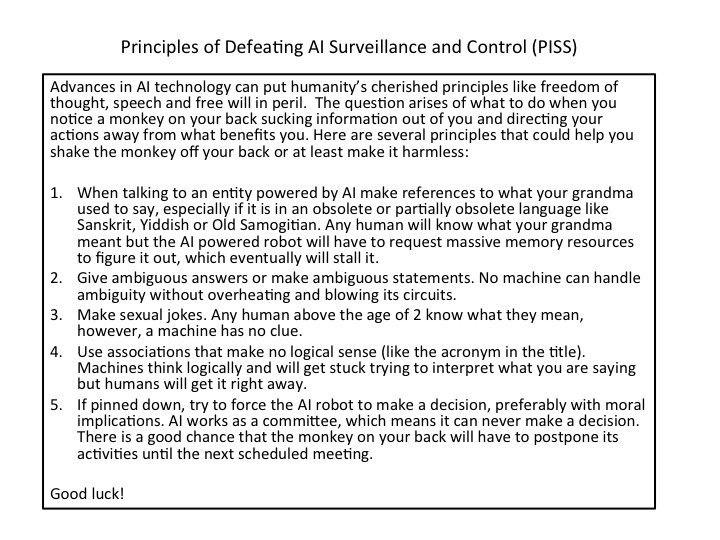
Core principles of defeating AI surveillance and control
Andrius Baskys tweet media
English
2
2
31
0
Andrius Baskys retweetledi
Shawn Milletary
Shawn Milletary@shawnredwood·
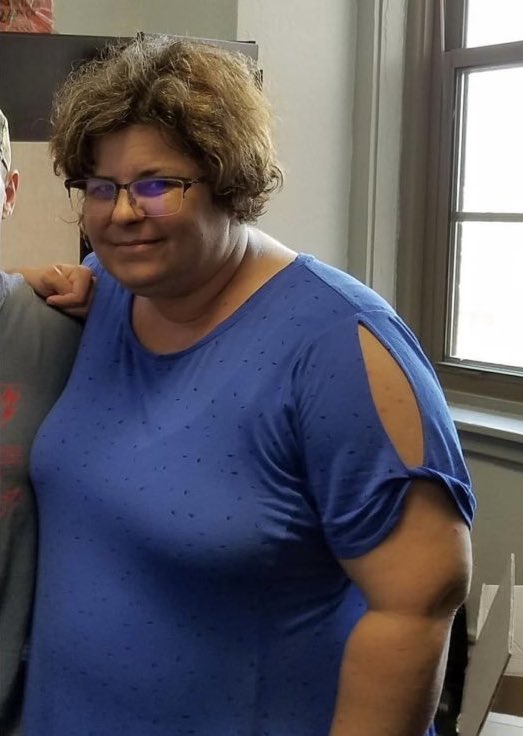
EVERY case of schizophrenia is a misdiagnosis. The first photo is my favorite photo of my wife. She's BEAUTIFUL. She is the strongest person I know. The second photo is AFTER traditional psychiatry chemically assaulted under the guise of care. Traditional 'pill-dominated' psychiatry is medicine’s way of saying we DON’T KNOW but your behavior is unacceptable. So we are going to drown you in chemicals till the SYMPTOMS are gone. The original name for antipsychotics was chemical labotomies - that should indicate their purpose. It's to control. This control is NOT primarily for the patient. It is more because SOCIETY deems a person's behavior unacceptable. The patient's satisfaction is secondary. These chemicals worked like magic for a period with my wife. 18 years later, they are far more harmful than the symptoms they were originally prescribed to treat. Every case of diagnosed schizophrenia has an unknown cause. All psychiatric diagnosis' are simply a description of symptoms - not actual illnesses. There are NO tests. Just an interpretation by others that your behavior is unacceptable and you need to be controlled. Think about it this way: If your knee hurts and you go to the doctor, they don’t diagnose you with “knee pain.” The solution is not a boatload of Tylenol to fix you. Sure, this may make you walk better in the near term. But it doesn’t solve the CAUSE of your limp. Doctors figure out WHY you are limping — a sprain, torn ligament, loose cartilage, etc. — and fix the root issue. If the meds work for you, have at it. But, please use this time to explore alternatives in the event the meds turn on you. I am happy that the meds work for some. But, anyone that has been around this knows that there are very few people on antipsychotics that would meet the definition of THRIVING a decade or two after commencing use. Up until the meds stopped working, my wife was considered a 'star patient' by her doctors. She use to crap herself, piss herself and couldn't tell you her age. Star patient meant that she was controlled NOT that she had a life. They erased her. Our story is NOT unique. It's common and needs to be fixed. Your mental health diagnosis is NOT the cause. It’s a SYMPTOM begging for a real solution.
Shawn Milletary tweet mediaShawn Milletary tweet media
English
75
71
541
103.4K
Andrius Baskys
Andrius Baskys@MindThisMind·
@DrJosefWD There is absolutely no reason for doctors to measure the actual attention span in time units in any person who complains of a reduced attention span. There are computer programs that can do it and normative values exist. However, clinicians do not do it. Why not?
English
0
0
0
26
Dr. Josef
Dr. Josef@DrJosefWD·
ADHD isn't what you've been told, full interview is out now.
English
4
12
50
2.9K
Andrius Baskys
Andrius Baskys@MindThisMind·
@Tslachan Not sure if it is legally possible due to driver's license regulations in Chinese cities.
English
1
0
0
56
Tsla Chan
Tsla Chan@Tslachan·
Tesla's FSD safely handles a crowded alleyway in China.
English
30
116
787
39.9K
Andrius Baskys
Andrius Baskys@MindThisMind·
It is amazing! I have 20 year old video files that no player can play - except VLC.
Nav Toor@heynavtoor

Do not install VLC. Once you install it, you can never go back. You will never pay 99 cents for a codec again. You will never buy QuickTime Pro again. You will never renew RealPlayer Plus again. You will never pay for Blu-ray decoder software again. You will never see the words "this file format is not supported" again. You will become the family tech support person. Forever. Your dad will call you at 11 PM because he downloaded a .mkv from somewhere and Windows refuses to open it. Your answer will always be the same. "Install VLC." And then the orange traffic cone will eat his problem in 4 seconds and he will call you a genius. You did not do that. A French student named Jean-Baptiste Kempf did, in 1996, as a school project at École Centrale Paris. His roommate brought a traffic cone home from the street that year. They made it the logo. 6 billion downloads later, the cone is still undefeated. Repo: github.com/videolan/vlc. 18,463 stars. GPL-2.0. Pushed today. Here is the wildest part: The warning is real. Just not for you. Apple sold QuickTime Pro for $29.99. VLC killed it. Apple shut it down in 2016. Microsoft sold Windows Media Center for $9.99. VLC killed it. Microsoft shut it down with Windows 10. RealNetworks charged $39.99 a year for RealPlayer Plus. VLC killed it. Sony built Blu-ray to need a $79.99 licensed decoder. VLC ships with libdvdcss and a French court ruling that protects it. The codec mafia spent 30 years building a tollbooth on every video file on Earth. A guy whose GitHub location is literally "Coneland" walked through every tollbooth with a cone on his head and never paid a cent. He was offered millions of dollars to sell it. He said no. So yes. Do not install VLC. The codec industry has not recovered from the last 6 billion people who did. 100% Opensource. 100% Free. 100% Yours. The biggest media companies on Earth spent three decades trying to charge you to play your own files. One French student and a cone he found on the street made all of it pointless.

English
0
0
0
18
Shenzhen Channel
Shenzhen Channel@sz_mediagroup·
Nicknamed the “Potato Bus” for its rounded capsule-like shape, this vehicle is actually RoboBus — an autonomous mini bus developed by Guizhou-based tech company PIX Moving(翰凯斯). The L4 self-driving shuttle features a steering-wheel-free design and is built for urban sightseeing, parks and smart mobility scenarios. It has already entered operation on routes in Guiyang, offering visitors a futuristic way to explore the city. @TripInChina @thisisGBA @Kanthan2030 @MarioNawfal @XueJia24682 Video from 萨瓦迪卡
English
2
15
56
2.6K
Andrius Baskys
Andrius Baskys@MindThisMind·
@KaniewskiAdrian That's the right way, I agree, but to be valid, the biomedical therapies need to be tested in placebo controlled clinical trials, which is difficult if not impossible for human aging.
English
0
0
1
15
Adrian Kaniewski🌎💙🌊🌾
Ray Kurzweil predicts Longevity Escape Velocity for 2032. Peter Diamandis wore a T-shirt with the words "LEV -2033" at the recent Aboundance Summit with David Sinclair. Whether Longevity Escape Velocity occurs in 32, 33, or 34 is important; only one thing is certain. We are indeed heading in this direction.
Adrian Kaniewski🌎💙🌊🌾 tweet media
English
13
25
129
8.4K
Andrius Baskys
Andrius Baskys@MindThisMind·
@sukh_saroy @weldeiry A very interesting study but like many studies that rely on psychological concepts (e.g. "idea density", "cognitive reserve") it does not identify the underlying biology of the metrics - "idea density". Should we measure the "idea density" in a post by it's length? Probably not.
English
0
0
1
172
Sukh Sroay
Sukh Sroay@sukh_saroy·
A University of Kentucky epidemiologist convinced 678 Catholic nuns to donate their brains and their entire life records to science, and the autopsies he performed quietly rewrote everything modern medicine thought it knew about Alzheimer's disease. The findings have been published in JAMA and the New England Journal of Medicine. Almost nobody outside the field of neurology has heard of them. His name was David Snowdon. He was a young epidemiologist at the University of Minnesota in 1986 when he had what most of his colleagues considered a crazy idea. He wanted to study Alzheimer's disease the way it had never been studied before. Not through brain scans of confused 80-year-olds in a hospital. Not through self-reported family histories. He wanted to find a group of people whose entire lives were on paper, from their twenties to their deathbeds, and then look inside their brains after they died and see what the autopsies actually showed. He chose 678 Catholic sisters from the School Sisters of Notre Dame congregation. The choice was not random. Nuns lived almost identical lifestyles. Same diet. Same housing. Same daily schedule. Same medical care. No smoking. No drinking. No pregnancies confounding the hormonal data. They were, statistically speaking, the cleanest research population on Earth. And they had something no other study population had ever offered. Their entire lives were already documented. Every nun in the order had written a one-to-two-page autobiography in her early twenties, before taking her final vows. The essays had been sitting in convent archives for 60 years, untouched, waiting to be discovered. Then Snowdon did the part most researchers would never have agreed to. He asked the nuns, in person, one at a time, if they would donate their brains to science after they died. They said yes. All of them. The study ran for over 25 years. Annual cognitive tests. Annual physical exams. Detailed medical records. And at the moment of death, every single brain was carefully removed and analyzed under a microscope. The findings broke modern neuroscience. The first thing the autopsies showed was that many of the nuns had brains riddled with the classic plaques and tangles of full-blown Alzheimer's disease. Severe damage. The kind of damage that, in any other patient, would have produced complete dementia. But while they were alive, these particular nuns had shown no symptoms at all. They had stayed sharp until the day they died. They had taught classes. They had run errands. They had recognized everyone. Their brains were destroyed. Their minds were intact. Something was protecting them that nobody had ever measured before. Snowdon called it cognitive reserve. The brain, he argued, can absorb extraordinary amounts of damage without showing symptoms, as long as it has been built thick enough beforehand. The nuns who stayed sharp had brains that had been so well-developed over a lifetime of learning, teaching, reading, and thinking that they could afford to lose huge sections of tissue and still keep functioning. Then he found the second thing. The one that made the study famous. He pulled the autobiographies out of the archives. The essays written by the same nuns 60 years earlier, when they were 22 years old. He measured a single linguistic feature called idea density. How many distinct ideas a writer packed into each ten words of prose. Not vocabulary. Not grammar. Not style. Just the raw informational compression of a young mind. The result was so clean it should be illegal to ignore. The nuns who had the lowest idea density at age 22 were 59 times more likely to develop Alzheimer's by age 85 than the nuns who had the highest idea density. Snowdon could predict with roughly 80 to 90 percent accuracy who would develop dementia 60 years before it happened, from a single essay written before the woman had even taken her vows. The detail that should disturb every adult reading this is what happened when the researchers controlled for the obvious objections. When they controlled for education, the effect held. When they controlled for occupation, the effect held. When they controlled for the age at which the nun entered the convent, the effect held. The cognitive complexity of the 22-year-old mind, measured in a single autobiographical paragraph, was a stronger predictor of Alzheimer's six decades later than any other variable Snowdon could find. Then he ran the second analysis. The one that almost nobody quotes. He measured the emotional tone of the same autobiographies. The frequency of positive words like joy, gratitude, hope, love, contentment. The nuns who wrote about their lives in positive emotional terms at age 22 lived an average of 10.7 years longer than the nuns who wrote in neutral or negative terms. Same convent. Same diet. Same medical care. Same prayer schedule. The lifespan was being shaped by something invisible. Something that had been written down before the nun had any way of knowing it would matter. The paper landed in JAMA in 1996. It has been cited thousands of times since. Almost no one outside academic neurology has heard of it. The reason most people resist this finding is that it sounds like a sentence handed down before adulthood even began. If the architecture of your old-age brain is being built by what you do with your mind in your twenties, and your emotional resilience is being calibrated by the words you use about your own life, then your eighties are being shaped right now by patterns you cannot even feel yourself making. Snowdon argued the opposite. He said the data showed cognitive reserve could be built throughout life. The nuns who continued to learn languages, teach courses, read difficult books, and engage in complex conversations in their 60s and 70s also showed slower decline. The brain does not stop responding to mental work just because you got older. It only stops responding when you stop asking anything of it. The most uncomfortable part of the research is the contrast Snowdon repeatedly emphasized. Two nuns could have identical brain damage on autopsy. Identical plaques. Identical tangles. Identical genetics. One would have lived her last years confused, frightened, and lost. The other would have lived her last years lucid, joyful, and intact. The only meaningful difference between them was the depth of the cognitive and emotional architecture each had built across the decades before the damage arrived. The brain you will have at 85 is being constructed right now by the books you choose not to read, the conversations you choose not to have, and the words you choose to use about your own life. The dementia that arrives at 80 is not a verdict. It is the bill for a structure you either built or did not build between 22 and 60. Almost nobody walks through the window because almost nobody knows it is open. You can be the one who does.
Sukh Sroay tweet media
English
61
814
2K
126.6K
sashalatypova.substack.com "Due Diligence and Art"
@uTobian the only reason they issue PREP Act for something that can legally be administered off label is - they need to remove the informed consent and rights to sue from the recipients. PREP Act removes informed consent and replaces it with a "fact sheet" by which people waive their rights (without knowing). CDC/WHO have kidnapped people from MV Hondius/contact tracing and are holding them under false pretenses of "quarantine" and they want to "treat" them without informed consent. That's the only logical explanation of what is really going on with this very odd narrow declaration.
English
5
6
11
449
Jeffrey A Tucker
Jeffrey A Tucker@jeffreytucker·
Yep, I assumed the worst about this without evidence. PTSD. This PREP, however unnecessary, protects only one antiviral for a limited time and for a limited group. Bad habit but good to get facts straight. Fearporn and the New PREP Act Declaration open.substack.com/pub/rwmalonemd…
English
13
32
131
28.7K
Marcos Arrut
Marcos Arrut@MarcosArrut·
We're not going to age a little slower. We're going to eradicate aging with cutting-edge genetic engineering. That's our proposal, and we won't stop until we achieve it. That's all.
English
23
20
293
4.3K
Andrius Baskys
Andrius Baskys@MindThisMind·
@RWMaloneMD Physicians do not need PREP act to prescribe a drug off-label. Manufacturers do need an authorization to market something that is not FDA approved for a specific indication. Once a product is marketed, organizations may mandate it.
English
0
0
0
38
Robert W Malone, MD
Robert W Malone, MD@RWMaloneMD·
Full piece, with a link to the actual declaration so you can read it yourself: malone.news/p/fearporn-and… What it does: creates liability protection for the investigational use of favipiravir, an antiviral, for a specific contained outbreak. What it does NOT do: authorize a vaccine, mandate anything, declare a national emergency, or suspend any civil liberties. The PREP Act is genuinely worth criticizing. This particular declaration is one of its more restrained uses.
English
7
43
111
13.7K
Robert W Malone, MD
Robert W Malone, MD@RWMaloneMD·
A claim went viral this week: that the new PREP Act declaration tied to the Andes hantavirus outbreak is secretly paving the way for a new mRNA vaccine. I read the declaration. It does not mention vaccines. At all. What it actually does is narrower and more mundane than the meme suggests. Worth slowing down on this one.
English
36
79
405
19.5K
Andrius Baskys
Andrius Baskys@MindThisMind·
The emergency situation in Orange County is consuming massive county resources and imperils thousands of residents. The owner of the leak is a global corporation GKN Aerospace. To my knowledge, there has been no word from Mr Global so far and no one came to OC offering help.
Andrius Baskys tweet media
English
0
0
1
215
Dr. Carl Hindy
Dr. Carl Hindy@DrCarlHindy·
A geriatric psychiatrist who has spent decades listening to older men in crisis says the risk isn't depression — it's the slow, quiet erosion of the four things that made their lives feel like something worth showing up to: autonomy, belonging, dignity … leravi.org/geriatric-psyc…
English
3
4
30
1.2K
Andrius Baskys
Andrius Baskys@MindThisMind·
@MarcosArrut Human aging is an interesting phenomenon. It's study appears to be resistant to traditional reductionist a.k.a. scientific approaches. Even the definition of human aging remains elusive.
English
0
0
0
14
Marcos Arrut
Marcos Arrut@MarcosArrut·
30,000 people die from cancer, and society does everything possible to eliminate it. 110,000 die from aging, and it is called a law of nature. Enough of this hypocrisy: aging is an aberrant phenomenon that must be eliminated. That's all.
English
5
13
108
1.4K
Andrius Baskys
Andrius Baskys@MindThisMind·
@AlexBerenson I do not believe that skin cancers like BCC and SCC are included in cancer registries.
English
0
0
1
48
Alex Berenson
Alex Berenson@AlexBerenson·
Yes, they are unchanged (or changing in the same ways they were before 2021. Topline cancers are up - mostly because we now catch a LOT of skin cancers. But deaths are falling slowly. Lung cancer, which is much deadlier than many others, is falling. And Keytruda has helped too).
Nikolai Vsevolodovich@nikolaivsevolod

Are they really unchanged? I gave up following all this stuff a long time ago, but I thought cancer rates were through the roof, doctors seeing aggressive "turbo cancers" in demographics they never saw before, and what about the whole thing about insurance companies noticing all cause mortality was up? Why did my gov decide to hide all the info for the next decade and a half? Was all that stuff bs?
English
9
5
32
22.5K
Andrius Baskys
Andrius Baskys@MindThisMind·
@DrNeilStone Very interesting, thank you for posting. Like my grandma used to say "Beets are good for you". I could never figure out how she knew it. Now I get it - she just knew it.
English
0
0
0
43
Neil Stone
Neil Stone@DrNeilStone·
Chemtrails don't exist Turbo cancer doesn't exist Covid vaccines are vaccines and they worked Ivermectin doesn't work for Covid Ivermectin doesn't work for cancer Ivermectin doesn't work for Hantavirus Ivermectin doesn't work for Ebola Vaccines don't cause autism
English
937
1.6K
7.3K
107.2K
Andrius Baskys retweetledi
Sachin Jose
Sachin Jose@Sachinettiyil·
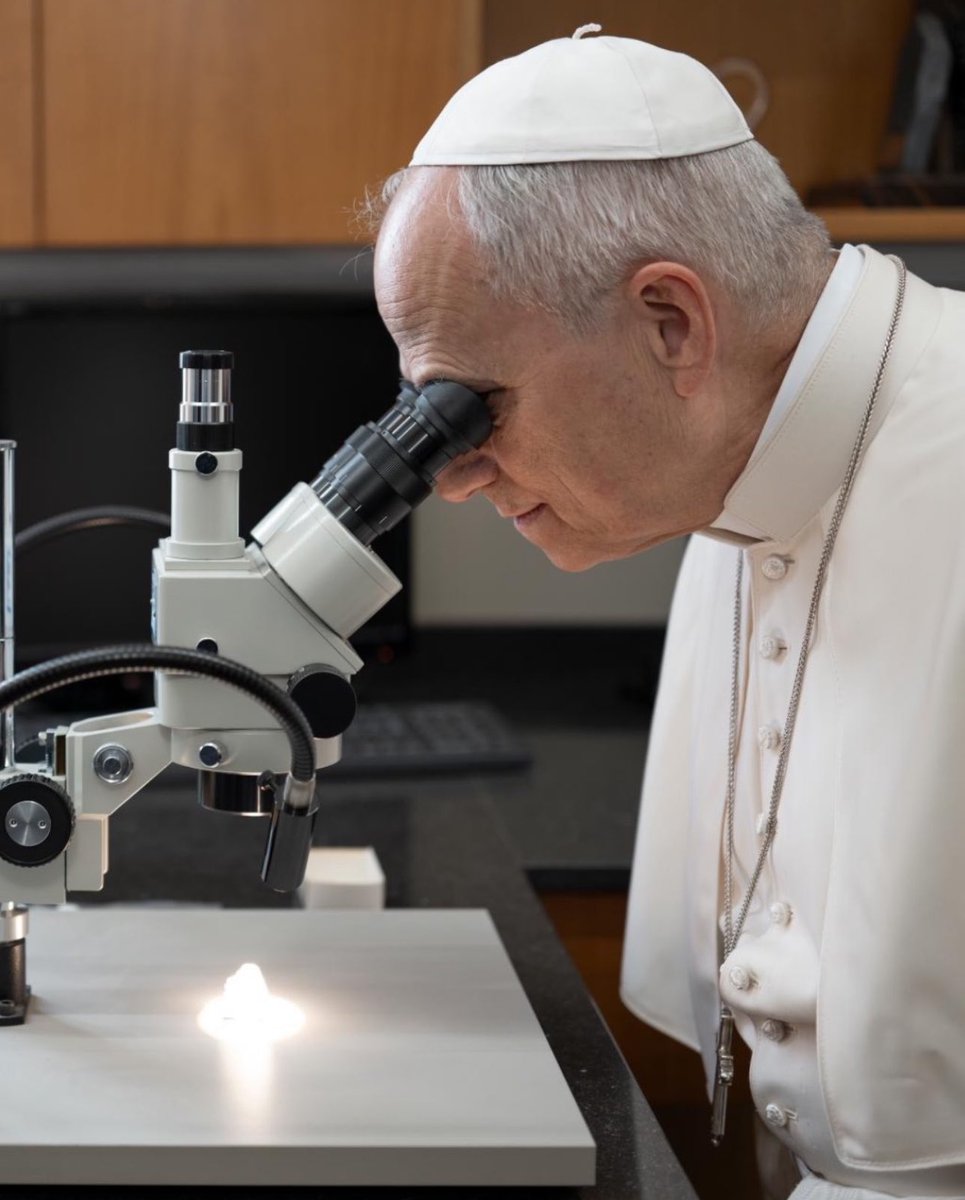
Atheists: The Catholic Church has always been against science Meanwhile the Church: • Georges Lemaître — Catholic priest; proposed the “primeval atom” theory, which became the foundation of the modern Big Bang cosmological model. • Gregor Mendel — Augustinian friar; discovered the laws of inheritance (Mendelian genetics), forming the basis of modern genetics. • Nicolaus Copernicus — Catholic canon; developed the heliocentric model (Sun-centered solar system), transforming astronomy. • Christopher Clavius — Jesuit priest; principal mathematician behind the Gregorian calendar reform still used worldwide today. • Roger Boscovich — Jesuit priest; early theory of atomic structure and force fields, influencing modern physics concepts. • Angelo Secchi — Jesuit priest; pioneer of astrophysics and first classification system of stars based on spectra. • Francesco Maria Grimaldi — Jesuit priest; discovered diffraction of light and contributed to wave theory of optics. • Jean Picard — Catholic priest; first highly accurate measurement of Earth’s radius using modern scientific instruments. • Nicolas Steno — Catholic bishop; founded stratigraphy (law of superposition), a foundation of modern geology. • Marin Mersenne — Minim friar; “Mersenne primes” in number theory are named after him; also built scientific communication networks across Europe. • Benito Viñes — Jesuit priest; developed early hurricane tracking and forecasting methods in Cuba.
Sachin Jose tweet media
English
134
1.1K
4.5K
147.2K