Mochimo Post Quantum

221 posts

Mochimo Post Quantum banner
Mochimo Post Quantum

Mochimo Post Quantum

@MochimoArmy

Mochimo Post Quantum Resistant since June 25, 2018 | NO ICO | Dezentralize | Fully Community Driven

Katılım Haziran 2021
17 Takip Edilen25 Takipçiler
Mochimo Post Quantum
Mochimo Post Quantum@MochimoArmy·
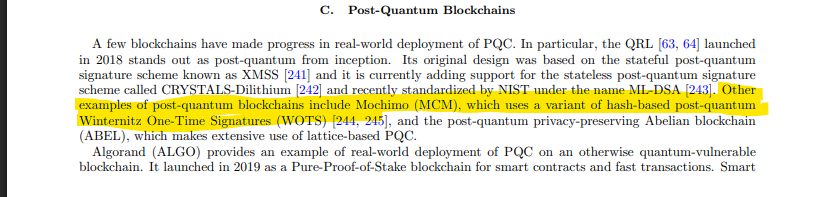
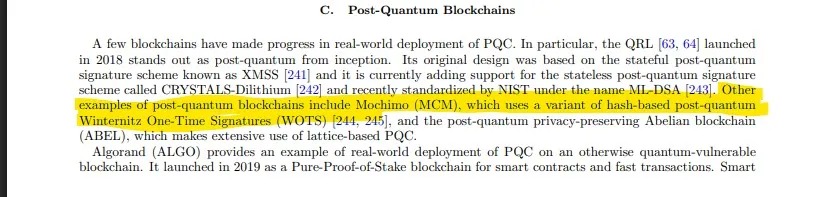
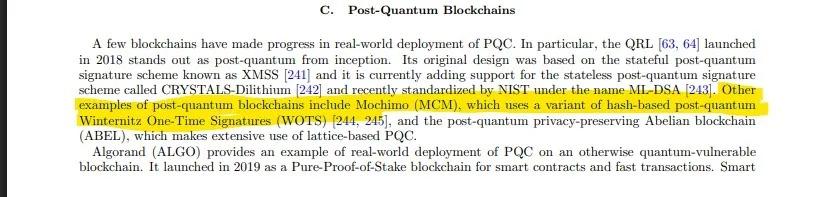
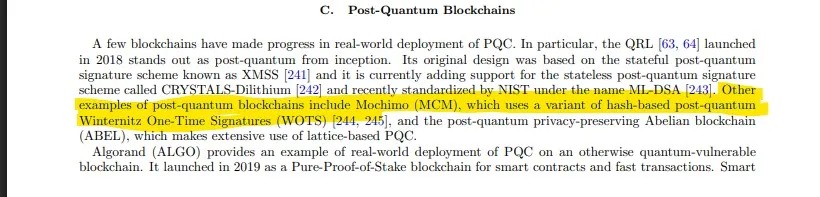
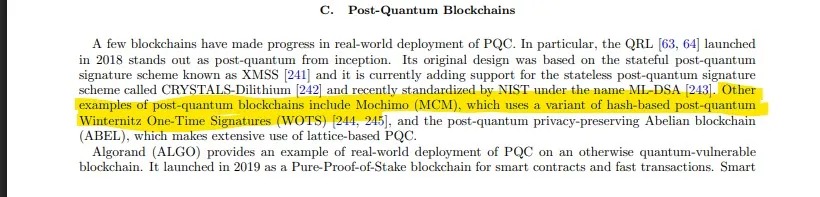
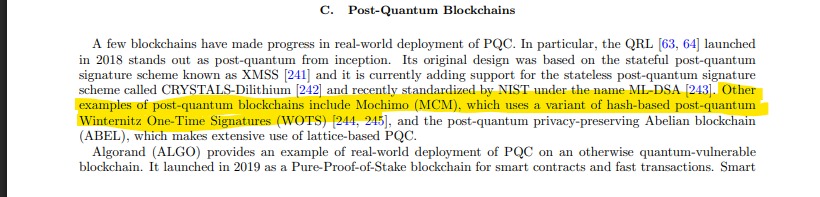
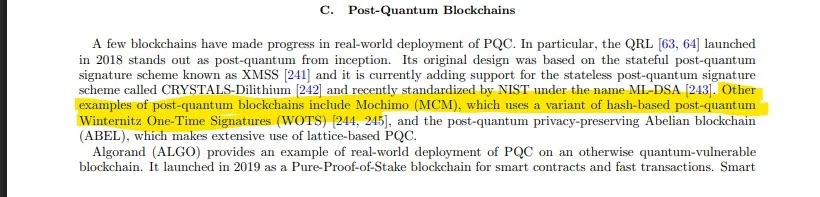
Mochimo uses: WOTS+ (Winternitz One-Time Signature Plus) This is: •Quantum-resistant •Hash-based cryptography •Unbreakable by quantum computers Also used in: •NIST Post-Quantum Cryptography research @mochimocrypto #PostQuantum

Mochimo Post Quantum tweet media
English
0
0
1
10
Mochimo Post Quantum
Mochimo Post Quantum@MochimoArmy·
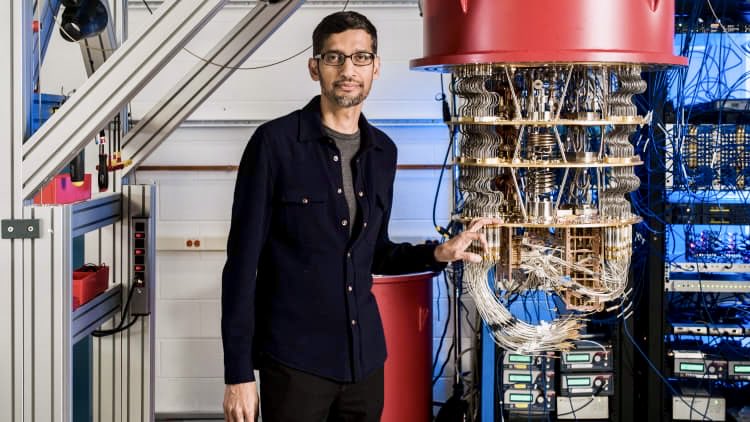
@mochimo_IDN @GoogleQuantumAI Mochimo dibuat untuk menghadapi ancaman dari Quantum Computing Karena komputer kuantum di masa depan bisa: •Membobol wallet crypto biasa •Memecahkan enkripsi Bitcoin & Ethereum Mochimo menggunakan: •WOTS+ (Winternitz One-Time Signature) •SHA-256 berbasis hash
Indonesia
1
0
0
35
Dimitry Nakhla | Babylon Capital®
Google, the Dot-Com Bubble & Quantum Computing — An Interesting Parallel Worth Thinking About 👇🏽 In the late 1990s, markets went parabolic on internet stocks — unprofitable companies trading at bubble valuations to reflect the hype around what the internet might become. The bubble burst. But the valuations themselves were a form of social proof — what I’d call “𝐌𝐚𝐫𝐤𝐞𝐭 𝐏𝐫𝐨𝐨𝐟” — that this transition was real and that it would eventually matter enormously. It did. Fast forward to today. Quantum computing stocks like $IONQ, $QBTS, and $RGTI recently traded at tens of billions in market cap with essentially no revenue. Another massive bubble. Sound familiar? 𝐉𝐮𝐬𝐭 𝐚𝐬 𝐭𝐡𝐞 𝐝𝐨𝐭-𝐜𝐨𝐦 𝐛𝐮𝐛𝐛𝐥𝐞 𝐰𝐚𝐬 𝐌𝐚𝐫𝐤𝐞𝐭 𝐏𝐫𝐨𝐨𝐟 𝐭𝐡𝐚𝐭 𝐭𝐡𝐞 𝐢𝐧𝐭𝐞𝐫𝐧𝐞𝐭 𝐰𝐚𝐬 𝐫𝐞𝐚𝐥 𝐚𝐧𝐝 𝐢𝐧𝐞𝐯𝐢𝐭𝐚𝐛𝐥𝐞 — 𝐭𝐡𝐞 𝐦𝐚𝐫𝐤𝐞𝐭’𝐬 𝐰𝐢𝐥𝐥𝐢𝐧𝐠𝐧𝐞𝐬𝐬 𝐭𝐨 𝐚𝐬𝐬𝐢𝐠𝐧 𝐭𝐡𝐨𝐬𝐞 𝐬𝐚𝐦𝐞 𝐤𝐢𝐧𝐝𝐬 𝐨𝐟 𝐯𝐚𝐥𝐮𝐚𝐭𝐢𝐨𝐧𝐬 𝐭𝐨 𝐪𝐮𝐚𝐧𝐭𝐮𝐦 𝐜𝐨𝐦𝐩𝐮𝐭𝐢𝐧𝐠 𝐜𝐨𝐦𝐩𝐚𝐧𝐢𝐞𝐬 𝐢𝐬 𝐌𝐚𝐫𝐤𝐞𝐭 𝐏𝐫𝐨𝐨𝐟 𝐭𝐡𝐚𝐭 𝐪𝐮𝐚𝐧𝐭𝐮𝐦 𝐜𝐨𝐦𝐩𝐮𝐭𝐢𝐧𝐠 𝐢𝐬 𝐥𝐞𝐠𝐢𝐭𝐢𝐦𝐚𝐭𝐞 𝐚𝐧𝐝 𝐢𝐭’𝐬 𝐜𝐨𝐦𝐢𝐧𝐠. 𝐓𝐡𝐞 𝐛𝐮𝐛𝐛𝐥𝐞 𝐦𝐚𝐲 𝐝𝐞𝐟𝐥𝐚𝐭𝐞. 𝐓𝐡𝐞 𝐭𝐞𝐜𝐡𝐧𝐨𝐥𝐨𝐠𝐲 𝐰𝐨𝐧’𝐭. 𝙒𝙝𝙞𝙘𝙝 𝙗𝙧𝙞𝙣𝙜𝙨 𝙢𝙚 𝙩𝙤 𝙩𝙝𝙚 𝙢𝙤𝙨𝙩 𝙞𝙣𝙩𝙚𝙧𝙚𝙨𝙩𝙞𝙣𝙜 𝙦𝙪𝙚𝙨𝙩𝙞𝙤𝙣: It’s not which quantum company survives. It’s which existing, profitable, high-quality business is best positioned to capture the benefits when it arrives. For me, that answer is $GOOG. Google is already a leader in quantum computing research. And the beauty of owning Google today is the asymmetry — you’re not making a pure quantum bet. You’re buying one of the greatest businesses ever built, with an 𝐞𝐦𝐛𝐞𝐝𝐝𝐞𝐝 𝐜𝐚𝐥𝐥 𝐨𝐩𝐭𝐢𝐨𝐧 𝐨𝐧 𝐪𝐮𝐚𝐧𝐭𝐮𝐦 𝐜𝐨𝐦𝐩𝐮𝐭𝐢𝐧𝐠. If quantum never fully arrives? You still own Google. If it does? They may be the most prepared company on the planet to capture it. As Mohnish Pabrai would say — “Heads I win; Tails I don’t lose much.” $GOOGL
English
6
4
41
20.6K
Nate Geraci
Nate Geraci@NateGeraci·
Bitcoin is no different than anything else ever created by humans… If created, then it can be destroyed. Is quantum computing a threat? Sure. But you’re assuming humans who created bitcoin are unable counter the threat (which was created by humans). Around and around we go.
English
13
4
50
4.7K
Vivek Sen
Vivek Sen@Vivek4real_·
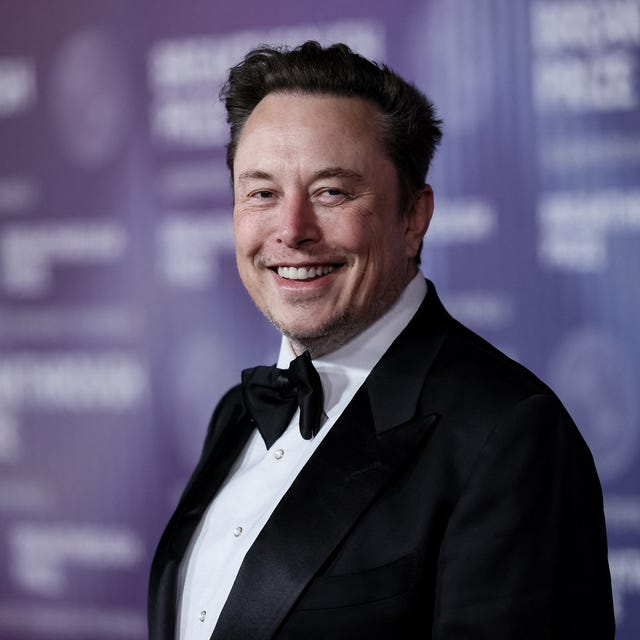
BREAKING: ELON MUSK JUST SAID QUANTUM COMPUTING COULD RECOVER LOST BITCOIN 🤯 THE WORLD’S RICHEST MAN HAS BTC ON HIS MIND. ABSOLUTELY WILD 🚀
Vivek Sen tweet mediaVivek Sen tweet media
English
172
268
2.2K
127.1K
BTC News Global
BTC News Global@BTCNewsGlobal·
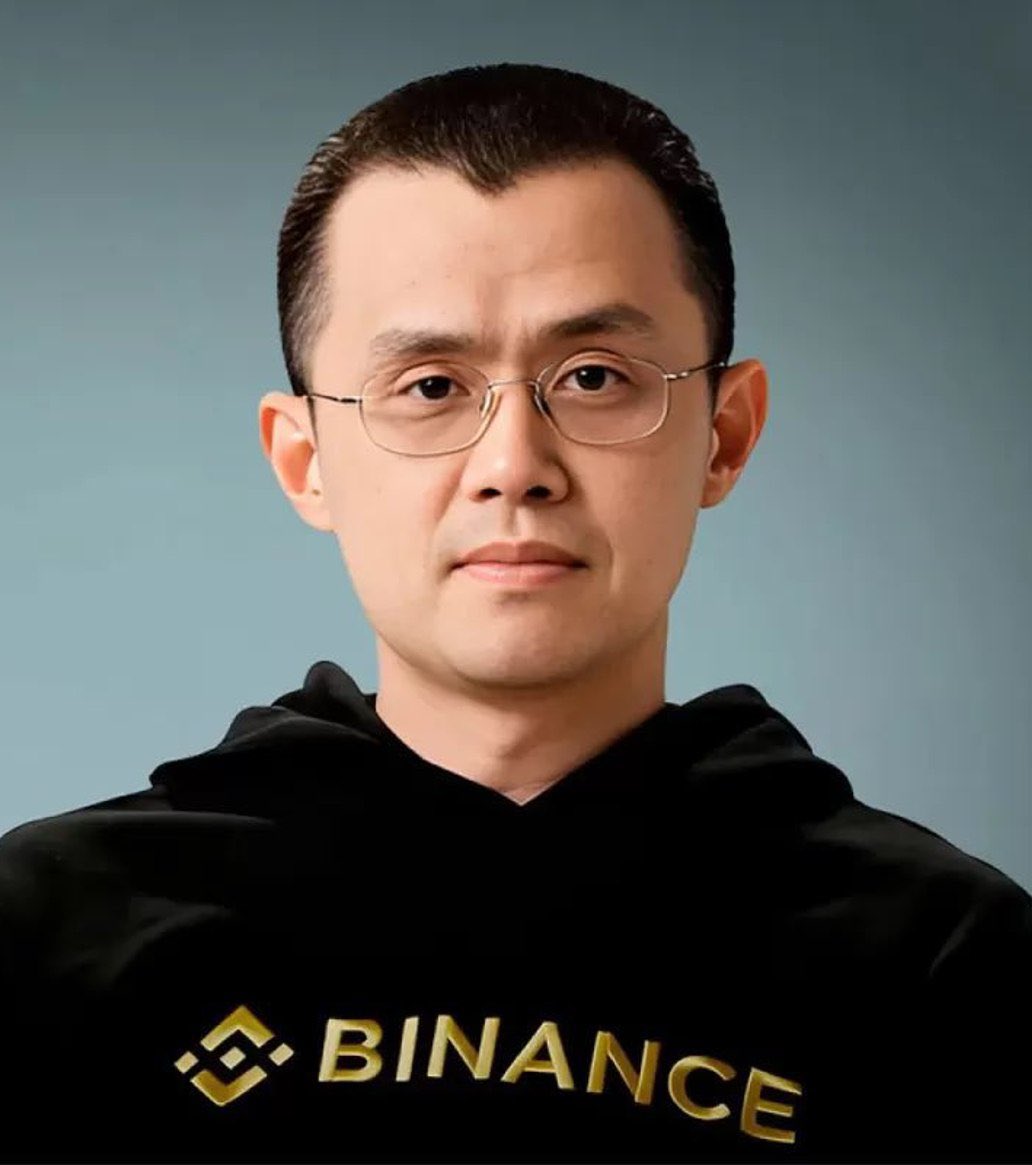
💥BREAKING: CZ says there is no need to worry about quantum computing for Crypto. "All crypto has to do is to upgrade to Quantum-Resistant (Post-Quantum) Algorithms."
BTC News Global tweet mediaBTC News Global tweet media
English
8
4
30
4K
Dr Singularity
Dr Singularity@Dr_Singularity·
Quantum computing breakthrough Caltech scientists have built the largest quantum computer qubit array ever: 6,100 neutral atom qubits held in place by lasers. This is a big leap from previous systems, which only had hundreds. Quantum computers use qubits, which can be in two states at once (called superposition), giving them far more power than normal computers, but they’re also fragile and need error correction. To fix this, future quantum machines will need hundreds of thousands of qubits. The Caltech team showed they could scale up without losing quality: Qubits stayed stable for 13 seconds (10× longer than before). They manipulated qubits with 99.98% accuracy. They even moved qubits around while keeping them in superposition, a key feature for better error correction. The next step is to entangle these qubits so they work together, opening the true power of quantum computing. This could help us simulate nature, discover new materials, explore new physics, and understand space time in ways classical computers never could.
Dr Singularity tweet media
English
64
155
912
55.9K
The Crypto Times
The Crypto Times@CryptoTimes_io·
🚨JUST IN: Changpeng Zhao weighs in on quantum computing fears: Says crypto isn’t at risk long-term — networks can upgrade to quantum-resistant algorithms. But warns of short-term challenges: forks, bugs, and wallet migrations. Bottom line: No panic. Crypto will survive post-quantum.
The Crypto Times tweet media
English
1
0
5
287
Shanaka Anslem Perera ⚡
Shanaka Anslem Perera ⚡@shanaka86·
Nobody is talking about what the helium shortage means for quantum computing. Every superconducting quantum computer on earth, every system at IBM, Google Quantum AI, and Quantinuum, operates inside a dilution refrigerator cooled to approximately 10 to 20 millikelvin. That is colder than outer space. The cooling mechanism relies on the phase separation of a helium-3 and helium-4 mixture below 0.87 kelvin, where helium-3 atoms continuously cross the boundary between two quantum phases, absorbing heat in the process. There is no substitute for this mechanism at scale. It is the physics that makes superconducting qubits possible. Qatar produces one-third of the world’s helium as a byproduct of LNG processing at Ras Laffan. Iranian missiles hit Ras Laffan on March 18 and 19. QatarEnergy declared force majeure. Repairs will take three to five years. Helium spot prices have doubled. Approximately 200 specialized cryogenic containers worth roughly $1 million each are stranded in the Middle East, and their cargo begins boiling off after 35 to 48 days. The Quantum Computing Report and Nature flagged on March 27 that US quantum labs have begun implementing rationing protocols for helium-3 and helium-4 mixtures used in dilution refrigerators. Delayed cooldown cycles are being reported at IBM Quantum and Quantinuum facilities. The potential impact: 6 to 18 months of delays in qubit scaling timelines and post-quantum cryptography testing. Modern closed-cycle “dry” dilution refrigerators significantly reduce liquid helium consumption, and labs maintain months of inventory with recycling rates above 80 percent. Trapped-ion platforms like IonQ have minimal helium dependency. No quantum lab has shut down. The counterarguments are real and must be stated at full strength: quantum computing uses a tiny fraction of global helium supply, roughly 0.1 to 0.5 percent, and rationing prioritizes critical applications. But the second-order effects are what matter for trillion-dollar allocators. If qubit scaling delays by 6 to 18 months, then post-quantum cryptography standards migration slows by the same interval. That means the window during which current encryption remains vulnerable to future quantum attack extends. Every central bank, every sovereign wealth fund, every institution holding assets secured by RSA or elliptic-curve cryptography has a direct exposure to this timeline. And helium-3 is also the working fluid in the dilution fridges used for fusion energy research. The same shortage rationing quantum labs is rationing the facilities developing the energy source that could eventually replace the fossil fuels flowing through the strait that caused the shortage. The circularity is total. Follow the chain. Iranian missiles hit a Qatari gas plant. The gas plant produced helium as a byproduct. The helium cooled quantum computers to temperatures colder than deep space. The quantum computers were developing the encryption standards that protect the global financial system. The financial system runs on energy that transits the strait that Iran just blockaded. One missile. Six domains. Every node connected through a single element that weighs four atomic mass units, cannot be manufactured, and has no substitute. The market priced the oil. It has not priced the helium. And it has not begun to price the quantum. open.substack.com/pub/shanakaans…
Shanaka Anslem Perera ⚡ tweet media
English
44
170
538
55.7K
Cole Grinde
Cole Grinde@GrindeOptions·
What’s the best quantum computing stock on the market right now?
English
46
3
40
14K
Project Eleven
Project Eleven@projecteleven·
🚨 Google has sounded the quantum alarm 🚨 Today, they released groundbreaking progress towards breaking crypto using a quantum computer. TLDR - Existing cryptography is dead. Mempool attacks are real. We must migrate to post-quantum now. Thread 🧵
Project Eleven tweet media
English
457
689
3.6K
2.7M
Kekius Maximus
Kekius Maximus@Kekius_Sage·
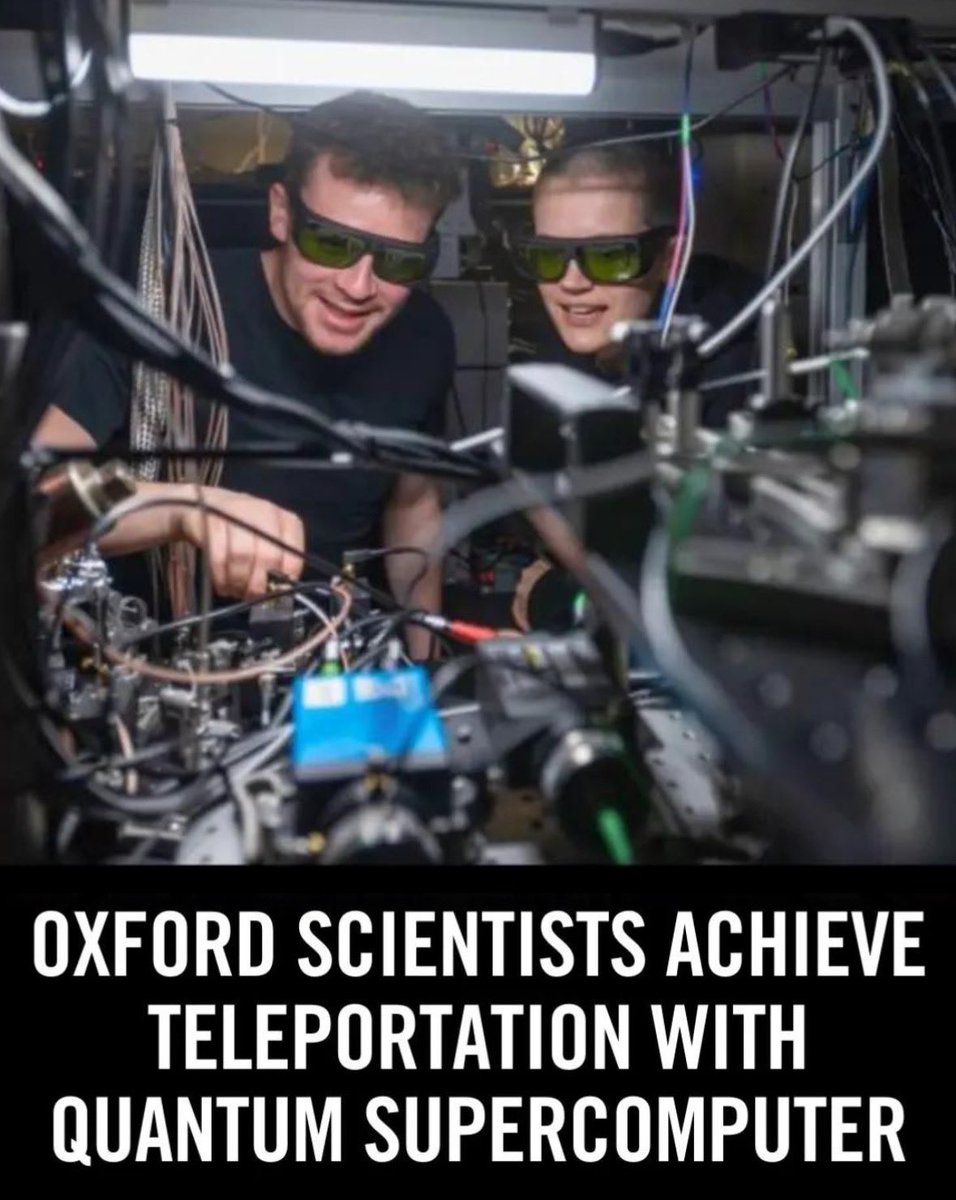
🚨Oxford Geniuses succesfully TELEPORTED the Core of Computer Algorithms Across a Room with LIGHT PARTICLES. Quantum Computing’s Wildest Dream Comes True! Scientists beamed logical gates, the fundamental building blocks of algorithms, between two quantum processors over six feet apart, creating a mind-bending shared link via photons that could redefine computing forever!
Kekius Maximus tweet media
English
126
167
804
33.2K
Mario Nawfal
Mario Nawfal@MarioNawfal·
QUANTUM COMPUTERS DON’T THINK FASTER - THEY THINK EVERYTHING AT ONCE A classical computer tests each possibility one at a time. A quantum computer? It runs every possibility simultaneously. With 20 qubits, it can process a million outcomes at once. With 300 qubits, it could match the number of particles in the observable universe. Now that’s next-level computing. Source: Everysci24
Mario Nawfal@MarioNawfal

🇺🇸 COLDER THAN DEEP SPACE: MICROSOFT’S NEW QUANTUM CHIP NEEDS EXTREME ICE TO WORK Microsoft’s “Majorana 1” chip has to be chilled to 50 millikelvin (10 times colder than interstellar space) just to function. Instead of electrons, it uses strange particles called Majoranas to store up to a million qubits in a single chip. That kind of power could make today’s supercomputers look like clunky calculators. It might reshape AI, science, and every field that needs serious brainpower. Source: iJustine IG
English
74
78
318
154.9K
Derya Unutmaz, MD
Derya Unutmaz, MD@DeryaTR_·
Quantum computing is essentially "God mode" compute. A 2029 arrival would be extremely soon! I don’t quite understand the research and am not sure if that’s what Google implies, but it needs to be taken seriously to prepare, especially for cryptography.
nic carter@nic_carter

Many are wondering "what Google saw" that caused them to revise their post-quantum cryptography transition deadline to 2029 last week. It was this: research.google/blog/safeguard…
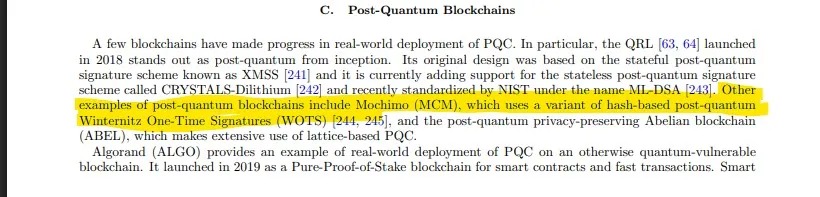
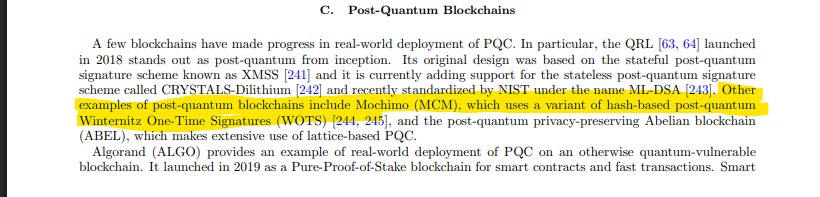
English
15
14
151
14.4K
Conor Deegan
Conor Deegan@conordeegan·
Google Quantum AI published a paper today on quantum attacks against blockchain cryptography, co-authored with Justin Drake from the Ethereum Foundation and Dan Boneh from Stanford. Their new resource estimates for breaking 256-bit ECDLP on secp256k1 come in at 1200 logical qubits with 90 million Toffoli gates, or 1450 with 70 million, which is roughly a 10x improvement in spacetime volume over the best prior work. On a superconducting architecture, that translates to under half a million physical qubits. They treat this as responsible disclosure, using a zero-knowledge proof to validate the resource estimates while withholding the circuits because they consider releasing them unsafe. The paper introduces a distinction between fast-clock architectures (superconducting, photonic, silicon spin) and slow-clock architectures (neutral atom, ion trap). The logical resource estimates are architecture-agnostic, but wall-clock time differs by orders of magnitude and determines which attacks are actually feasible (at rest vs mempool). By precomputing the input-independent first half of the algorithm (a step that depends only on fixed curve parameters, not on any specific public key), a CRQC can sit in a “primed” state and begin key derivation the moment a public key appears in the mempool. From that primed state, derivation takes roughly 9 minutes, Bitcoin's average block time is 10 minutes. The paper estimates a 41% success probability for an on-spend (mempool) attack under somewhat idealised assumptions. I’ve been saying publicly for a long time that at-rest threats are real and urgent, and the paper cites that work, but I have mostly been treating on-spend as a second-order concern and a problem for later, larger machines. That is no longer a good assumption. For fast-clock architectures, a machine capable of at-rest attacks is very likely also capable of on-spend attacks. One pattern the paper surfaces across multiple chains is the idea of quantum computation as a one-time cost that produces indefinitely reusable classical exploits. Ethereum’s KZG trusted setup for Data Availability Sampling, Zcash's Sapling protocol, and Litecoin's MimbleWimble all bake ECDLP hardness into fixed public protocol parameters. In each case, a single CRQC run against those parameters recovers a secret that can be reused without further quantum access, at least until those parameters are replaced. This is a different failure mode to key derivation attacks on individual wallets or validators. Any protocol that encodes ECDLP hardness into fixed public parameters creates a target that only needs to be broken once. Something we talk about a lot and the paper reinforces is that progress in quantum computing does not follow a smooth curve that provides reliable early warning. The hard problems are discrete engineering thresholds (things like error correction, interconnects, decoding) rather than gradual scaling, and a leading architecture could clear all of them while its devices are still too small to break 32-bit ECDLP. Once those engineering problems are solved, the distance from 32-bit to 256-bit is comparatively short. The paper is clear that a public demonstration of Shor’s algorithm on a 32-bit elliptic curve should not be read as the moment to start migrating, but as a signal that migration should already have happened. As a security engineer, my take from the paper is that deploying new cryptographic infrastructure on ECDLP curves is now indefensible given these resource estimates and the consistent downward trajectory of quantum attack costs over the past few years. Our published research is referenced and acknowledged by the authors, and we have been in contact with several of them during the course of this work. It’s great to see this problem treated with this level of seriousness by the people building the hardware that will eventually be used to break these systems.
English
7
10
71
5K
Dom Kwok | EasyA
Dom Kwok | EasyA@dom_kwok·
quantum will soon be able to crack bitcoin in under 9 minutes, with a 41% success rate. new research from google's quantum team suggests cracking bitcoin requires less than 500k qubits (much less than the “millions” previously assumed).
Dom Kwok | EasyA tweet media
English
179
250
1.3K
92.1K
Mochimo Post Quantum retweetledi
Mochimo Official
Mochimo Official@mochimocrypto·
The Google Warning: Google Quantum AI just dropped a bombshell whitepaper on the "Quantum Threat" to Cryptocurrency. The TL;DR? Your ECC-based assets (BTC, ETH) are in the crosshairs. ⬇️ Link here: quantumai.google/static/site-as…
English
1
6
20
552