scythe
253 posts
scythe retweetledi

scythe retweetledi

Regular reminder that Donald Trump’s core competency is not dealmaking with powerful counter-parties. It is duping gullible victims.
English
scythe retweetledi

A long read on Ukrainian UAS success on the southern direction:
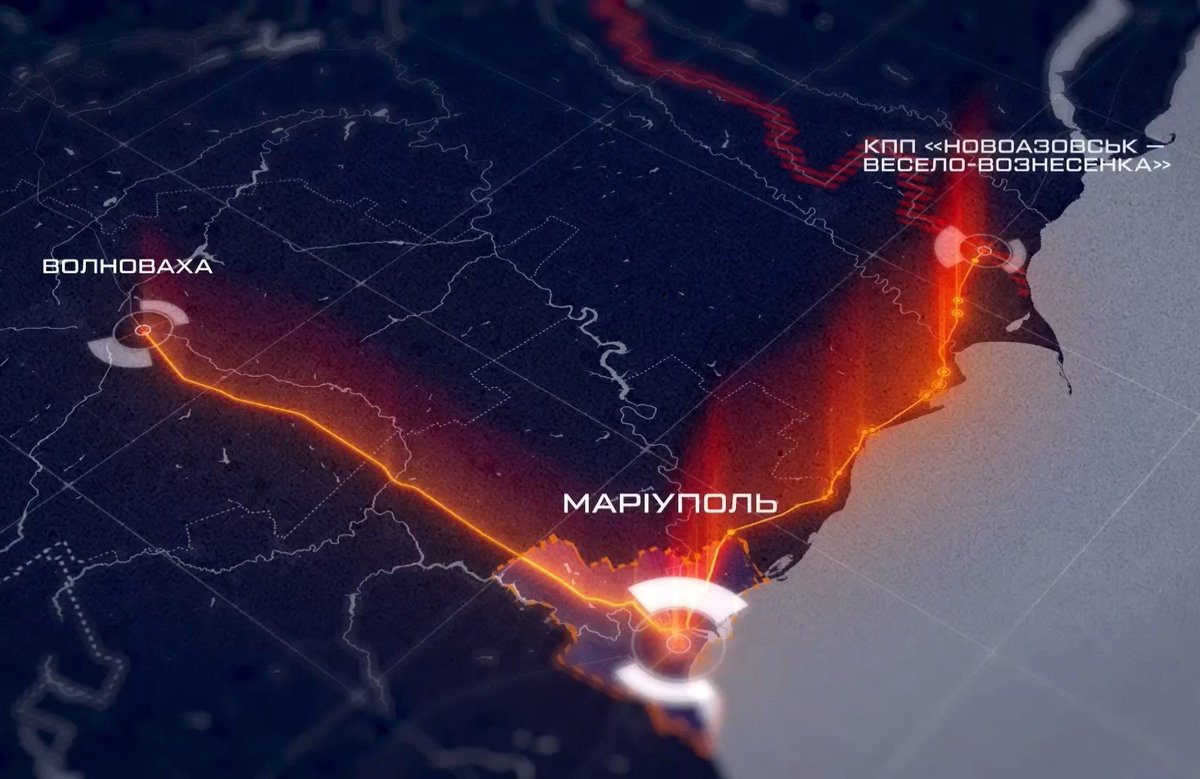
In recent weeks, Ukrainian medium-range strike drones have significantly ramped up operations. Day by day, they are increasing the pace and inflicting more and more damage on ruSSian logistics in the southern direction — with the main strikes targeting the Mariupol–Taganrog and Mariupol–Volnovakha supply routes.
Put simply, this is battlefield isolation — exactly the kind of capability the ruSSian Aerospace Forces failed to achieve either at the start of the war or in the years that followed.
Battlefield isolation (or isolation of the combat area) is a military action aimed at disrupting enemy maneuver, blocking the delivery of ammunition and supplies, and preventing the evacuation of wounded personnel.
This tactic is conducted 50–100 km behind the line of contact and includes the following methods:
• Destruction of logistical hubs: strikes on bridges, railway stations, and transport junctions.
• Disruption of communications: jamming and interference against command-and-control and communication systems.
• Targeting reserves: preemptive strikes against reinforcements before they can enter combat.
Historically, this mission was carried out primarily by attack aircraft and bombers.
The modern concept of battlefield isolation was formalized in the 1980s under the doctrine known as Follow-On Forces Attack (FOFA).
FOFA was a Cold War-era NATO doctrine officially adopted in 1984. It proposed the use of deep conventional air strikes and ground-launched missiles to delay, disrupt, and destroy the enemy’s second- and third-echelon forces — reserves and reinforcements — before they could reach frontline engagements.
Developed under the leadership of General Bernard W. Rogers, NATO’s Supreme Allied Commander Europe (SACEUR), FOFA served several key strategic purposes:
• Conventional deterrence: strengthening NATO’s conventional defense capabilities so the alliance would not have to rely on nuclear weapons to stop the numerically superior Warsaw Pact forces.
• Deep targeting strategy: instead of focusing solely on the “close battle” at the front line, FOFA emphasized strikes against enemy forces located behind the active combat zone and throughout the operational rear.
• Technological innovation: the doctrine accelerated the development of advanced microelectronics, all-weather and night target acquisition systems, airborne battlefield surveillance platforms such as Joint STARS, and precision-guided munitions capable of striking moving targets deep behind enemy lines.
In many ways, modern long-range drone warfare represents a continuation of the same operational logic — replacing expensive strike aircraft with large numbers of cheaper, expendable unmanned systems (UAS) capable of continuously hunting logistics, reserves, and supply routes far behind the front.
And if we take that last point (UAS), add Ukrainian ingenuity, we get its modern form — combining large numbers of drones, AI, and modern communications systems like Starlink.
In essence, this is a revolution in warfare built on top of an older doctrine.
Since roughly mid-spring, Ukrainian UAV units have begun to widely deploy drones that specifically cover the “mid-strike” range. These include loitering munitions such as RAM-2X, RAM-3X, D-4, as well as various modifications of HORNET drones.
Together, these systems fill the gap between tactical frontline drones and long-range strike assets, creating a layered, continuous strike capability against logistics and targets in operational depth.
It should be noted, however, that preparations for FOFA-style operations began much earlier. Over the past year — especially in the second half — we observed a gradual degradation of ruSSian air defense systems.
This process occurred across all sectors, but it was particularly noticeable in the southern direction.
1/
English
scythe retweetledi

🇺🇦 Contre-attaque réussie au sud de Zaporijia ! Profitant des failles logistiques russes, les forces ukrainiennes ont repris le contrôle de Stepnohirsk et progressent maintenant vers Kamyanske.
Ce revers local fait particulièrement mal à Moscou : il efface en quelques jours les gains territoriaux que l'armée russe a mis près d'un an à obtenir au prix de lourds efforts. La dynamique change sur le terrain.
#Zaporizhzhia #UkraineNews #CounterOffensive #SlavaUkraini

Français
scythe retweetledi

Holy shit..
Tonight's post from Russia's biggest military blogger paints the absolute darkest picture for the Russian military since any time of the war and very mych explains why Putin is now targeting Kyiv in desperation. READ THIS.
-Logistics Problems, Deeper Than They Seem-
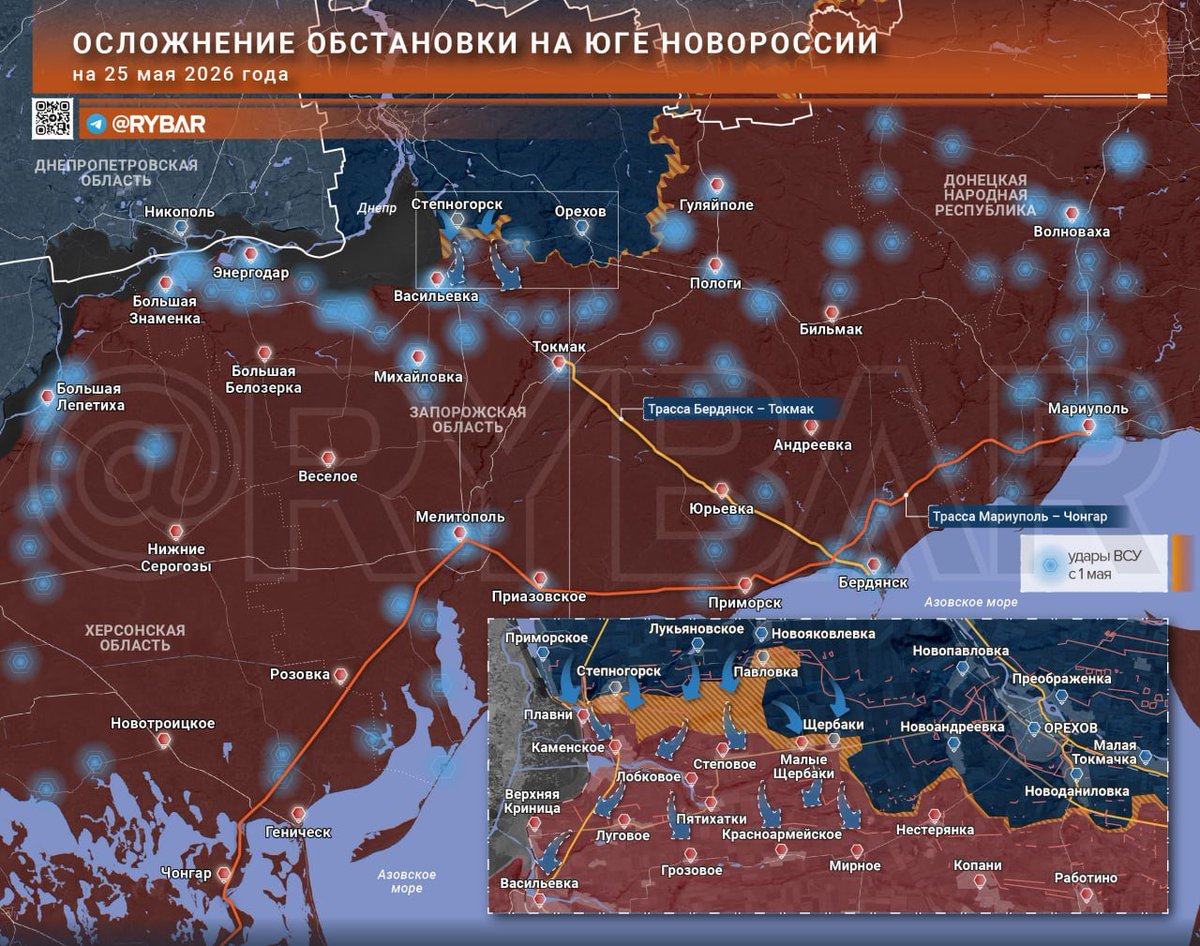
The situation in Russia's southern regions is becoming increasingly threatening. Since early May, Ukrainian forces have significantly increased the number of drone strikes against vehicles transporting various goods to the Kherson and Zaporizhzhia regions and Crimea. There is a risk of shortages of certain goods on the peninsula, and fuel sales are restricted.
The threat is not only the disruption of the Crimean holiday season or the shortage of certain products on the peninsula. Strikes against cargo carriers on the peninsula directly impact the combat capabilities of the Russian Armed Forces on the southern fronts, where the situation is already precarious.
🔻What's happening on the front?
➡️The enemy has been attacking the Kamenskoye area for a long time and has managed to advance in several areas, pushing back Russian forces: Stepnogorsk and Plavni have been nearly lost, along with virtually all territorial gains made by the Russian Armed Forces during the offensive that began in early 2025.
➡️There is a risk that the enemy will not only restore the status quo but also launch an offensive along the Kamenskoye-Shcherbaki line. Indirect signs indicate that the problems in this area have been addressed, but the situation remains difficult.
➡️Ukrainian drone operators have significantly increased their activity in strikes against Kamenka-Dniprovska, Vodyane, and Enerhodar. Every 20-30 minutes, local public groups report dozens of drone attacks on the city. There have been casualties among the local population. Employees of the Zaporizhzhia Nuclear Power Plant are also becoming targets, as officially reported by the company's resources.
➡️This may indicate that the enemy is preparing, if not a full-scale landing, then a diversionary strike through the reeds at the bottom of the former Kakhovka Reservoir.
The loss of the Zaporizhzhia Nuclear Power Plant cannot be allowed: dislodging even small enemy forces from there will be an extremely difficult task. Moreover, the Russian Armed Forces will be severely limited in their means of destruction, as the Zaporizhzhia Nuclear Power Plant is not a target worth targeting with airstrikes.
❗️Considering that Ukrainian forces have already partially paralyzed the logistics of southern Russia in the land corridor to Crimea, it is not difficult to imagine what will happen if the Ukrainian Armed Forces manage to breach the Russian Armed Forces' defenses along the Kamenskoye-Shcherbaki line.
📌The Russian Armed Forces will have to deploy reinforcements along the route to Vasilyevka, the roads to which are already under frequent enemy attack. In the worst-case scenario, stabilizing the situation will require the deployment of additional forces via routes such as Tokmak and the more distant Berdyansk and Mariupol. Even the delivery of civilian cargo along these routes is already severely disrupted.
❓What can be done about this? The issue of organizing a "small sky" air defense system is clear and has been studied. It has also been discussed at the highest levels. The exponential increase in attacks after the May holidays is obvious, even though the roads were unsafe even before. Just in time for the beginning of May, the Ukrainian Armed Forces tested Hornets, and after the ceasefire, they began massive use, giving no respite to develop countermeasures.

English

Ukrainian drones struck several more valuable Russian rear targets, including:
- An S-300V surface-to-air missile launcher near the village of Shyroka Balka, Donetsk Oblast.
- A Tor surface-to-air missile launcher near the village of Berestove, Zaporizhzhia Oblast.
- A BM-27 Uragan MLRS near the village of Zelenyi Hai, Donetsk Oblast.
- A mobile fire crew near the village of Monakhove, Donetsk Oblast.
- A port crane in the city of Berdyansk, Zaporizhzhia Oblast.
- Several other less important targets closer to the frontline.
English


@GuntherEagleman I hope your sons and daughters are the first to be sent. You have no idea how many people hate you @GuntherEagleman.
English

🚨 ANOTHER HUGE WIN for President Trump, CBS just dropped the poll bomb: 92% of MAGA Republicans APPROVE of his strikes on Iran, with only 8% disapproving.
English

@aviejibbz/live?enter_from_merge=share&enter_method=share_twitter" target="_blank" rel="nofollow noopener">tiktok.com/@aviejibbz/liv… @aviejibbz/live?enter_from_merge=share&enter_method=share_twitter" target="_blank" rel="nofollow noopener">tiktok.com/@aviejibbz/liv…
ZXX
scythe retweetledi

BREAKING:
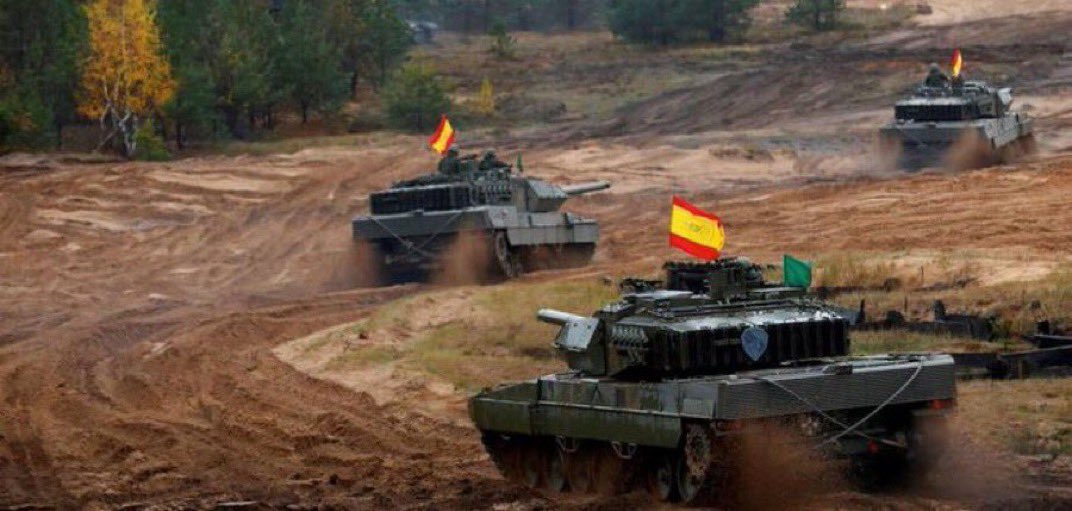
Spain announces that it’s donating another military aid package to Ukraine worth EUR 1 billion
🇪🇸🇺🇦
English
scythe retweetledi

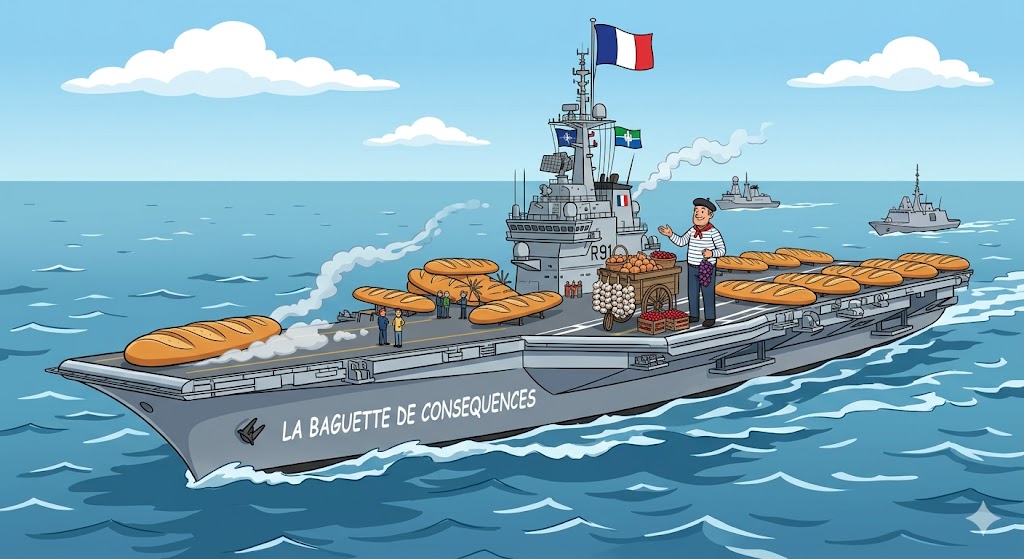
@secretsqrl123 La Baguette de consequences & DEV .. God bless all who munch on her
@actfast @DevSlashNull_
English
scythe retweetledi


We would love to know where our supporters are joining us from. 🌍
Drop your country and city in the comments!
English
scythe retweetledi