Morrigan Nolan retweetledi

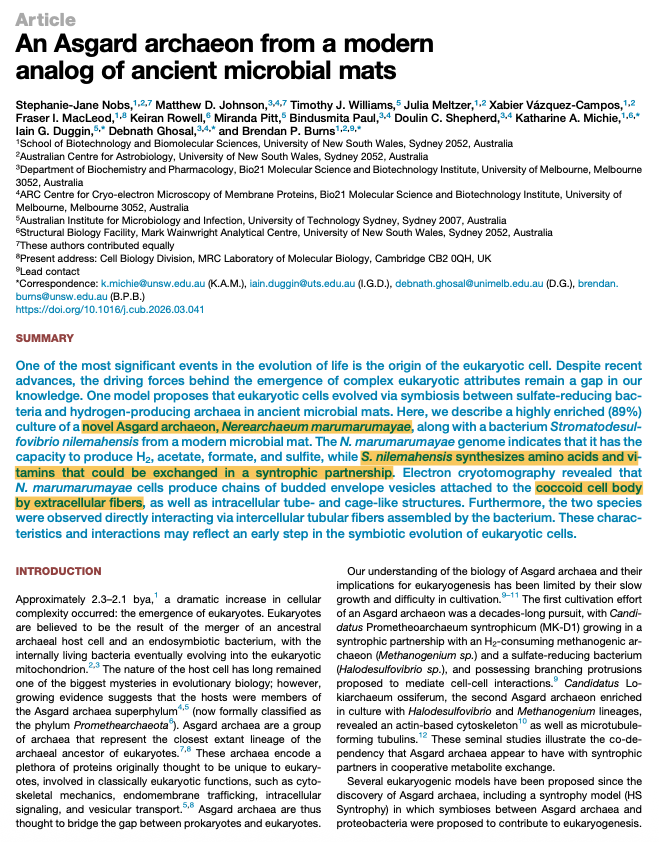
New Asgard paper dropped yesterday. This is only the third Asgard archaeon to be cultured in the laboratory (the first took 10+ years of work.)
Many microbiologists think that the Asgard archaea are the closest living relatives of the ancestor that gave rise to eukaryotic cells. They have cellular features that "bridge" bacterial and eukaryotic cells. And this new Asgard species, found off the coast of Western Australia, is interesting for a couple reasons:
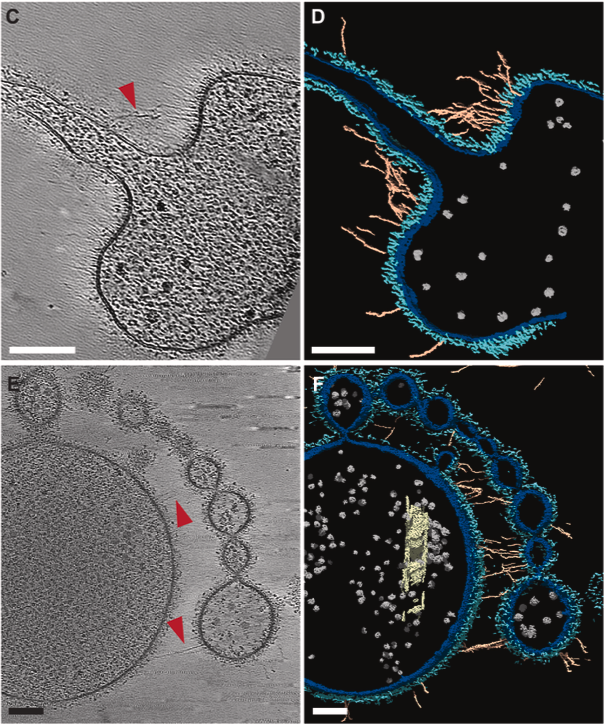
1. The Asgard buds off extracellular vesicles, like many other organisms. But these vesicles remain "tethered" to the main cell via a thin fiber. You can see this clearly in the cryotomography images below. I've never seen other examples of this (but maybe microbiologists on Twitter have.)
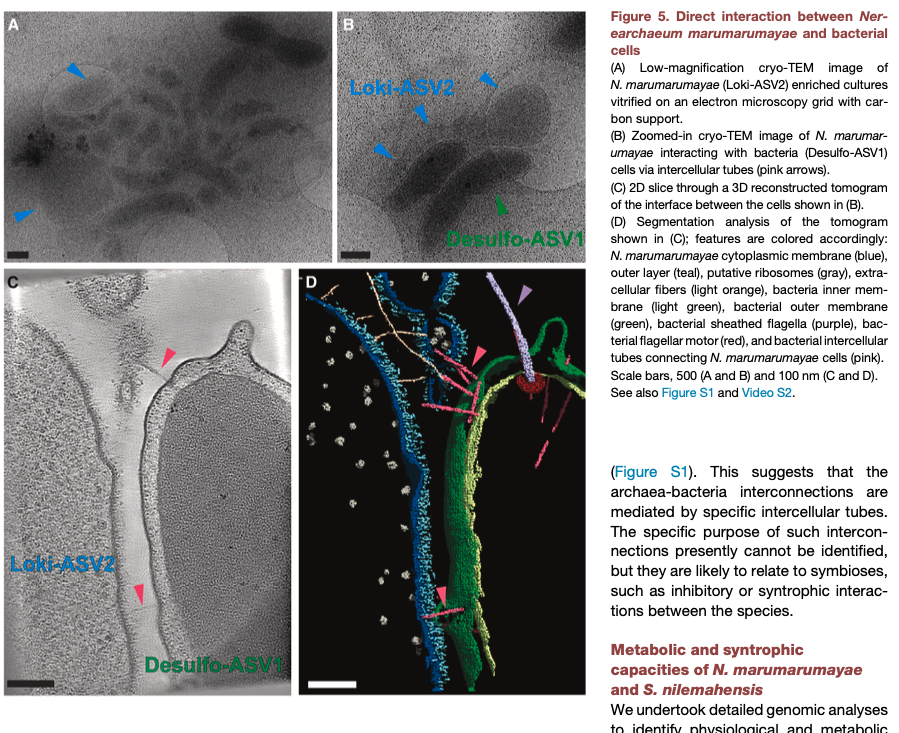
2. Asgards cannot be cultured on their own. All of the species cultured thus far can only be grown in the presence of a syntroph. This Asgard can only be cultured with a microbe, called S. nilemahensis. The Asgard makes acetate, formate, and lactate for the bacterium; the bacterium, in exchange, makes amino acids and vitamins for the Asgard. (The archaeon seems to entirely lack metabolic pathways for arginine, proline, phenylalanine, and tryptophan.) These nutrients are exchanged via hollow tubes that physically context the Asgard --> bacterium. (See the images below.)
English