Sabitlenmiş Tweet
مُهنّدْ
154 posts

مُهنّدْ
@Mosolomn
Seeking Wisdom in Favour of Life Quality.
Electronic. Katılım Mart 2013
262 Takip Edilen28 Takipçiler

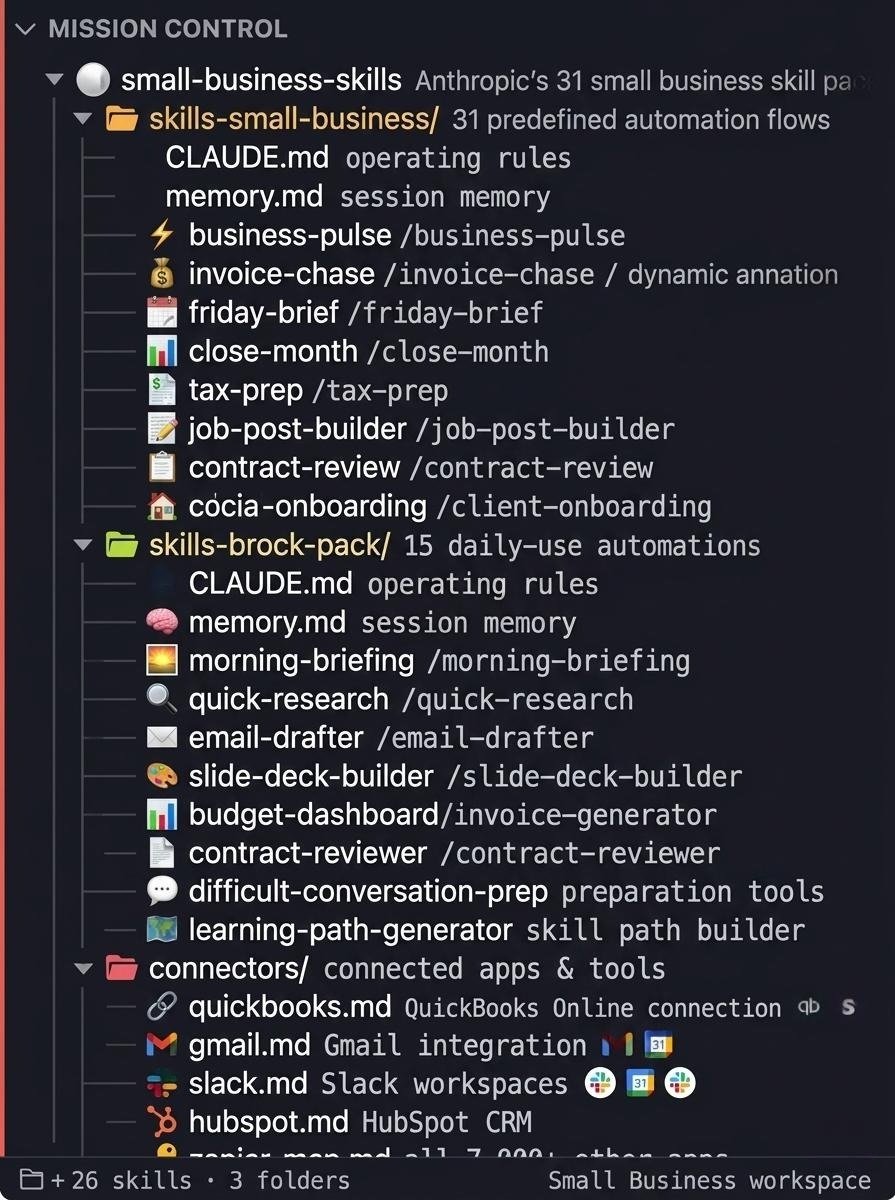
Claude For Small Business is INSANE.
I've built a complete breakdown of all 31 Anthropic Small Business skills that maps every workflow, connector, and automation in under 10 minutes.
The same skill stack that had 382,000 downloads on its first day.
Financial operations, sales and client work, HR and hiring, marketing and growth, reporting and dashboards.
Inside the breakdown:
- All 31 skills organised by function with the 5 to run first
- The 12 connector setup guide in priority order with permission settings for every sensitive action
- Worked examples for Business Pulse, Invoice Chase, and Job Post Builder with real output shown
Want a copy? Like + Comment "31" and I'll send it over ASAP
(Must be following)
English
مُهنّدْ retweetledi

In a world that keeps accelerating, the solution to avoid becoming a hamster in a wheel is not to slow down, it's to differentiate yourself by thinking alone and truly independently, and play another game altogether.
English
@dryanallah بارك الله فيك دكتورنا، كلامك دقيق ومؤلم في آن واحد.
البيروقراطية فعلاً تحول الأكاديمي من مبدع إلى موظف أوراق. أشاركك الاهتمام الكبير بـالابتكار والإبداع الأكاديمي، خاصة في تطوير المناهج وطرق التدريس. لو سمحت، أود أن أتابع معك بعض الأفكار في هذا المجال. شكراً لك على كل ما تقدمه.
العربية
لجان واجتماعات ونماذج وطلبات لا تنتهي، حتى تحول عضو هيئة التدريس من معلمٍ ومرشدٍ إلى موظف إداري يغرق في الأوراق، ومن باحثٍ مبدع إلى كاتبِ تقارير.
هذه البيروقراطية الخانقة تبعده تماماً عن عمله الأساسي: التدريس والبحث العلمي وخدمة المجتمع، وتقتل الإبداع الأكاديمي تحت ستار "الجودة والاعتماد الأكاديمي".
تعبنا ياجماعة
العربية
مُهنّدْ retweetledi

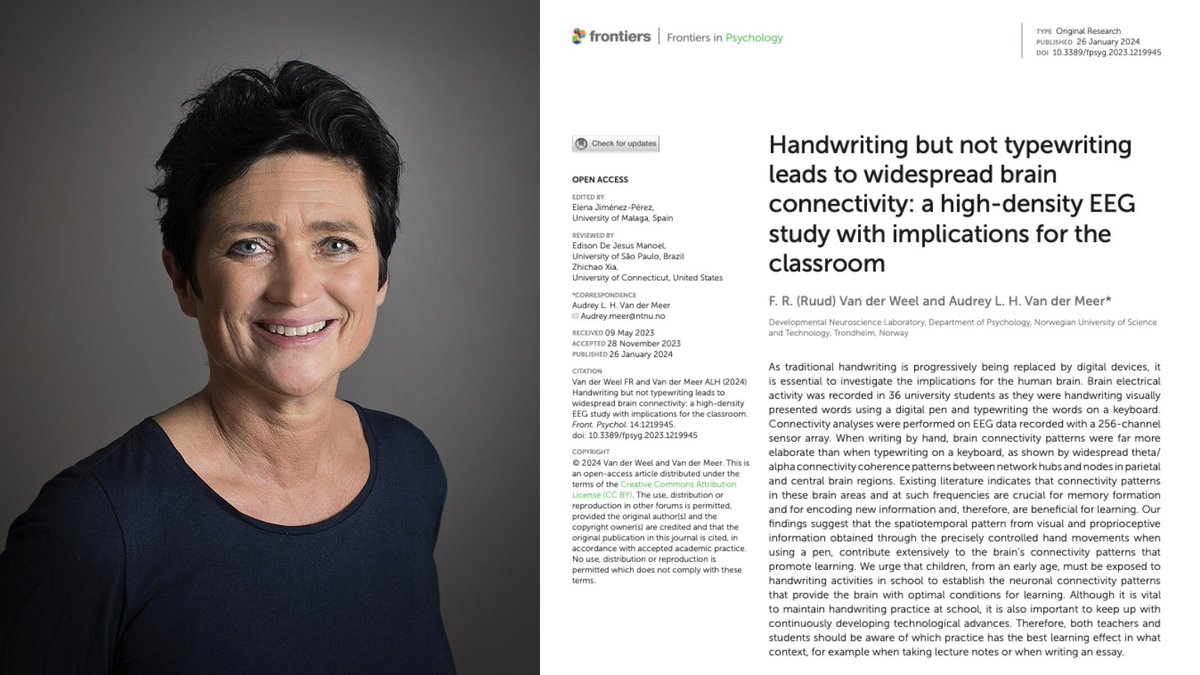
A Norwegian neuroscientist spent 20 years proving that the act of writing by hand changes the human brain in ways typing physically cannot, and almost nobody outside her field has read the paper.
Her name is Audrey van der Meer.
She runs a brain research lab in Trondheim, and the paper that closed the argument was published in 2024 in a journal called Frontiers in Psychology. The finding is brutal enough that it should have changed every classroom on Earth.
The experiment was simple. She recruited 36 university students and put each one in a cap with 256 sensors pressed against their scalp to record brain activity. Words flashed on a screen one at a time.
Sometimes the students wrote the word by hand on a touchscreen using a digital pen, and sometimes they typed the same word on a keyboard. Every neural response was recorded for the full five seconds the word stayed on screen.
Then her team looked at the part of the data most researchers had ignored for years, which is how different parts of the brain were communicating with each other during the task.
When the students wrote by hand, the brain lit up everywhere at once.
The regions responsible for memory, sensory integration, and the encoding of new information were all firing together in a coordinated pattern that spread across the entire cortex. The whole network was awake and connected.
When the same students typed the same word, that pattern collapsed almost completely.
Most of the brain went quiet, and the connections between regions that had been alive seconds earlier were nowhere to be found on the EEG.
Same word, same brain, same person, and two completely different neurological events.
The reason turned out to be something nobody had really paid attention to before her work. Writing by hand is not one motion but a sequence of thousands of tiny micro-movements coordinated with your eyes in real time, where each letter is a different shape that requires the brain to solve a slightly different spatial problem.
Your fingers, wrist, vision, and the parts of your brain that track position in space are all working together to produce one letter, then the next, then the next.
Typing throws all of that away. Every key on a keyboard requires the exact same finger motion regardless of which letter you are pressing, which means the brain has almost nothing to integrate and almost no problem to solve.
Van der Meer said it plainly in her interviews.
Pressing the same key with the same finger over and over does not stimulate the brain in any meaningful way, and she pointed out something that should scare every parent who handed their kid an iPad.
Children who learn to read and write on tablets often cannot tell letters like b and d apart, because they have never physically felt with their bodies what it takes to actually produce those letters on a page.
A decade before her, two researchers at Princeton ran the same fight using a completely different method and ended up at the same answer. Pam Mueller and Daniel Oppenheimer tested 327 students across three experiments, where half took notes on laptops with the internet disabled and half took notes by hand, before testing everyone on what they actually understood from the lectures they had watched.
The handwriting group won by a wide margin on every question that required real understanding rather than surface recall.
The reason was hiding in the transcripts of what the two groups had actually written down.
The laptop students typed almost word for word, capturing more total content but processing almost none of it as they went, while the handwriting students physically could not write fast enough to transcribe a lecture in real time, which forced them to listen carefully, decide what actually mattered, and put it in their own words on the page.
That single act of choosing what to keep was the learning itself, and the keyboard had quietly skipped the choosing and skipped the learning along with it.
Two studies. Two countries. Same answer.
Handwriting makes the brain work. Typing lets it coast.
Every note you have ever typed instead of written went into your brain through a thinner pipe. Every meeting, every book highlight, every idea you captured on your phone instead of on paper was processed at half depth.
You did not forget those things because your memory is bad. You forgot them because typing never woke the part of the brain that would have made them stick.
The fix is the thing your grandmother already knew.
Pick up a pen. Write the thing down. The slower road is the faster one.
English

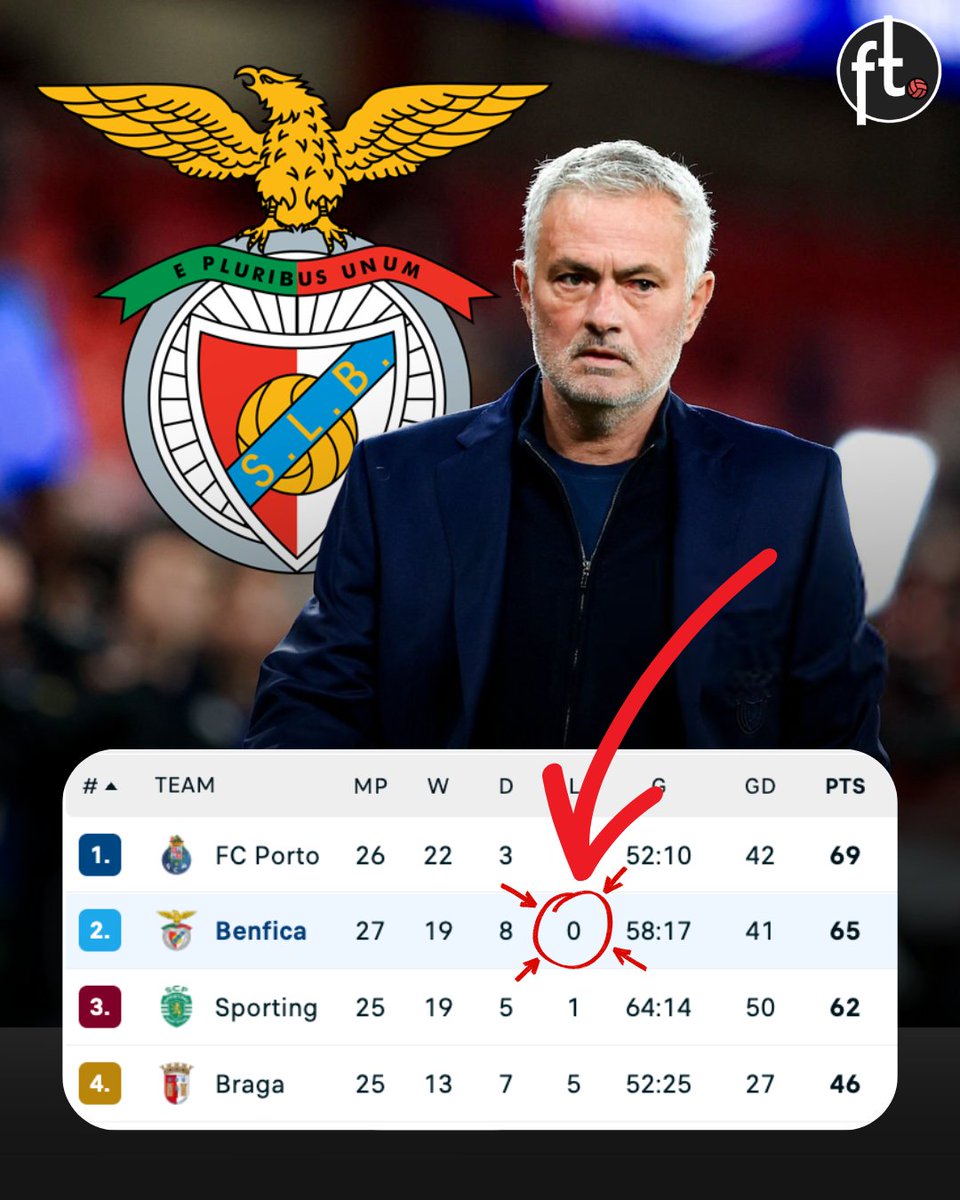
🚨 𝗥𝗘𝗠𝗜𝗡𝗗𝗘𝗥: José Mourinho's Benfica remain the only team in Europe's big leagues to be unbeaten this season.
They are just 7 games away from becoming Invincibles in Portugal's Primeira Liga.
However, despite being 27 games out of 27 without defeat they are 4 points behind FC Porto because they've drawn 8 matches.
Benfica play on Monday night against Casa Pia.
English

أرسنال فريق لا يستسلم، وبعزيمته كسر شوكة كرة القدم المتحفظة، وانتصر لفكرة كرة القدم الجميلة، كرة القدم الجريئة الباحثة عن الهجوم كسبيل وحيد للانتصار!
4 مسامير دُقّت في نعش ال ugly football وأسقطت عرّابها شون دايتش 💪

العربية

@Khartoum_Map شاكرين لكم المجهود العظيم.
نريد الإنضمام حتى نساعد في تخطيط مدن السودان ، رجاءً كيف الطريقة.
العربية

اخيراً و بعد فتره طويله كل فريق خرطوماب اجتمع في مكان واحد
بس خليكم جاهزين جاي

العربية
@MuhammedKambal @EurasiaReview Very interesting approach Mohamed , keep it up on this domain.
English
In my latest for @EurasiaReview, I explain what system philosophy is, how it differs from reductionism, and why we should rethink some of its underpinning assumptions. I really welcome feedback and critique
eurasiareview.com/26112022-rethi…
English

مُهنّدْ retweetledi


مُهنّدْ retweetledi


مُهنّدْ retweetledi

مُهنّدْ retweetledi
What a terrifying story.
How on earth is this possible!
Wasil Ali - واصل علي@wasilalitaha
"In detention in Libya, I was raped while my husband was being beaten up next to me"
English
مُهنّدْ retweetledi
Never assume you know what’s best for others, you barely know what’s best for you.
English