
Sabitlenmiş Tweet
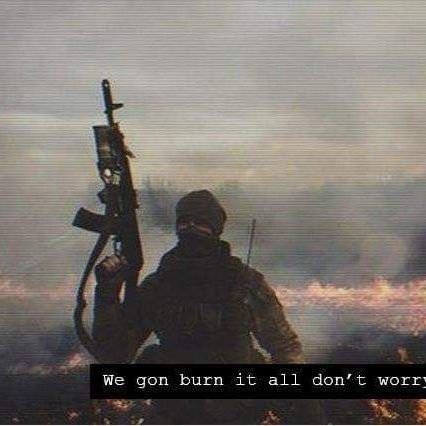
Russia lost the war in 2022, but it remains to be seen if Ukraine will win.
English
Mr. Colton Anderson
18.8K posts

@MrCMAnderson
Anti-Communist. Superhet. Writer, Editor @TheHoppean Gab: @CMAnderson





@EuropeanPan I am talking about the people who are celebrating his win. This was the object of our argument. And you keep nonstop talking about geopolitics while your own country is being invaded... Strange.


Ohio’s governor recently said if the current push for abolishing property taxes succeeds, it would require a 20% sales tax to handle the fiscal load. In other words, sacrificing Ohio’s economy upon the altar of a massive wealth transfer against young taxpayers.

Japan imports 94.2 percent of its crude oil through routes linked to the Strait of Hormuz. No major economy on earth is more exposed to the waterway Iran weaponized on February 28. Six weeks later, Japan is the silent measure of what this war has actually cost the countries it was supposed to protect. The Nikkei has fallen 11 percent since Operation Epic Fury began. The yen has dropped to 20-month lows. The Bank of Japan has issued inflation warnings that have pushed rate-hike expectations to 70 percent probability. Japan has released 80 million barrels from strategic petroleum reserves, equivalent to 45 days of domestic demand, the largest drawdown since the reserves were established. An additional 20 days’ worth is scheduled for release starting in early May. On April 8, Prime Minister Sanae Takaichi called Iranian President Masoud Pezeshkian for 25 minutes, the first top-level contact between Tokyo and Tehran since the war started. She called the Strait of Hormuz an “international public good.” The phrasing was precise. It rejected Iran’s toll system without naming it. It rejected privatization of transit without confrontation. It framed the chokepoint as belonging to the global commons rather than to any sovereign naval force. It was the most diplomatically calibrated statement any leader has made about Hormuz since the war began, and it was made by the leader whose country has the most to lose. Japan’s Ministry of Economy, Trade and Industry has set a target of sourcing more than 50 percent of imports through bypass routes by May. Saudi crude from Yanbu on the Red Sea. UAE crude from Fujairah on the Gulf of Oman. American crude from the Gulf of Mexico. Latin American, African, and Asian alternatives. Japan is attempting to rebuild its entire import architecture in weeks, a restructuring that took the West a decade after the 1973 embargo. And Japan has already succeeded on LNG. In 2013, the Middle East supplied 29 percent of Japan’s liquefied natural gas. By 2025, that share had fallen to 11 percent. Australia now provides 38 percent. Malaysia 16 percent. The United States 10 percent. Russia 9 percent. Japan’s LNG diversification, executed quietly over thirteen years, is the template for what crude oil diversification needs to become. But LNG terminals and long-term contracts take years to build. Crude bypass infrastructure takes months at minimum. And the ceasefire expires April 22. Nine days. If the strait stays weaponized past the ceasefire expiry, Japan’s reserve drawdown accelerates into crisis territory. IEEFA projects a potential 3 percent GDP hit from prolonged closure, larger than Japan’s entire annual defense budget. Every day Hormuz remains under dual blockade, American and Iranian, Japan burns through reserves that cannot be replaced at the rate they are being consumed. The country hosting the largest US military presence in the Pacific is absorbing the economic damage from a war its closest ally launched to secure the energy flows that are now more disrupted than before the war began. Iran weaponized geography. The United States responded with force. Japan, which fired no shots and closed no straits, is paying the bill. Eighty million barrels drawn. Eleven percent off the stock market. A currency in retreat. And a prime minister who called the strait a public good because calling it anything else would mean admitting that the good is no longer public. open.substack.com/pub/shanakaans…


Soft cookies are way better than the crunchy ones
