

Mr.Lambo
832 posts

Mr.Lambo
@MrIambooo
always better than yesterday
Miami, FL Katılım Ekim 2015
402 Takip Edilen408 Takipçiler


@MikeLongTerm @AMD Mike you had a lot to do with me getting into this stock. Don’t know who you are,where you are but thanks man
English

BREAKING $AMD| $375 PT| BUY Rating 🚨🚨🚨
DA Davison Analysts Gil Luria upgraded @AMD to BUY Rating with a $375 Price Target.
See, I told you they gonna rush to upgrade AMD because they didnt read my threads🤣

Mike@MikeLongTerm
$AMD at $600 is still cheap vs all others 🧵 Most should understand after you read the thread below, $AMD is so much cheaper than $ARM and $INTC. Now, $AMD is still the least owned Semi stock among all Funds because of bearish Analysts for years. Basically these institutions/Funds are reading these equity report on AMD and sold/trimmed AMD. So if we are talking about balancing back AMD to normal ownership level, it should be around $500-$600 approximately speaking. If you don't believe me, google those videos and equity papers on @AMD in 2022-2023-2024 and 2025. I was writing $AMD threads alone most of the time. $AMD is at ~$494B market cap or P/S 13x | Fwd P/S 6x-7x Fwd P/E 20-25x In what world this is expensive to you? PEG Ratio is 0.22. In what world is this expensive? $NVDA PEG Ratio is ~1; $AVGO PEG Ratio is 1.20 And AMD is the only company that has the full-stack AI solution CPUs,GPUs, NPU, ROCm open Software, Networking & Interconnects, and Custom Chip. And you think $494 B market cap is expensive? Think again!!!! IMO, AMD should be at 25x-28x or ~$600 a share. If we are using Forward P/S at 25x= $1,250 a share. For this kind of growth and potential, i'm already MAD Conservative. I'm not even pumping AMD here, just asking for a fair multiple. You have not seen FOMO at all, we are about to enter the most consequential J-curve Quarters or Q3 Q4 2026 toward the next 3-5 years. Now you know why I called analysts sexist for years. I will continue to do so as they kept rolling out 1GW Helios Rack revenue at $10 B. At $10 B, $AMD would lose money, and these idiots are getting paid $50-$200k a year on these equity reports. Mine is Free.99 or $10/month when subscribed. I will continue to call AMD Analysts sexist until they cover AMD fairly like other Semi companies. There is no need to judge base on male or female CEO, it should be judge purely on Financial Performance, Growth, and product leaderships. I spent years covering AMD, most followers and subscribers already know this. Analysts forecasted AMD to grow only 15-20% FY2026. Now they are rushing to change all PT and forecasts so they don't look like idiots. The whole Semi supply chain is complex and expensive to get Helios Racks to customers and AMD recognizes revenue when shipment gets to customers, not when customers decide to turn-on. 1GW of Helios Rack should generate ~$20-$25 B, because CPUs price is rising. The Industry is expecting 25-40% CPUs price increase for entire 2026, this is MASSIVE. Because the whole CPU:GPU ratio went from 1:4 to 3-5:1. $NVDA sold roughly 7m GPUs in 2025, so we are talking about 21m-35m Data Center CPUs shortage here, where $AMD EPYC Turin(Current Gen) is already dominating in all benchmarks. $AMD EPYC Venice is about to be shipped in less than 2 months, and will remain the best CPUs for a long time. AMD's rise in the server CPU market is one of the most dramatic reversals in semiconductor history. From less than 1% market share in 2017, AMD has grown to approximately 29% by late 2025, with EPYC Turin (5th Gen, Zen 5) driving record enterprise and hyperscale deployments. ~10 of 10 major social media platforms now run EPYC including Meta, which was historically an Intel-only shop ~ 10 of 10 large SaaS organizations have converted to EPYC ~3× year-over-year public cloud adoption growth by large customers ~AMD's target of 50%+ server CPU market share is achievable by 2027 with Venice and Verano ~ 100% of AMD Helios AI racks (pairing Venice CPUs with Instinct MI455X GPUs) use EPYC as the host CPU, locking in CPU sales tied to AI GPU deployments Not Financial Advice!
English

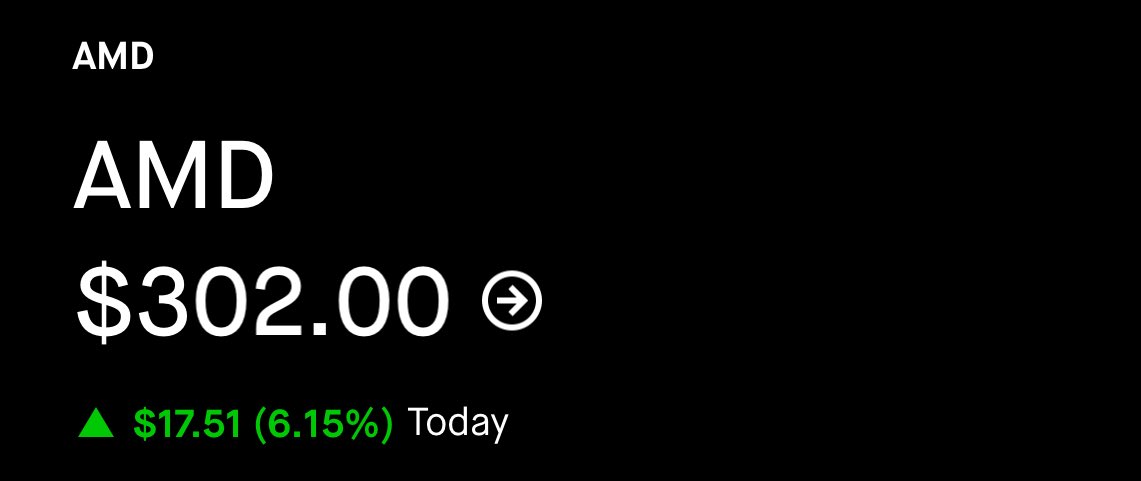
BREAKING $AMD is abt to hit $300
I know this is getting old.
but I called it.
much more room to run
Not Financial Advice

Mike@MikeLongTerm
$AMD is a $423-$529/share stock today 🧵 Full Dr. Su Comment on CPU. And $INTC $ARM CPUs Not Financial Advice!(Just my well researched opinion) 20-25x P/S= $423-$529/share today. Fwd P/S would collapse multiple again, so analysts better upgrade it quick! AMD Fwd P/S 8x-11x 1. Analysts been wrong on AMD for more than a decade For years, Dr. Su did not know how to hype investors/institutions; it wouldnt be wrong for me to say she is the most humble CEO. I'm not even here to hype valuation, i'm just asking for a fair multiple. Analysts have been wrong on @AMD for about 14 years now, and they continue to be this same trend. I like to call them Sexist, and many didnt like it and still defending them. They went from $35-$40B FY2026 to now $45-$55B for FY2026, and pushing toward above $60B from some. In 2024, they said do we even need AMD? And gave FY2025 10-15% growth, and they were wrong. They laughed and declared "AMD is done" on podcast, CNBC or Bloomberg. Subscribers and Followers know I been calling them out and precisely addressed AMD true potential. Analysts have been the biggest reason why $AMD never traded at the true potential. AMD always been volatile or trading at 4-10x P/S, because Analysts gave the wrong forecasts for many quarters and years. Even at 20-25x P/S right now, Fwd P/S would collapse on TTM revenue. In this clip, you will see Dr. Su discussed on CPU EPYC demand, and why it is massively undervalued, and cagr is now much higher than guided at financial analyst day. And AMD is "we are very, very well positioned from a supply standpoint to meet a large percentage of that demand." $INTC and $ARM can't even beat Current EPYC Turin 192 cores, how the hell they gonna beat Venice? so Analysts, please save me the BS. It is ok to admit you are wrong and move on to give it 20-25 P/S multiple on Price Target. In 2024-2025, I talked about EPYC and Agentic AI, most would just cite Jensen, hey the world of AI factory only running on GPUs. Now what? CPU:GPU Ratio went from 1:4 - 1:8 to 1:1 3:1 & 5:1 Will link $MSFT custom Chip thread below. And yes Microsoft is a large customer as well like $META and @OpenAI on Agentic AI. The truth is, Dr. Su been betting big on Inference since 2023. I will link the full thread below. Most analysts and investors just didnt want to listen, because GPUs was everything from 2023-2025. 2. CPU:GPU Ratio shifted from 1:4-8 to 3-5:1. A MASSIVE Inflection point for AMD shareholders, where Dr. Su made the bet since 2022-2023. By late 2025 into 2026, the narrative had evolved into Agentic AI, where 80- 90%+ compute is now Inference and become the largest driver of AI compute, with next-year projections showing over half of workloads shifting there. In the early scaling phase of large language models (dominated by training), GPU-heavy clusters were the norm. A common configuration had 1 CPU : 4–8 GPUs (sometimes described as a 1:4 to 1:8 CPU-to-GPU ratio). The CPU acted mainly as a lightweight host/orchestrator to feed data to the GPUs, while the heavy matrix math happened on accelerators. Training is bursty and compute-bound on GPUs, so fewer high-core CPUs sufficed per rack As inference scales, running models for real users, queries, and now agentic workflows, the balance flips. Inference is continuous, latency-sensitive, and involves far more orchestration: data routing, tool calling, verification loops, state management, enterprise integration, memory handling, and keeping GPUs utilized without idling. Dr. Lisa Su has repeatedly called out this "unexpected" surge in server CPU demand tied directly to rising inference volumes. In early 2026 comments (e.g., Morgan Stanley Conference), she noted that the CPU side of the business "far exceeded" expectations, driven by inference picking up and agentic applications. Hyperscalers are now signing standalone CPU deals, and EPYC is seeing supply tightening as demand outstrips forecasts. Analyst and industry projections (JPM, TrendForce) show the CPU-to-GPU ratio narrowing from the old 1:4–1:8 toward something much more CPU-heavy in AI data centers. In agentic scenarios, where multi-step autonomous agents multiply token/compute demand 5–50x per interaction (planning → tool use → iteration → verification), the CPU becomes the new bottleneck and "orchestration engine." The ratio is shifting dramatically from 1:4 (or 1:4–8) toward 3:1 to 5:1 (or higher) in the near term for agentic inference, with some longer-term views (by 2030) going to 10:1–20:1 as companies run dozens or hundreds of parallel agents 24/7. In AMD's own Helios rack-scale designs, a common node is structured around 1 EPYC Venice CPU + 4 MI455X GPUs already reflecting a move toward more balanced or CPU-weighted systems. Conclusion: Dr. Lisa Su didn't just predict the inference era, she architected AMD's full-stack platform to dominate it, with EPYC Venice as the decisive orchestration engine that turns the agentic AI multiplier into structural, multi-year outperformance. AMD isn't fighting a pure GPU war. It wins with a balanced, open full-stack, Instinct accelerators for raw inference power, high-core EPYC Venice as the orchestration backbone that prevents GPU underutilization, Pensando networking, and ROCm software. Training remains important (and AMD is gaining selective share), but inference + agentic becomes the stickier, higher-volume opportunity, with CPUs now matching or exceeding GPU revenue potential in the data center mix. Dr. Su's long-term bet, structural advantages in memory subsystems, chiplet design, and CPU+GPU synergy is materializing as real-world workloads evolve. As agentic and physical AI scale (from cloud agents to edge robotics), the CPU:GPU rebalancing cements EPYC's role as a massive standalone growth engine while amplifying the entire platform. Supply is tightening, lead times stretching, and pricing power emerging exactly the conditions for sustained share gains and margin expansion. Not Financial Advice!
English
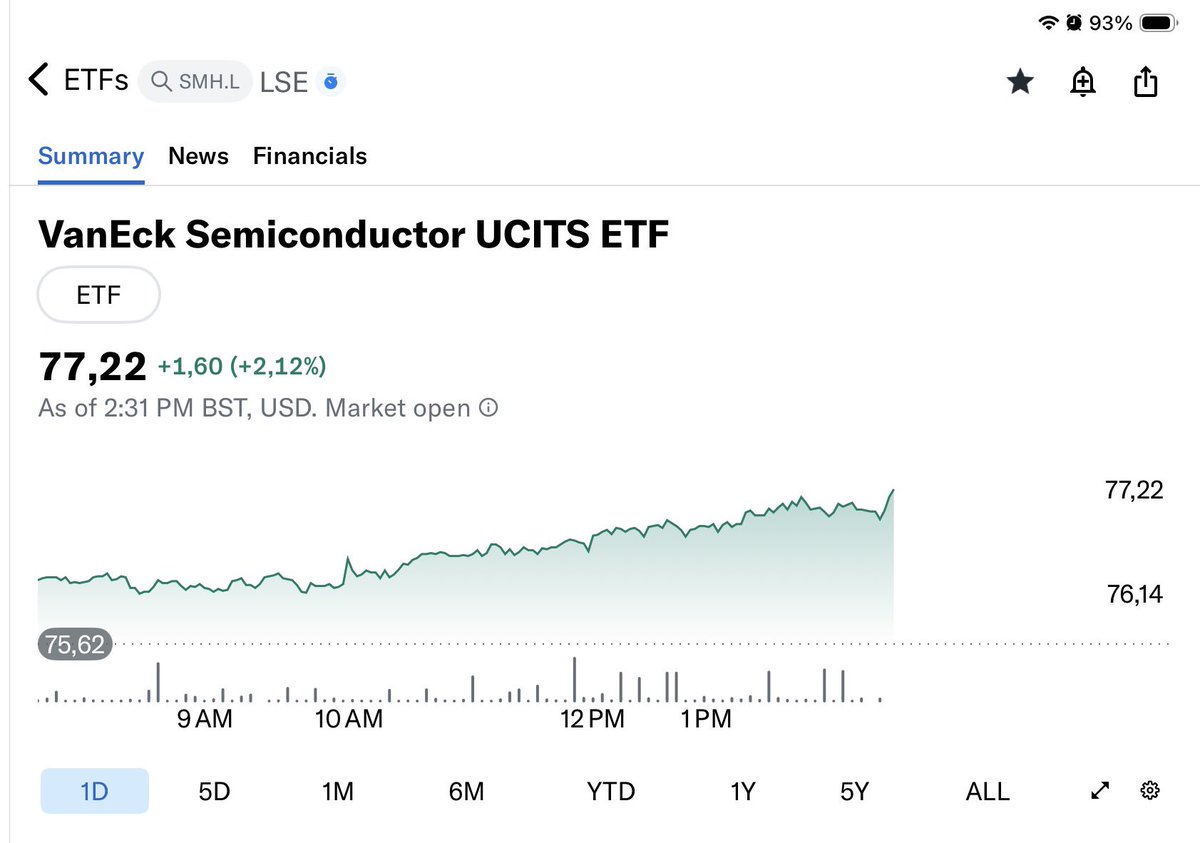
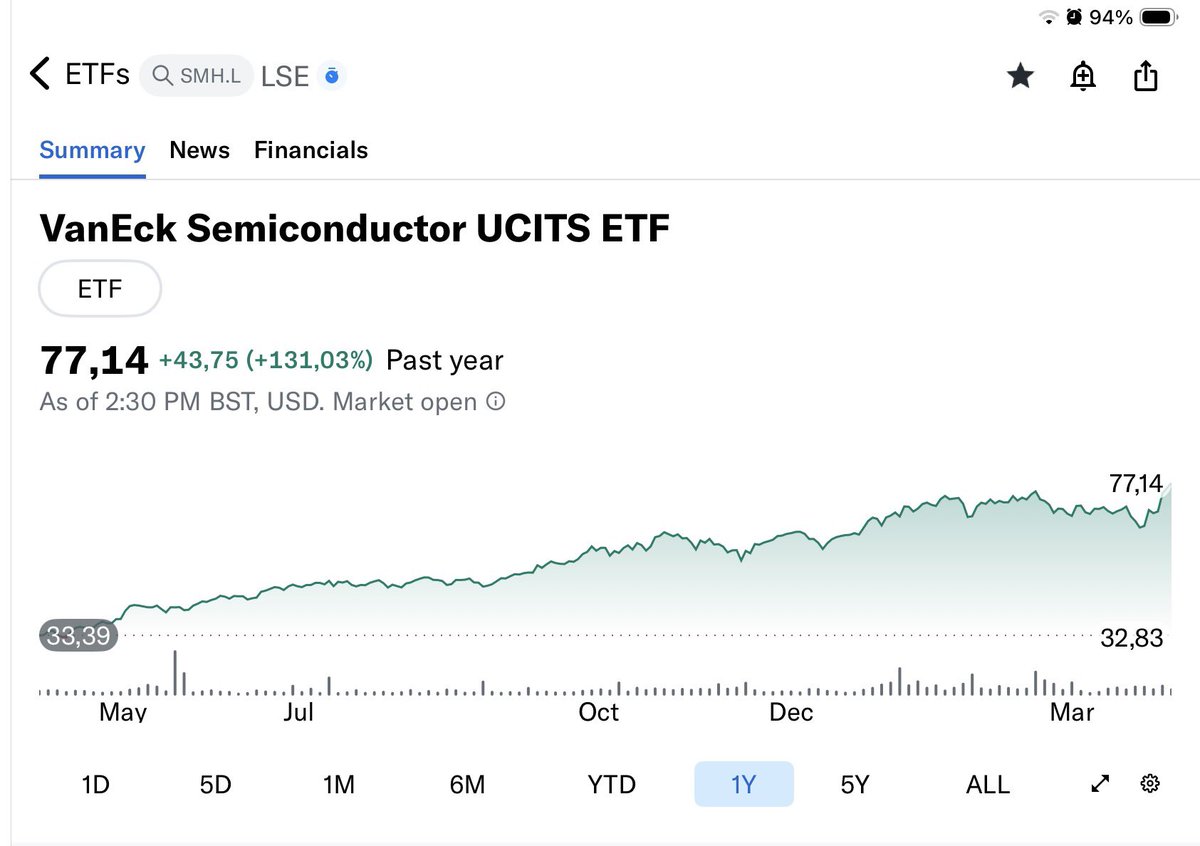
I’ve always been honest and said I was heavy on semis, even when they were being sold heavy. I started with $NVDA in 2016 ( when it was a graphic card company really) then $TSM 2017 $AVGO and ASML 2018. I also hold $SMH which has been nothing short of extraordinary for an ETF …again ATH

English
Would you see the eastern Roman Empire was some sort of an answer to the Persians taking Caesar valerian as a captive? like what I’m trying to say is the Romans told themselves there’s a civilization on our eastern border than not only they can defeat us they could actually take a Roman Caesar as captive as well And so they shifted most of their treasure and blood and efforts to the eastern frontier and we have the eastern Roman Empire for more than 1000 years.
English
@DirectDemToday @ConsulofRome_ Finally a man of taste, not only you picked the eastern Roman Empire era you also picked the best of all its emperors
English




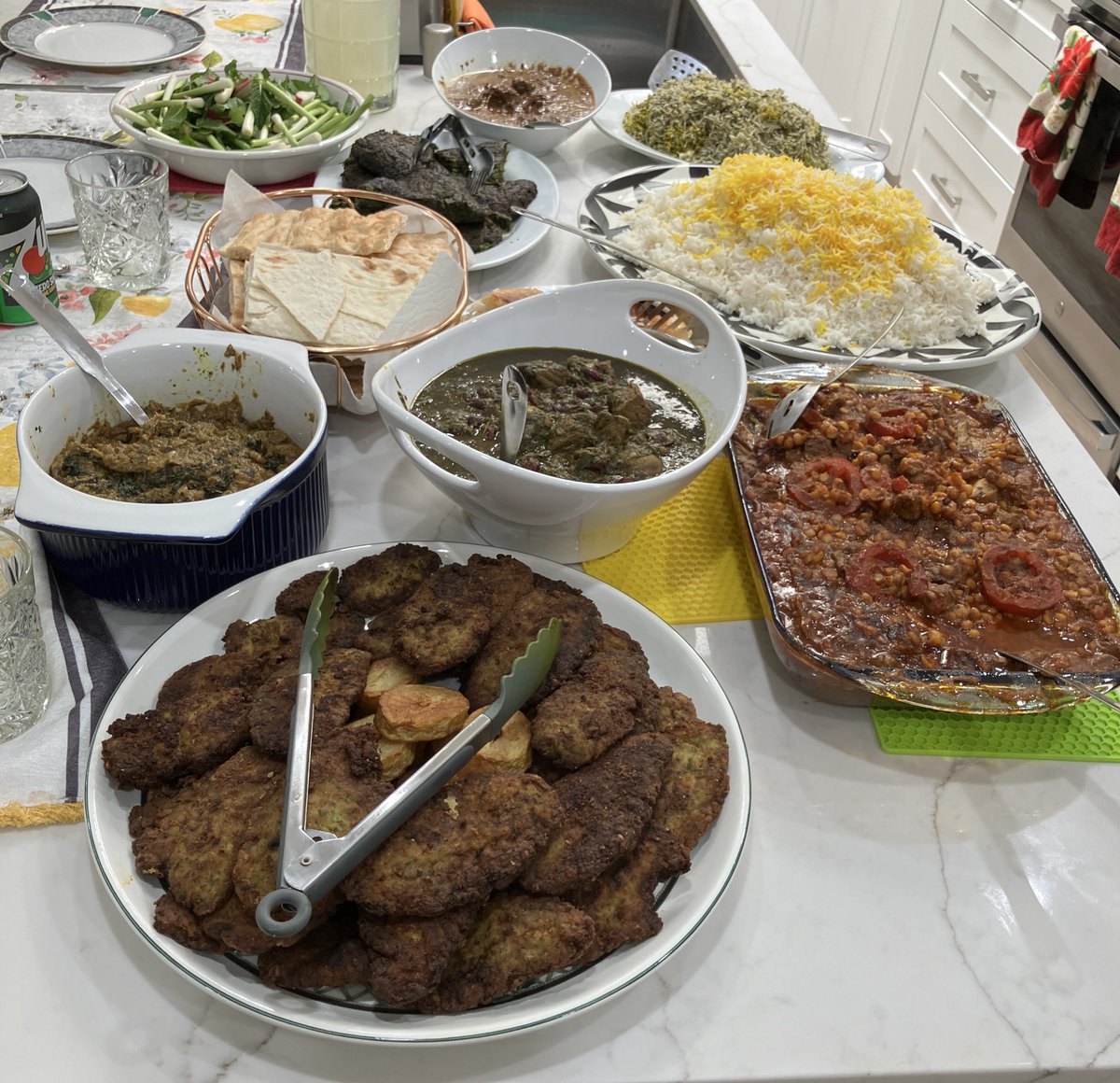
nothing makes you feel as good as mom’s cooking
cutlets, gheymeh bademjan, ghormeh sabzi, kashk bademjan, saffron rice, sabzi rice, koo koo, and fesenjoon
English

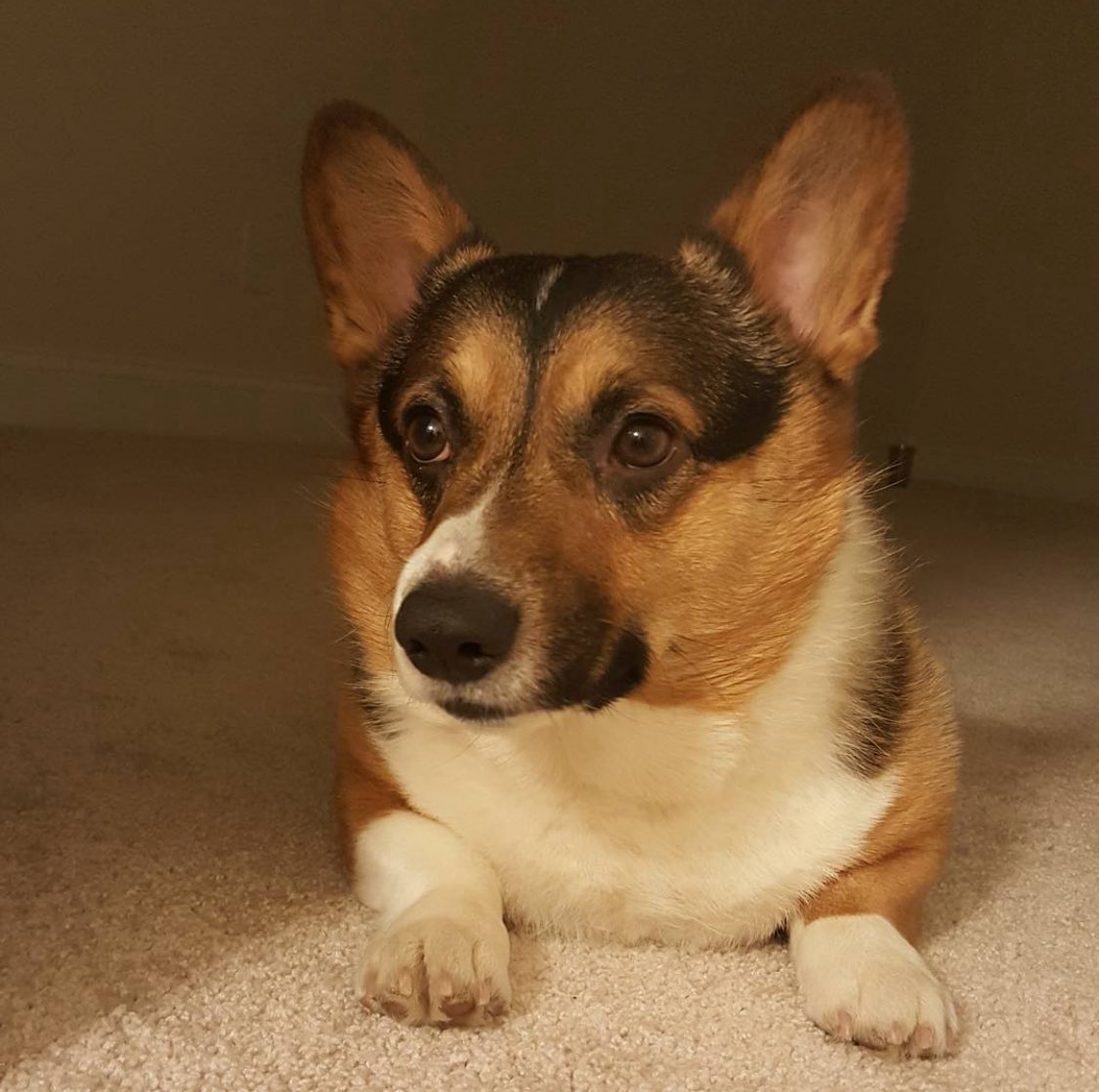
I had a Corgi… they are probably the most lovable, loyal, friendly and protective breeds.
Miss ya buddy.
𝕐o̴g̴@Yoda4ever
Seven dogs stolen from their owners have gone viral after escaping from an illegal transport truck and making their way home. They traveled around 17 km together, led by a corgi across highways and fields, now safely back with their respective owners..🐶🐾🥺❤️
English


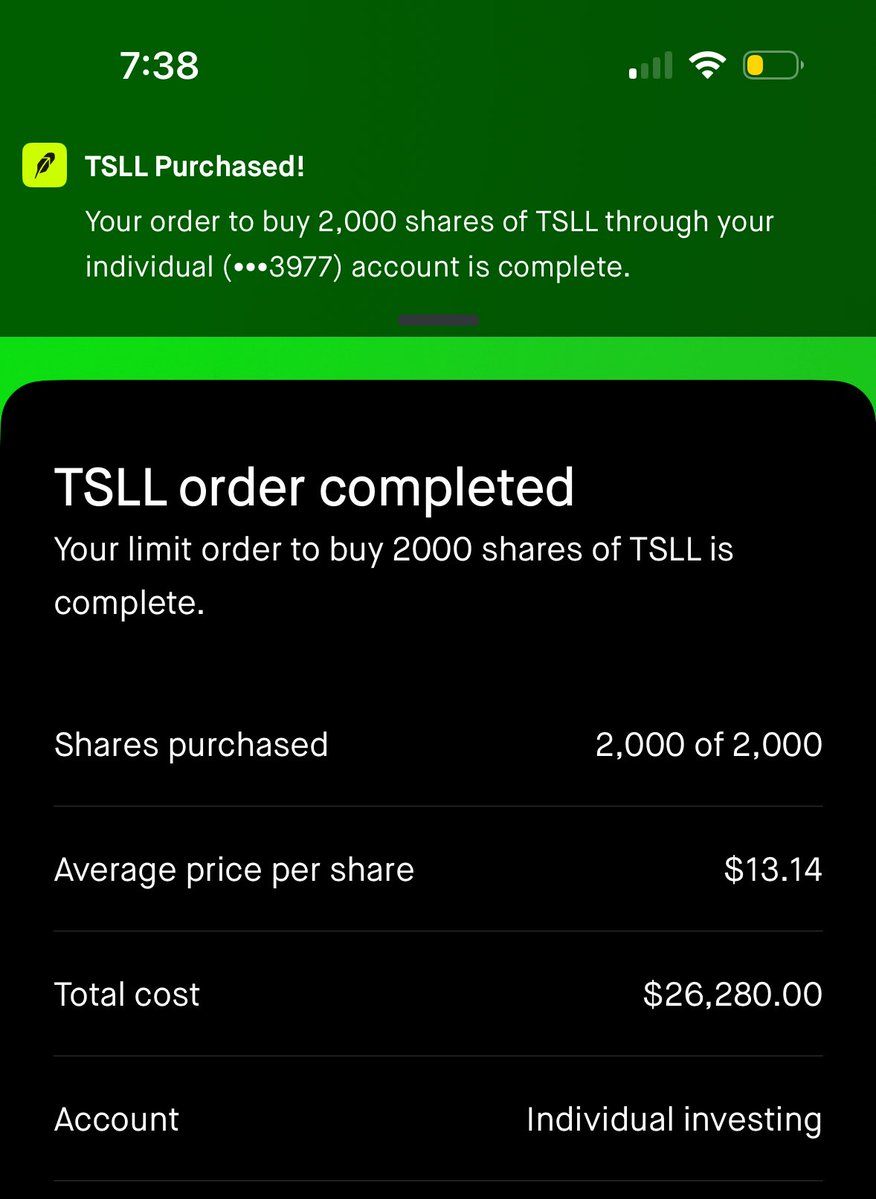
I can’t be the only one wanting a bit more red here and there in the market… 😉
English
@GrantCardone 10% a year you goof ball?any of the mag sevens: bro hold my beer
English


SpaceX is Caesar’s XIII Legion level good
🌋🌋 Deep₿lueCrypto 🌋🌋@DeepBlueCrypto
"Somebody I know went to work for SpaceX and said, 'It's like being dropped into a zone of shocking competence.' The best engineers in the world want to work for Elon Musk because he's the one CEO who's able to work with them as a peer."
English