Mr. Shurtleff - Art Of Thinking Teacher

645 posts

Mr. Shurtleff - Art Of Thinking Teacher

Mr. Shurtleff - Art Of Thinking Teacher

@MrShurtleff82
Katılım Ağustos 2024
80 Takip Edilen31 Takipçiler
Mr. Shurtleff - Art Of Thinking Teacher retweetledi
Echoes of War
Echoes of War@EchoesofWarYT·
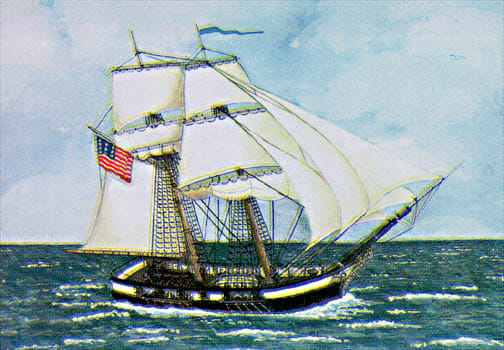
May 17, 1775. Just eight days after the fall of Fort Ticonderoga, a 34-year-old American officer slipped into a sleeping British fort in Quebec with only 50 men. They captured a 70-ton British warship, four bateaux, military supplies, and nine prisoners. Not a single shot was fired. The whole raid was over before the garrison finished breakfast. The officer renamed the captured sloop "Enterprise," making it the first American naval vessel to ever carry that name. Every USS Enterprise since, from the aircraft carriers to the one Star Trek borrowed its name from, traces its lineage back to that morning on Lake Champlain. The officer's name? Benedict Arnold. Yes. That Benedict Arnold. Five years later he would switch sides and become the most infamous traitor in American history. But on this day in 1775, he handed the colonies their first naval victory, their first warship, and a name that would sail for the next 250 years.
Echoes of War tweet media
English
12
130
835
17.3K
Mr. Shurtleff - Art Of Thinking Teacher retweetledi
Barnaby Breaks History 🇺🇸
🇺🇸 Countdown Until America’s 250th Birthday: Day 49 49 Patriots were killed at the Battles of Lexington and Concord. They fired the first shots of the Revolution and chased British regulars all the way back to Boston. Bless these Patriots who stood their ground for liberty 🇺🇸
Barnaby Breaks History 🇺🇸 tweet media
Barnaby Breaks History 🇺🇸@CorpBarnaby

🇺🇸 Countdown Until America’s 250th Birthday: Day 50 Exactly 50 years after the Declaration of Independence, John Adams and Thomas Jefferson both died on July 4, 1826. These two great Patriots passed on the very day the nation they helped create turned 50. 🇺🇸🇺🇸🇺🇸
English
1
17
73
3.2K
Mr. Shurtleff - Art Of Thinking Teacher retweetledi
Theodore Roosevelt Presidential Library
#OTD in 1903, day two of Theodore Roosevelt's camping trip with John Muir found the two men deep in Yosemite's high country, riding through alpine meadows and discussing what TR himself would later call "the whole subject of forestry and the preservation of the wild creatures." Muir was, as one biographer put it, the perfect tour guide for the wrong tourist — except Roosevelt was exactly the right tourist. Muir tended toward mystical exuberance about wilderness, calling it "the inestimable wealth of the forests" and walking long distances to chase a single rare flower. Roosevelt was more practical, more political, but no less devoted to the country he was passing through. The chemistry between them was immediate. Sometime that day, the two men reached a high vantage point — the Yosemite Valley spread out below them, the granite domes of the Sierra rising in every direction. It was the kind of place that makes serious people quiet. Roosevelt and Muir, normally two of the most loquacious men in America, are reported to have simply stood and looked. The moment didn't end with a treaty signed or a proclamation issued. It ended with two men, slightly older than they had been the day before, planning what they would do. #OTD #OnThisDay #TheodoreRoosevelt #TeddyRoosevelt #JohnMuir #Yosemite #Conservation #TRHistory
Theodore Roosevelt Presidential Library tweet media
English
3
18
73
1.2K
Mr. Shurtleff - Art Of Thinking Teacher retweetledi
Theodore Roosevelt Presidential Library
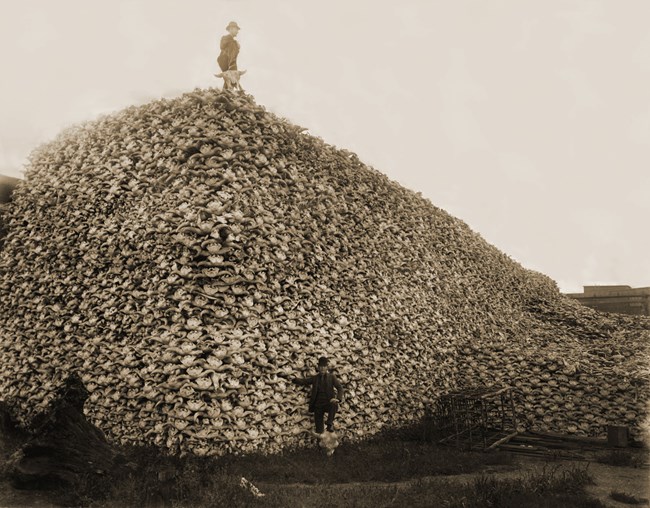
Today is #EndangeredSpeciesDay — and Theodore Roosevelt's role in shaping how America protects vulnerable wildlife is hard to overstate. When TR took office in 1901, the American bison was nearly extinct. Once numbering in the tens of millions across the Great Plains, the herds had been destroyed within a single generation by commercial hunting and federal policy aimed at undermining Plains tribes. By the early 1900s, fewer than a thousand bison remained alive in the entire United States. Roosevelt's response was characteristic. In 1905, he served as founding honorary president of the American Bison Society, which was led by William Hornaday, the New York Zoological Society director and a conservationist Roosevelt deeply admired. In 1907, his administration shipped 15 bison from the Bronx Zoo to the Wichita Mountains Wildlife Refuge in Oklahoma — the first federal effort to restore an endangered species to its native range. In 1908, he established the National Bison Range in Montana. By the time he left office, the federal government was actively breeding and protecting bison on multiple federal preserves. The species is alive today because Roosevelt and his contemporaries refused to let it slip away on their watch. The principle they established — that the federal government has an obligation to protect endangered species — would eventually grow into the Endangered Species Act of 1973, signed by another Republican president, Richard Nixon. So when you hear a meadowlark in a pasture Roosevelt protected, or see a bison on a refuge he helped establish, you're seeing the long arc of an idea: that we owe something to the wild creatures we share this country with. #EndangeredSpeciesDay #TheodoreRoosevelt #TeddyRoosevelt #Conservation #BisonRestoration #TRPL
Theodore Roosevelt Presidential Library tweet media
English
1
17
73
1.5K
Mr. Shurtleff - Art Of Thinking Teacher retweetledi
Theodore Roosevelt Presidential Library
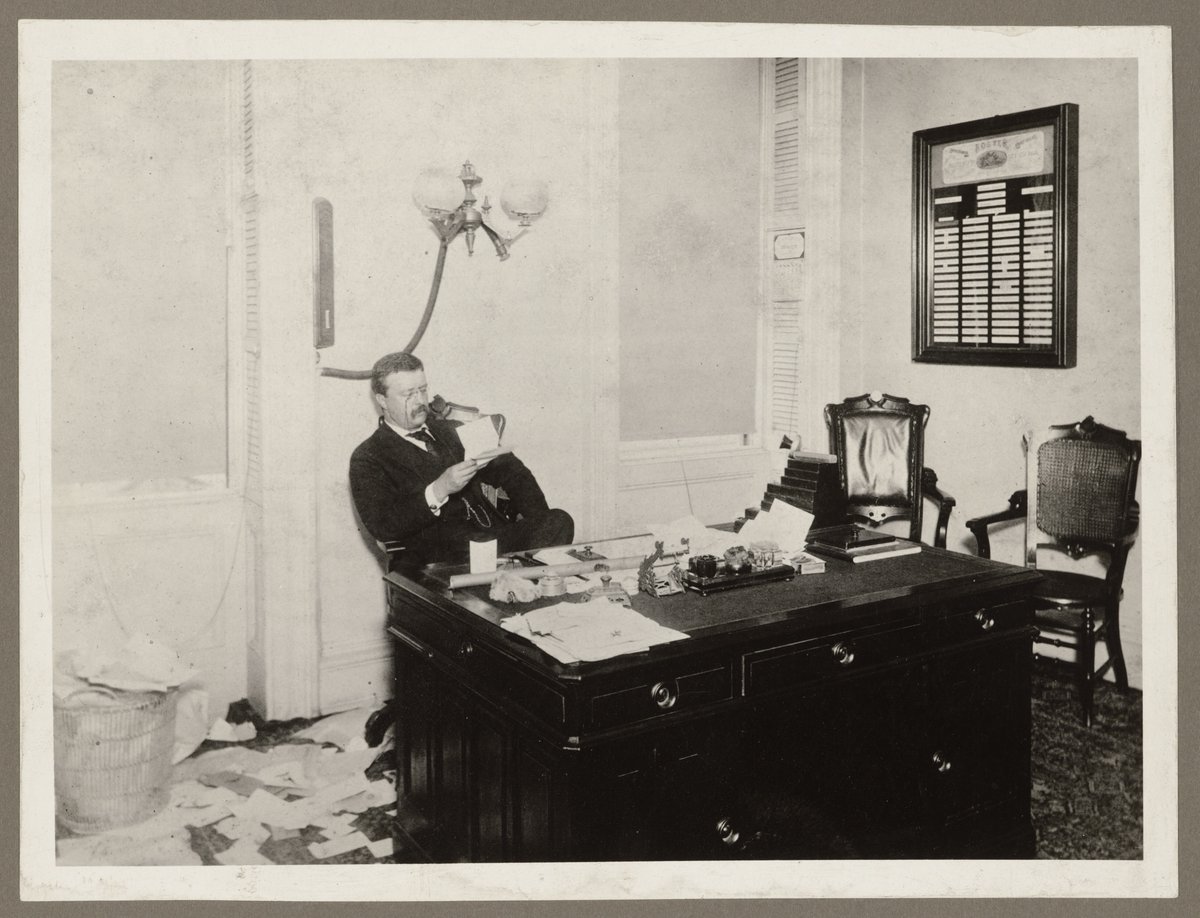
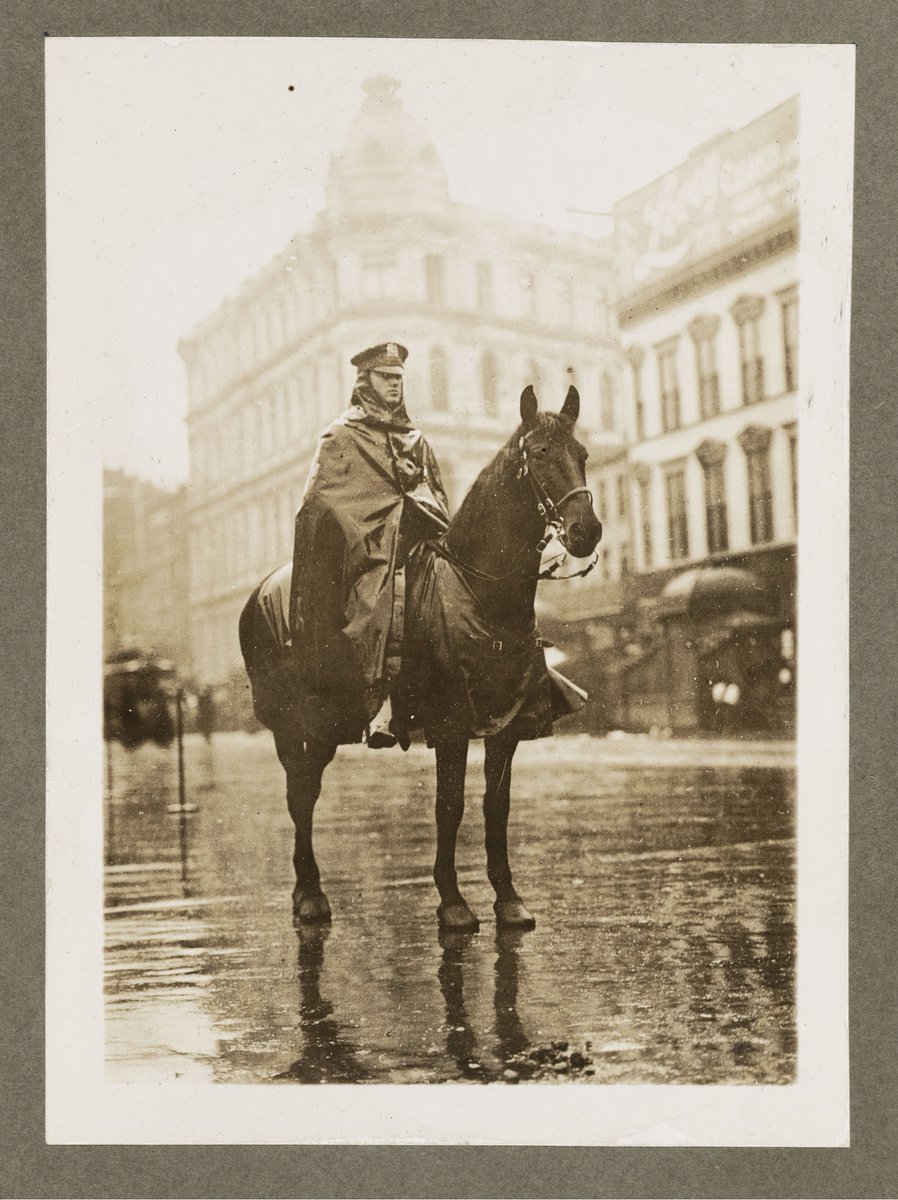
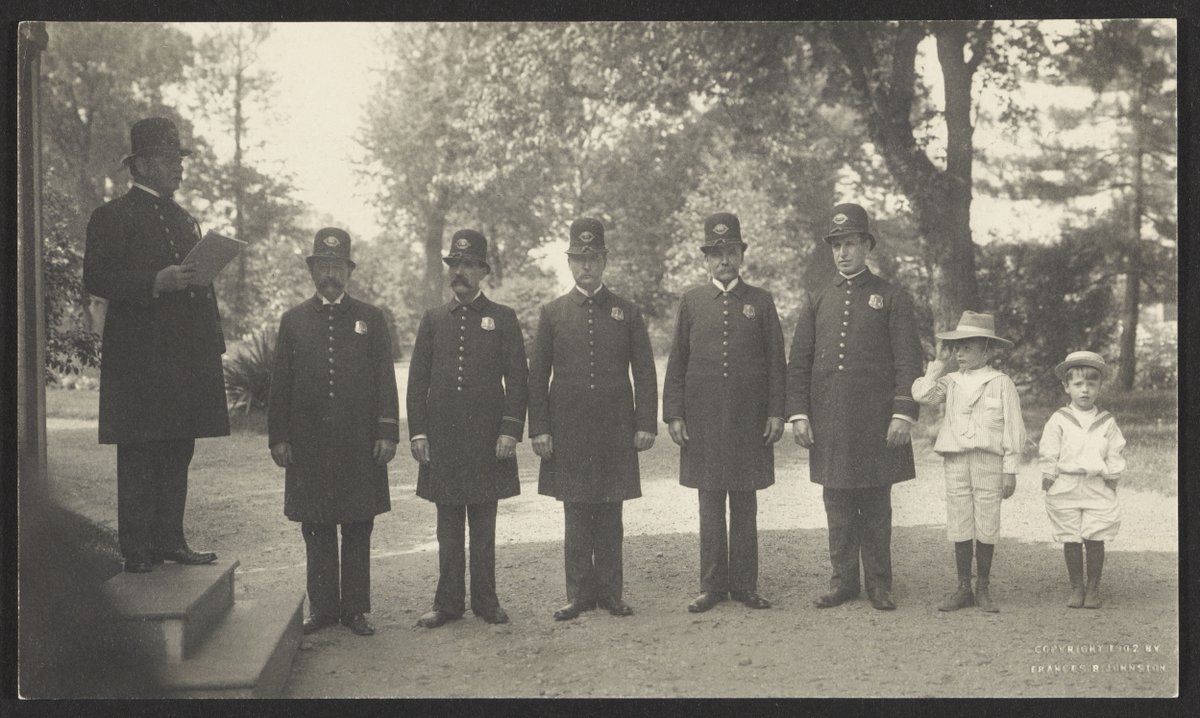
It's #PeaceOfficersMemorialDay — and we're thinking about a former NYC Police Commissioner who walked the Manhattan beat in the dead of night. In 1895, Theodore Roosevelt was appointed to the Board of Police Commissioners of the City of New York — and quickly became the loudest, most visible reformer the department had ever seen. NYC policing in 1895 was a swamp of patronage, payoffs, and political interference. Cops paid for promotions. Captains protected favored saloons. Whole precincts operated as fiefdoms of Tammany Hall. Roosevelt's response was relentless. He showed up at police stations unannounced. He walked patrol routes at 2 a.m. with reporter Jacob Riis at his side, looking for officers who weren't on their posts. He moved aggressively to fire or discipline officers for corruption or dereliction of duty — in numbers that shocked the political class. He insisted, against fierce political opposition, that the law applied equally — even, controversially, to the closing of saloons on Sundays. Was he beloved by the rank and file? Not always. He stepped on toes. He alienated political allies. He earned editorial criticism and street-level resentment. But by the time he left the Board in 1897 to become Assistant Secretary of the Navy, he had begun a transformation of NYPD culture that would take decades to complete — and he had given honest officers cover to do their jobs without paying tribute to bosses. Today, on #PeaceOfficersMemorialDay, we honor the officers who give their lives in service. And we remember a former commissioner who believed deeply that the badge meant something — and who spent two years of his life fighting to make sure it did. #PeaceOfficersMemorialDay #NationalPoliceWeek #TheodoreRoosevelt #NYPD #TRPL
Theodore Roosevelt Presidential Library tweet mediaTheodore Roosevelt Presidential Library tweet mediaTheodore Roosevelt Presidential Library tweet mediaTheodore Roosevelt Presidential Library tweet media
English
2
8
41
776
Mr. Shurtleff - Art Of Thinking Teacher retweetledi
samuel s 🇺🇸⚾☕🍖🍳
The acres and the number of places set aside is almost unbelievable. 150 National Forests?!!! 🌳 🇺🇸
Theodore Roosevelt Presidential Library@TRPresLibrary

#OTD in 1903, Theodore Roosevelt stepped off his presidential train at Raymond, California, climbed into a stagecoach, and began one of the most consequential camping trips in American history. His guide was John Muir — naturalist, writer, founder of the Sierra Club, and the most passionate wilderness advocate of his generation. Muir had been pestering Washington for years to extend federal protection over Yosemite Valley. Roosevelt had finally said: "don't tell me about it; show me." That first night was spent in the Mariposa Grove of giant sequoias. Roosevelt slept beneath the Grizzly Giant — one of the largest living things on earth — on a bed made up of forty wool army blankets that park rangers had laid down beneath the tree. Muir built a fire. The two men talked late into the night about glaciers, forest fires, sheep grazing, and the federal government's responsibility to protect what was here long before any of us. It would be hard to overstate what those four days did to American conservation. By the time Roosevelt left Yosemite, he had decided to push for federal control of the valley. By 1906, Congress had returned Yosemite Valley and the Mariposa Grove to federal jurisdiction. Within a decade, his administration would protect more than 230 million acres of land — five national parks, 18 national monuments, and over 150 national forests. It started here. With a stagecoach, a sequoia, and a man named Muir. #OTD #OnThisDay #TheodoreRoosevelt #TeddyRoosevelt #JohnMuir #Yosemite #Conservation #PublicLands #TRHistory

English
1
2
7
176
Mr. Shurtleff - Art Of Thinking Teacher retweetledi
eddie
eddie@EddieTheArts·
eddie tweet media
ZXX
2
7
18
308
Mr. Shurtleff - Art Of Thinking Teacher retweetledi
Theodore Roosevelt Presidential Library
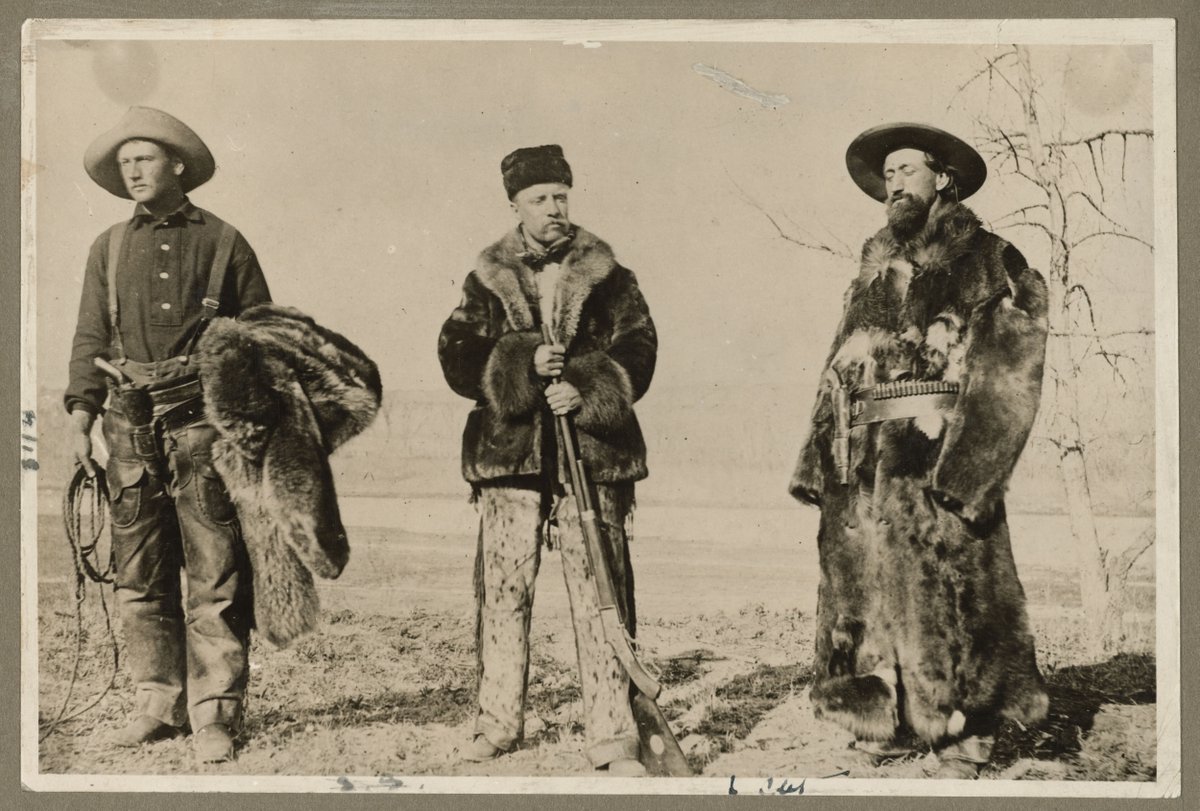
Roosevelt was born into wealth. His family was one of the most prominent in New York. He attended Harvard. He published his first book at 23. And then he came to the Badlands and worked alongside men who had nothing but their skill, their toughness, and their character. That's the part of the story that changes everything. In the Badlands, Roosevelt was judged by his work, not his name. The cowboys didn't care about his Harvard degree. They cared about whether he could stay in the saddle during a roundup. Gregor Lang, the Scottish rancher Roosevelt admired most, earned respect through honesty and hard work, not inherited position. Bill Sewall and Wilmot Dow, the Maine woodsmen who ran the Elkhorn Ranch, were men whose competence Roosevelt could never match — and he knew it, and respected them for it. The Badlands taught Roosevelt that character was built, not born. That lesson informed everything that followed — from his reform crusades to his conservation legacy to his insistence that a "square deal" was owed to every American, regardless of background. The Theodore Roosevelt Presidential Library opens July 4 in Medora. trlibrary.com/visit #TheodoreRoosevelt #TRLibrary #Medora #NorthDakota #Leadership #SquareDeal #AmericanHistory #OpeningJuly4
Theodore Roosevelt Presidential Library tweet media
English
2
21
118
2.3K
Mr. Shurtleff - Art Of Thinking Teacher retweetledi
Bob Hyneman
Bob Hyneman@BobhynemanUSA·
Ya gotta love this story😁 🇺🇸TODAY IN AMERICAN HISTORY🇺🇸 Slave Robert Smalls sailed to freedom. Small had been serving as a pilot aboard the CSS Planter (used to ferry supplies to the various forts on Charleston Harbor) On this night, while the white officers were ashore, the other enslaved crewmembers took command of the ship, made a high-stakes stop at a nearby wharf to pick up their wives and children (who had been hiding and waiting to board), and sailed to freedom. The US Navy promptly turned it into a gunboat and shortly thereafter made him a captain (the first Black captain of a U.S. vessel). The vessel served as a gunboat or a supply ship in 17 major battles.
Bob Hyneman tweet media
English
0
3
12
186
Mr. Shurtleff - Art Of Thinking Teacher retweetledi
Bob Hyneman
Bob Hyneman@BobhynemanUSA·
***This is not a photograph.*** This is a 19th-century painting (and one of the foremost examples of "American Realist" painting) 150 years ago today — May 10, 1876 — Thomas Eakins completed The Gross Clinic, one of the greatest and most controversial paintings in American art history. In this massive, unflinching work, Eakins depicted Dr. Samuel Gross performing surgery in front of medical students at Jefferson Medical College. The graphic realism, (blood on the surgeon’s hands, the patient’s open thigh, the horrified reactions) shocked many viewers. While Europe was embracing Impressionism and dreamy abstraction, more and more American artists like Eakins chose raw, honest realism. -- At first, the art world of Europe and NYC rejected it. -- Not anymore. The Gross Clinic remains one of the finest examples of 19th-century American painting.
Bob Hyneman tweet media
English
1
4
30
23.6K
Mr. Shurtleff - Art Of Thinking Teacher retweetledi
Barnaby Breaks History 🇺🇸
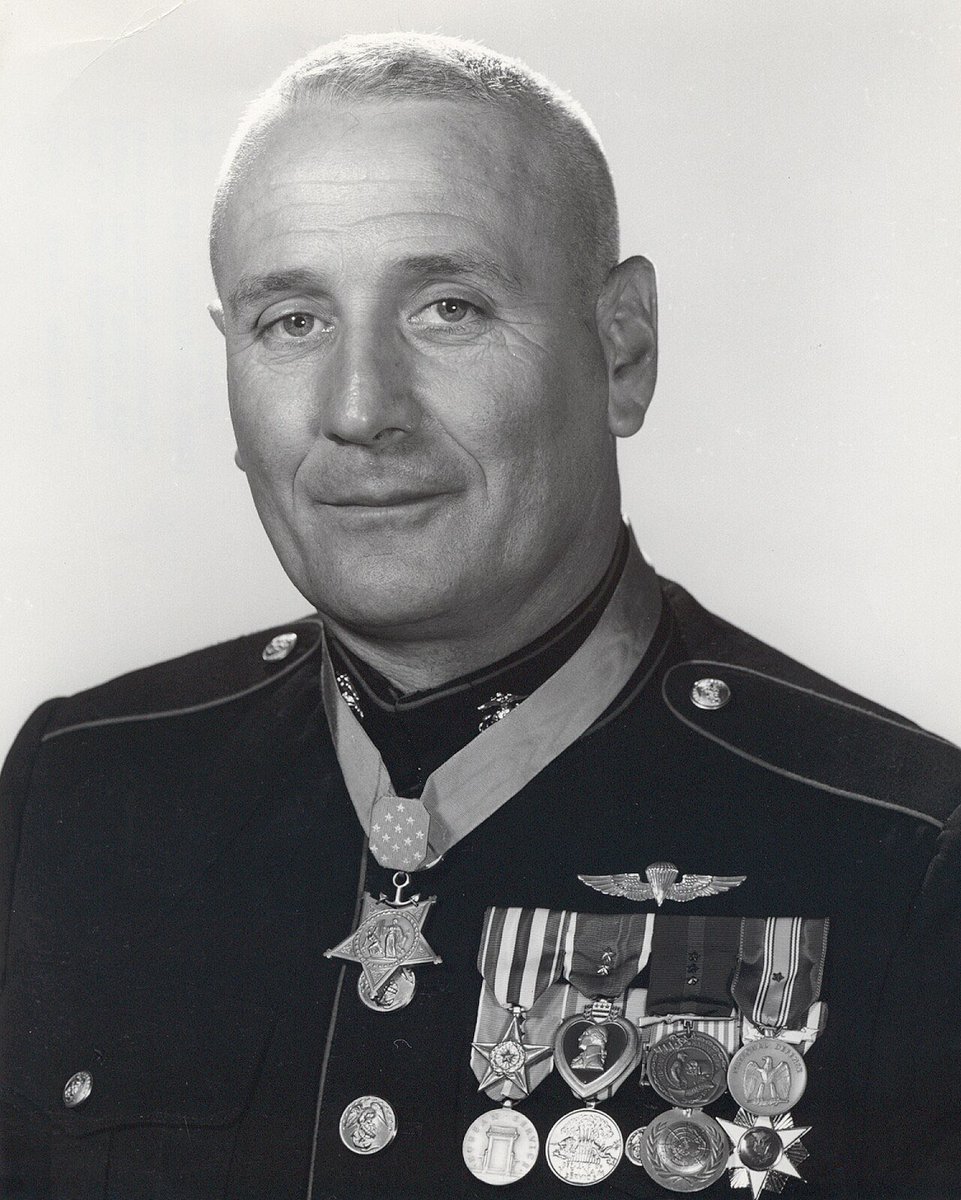
🇺🇸 Most Badass Marines You Don’t Know: #6 Jimmie E. Howard Jimmie E. Howard is an American Badass A Marine Gunnery Sergeant who led 18 men in a savage all-night stand against hundreds of NVA on a lonely hill in Vietnam. Born in 1929 in Burlington, Iowa. He enlisted in the Marine Corps in 1950 and was already a hardened combat veteran of the Korean War where he earned the Silver Star for gallantry as a forward observer and was wounded multiple times earning two Purple Hearts. Assigned to 1st Reconnaissance Battalion, 1st Marine Division in Vietnam. On the evening of June 13, 1966, Howard and his 18-man recon team (16 Marines and 2 Navy corpsmen) were inserted by helicopter onto the crest of Hill 488 near Chu Lai. Their mission: observe enemy movements and call in artillery and air strikes. For two days they watched the valley below. Then the NVA discovered them. Hundreds of enemy soldiers swarmed the hill from three sides in a furious night assault that began at 10 PM on June 15. Howard’s team was completely surrounded and cut off. The tiny team fought in pitch darkness under a relentless storm of continuous attack. Howard moved from position to position, directing fire, calling in artillery so close it shook the ground, and encouraging his men as ammunition ran dangerously low. He was struck and painfully wounded by fragments from an enemy hand grenade. Unable to move his legs, he dragged himself all around to his fellow Marines, distributing his ammunition to the remaining members of his platoon and directing friendly aircraft and artillery strikes upon the enemy. When the NVA reached the crest in savage hand-to-hand fighting, Howard and his Marines beat them back with rifles, pistols, knives, and even rocks. Dawn found the beleaguered force diminished by five killed and all but one wounded. When rescue helicopters proceeded to Howard’s position, he directed them away from his badly mauled force and called additional air strikes and directed devastating small arms fire on the enemy making the landing zone as secure as possible. By the time relief finally arrived the next morning, they had killed more than 200 enemy soldiers. For his extraordinary leadership and courage, Gunnery Sergeant Jimmie E. Howard was awarded the Medal of Honor. In his honor, the U.S. Navy named the guided-missile destroyer USS Howard after him. Jimmie E. Howard is an American Legend 🇺🇸
Barnaby Breaks History 🇺🇸 tweet media
Barnaby Breaks History 🇺🇸@CorpBarnaby

🇺🇸 Most Badass Marines You Don’t Know: #7 Stephen W. Pless Stephen W. Pless is an American Badass. A Marine Huey gunship pilot who became the only Marine aviator awarded the Medal of Honor in Vietnam. Born September 6, 1939, in Newnan, Georgia. He enlisted in the Marine Corps Reserve while still in high school and went on active duty after graduating from Georgia Military Academy in 1957. After recruit training at Parris Island, he served as an artillery surveyor before entering flight training. He was commissioned a Second Lieutenant in 1959 and designated a Naval Aviator in 1960. Pless deployed to Vietnam as a helicopter pilot with Marine Observation Squadron 6. He flew an incredible 780 combat missions during the war. On August 19, 1967, while serving as a captain near Quang Ngai, Pless was on an escort mission when he monitored an emergency call. Pless diverted his UH-1 Huey gunship to the scene without hesitation. Four American soldiers from a downed Army Chinook were stranded on a beach and being overrun by a large Viet Cong force. Captain Pless flew to the scene and found 30 to 50 enemy soldiers in the open. Some of the enemy were bayoneting and beating the downed Americans. He launched a devastating low level rocket and machine gun attack against the enemy force, killing or wounding many and driving the remainder back into a treeline. He then landed the Huey directly on the beach between the wounded soldiers and the enemy, using the aircraft as a shield so his crew could retrieve the men under intense fire. During the rescue the enemy directed intense fire at the helicopter and rushed the aircraft again and again, closing to within a few feet before being beaten back. After loading the three surviving wounded soldiers, the heavily overloaded helicopter struggled to rise from the soft beach sand. Pless skillfully turned the aircraft out toward the open sea while still taking enemy fire. Four times the skids settled deep into the water as the overloaded Huey bounced across the waves and nearly swamped. Pless jettisoned his rocket pods, ordered the crew to throw out everything possible to lighten the load, and finally coaxed the struggling bird aloft. He flew the wounded soldiers to safety and saved their lives. Captain Stephen W. Pless was awarded the Medal of Honor. It was presented by President Lyndon B. Johnson on January 16, 1969. Tragically, Major Stephen W. Pless was killed on July 20, 1969, at age 29, when his motorcycle plunged off an open drawbridge in Pensacola, Florida. The Huey helicopter which Pless flew during his Medal of Honor mission is on display at the National Museum of the Marine Corps in Quantico, Virginia. Stephen W. Pless is a Marine Badass 🇺🇸
English
58
401
1.9K
62.4K
Mr. Shurtleff - Art Of Thinking Teacher retweetledi
Barnaby Breaks History 🇺🇸
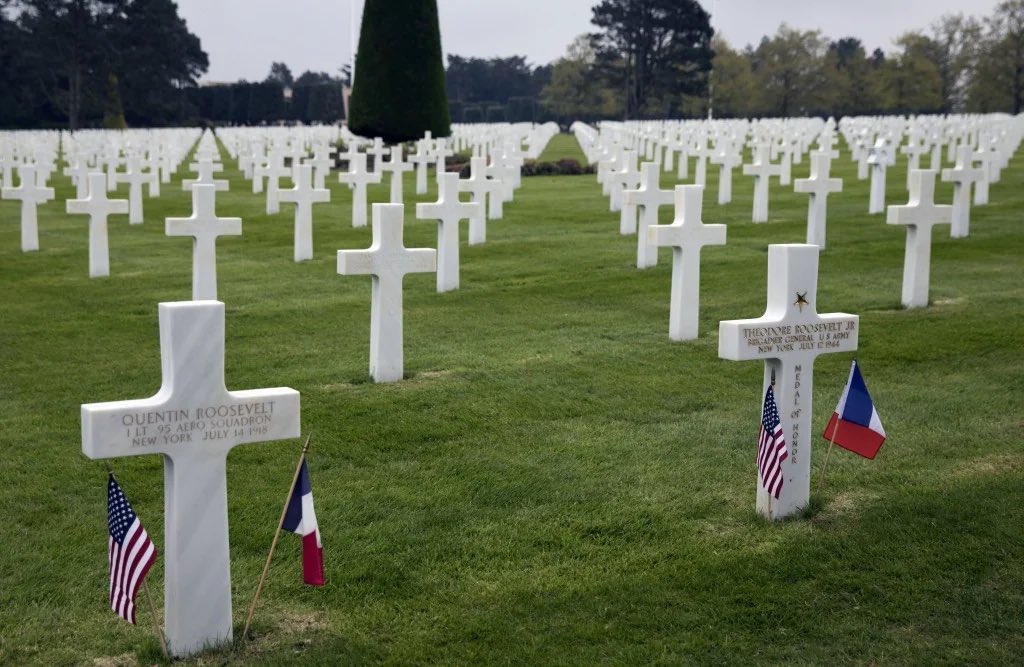
🇺🇸 Quentin Roosevelt is the ONLY WWI soldier in the entire Normandy cemetery. BG Theodore Roosevelt Jr. died in France of a heart attack in July 1944 and was laid to rest there. At the family’s request, his younger brother Quentin, who was killed in WWI aerial combat in 1918, was exhumed and reburied right beside him.
Barnaby Breaks History 🇺🇸 tweet media
Barnaby Breaks History 🇺🇸@CorpBarnaby

🇺🇸 The Roosevelts had the ONLY father-son duo that stormed D-Day together BG Theodore Roosevelt Jr. hit Utah Beach in the first wave at age 56. Captain Quentin Roosevelt II stormed Omaha Beach on the first wave under fire at age 24. No other father and son duo fought on D-Day. Quentin was named after his Uncle who died in WWI. Pure Roosevelt steel 💪🇺🇸

English
5
59
409
22.1K
Mr. Shurtleff - Art Of Thinking Teacher retweetledi
Theodore Roosevelt Presidential Library
Today is #WorldMigratoryBirdDay — and there may be no American president who would be more delighted by this observance than Theodore Roosevelt. Roosevelt was a serious ornithologist before he was anything else. As a boy, he kept meticulous bird-watching journals, taught himself taxidermy, and donated specimens to what would become the American Museum of Natural History. As a young man, he wrote scholarly papers on Adirondack birds. As president, he hosted ornithologist John Burroughs at the White House and exchanged letters with leading naturalists across the country and abroad. His conservation legacy reflects this lifelong love. In 1903, he established Pelican Island in Florida as the first federal bird reservation — the seed of what would grow into the National Wildlife Refuge System. By the end of his presidency, he had set aside 51 federal bird reservations and four national game preserves, an unprecedented federal commitment to wild creatures. Roosevelt understood that birds — especially migratory birds — don't recognize state lines, county boundaries, or property fences. They follow ancient flyways across continents. Protecting them required protecting the places they paused, fed, nested, and fledged. It required, in other words, a federal vision that no American president had previously brought to wildlife conservation. So today, when you see a warbler flash through your backyard or a flock of Canada geese passing overhead, you're seeing something that Theodore Roosevelt helped make sure your great-grandchildren can still see, too. #WorldMigratoryBirdDay #TheodoreRoosevelt #TeddyRoosevelt #Conservation #PelicanIsland #BirdConservation #TRPL
Theodore Roosevelt Presidential Library tweet media
English
0
14
62
954