samuel s 🇺🇸⚾☕🍖🍳

19.4K posts

samuel s 🇺🇸⚾☕🍖🍳 banner
samuel s 🇺🇸⚾☕🍖🍳

samuel s 🇺🇸⚾☕🍖🍳

@sambeaux64

I like ⚾️, 🏉, and ND 🏈 ☘️. I am anti-authoritarian. Also a theologically trained Christian. ✝️ Sometimes onstage. 🎭

Missouri City, TX Katılım Ekim 2010
2.2K Takip Edilen2.5K Takipçiler
Michael Warburton
Michael Warburton@TheMonologist·
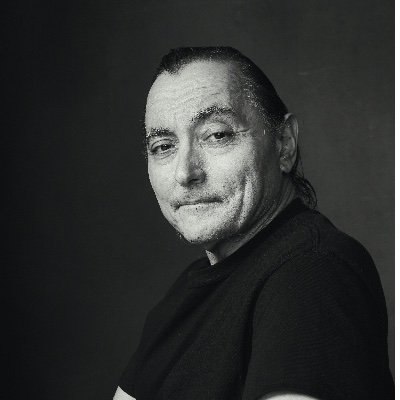
Remembering M. EMMET WALSH — who left us 2yrs ago today, aged 88
Michael Warburton tweet media
English
73
44
1K
15.1K
Thrilla the Gorilla
Thrilla the Gorilla@ThrillaRilla369·
Be honest... could you jump into a stick-shift car and drive it without a problem right now? 🚘
Thrilla the Gorilla tweet media
English
4.5K
377
9.5K
128.7K
Biased Notre Dame Fan
Biased Notre Dame Fan@CFBGuy999·
Name your favorite college football players of all time ⬇️
English
30
1
12
1.5K
Love Classical Music and Movies 🎺🎻💖🎥🎬
Pacino's 90s era by generation 1990 Dick Tracy 1990 The Godfather Part III 1992 Glengarry Glen Ross 1992 Scent of a Woman 1993 Carlito's Way 1995 Heat 1997 Donnie Brasco 1997 Devil's Advocate 1999 The Insider 1999 Any Given Sunday Which movie is your favorite?
Love Classical Music and Movies 🎺🎻💖🎥🎬 tweet media
English
197
32
354
16.8K
Kelly Kress
Kelly Kress@kress_kell64189·
@sambeaux64 @miles_commodore I'd swear I heard the announcer. Say they held him to negative.Yardage, possibly it was not the end of the game... Huge Steelers fan, when I watched football back in the day.
English
1
0
1
6
VintageCountryMusic
VintageCountryMusic@realcountry1953·
The greatest female country music artist in history. With Jim Reeves.
VintageCountryMusic tweet media
English
20
2
79
2.9K
samuel s 🇺🇸⚾☕🍖🍳 retweetledi
Michael Warburton
Michael Warburton@TheMonologist·
Happy 71st to the dude that is BRUCE WILLIS 🎂
Michael Warburton tweet media
English
111
467
8.2K
68.6K
Kelly Kress
Kelly Kress@kress_kell64189·
@miles_commodore Pittsburgh was the only team to hold him to negative.Yards in a game. Loved watching him He was one hell of a powerhouse.
English
2
0
0
20
samuel s 🇺🇸⚾☕🍖🍳
Great story! 🇺🇸
G-PA INDY@GPAIndiana

🙏🇺🇸🙏 A surgeon demanded General Sherman remove this 44-year-old widow from his camp. Sherman's response: "She outranks me. I can't do a thing in the world." Her name was Mary Ann Bickerdyke. In 1861, Mary Ann was a widow in Galesburg, Illinois, supporting her two sons with herbal medicine. She had no military connections, no formal training, and no official authority. But that changed when her pastor read a letter aloud in church. A young doctor from Cairo, Illinois, where Union soldiers were stationed, described the horrific conditions: soldiers dying from disease, neglect, and filth, not battle wounds. They needed medical supplies and someone to care for them. The congregation raised $500 and needed a volunteer to deliver it. Mary Ann raised her hand. She thought she would just drop off the supplies and return home. She stayed for four years. When she arrived in Cairo, she was furious. Soldiers lay on filthy straw, without clean water, proper food, or competent medical care. Instead of asking permission, Mary Ann started fixing things. She cleaned hospital floors, set up kitchens, organized laundries, assisted in surgeries, and wrote letters for the dying. When bureaucratic obstacles got in her way, she tore them down. Medical supplies locked away while men suffered? She broke the locks. Surgeons refusing to treat the wounded? She got them dismissed. When officers questioned her authority, she boldly replied: "I have received my authority from the Lord God Almighty. Have you anything that outranks that?" The soldiers quickly began calling her "Mother Bickerdyke!" She became a legend, searching battlefields after dark with a lantern, seeking out wounded soldiers that recovery teams had missed. She was often the only woman on the battlefield, organizing field hospitals and confronting any officer who tried to stop her. General Ulysses S. Grant fully supported her, offering her free transportation across his command. General William T. Sherman became one of her staunchest defenders. When a surgeon, frustrated with this widow who refused to follow military protocol, demanded that she be removed, Sherman reportedly said: "She outranks me. I can't do a thing in the world." Mary Ann served in nineteen major battles, including Fort Donelson, Shiloh, Vicksburg, and Sherman's March to the Sea. Under her supervision, more than 300 field hospitals were built. When the war ended in 1865, Mary Ann didn't stop. She helped veterans with the pension system, advocated for disabled soldiers, and worked with the Salvation Army. She kept serving until her death in 1901 at the age of 84. A statue stands in Galesburg today, depicting her offering water to a wounded soldier. Mary Ann Bickerdyke proved that the most powerful authority isn't always the one you're given. Sometimes it's the one you take, especially when lives are at stake 🙏🇺🇸🙏

English
0
1
3
25
samuel s 🇺🇸⚾☕🍖🍳
@miles_commodore Yes! Had a shark steak in Philadelphia like that once. Best thing I have ever eaten. Also caught a tub full of blue crab in the Gulf and my aunt boiled them that evening. Absolute perfection.
English
0
0
1
43
Miles Commodore
Miles Commodore@miles_commodore·
Have you ever eaten fish that was in the ocean a few hours before it was on your plate? There’s nothing like it.
English
543
46
1.8K
29.9K
samuel s 🇺🇸⚾☕🍖🍳
@Not_the_Bee My takeaway from this SHOULD be that the propaganda war is hitting us from all sides. I feel like you are saying it is more one sided though. Hope I’m wrong.
English
0
0
3
90
Michael Warburton
Michael Warburton@TheMonologist·
John Sturges’ second go at the ‘Gunfight at the O.K. Corral’ legend HOUR OF THE GUN (1967)
Michael Warburton tweet media
English
1
4
27
647
samuel s 🇺🇸⚾☕🍖🍳 retweetledi
G-PA
G-PA@IndianaGPA·
🙏🇺🇸🙏 Vietnam vet US Army 82nd Airborne's Dennis Franz Schlachta AKA actor Dennis Franz Dennis Franz: Airborne Division, U.S. Army After graduating from college in 1968, Franz was drafted and immediately enlisted in officer's school. He served 11 months with the 82nd and 101st Airborne Divisions in Vietnam. Franz served 11 month in Vietnam in a reconnaissance unit, and after his service he suffered depression for some time afterwards." "It was the loneliest, most depressing, frustrating time," he said in a 1995 interview. "It was life-altering. I came back a much different person than when | left, much more serious. I left my youth over there." "I was curious about the military service and went into the Army," Franz told TV Guide. "I regretted my curiosity about two weeks after I was in. I ended up in the 82nd Airborne and the 101st Airborne in Vietnam for 11 months." "I'm not as frivolous as I once was. I experienced death over there, and losing friends. I got as close to being shot as I care to. I could feel and hear bullets whizzing over my head, and that shakes you up quite a bit. When I came back in the early 1970s, there was still a lot of anti-war feeling. I didn't know how I fit in... I was torn up and angry for a year." - Dennis Franz Thank you for your service! 🙏🇺🇸🙏
G-PA INDY@GPAIndiana

🙏🇺🇸🙏 In September 1944, after weeks of brutal fighting in France, a young American officer did something that sounds impossible even today. First Lieutenant John Joseph Tominac was serving with the 3rd Infantry Division near Saulx de Vesoul. His platoon had already taken heavy losses since landing in France. Nearly half his men were wounded or killed. Still, the fighting continued. On September 12, Tominac launched four separate charges against German positions. One of them was a solo run across fifty yards of open ground under fire. But that was not the moment that defined him. While scouting ahead of his men, Tominac saw a German gun knock out an American tank, setting it ablaze. Believing the crew was still inside and advancing anyway, he made a split second decision. He jumped onto the burning tank. Standing fully exposed, silhouetted against the sky, Tominac fired the tank's mounted machine gun while enemy machine guns, mortars, snipers, and pistols poured fire at him. The unmanned tank continued rolling toward the German position, and the shock of his action forced the enemy to flee. As flames intensified, Tominac leapt from the tank just moments before it exploded. He survived, but shrapnel tore into his shoulder. He refused evacuation. He ordered his sergeant to remove the metal with a pocketknife and returned to the fight. For his actions that day, John Joseph Tominac received the Medal of Honor. He later said fear was always there. What mattered was not letting it show in front of his men. He was not chasing glory. He was doing what he believed had to be done. 🙏🇺🇸🙏

English
44
312
2.5K
391.4K
Susan McLaughlin
Susan McLaughlin@SusanMcLaughli2·
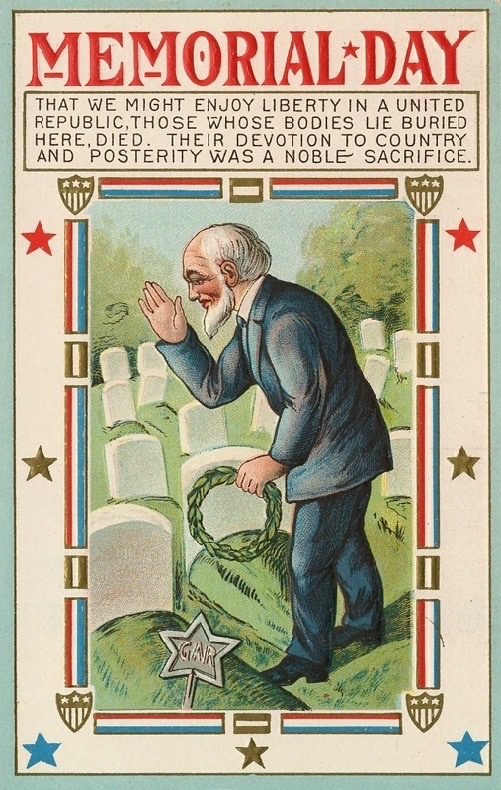
God Bless the families of our fallen. N.C. Wyeth : ‘Poems of American Patriotism"
Susan McLaughlin tweet media
English
1
0
9
56
samuel s 🇺🇸⚾☕🍖🍳 retweetledi
Michael Brasher
Michael Brasher@2ndMississippi·
The Allure and Burden of the "Lost Cause" [A note before we begin: I come from deep Confederate Southern roots, and I know the phrase "Lost Cause" carries freight it was never meant to bear. I don't mean here the postwar mythology that whitewashed history or excused what cannot be excused. I mean something older and larger — the thing that Margaret Mitchell and Robert Heinlein and C. Vann Woodward and Shelby Foote and William Faulkner all circled around in their different ways: the strange enduring human pull of causes carried forward even in defeat. I don't normally stray far outside strictly military history, but while I study and write about Atlanta's fall and recall how 'Gone with the Wind' fixed it in memory.... all this makes me occasionally take time and pause to think through what the South's memory of loss did to its literature, its music, its voice.] There is a curious power in a lost cause. Not the kind of power that wins battles or changes governments — the other kind, the kind that outlasts victory, that gets under the skin of a people and won't let go. History knows this. Literature knows it. Even science fiction has grappled with it. Defeat leaves a mark that triumph somehow doesn't. Victories get celebrated, then filed away and half-forgotten. Losses endure. They become identities. Margaret Mitchell understood. When she put words in Rhett Butler's mouth — her roguish, half-cynical hero who had seen through the Confederacy from the start — she gave him the line that would echo longer than anything else in 'Gone with the Wind': "I'm going to join the army. … I've always had a weakness for lost causes once they're really lost." Clark Gable delivered it in the 1939 film almost word for word, and it landed just the way Mitchell meant it: half-romantic, half-rueful, a recognition that there's something noble, even seductive, about throwing your lot in with a cause that cannot win. Not nobility in the cause itself, mind you. Nobility in the gesture — in the going forward when the end is already written. Three decades later, Robert A. Heinlein circled the same truth from a different angle. In 'The Moon Is a Harsh Mistress,' his philosopher-revolutionary Bernardo de la Paz — guiding a Lunar rebellion against Earth that had no business succeeding — put it this way: "Revolution is an art that I pursue rather than a goal I expect to achieve. Nor is this a source of dismay; a lost cause can be as spiritually satisfying as a victory." Where Rhett saw romance, the Professor saw dignity. Principle mattered even when it lost. Maybe especially when it lost. In both cases, defeat became not just an end but a kind of transcendence. These are fictional voices, but they resonate because they're rooted in something real. The South knew it before Mitchell or Heinlein ever set pen to paper. William Faulkner, who carried the South's ghosts in his bones, wrote it plainest in 'Requiem for a Nun': "The past is never dead. It's not even past." For Faulkner, defeat wasn't abstract. It was woven into the fabric of the present — individuals and families and whole communities laboring in webs spun long before their time, bound by consequence and memory they didn't choose but couldn't escape. The Confederacy's loss wasn't a closed chapter. It was a living ghost. C. Vann Woodward gave this sensibility its scholarly form in 'The Irony of Southern History.' He argued that the South bore a burden the rest of the United States did not — couldn't, really, because the rest of the country had never known total defeat. While the nation at large celebrated triumphs and expansion and exceptionalism, the South carried humiliation, poverty, racial crisis, and the plain fact of having been conquered. Woodward put it this way: "Southern history, unlike American, includes large components of frustration, failure and defeat. It includes not only an overwhelming military defeat but long decades of defeat in the provinces of economic, social, and political life." That's not sentiment. That's fact. The South lost the war, then lost the peace, then spent generations losing arguments about what it all meant. Defeat piled on defeat until defeat itself became the defining experience. Shelby Foote — novelist turned historian, Southerner to the marrow — said it even simpler in Ken Burns' 'The Civil War': "As a Southerner I would have to say that one of the main importances of the War is that Southerners have a sense of defeat which none of the rest of the country has." Where Woodward dissected irony, Foote described feeling. That sense of defeat became a cultural inheritance, passed down not in history books alone but in songs, in humor, in manners, in the way people talked about time itself. Taken together — Rhett Butler's gallantry, Heinlein's philosophy, Faulkner's haunted prose, Woodward's historical irony, Foote's cultural lament — these voices converge on a single truth: defeat carries its own kind of permanence. Victories can be celebrated and then forgotten. Losses endure. They become identities. They inspire literature and music, color politics and culture, shape how people see themselves in the stream of history. For the American South, that defeat was the Civil War. The Midwest remembers sacrifice and Union preserved. The West folded the war into its larger frontier myth. The North celebrated vindication. But the South? The South lives with memory of catastrophe. Its cause wasn't merely lost — it was woven into identity itself, inseparable from the question of what it meant to be Southern at all. That's why the South produced so much of the nation's most powerful literature, music, cultural expression. Because it carried the burden of memory. The blues, with its mournful beauty. Country ballads of loss. Faulkner's haunted Yoknapatawpha County, where every field held a ghost and every family carried a curse. All threads in that web. The past is not past. And in the South, defeat proved as enduring — perhaps even more spiritually satisfying — than victory. Shelby Foote and William Faulkner
Michael Brasher tweet mediaMichael Brasher tweet media
English
42
72
353
30.7K
samuel s 🇺🇸⚾☕🍖🍳 retweetledi
Michael Tullos
Michael Tullos@TeacherAuthor17·
A picture book manuscript of mine about the true story of Revere's ride has been a part of our district's 5th grade curriculum for 10 years. I wanted to see what it might look like if I self-published it. While I was messing around with it, I saw the video option. The following shows Revere, Dawes and Prescott riding out of Lexington. So now I'm wondering if I should skip the book idea and make each "page" into a video. I need to speak with an AV teacher about this idea. Elon, if I can do this with a little trial and error (I'm not a tech person in the least), IMAGINE what anyone with even a little bit of editing knowledge can do. This is an awesome tool!
English
0
2
6
265