Muheki the hustler

9.6K posts

Muheki the hustler banner
Muheki the hustler

Muheki the hustler

@MuhekiKeneth

A God loving creature, IT professional, certified hustler,MAN U die hard,Vipers SC,Real Madrid. Truthful mukiga. [email protected]

Kampala, Uganda Katılım Şubat 2016
6.2K Takip Edilen2.2K Takipçiler
Muheki the hustler
Muheki the hustler@MuhekiKeneth·
Hello, Madam @ollamson . patiently waiting for your response over my Application number sent to your Dm. Thanks
English
1
0
0
10
Muheki the hustler retweetledi

Muneerah
Muneerah@muneerahreturns·
Until you enter a room full of intelligent people You will realize you are not as wise as you think Read books!!!
English
300
4.1K
22.2K
259.7K
Muheki the hustler retweetledi
Alan Kasujja
Alan Kasujja@kasujja·
Interns. 2 of them. 1- Graphics 2- Video Geniuses only! @Dave_Bugzy has instructions to handle. Thanks for paying attention to this matter.
English
3
67
363
39.4K
Muheki the hustler retweetledi
Lawrence Kitema
Lawrence Kitema@lawrencekitema·
Nobody is rich enough. Just pray that life doesn’t test you with a problem bigger than your account balance. Always stay humble and kind.
English
426
7.9K
31.7K
550.6K
Muheki the hustler retweetledi
Joel JAFFER Aita
Joel JAFFER Aita@aitajoel·
OPEN LETTER TO HIS EXCELLENCY THE PRESIDENT OF THE REPUBLIC OF UGANDA H.E. GEN. YOWERI KAGUTA MUSEVENI, PRESIDENT OF UGANDA BUILDING LOCAL CONSTRUCTION CAPACITY: A CALL FOR STRUCTURAL REFORMS IN UGANDA'S INFRASTRUCTURE DELIVERY March 2026 Your Excellency, I write to you with deep respect, and with the conviction of a civil engineer who has spent over two decades working in Uganda's infrastructure sector. Serving communities from Kisoro to Kidepo, from Arua to the farthest reaches of our nation. I write not to complain, but to propose. Not to criticize, but to build. And I write because I believe this government has both the will and the ability to transform how Uganda constructs its own future. Uganda is spending billions of dollars most of it borrowed on infrastructure. Roads, water systems, hospitals, energy projects, and urban development are being financed through loans from the AfDB, World Bank, Islamic Development Bank, KfW, UKEF, Saudi Fund, BADEA, OFID, and others. Yet a troubling and persistent pattern continues: the majority of these funds leave Uganda the moment they arrive, carried out in the pockets of foreign construction companies who win our contracts, import their workforce, and repatriate their profits. Uganda builds, but Ugandans do not benefit. This is not a new observation. But the urgency is new. As our national debt grows and as the infrastructure gap widens, we cannot afford to continue financing the development of other nations while our own local construction industry remains weak, underfunded, and structurally excluded from the very projects meant to develop our country. Your Excellency, the solution is not to stop borrowing. The solution is to ensure that borrowed money builds Ugandan capacity permanently. I. THE PROBLEM: FOREIGN DOMINANCE OF UGANDA'S CONSTRUCTION SECTOR Uganda's government construction projects, particularly those financed by international development partners are overwhelmingly awarded to foreign contractors. Chinese, Turkish, Indian, and European construction firms routinely secure the largest and most lucrative contracts, while Ugandan companies are confined to minor subcontracts, if any at all. The reasons are well understood: •Local companies lack the financial muscle to post the performance bonds and advance payment guarantees demanded under international tender requirements. •They lack access to modern plant and equipment, and cannot compete on mobilization capacity. •They are excluded by minimum turnover thresholds and track record requirements set at levels no Ugandan company can meet. •They cannot secure affordable financing from commercial banks whose interest rates range from 20% to 26% making project financing economically impossible. •There is no structured, government-backed system to develop local firms technically or financially. The result is a construction sector that looks busy but delivers very little lasting value to Uganda. When foreign contractors leave, they take their skills, their equipment, and their profits with them. Uganda is left with infrastructure — but without the industrial capacity to maintain it, expand it, or build on it independently. This must change. And it can change with deliberate, courageous policy action. II. PROPOSAL ONE: MANDATORY 30% LOCAL SUBCONTRACTING — THE MALAWI MODEL The first and most immediately actionable reform Your Excellency can direct is the introduction of a mandatory local content requirement for all government-funded construction contracts. I propose that no foreign construction company should be permitted to sign a main construction contract in Uganda unless it has first entered into a formally executed subcontract agreement with a Ugandan-registered and Ugandan-owned construction firm — covering a minimum of 30% of the contract value. The current Law is not followed. This is not a radical idea. It is already working in our region. 🌍 THE MALAWI PRECEDENT: A MODEL FOR UGANDA Malawi has implemented a local content policy in its public infrastructure programmes that requires foreign contractors to formally subcontract a defined percentage of work to locally registered companies (Owned at least 51% by an indigenous Malawian). Critically, the subcontract agreement must be signed BEFORE the foreign contractor can execute the main contract. This single requirement will have transformative effects: •Ugandan companies gain direct exposure to international construction standards and project management disciplines •Technology and skills transfer happen organically, on the job •Local firms build track records that qualify them for larger contracts over time •A portion of contract proceeds is retained within the local economy •Foreign firms are incentivized to partner with and develop local capacity, rather than bypass it "What Malawi has demonstrated is that local content is not charity it is industrial policy." Uganda should codify this into the Public Procurement and Disposal of Public Assets (PPDA) Act as a non-waivable mandatory condition. The 30% threshold should be structured as a floor, not a ceiling. Procurement regulations should incentivize bids that exceed this threshold, with evaluation criteria rewarding higher local content commitments. Sectors such as water and sanitation, urban roads, and social infrastructure — where local firms already have meaningful expertise — should attract mandatory local content requirements of up to 50%. The PPDA, the Ministry of Works and Transport, and other entities should be directed to update standard bidding documents immediately to make subcontract agreements with local firms a mandatory prerequisite for contract award. III. PROPOSAL TWO: A STRUCTURED NATIONAL PROGRAMME FOR LOCAL CONSTRUCTION CAPACITY BUILDING Mandatory local participation alone is not sufficient. For local firms to actually execute their subcontracted works to the required quality, they must be equipped with the skills, systems, and standards to do so. I propose that the Government of Uganda, through the Ministry of Works and Transport in partnership with the Uganda Institution of Professional Engineers (UIPE) and the Engineers Registration Board (ERB), establish a dedicated National Construction Industry Development Programme (NCIDP). This programme should include the following components: 3.1 Technical Skills Development A structured technical training pipeline, targeting middle-level construction managers, site engineers, quantity surveyors, and foremen across Uganda's regions. Partnerships with UIPE, ERB, and Uganda's public universities including Muni University and Makerere should be formalized to deliver industry-relevant curricula aligned with real project requirements. 3.2 Equipment Leasing and Shared Plant Programme One of the greatest barriers facing local contractors is access to plant and equipment. A Government Equipment Leasing Programme similar to what exists in Ghana and Rwanda would make excavators, compactors, pavers, and other heavy machinery available to qualifying local firms at subsidized rental rates. Equipment depots could be established regionally, ensuring firms outside Kampala have access. 3.3 Business Development and Management Training Many local firms fail not because of poor workmanship, but because of poor financial management, contract administration, and business systems. A structured training programme in construction business management, contract law, and quality systems — delivered through institutions like the Joadah Design Institute and other accredited training providers would address this gap directly. 3.4 Technology Transfer Requirements Every major foreign contractor operating in Uganda should be required, as a condition of contract, to deliver a formal technology and skills transfer programme including on-site training for Ugandan staff, documentation of systems and processes, and mentorship of designated Ugandan counterparts. This should be assessed as part of contract performance evaluation. 3.5 A Uganda Contractors Registry with Grading and Development Tracks PPDA and the Ministry of Works should establish a national contractor grading system, classifying local contractors by capacity level. This registry would match firms with appropriately sized opportunities and create a defined pathway from Grade 1 (small community works) to Grade 5 (major national infrastructure). Progression through grades would be tied to demonstrated performance, training completion, and financial capacity benchmarks. IV. PROPOSAL THREE: ESTABLISH A UGANDA INFRASTRUCTURE AND CONSTRUCTION BANK (UICB) Your Excellency, no reform will be sufficient if local contractors cannot access affordable financing. This is the single greatest structural barrier facing Ugandan construction firms today, and it requires a structural not incremental solution. Commercial bank lending rates in Uganda range between 20% and 26% per annum. No construction firm working on projects with typical margins of 8% to 15% can profitably borrow at those rates to finance project mobilization, performance bonds, or working capital. The result is that local firms are perpetually under-capitalized, unable to grow, and structurally incapable of competing. I propose the establishment of the Uganda Infrastructure and Construction Bank (UICB) a government-owned or government-guaranteed development finance institution specifically mandated to serve the construction and infrastructure sector. 🏦 UGANDA INFRASTRUCTURE AND CONSTRUCTION BANK — PROPOSED MANDATE LENDING RATES: Single-digit interest rates (5–9% p.a.) for qualifying local contractors on government-funded projects PRODUCTS: •Performance Bond Guarantee Facility — enabling firms to meet contract requirements •Advance Payment Bridging Finance — covering mobilization costs while advance payments clear •Equipment Acquisition Loans — long-term, low-interest financing for plant and machinery •Working Capital Facilities — revolving credit during project execution ELIGIBILITY: Ugandan-registered, Ugandan-majority-owned firms with valid contracts on public projects GOVERNANCE: Independent board, regulated by Bank of Uganda, capitalized by Government of Uganda and development partner co-financing PRECEDENTS: Rwanda Development Bank (BRD), Ghana Infrastructure Investment Fund, Kenya Mortgage Refinance Company The UICB would not replace commercial banks it would fill the gap that commercial banks have neither the mandate nor the appetite to fill. It would be the financial backbone of a revitalized local construction industry. Initial capitalization could be structured through a combination of Government of Uganda equity, a levy on large foreign construction contracts (for example, 1–2% of contract value paid into the UICB capitalization fund), and concessional co-financing from development partners such as the AfDB Local Currency Solutions initiative, IFC, and the European Investment Bank. This institution would pay for itself. Every shilling lent to a Ugandan contractor on a government project recirculates through the Ugandan economy — in wages, in local material procurement, in taxes, in reinvested profit. The multiplier effect of local construction financing is, by conservative estimates, three to four times greater than equivalent expenditure through foreign contractors. V. WHAT THIS LOOKS LIKE IN PRACTICE: A VISION FOR 2030 Your Excellency, the three proposals above are mutually reinforcing. Together, they create a system: •Mandatory local subcontracting opens the door giving Ugandan firms the contracts they need. •Capacity building provides the skills and systems to walk through that door successfully. •The Government Construction Bank provides the financial fuel to sustain the journey. •Within a decade, Uganda could realistically achieve a construction sector where: •At least 60% of government infrastructure contracts are led or co-led by Ugandan firms. •A new generation of Grade 4 and Grade 5 Ugandan contractors exists, capable of independently delivering projects valued at USD 50 million and above. •Uganda's construction sector contributes meaningfully to formal employment, skills development, and industrial growth. •Infrastructure loan proceeds remain largely within Uganda, multiplying their developmental impact. •Uganda's engineers and construction professionals are recognized as leaders across the East African region. None of this requires Uganda to reinvent the wheel. Malawi, Ghana, Rwanda, Kenya, and South Africa have all implemented versions of these policies. What it requires is political will and coordinated implementation. VI. A CALL TO ACTION: WHAT YOUR EXCELLENCY CAN DIRECT TODAY The following actions can be initiated immediately, without requiring new legislation in the first instance, through executive direction and ministerial circulars: i.Direct the PPDA Authority and Ministry of Works and Transport and other government entities to amend standard bidding documents for all government infrastructure contracts above UGX 10 billion to include a mandatory local subcontracting requirement of not less than 30%. ii.Direct Ministry of Works, the Ministry of Water, and other government implementing agencies to enforce this requirement immediately on all contracts currently under procurement. iii.Commission a feasibility study for the Uganda Infrastructure and Construction Bank, to be completed within six months, with a mandate to present a full business case to Cabinet. iv.Direct UIPE, ERB, and the Ministry of Works to develop a National Contractor Development Programme framework within ninety days, for implementation from the next financial year. v.Engage development partners particularly the World Bank, AfDB, and EU to include local content provisions as a conditionality in infrastructure financing agreements with Uganda. These are not large budgetary commitments. They are policy decisions. And they will have larger long-term returns than virtually any other infrastructure policy measure available to this government. VII. CLOSING REMARKS Your Excellency, Uganda is not short of talent. We have engineers who have designed and supervised projects worth over a billion dollars. We have contractors who have delivered quality works in challenging conditions. We have young professionals hungry for opportunity and capable of excellence when given the chance. What we lack is a system that believes in us enough to invest in us, a system that says, unambiguously, that Ugandan hands will build Uganda. The infrastructure being constructed today will define this nation for the next fifty years. The question is not whether Uganda will build it will. The question is whether Uganda will build its own capacity in the process, or whether we will arrive at a future of gleaming roads and modern hospitals, still unable to construct or maintain them without calling a foreign company. I believe Uganda Can Build. I believe Ugandan engineers and contractors, properly supported and properly empowered, can deliver world-class infrastructure on Ugandan soil. This letter is my contribution to making that belief a reality. With respect, with conviction, and in service of our nation, Joel Aita CEO & Chairman, Joadah Consult Ltd | Entebbe, Uganda Civil Engineer | Entrepreneur | Author — An Entrepreneur's Mind Chairperson, Muni University Council Director, Joadah Design Institute | Director, Joadah Technologies Ltd @KagutaMuseveni
Joel JAFFER Aita tweet media
English
81
112
369
32.4K
Muheki the hustler
Muheki the hustler@MuhekiKeneth·
Good morning @NIRA_Ug , i received a messege that my ID is done but i will be informed on when to pick it, can i access my NIN for the mean time?
English
1
0
12
2.8K
Muheki the hustler
Muheki the hustler@MuhekiKeneth·
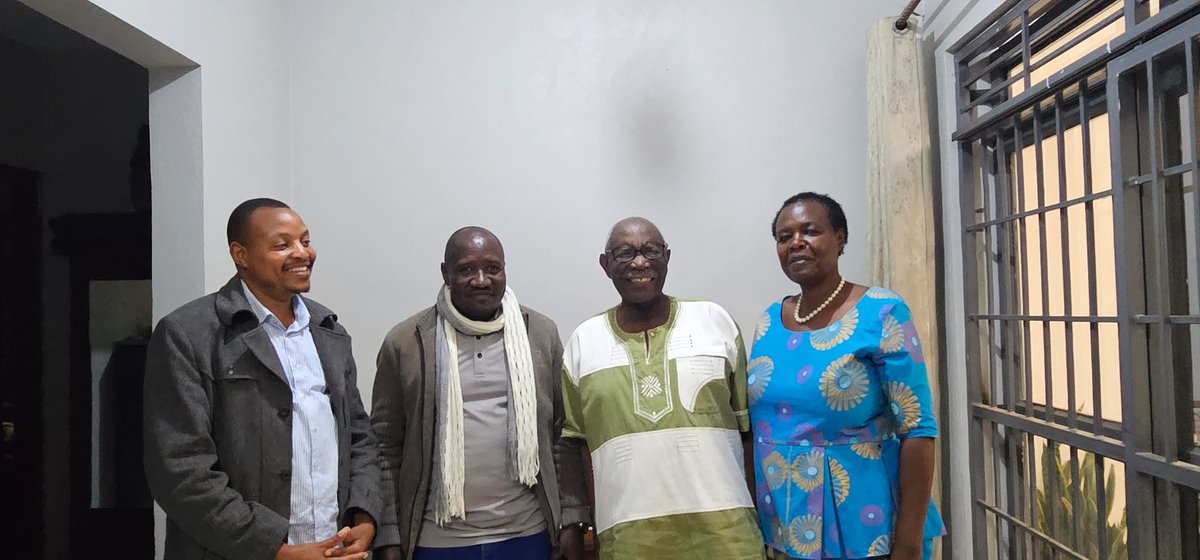
@KakyeneNamanya Its always good to check on elders and drink on their cup of wisdom, thanks to you Kakyene and Sam for checking on the man of God ,Emeritus Bishop.
English
0
0
0
29
Muheki the hustler retweetledi
Kakyene Namanya
Kakyene Namanya@KakyeneNamanya·
I was honoured today to be hosted by the Emeritus Bishop William Rukirande at his residence in Makanga. BP. Rukirande is one of the bishops who was with the Archbishop Janan Luwum on his last day I felt so cold when he started telling me the horrible story.
Kakyene Namanya tweet media
English
2
1
18
602
Muheki the hustler retweetledi
JAY4SURVEYS
JAY4SURVEYS@jay4surveys·
If you are an African and can be up by midnight 12am GMT+1, this company i just found is willing to pay you $1500 monthly. I spent the weekend looking for companies that need international participants to answer questions for them and i found this one that's really interesting. You get paid to answer questions for the company for approximately 20 minutes daily and in return, you'll be given $1500 at the end of the month. If this is something you can do; rt and let me know below 700 participants are urgently needed (NB: Must be following)
𝔻𝕒𝕟.@fwdaniels

there is insane money online dawg, find who will put you on & lock in

English
938
701
1.9K
191.5K
Muheki the hustler retweetledi
Jim Spire Ssentongo
Jim Spire Ssentongo@SpireJim·
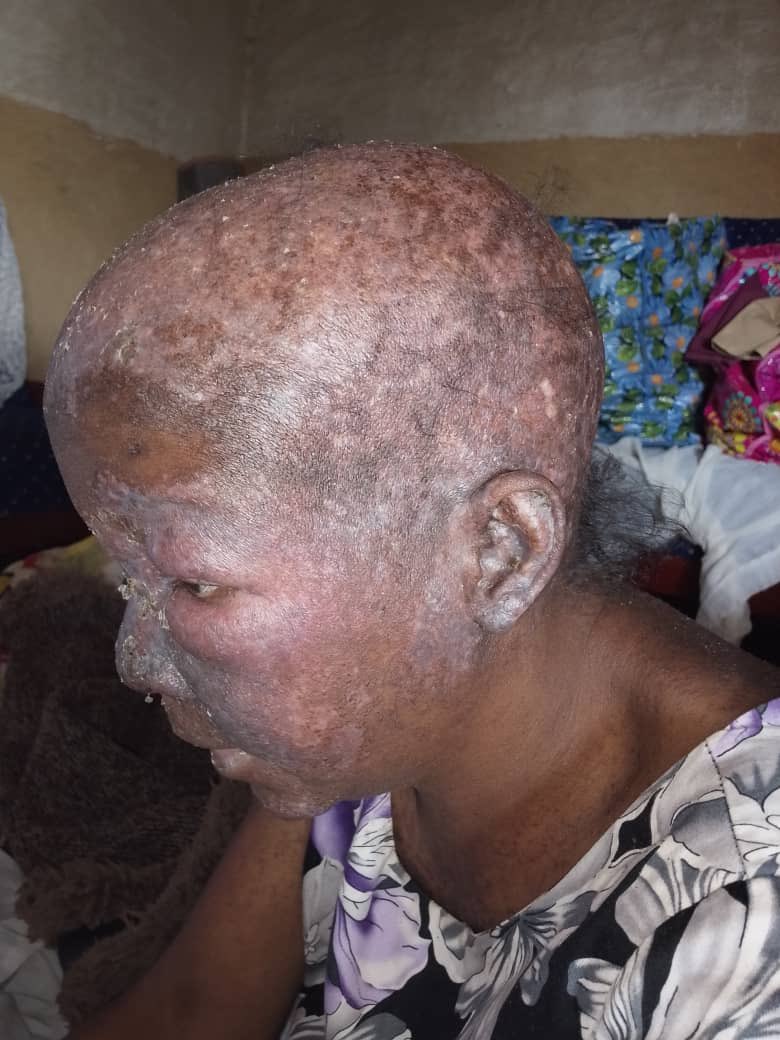
When I was contacted to help fundraise for Norah Atuhire, my immediate feeling was that I am not doing any other fundraising any time soon. I’m overwhelmed by appeals, and I can only do so much. But today, when I met the lady spearheading the attempt to save Norah’s life, I was deeply touched and had to come here to appeal to your kindness. Norah, a primary teacher and single mother of two, is suffering from a strange disease called Lupus Erythematosus. The disease turns the body against itself, and it fights its own immunity (in lay terms). That is how it deformed Norah from her original self to look like this and suffer excruciating pain. While the disease cannot be cured, she can be treated to get back to normal life with much less pain. The medication to take her back to ‘normal’ is expensive, but we can help her in which ever way we can, They’re looking for about $4,000. See numbers on flyer. NB: Photos shared with her full permission
Jim Spire Ssentongo tweet mediaJim Spire Ssentongo tweet mediaJim Spire Ssentongo tweet mediaJim Spire Ssentongo tweet media
English
184
1.3K
2.6K
356.8K
Muheki the hustler retweetledi
Phil
Phil@bamwinejnr·
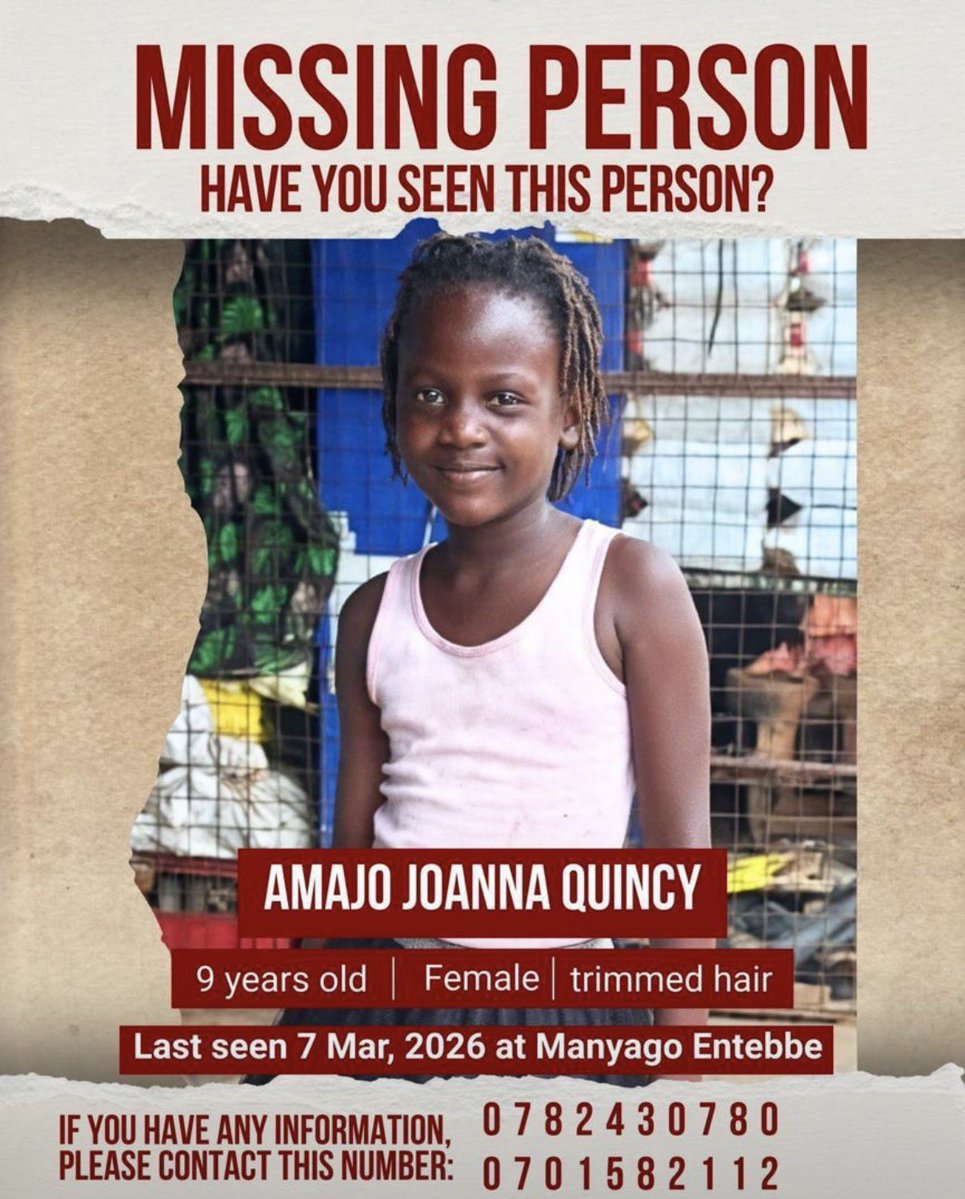
Missing child !! Please retweet widely 👏
Phil tweet media
English
5
808
847
21.1K
Muheki the hustler retweetledi
Gideon Nova Kwikiriza
Gideon Nova Kwikiriza@KwikirizaNova·
What you need to know about creator revenue share, stripe and why you can’t get your money directly to your banks. Let’s learn together.
English
41
116
340
13.6K
Dr Kizza Blair
Dr Kizza Blair@blair_kizza·
From Uganda to the U.S. residency Match. 🇺🇬➡️🇺🇸 I officially MATCHED into residency.
Dr Kizza Blair tweet media
English
528
831
8K
397.6K