Sir Muttley OBE UTAG retweetledi
Sir Muttley OBE UTAG
4.9K posts


Sir Muttley OBE UTAG
@MuttleyObe
LOVE LIFE,LONDON and the GBs fighting the fight UNIFORM 26
London, England Katılım Aralık 2019
825 Takip Edilen859 Takipçiler

Sir Muttley OBE UTAG retweetledi

Birmingham vs Bristol City on Saturday just gone.
Only English football fans could make a chant up involving a pigeon on the pitch.
Even the substitues are laughing.🤣🤣🤣
English
Sir Muttley OBE UTAG retweetledi

QUICK SURVEY!
1. Which is the nearest football team to where you were born?
2. Which is the nearest team to where you grew up?
3. Which is the nearest team to where you live now?
4. Which team do you have historical family ties with?
5. Which team do you support?
English
@SamaHoole @happycabby1 The fryers delight in Holborn London is the only one I know in London
English
Sir Muttley OBE UTAG retweetledi

Chips fried in beef dripping were a different object to what passes for a chip today.
Walk into a Whitby chippy in 1978. The fryer has been on since 11am. The fat in it is beef dripping, held at 180 degrees by a man in a white apron who has been frying chips since he was fifteen. There are no seed oils in the building. The idea would not occur to anyone.
Thick-cut Maris Pipers, ninety seconds in the dripping. Dark gold at the edges, fluffy inside, crisp in a way that sets your teeth against them. Salt. Vinegar. Paper. Two bob.
You eat them walking home along the harbour wall. The chip tastes of the chip and also of something underneath the chip, something deeper, something you don't have a name for because you are nine and nobody names it, it is just what chips taste like.
That taste was beef dripping.
By 2002, 90% of British chippies had switched to rapeseed, palm, or sunflower oil, on the advice of public health officials citing research since quietly retracted. A stable saturated fat used for ten thousand years, swapped for an industrial oil invented in 1911, oxidised at fryer temperatures for twelve hours a day.
A seed-oil chip is lighter, flatter. The crust doesn't hold. The flavour stops at the potato. No deeper note. No roast beef on a Friday.
Ask a British person under thirty what chips are supposed to taste like and they will describe, with complete sincerity, the chip they have always eaten. A chip their great-grandfather would have considered a practical joke. They cannot miss it, because the reference point was removed from the national palate before they were born.
A handful of chippies still fry in dripping. The Magpie in Whitby. A few survivors in Yorkshire, Lancashire, the Black Country.
Go. Drive. Queue. Eat them standing up, out of the paper.
You will understand, in one bite, what was taken.
The cow is still in the field. The suet is still at the butcher. The fryer could be switched back tomorrow.
A whole country forgot what a chip was.

English
Just had 4 Chinese customers who paid cash though that’s a bit odd until I realised that they tried to tuck me up with an old tener 😂
English
@QPR @englishoop Missed the cup final against Tottenham
English

@bagshaw2112 @zombie_nun Met him and he’s family in Malta when I was young lovely bloke but I couldn’t work out that he spoke differently from the actor 😂
English


Sir Muttley OBE UTAG retweetledi

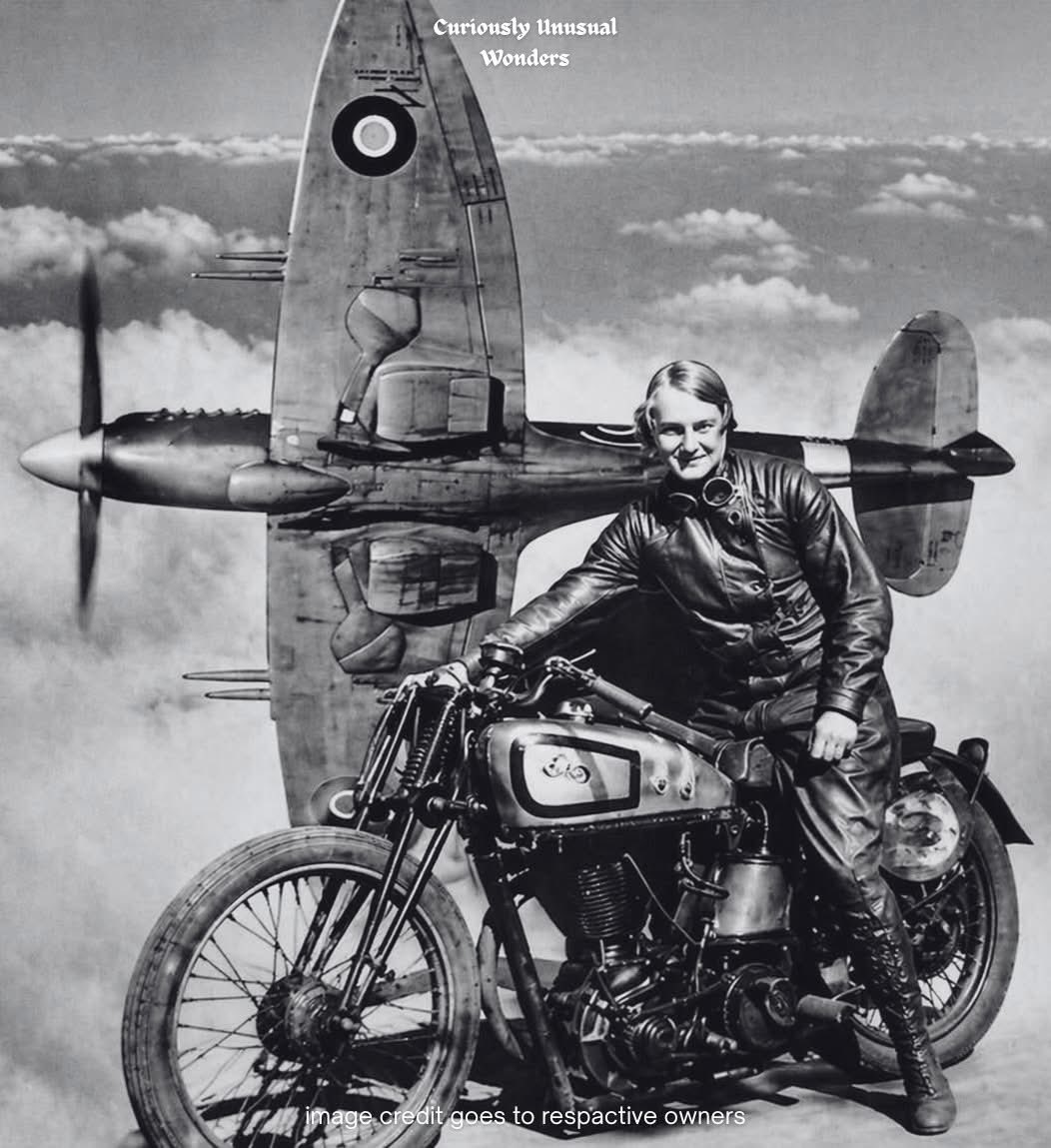
Every time a German Messerschmitt pilot wanted to escape a Spitfire on his tail, he did the same thing.
He pushed the nose down.
In a dive, the German engine kept running — it used fuel injection. The British Spitfire's engine cut out. For one and a half seconds the Merlin went dead, the aircraft shuddered, and by the time it caught again the German was gone. Worse: if a German was behind a British pilot and the British pilot dove to escape, the German could follow and keep shooting while the British engine was silent.
Pilots were dying because of a carburetor.
The engineers at Farnborough knew about the problem. They were working on a long-term solution — a redesigned carburetor that would take years to perfect and manufacture.
A woman named Beatrice Shilling fixed it with a washer.
She was born in Hampshire in 1909 and was the kind of child who spent her pocket money on Meccano sets and tools. At fourteen she bought her first motorbike. Her mother, with the inspired instinct of someone who understood what her daughter actually was, found the Women's Engineering Society and arranged an apprenticeship at an electrical firm.
She went to Manchester University — one of the first two women ever to study engineering there — graduated with a degree in electrical engineering, stayed another year for a master's in mechanical engineering, and in 1936 joined the Royal Aircraft Establishment at Farnborough as a scientific officer.
By the late 1930s she was one of the best carburetor engineers in Britain. She was also one of only three women to hold the British Motorcycle Racing Club's Gold Star — awarded for lapping the Brooklands racing circuit at over 100 miles per hour on a motorcycle.
She had reportedly told her future husband, an engineer named George Naylor, that she wouldn't marry him until he earned his own Brooklands Gold Star first.
He earned it. They married in 1938.
The problem with the Merlin was specific and lethal. The SU carburetor used a float chamber to regulate fuel flow. Under negative g-forces — the forces experienced in a sudden dive — the fuel flooded to the top of the float chamber and starved the engine for 1.5 seconds. Just enough time for a German pilot to turn the tables entirely.
The RAF had known about this since the Battle of France. The formal solution — a redesigned pressure carburetor — was in development but wouldn't be ready for years.
Shilling was thirty-one years old, working in carburetor research, and she designed a fix in weeks.
A brass thimble with a precisely calibrated hole in the center — later simplified to a flat washer — fitted inline in the fuel line just before the carburetor. It restricted maximum fuel flow to just enough to prevent flooding without cutting off power. The key breakthrough: it could be fitted without taking the aircraft out of service. No downtime. No factory return.
The old guard at the RAE looked at it and called it a plumbing fix. They called her a plumber. The first batch of 5,000 units was made by a Birmingham firm that normally manufactured plumbing fixtures, which they found embarrassing.
The RAF pilots who flew Spitfires with Messerschmitts on their tails called it something else.
They called it Miss Shilling's Orifice. With deep affection.
By March 1941 she had organized a small team and was personally touring RAF fighter stations across England — traveling between bases on her old racing motorcycle — fitting the device to every Merlin engine they could reach. Squadron leaders all over the country were demanding installations. The word spread faster than the official channels could keep up with.
The Germans noticed. They couldn't explain why British fighter pilots had suddenly started following them into dives. They were baffled by the new aggression. They didn't know about the washer.
(More story replies)
English
@phughes76340646 @LeeHarris @grahamrhino10 When will British people wake up and I mean British people of all colours and creeds these lunatics need sectioning
English

@LeeHarris @grahamrhino10 The loony left are dragging our great country into the gutter
They will sell their soul for Muslim votes
Two of the most dangerous politicians in our country right now


English

I still can't get my head around this. We currently have a prime minister, in office, who has
Broken the ministerial code
Repeatedly lied to the public
Repeatedly lied to parliament
And put our national security at risk.
He should be dragged out of No.10 in cuffs
GET HIM OUT!

English


Sir Muttley OBE UTAG retweetledi
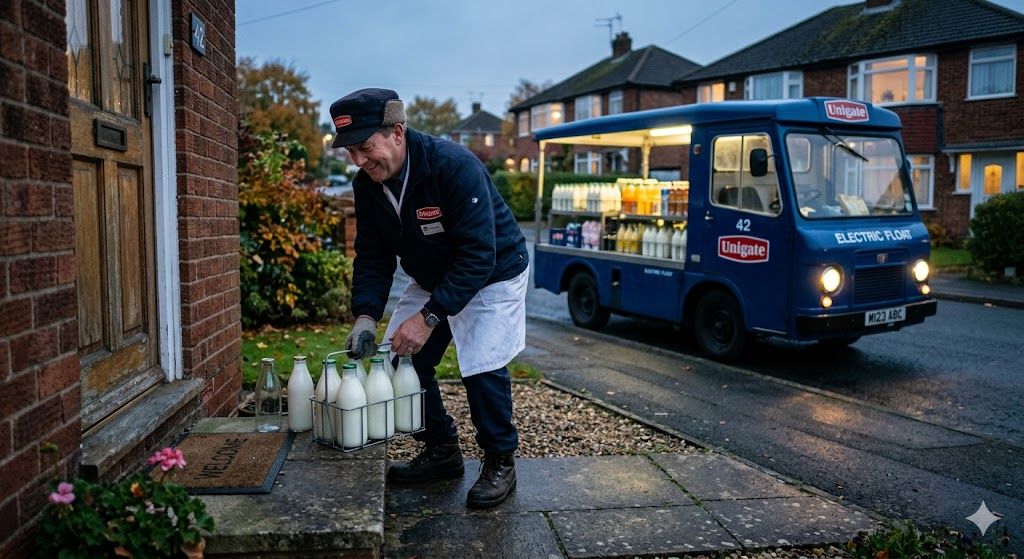
In 1995, 45% of British milk was delivered to the doorstep before seven in the morning by a milkman in an electric float.
In 2026, it is 3%.
The milkman has been effectively abolished inside one human generation. The supermarket walked in, undercut the cost by a few pence per pint, and the daily ritual of British household life, glass bottles clinking on the step at half past six, was gone by the time the children of 1995 had finished secondary school.
The cost to the customer was a few pence per pint.
The cost to the system was, in rough order: the glass bottle that was washed and reused hundreds of times, replaced with a plastic bottle that is used once and recycled imperfectly. The local dairy that supplied one town, replaced with a national processor that supplies half the country. The milk that arrived four hours after milking, replaced with milk that arrived three days after milking after a journey of 200 miles. The conversation on the doorstep, replaced with a self-checkout beep.
The milkman himself, incidentally, had the lowest recorded rate of heart disease of any male occupation in Britain. He walked approximately 12 miles a day, finished work by 10am, and ate a cooked breakfast. He has been replaced, in the same delivery role, by a zero-hours Amazon Flex driver sitting in a Ford Transit.
A small piece of British daily infrastructure was quietly demolished.
Nobody was consulted.
The milk is still being produced. It is just being produced further away, transported further, kept in plastic, and sold at a different margin, by a different business, to a customer who never sees who milked the cow.
The milkman knew your name.
The self-checkout does not.
English
Sir Muttley OBE UTAG retweetledi
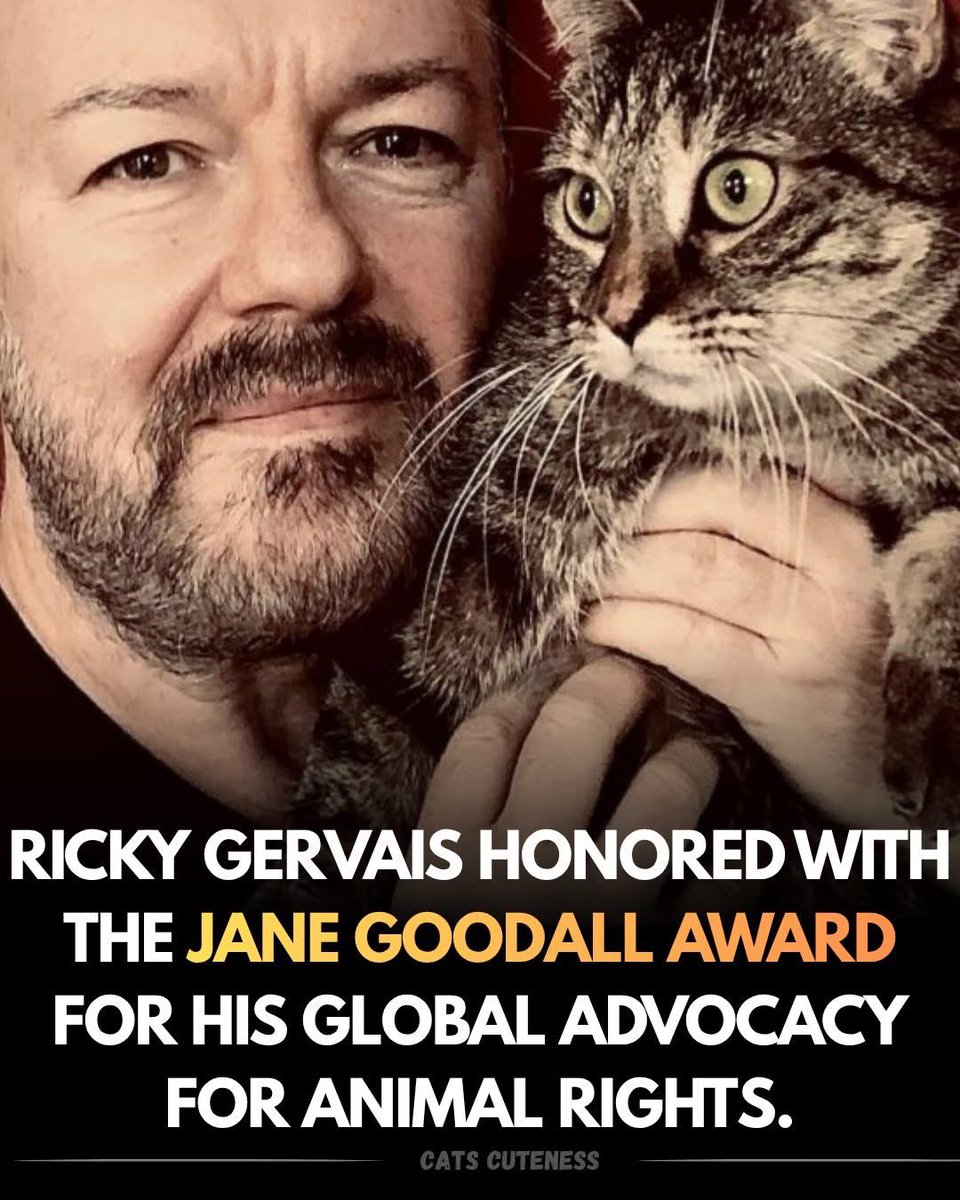
An actor who has given millions to support animals is now being recognized on a global stage.
Ricky Gervais has been awarded the Jane Goodall Award for his ongoing efforts to stand up for animals and call out cruelty worldwide.
Using his platform, he’s brought attention to issues like animal testing, fur farming, and trophy hunting—while also supporting charities and funding real change.
Inspired by Jane Goodall’s legacy, the award honors those deeply committed to protecting animals and the planet.
Supporters say this moment shows the impact of using influence for good—and how one voice can help spark global awareness.
Because real advocacy isn’t just words—it’s action.
English
Sir Muttley OBE UTAG retweetledi

@MuttleyObe Hi, thanks for getting in touch. The A40 Westway between the Westway roundabout and the Marylebone flyover will reopen this evening, Thanks, SW.
English
English
Sir Muttley OBE UTAG retweetledi