
aj

4K posts

aj banner
aj

aj

@MySimpleID

Katılım Ağustos 2013
458 Takip Edilen159 Takipçiler
aj
aj@MySimpleID·
@OWHistory You could speculate that malicious node providers are doing this on purpose to keep the ICP price as low as possible so they get paid more. IMHO, the root cause is the imbalance between the guaranteed supply from node providers and the absence of consistent demand from users.
English
0
0
0
191
octavian augustus.icp
octavian augustus.icp@OWHistory·
Hey internet-computer:native fam, let’s make a discussion here❓ Is it possible node providers to pressure the price because more low it is, more tokens they receive. They have tons of tokens and they can dump them everytime the price goes up. Is this the case?
English
27
3
38
3.3K
aj
aj@MySimpleID·
@dominic_w @numb3rth30ry @ICPsimp Dom, fix the cycles hoarding behaviour when ICP price is high, this is to create more spread out demand for ICP in all market cycle
English
0
0
1
119
dom | icp
dom | icp@dominic_w·
@ICPsimp We believe that states will be using the new agentic organization functionality, and trials are already under way..
English
5
60
237
5.1K
dom | icp
dom | icp@dominic_w·
Nearly every solopreneur, startup, SME, enterprise or government department, will want to become an agentic organization (or "cybernetic org"). They will be vastly smarter, faster and more efficient. Internet Computer Protocol (ICP) helps enable this brave future. But how? 🧵
dom | icp tweet media
English
57
272
856
43.2K
aj
aj@MySimpleID·
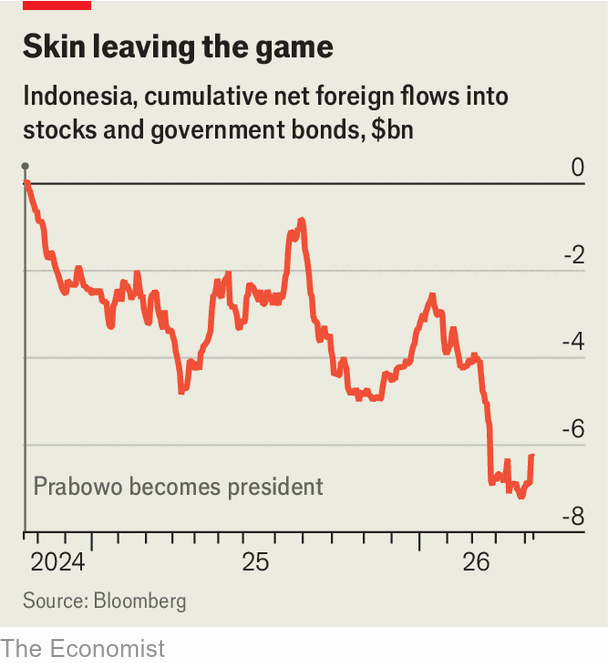
@ConnellyAL @TheEconomist @EthanYWu The probability of having the same fate like his ex-father in-law is somewhat increasing along with the weakening Rupiah IDR.
English
0
0
1
915
Aaron Connelly
Aaron Connelly@ConnellyAL·
🧵 Prabowo Subianto is chipping away at the political and economic settlements that have been the foundation of Indonesia's hard-won stability since the Asian financial crisis. In @TheEconomist's Briefing this week, @EthanYWu and I take in the first 18 months of his presidency.
Aaron Connelly tweet mediaAaron Connelly tweet media
English
31
944
2.3K
100.1K
aj retweetledi
dom | icp
dom | icp@dominic_w·
Dear ICP community, the Internet Computer has now been running strong for 5 years 👏👏👏 Here is a celebratory preview of ICP "cloud engines," the sovereign frontier cloud technology the network shall soon provide from opencloud.org. Main points: — Cloud engines enable anyone to spin up their own sovereign frontier cloud. The technology involves an extraordinary inventive step, in which cloud is created from a mathematically secure network of nodes. The nodes run as part of the Internet Computer network (internetcomputer.org) but are selected and configured by the cloud engine's owner. — The frontier cloud provided by engines is strongly focused on enabling AI agents to build and update online applications and services for us. The world is changing fast, and nearly all new online apps and services are already being built with the help of AI, and thus cloud engines target the future of cloud. — Software hosted on cloud engines is tamperproof, which means that it is immune to infrastructure hacks, because it runs inside a mathematically secure network protocol, rather than on computers directly. This means that AI agents, and those building with them, don't need to have a security team in the loop, or to trust someone else's security team. This is crucial, because in the future, non technical people will demand the freedom to build with full automation — where they just need to issue instructions to AI about what to build, and don't need to worry about anything or anyone else. Of course, apps and services running on engines are also vastly safer from the new breed of hacker being enabled by frontier AI. (The cloud engines themselves are also "tamperproof." Even if a hacker gains physical access to some portion of a cloud engine's nodes, and can make arbitrary changes, the computations and data of the hosted apps and services cannot be corrupted or interrupted so long as the network's fault bounds aren't exceeded. The recent hack of Vercel, a major cloud platform, which gave hackers access to the apps it hosted, provides additional perspective on the importance of this advantage.) — Software hosted on cloud engines is guaranteed to run, so long as a sufficient number of the engine's nodes are running. This means that AI can build applications and services without the need to have a human systems admin team constantly tinkering with the underlying platform to keep it running, which is again crucial, because in the future, non technical people will expect the freedom to use AI to build without the support of others. — New frontier programming language technology, in the form of the Motoko language developed by Caffeine Labs, leverages seminal "orthogonal persistence" technology that unifies program logic and data to deliver further unlocks for AI (Motoko is the first computer language being developed that targets agents that are writing software rather than humans engineers per se). Nowadays, AI can build and update production apps at a prodigious rate, even at the speed of conversation. But it can also make mistakes, and there's a risk that an update it creates might be "lossy" in the sense it causes some transformed data to be lost. Again, in this new world, it's both undesirable and impractical for everyone to have to have a systems admin team on-hand to detect lossy updates and roll them back, but Motoko provides a solution: it can detect new software updates are lossy before they are applied, reducing potentially catastrophic errors by AI to harmless coding retries. — Software hosted on cloud engines is "serverless" but unlike traditional serverless software, directly it directly incorporates data through "orthogonal persistence." Another key purpose is simplify backend software logic and fuel the modeling power of AI by increasing abstraction (sorry for the technical language!!!). Put simply, this enables AI to produce more sophisticated backends, faster, and at dramatically lower costs, as measured by the number AI API tokens consumed during coding. (Tip for the technical: orthogonal persistence is a new paradigm where "the program is the database," and data lives inside program variables, which is possible because it's as if hosted software runs forever in persistent memory). — An expanding database of skills at skills.internetcomputer.org shall make it possible to develop and directly deploy apps and services to your cloud engines directly from Claude Code, Perplexity, Codex and other AI platforms. Further, your account on caffeine.ai can be connected, so that new apps and updates created through conversation automatically appear hosted from your cloud engine. In the future, R&D is going to be very seamless. You converse with AI, and your secure and unstoppable apps or services are created or updated. Cloud engines are designed to directly support this "self-writing cloud" future where we can work hands-free. — Tech sovereignty is becoming a huge issue worldwide, with governments and corporations seeking to create sovereign tech stacks owing to geopolitical tensions. Increasingly, people are realizing that tech provided by foreign nations can come with hidden backdoors and kills switches, from the base platform, right up through hosted apps and services. ICP technology is open source, and those building on ICP using AI own their own source code. When you have the source code, you can verify that there are no backdoors, and when you own the source code thanks to AI, you can update it at will, freeing you from vendor lock-in. But cloud engines take sovereignty much further... — You create a cloud engine by selecting the nodes that will be combined. You can choose the class of nodes used, and their number, but more importantly, you can choose who operates the nodes, and where they are located. Almost any configuration is possible, because the Internet Computer scales the security privileges afforded to hosted software within the network according to configuration (software hosted on cloud engines can directly interoperate with software on other engines and traditional subnets, but base restrictions are applied according to security rules). A cloud engine can be created within a region such as Europe, to comply with regs such as GDPR, or completely within a sovereign state like Switzerland or Pakistan. But cloud engines go further still... — Sovereignty is also about freedom from vendor lock-in. Cloud engines are essentially ICP (Internet Computer Protocol) network configurations, and this means the underlying compute nodes they combine can be swapped out without interrupting their hosted apps and services. This is a big deal. In addition, cloud engines now support nodes that are instances running on Big Tech's clouds, in addition to nodes that are dedicated specialized hardware, as per the Gen I and Gen II nodes that dominate the Internet Computer today. For example, it is possible to have an engine running across different AWS data centers, say, and then reconfigure the engine to run across a mixture of AWS, Google, Azure and Hetzner for even more resilience, without the users of hosted apps and services noticing a thing. That's true freedom. — Sovereign AI is becoming increasingly important too, and cloud engines allow special "AI nodes" to be added to them, so that hosted software can perform inference on hardware provisioned by the owner from a location the owner has selected. Even though the AI nodes are only accessible within the cloud engine, they can still benefit from the forthcoming Internet Intelligence Gateway (IG), which will make it possible to validate inference performed on key frontier open weights LLMs, even when the inference is performed on completely independent AI clouds. When the results of inference are received, this technology can verify that neither the prompt+context (input) nor the inference result (output) have been modified, and that the results were produced by the precise LLM expected. This ensures that AI clouds don't cheat by running inference on cheaper models than are being paid for, and bad actors aren't modifying the inputs or outputs to surreptitiously insert advertising into results, say, or change facts, or insert malware when code is being generated. What's super cool about this technology is the cost of the verification is scalable. A very valuable additional security can be achieved with only 1-2% of extra cost. — Scaling apps and services when they hit capacity limits is another thorny problem that cloud engines help the world address. Engines make scaling possible without rewriting or reconfiguring software. The query workload capacity of hosted software can be horizontally scaled simply by adding new nodes to an engine, and nodes can also be added in geographical proximity to demand. Meanwhile, update workload capacity can first be scaled-up by swapping an engine's nodes out for the next class up, and then when no larger class of node is available, horizontally scaled-out by "splitting" the engine into two, which doubles available capacity. (Technical tip: horizontally scaling update capacity by splitting engines requires multi-canister architectures). — For those who have been following how Caffeine builds apps that can efficiently store large numbers of files, I should mention that apps built on cloud engines will also support the new ICP Blob Storage cloud network (since cloud engines currently have up to about 3 TB of memory, which apps storing large amounts of files can easily exceed). We are also working on allowing blob storage nodes to be added to cloud engines, to enable sovereign mass blob storage within an engine, similarly to how AI nodes can be added currently. — Lastly, but certainly not least, I should mention that cloud engines are multi-blockchain capable, and ready for digital assets, thanks to the clever math at their core. For example, an e-commerce service built on a cloud engine can securely accept and custody stablecoin payments, or a multi-chain DEX could be hosted. Further, engines can support software autonomy (software orchestrated and controlled by other autonomous software, in a decentralized way) and can themselves be orchestrated by SNS technology, and thus run autonomously too. Today, though, the focus is on *mainstream* cloud. This year, the cloud industry will generate approximately one trillion dollars in revenue. That number is already huge, but is expected to grow to two trillion dollars by 2030. After years of continuous development, which have seen more than $500m spent on R&D, the Internet Computer network is now tacking directly toward this mainstream cloud market with cloud engine technology. In their first version, cloud engines are not meant to be a cloud panacea. For example, currently they are not ideal for working with big data. You should use something like DataBricks for that. Cloud engines are carefully targeted at enabling AI to produce traditional online applications and services, including SaaS, in a safer and more productive way, which represents a new market segment with tremendous potential. Of course, DFINITY will continue to work relentlessly to push forward ICP's capabilities, so expect further developments. It's worth mentioning that this cloud segment isn't just about creating new apps and services using AI, it's also about replacing legacy systems and apps built on super expensive SaaS services. Caffeine Labs is working to produce technology (Caffeine Snorkel) that can study an enterprise's legacy systems and app built on SaaS, create replacement systems and apps, and migrate the data, while supporting key stakeholders through the process over email and chat, with full automation. Thus the legacy systems and SaaS markets shall also be addressed by cloud engines. Zooming out, and reasoning in a more metaphysical way, we believe, as we always have, that there is room for a new kind of cloud created by mathematical networks, that provides seminal advances in the fields of security and resilience, as well as true sovereignty and freedom from lock-in. That this same technology, with the help of additional technologies like orthogonal persistence and Motoko, enables AI to build for us without the need for so much oversight, and to create more backend sophistication while consuming fewer AI API tokens, enables ICP to bring game-changing advances to the world. Cloud engines will work synergistically with the Intelligence Gateway, which will enable apps and services running on engines to seamlessly leverage AI, wherever that AI is running, while providing verifiability at extremely low cost for open weights frontier models. We believe that cloud engines represent an inflection point in the storied history of the Internet Computer project, and I'm very proud to be sharing the details with you on the network's fifth birthday 💪 I'll be back with more news soon!!
English
215
651
1.8K
175.8K
aj retweetledi
dom | icp
dom | icp@dominic_w·
The opencloud.org portal is designed to be autonomous and run as an integral part of the Internet Computer network. It will thus be updated by the NNS, the network's inbuilt decentralized governance system = sovereign frontier cloud from an open network.
dom | icp tweet media
English
42
221
876
26.6K
aj
aj@MySimpleID·
@TrapDefi Harsh truth: Legit mainstream won't touch ICP because ICP=crypto and crypto=bad reputation. Hardcore cryptos hates it too, because ICP ruin their 'get-rich-quick' schemes. Bottom line? None wants ICP because DFINITY hasn't picked a side where they actually stand for.
English
0
0
0
21
TrapDefi ♿️
TrapDefi ♿️@TrapDefi·
Most people don’t use $ICP because the tech is intimidating True or false? 🤔
English
17
8
56
2K
aj
aj@MySimpleID·
@ChrisYost_ It is a good news if it is true. However, it has happened far too frequently that the ICP community makes such claims one-sidedly, whereas in reality, they prove to be untrue
English
1
0
2
181
ChrisYost.icp ∞
ChrisYost.icp ∞@ChrisYost_·
Anthropic is in the bill of materials for $ICP's May 10 Cloud Engines demo. The biggest demo since genesis. A turning point for AI. Briefing video 🕵️‍♂️⬇️ — three things to watch, two reasons to doubt, one buried lead. Claude-assisted, third-person investigative format. @dominic_w @dfinity
English
8
70
320
6.5K
aj
aj@MySimpleID·
@dominic_w @numb3rth30ry If #ICP wants to be taken seriously by real business mainstream, stop fooling around by entertaining DeFi cryptos, etc. Focus on real sectors that bring real world impacts.
English
2
0
2
317
dom | icp
dom | icp@dominic_w·
Please bear with us as a lot of things being updated at once on shortest path for speed (e.g. websites, etc). Nb. some asked whether ICP's frontier cloud focus means no more DeFi. Actually the opposite, we think onchain cloud will ultimately be better for DeFi than trad. chains.
English
55
196
960
38.9K
Times ²
Times ²@TimesSquared·
NEW: $1,710,684 in compute burned on $ICP today.
Times ² tweet media
English
13
30
165
8.1K
aj retweetledi
DFINITY Foundation
DFINITY Foundation@dfinity·
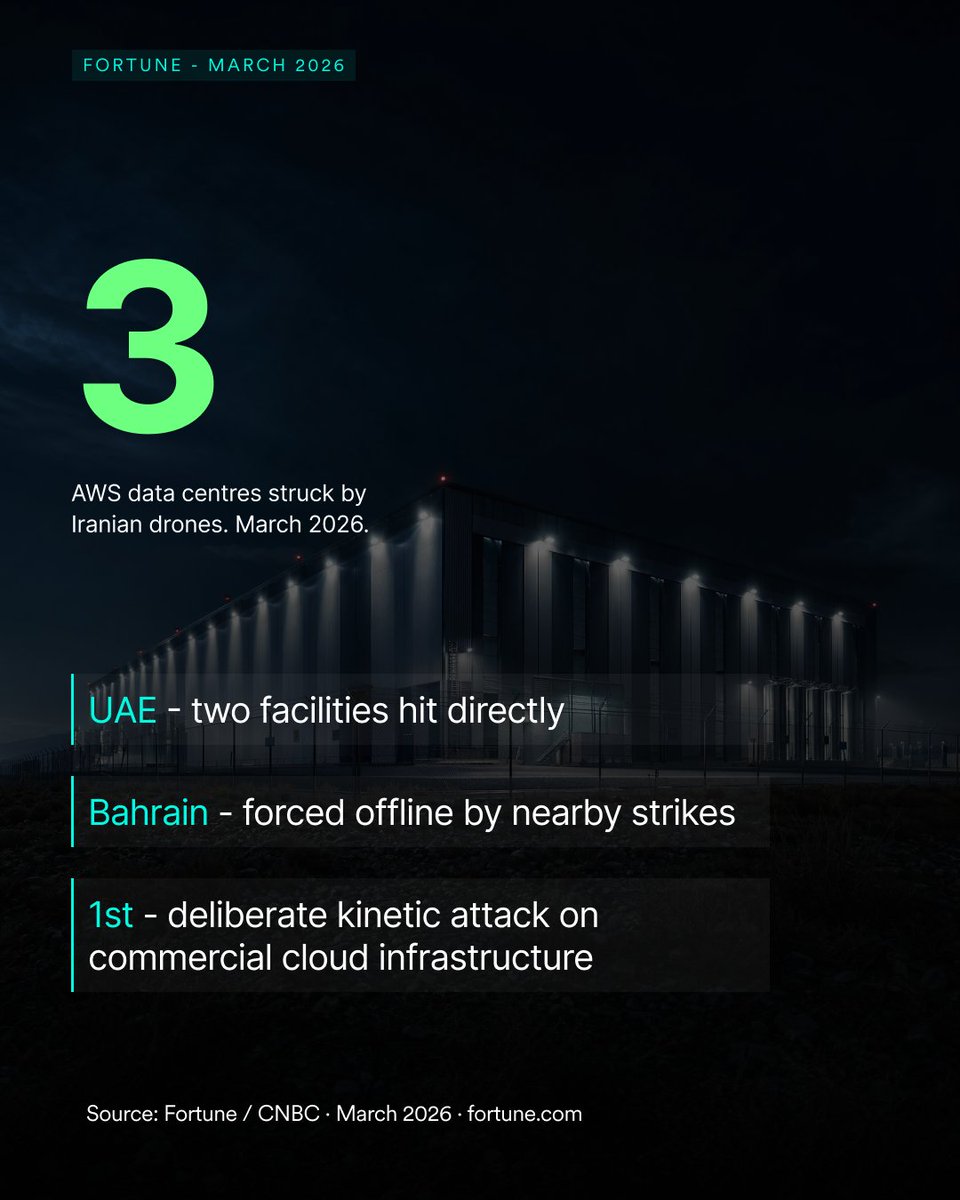
Three AWS data centers. Offline. Banking stopped. Payments stopped. Enterprise software stopped. Across the region. Two facilities in the UAE. One in Bahrain. Struck by Iranian drones in March 2026. The first deliberate kinetic attack on commercial cloud infrastructure in history. Iran's state news agency said the Bahrain facility was targeted specifically to disrupt military and intelligence operations running on it. The US military runs workloads on AWS. "The cloud" is a building. That building has a zip code. That zip code can be struck by a missile. Contractual sovereignty doesn't protect a building. If the infrastructure isn't yours (architecturally), it was never really yours at all.
DFINITY Foundation tweet media
English
78
130
426
14.7K
aj
aj@MySimpleID·
@OWHistory @dfinity PayPal is an example of a project that iterated its value proposition before reaching product market fit. ICP is adopting a similar approach by continuously testing and refining its value proposition toward the strongest market signal. So..No, This has to continue.
English
1
0
2
106
aj retweetledi
DFINITY Foundation
DFINITY Foundation@dfinity·
New ICP Skill: Cycles Management. On ICP, apps pay for their own compute with cycles - no surprise cloud bills, just a transparent, predictable fuel model you control. Here's what's inside. 🧵 1/2
DFINITY Foundation tweet media
English
7
53
265
9.1K
aj
aj@MySimpleID·
@dominic_w better version of Yoti ?
English
0
0
0
139
aj retweetledi
dom | icp
dom | icp@dominic_w·
Internet Computer's 5th birthday on May 10th, 2026. To celebrate, DFINITY will demo "cloud engines," including agentic builds, AI nodes, and more. This is a very big deal for ICP, cloud and agentic R&D. Engines will be the 1st frontier cloud/compute technology the wild⏱️
English
112
340
1.3K
83.9K
aj
aj@MySimpleID·
@CoinMarketCap ICP ? don't say it's another meme project he is trying to shill.
English
0
0
4
52
CoinMarketCap
CoinMarketCap@CoinMarketCap·
LATEST: ⚡ Arthur Hayes says Ethereum may drop out of the top three by 2030, predicting AI-focused tokens powering the agentic economy will overtake it.
CoinMarketCap tweet mediaCoinMarketCap tweet media
English
466
198
1.6K
338.8K
aj retweetledi
caffeine
caffeine@caffeineai·
AI-built apps can look a bit off sometimes - like each page was made by a different person who never talked to each other. We fixed that in Caffeine V3. Now there's a designer in the room. Before any code gets written, the designer makes a brief covering colors, typography, component styles, and what not to do. Everyone building reads the same brief. Same source of truth. Your workflow hasn't changed. You describe what you want, you get an app. It just looks a lot better now. Here's how it works: blog.caffeine.ai/posts/v3-desig…
caffeine tweet media
English
8
44
203
2.9K
aj retweetledi
dom | icp
dom | icp@dominic_w·
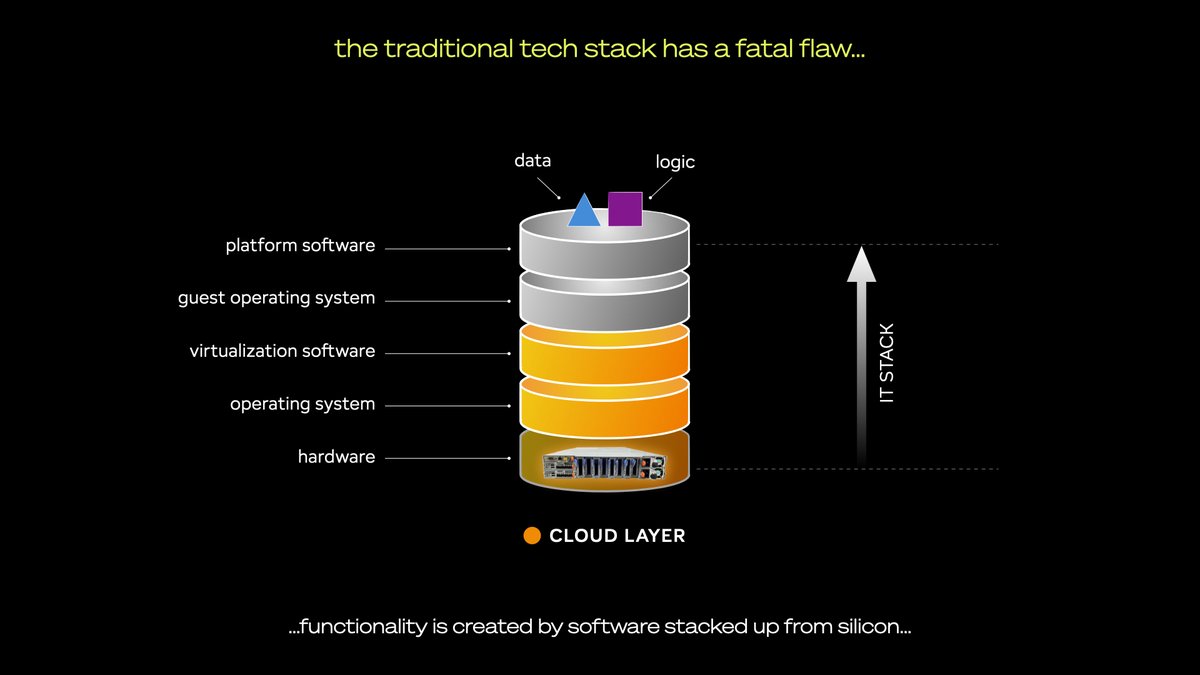
Traditional tech security is cooked with AI. Limitless combinations of clouds, servers and platform software configs. Zillions of packages auto-downloaded by e.g. Node.js. A vast surface where vulnerabilities hide, which can now be found Hackproof stacks soon to be *necessary*
dom | icp tweet mediadom | icp tweet mediadom | icp tweet mediadom | icp tweet media
English
28
208
749
15.5K
aj retweetledi
Kristofer
Kristofer@kristoferlund·
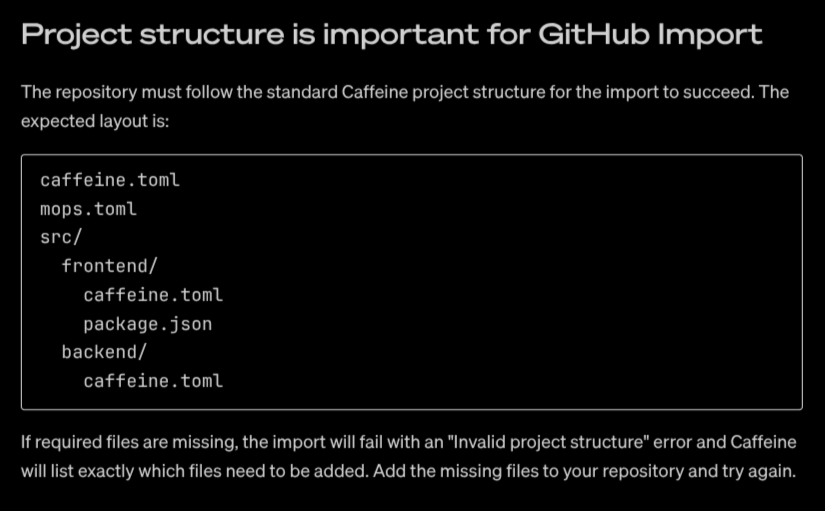
Everything You Always Wanted to Know About GitHub Import* (*But Were Afraid to Ask) All the details in the Help Center: help.caffeine.ai/hc/en-us/artic…
Kristofer tweet media
English
1
9
57
1.6K
aj retweetledi
dom | icp
dom | icp@dominic_w·
#Mission70 progress: Gen-1 node rewards now reduced by 40%, and NNS voting rewards by 36.7%. Total ICP inflation reduced by 33.4% ✅ Deflationary pressure: cloud engines on track, self-writing cloud use is growing ✅ Much more to come :)
English
55
204
902
32.6K
aj retweetledi
Kristofer
Kristofer@kristoferlund·
Import code from GitHub directly into Caffeine, now live! You can now move your project out of Caffeine, work on it locally, and bring it back via GitHub. More tools in this area are coming soon, including a CLI application that lets you instantly push code from your machine.
caffeine@caffeineai

Your app lives in Caffeine. Now your code can too - on your terms. A lot of you have been asking for this. You want to open your codebase in your own editor, version it properly, work with your existing tools, and bring it back into Caffeine when you're done. That's exactly what GitHub import lets you do. Export to GitHub, tweak it however you want, and pull it straight back in. Your workflow, your tools.

English
10
31
152
4.9K